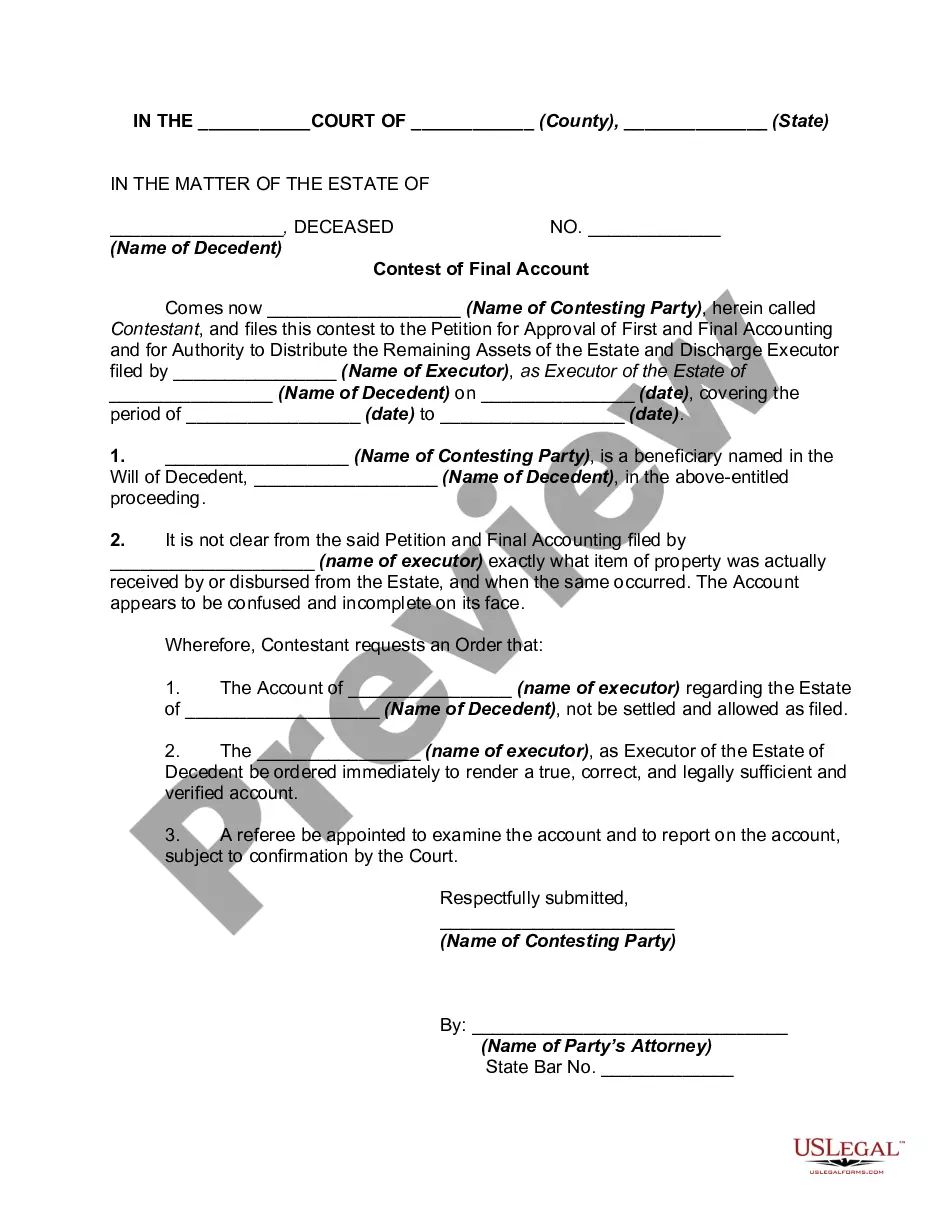
Accounts Estate Sample With Solution (12th)
Description
Get your form ready online
Our built-in tools help you complete, sign, share, and store your documents in one place.
Make edits, fill in missing information, and update formatting in US Legal Forms—just like you would in MS Word.
Download a copy, print it, send it by email, or mail it via USPS—whatever works best for your next step.
Sign and collect signatures with our SignNow integration. Send to multiple recipients, set reminders, and more. Go Premium to unlock E-Sign.
If this form requires notarization, complete it online through a secure video call—no need to meet a notary in person or wait for an appointment.
We protect your documents and personal data by following strict security and privacy standards.

Make edits, fill in missing information, and update formatting in US Legal Forms—just like you would in MS Word.

Download a copy, print it, send it by email, or mail it via USPS—whatever works best for your next step.

Sign and collect signatures with our SignNow integration. Send to multiple recipients, set reminders, and more. Go Premium to unlock E-Sign.

If this form requires notarization, complete it online through a secure video call—no need to meet a notary in person or wait for an appointment.

We protect your documents and personal data by following strict security and privacy standards.
Looking for another form?









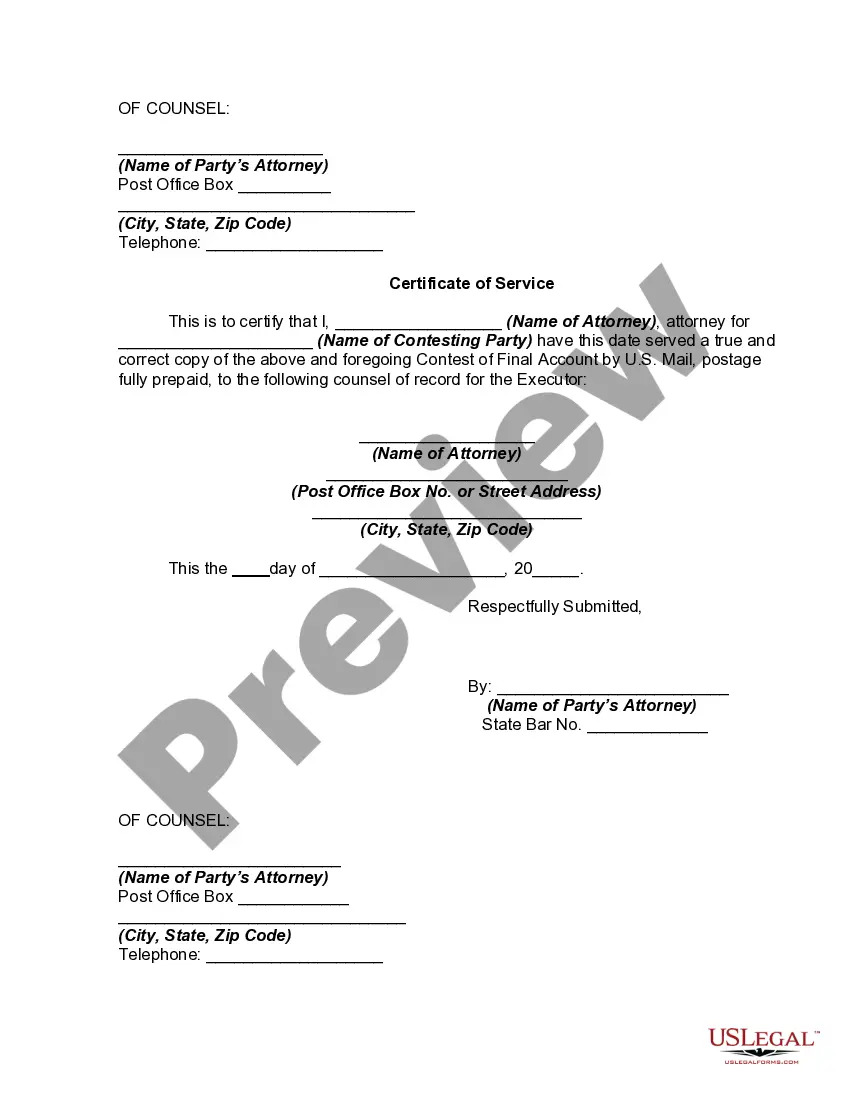
How to fill out Contest Of Final Account And Proposed Distributions In A Probate Estate?
Employing legal templates that adhere to national and local regulations is crucial, and the web provides a vast array of choices to select from.
However, why spend time searching for the properly prepared Accounts Estate Sample With Solution (12th) template online if the US Legal Forms online repository already has such templates gathered in one location.
US Legal Forms is the largest online legal archive containing more than 85,000 editable templates created by attorneys for any professional and personal situation.
Examine the template using the Preview feature or via the text outline to ensure it satisfies your requirements.
- They are simple to navigate, with all documents categorized by state and intended use.
- Our specialists stay updated with legislative changes, ensuring you can always trust that your documents are current and compliant when obtaining an Accounts Estate Sample With Solution (12th) from our site.
- Acquiring an Accounts Estate Sample With Solution (12th) is fast and straightforward for both existing and new users.
- If you already have an account with an active subscription, Log In and download the document template you require in the appropriate format.
- If you are new to our site, follow the steps outlined below.
Form popularity
FAQ
You should add together the totals for assets, changes, and income, then take away the totals for liabilities and expenses. This final figure should then be divided into the appropriate portions and then assigned to the list of beneficiaries.
Once you've been appointed executor or personal representative by the probate court, you'll probably want to open a bank account in the name of the estate. Usually, an account for an estate is registered in this or a similar way: "Estate of Gerald S. Smith, Deceased, Pamela S. Smith, executor."
An informal accounting for an estate is a document that outlines the financial activities of the estate. This type of accounting is often used to prepare financial statements of affairs. It includes details about assets and liabilities, income and expenses, donations or transfers from the estate, and tax information.
By way of example, in a relatively simple estate an informal accounting can consist of copies of all of the estate account statements and a copy of the fiduciaries check register. If there was real property sold by the fiduciary a copy of the closing statement should be provided to the beneficiaries.
After a death, the deceased's executor or administrator has the job of winding up the estate. Once this has been done, they are required to provide a final estate account. This details all of the assets, income, liabilities and expenses as well as the amount that is payable to the beneficiaries.