Qtip Trust Principal Form Complete For A Field
Description
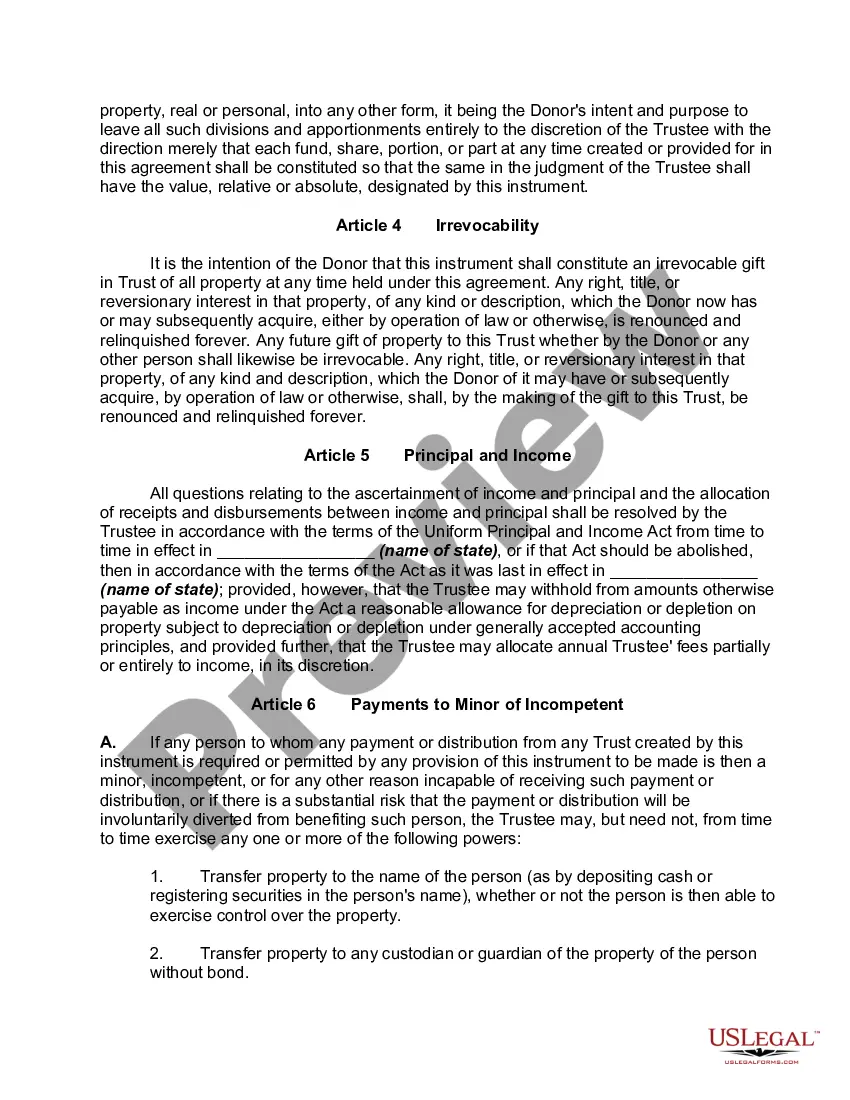
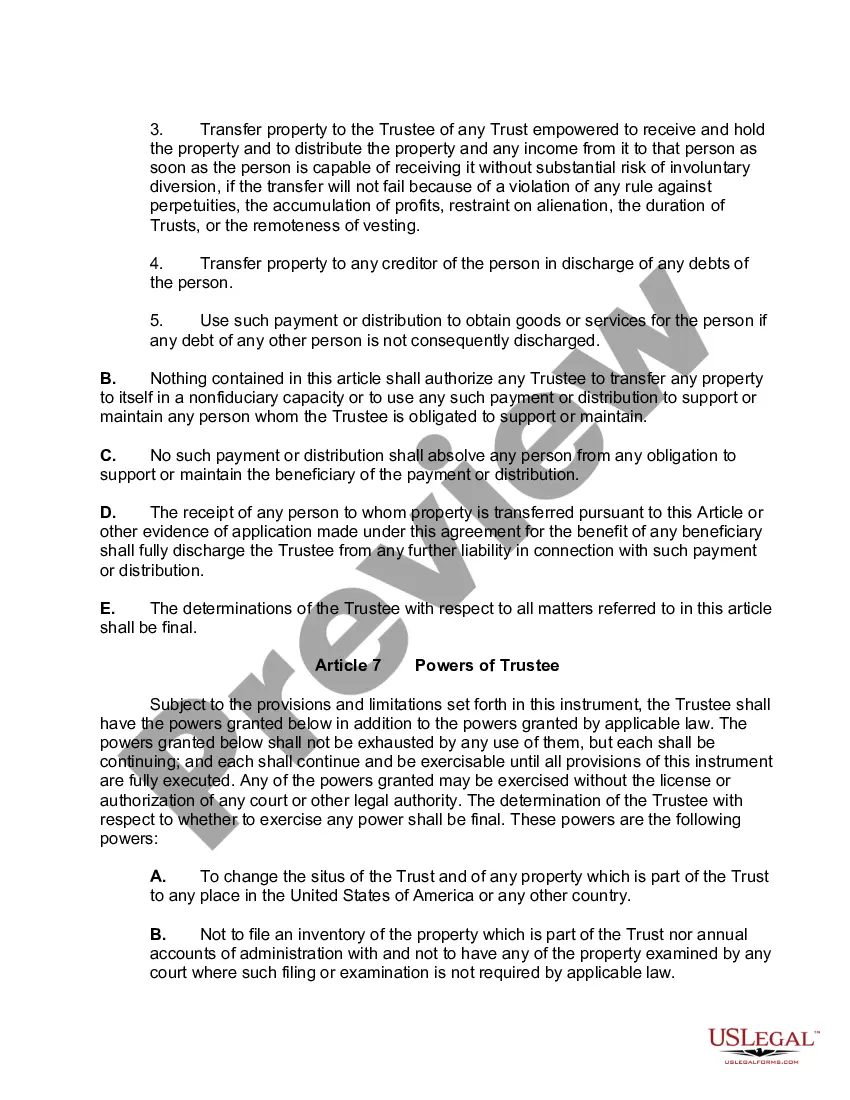
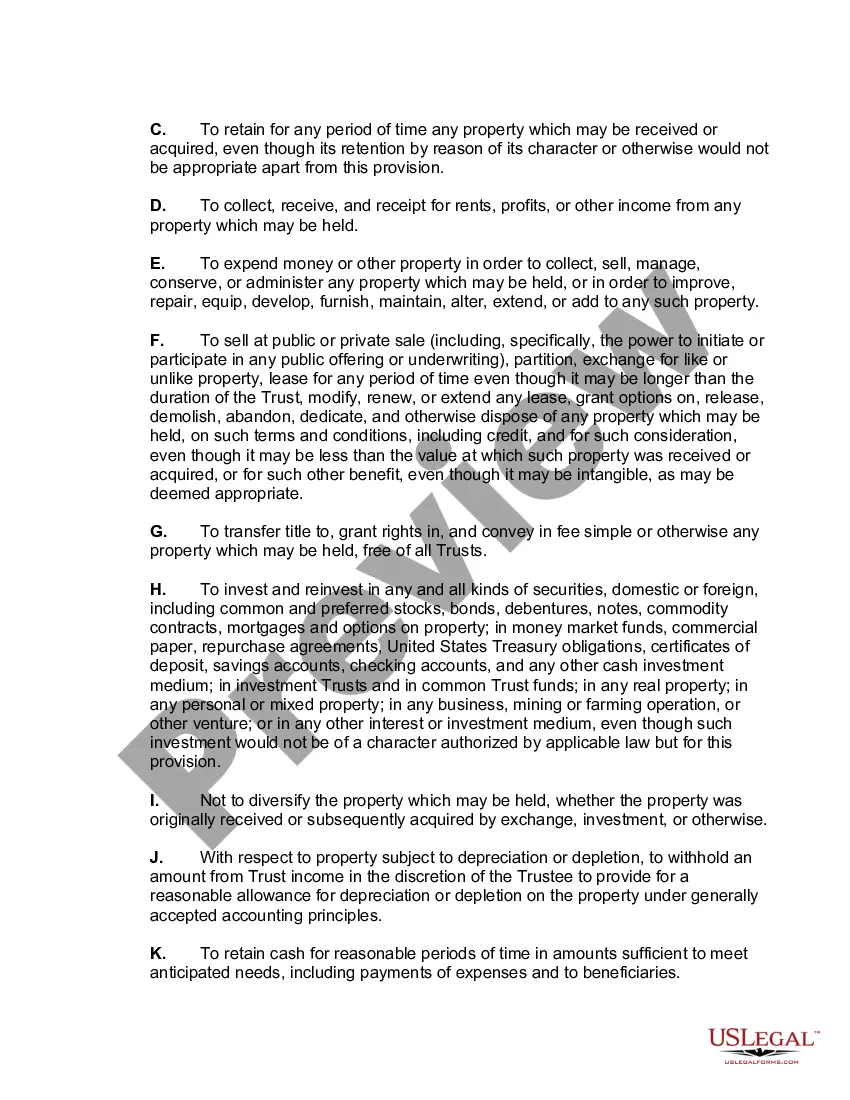

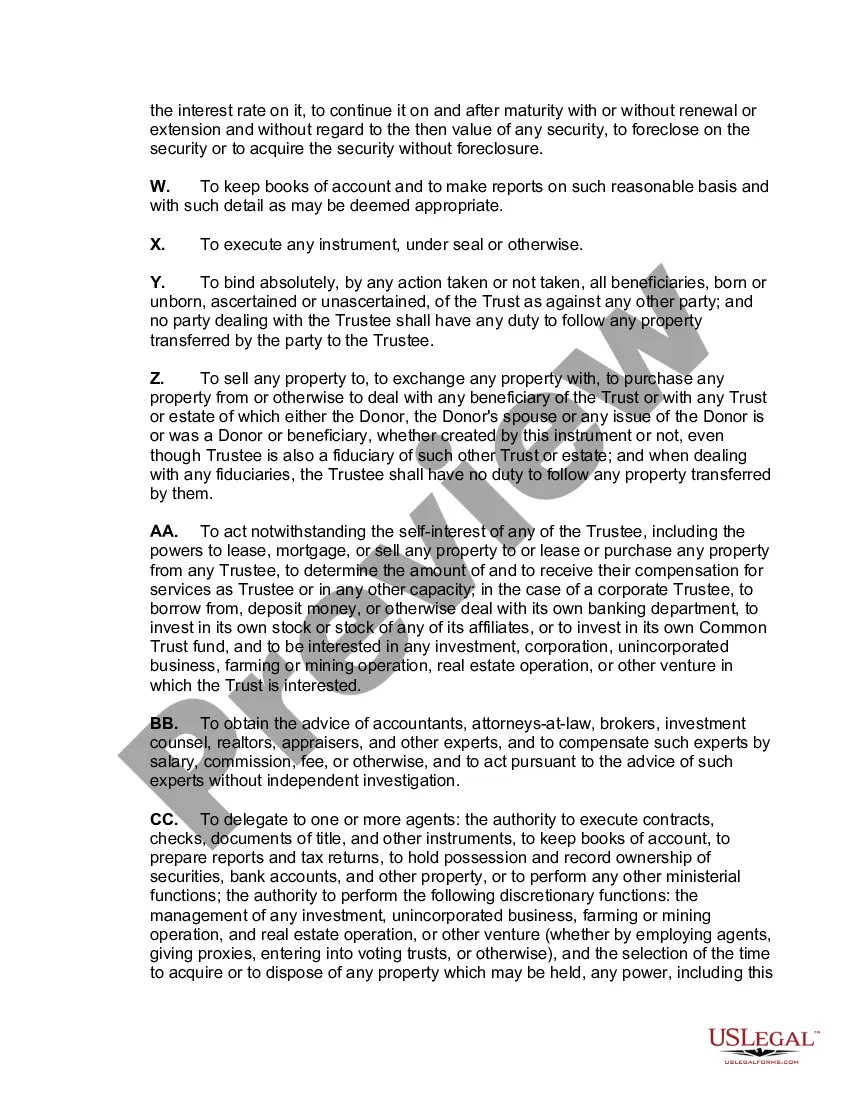
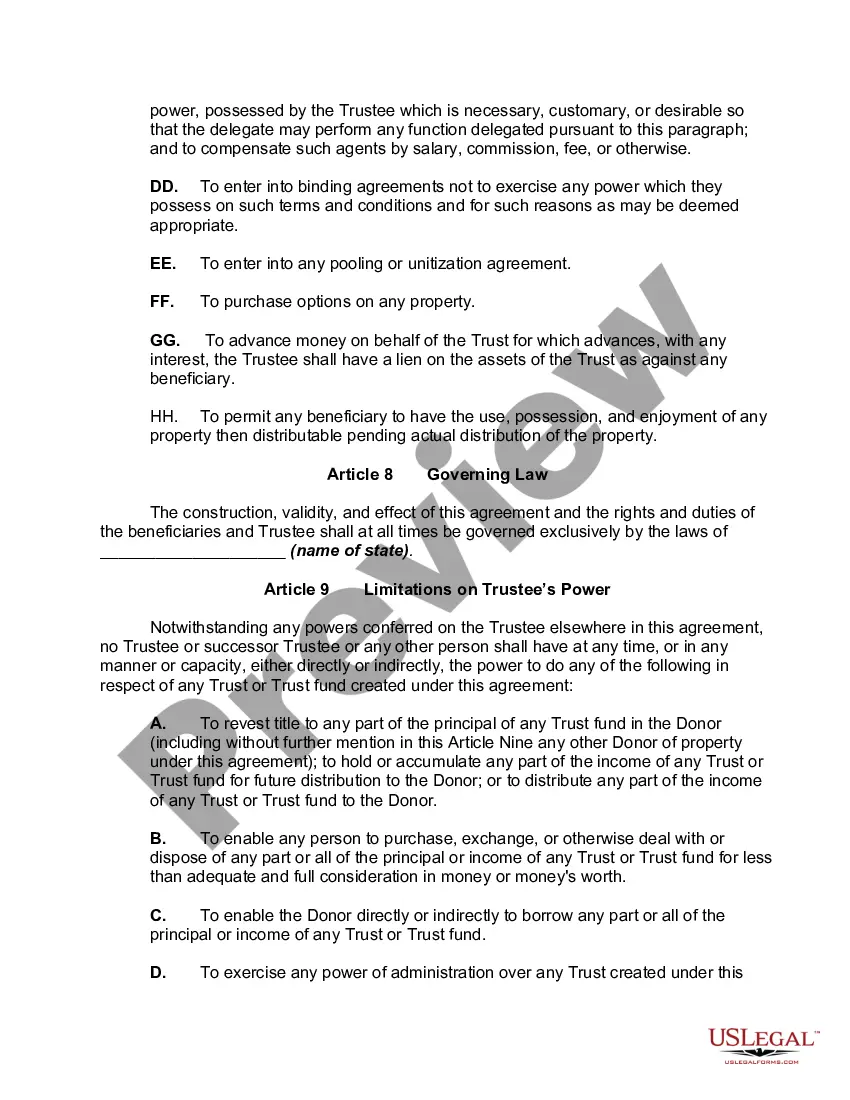

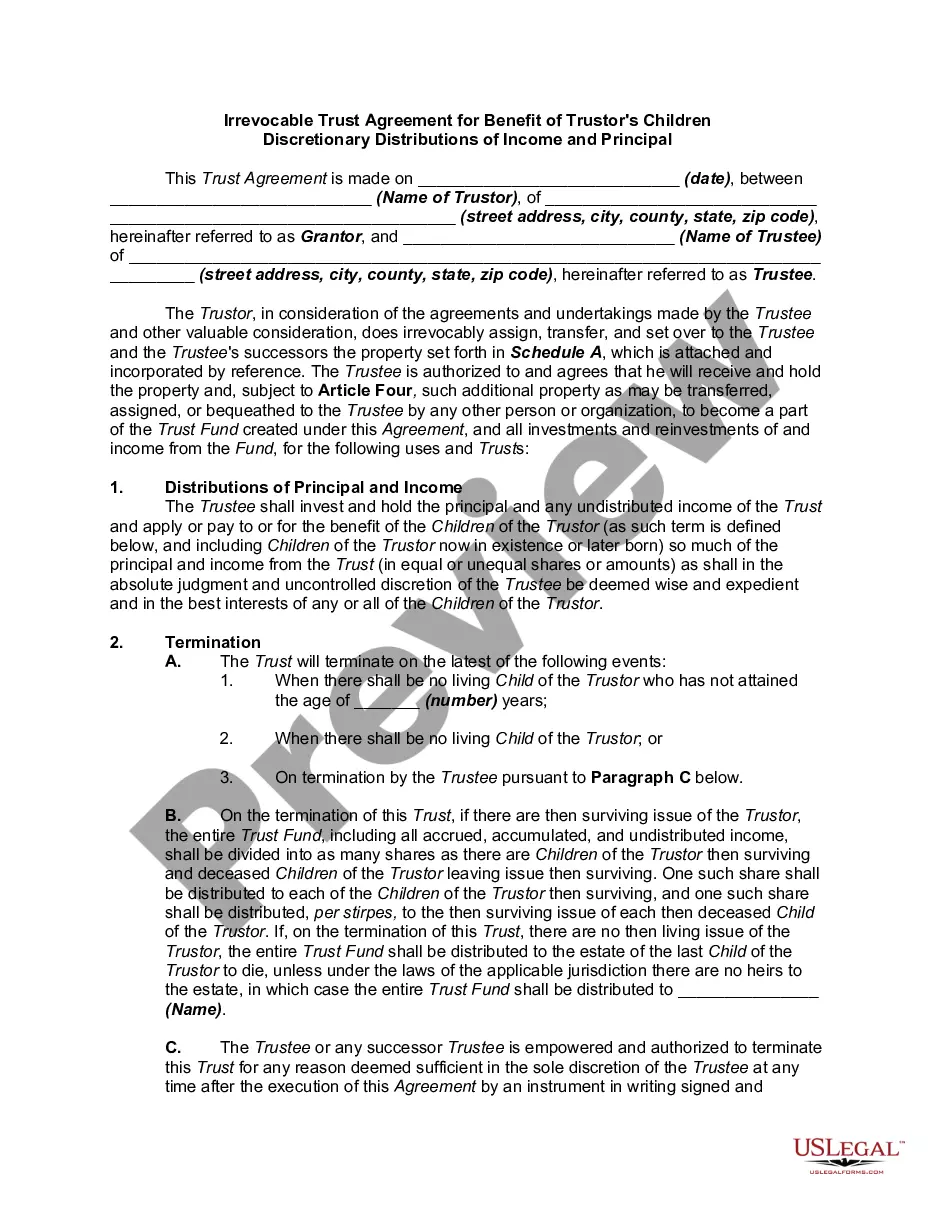
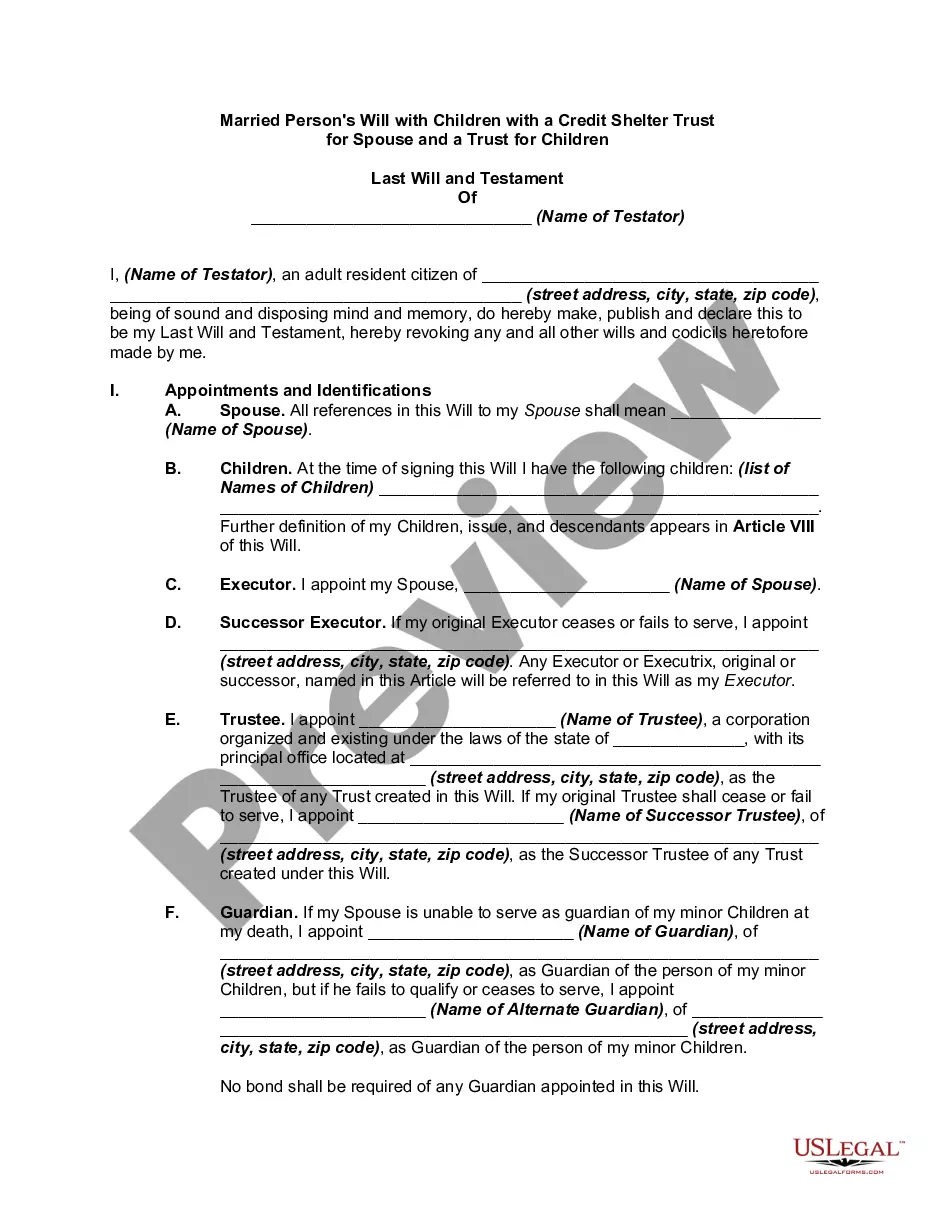
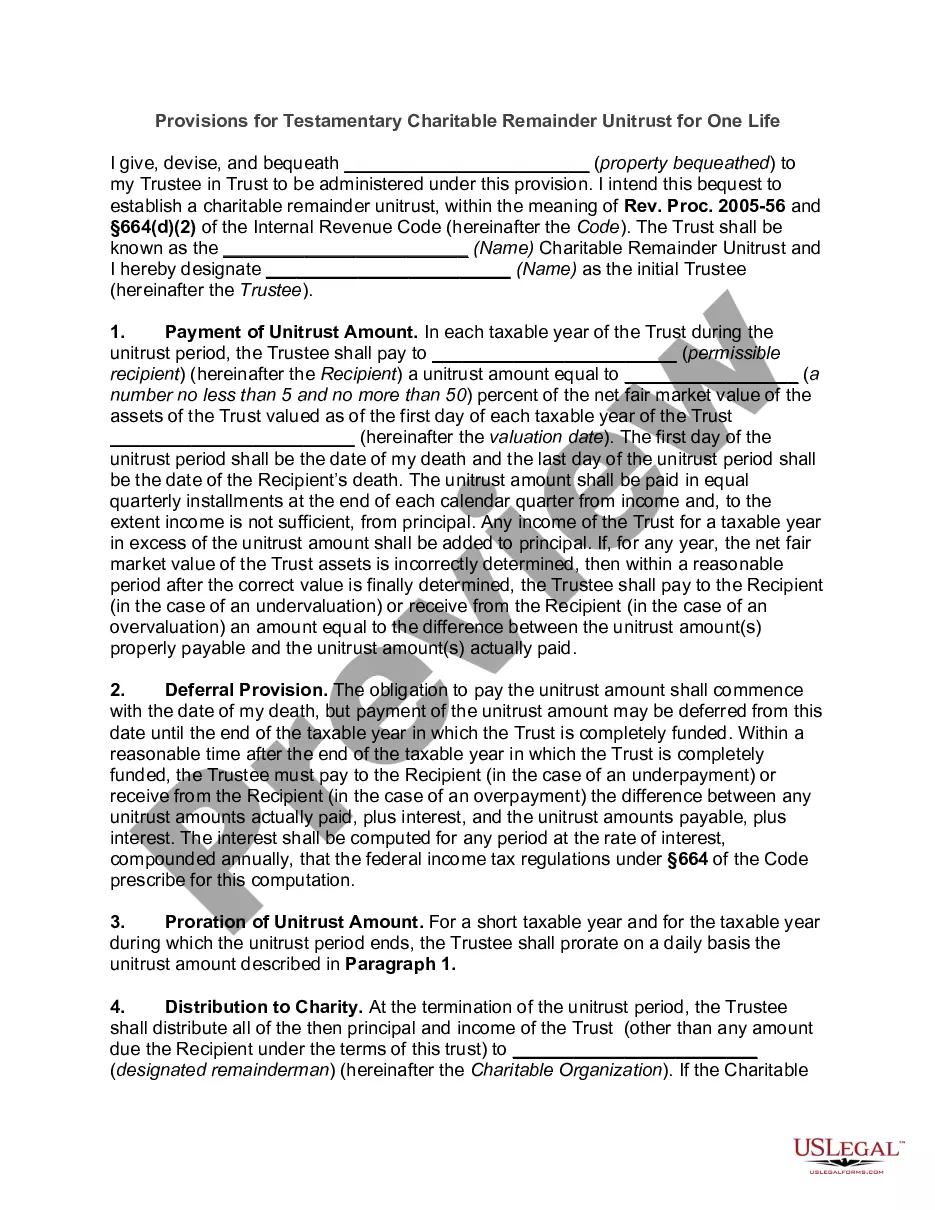
Get your form ready online
Our built-in tools help you complete, sign, share, and store your documents in one place.
Make edits, fill in missing information, and update formatting in US Legal Forms—just like you would in MS Word.
Download a copy, print it, send it by email, or mail it via USPS—whatever works best for your next step.
Sign and collect signatures with our SignNow integration. Send to multiple recipients, set reminders, and more. Go Premium to unlock E-Sign.
If this form requires notarization, complete it online through a secure video call—no need to meet a notary in person or wait for an appointment.
We protect your documents and personal data by following strict security and privacy standards.

Make edits, fill in missing information, and update formatting in US Legal Forms—just like you would in MS Word.

Download a copy, print it, send it by email, or mail it via USPS—whatever works best for your next step.

Sign and collect signatures with our SignNow integration. Send to multiple recipients, set reminders, and more. Go Premium to unlock E-Sign.

If this form requires notarization, complete it online through a secure video call—no need to meet a notary in person or wait for an appointment.

We protect your documents and personal data by following strict security and privacy standards.
Looking for another form?



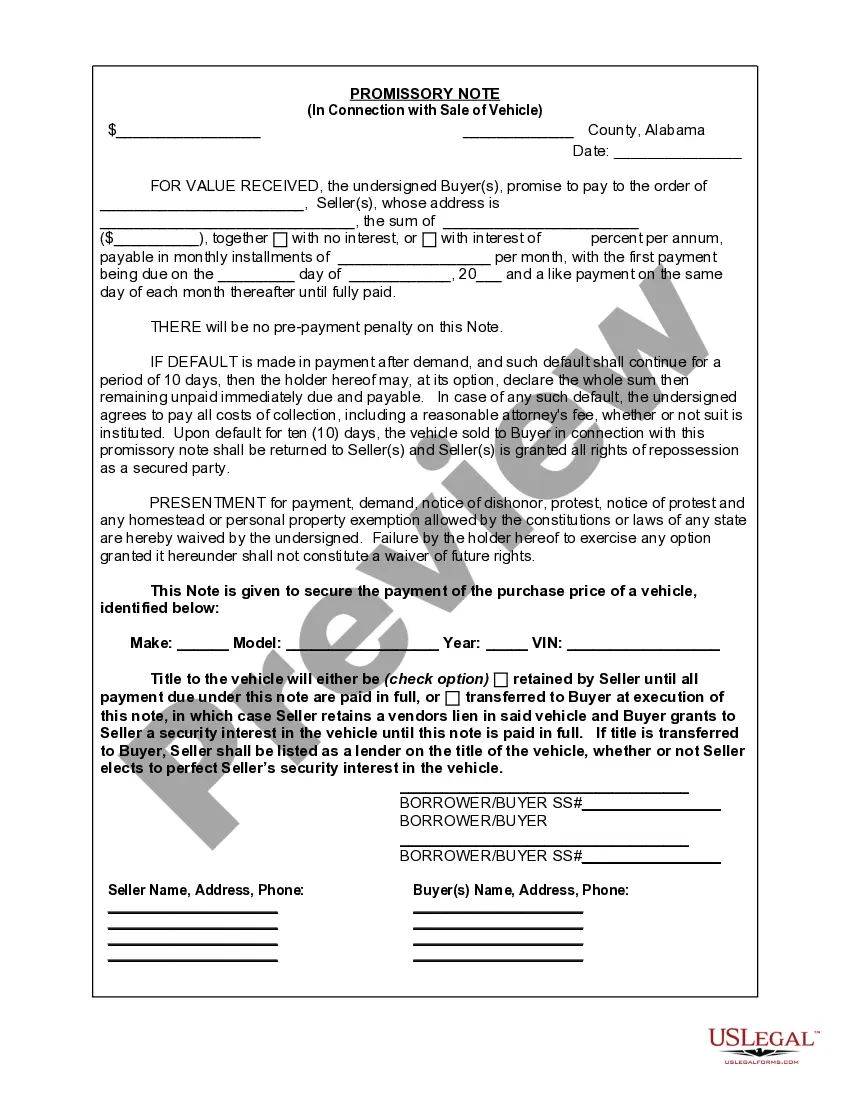


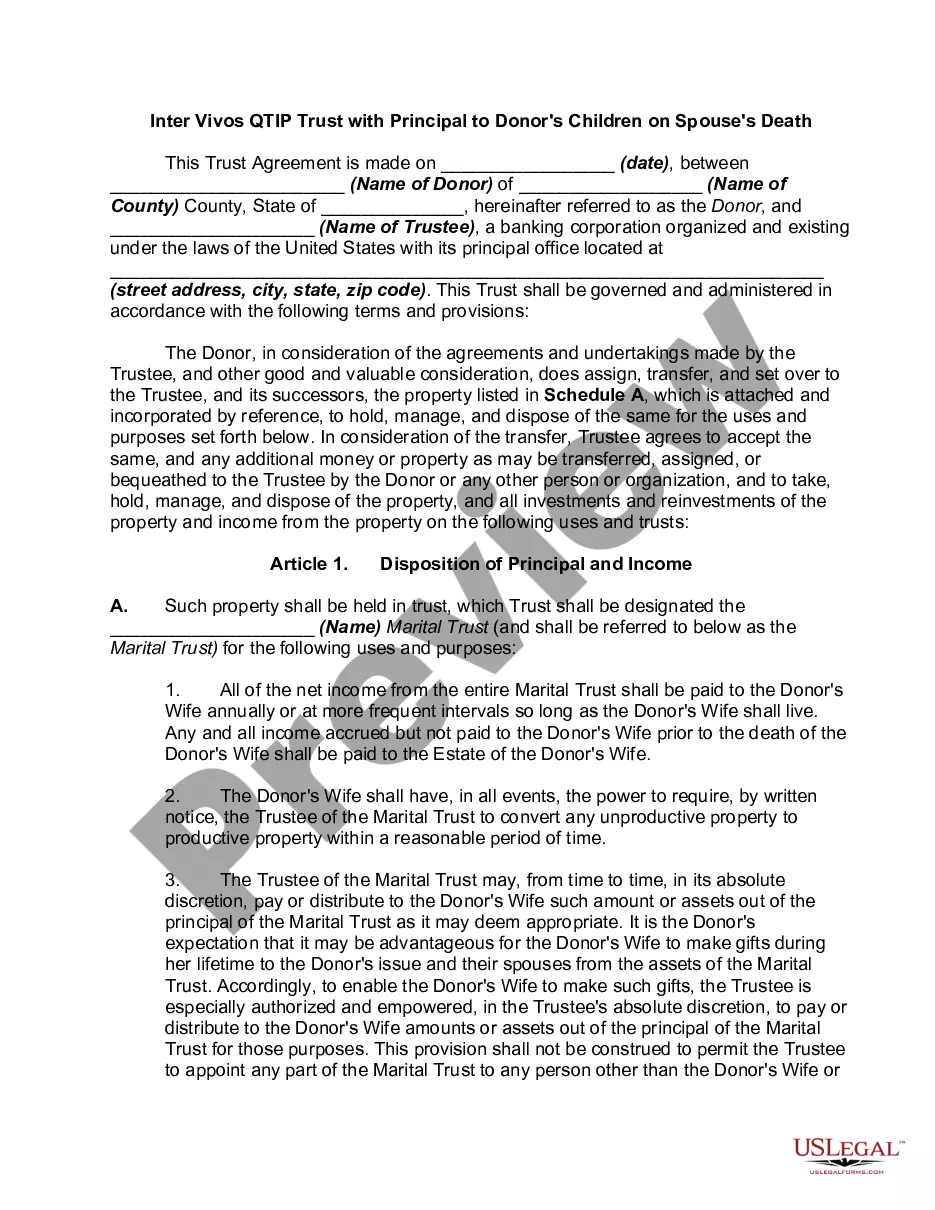
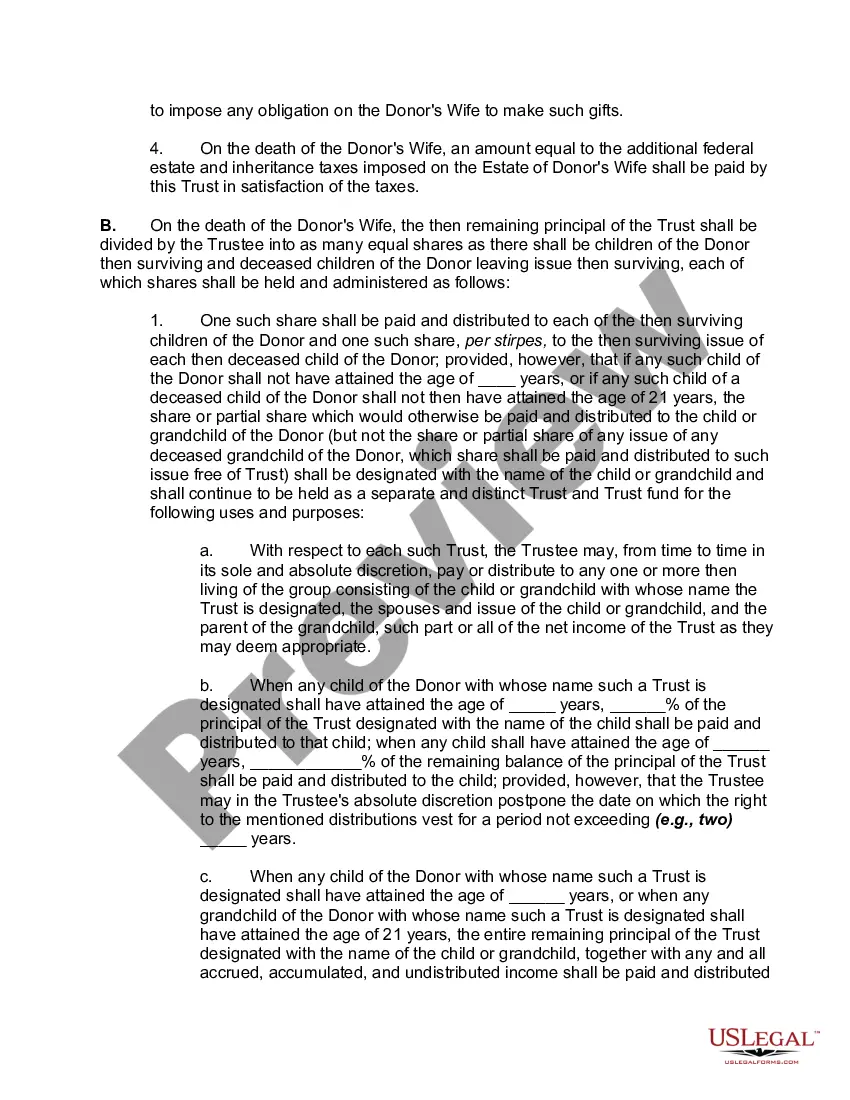
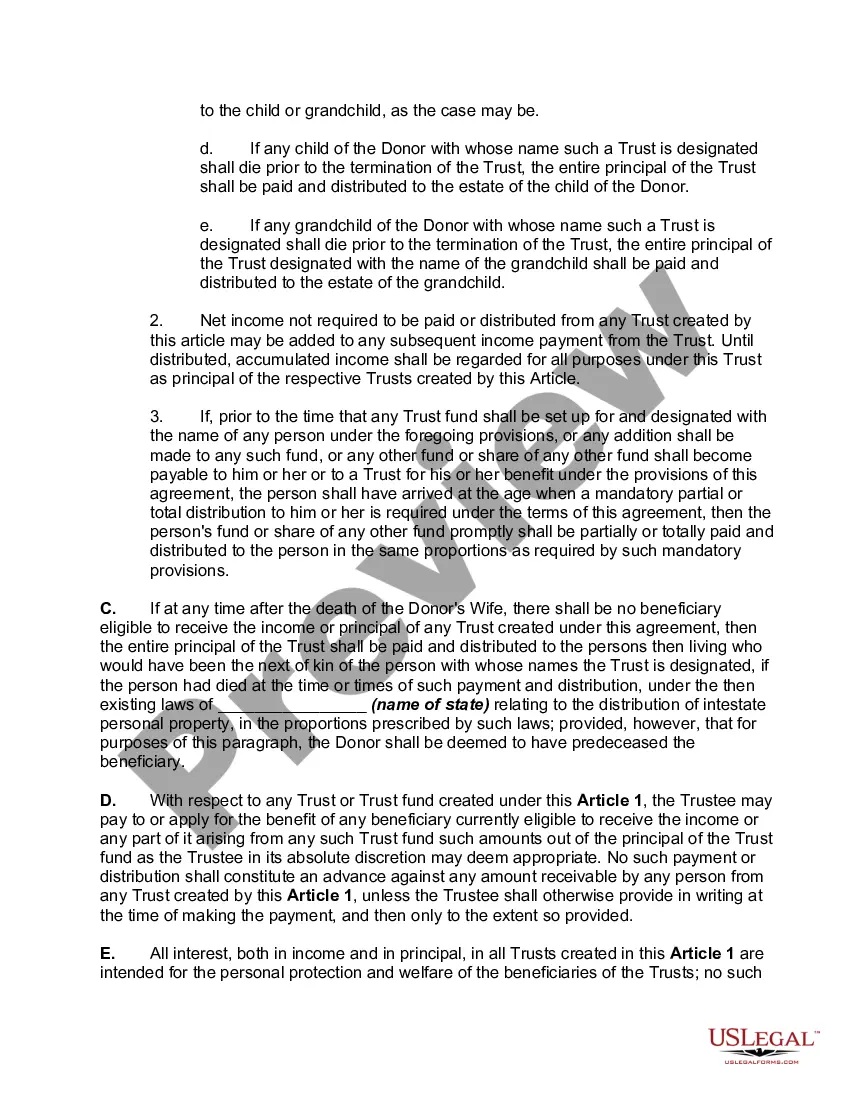
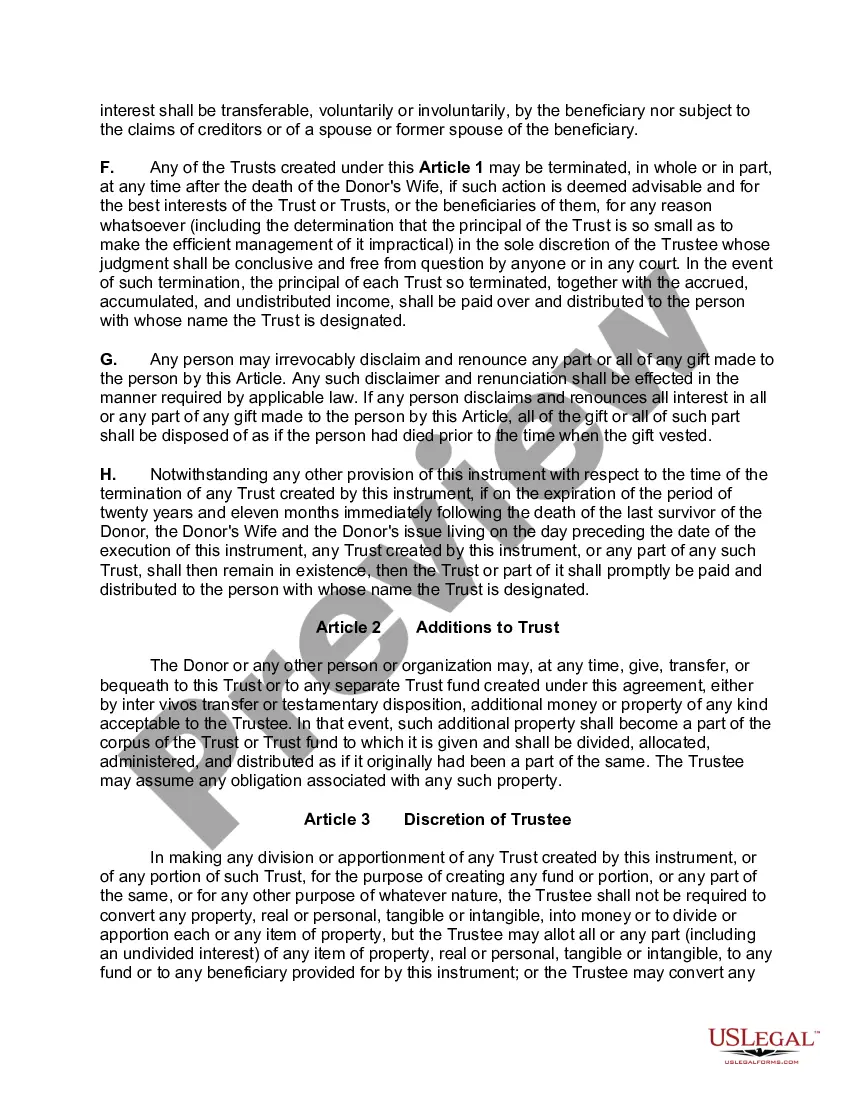
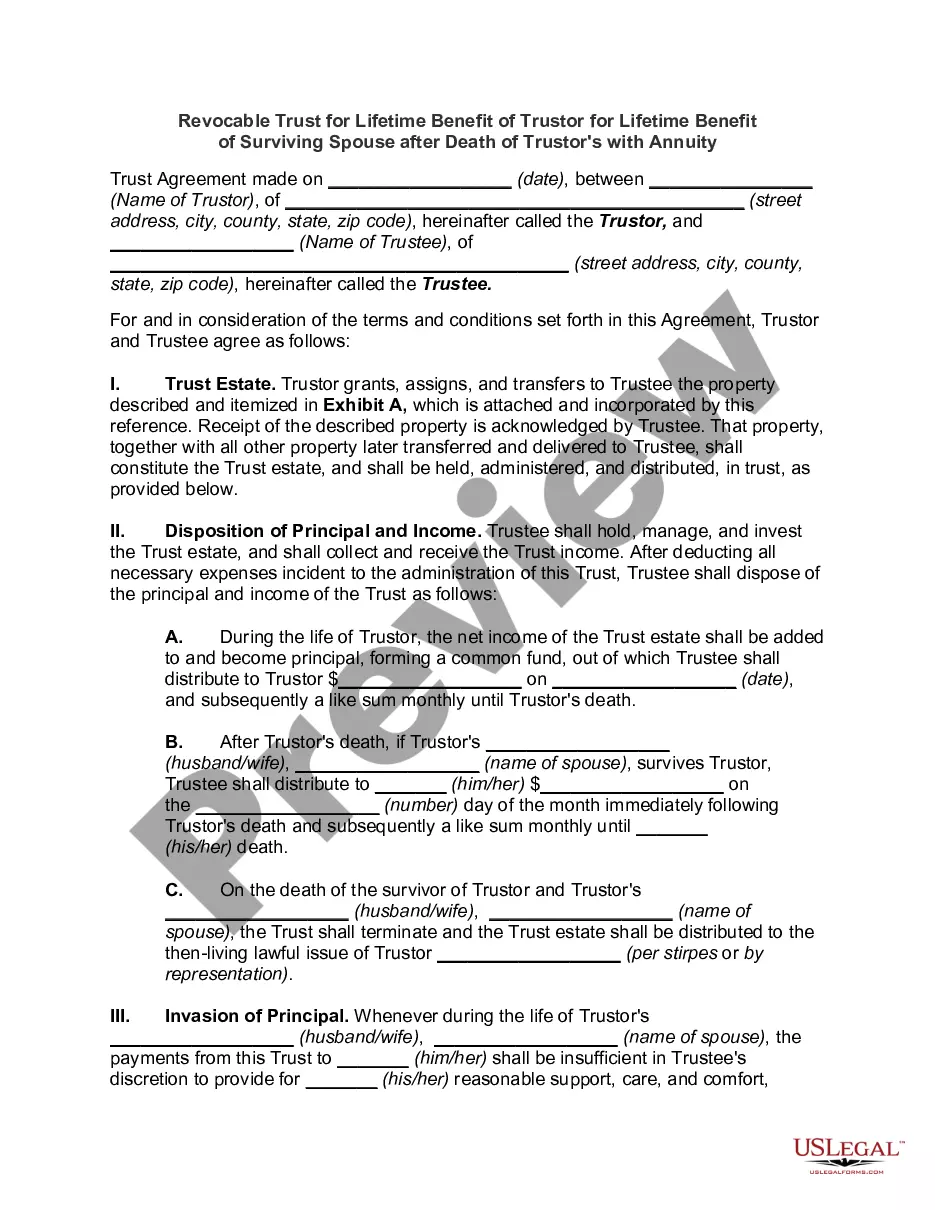
How to fill out Inter Vivos QTIP Trust With Principal To Donor's Children On Spouse's Death?
- Log in to your account at US Legal Forms or create a new account if you are a first-time user.
- Preview the form and read the description carefully to ensure it meets your jurisdiction's requirements.
- If the chosen form does not meet your needs, utilize the search feature to find the correct template.
- Click on the Buy Now button to select your subscription plan, ensuring access to the extensive library.
- Provide your payment details to complete the purchase securely.
- Download your Qtip trust principal form and save it on your device for easy access and completion.
After following these steps, you’ll have the Qtip trust principal form ready for use. US Legal Forms ensures that you have access to a robust collection of legal documents to expedite your legal processes.
Start your journey with US Legal Forms today and experience the convenience of having over 85,000 legal forms at your fingertips!
Form popularity
FAQ
To make a QTIP election on Form 706, first, you need to complete the QTIP trust principal form complete for a field. This form allows you to claim a marital deduction for property held in a Qualified Terminable Interest Property (QTIP) trust. Make sure to provide all necessary documentation to support the election. Additionally, you can streamline this process by using the US Legal Forms platform, which offers resources and templates to help you navigate the complexities of tax forms.
Typically, a QTIP trust is designed to provide income rather than distribute principal. The principal usually remains intact for later distribution to beneficiaries after the surviving spouse's passing. However, special provisions can sometimes allow for principal distributions, depending on the trust's terms. For clarity on your specific situation, the Qtip trust principal form complete for a field can offer valuable insights.
The primary rule for a QTIP trust is that it must provide income to the surviving spouse for their lifetime. Upon their death, the remaining assets can be distributed according to the trust's terms. Additionally, the trust must ensure compliance with IRS regulations to qualify for QTIP treatment. To help you understand these rules better, check out the Qtip trust principal form complete for a field.
One significant disadvantage of a QTIP trust is that any income generated is taxable to the beneficiaries. This could lead to a higher tax burden if the beneficiaries are in a higher tax bracket. Additionally, since the trust must remain intact until the surviving spouse passes away, there may be limited flexibility in asset distribution. Utilizing the Qtip trust principal form complete for a field helps you navigate these complexities.
Yes, a QTIP trust is required to file an annual tax return. Depending on the income earned, the trust may need to file Form 1041, just like other trusts. This ensures that the trust meets its tax obligations and beneficiaries are properly accounted for. For guidance on completing this accurately, consider the Qtip trust principal form complete for a field.
Income generated from a QTIP trust is typically taxable to the beneficiaries who receive distributions. This means that the beneficiaries must report this income on their personal tax returns. Understanding the tax implications can be complex, so utilizing the Qtip trust principal form complete for a field can help clarify your obligations.
Yes, a trust fund is generally required to file a tax return if it generates income. This includes any income earned from assets held in the trust. However, the specific requirements can vary based on the structure of the trust and its tax classification. For detailed guidance, consider using the Qtip trust principal form complete for a field.
For a QTIP trust to be valid, it must specify that all income goes to the surviving spouse, and the spouse must have the right to withdraw principal under certain conditions. The trust should also maintain clarity about how the principal will be distributed to other beneficiaries after the spouse’s death. Properly completing the QTIP trust principal form for a field helps ensure all conditions are transparent and legally binding.
While a QTIP trust offers flexibility, it also has some downsides. One significant concern is that the trust assets may be subject to estate taxes upon the surviving spouse's death, depending on the overall estate size. Additionally, the surviving spouse may not control beneficial interests, which limits financial discretion. Knowing these nuances and using the QTIP trust principal form complete for a field can aid in navigating potential challenges effectively.
A QTIP trust must meet specific IRS guidelines to qualify for tax benefits. It requires that all trust income be distributed to the spouse, and the surviving spouse needs to have unrestricted access to the income. The trust must also specify that the principal will be distributed to designated beneficiaries after the spouse's death. Utilizing the QTIP trust principal form complete for a field helps establish these requirements clearly.