Qtip Trust Explained For Dummies
Description
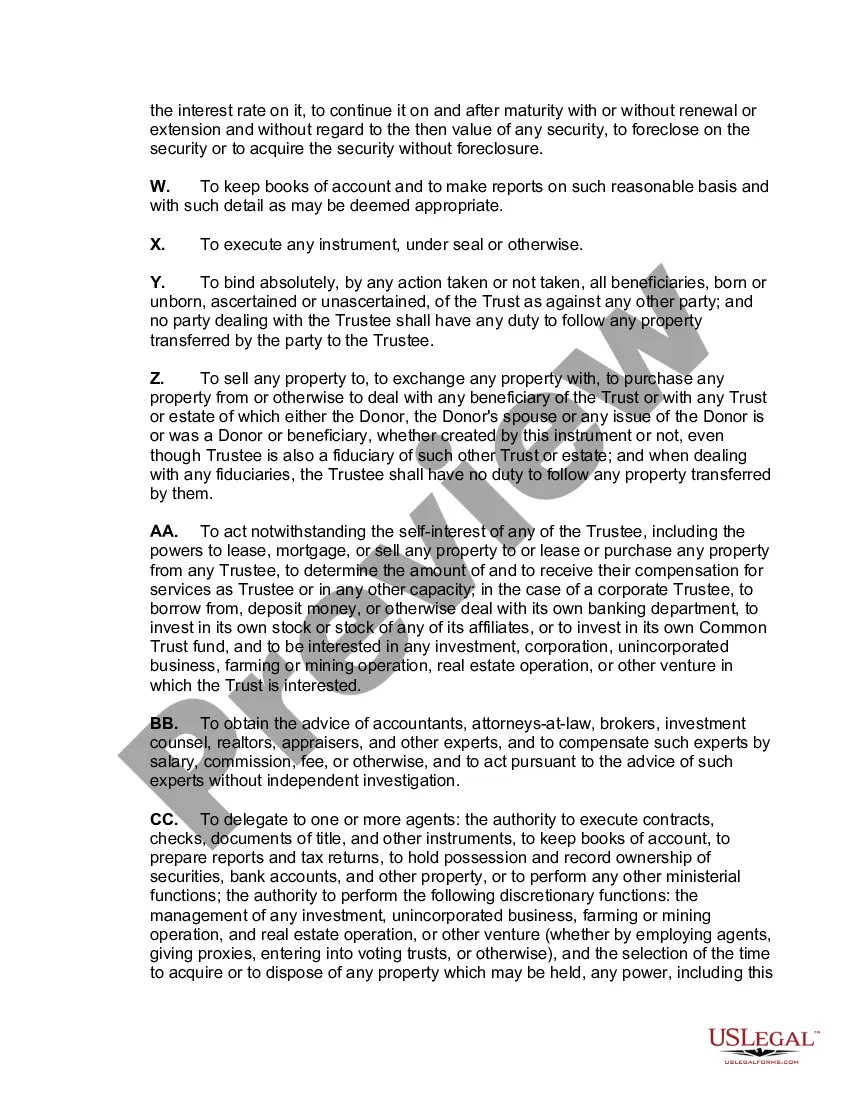
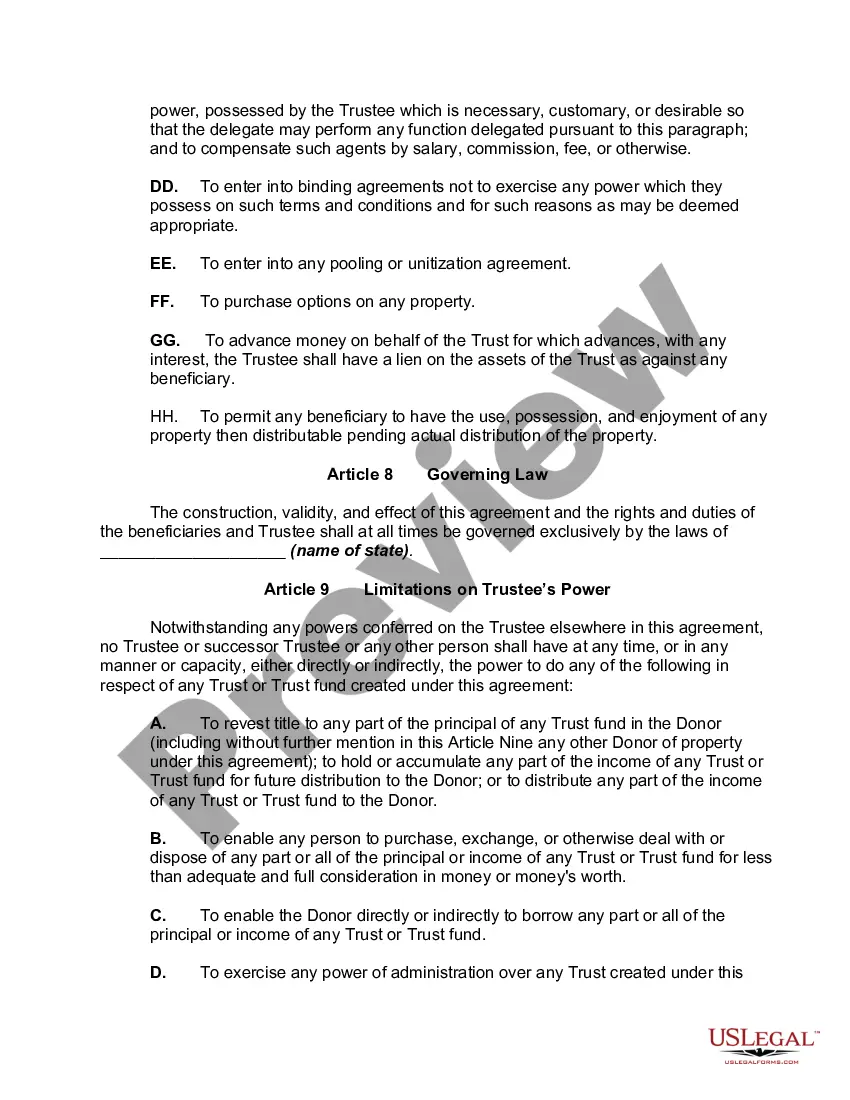

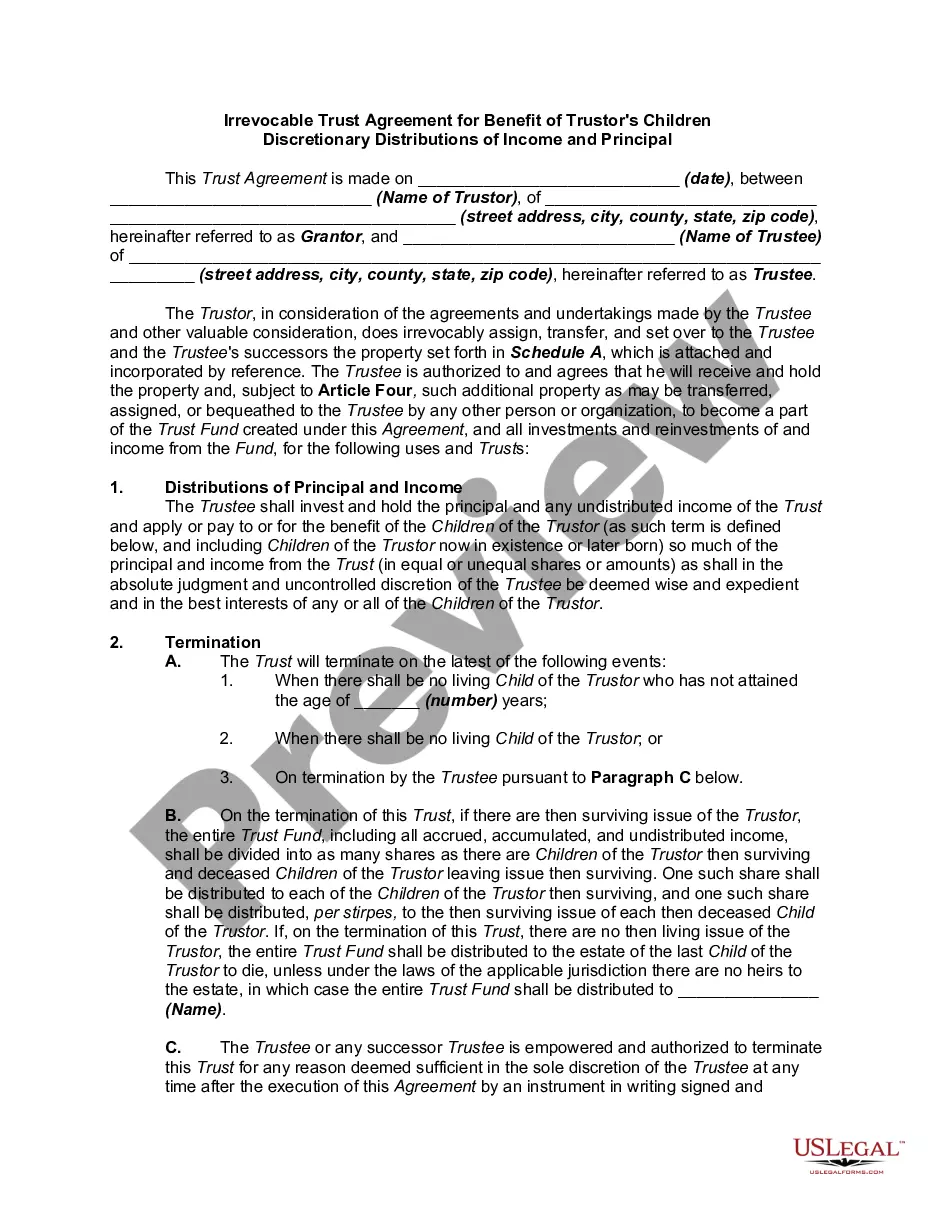
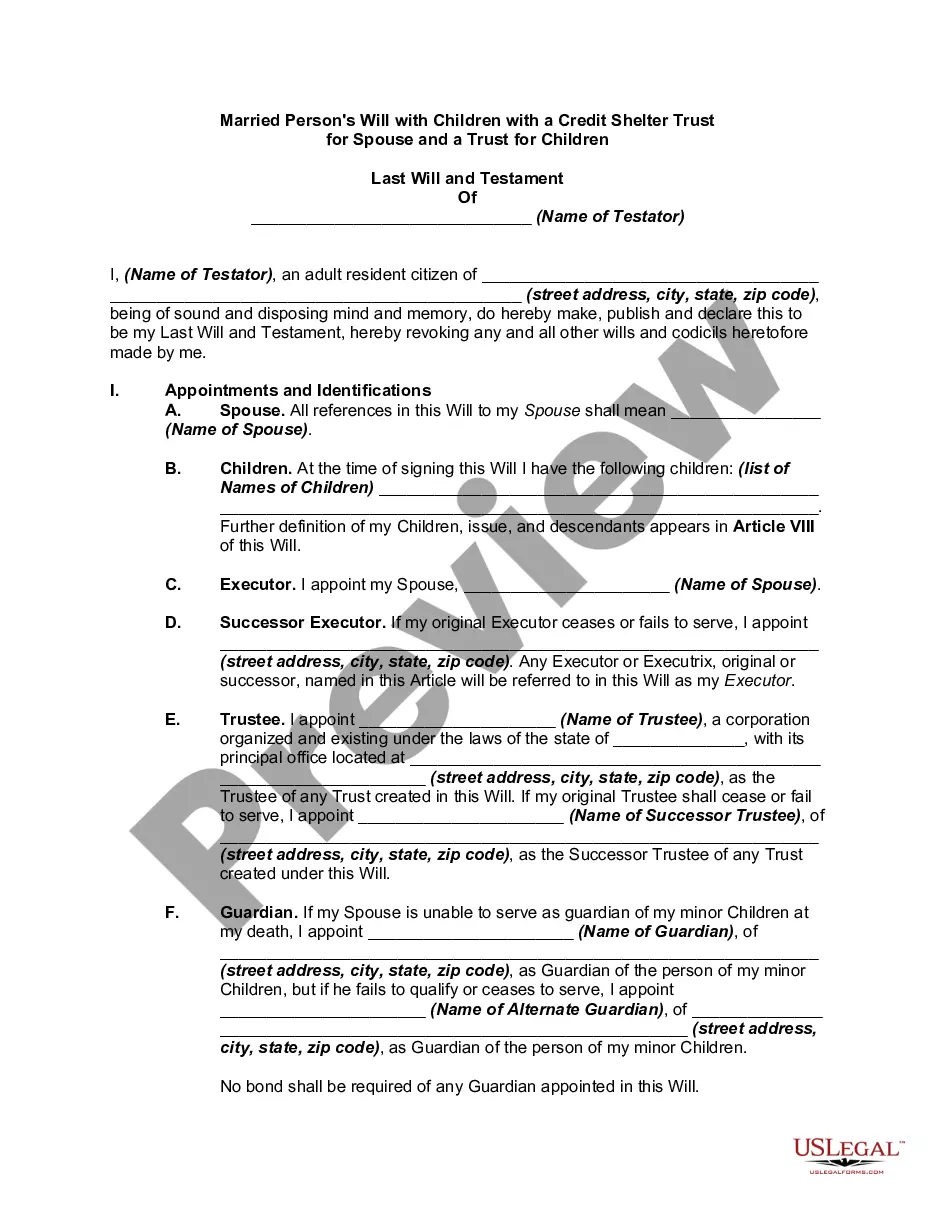
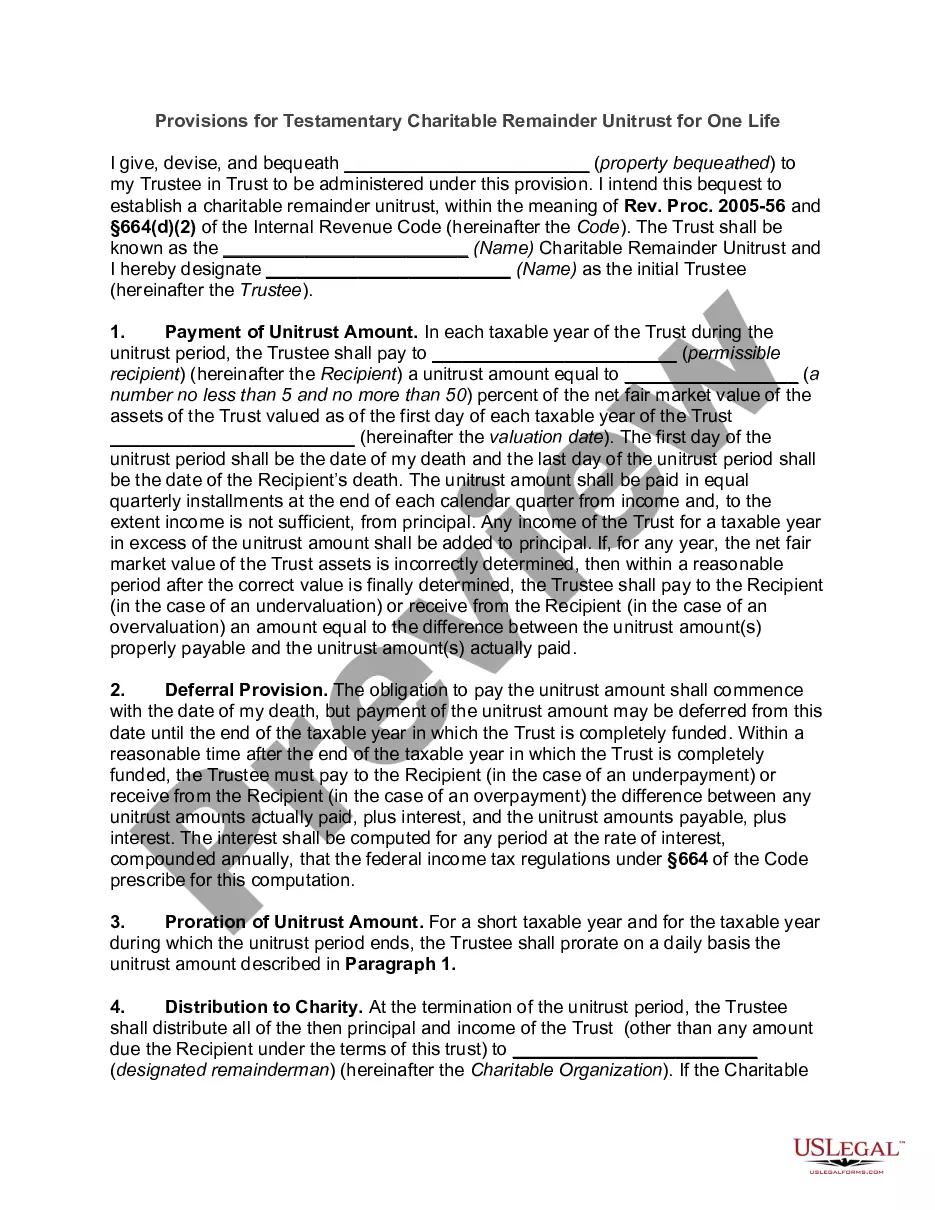
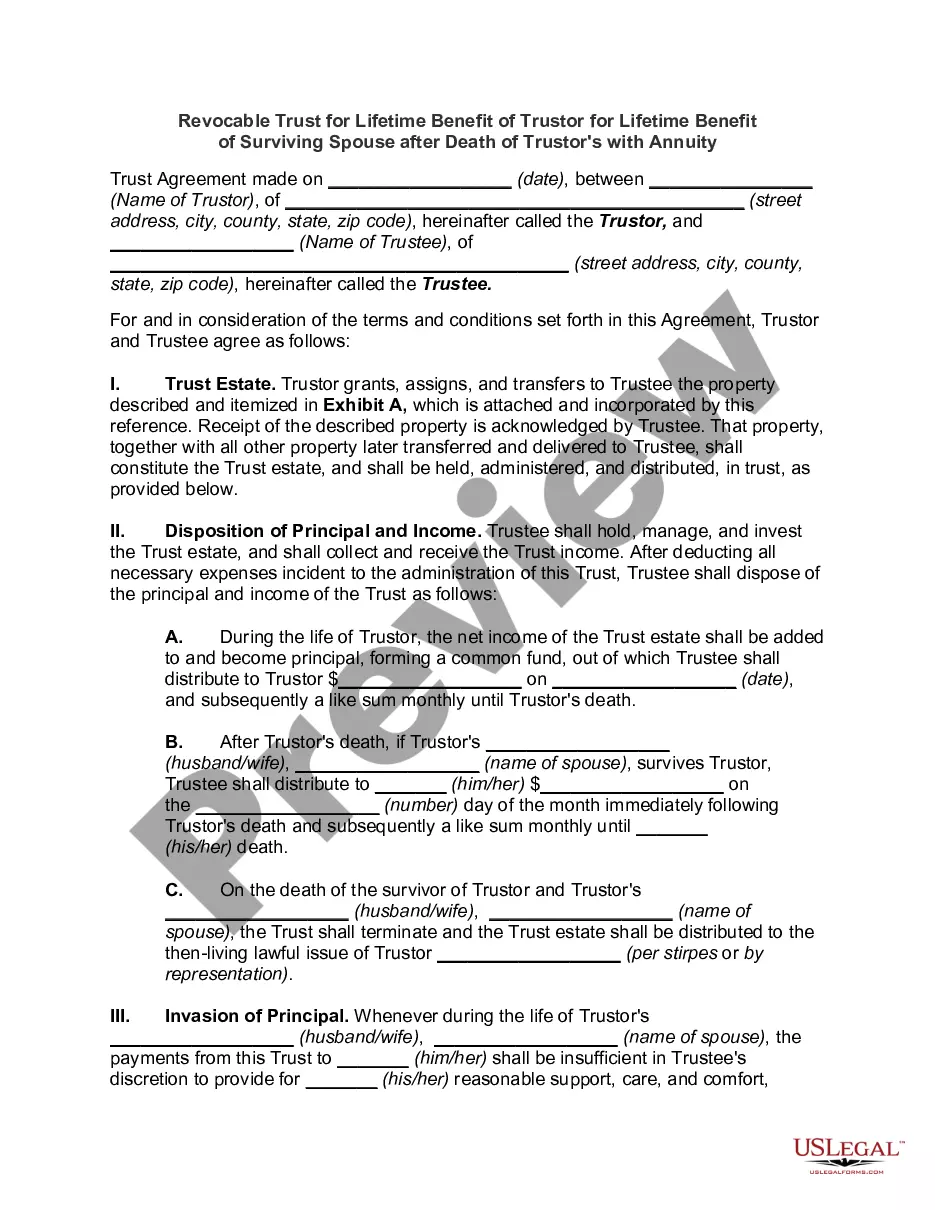
Get your form ready online
Our built-in tools help you complete, sign, share, and store your documents in one place.
Make edits, fill in missing information, and update formatting in US Legal Forms—just like you would in MS Word.
Download a copy, print it, send it by email, or mail it via USPS—whatever works best for your next step.
Sign and collect signatures with our SignNow integration. Send to multiple recipients, set reminders, and more. Go Premium to unlock E-Sign.
If this form requires notarization, complete it online through a secure video call—no need to meet a notary in person or wait for an appointment.
We protect your documents and personal data by following strict security and privacy standards.

Make edits, fill in missing information, and update formatting in US Legal Forms—just like you would in MS Word.

Download a copy, print it, send it by email, or mail it via USPS—whatever works best for your next step.

Sign and collect signatures with our SignNow integration. Send to multiple recipients, set reminders, and more. Go Premium to unlock E-Sign.

If this form requires notarization, complete it online through a secure video call—no need to meet a notary in person or wait for an appointment.

We protect your documents and personal data by following strict security and privacy standards.
Looking for another form?
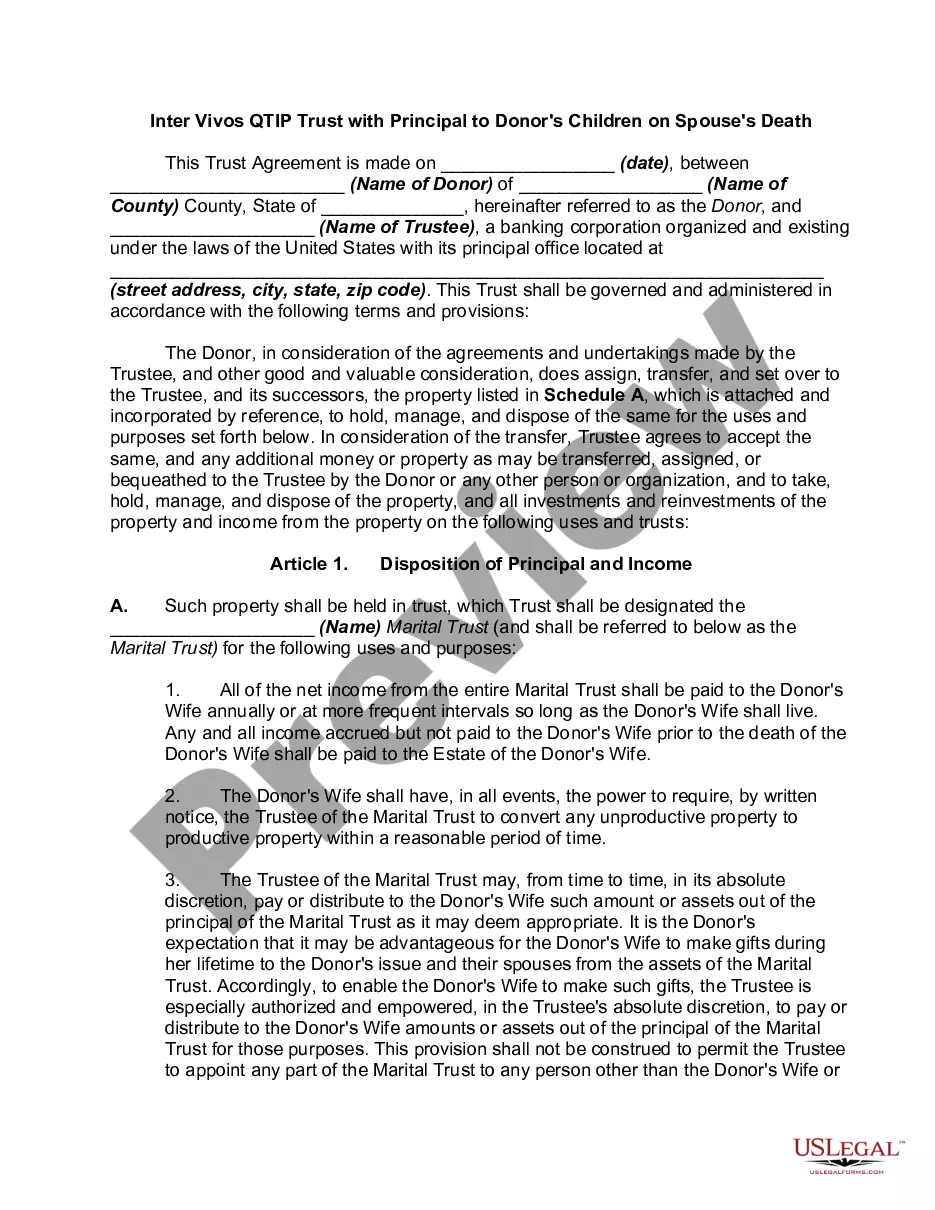
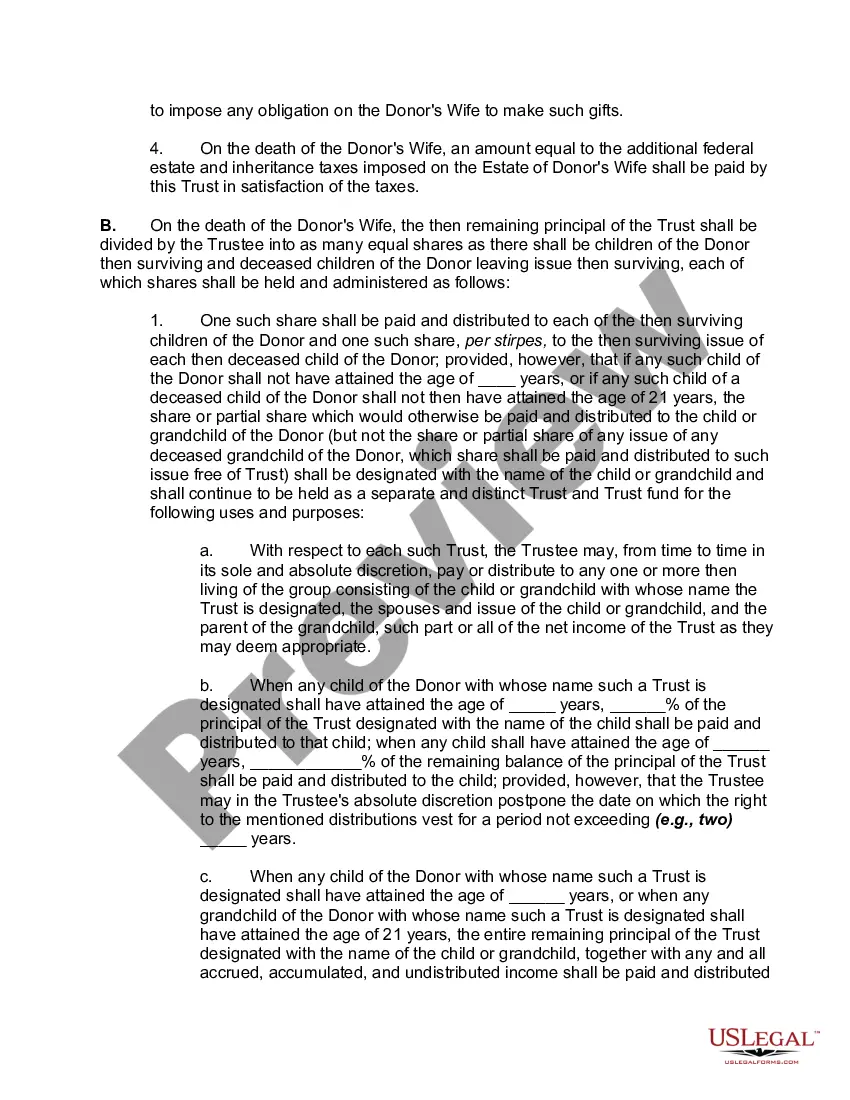
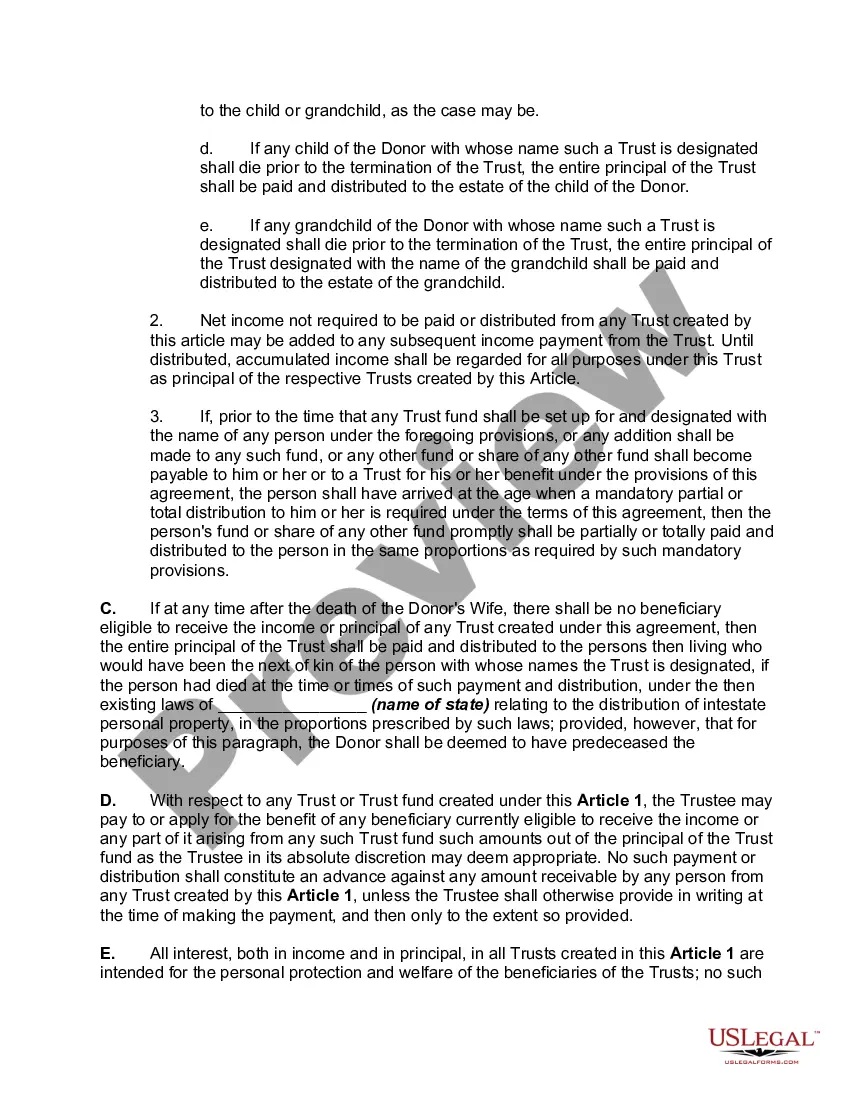
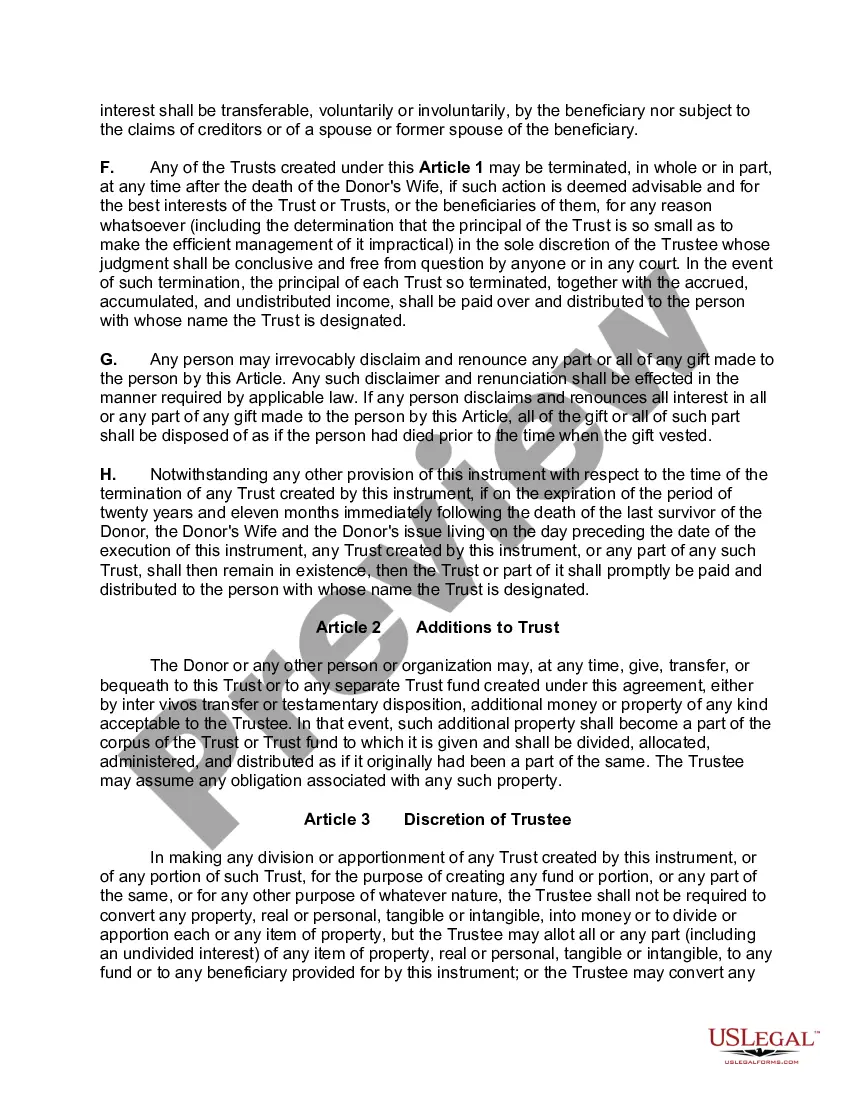
How to fill out Inter Vivos QTIP Trust With Principal To Donor's Children On Spouse's Death?
- If you are an existing user, log in to access your account and locate the desired form template. Ensure your subscription is current; renew if necessary.
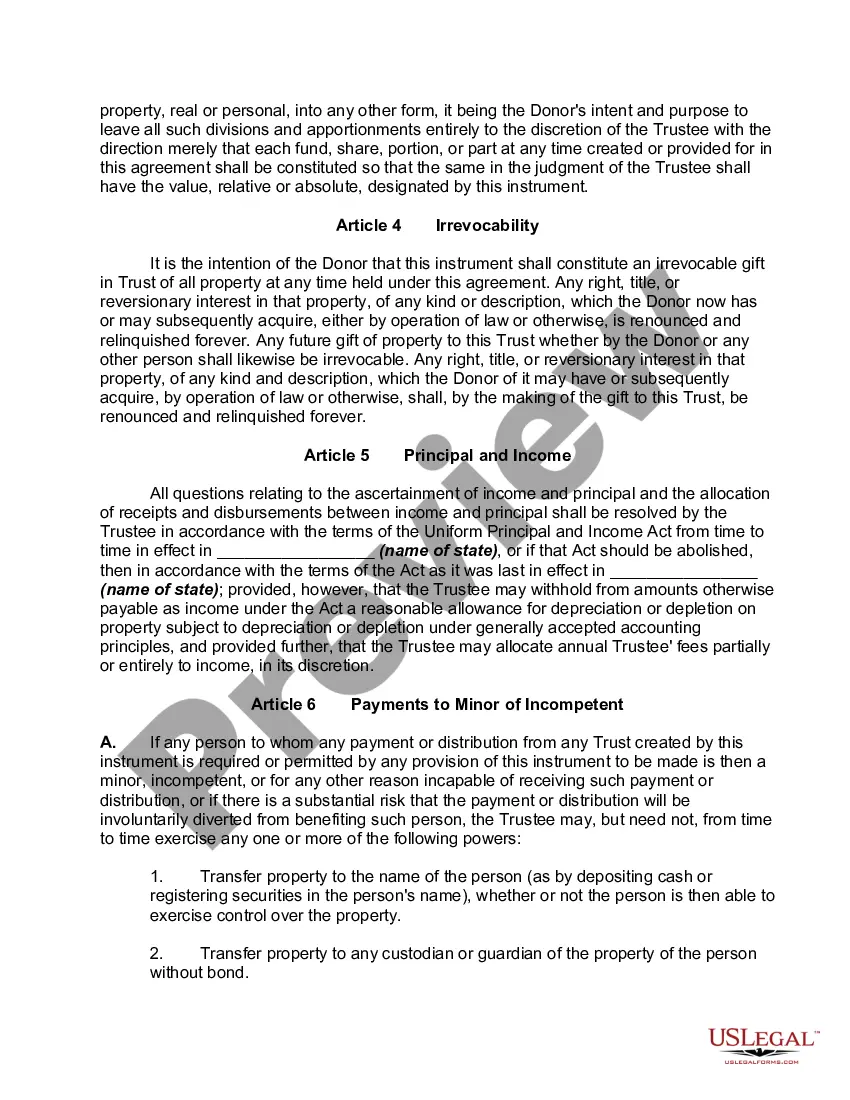
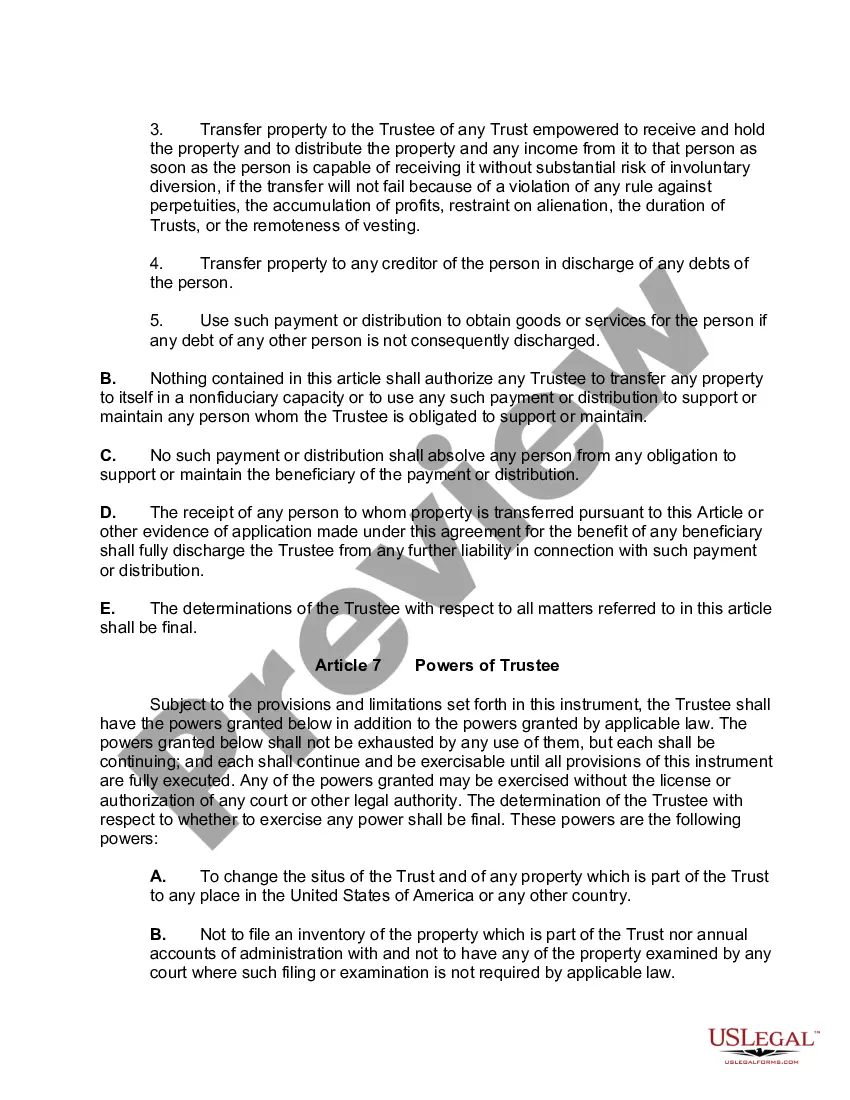
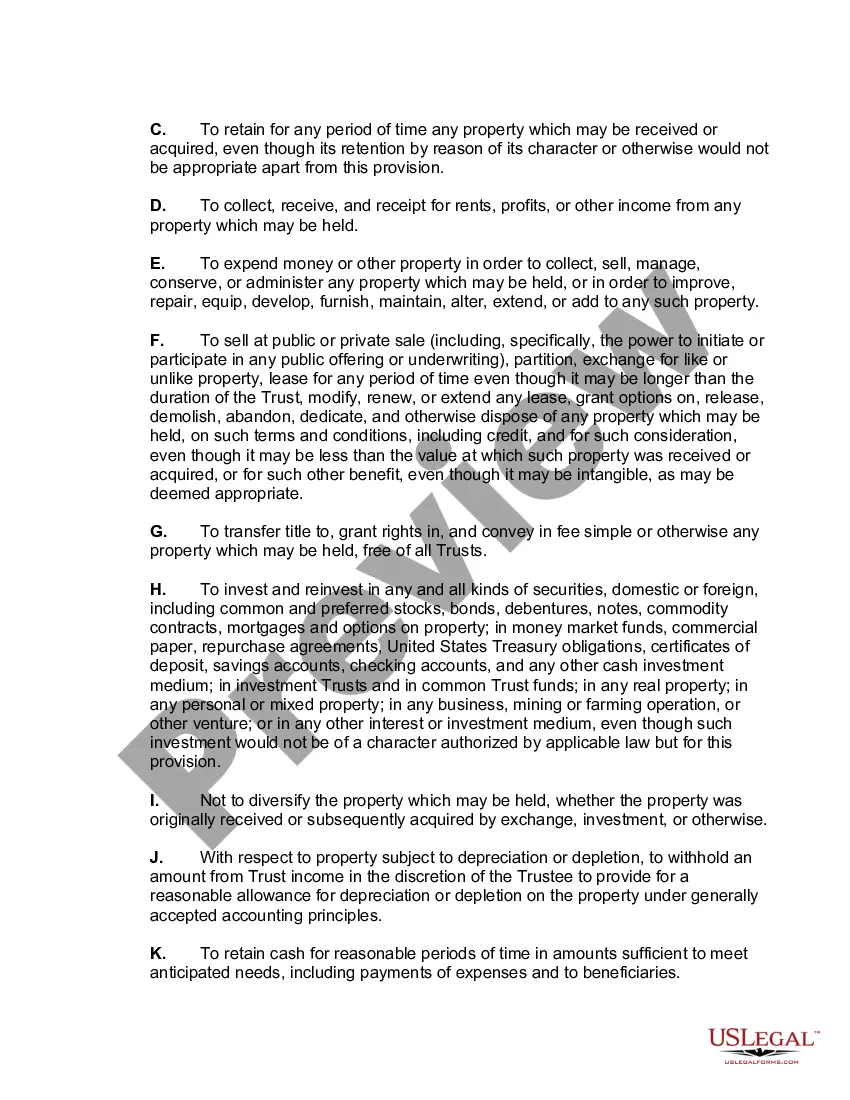
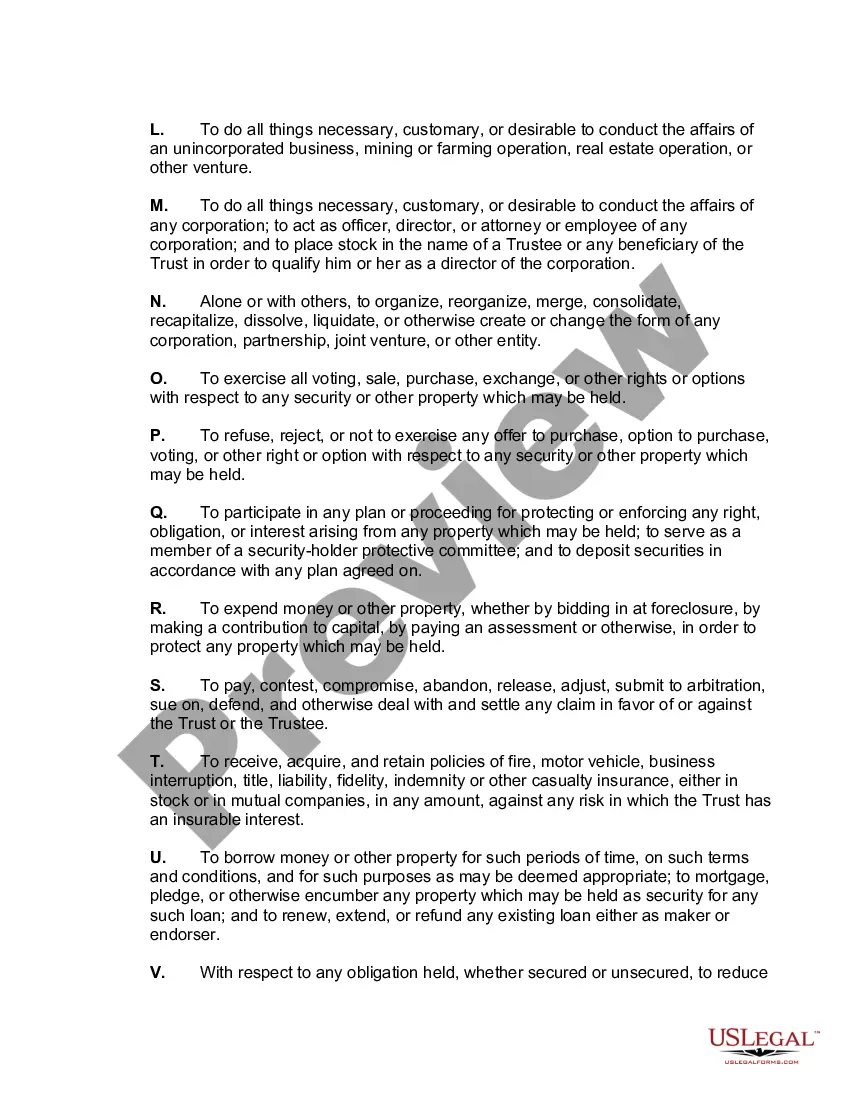
- Review the Preview mode and form description to guarantee you have selected the correct document that aligns with your needs and local legal requirements.
- If you find any discrepancies, utilize the Search tab at the top to find an alternative template that meets your needs. Confirm its suitability before proceeding.
- Purchase the document by clicking on the Buy Now button and select your desired subscription plan. A user account registration will be necessary to access the library.
- Complete your purchase by entering your credit card details or using your PayPal account for the subscription.
- Download your chosen form to your device. You can also access it anytime through the My Forms section of your profile.
US Legal Forms offers an unrivaled collection of over 85,000 easily editable legal documents, surpassing competitors in both variety and value. Users receive premium support from legal experts, ensuring their documents are both accurate and compliant with local laws.
In conclusion, navigating QTIP trusts doesn't have to be complicated. Leverage US Legal Forms to simplify your legal needs and ensure compliance. Start exploring today!
Form popularity
FAQ
A QTIP trust, or Qualified Terminable Interest Property trust, does not avoid probate by itself. When the trust creator passes away, the assets in the QTIP trust still become subject to probate; however, the trust does provide advantages during this process. It allows for the smooth transfer of assets to the surviving spouse while also ensuring that the inheritors ultimately receive the trust's assets according to the creator's wishes. For those seeking clarity on estate planning, our platform offers insightful information and resources on QTIP trusts, explaining these concepts simply and effectively, perfect for anyone looking for a QTIP trust explained for dummies.
One downside of a QTIP trust is that it can create complexities in tax situations, especially concerning estate taxes. Also, because the surviving spouse receives all the income, it may limit the growth potential of the trust's assets. While this trust can protect your wishes, it's essential to evaluate the potential implications on your family's financial future and consult with an expert to navigate these concerns.
The primary reason for using a QTIP trust is to protect your spouse while controlling the final distribution of your assets. This trust structure provides clarity and security when planning your estate, allowing your surviving spouse to benefit from your assets during their lifetime. It also helps to avoid family disputes and ensures that your wishes are honored after your spouse's passing.
Imagine you have a house and some investments that you want to provide for your spouse while ensuring your children inherit them later. By establishing a QTIP trust, your spouse can live in the house and receive income from the investments. When your spouse passes away, the trust directs that the house and remaining assets go directly to your children, ensuring a smooth transition of wealth.
In simple terms, a QTIP trust is a legal arrangement that lets you leave assets to your surviving spouse while specifying how those assets will be handled after their death. This trust allows your spouse to receive income from the trust during their lifetime, but the principal goes to other beneficiaries later. So when you want to make things easier for your spouse but still have a say in the future of your assets, the QTIP trust is a fantastic option.
The main purpose of a QTIP trust is to provide financial support to a surviving spouse while ensuring that the trust's assets are preserved for other beneficiaries. This type of trust allows the creator to control how the assets are ultimately distributed after the surviving spouse's death. Using a QTIP trust can help minimize estate taxes and provide clarity in your estate plan, making it easier for your family to manage your wishes.
The 5 by 5 rule is an important aspect of trust distributions, particularly for Qtip trusts. It allows beneficiaries to withdraw up to 5% of the trust's value each year, ensuring they have access to funds when needed. For anyone seeking straightforward information, a Qtip trust explained for dummies provides a solid foundation for understanding how this rule keeps beneficiaries engaged while benefiting from the trust's assets. Uslegalforms can help you create a trust that aligns with your goals and simplifies distribution for beneficiaries.
In a QTIP trust explained for dummies, qualifying for the marital deduction requires meeting specific IRS requirements. The trust must ensure that the surviving spouse receives all income generated by the trust during their life. Additionally, the trust must be structured such that remaining assets pass to other beneficiaries upon the spouse's death, maintaining compliance with IRS guidelines.
The QTIP rule, integral to a QTIP trust explained for dummies, allows a trust to qualify for the marital deduction. This means the assets in the trust can pass to a surviving spouse without incurring estate taxes at the time of the first spouse's death. The surviving spouse receives income from the trust during their lifetime, ensuring financial support.
When exploring a QTIP trust explained for dummies, the primary requirements include designating the surviving spouse as the sole income beneficiary. The trust corpus must pass to designated beneficiaries after the spouse's death. Importantly, it must adhere to tax law requirements to benefit from the marital deduction, ensuring it meets necessary legal criteria.