Donors Study
Description

Get your form ready online
Our built-in tools help you complete, sign, share, and store your documents in one place.
Make edits, fill in missing information, and update formatting in US Legal Forms—just like you would in MS Word.
Download a copy, print it, send it by email, or mail it via USPS—whatever works best for your next step.
Sign and collect signatures with our SignNow integration. Send to multiple recipients, set reminders, and more. Go Premium to unlock E-Sign.
If this form requires notarization, complete it online through a secure video call—no need to meet a notary in person or wait for an appointment.
We protect your documents and personal data by following strict security and privacy standards.

Make edits, fill in missing information, and update formatting in US Legal Forms—just like you would in MS Word.

Download a copy, print it, send it by email, or mail it via USPS—whatever works best for your next step.

Sign and collect signatures with our SignNow integration. Send to multiple recipients, set reminders, and more. Go Premium to unlock E-Sign.

If this form requires notarization, complete it online through a secure video call—no need to meet a notary in person or wait for an appointment.

We protect your documents and personal data by following strict security and privacy standards.
Looking for another form?



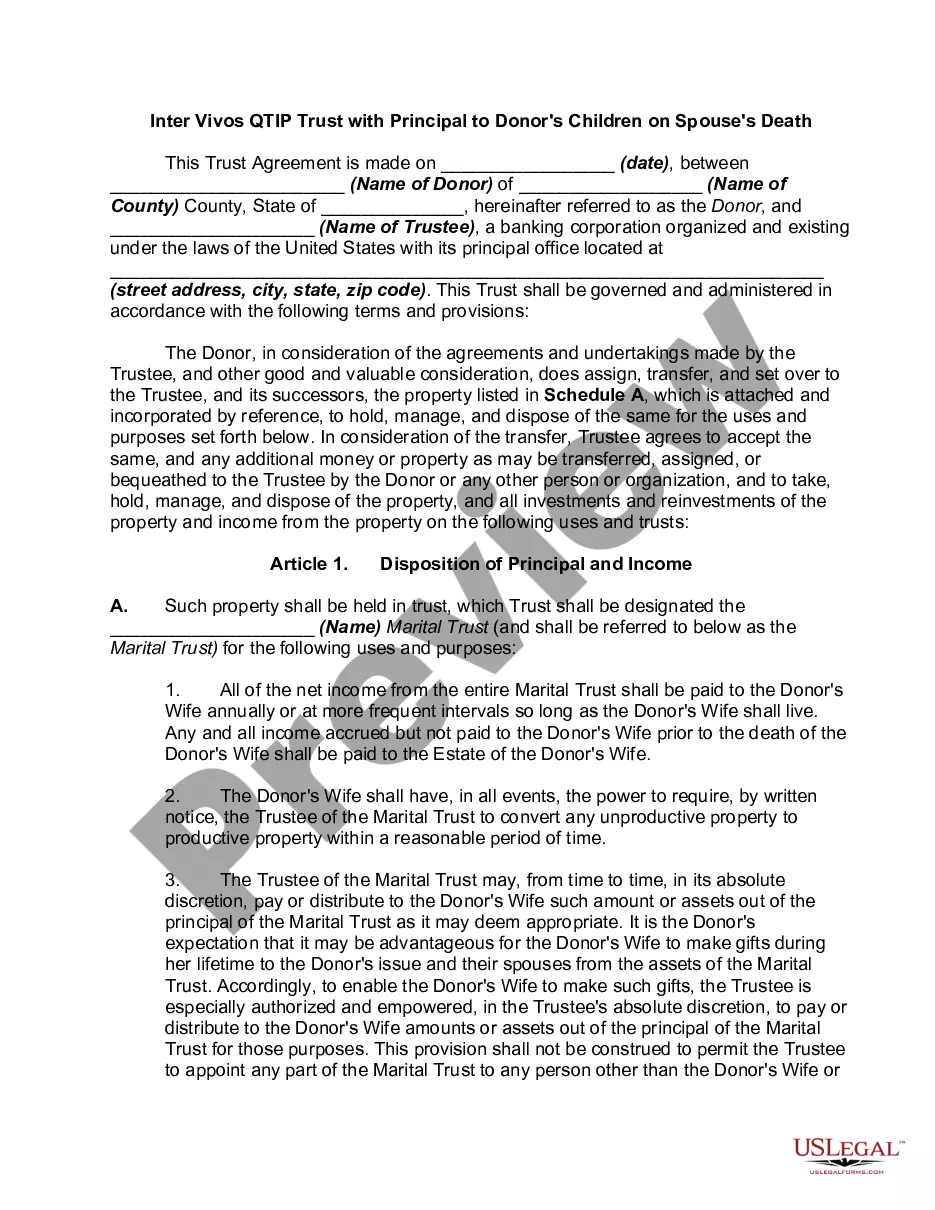
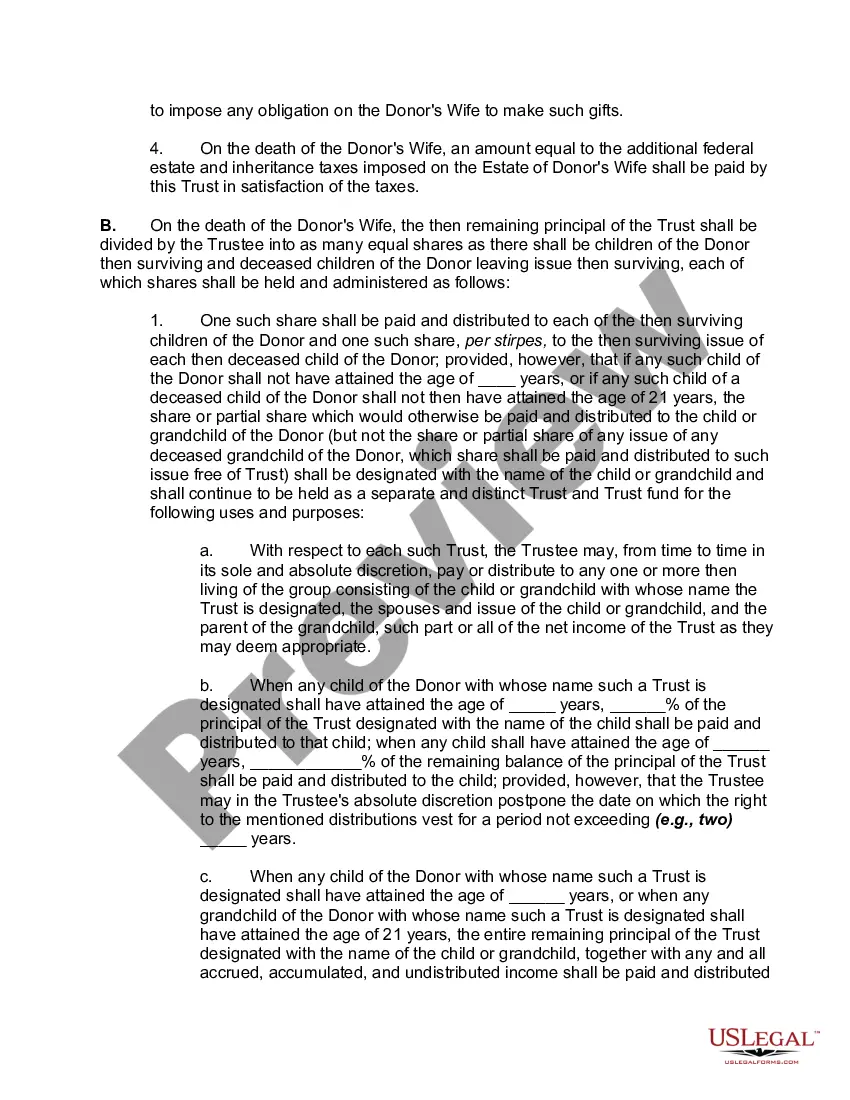
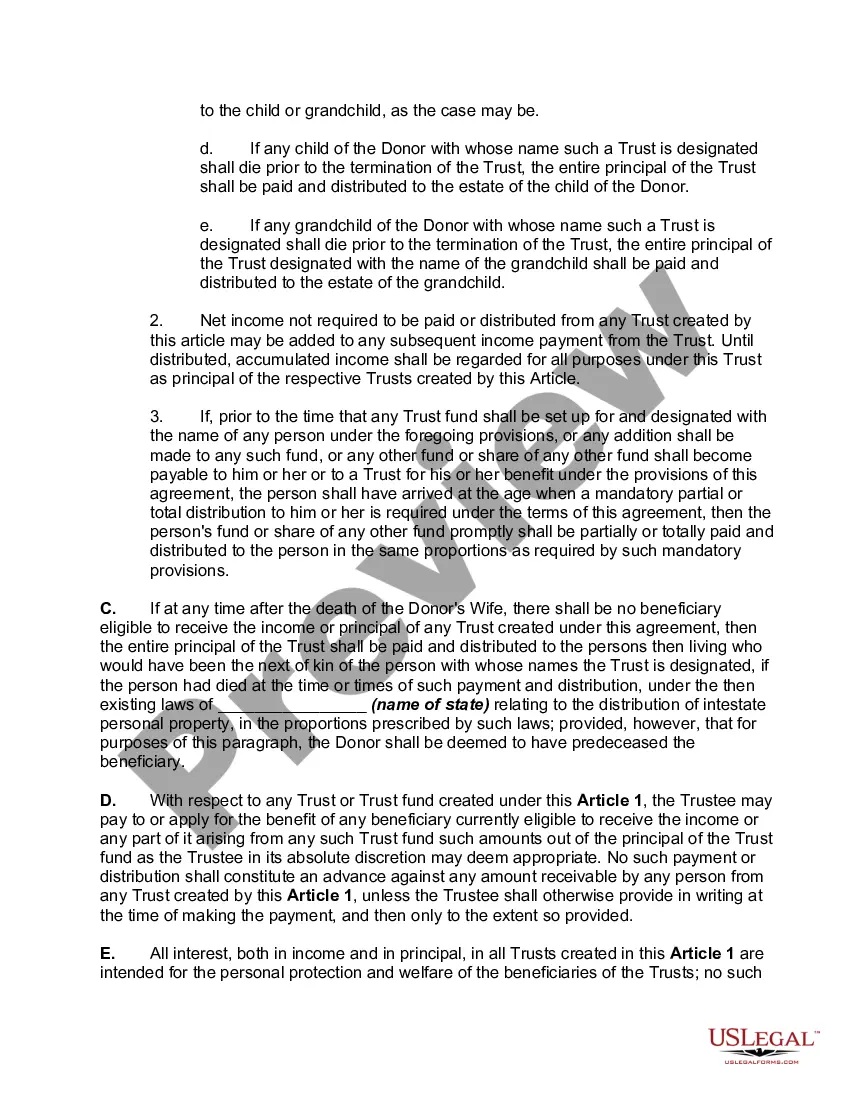
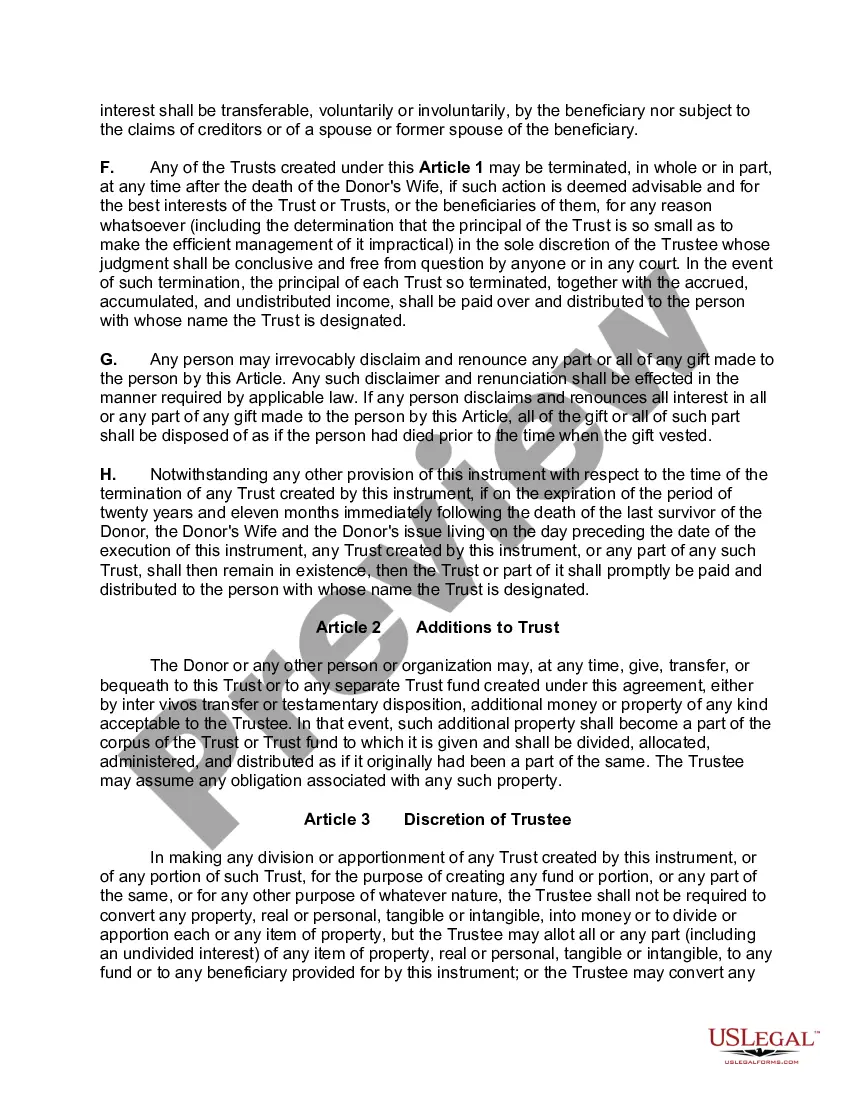
How to fill out Inter Vivos QTIP Trust With Principal To Donor's Children On Spouse's Death?
- If you're a returning user, log in and access the desired form template by clicking the Download button. Ensure your subscription is up to date, and renew if necessary.
- For first-time users, start by checking the Preview mode along with the form description. Confirm that the form you select aligns with your requirements and complies with your local jurisdiction.
- If the initial form doesn’t meet your needs, use the Search tab at the top to find alternative templates until you find the right match.
- Proceed to purchase the desired document by clicking the Buy Now button. You'll need to select a subscription plan and register for an account to access the resources.
- Complete your transaction by entering your credit card details or utilizing your PayPal account for a seamless purchasing experience.
- Finally, download your completed form and save it on your device. You can also revisit it anytime from the My Forms section of your profile.
US Legal Forms is committed to facilitating legal processes by equipping individuals and attorneys with a comprehensive library of over 85,000 fillable forms. This ensures you access the best documentation with expert assistance to guarantee legal accuracy.
Ready to streamline your legal document process? Explore US Legal Forms today and unlock a world of convenience for all your legal form needs!
Form popularity
FAQ
Several factors can disqualify individuals from donating their body to science. Common disqualifying conditions include recent infections, serious health conditions, or trauma that compromises the body’s integrity. It’s important to consult with a reputable donation program to understand all qualification criteria and ensure that you are well-informed about your options in the donors study.
While donating your body to science offers valuable contributions, there can be downsides. Some individuals worry about not having a traditional burial, leading to concerns for their families and loved ones. While most programs honor the donor's wishes, it's important to discuss and understand all aspects involved in a donors study, including how your body may be used.
Not everyone is eligible to donate their body to science. For instance, individuals under the age of 18, those with severe medical conditions, or those who have not provided legal consent cannot participate. It’s essential to check eligibility requirements with a trusted body donation program, which often includes guidance on the donors study process.
Certain conditions can prevent a body from being accepted for donation. Primarily, if the person had a contagious disease, significant infections, or if the body was significantly damaged, it might not be suitable. Additionally, individuals with certain chronic diseases may face restrictions. Understanding these criteria is vital, especially for those considering a donors study.
To conduct donor reporting, begin by gathering all relevant data regarding each donation, including donor information and the purpose of the donation. Utilize simple tracking systems to record contributions accurately. With platforms like US Legal Forms, you can streamline your documentation process and ensure compliance with legal standards, thus making donor reporting more efficient.
The 33 1/3 rule indicates that a nonprofit should allocate one-third of its resources to program services, one-third to management and administrative costs, and one-third to fundraising. This distribution helps to maintain a balance of operation while supporting growth. By keeping these proportions, organizations can demonstrate transparency and efficiency to their donors. Integrating a donors study into your planning provides clarity and solidifies your strategy.
The 80 20 rule suggests that 80% of donations often come from just 20% of donors. Understanding this principle helps nonprofits focus their time and efforts on nurturing relationships with major donors. This targeted approach can enhance fundraising efforts and improve donor engagement. Incorporating insights gained from a donors study can further hone your strategy and fundraising success.
Researching potential donors involves gathering information about their giving history, interests, and connections. Utilize online databases and resources such as donor databases, social media, and community bulletins. Conduct thorough background checks to align potential donors with your nonprofit's mission. A detailed donors study can equip your organization with valuable insights, making your fundraising efforts more targeted and effective.
Finding potential donors requires strategic planning and outreach. Begin by identifying individuals or organizations that resonate with your nonprofit's cause. Utilize social media, community events, and networking opportunities to connect with these prospects. Additionally, leveraging a donors study can provide insights into your audience, helping you to tailor your outreach effectively.
To maintain 501c3 status, nonprofits must adhere to specific guidelines. Activities outside of charitable, educational, or religious purposes can create risks. Furthermore, engaging in political campaigning or lobbying without restrictions can also threaten this status. Regularly conducting a donors study helps organizations ensure compliance and assess their risk factors.