Foreclosure Process Timeline For Georgia
Description

Get your form ready online
Our built-in tools help you complete, sign, share, and store your documents in one place.
Make edits, fill in missing information, and update formatting in US Legal Forms—just like you would in MS Word.
Download a copy, print it, send it by email, or mail it via USPS—whatever works best for your next step.
Sign and collect signatures with our SignNow integration. Send to multiple recipients, set reminders, and more. Go Premium to unlock E-Sign.
If this form requires notarization, complete it online through a secure video call—no need to meet a notary in person or wait for an appointment.
We protect your documents and personal data by following strict security and privacy standards.

Make edits, fill in missing information, and update formatting in US Legal Forms—just like you would in MS Word.

Download a copy, print it, send it by email, or mail it via USPS—whatever works best for your next step.

Sign and collect signatures with our SignNow integration. Send to multiple recipients, set reminders, and more. Go Premium to unlock E-Sign.

If this form requires notarization, complete it online through a secure video call—no need to meet a notary in person or wait for an appointment.

We protect your documents and personal data by following strict security and privacy standards.
Looking for another form?







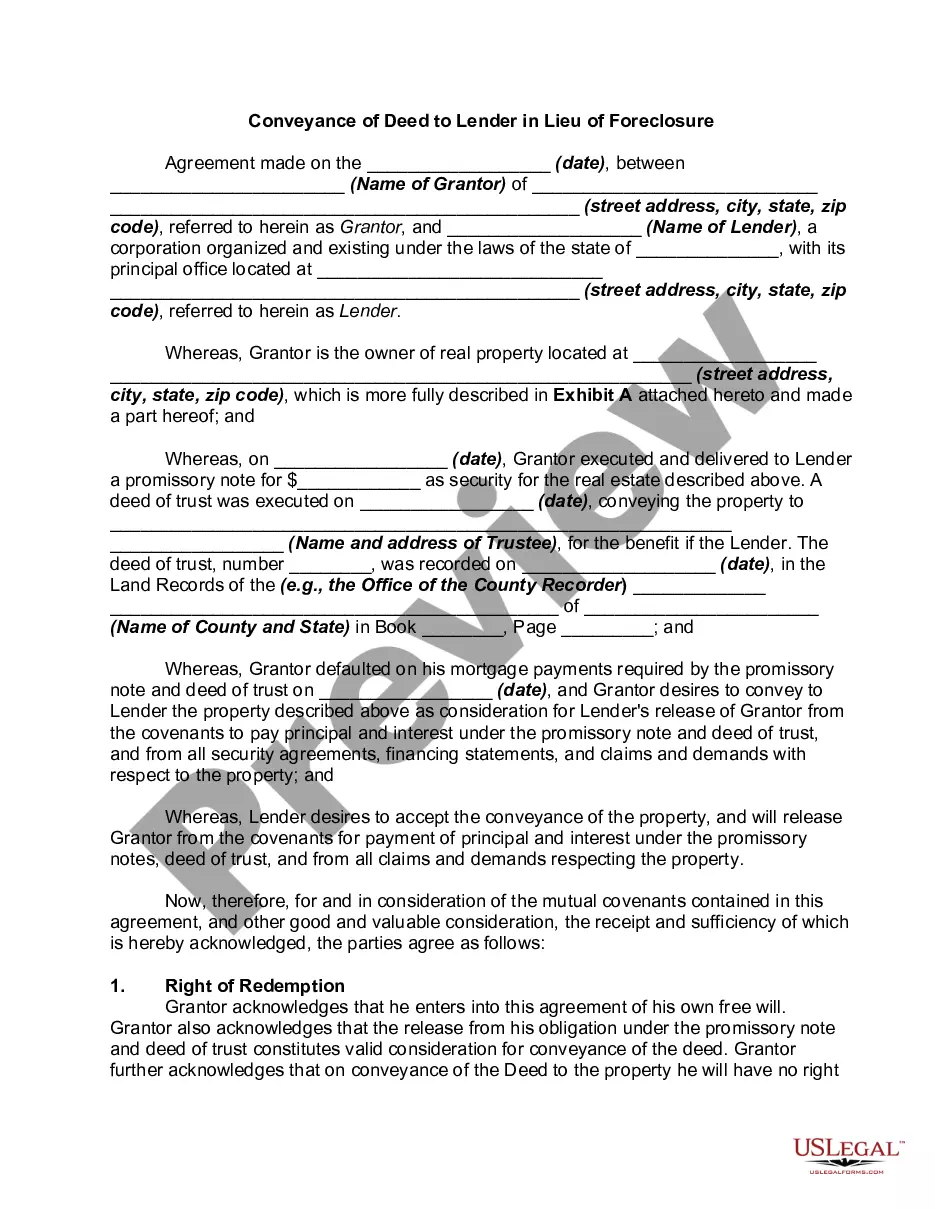
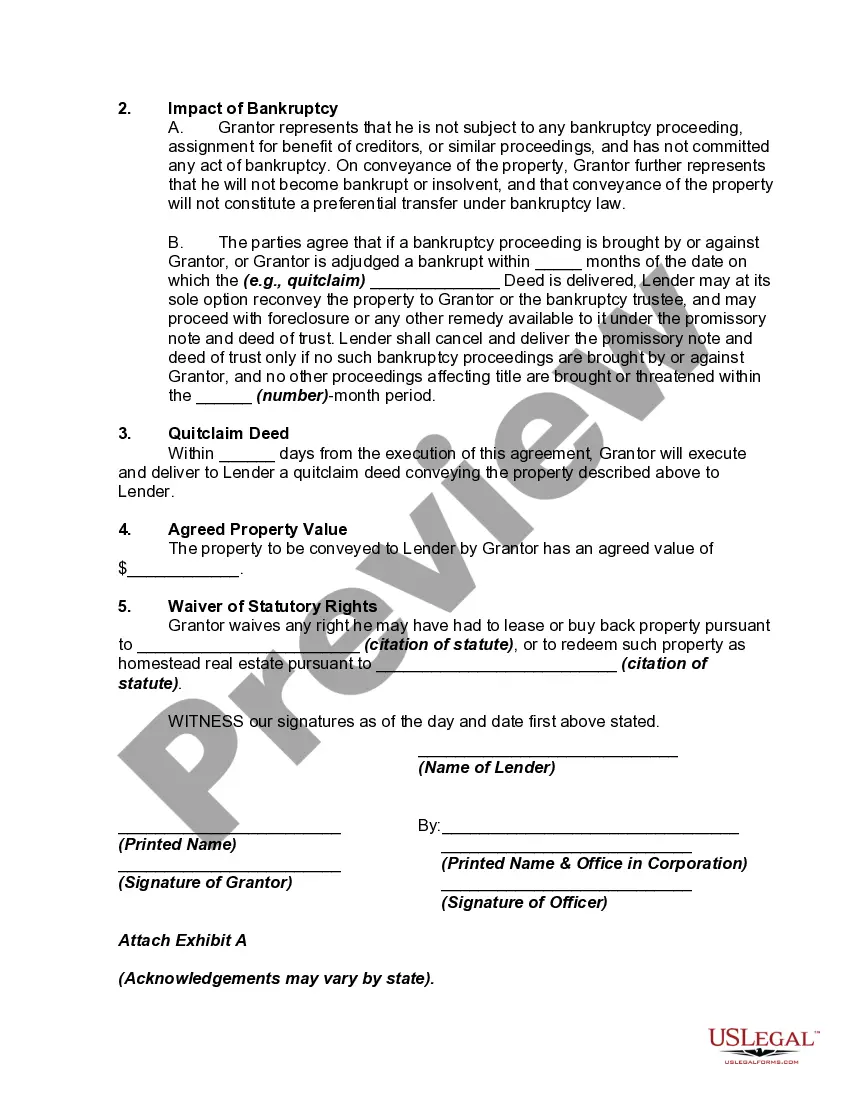
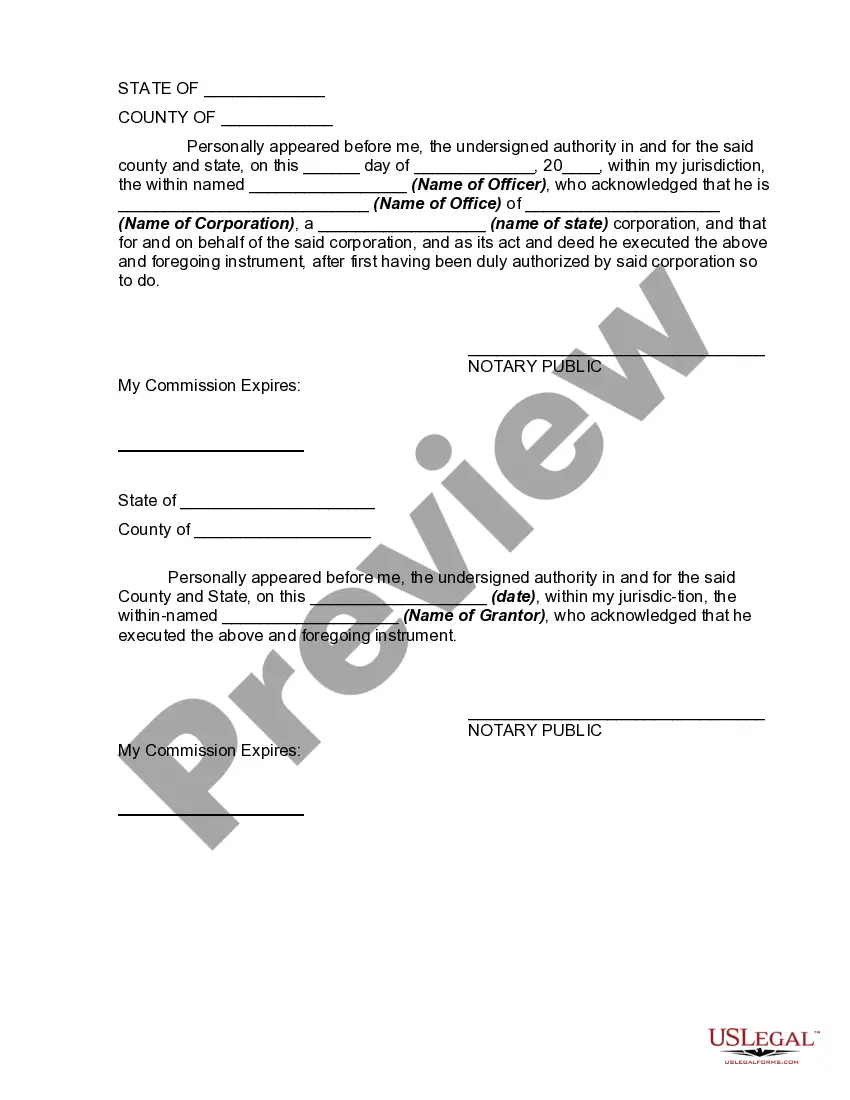
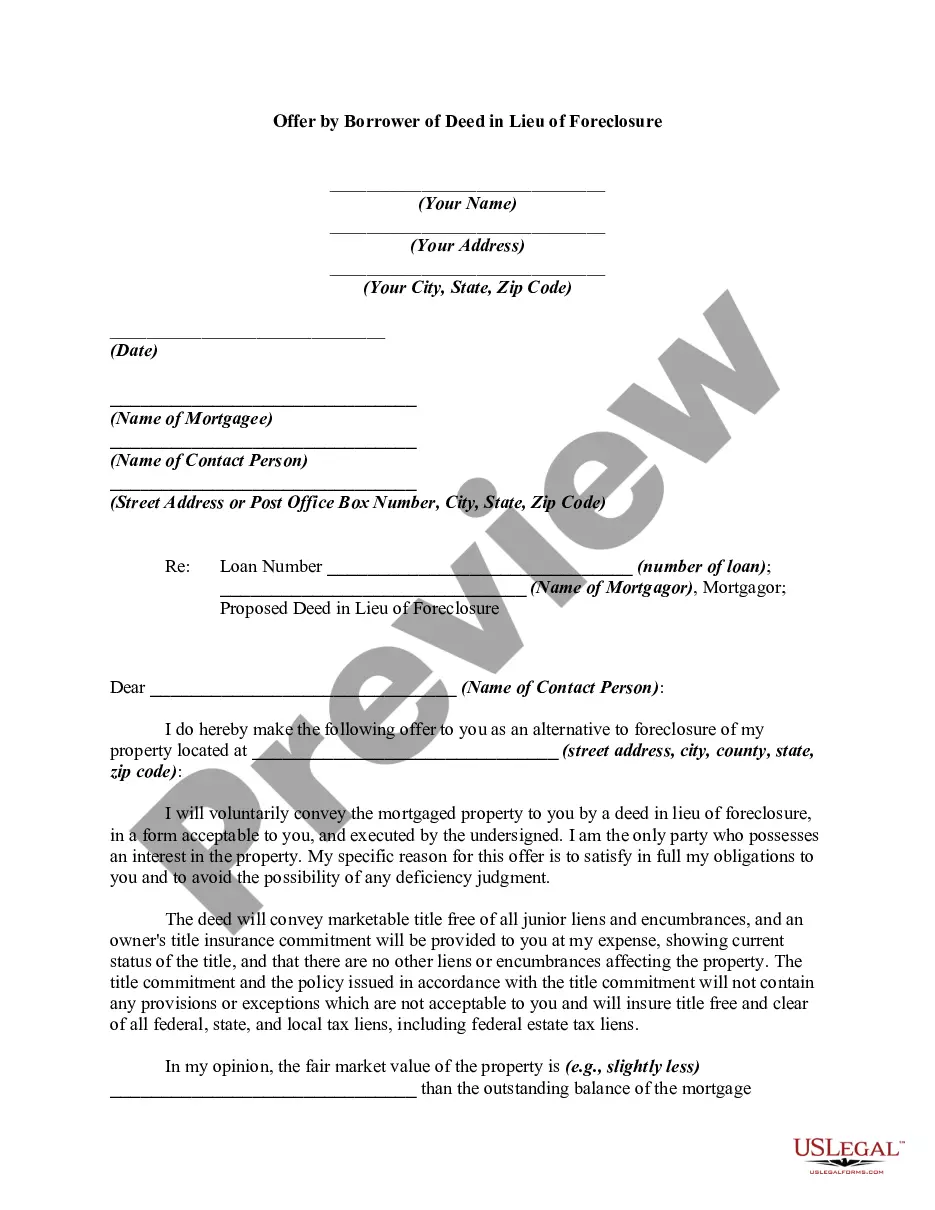
How to fill out Conveyance Of Deed To Lender In Lieu Of Foreclosure?
Legal administration can be perplexing, even for the most seasoned professionals.
When you are searching for a Foreclosure Process Timeline For Georgia and cannot find the time to devote to locating the accurate and updated version, the processes can be overwhelming.
Gain access to a resource hub of articles, guides and materials related to your situation and needs.
Conserve time and effort in searching for the documents you require, and utilize US Legal Forms' advanced search and Review feature to locate Foreclosure Process Timeline For Georgia and download it.
Ensure that the template is valid in your state or county. Choose Buy Now when you're ready. Select a subscription plan. Choose the format you prefer, and Download, fill it out, sign, print and send your document. Benefit from the US Legal Forms online library, backed by 25 years of experience and reliability. Streamline your daily document management into a smooth and user-friendly process today.
- If you have a subscription, Log In to your US Legal Forms account, search for the document, and download it.
- Check your My documents section to review the documents you have previously downloaded and manage your folders as you see fit.
- If this is your first experience with US Legal Forms, create a free account and gain unlimited access to all benefits of the platform.
- Here are the steps to follow after accessing the form you desire.
- Verify it is the appropriate document by previewing it and examining its details.
- Access state- or county-specific legal and business documents.
- US Legal Forms addresses any requirements you may have, from personal to corporate paperwork, all in one location.
- Utilize sophisticated tools to complete and manage your Foreclosure Process Timeline For Georgia.
Form popularity
FAQ
The foreclosure process timeline for Georgia includes several key steps. Initially, the lender sends a notice of default to the homeowner, followed by a notice of sale published for several weeks. Next, the foreclosure sale occurs at public auction. Finally, after the sale, the new owner may initiate eviction if the previous homeowner or tenant does not vacate. Understanding these steps through platforms like US Legal Forms can help you prepare for any eventualities.
In Georgia, a tenant can remain in a foreclosed property for a period after the sale, depending on their lease terms and eviction proceedings. Typically, tenants might stay until the new owner files for eviction, which may take additional time beyond the sale. It is important to understand tenant rights during this transition, and using platforms like US Legal Forms can provide valuable insights and documentation.
Foreclosing on a house in Georgia typically takes around 3 to 6 months, aligning with the foreclosure process timeline for Georgia. This timeframe accounts for the legal notices, the waiting period for homeowner responses, and the actual sale of the property. Factors like whether the homeowner contests the foreclosure can extend this timeline. Utilizing resources such as US Legal Forms can help streamline the process.
The average foreclosure process timeline for Georgia is generally between 130 to 180 days. This timeline includes various steps, such as notifying homeowners of default and conducting the foreclosure sale. Keep in mind that the duration can vary based on specific circumstances, including court proceedings and homeowner responses. For more guidance, consider using platforms like US Legal Forms to navigate the timeline effectively.
In Georgia, lenders often initiate foreclosure after a homeowner misses three to four monthly payments. This timeframe is part of the broader foreclosure process timeline for Georgia, and it emphasizes the importance of early communication with your lender. Homeowners should not wait too long to seek help, as options may become limited as debts accumulate. Platforms like USLegalForms can provide essential resources and guidance during this stressful time.
The duration of the foreclosure process timeline for Georgia generally ranges from about 90 days to several months. This timeline can vary based on factors such as the lender’s procedures and any legal challenges during the process. Homeowners can face delays if they work to resolve their debts or refinance their loans. It’s important to act promptly and seek assistance if facing foreclosure.
The foreclosure process timeline for Georgia consists of six main phases: 1) Default; 2) Notice of Default; 3) Foreclosure Sale Notice; 4) Foreclosure Sale; 5) Redemption Period; and 6) Eviction Process. Each phase has specific timelines and requirements, which can greatly impact homeowners. Understanding these phases helps individuals navigate the complexities of foreclosure. By staying informed, homeowners can better prepare for each step and explore their options.
The 120-day rule for foreclosure indicates that after a borrower misses a payment, lenders typically cannot initiate foreclosure proceedings until 120 days have passed. This rule aims to provide homeowners a fair chance to catch up on missed payments and avoid losing their property. Understanding this rule is essential in the context of the foreclosure process timeline for Georgia, as it highlights the importance of timely communication with your lender. Utilizing resources like US Legal Forms can help navigate these challenges.
Being 120 days delinquent means that a homeowner has not made mortgage payments for four consecutive months. Once this occurs, lenders are likely to initiate the foreclosure process, as many consider this a critical point for default. This timeline underscores the importance of staying informed about the foreclosure process timeline for Georgia and where to seek help if needed. Taking steps early can help mitigate the situation.
The 37-day foreclosure rule refers to the minimum period a lender must wait after providing notice of default before moving forward with foreclosure. This gives homeowners time to respond and potentially rectify their situation. In Georgia, understanding this rule is vital as part of the broader foreclosure process timeline for Georgia. Taking action quickly can often lead to positive resolutions.