Irrevocable Trust Agreement Withdrawals
Description



Get your form ready online
Our built-in tools help you complete, sign, share, and store your documents in one place.
Make edits, fill in missing information, and update formatting in US Legal Forms—just like you would in MS Word.
Download a copy, print it, send it by email, or mail it via USPS—whatever works best for your next step.
Sign and collect signatures with our SignNow integration. Send to multiple recipients, set reminders, and more. Go Premium to unlock E-Sign.
If this form requires notarization, complete it online through a secure video call—no need to meet a notary in person or wait for an appointment.
We protect your documents and personal data by following strict security and privacy standards.

Make edits, fill in missing information, and update formatting in US Legal Forms—just like you would in MS Word.

Download a copy, print it, send it by email, or mail it via USPS—whatever works best for your next step.

Sign and collect signatures with our SignNow integration. Send to multiple recipients, set reminders, and more. Go Premium to unlock E-Sign.

If this form requires notarization, complete it online through a secure video call—no need to meet a notary in person or wait for an appointment.

We protect your documents and personal data by following strict security and privacy standards.
Looking for another form?







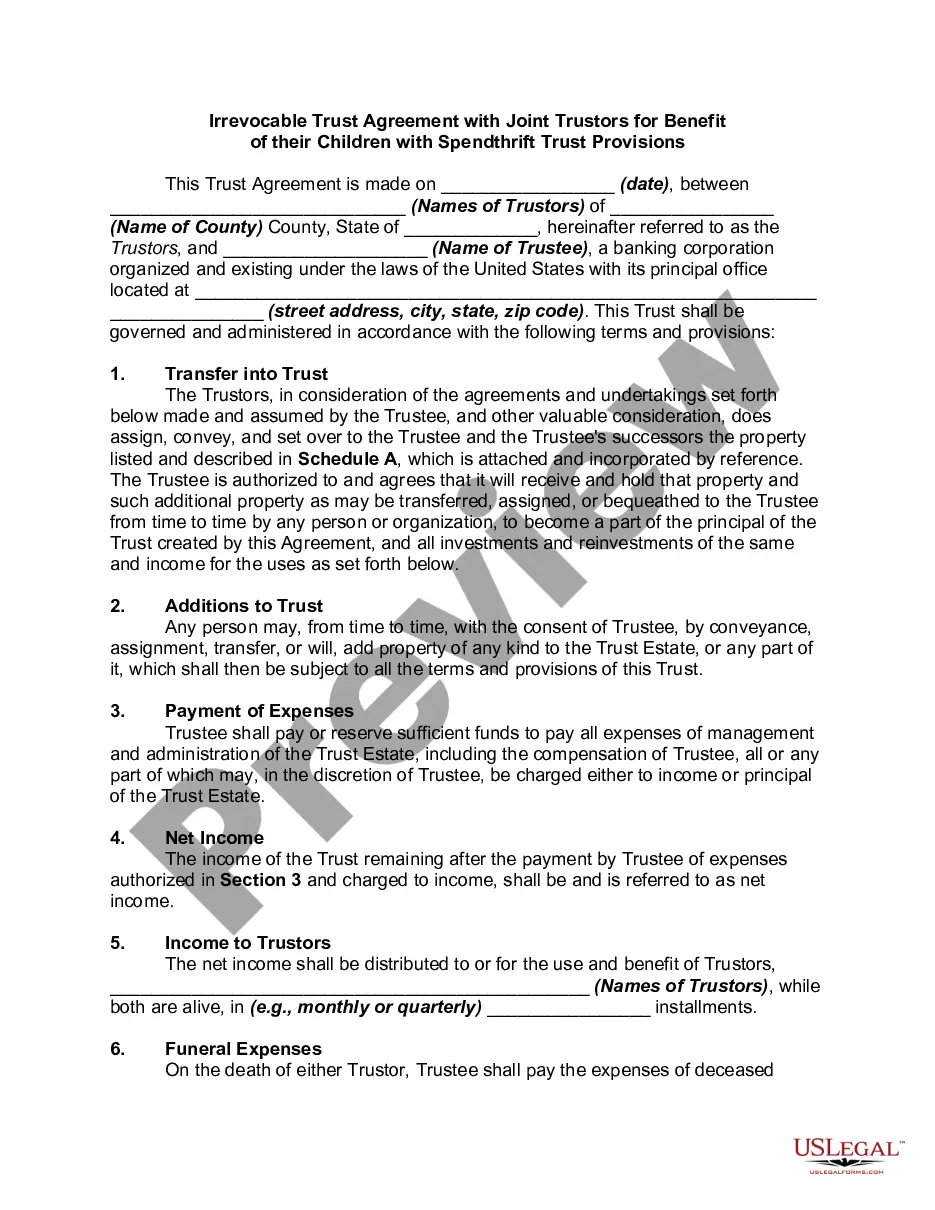
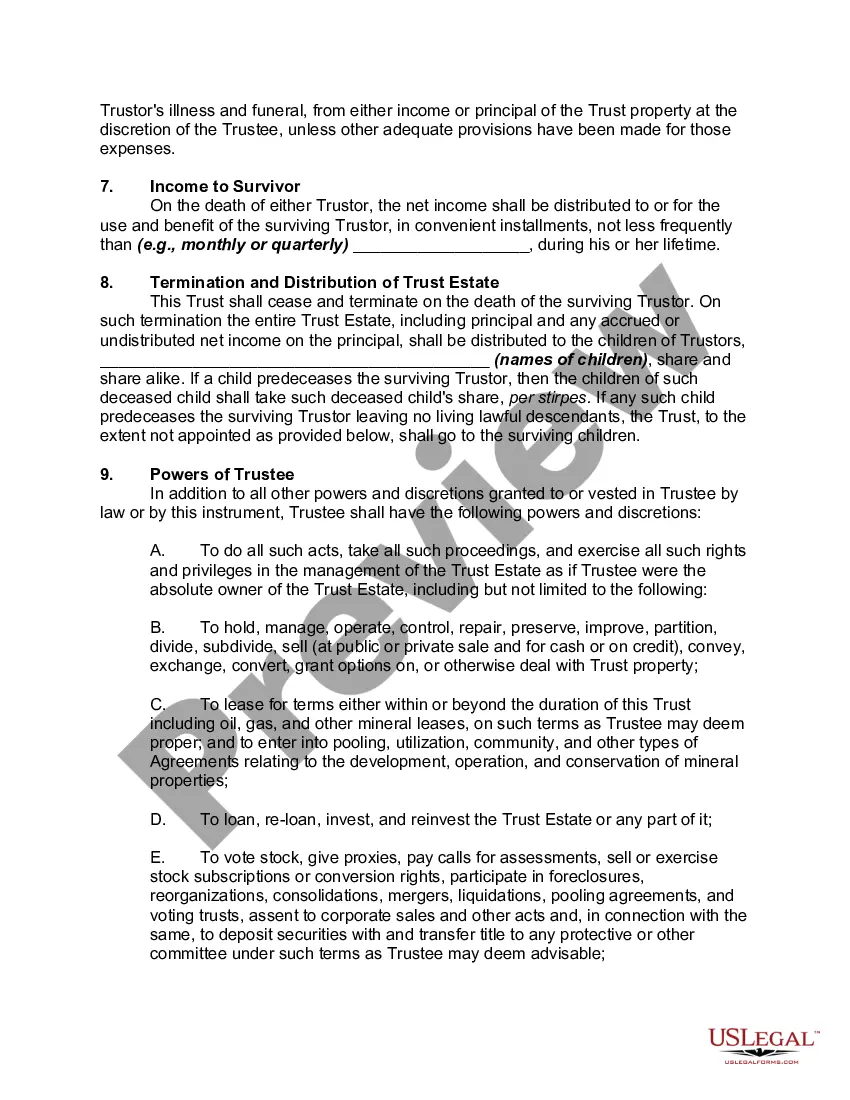
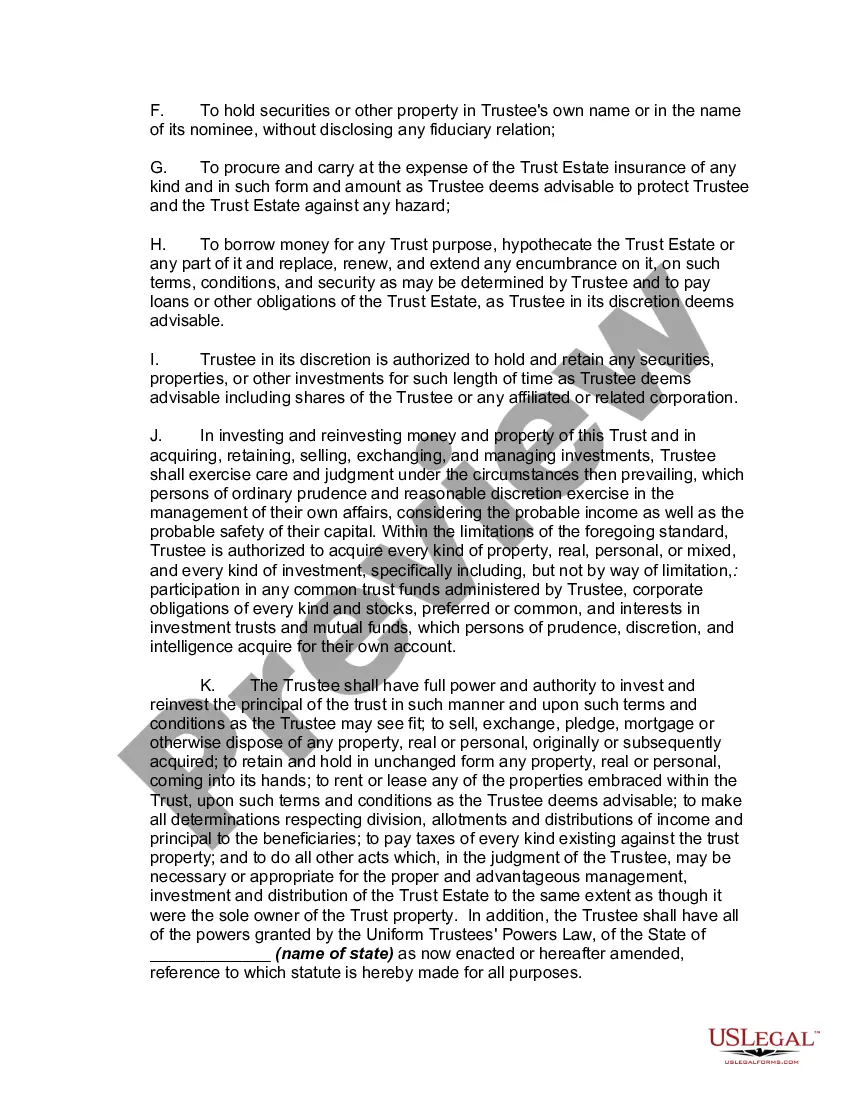
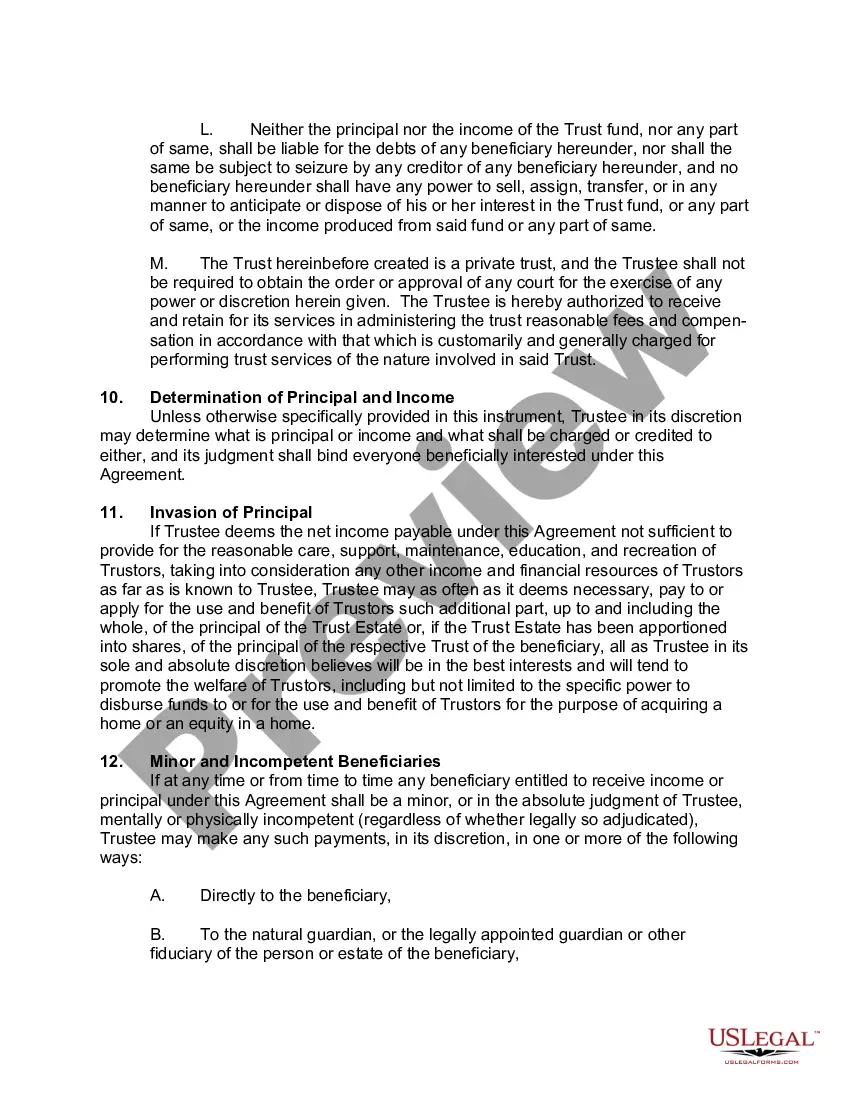
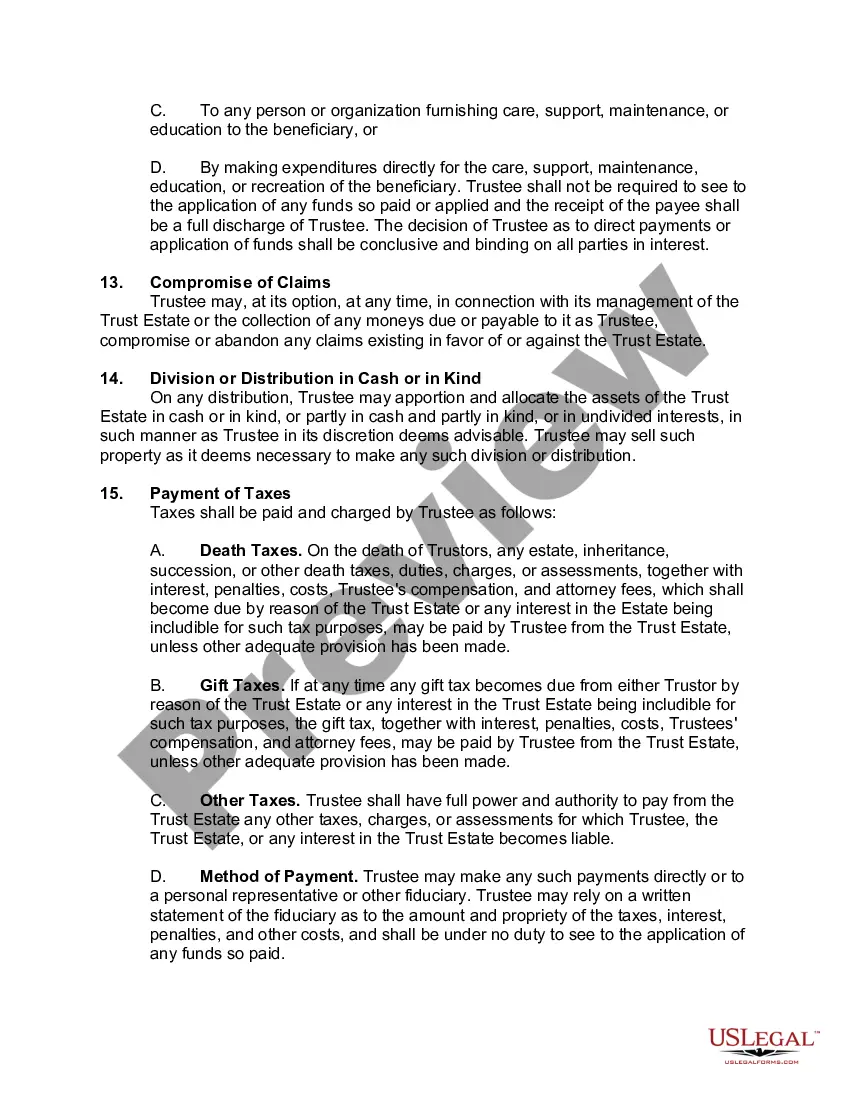
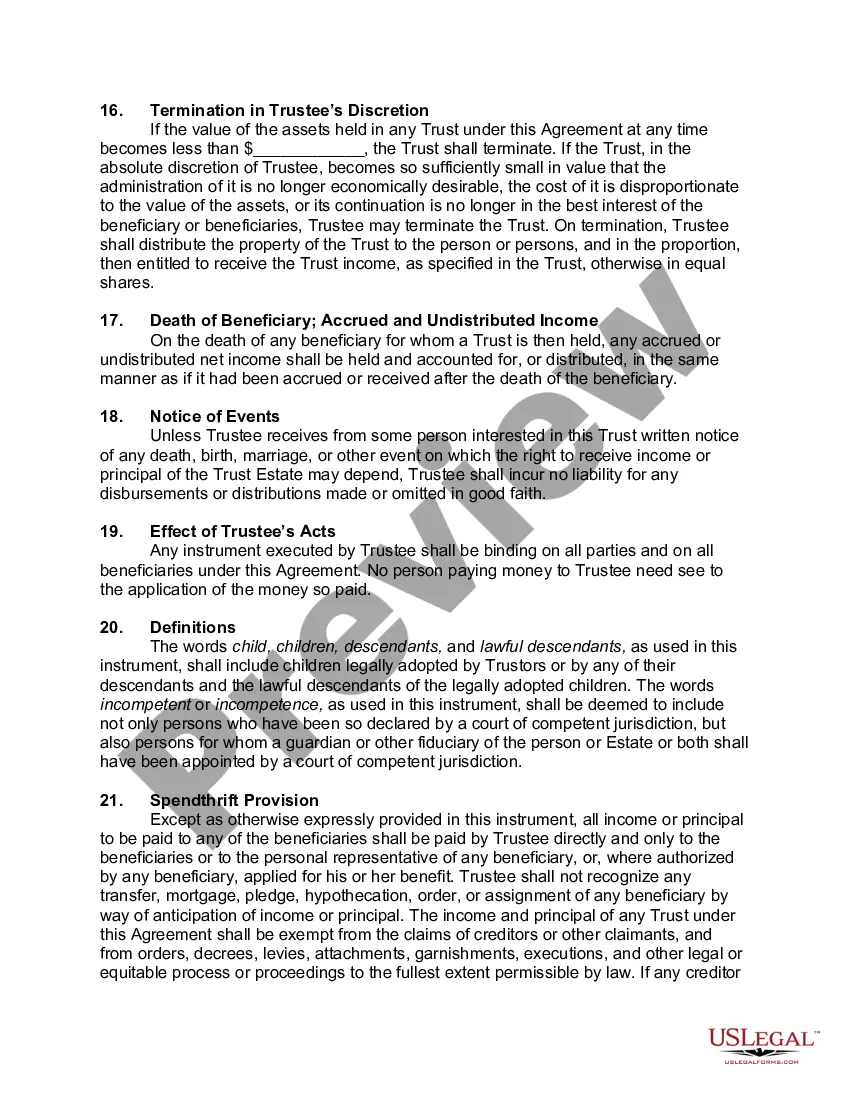
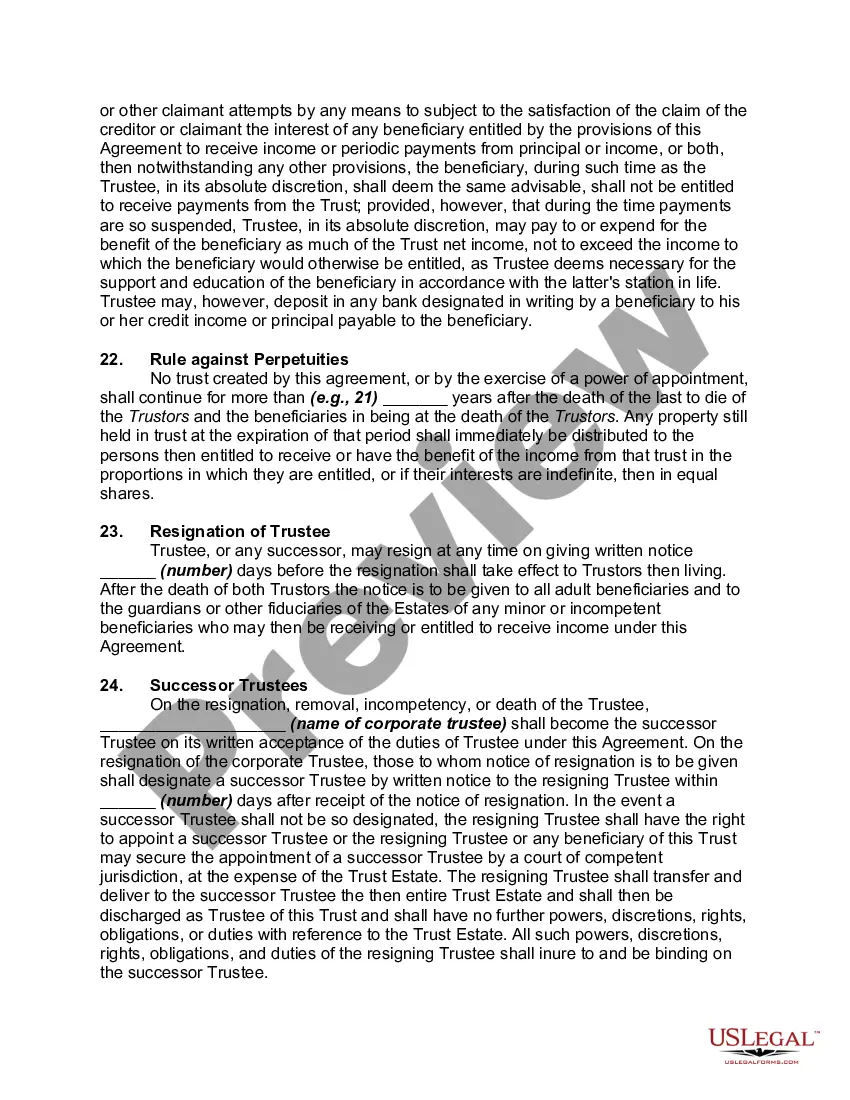
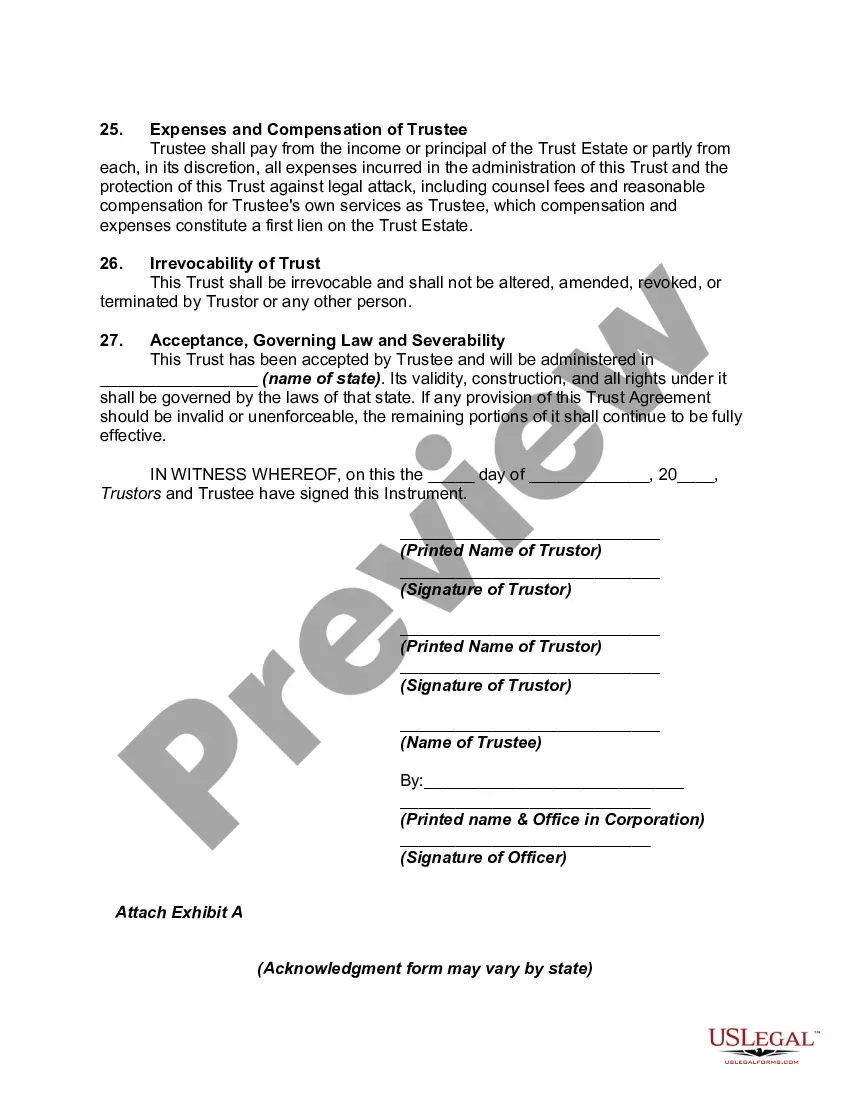
How to fill out Irrevocable Trust Agreement With Joint Trustors For Benefit Of Their Children With Spendthrift Trust Provisions?
What is the most reliable service to obtain the Irrevocable Trust Agreement Withdrawals and other updated versions of legal documents? US Legal Forms is the answer!
It boasts the largest assortment of legal forms for any purpose. Each document is meticulously crafted and verified for adherence to federal and local regulations. They are organized by area and state, making it effortless to find the one you require.
US Legal Forms is an ideal solution for anyone needing to manage legal documents. Premium members can access even more features as they can fill out and sign previously saved forms electronically at any time using the integrated PDF editing tool. Explore it today!
- Advanced users of the platform only need to Log In to the site, confirm if their subscription is active, and click the Download button next to the Irrevocable Trust Agreement Withdrawals to obtain it.
- Once saved, the document remains accessible for additional use in the My documents section of your account.
- If you do not have an account with our library yet, here are the steps you need to follow to create one.
- Document compliance verification. Before obtaining any document, you must ensure it meets your use case requirements and complies with your state or county's regulations. Review the document description and use the Preview if available.
Form popularity
FAQ
A withdrawal right is the right, given to the beneficiary of a trust, to withdraw all or a portion of each gift made to the trust. For example, if a $1,000 gift is made to a trust and a beneficiary of the trust has a withdrawal right over that gift, he or she can withdraw up to $1,000 from the trust.
Irrevocable Trusts Generally, a trustee is the only person allowed to withdraw money from an irrevocable trust. But just as we mentioned earlier, the trustee must follow the rules of the legal document and can only take out income or principal when it's in the best interest of the trust.
Yes, you could withdraw money from your own trust if you're the trustee. Since you have an interest in the trust and its assets, you could withdraw money as you see fit or as needed. You can also move assets in or out of the trust.
Distributing assets from an irrevocable trust requires that the assets first be part of the trust's corpus. Tax laws allow trusts to recover the after-tax money locked up in the corpus as tax-free return of principal. Trusts pass this benefit along to their beneficiaries in the form of tax-free distributions.