Fixed Interest Security
Description


Get your form ready online
Our built-in tools help you complete, sign, share, and store your documents in one place.
Make edits, fill in missing information, and update formatting in US Legal Forms—just like you would in MS Word.
Download a copy, print it, send it by email, or mail it via USPS—whatever works best for your next step.
Sign and collect signatures with our SignNow integration. Send to multiple recipients, set reminders, and more. Go Premium to unlock E-Sign.
If this form requires notarization, complete it online through a secure video call—no need to meet a notary in person or wait for an appointment.
We protect your documents and personal data by following strict security and privacy standards.

Make edits, fill in missing information, and update formatting in US Legal Forms—just like you would in MS Word.

Download a copy, print it, send it by email, or mail it via USPS—whatever works best for your next step.

Sign and collect signatures with our SignNow integration. Send to multiple recipients, set reminders, and more. Go Premium to unlock E-Sign.

If this form requires notarization, complete it online through a secure video call—no need to meet a notary in person or wait for an appointment.

We protect your documents and personal data by following strict security and privacy standards.
Looking for another form?


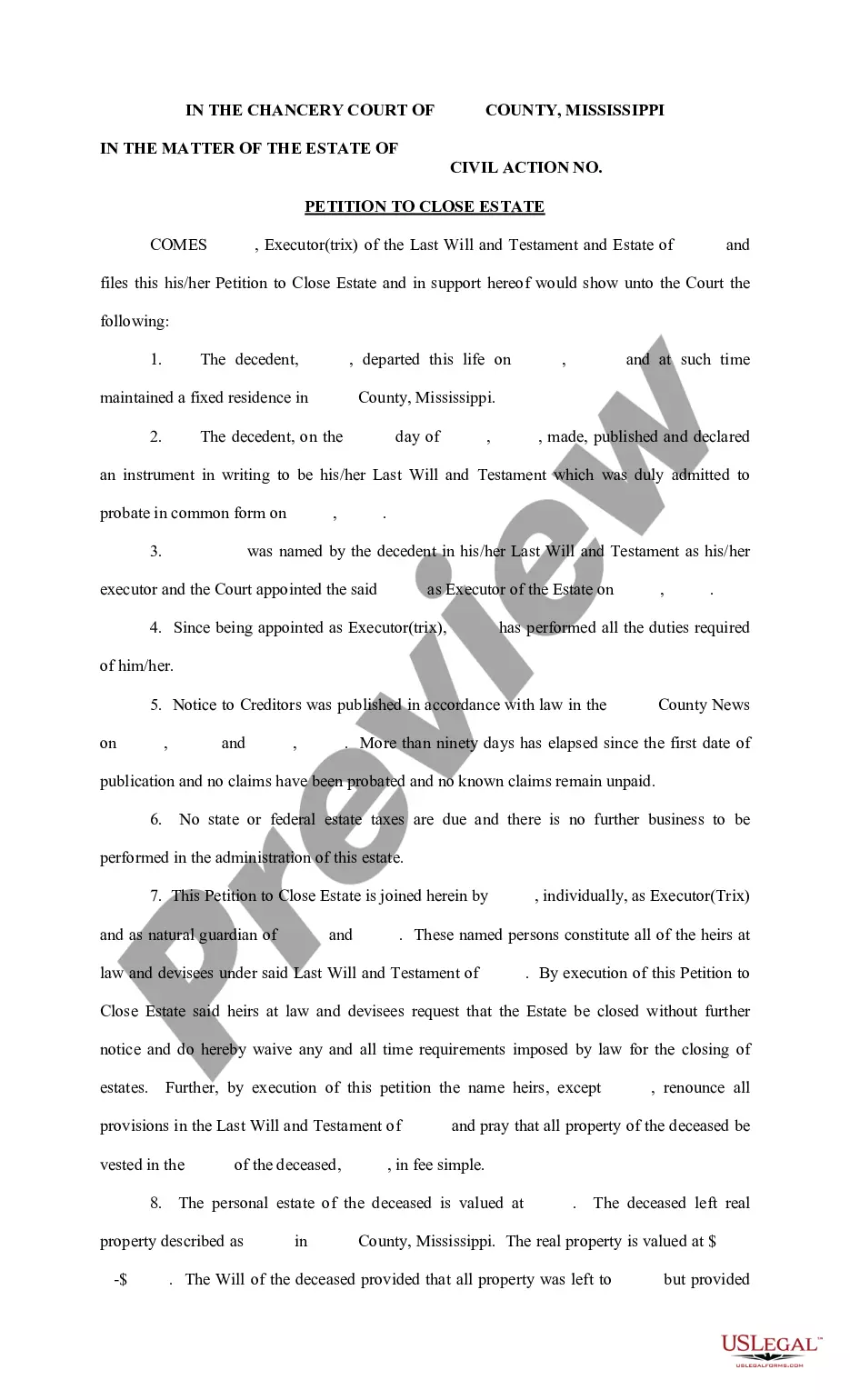



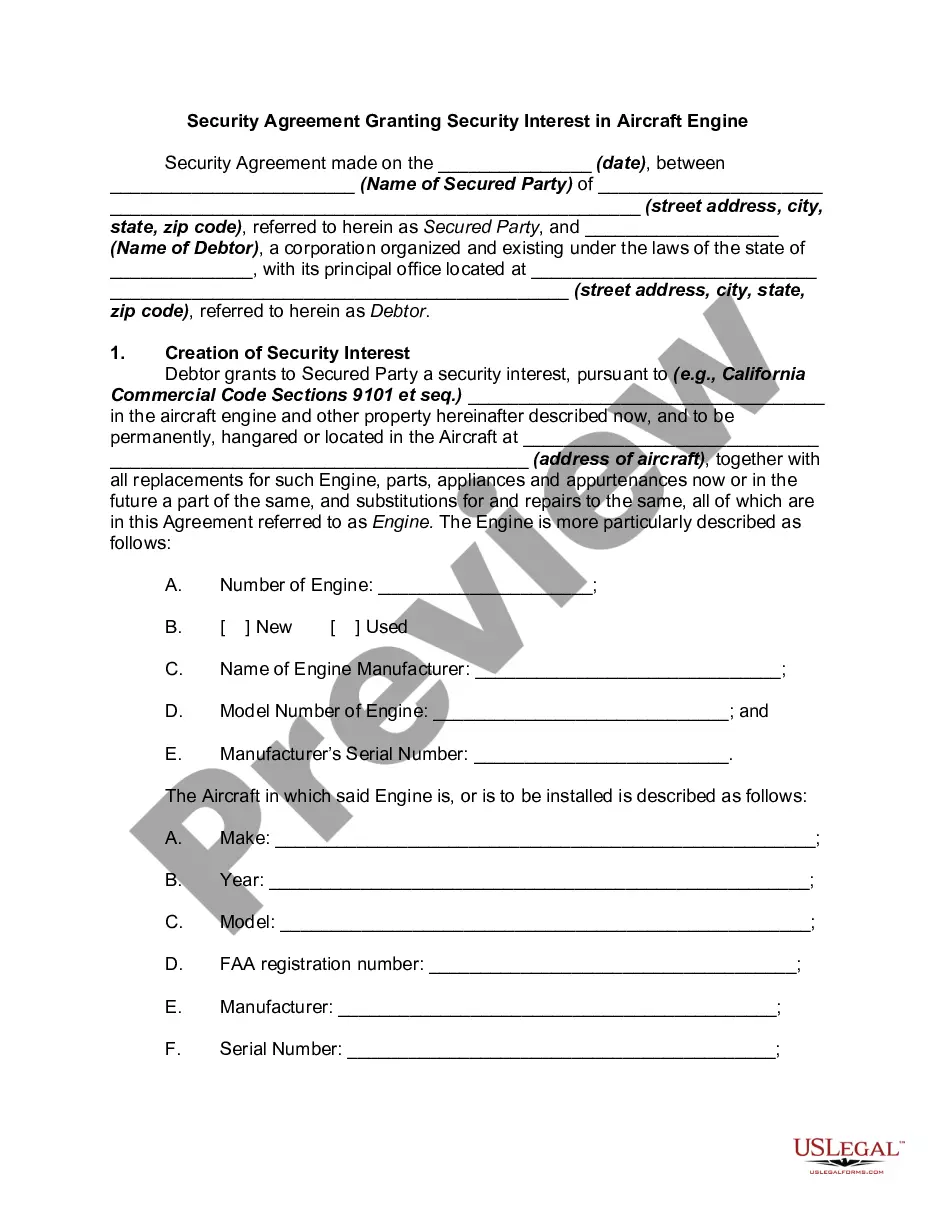
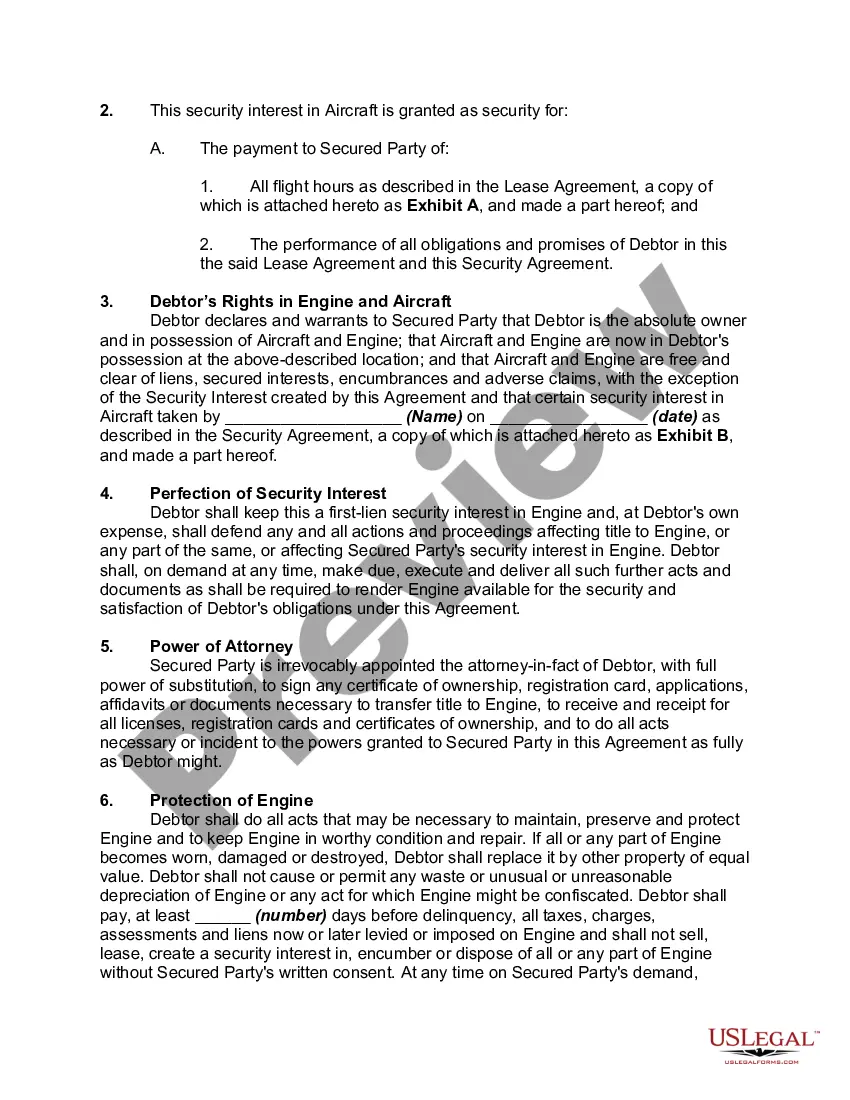
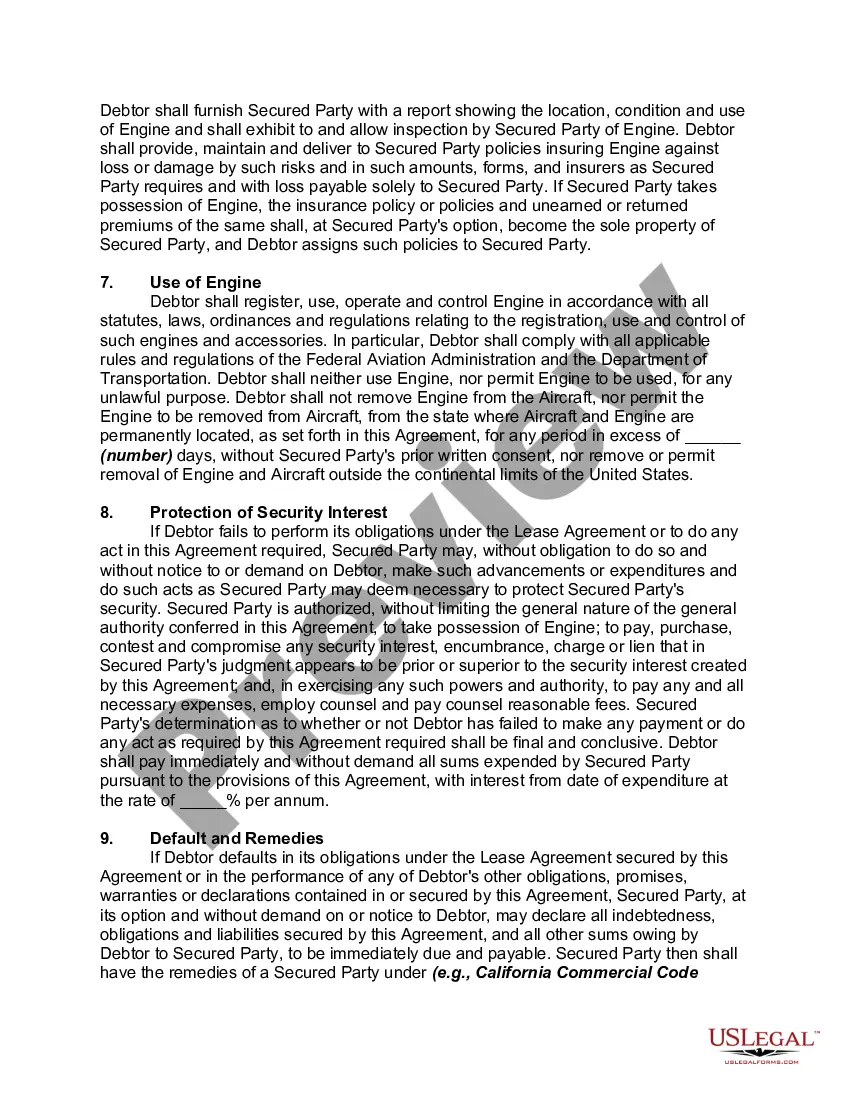
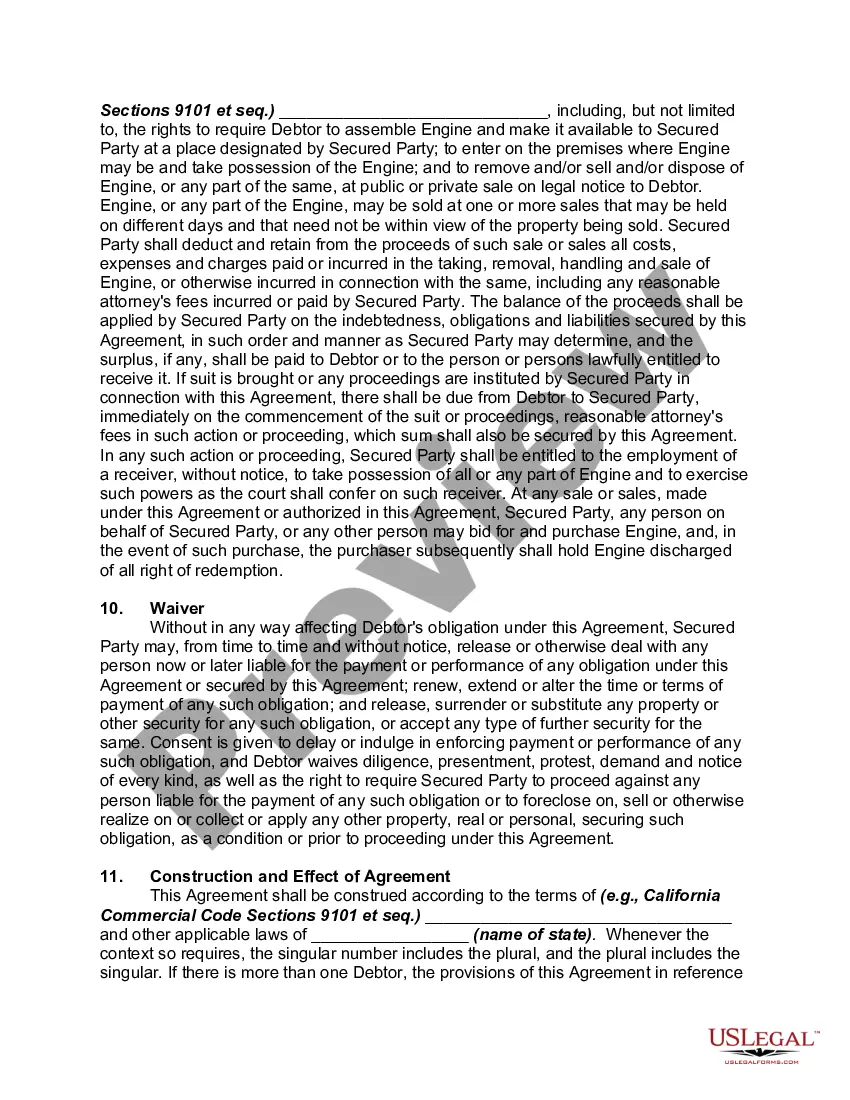
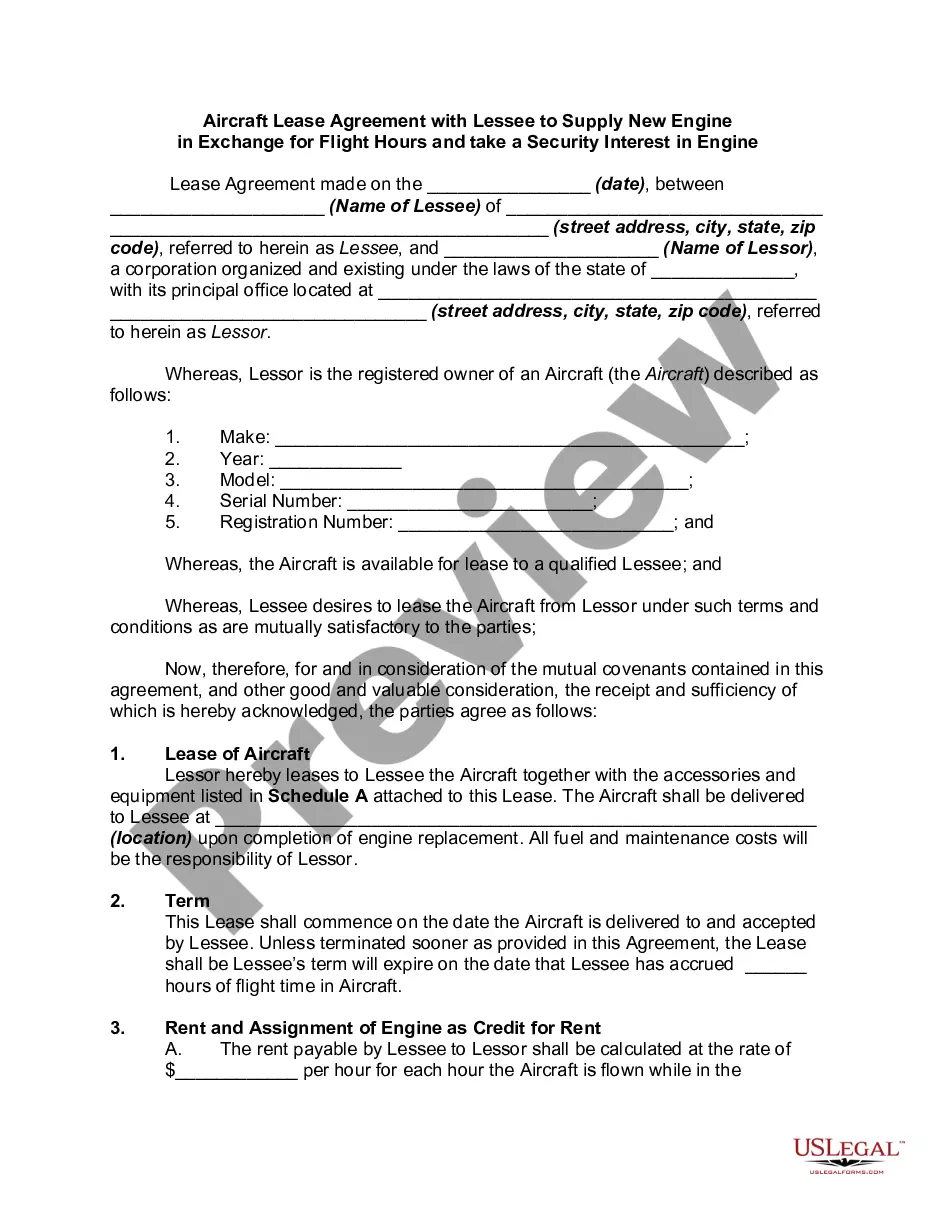
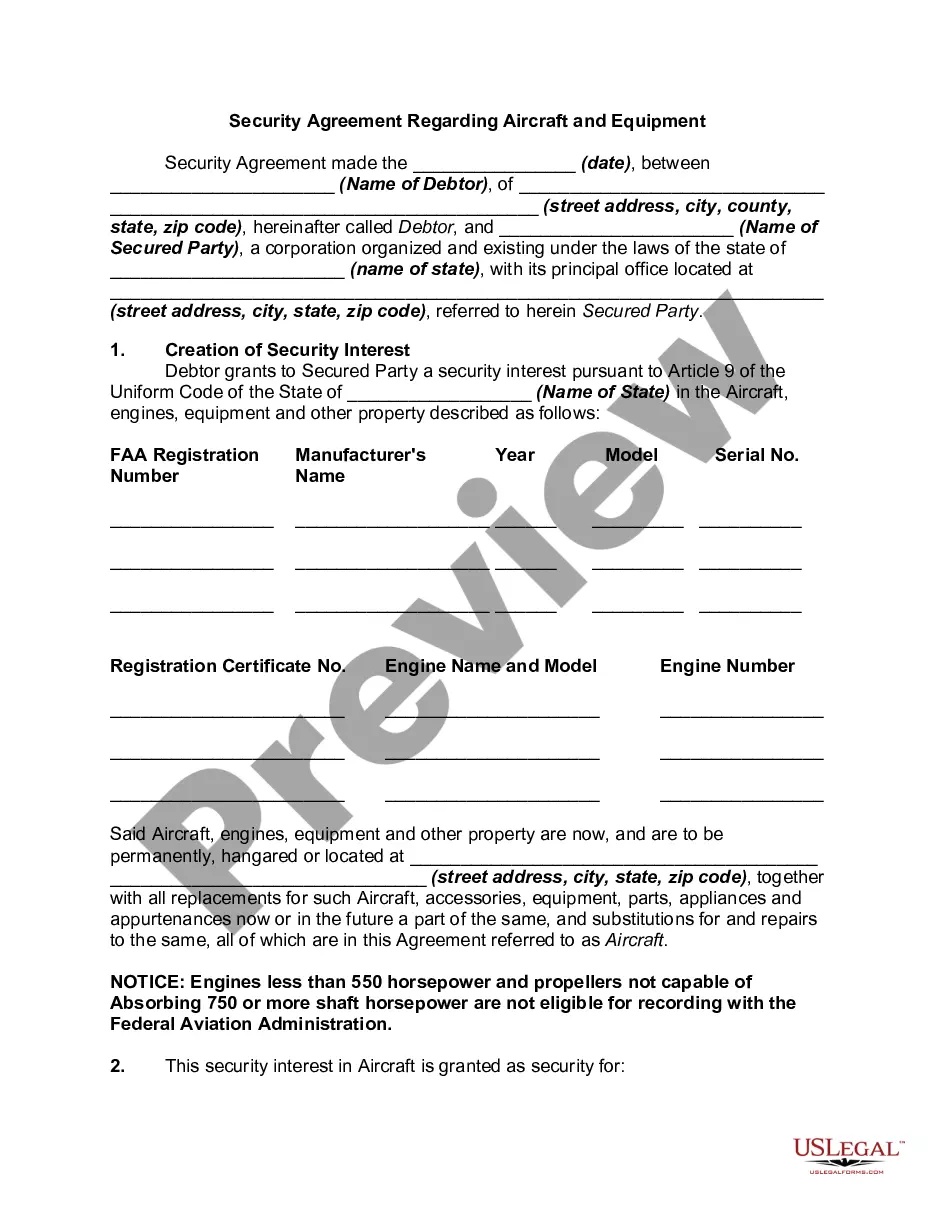
How to fill out Security Agreement Granting Security Interest In Aircraft Engine?
- If you are a returning user, simply log in to your account. Ensure that your subscription is active, or renew it to access the required form.
- In case you are new to the platform, start by browsing the available templates. Use the Preview mode and form descriptions to verify that the document aligns with your specific legal needs and complies with local jurisdiction requirements.
- If the form does not meet your expectations, utilize the Search tab to find a more suitable template.
- Once you identify the correct document, click on the Buy Now button and select your preferred subscription plan. You’ll need to create an account to gain full access.
- Complete your purchase by entering your payment details, using either a credit card or PayPal.
- Finally, download the completed form to your device. You can easily revisit your documents at any time through the My Forms section in your profile.
By using US Legal Forms, you not only gain access to an extensive library of over 85,000 legal documents but also receive support from premium experts to ensure your forms are filled out accurately and in compliance with legal standards.
Start your journey with US Legal Forms today to take advantage of their robust collection of fixed interest security documents and streamline your legal processes!
Form popularity
FAQ
The four types of security interest generally include mortgages, pledges, liens, and financing statements. Mortgages provide lenders with a claim against real estate, while pledges involve an asset being set aside as collateral. Liens are legal claims against someone's property due to unpaid debts, and financing statements serve to publicly declare a lender's interest in a debtor's collateral. Understanding these types can help you navigate the realm of fixed interest security more effectively.
A common example of fixed interest security is a government bond. This type of bond pays a set amount of interest over a specified period, making it a reliable option for investors seeking steady income. Additionally, corporate bonds can also be considered fixed-income securities, as they offer predictable returns through fixed interest payments. Both options can help diversify your investment portfolio while providing a sense of financial stability.
An excellent example of fixed interest security is a municipal bond, where local governments issue bonds to finance public projects. Investors receive regular interest payments from these bonds over their lifespan. The fixed nature of returns appeals to risk-averse investors aiming to secure their financial future.
When evaluating various financial products, certificates of deposit, government bonds, and corporate bonds qualify as fixed income securities. Each of these options provides regular interest payments over a specified period. Investors often choose these options for their tendency to offer lower risk and more stable returns compared to equities.
An example of a fixed security is a certificate of deposit (CD), which banks offer to customers. The bank pays a fixed rate of interest over a predetermined time. This arrangement helps investors plan their finances, appealing to those seeking the predictability of fixed interest securities.
To enforce a security interest, you generally need to follow the terms laid out in the security agreement. This might involve filing a financing statement to perfect the interest, thereby giving you rights against third parties. If the borrower defaults, you can assert your rights over the secured asset, which ensures you can recover what you are owed, providing peace of mind specifically associated with fixed interest securities.
Fixed income securities include bonds and notes that provide returns in the form of fixed periodic payments. However, common stocks do not qualify as fixed income securities because their returns depend on the company's performance and market conditions. Therefore, while stocks can offer potential growth, they do not provide the consistent income characteristic of fixed interest securities.
Investing in fixed income securities involves purchasing bonds or similar products that provide fixed interest payments. You can do this through brokerage accounts, retirement accounts, or investment funds. Platforms like uslegalforms can assist in navigating these investments, helping you understand the options and make informed decisions.
A fixed interest security is a financial instrument that pays a predetermined interest rate over a specified period. Common examples include bonds issued by governments or corporations. These securities provide investors with a reliable source of income, making them appealing for anyone wanting to minimize risk while still earning returns.
Achieving a 10% return on investment with fixed interest securities can be challenging, as traditional bonds generally offer lower yields. However, exploring higher-yielding options, like certain corporate bonds or specific funds dedicated to fixed income, may help. Always evaluate your risk tolerance before pursuing higher returns, and consider consulting with a financial professional to guide your strategy.