Creditor Write Off For Business 2018
Description
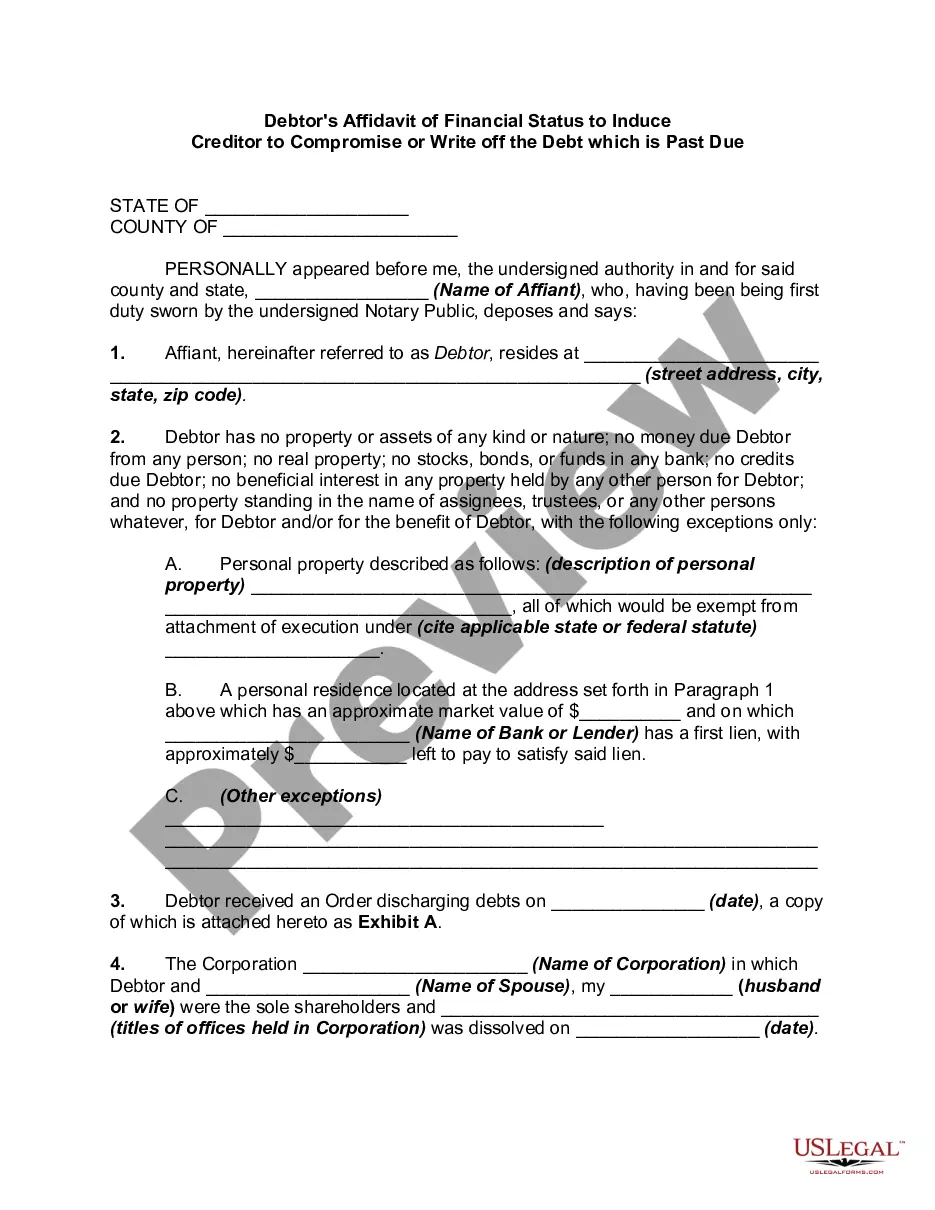
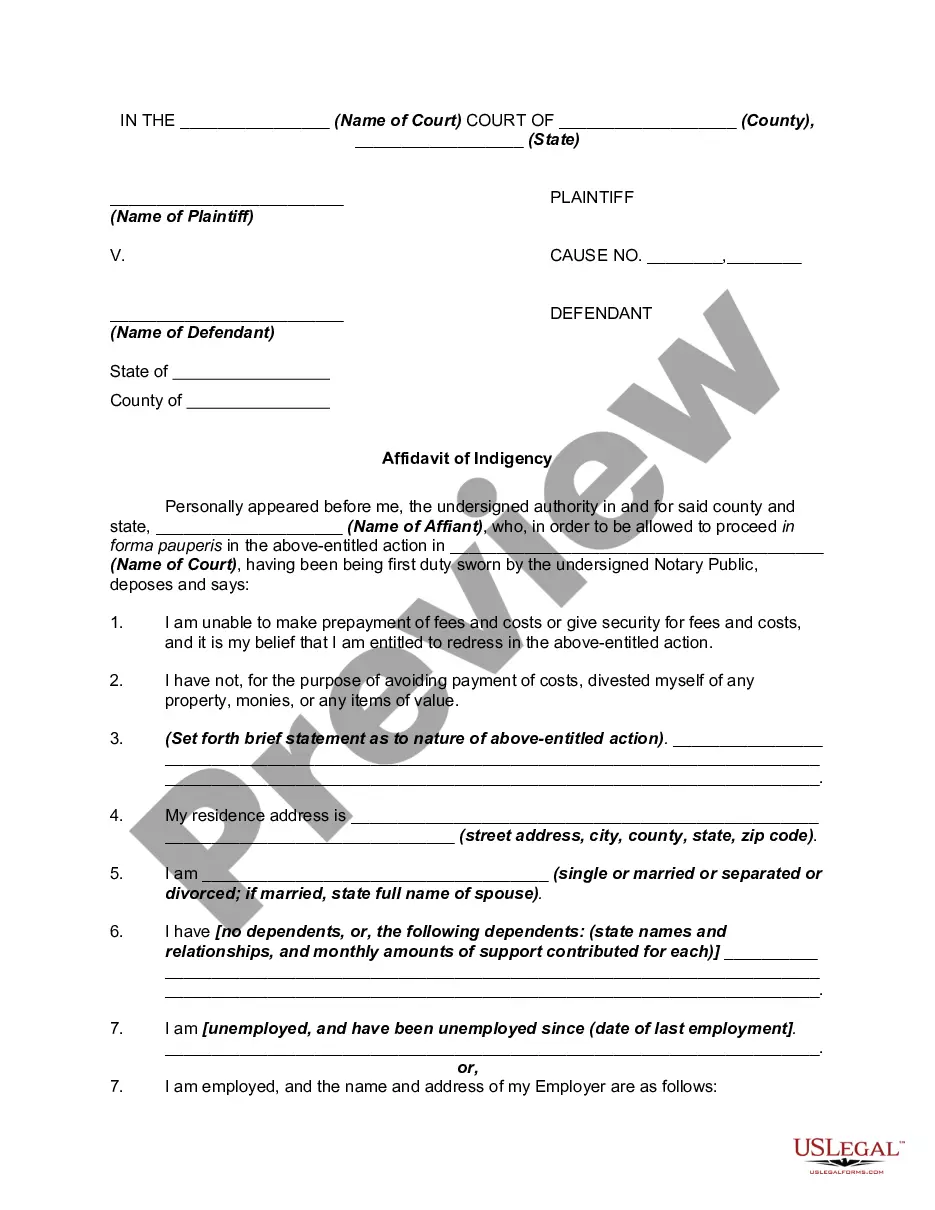
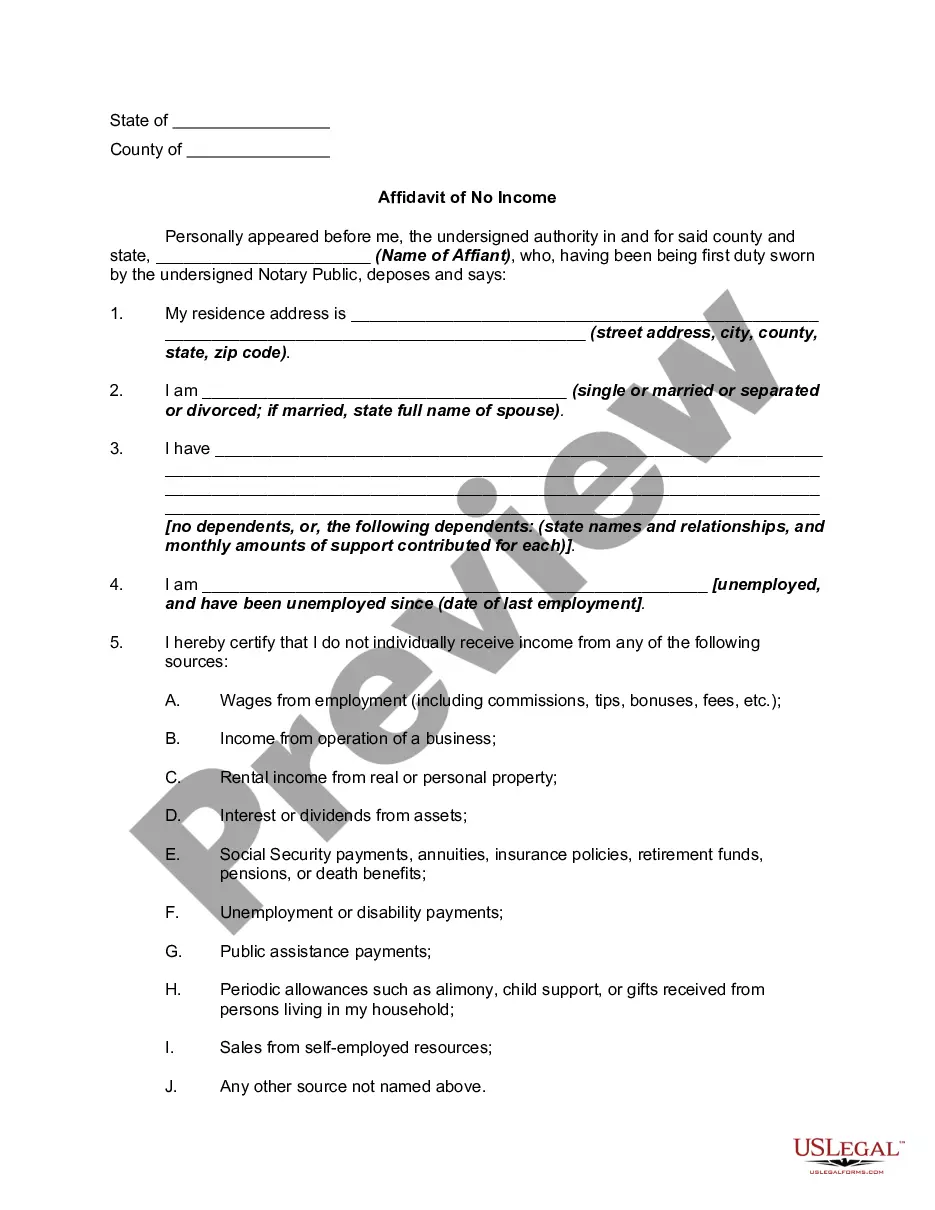
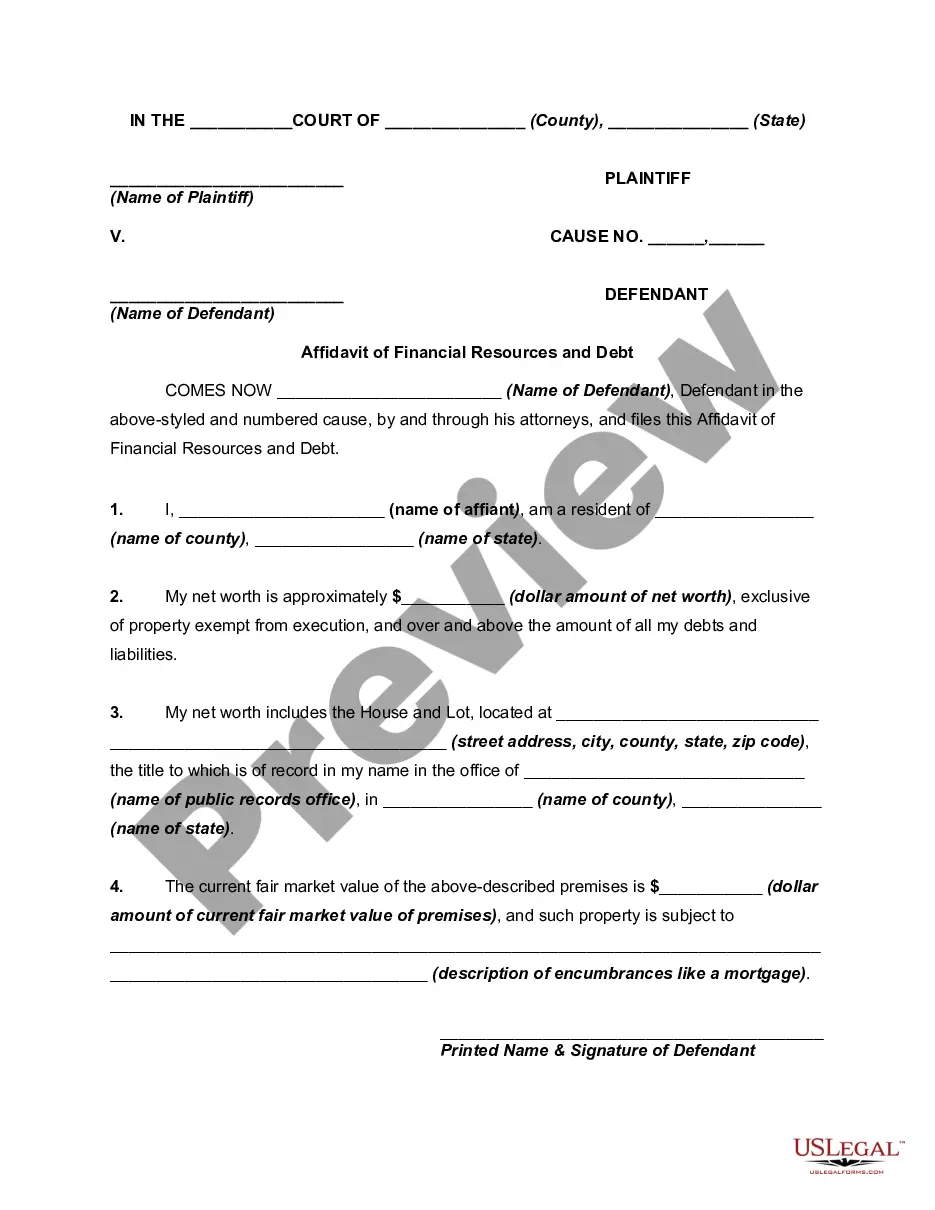



How to fill out Debtor's Affidavit Of Financial Status To Induce Creditor To Compromise Or Write Off The Debt Which Is Past Due - Assets And Liabilities?
Managing legal documents and processes can be a lengthy addition to your entire day.
Creditor Write Off For Business 2018 and similar forms generally necessitate you to search for them and find the most efficient way to fill them out properly.
Therefore, if you are dealing with financial, legal, or personal issues, utilizing a comprehensive and user-friendly online directory of forms readily available will be very beneficial.
US Legal Forms is the leading online platform for legal templates, featuring over 85,000 state-specific documents and a range of tools to help you complete your paperwork swiftly.
Is it your first time using US Legal Forms? Register and set up your account in a few minutes and you’ll gain access to the form catalog and Creditor Write Off For Business 2018. Then, follow the steps outlined below to complete your document: Ensure you have found the correct form using the Preview feature and reviewing the form details. Select Buy Now when ready, and choose the subscription plan that fits your requirements. Click Download then fill out, sign, and print the document. US Legal Forms has 25 years of experience assisting users manage their legal documents. Find the form you need today and streamline any process effortlessly.
- Browse the collection of pertinent documents accessible to you with just one click.
- US Legal Forms offers you state- and county-specific documents available at any time for downloading.
- Safeguard your document management processes with a reliable service that allows you to create any form in minutes without extra or concealed charges.
- Simply Log In to your account, locate Creditor Write Off For Business 2018 and download it immediately from the My documents section.
- You can also access previously downloaded documents.
Form popularity
FAQ
The issuance of the 1099C does not even mean that the creditor cannot still collect the debt. There are ways to avoid having to pay tax upon the amount of debt written off or forgiven, though. This question and answer can also be found on Justia's ?Ask a Lawyer? page.
How to Write Off Business Expenses Categorize Purchases (Qualifying vs Non Qualifying) Before the calendar year begins, you should have an idea of which expenses can be written off as business expenses. ... Add Up Qualifying Expenses. ... Add Total to Schedule C.
Any business can deduct credit card fees on their taxes. The form you use depends on your business structure. Corporations: Incorporated entities, including limited liability companies (LLCs) filing as a C-corp, use Form 1120. Those filing as an S-corp use Form 1120-S.
Under the Tax Cuts and Jobs Act, pass-through business entity owners can potentially deduct 20% of their business income. By Stephen Fishman, J.D. The Tax Cuts and Jobs Act (TCJA), the massive tax reform law that took effect in 2018, established a new tax deduction for owners of pass-through businesses.
To qualify for a write-off, the IRS uses the terms "ordinary" and "necessary;" that is, an expense must be regarded as necessary and appropriate to the operation of your type of business. Generally, tax write-offs fit into specific reporting categories such as business travel, advertising, or home office expenses.