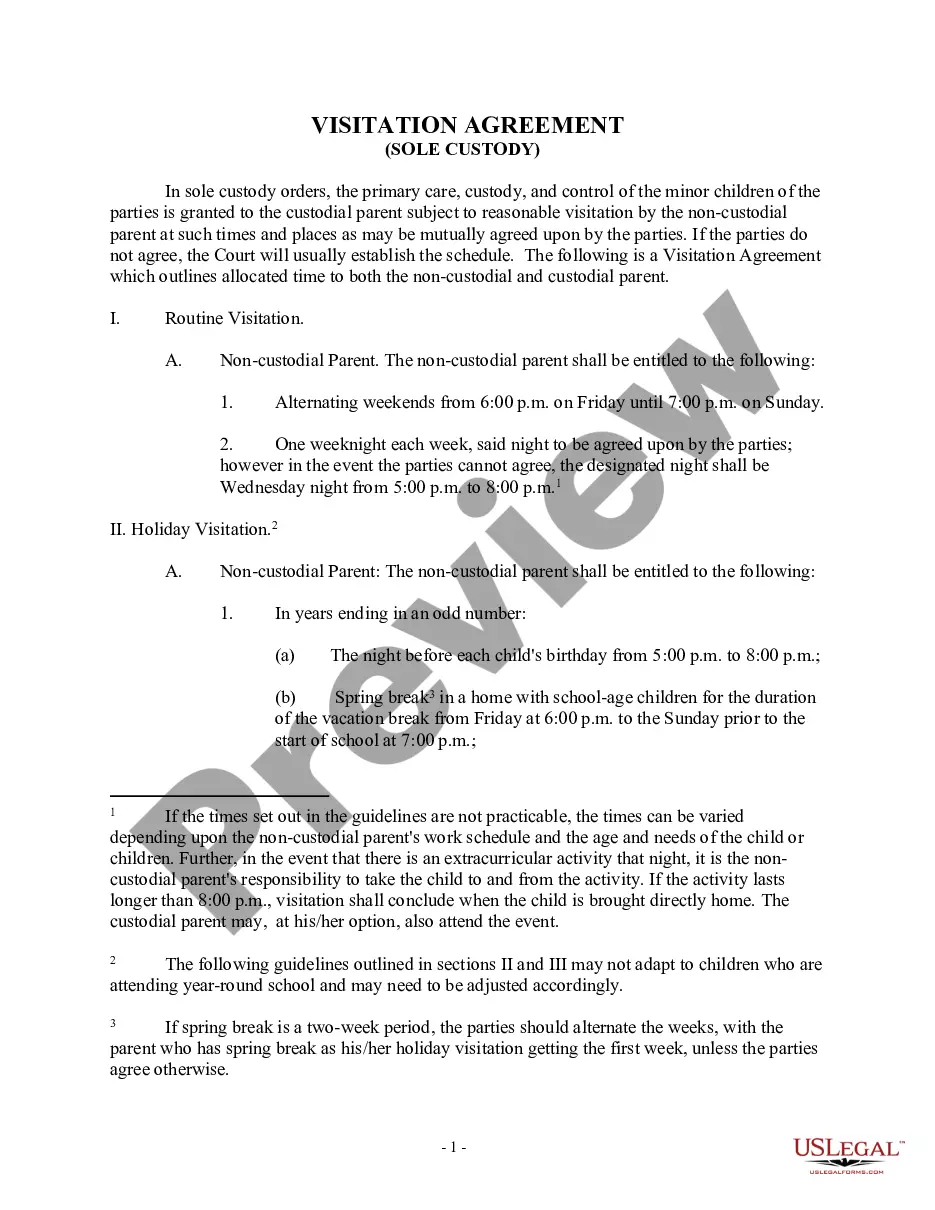
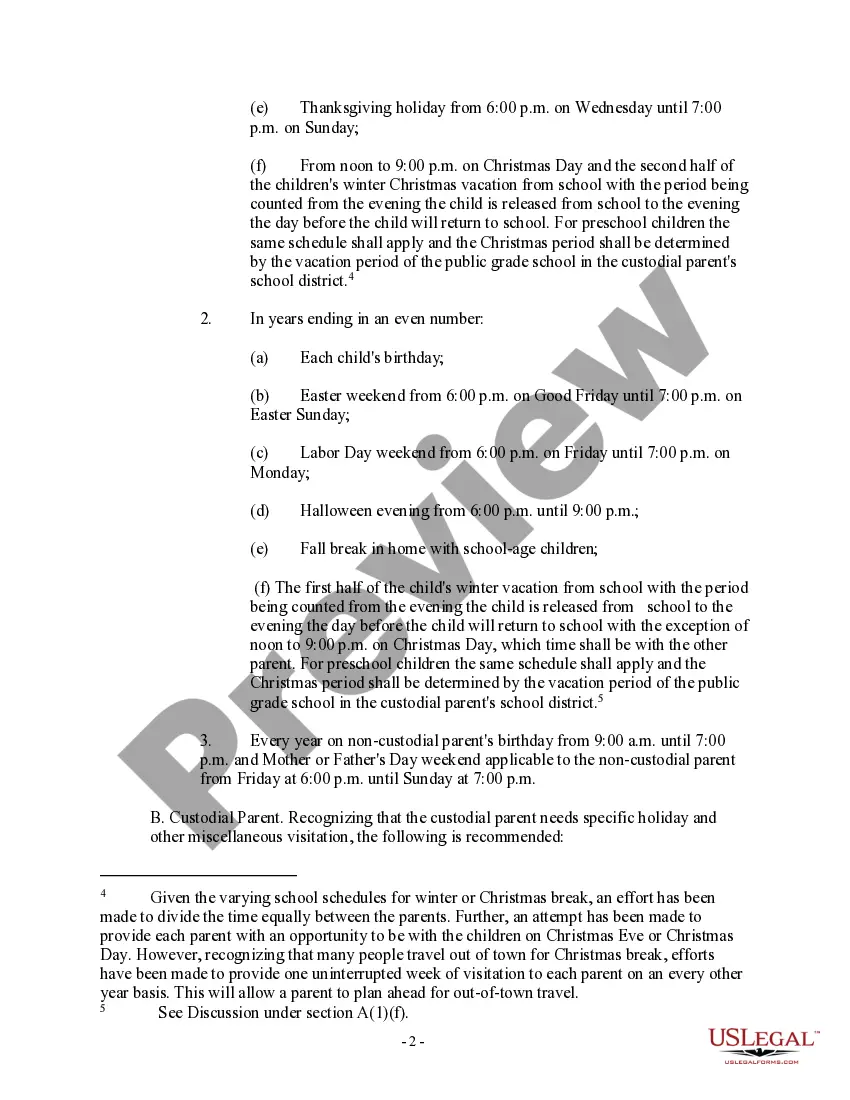
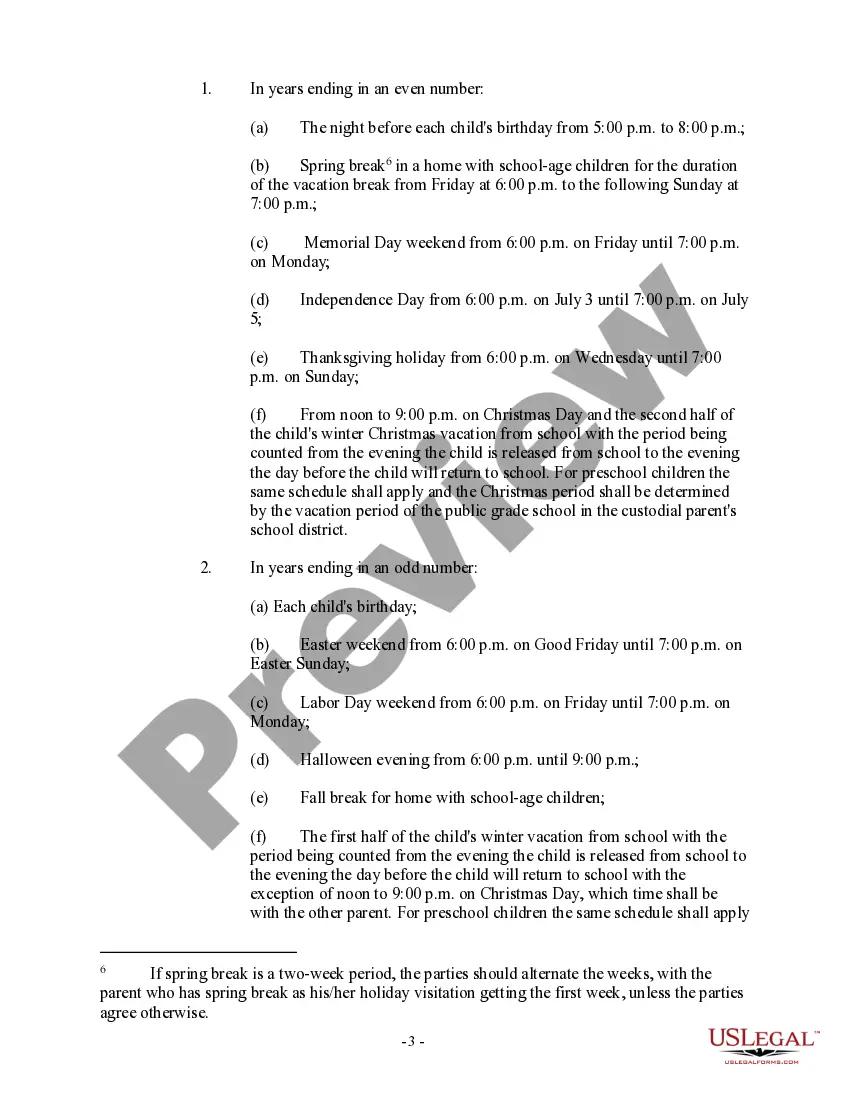
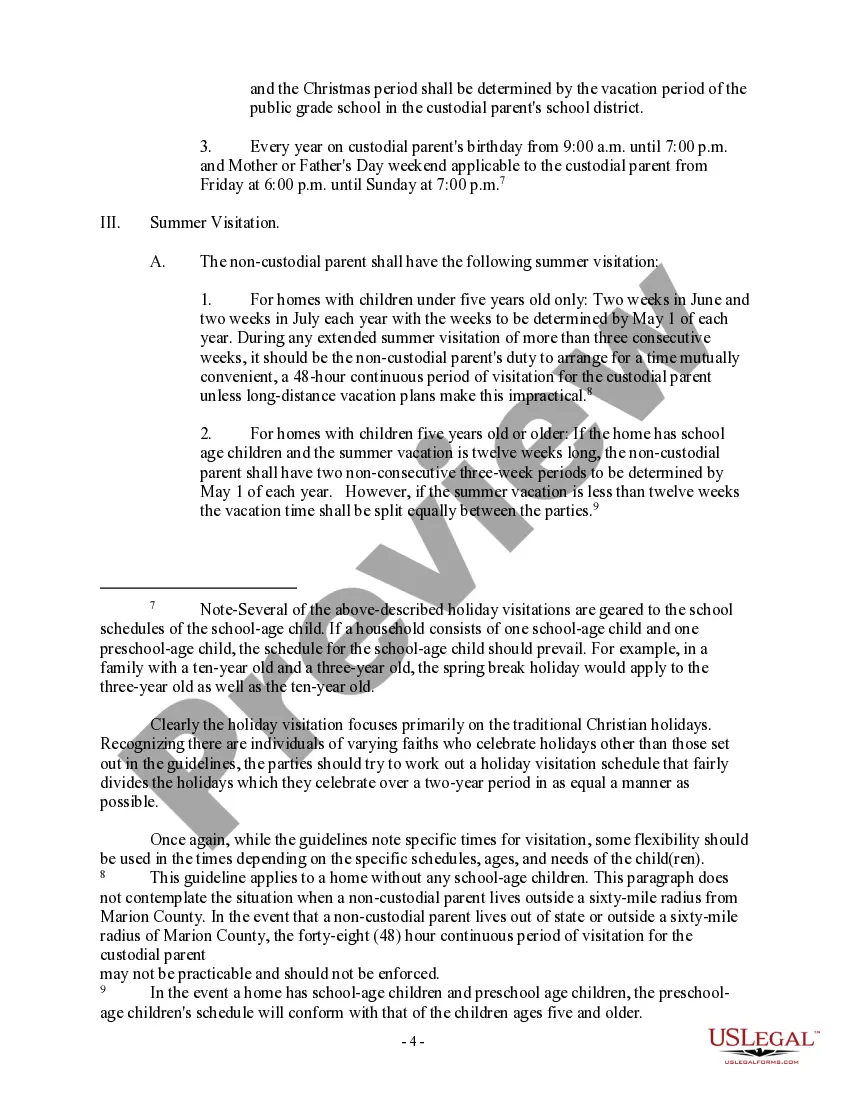
Order For Visitation
Description
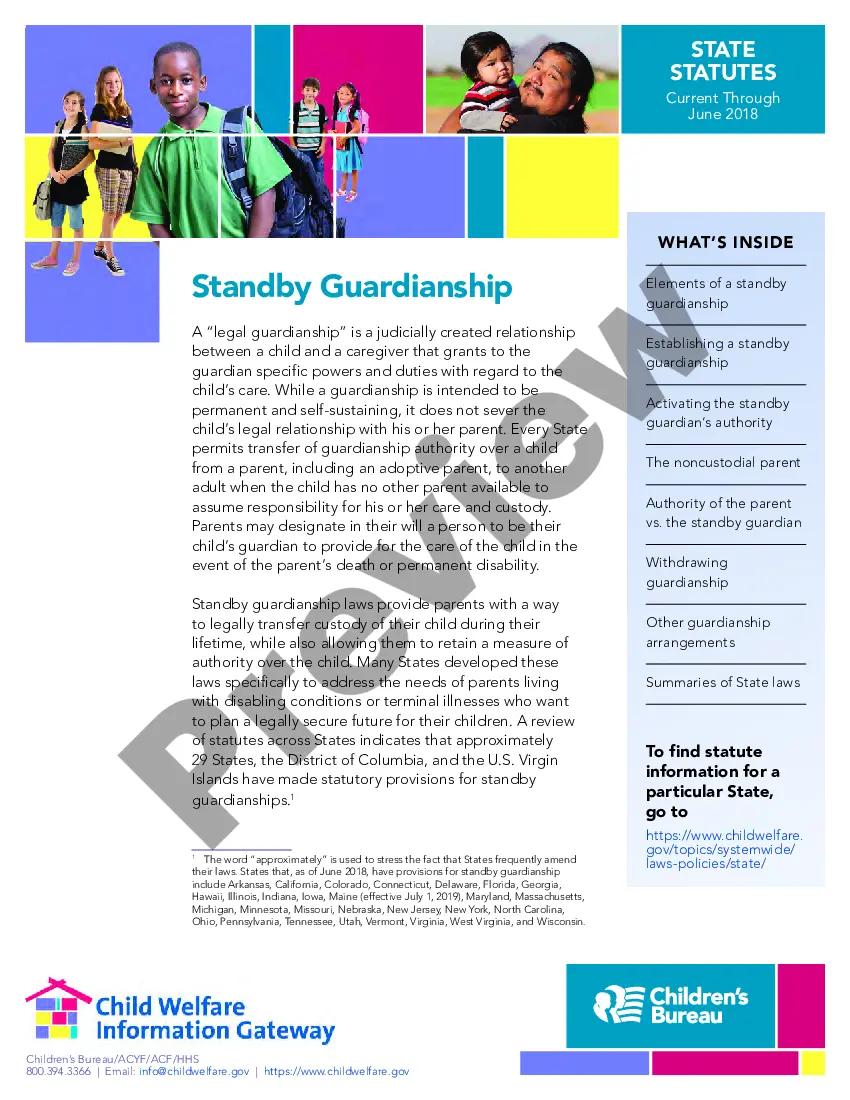
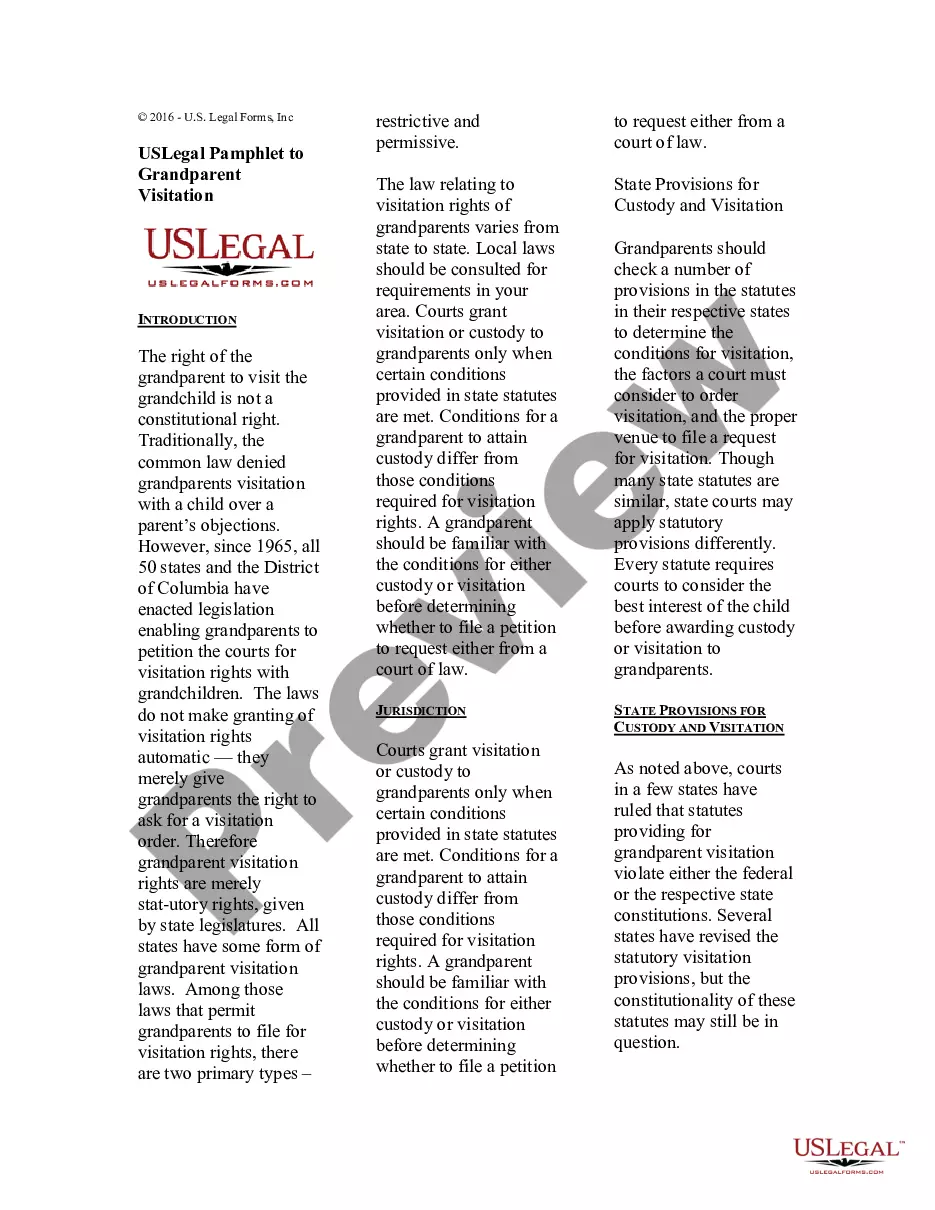
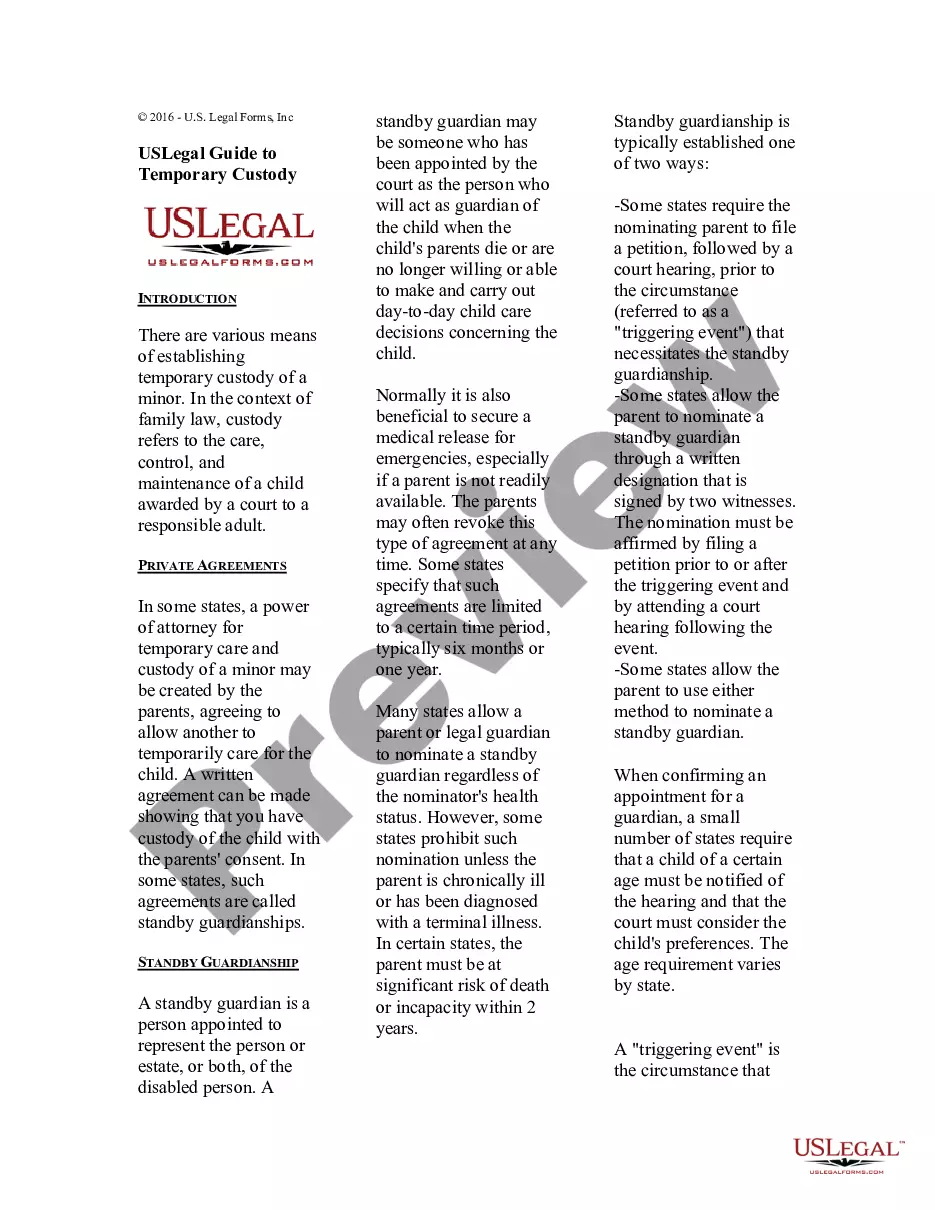
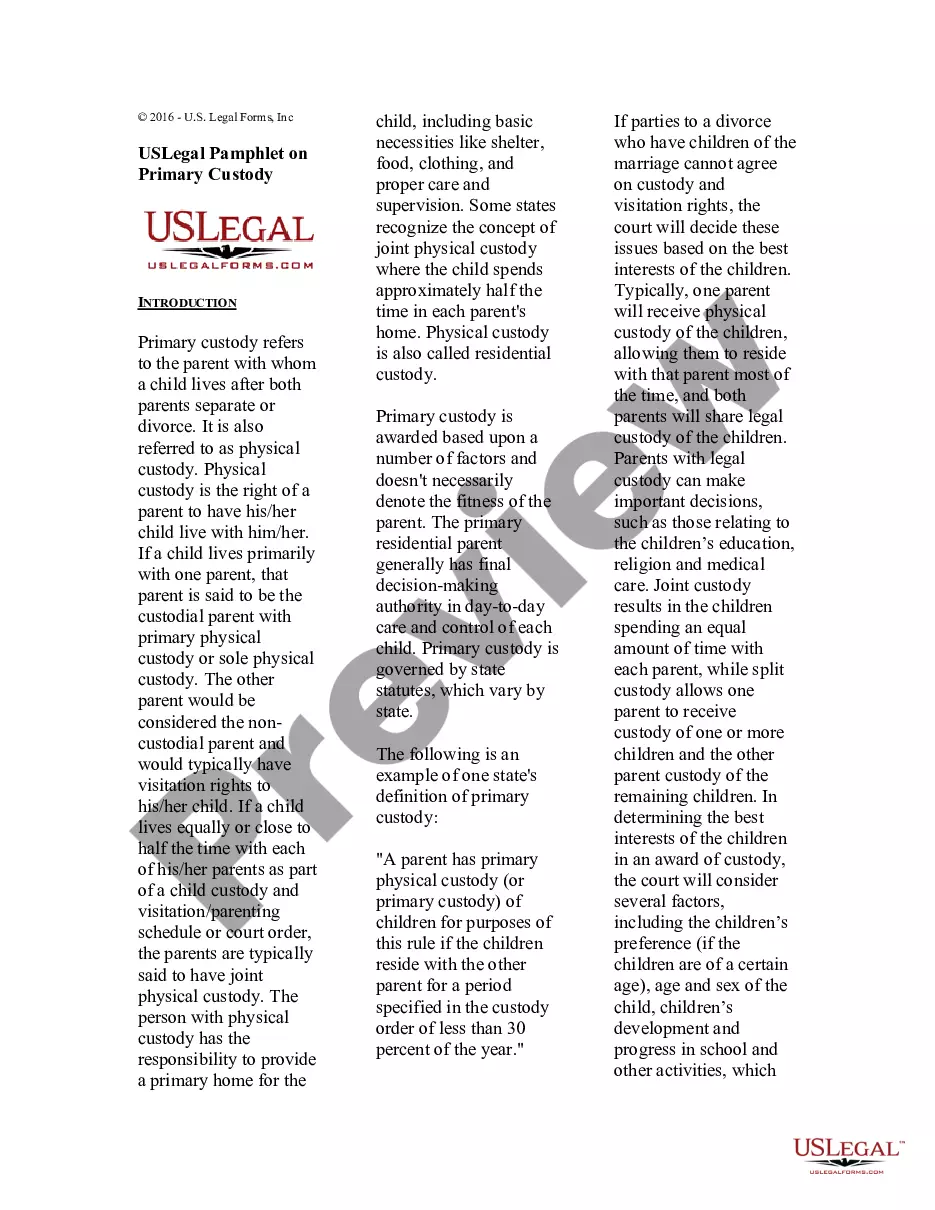
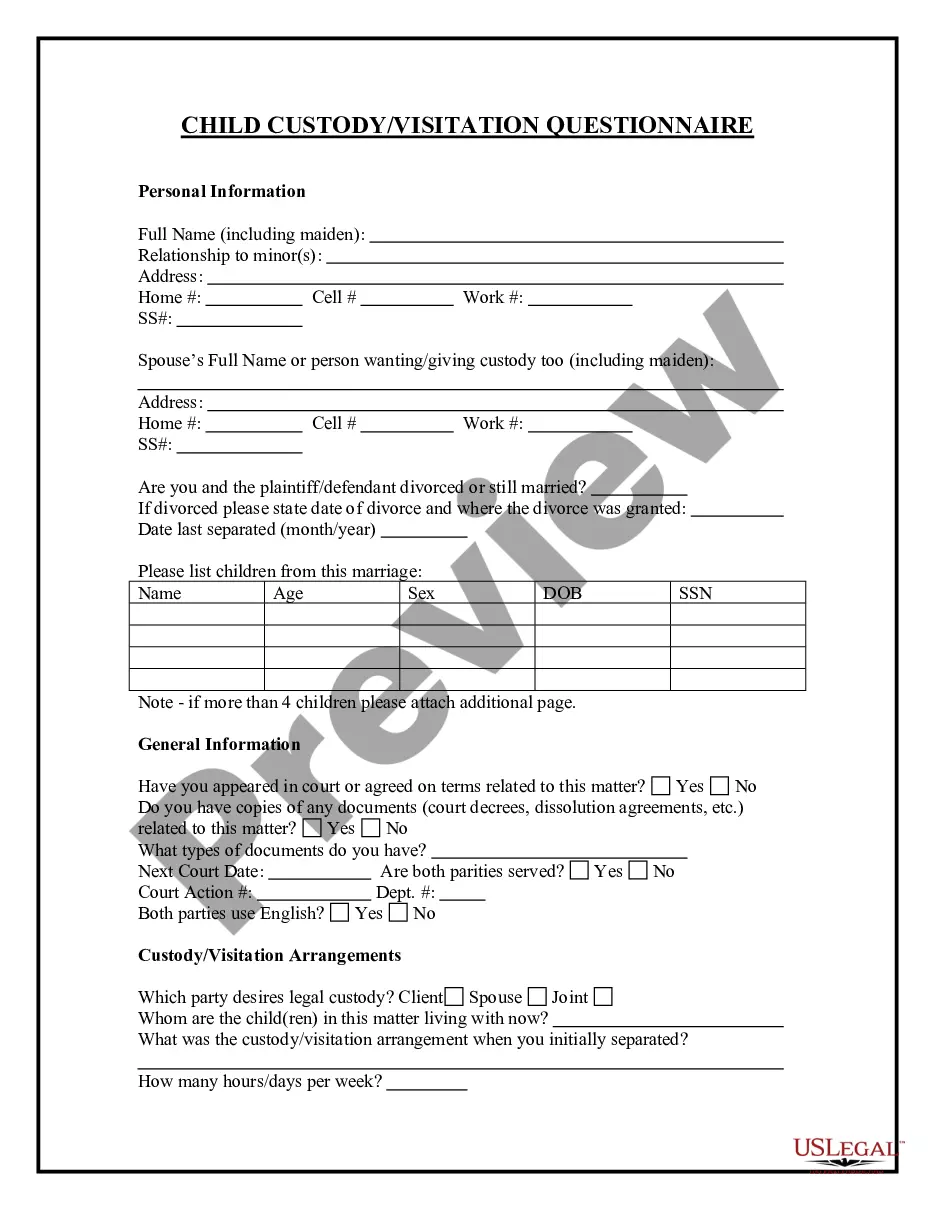
Get your form ready online
Our built-in tools help you complete, sign, share, and store your documents in one place.
Make edits, fill in missing information, and update formatting in US Legal Forms—just like you would in MS Word.
Download a copy, print it, send it by email, or mail it via USPS—whatever works best for your next step.
Sign and collect signatures with our SignNow integration. Send to multiple recipients, set reminders, and more. Go Premium to unlock E-Sign.
If this form requires notarization, complete it online through a secure video call—no need to meet a notary in person or wait for an appointment.
We protect your documents and personal data by following strict security and privacy standards.

Make edits, fill in missing information, and update formatting in US Legal Forms—just like you would in MS Word.

Download a copy, print it, send it by email, or mail it via USPS—whatever works best for your next step.

Sign and collect signatures with our SignNow integration. Send to multiple recipients, set reminders, and more. Go Premium to unlock E-Sign.

If this form requires notarization, complete it online through a secure video call—no need to meet a notary in person or wait for an appointment.

We protect your documents and personal data by following strict security and privacy standards.
Looking for another form?



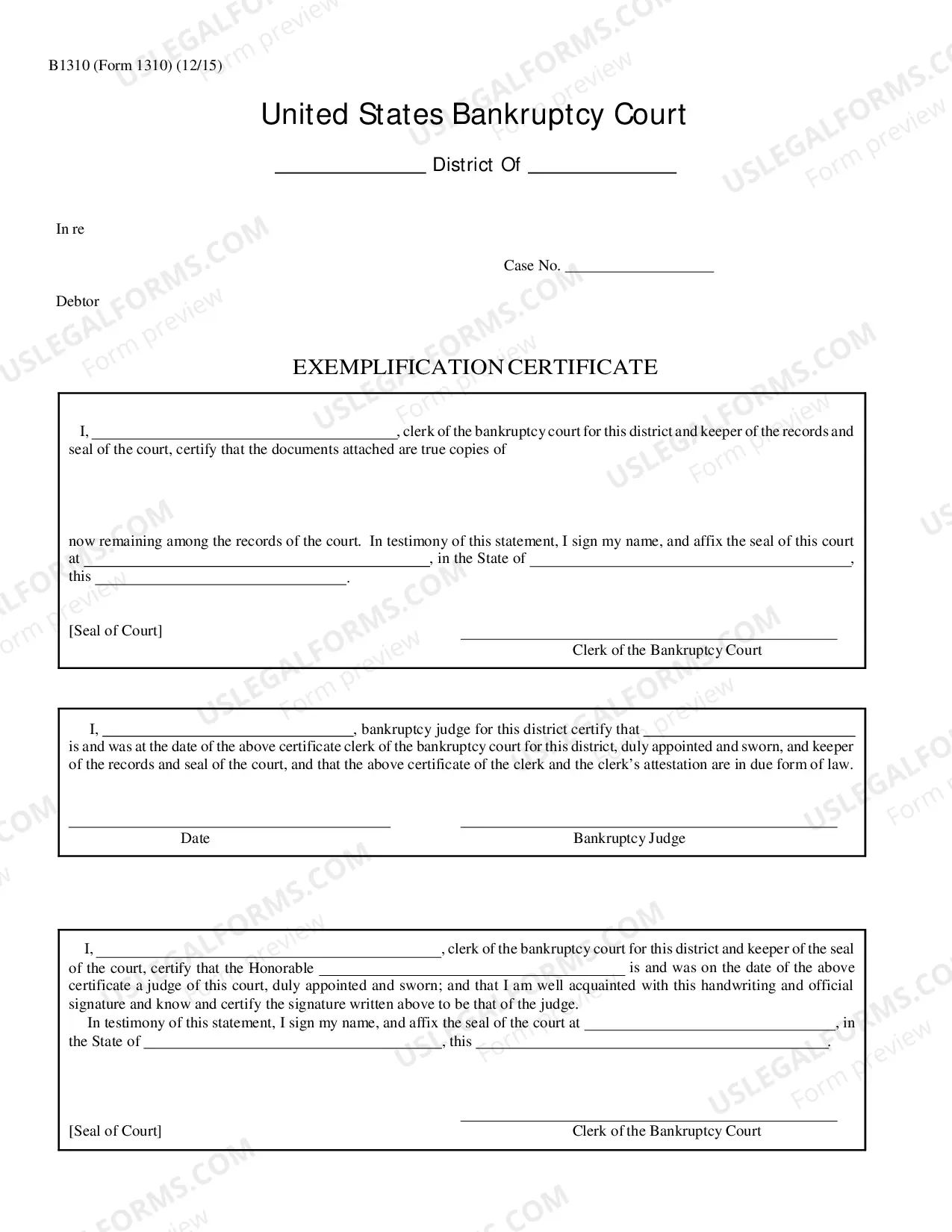

How to fill out Visitation Guidelines?
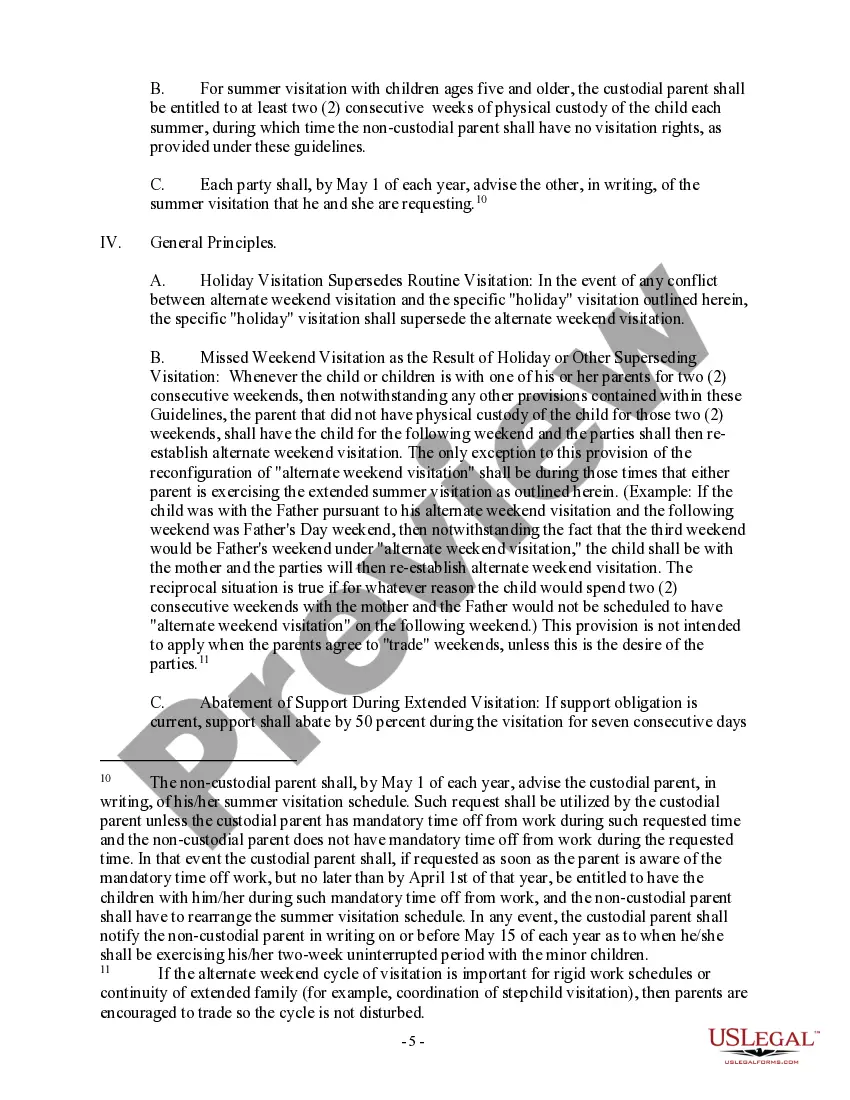
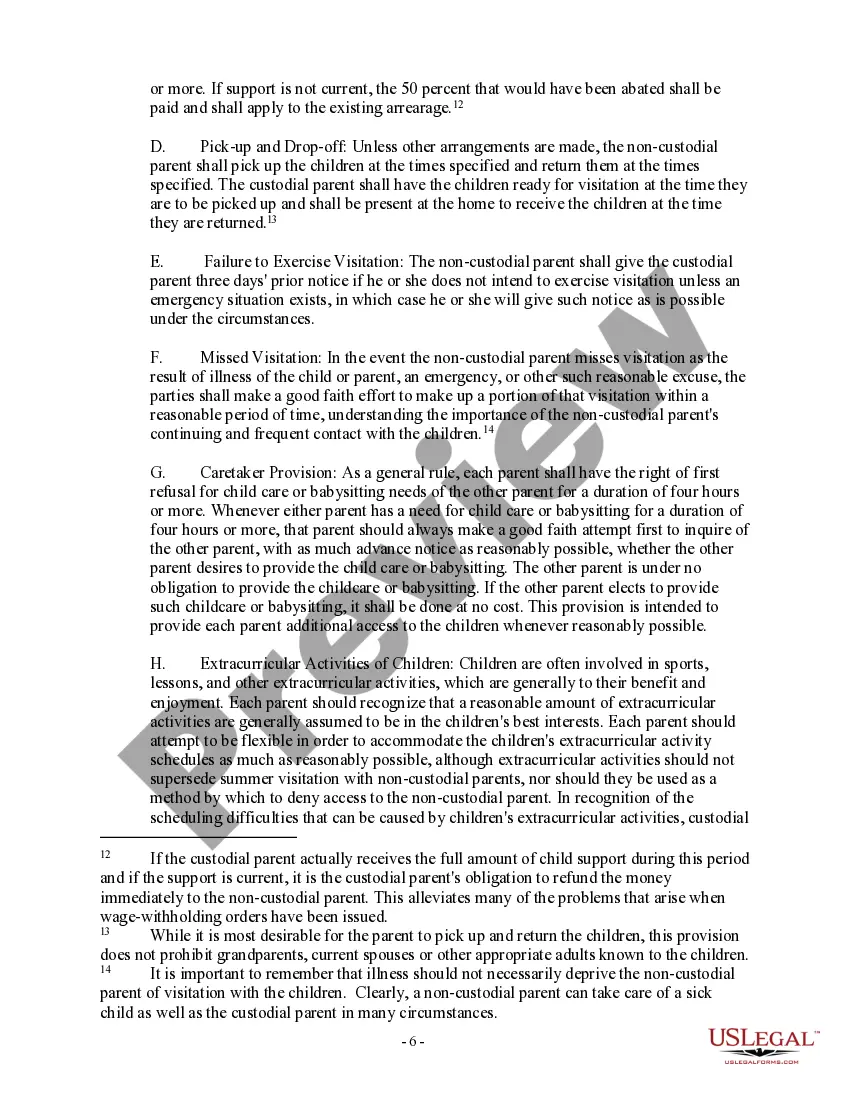
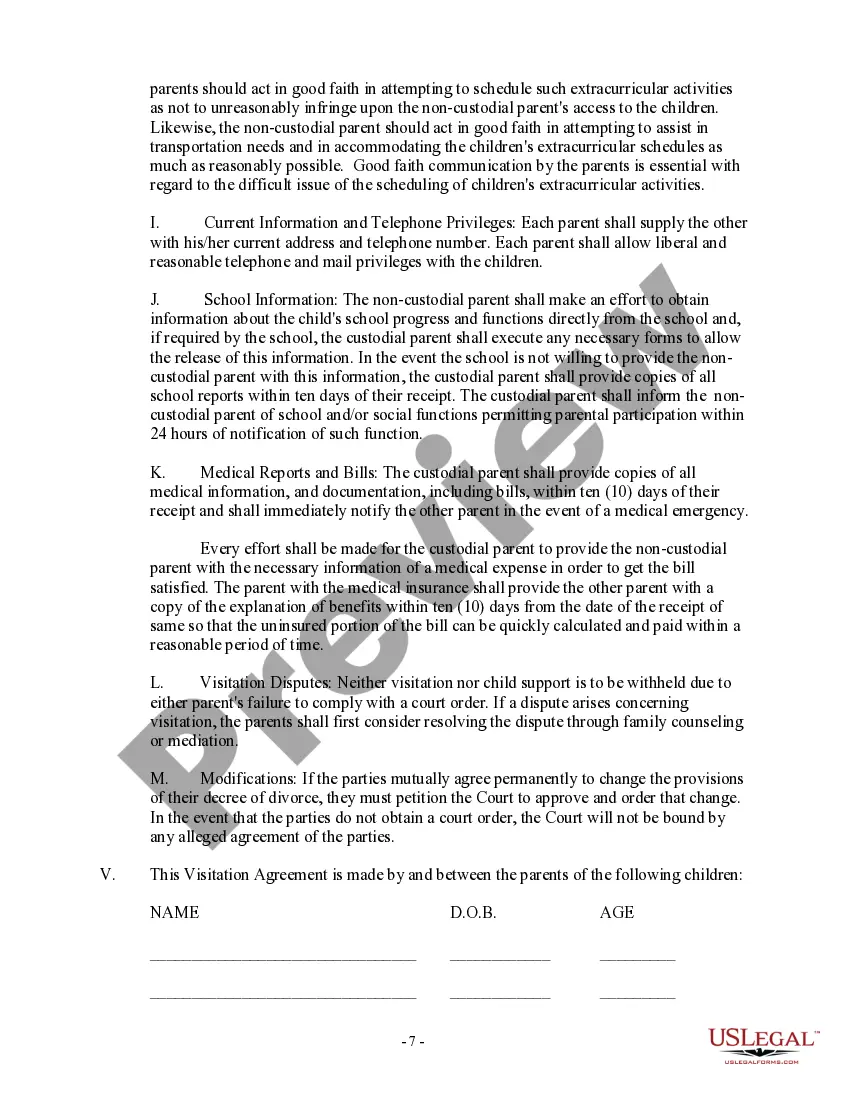
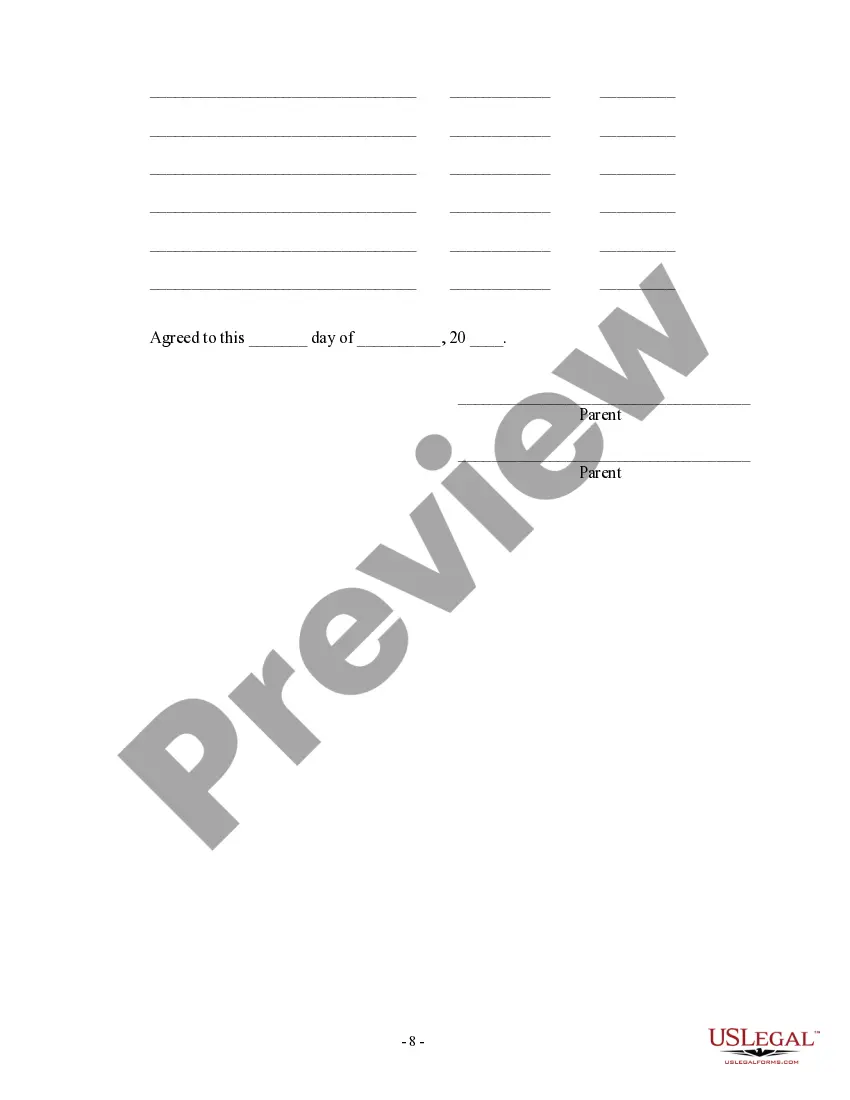
It’s widely acknowledged that one cannot instantly become a legal expert, nor can you quickly learn how to draft an Order For Visitation without having a specialized skill set. Compiling legal documentation is a lengthy process that demands specific training and expertise. So why not delegate the creation of the Order For Visitation to the professionals.
With US Legal Forms, which boasts one of the most extensive libraries of legal templates, you can access everything from judicial documents to templates for internal corporate communications. We understand how vital it is to comply with federal and state laws and regulations. That’s why, on our platform, all forms are tailored to specific locations and are current.
Here’s how you can begin with our website and obtain the document you require in just minutes.
You can regain access to your documents from the My documents section at any time. If you are an existing customer, you can simply Log In to find and download the template from the same section.
Regardless of the reason for your paperwork—be it financial, legal, or personal—our website has you covered. Try US Legal Forms today!
- Search for the form you need using the search bar at the top of the page.
- Preview it (if this option is available) and review the accompanying description to see if the Order For Visitation is what you seek.
- Repeat your search if you need any additional form.
- Create a complimentary account and choose a subscription plan to purchase the form.
- Click Buy now. After the payment is processed, you can download the Order For Visitation, fill it out, print it, and send or mail it to the relevant individuals or organizations.
Form popularity
FAQ
One of the biggest mistakes in a custody battle is failing to prioritize the child's needs over personal disputes. This can lead to poor decisions that may negatively impact the child's welfare and your position in court. This is where obtaining an order for visitation becomes essential, as it helps outline your rights and responsibilities clearly.
Ing to a report from the Washington State Center for Court Research, the most commonly reported balance of parenting time was 50/50 between mother and father, with nearly 21 percent of cases.
There is no specific age ? such as 12 or 14 ? when children get to decide who they will live with. Each child is unique, and their views are one factor that a judge will consider when deciding what parenting arrangement is in their best interests.
Access is a right of the child and not a right of the parent. A parent with custody cannot refuse access to the other parent, unless there is a Court order stating that. If a parent with custody refuses access, he or she can be found in contempt of Court, fined or possibly imprisoned.
A Child Visitation Letter is a document that divorced or separated parents can use to plan a visit with their child or to inform each other of a breach in their visitation agreement. In most instances, the non-custodial parent sends the letter to the custodial parent.
Close to 80 percent of children under the age of 12 were placed in their mothers' custody in cases where a court order existed. Almost 7 percent were placed in their fathers' custody, and for 13 percent of children, a shared custody arrangement was established.