Child Visitation Schedule Calendar For Parents
Description
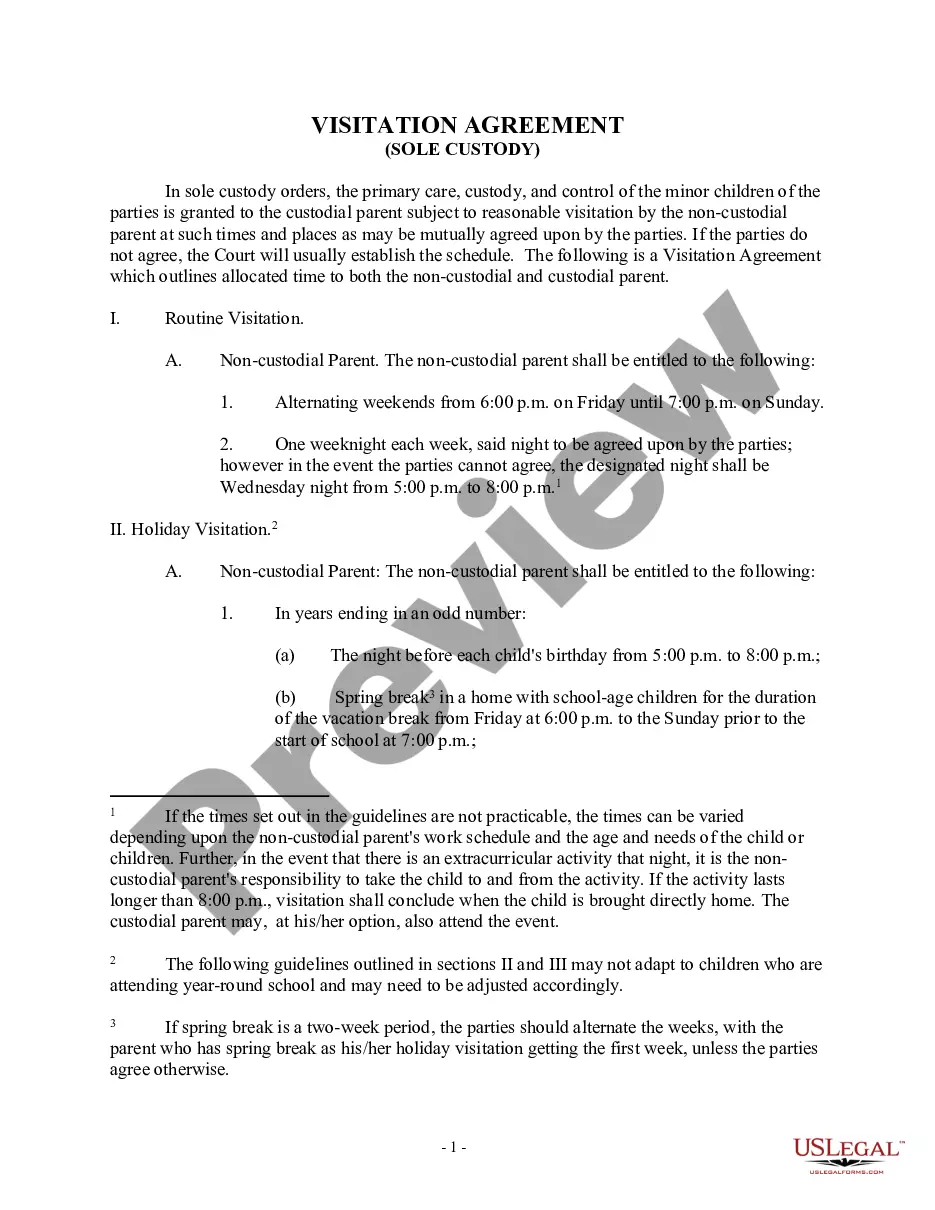



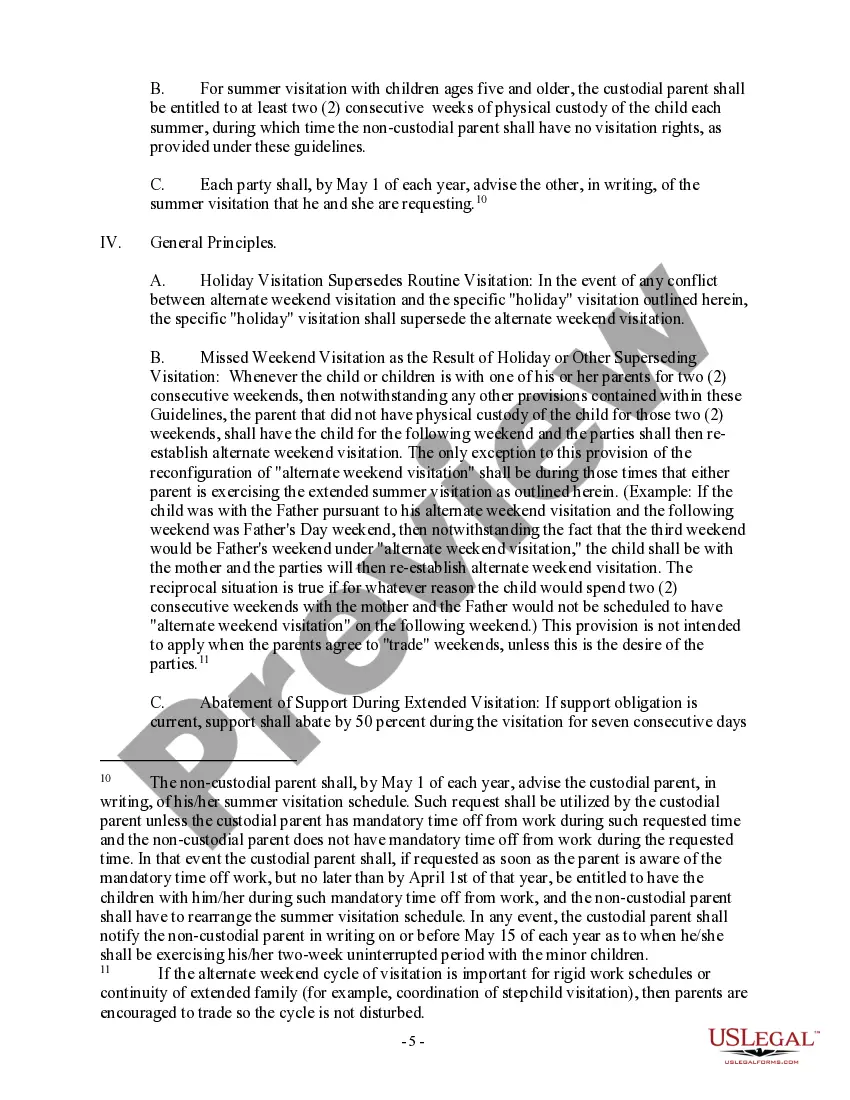
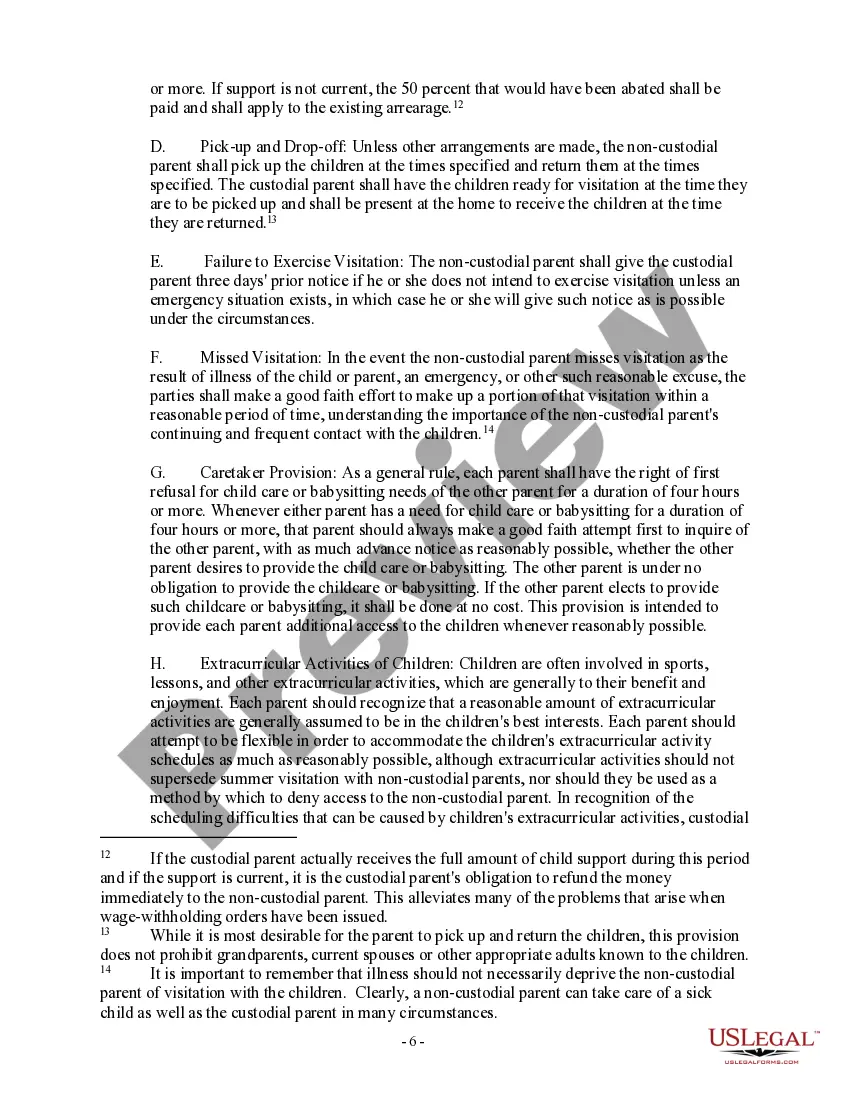



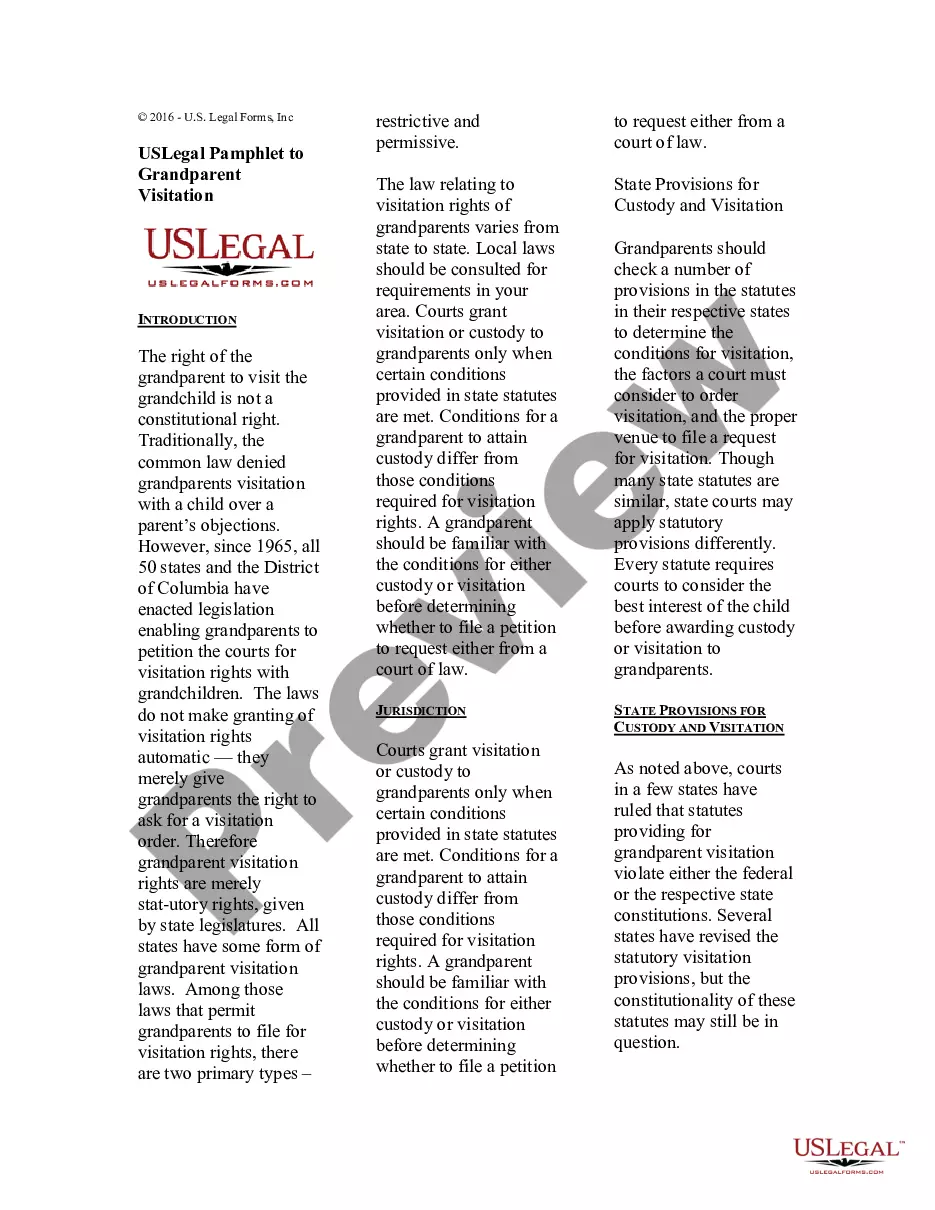


Get your form ready online
Our built-in tools help you complete, sign, share, and store your documents in one place.
Make edits, fill in missing information, and update formatting in US Legal Forms—just like you would in MS Word.
Download a copy, print it, send it by email, or mail it via USPS—whatever works best for your next step.
Sign and collect signatures with our SignNow integration. Send to multiple recipients, set reminders, and more. Go Premium to unlock E-Sign.
If this form requires notarization, complete it online through a secure video call—no need to meet a notary in person or wait for an appointment.
We protect your documents and personal data by following strict security and privacy standards.

Make edits, fill in missing information, and update formatting in US Legal Forms—just like you would in MS Word.

Download a copy, print it, send it by email, or mail it via USPS—whatever works best for your next step.

Sign and collect signatures with our SignNow integration. Send to multiple recipients, set reminders, and more. Go Premium to unlock E-Sign.

If this form requires notarization, complete it online through a secure video call—no need to meet a notary in person or wait for an appointment.

We protect your documents and personal data by following strict security and privacy standards.
Looking for another form?





How to fill out Visitation Guidelines?
Locating a reliable source to obtain the most up-to-date and suitable legal templates is a significant part of dealing with red tape.
Selecting the appropriate legal documents necessitates precision and meticulousness, which is why it is crucial to obtain Child Visitation Schedule Calendar For Parents exclusively from reputable sources, such as US Legal Forms. An incorrect template can squander your time and delay your situation.
Once you have the form on your device, you can modify it with the editor or print it to complete manually. Eliminate the stress associated with your legal documentation. Browse the extensive US Legal Forms catalog to discover legal templates, verify their suitability for your situation, and download them immediately.
- Utilize the library navigation or search tool to find your template.
- Examine the details of the form to ensure it meets the criteria of your state and county.
- Check the form preview, if available, to confirm that the form is indeed the one you require.
- Return to the search and look for the suitable document if the Child Visitation Schedule Calendar For Parents does not meet your needs.
- Once you are confident about the form’s applicability, download it.
- If you are a registered user, click Log in to verify your identity and access your chosen templates in My documents.
- If you do not have an account yet, click Buy now to acquire the template.
- Choose the pricing option that fits your needs.
- Continue with the registration to complete your purchase.
- Finalize your transaction by selecting a payment method (credit card or PayPal).
- Choose the document format for downloading Child Visitation Schedule Calendar For Parents.
Form popularity
FAQ
Attorney Zeiderman lists 5-2-2-5 and alternating weeks as the two most popular schedules. "I would say that there are two plans that work," says Zeiderman. "5-2-2-5 is extremely popular, but it means lots of transitions for the child. Some children do very well with this plan, but other children dislike the transition.
4-3-3-4 schedule: As the title suggests, the 4-3-3-4 is the inverse of 3-4-4-3. Instead of the first parent in the rotation starting with three days, he/she starts with four. Then, the other parent gets the children for three days.
The 3-4-4-3 schedule splits up each week. As there are 7 days in a week, the child(ren) spends, 3 days with the first parent, then 4 days with the other. The following week, the child(ren) spends 4 days with the first parent and 3 days with the other. This alternating pattern continues each week.
It typically involves the child staying with their primary caregiver most of the time but spending every other weekend with their other parent. If the parent lives some distance away, it often involves that parent driving, flying or taking the train to visit their child.
70 30 custody works out to 104 days or nights per year for one parent and 261 for the other. Assuming the schedule is 2 nights out of every 7, you calculate 2/7 of the number of days in a year.