Educational Power Of Attorney With Dementia
Description
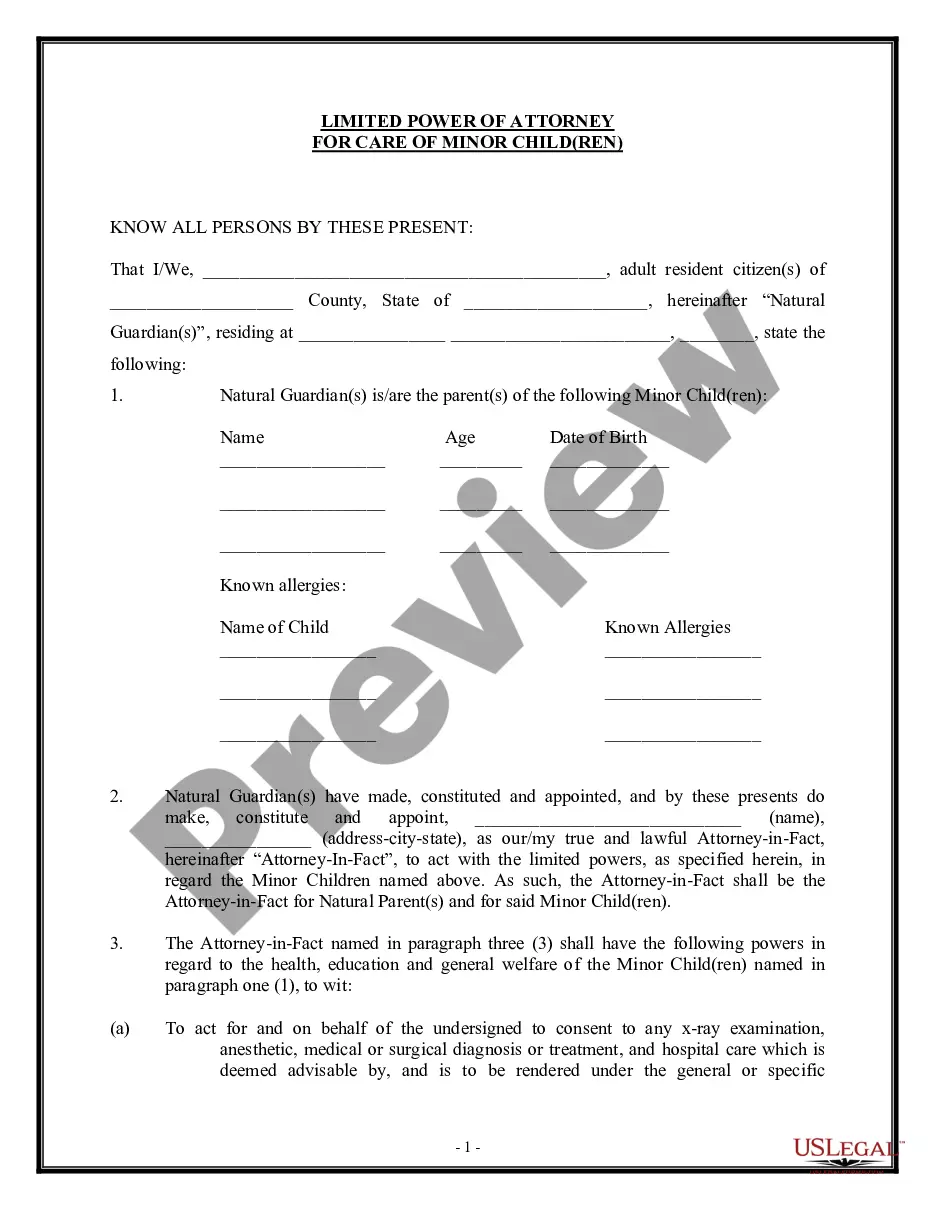
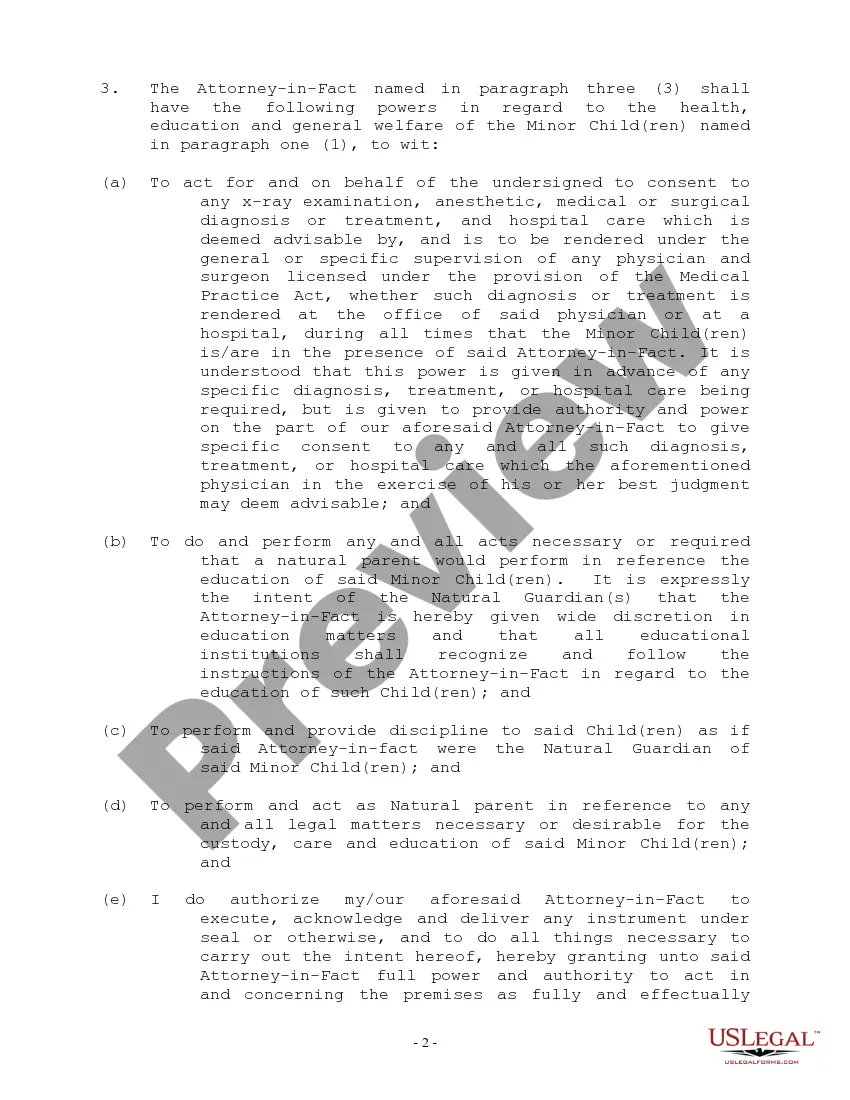
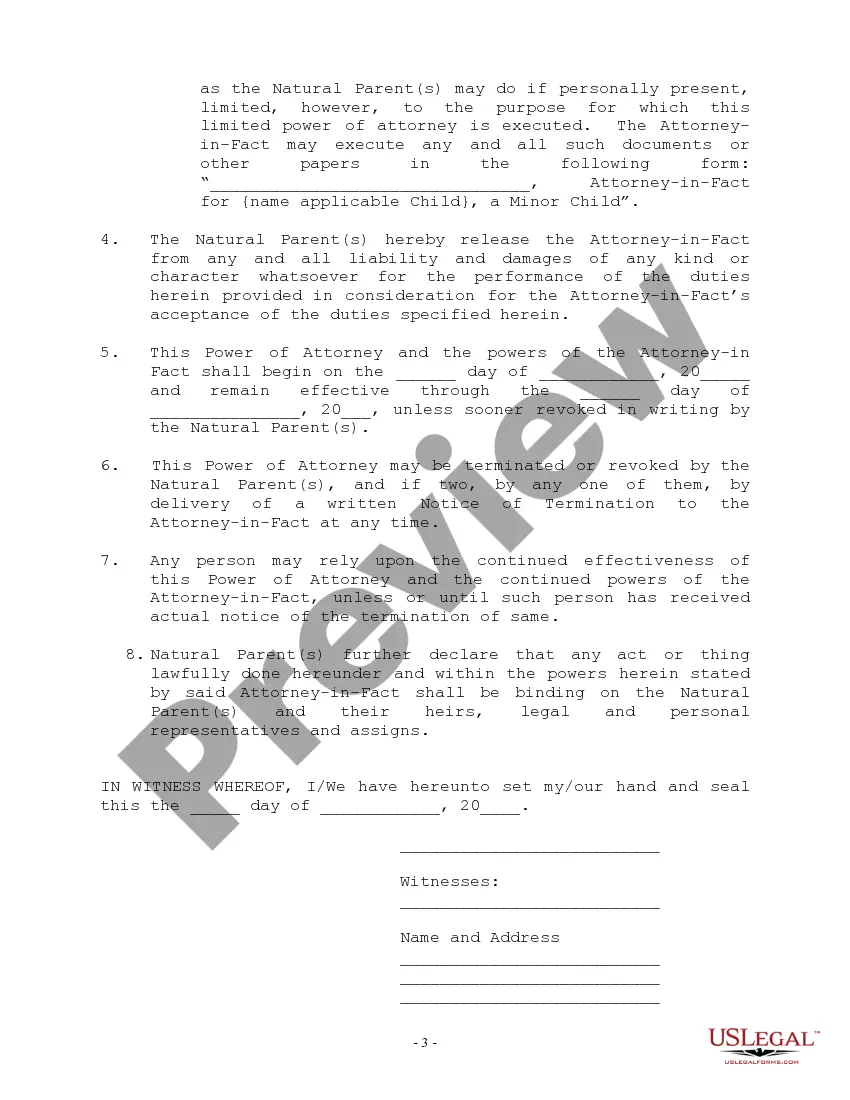
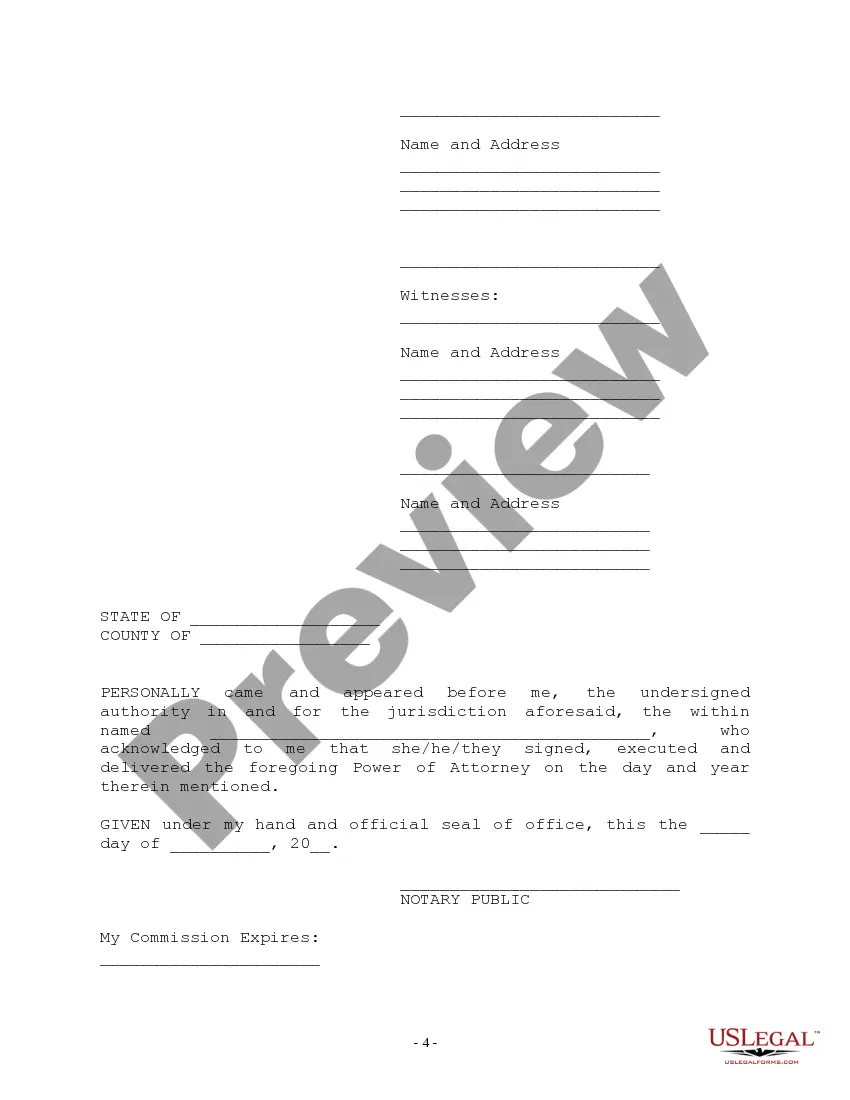
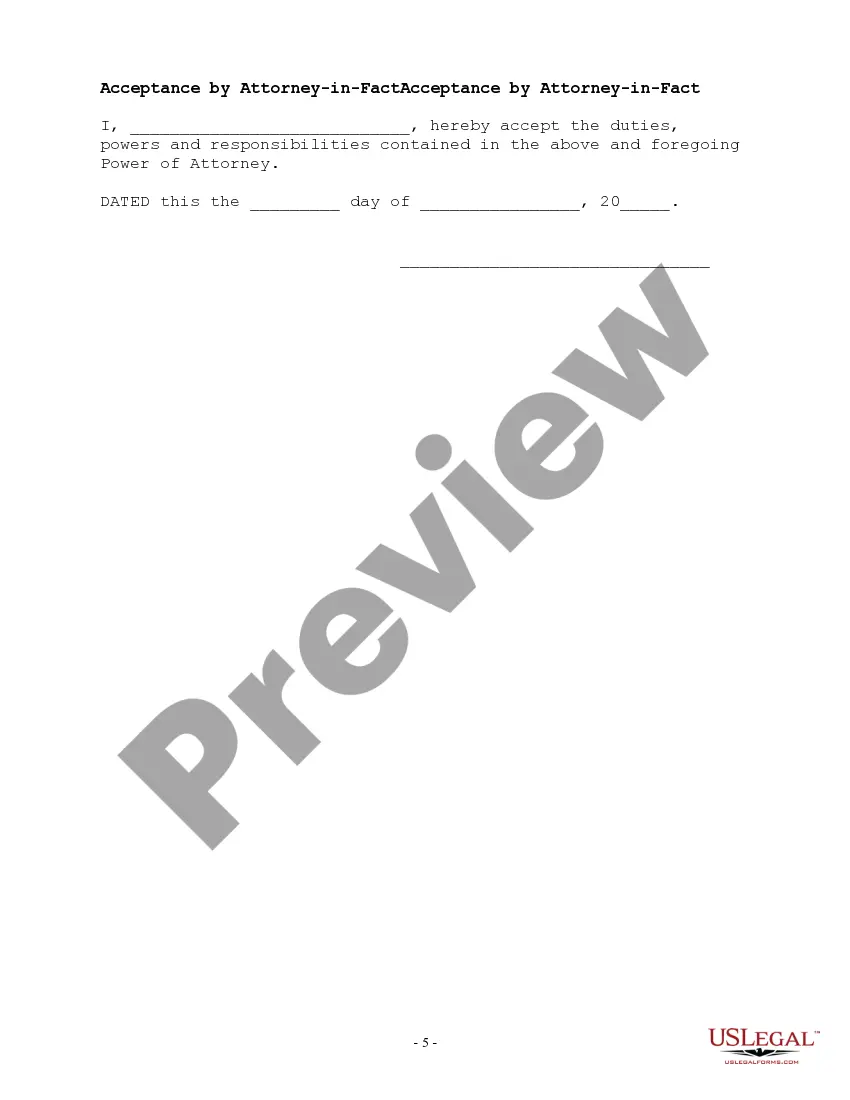
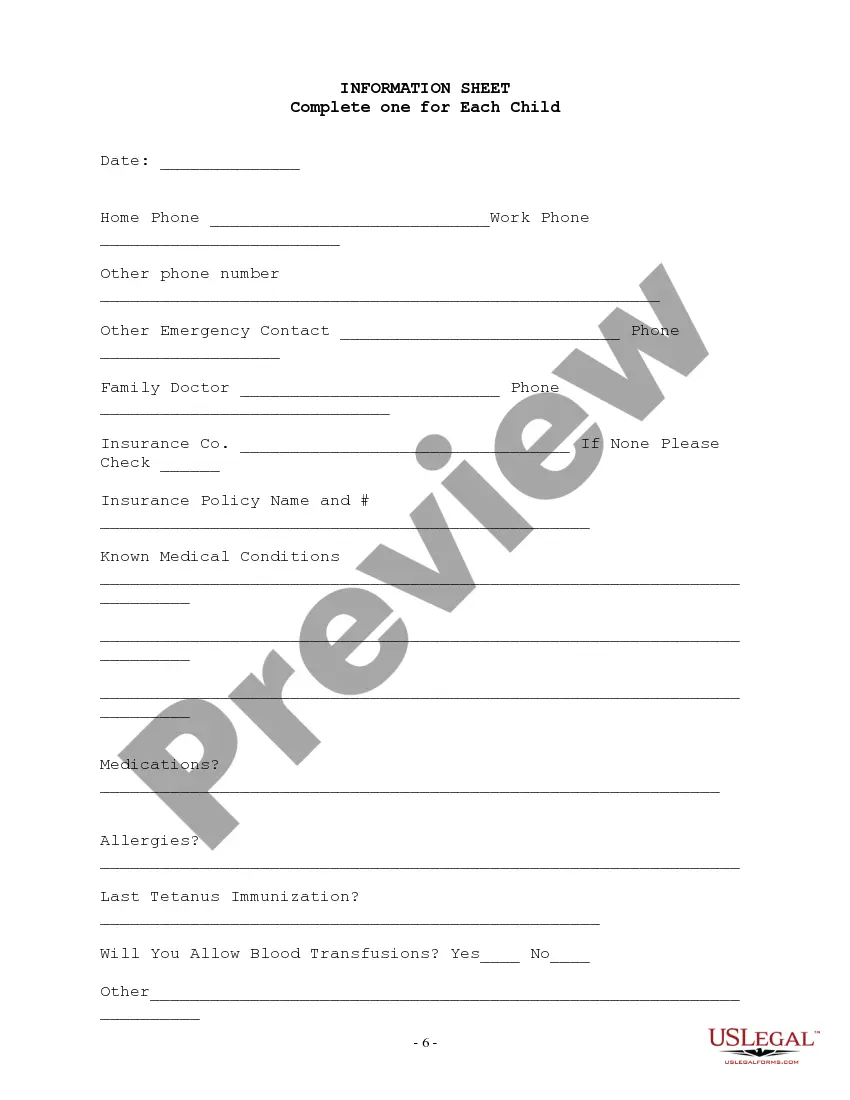

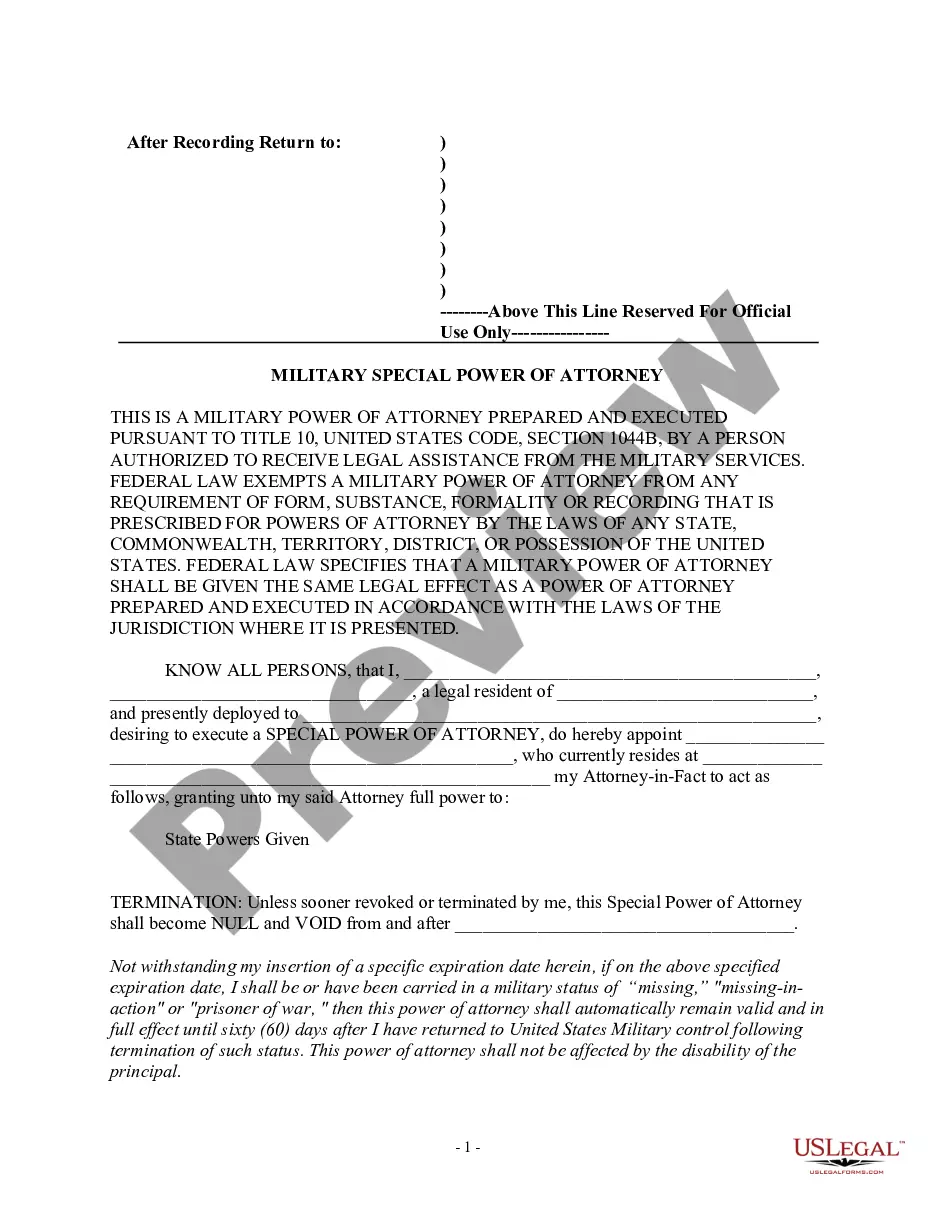
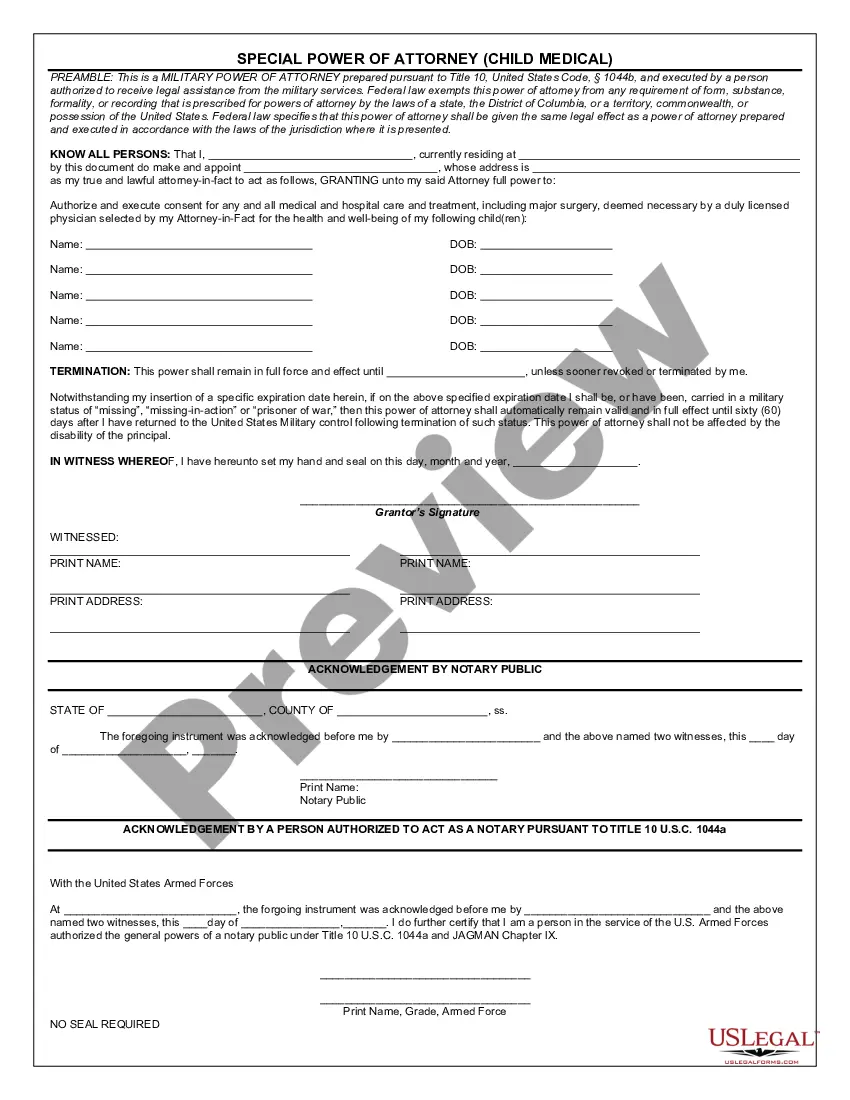
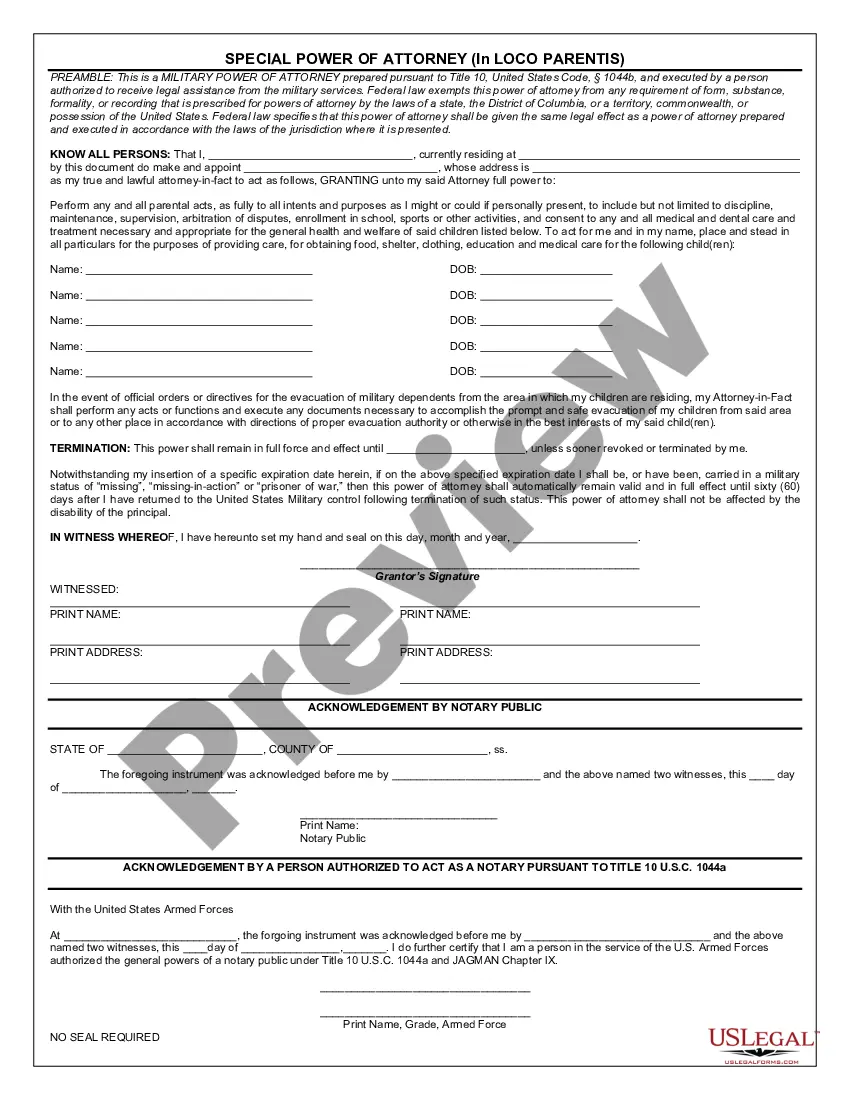
How to fill out Power Of Attorney For Care Of Minor Child Or Children?
Using legal document samples that comply with federal and regional regulations is crucial, and the internet offers numerous options to choose from. But what’s the point in wasting time looking for the right Educational Power Of Attorney With Dementia sample on the web if the US Legal Forms online library already has such templates collected in one place?
US Legal Forms is the largest online legal library with over 85,000 fillable templates drafted by lawyers for any professional and personal case. They are easy to browse with all documents arranged by state and purpose of use. Our professionals stay up with legislative updates, so you can always be confident your form is up to date and compliant when acquiring a Educational Power Of Attorney With Dementia from our website.
Obtaining a Educational Power Of Attorney With Dementia is quick and easy for both current and new users. If you already have an account with a valid subscription, log in and save the document sample you require in the preferred format. If you are new to our website, follow the instructions below:
- Examine the template utilizing the Preview option or through the text outline to make certain it meets your needs.
- Browse for a different sample utilizing the search tool at the top of the page if needed.
- Click Buy Now when you’ve found the correct form and choose a subscription plan.
- Register for an account or log in and make a payment with PayPal or a credit card.
- Select the best format for your Educational Power Of Attorney With Dementia and download it.
All documents you find through US Legal Forms are multi-usable. To re-download and fill out earlier purchased forms, open the My Forms tab in your profile. Enjoy the most extensive and simple-to-use legal paperwork service!
Form popularity
FAQ
If you want to have your own account but would prefer someone else to help manage it, such as a close relative or friend, you can ask your bank for a 'third party mandate'. This allows someone else to be able to sign cheques and manage your account for you.
To sell the property, you need to establish your authority to act on behalf of the legal owner through a power of attorney (POA) or a court order, like a conservatorship, which grants you the legal authority to handle the sale on behalf of your parent.
The average life expectancy after diagnosis for someone with Alzheimer's, the most common form of dementia is 10 years. However, dementia progresses differently in everyone, meaning people can live anywhere from 2 years to 26 years after diagnosis.
The average life expectancy figures for the most common types of dementia are as follows: Alzheimer's disease ? around eight to 10 years. Life expectancy is less if the person is diagnosed in their 80s or 90s. A few people with Alzheimer's live for longer, sometimes for 15 or even 20 years.
In reality, when someone is diagnosed with Alzheimer's disease or dementia, they are not immediately considered incapacitated or of unsound mind. A legal determination of whether someone is incapacitated needs to be made by a court. There is no presumption or immediate trigger based solely on a medical diagnosis.