Disclosures Truth Lending For Bad Credit
Description

Get your form ready online
Our built-in tools help you complete, sign, share, and store your documents in one place.
Make edits, fill in missing information, and update formatting in US Legal Forms—just like you would in MS Word.
Download a copy, print it, send it by email, or mail it via USPS—whatever works best for your next step.
Sign and collect signatures with our SignNow integration. Send to multiple recipients, set reminders, and more. Go Premium to unlock E-Sign.
If this form requires notarization, complete it online through a secure video call—no need to meet a notary in person or wait for an appointment.
We protect your documents and personal data by following strict security and privacy standards.

Make edits, fill in missing information, and update formatting in US Legal Forms—just like you would in MS Word.

Download a copy, print it, send it by email, or mail it via USPS—whatever works best for your next step.

Sign and collect signatures with our SignNow integration. Send to multiple recipients, set reminders, and more. Go Premium to unlock E-Sign.

If this form requires notarization, complete it online through a secure video call—no need to meet a notary in person or wait for an appointment.

We protect your documents and personal data by following strict security and privacy standards.
Looking for another form?








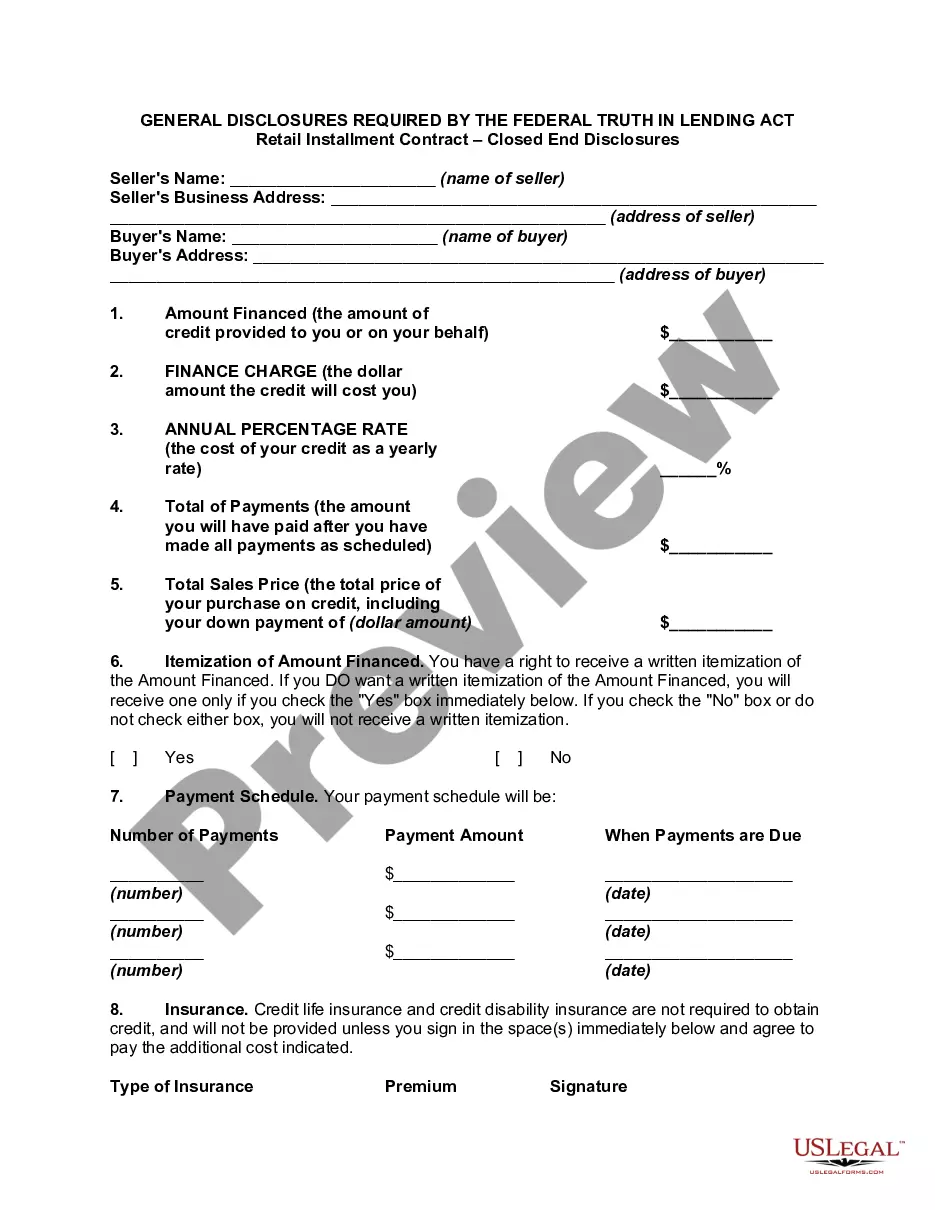
How to fill out General Disclosures Required By The Federal Truth In Lending Act - Retail Installment Contract - Closed End Disclosures?
Whether for corporate reasons or personal matters, everyone must handle legal circumstances at some point in their lifetime.
Filling out legal documents requires meticulous care, starting from selecting the appropriate form template.
With an extensive US Legal Forms library available, you do not have to waste time searching for the suitable template online. Use the library’s easy navigation to find the right document for any situation.
- Acquire the template you need by utilizing the search box or the catalog navigation.
- Review the document’s details to ensure it aligns with your situation, state, and region.
- Click on the document’s preview to inspect it.
- If it is the incorrect paper, return to the search function to locate the Disclosures Truth Lending For Bad Credit template you require.
- Download the file if it satisfies your needs.
- If you possess a US Legal Forms account, simply click Log in to access previously saved documents in My documents.
- If you do not yet have an account, you can acquire the form by clicking Buy now.
- Select the appropriate pricing option.
- Fill out the account registration form.
- Choose your payment method: use a credit card or PayPal account.
- Select the file format you desire and download the Disclosures Truth Lending For Bad Credit.
- Once it is saved, you can complete the document using editing software or print it and finalize it by hand.
Form popularity
FAQ
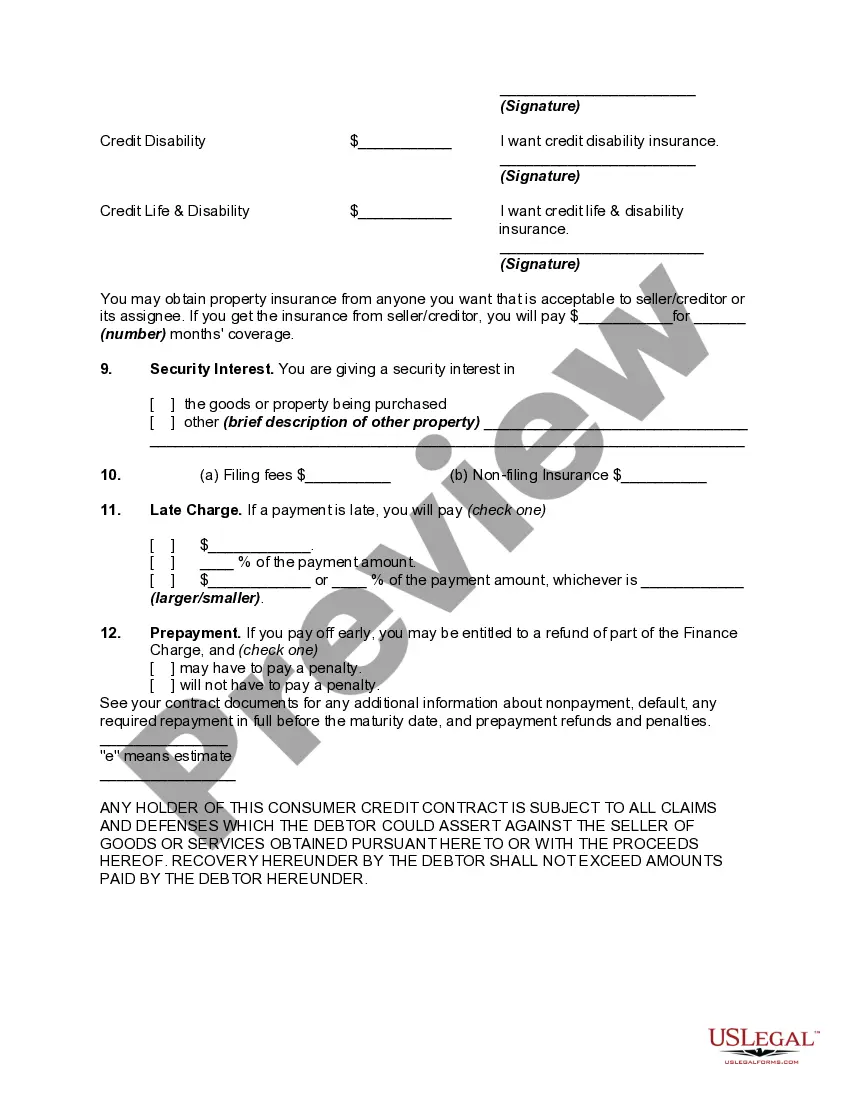
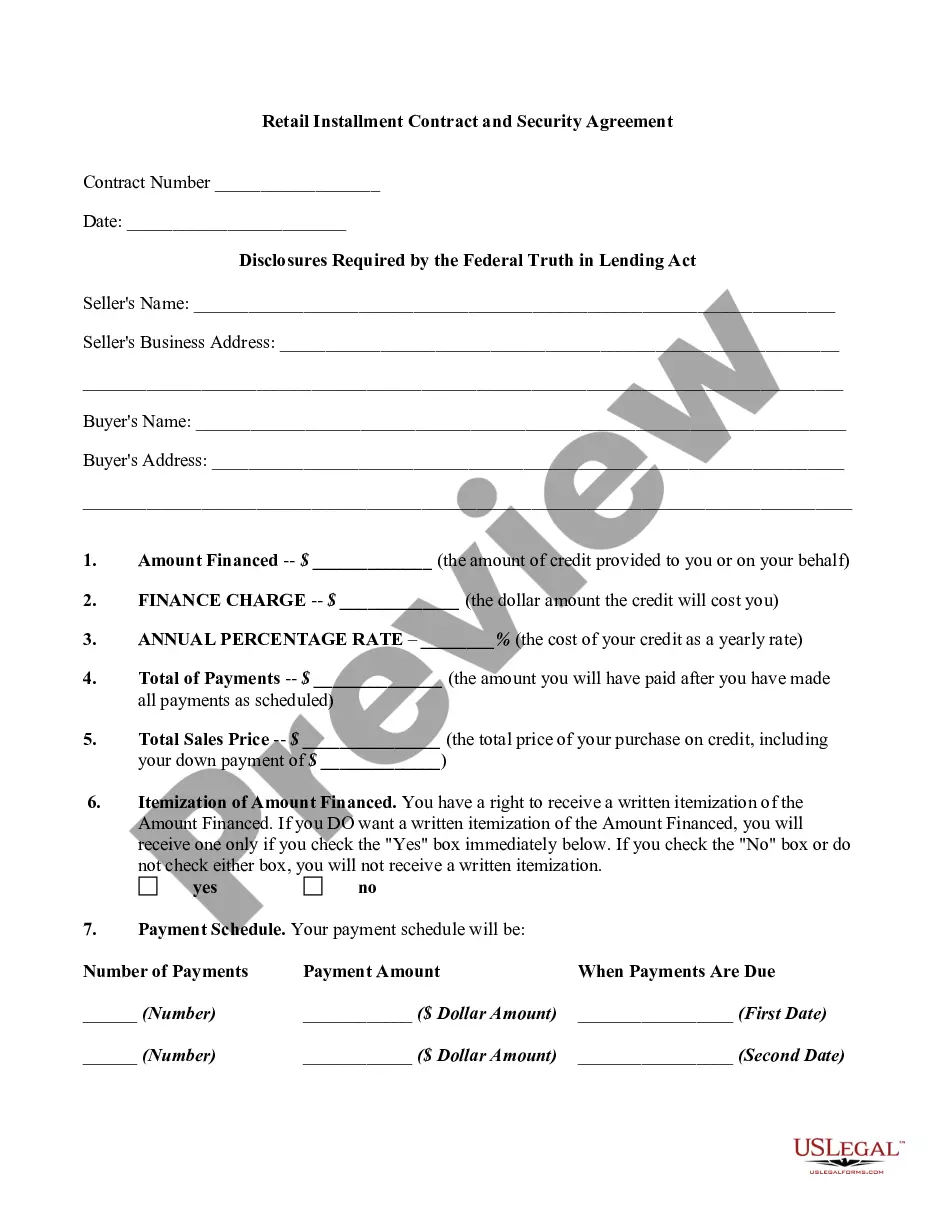
The Truth in Lending Act mandates that contracts must include vital information like the APR, payment schedule, total finance charges, and the total amount financed. This clear presentation helps consumers make informed decisions and understand their financial responsibilities fully. Checking these disclosures truth lending for bad credit can ensure you are prepared.
The Truth in Lending statement is required when a borrower applies for credit lines outside of credit cards, such as personal loans or home loans. It guarantees that borrowers receive vital information, helping ensure informed decisions in their financing. When dealing with disclosures truth lending for bad credit, clarity is key.
Regulation Z, which implements TILA, does not apply to certain loans, including loans made primarily for business or commercial purposes. Additionally, loans secured by real property for investment purposes might also fall outside its scope. Understanding these exclusions is essential when considering your financing options.
A Truth in Lending statement is typically required when a lender extends credit to a consumer. This includes personal loans, home equity lines of credit, and other revolving credit accounts. As you explore disclosures truth lending for bad credit options, ensure that any lender provides this statement to meet regulatory requirements.
Loans that are exempt from the Truth in Lending Act and Real Estate Settlement Procedures Act (RESPA) often include certain types of business loans and loans over a particular amount. Additionally, some temporary loans and specific types of agricultural loans may not be covered. Knowing these exemptions will help you navigate the borrowing landscape more effectively.
Section 108 of TILA deals with specific requirements related to the disclosures of alternative loans and credit offers. It is designed to protect consumers by ensuring they receive clear information about their borrowing options. This section is particularly helpful for those with bad credit, as it mandates transparency in lending practices. Emphasizing disclosures truth lending for bad credit can help you make informed decisions and avoid pitfalls in your credit journey.
Regulation Z is the implementing regulation of the Truth in Lending Act. It outlines the requirements for disclosures that lenders must provide to consumers to promote informed credit use. For those with bad credit, understanding Regulation Z can help you identify your rights and ensure that lenders comply with disclosure requirements. This regulation plays a critical role in ensuring transparency through disclosures truth lending for bad credit.
The Truth in Lending Act (TILA) mandates that lenders disclose the costs of credit. This regulation ensures that consumers, especially those with bad credit, understand the terms and fees associated with their loans. By providing clear disclosures, TILA empowers you to make informed decisions about borrowing. Understanding these disclosures truth lending for bad credit helps you navigate the lending landscape.
A credit card company must disclose the APR, fees, grace periods, payment terms, the consequences of late payments, and the total costs of credit. For borrowers with bad credit, knowing this information can significantly influence financial decision-making. Clarity in these disclosures fosters responsible credit management, helping consumers avoid pitfalls.
TILA requires credit card lenders to disclose the APR, fees associated with the card, and the minimum payment terms. These disclosures are vital for consumers managing bad credit, as they clarify borrowing costs and repayment obligations. By being aware of these terms, cardholders can better manage their credit and avoid falling into debt.