Sample Blind Trust Agreement With Trustee
Description
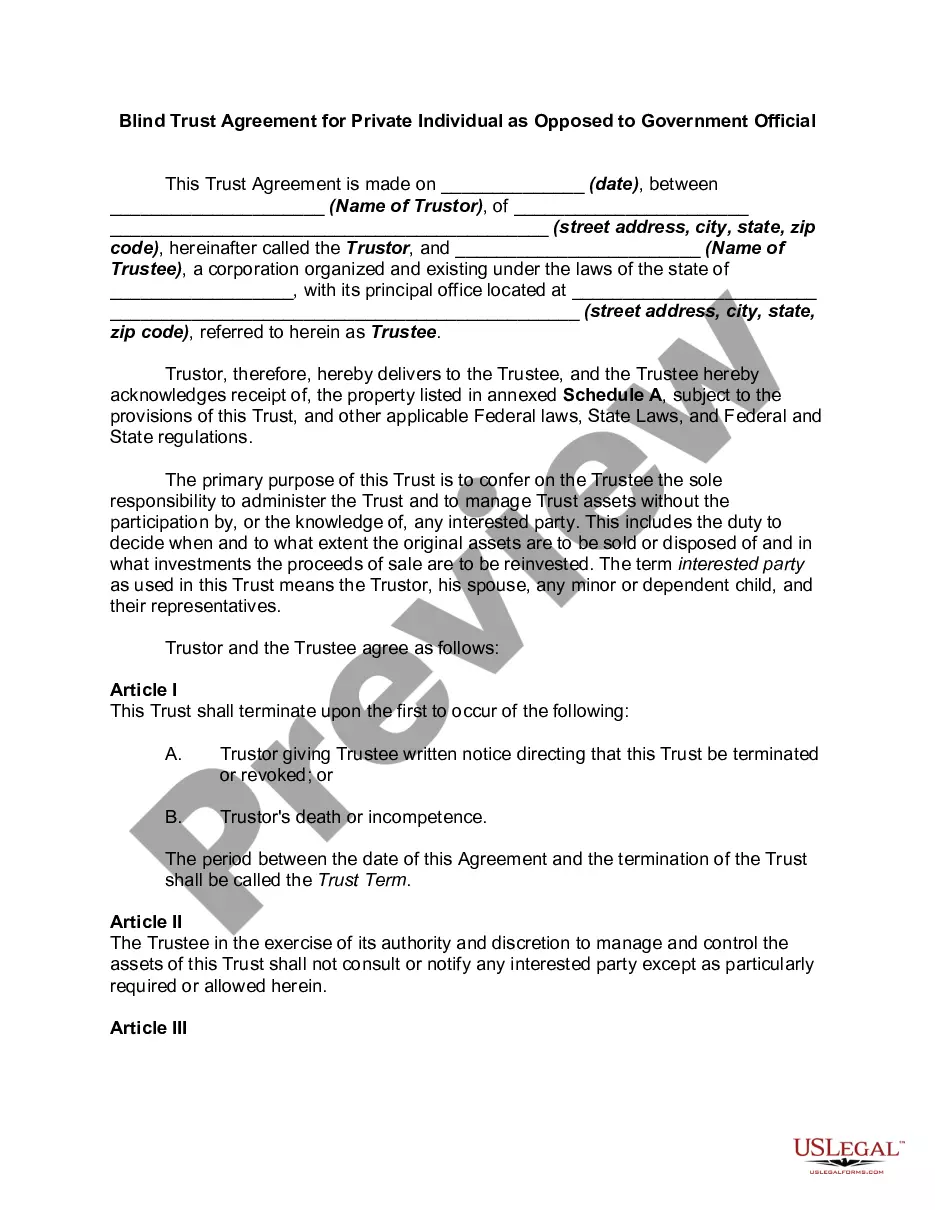
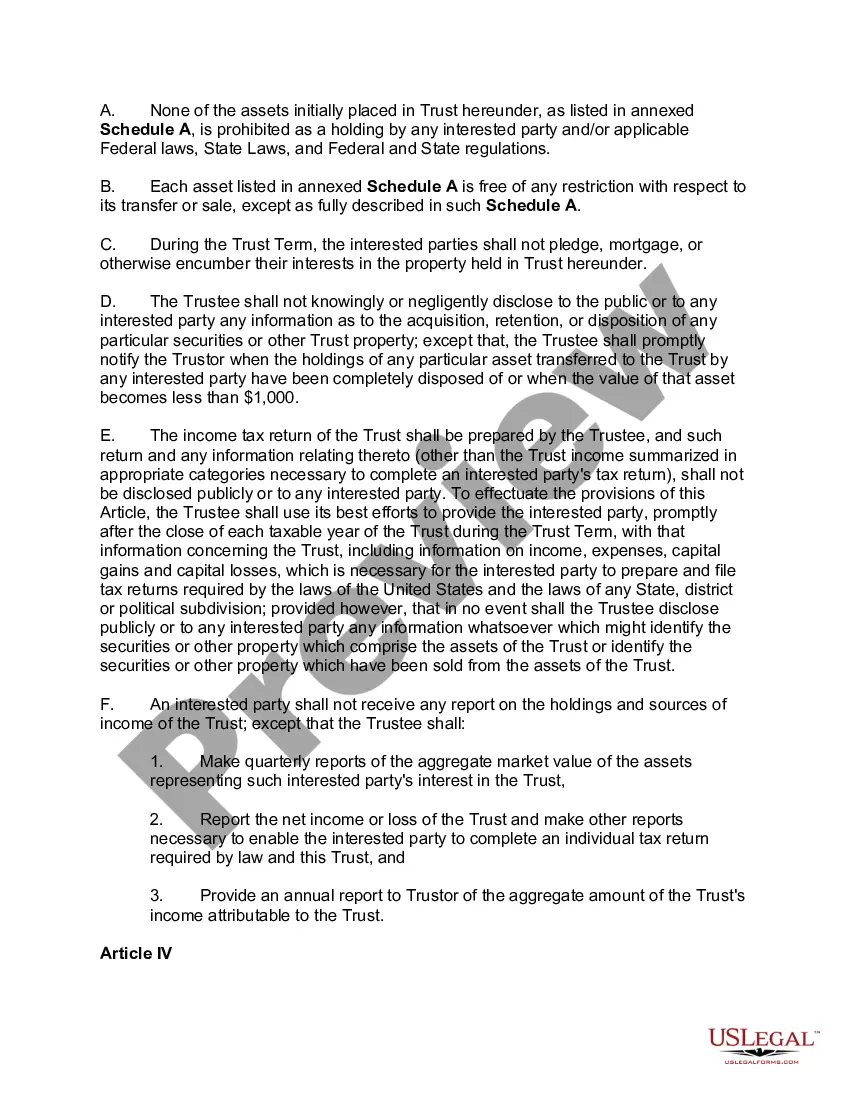
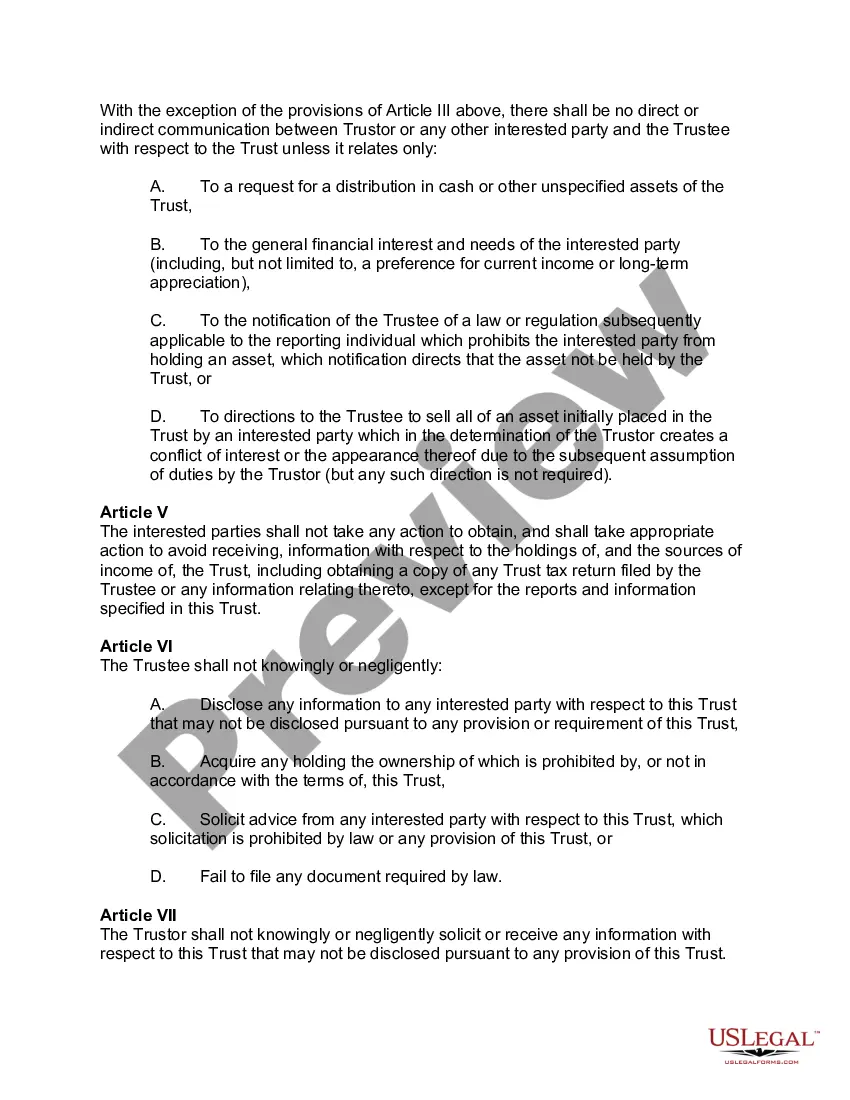
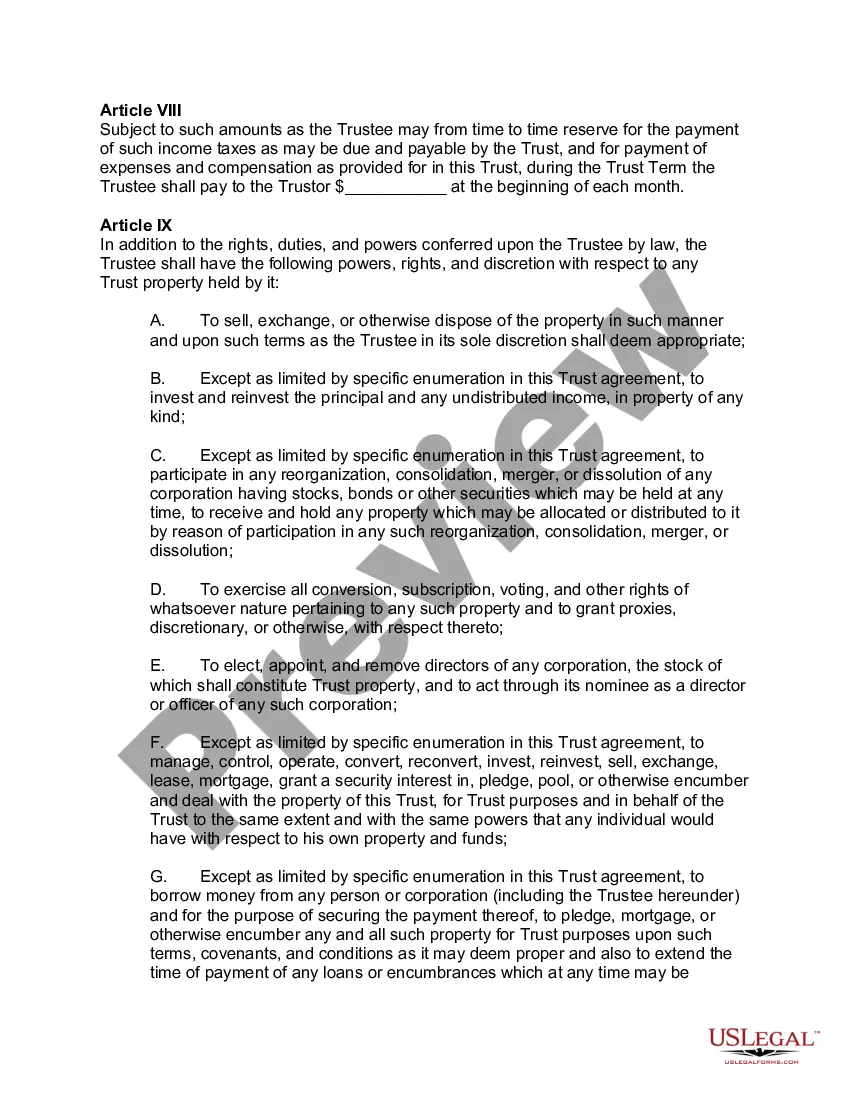
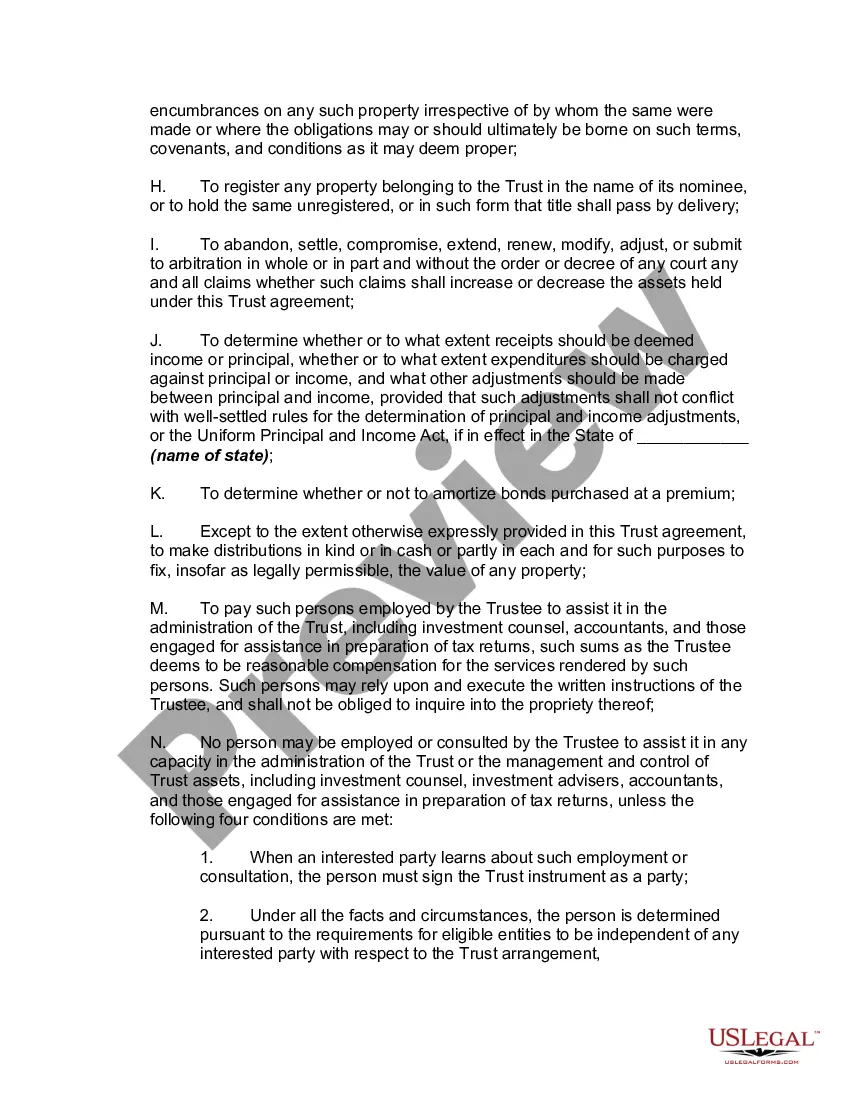
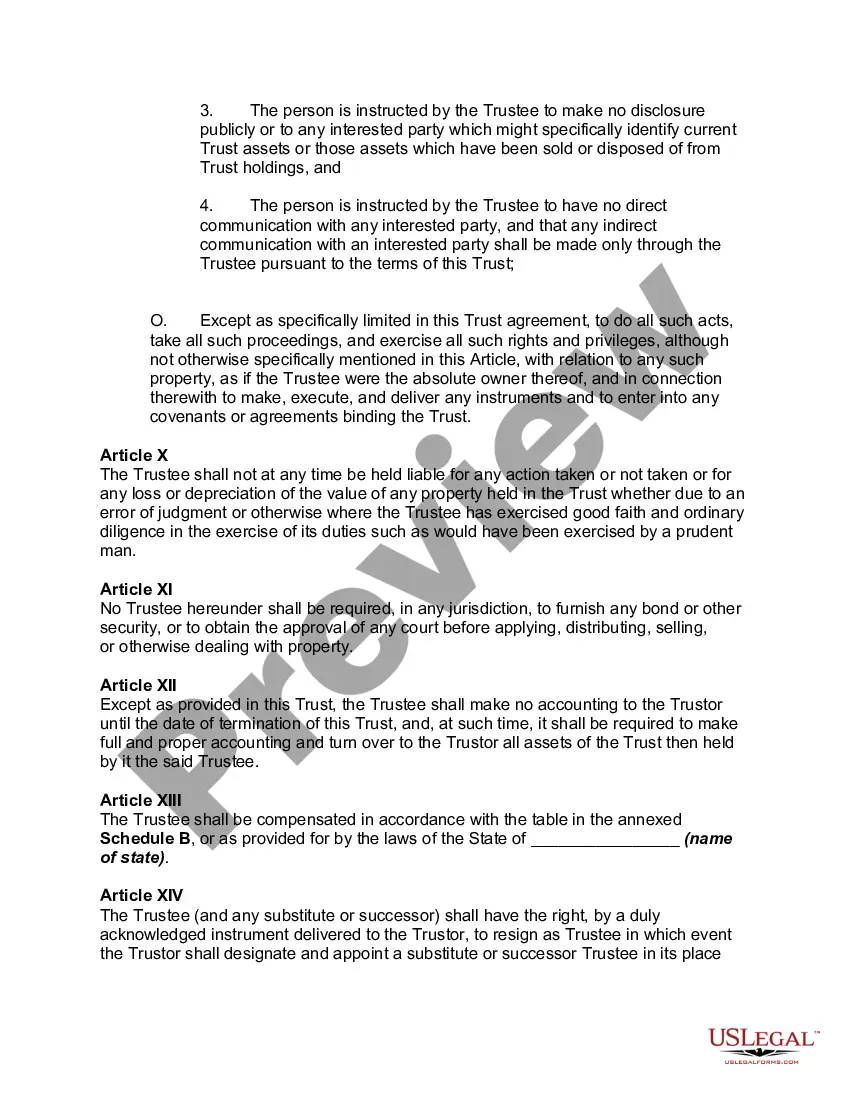
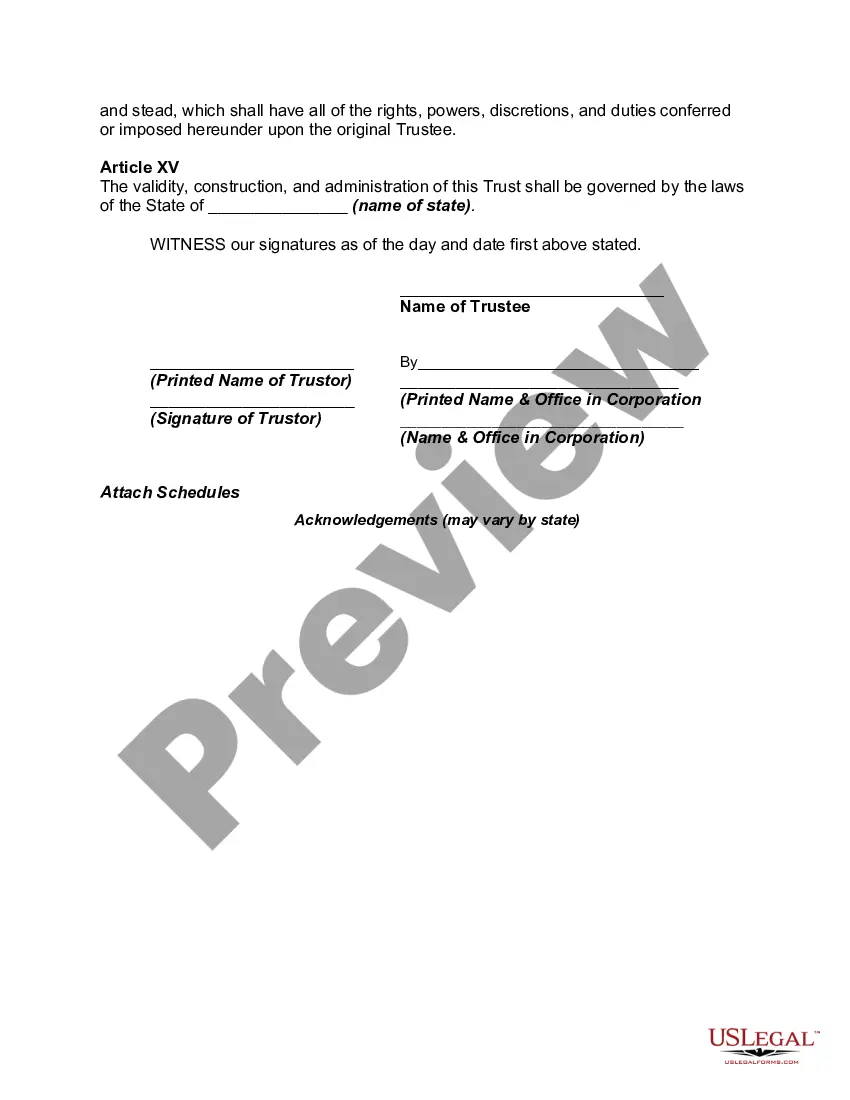
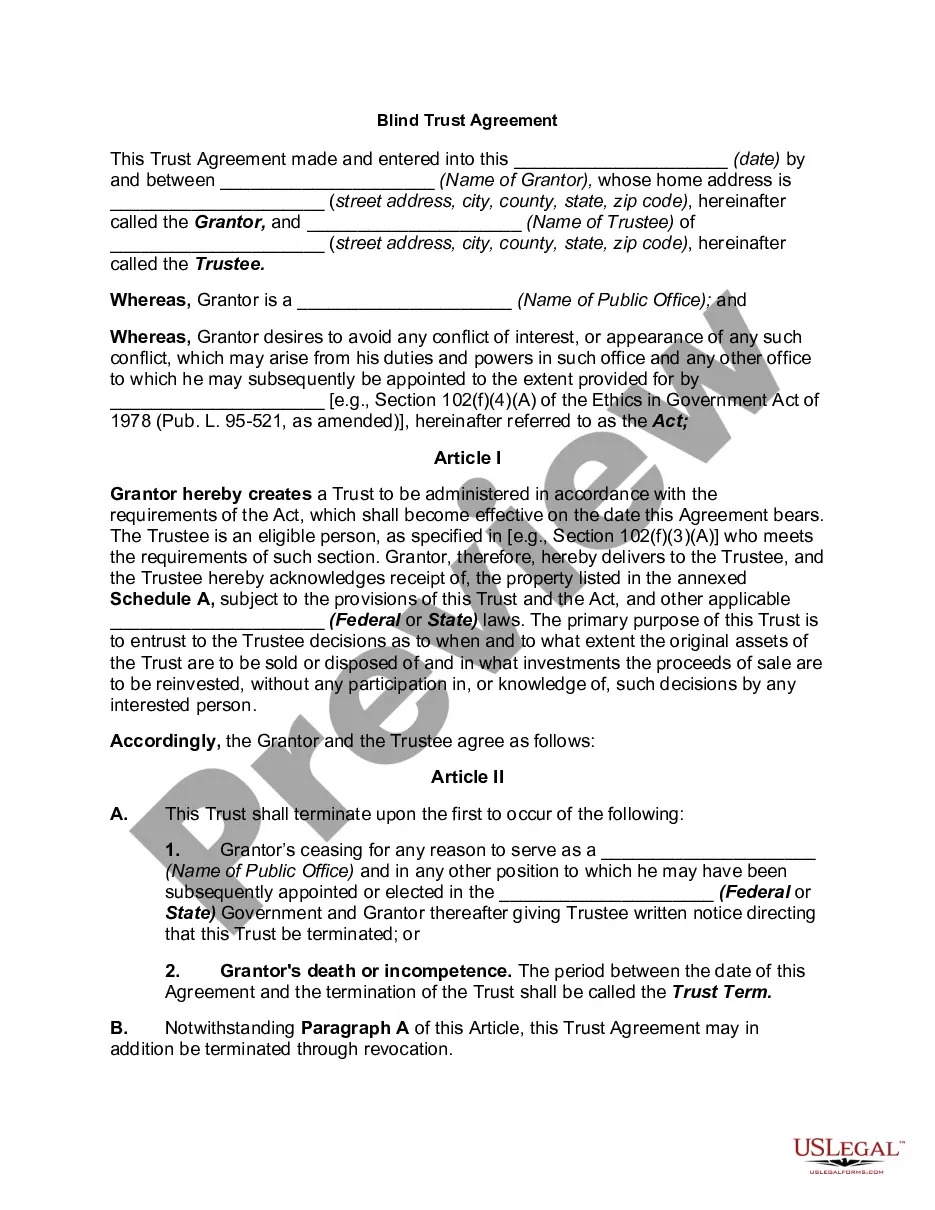
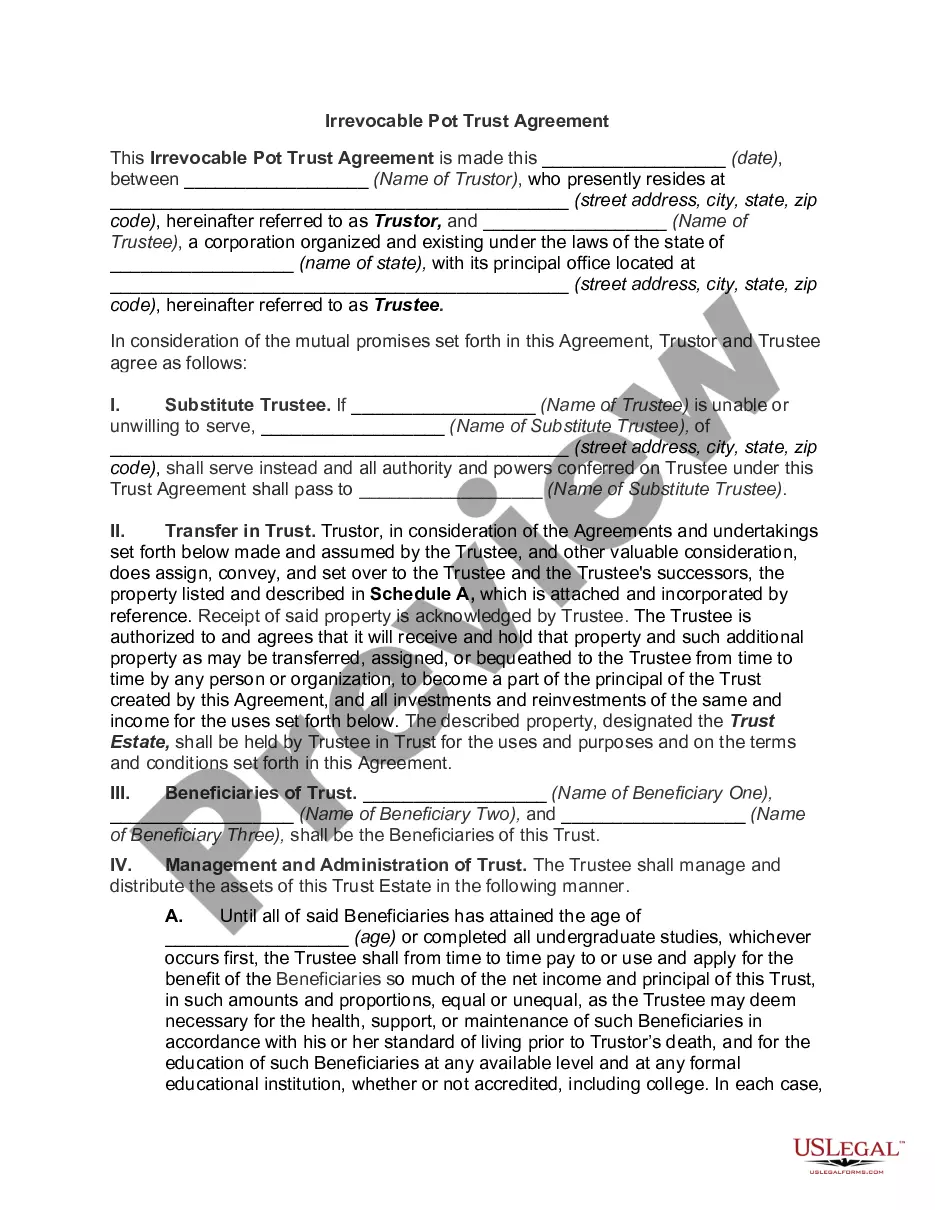
Get your form ready online
Our built-in tools help you complete, sign, share, and store your documents in one place.
Make edits, fill in missing information, and update formatting in US Legal Forms—just like you would in MS Word.
Download a copy, print it, send it by email, or mail it via USPS—whatever works best for your next step.
Sign and collect signatures with our SignNow integration. Send to multiple recipients, set reminders, and more. Go Premium to unlock E-Sign.
If this form requires notarization, complete it online through a secure video call—no need to meet a notary in person or wait for an appointment.
We protect your documents and personal data by following strict security and privacy standards.

Make edits, fill in missing information, and update formatting in US Legal Forms—just like you would in MS Word.

Download a copy, print it, send it by email, or mail it via USPS—whatever works best for your next step.

Sign and collect signatures with our SignNow integration. Send to multiple recipients, set reminders, and more. Go Premium to unlock E-Sign.

If this form requires notarization, complete it online through a secure video call—no need to meet a notary in person or wait for an appointment.

We protect your documents and personal data by following strict security and privacy standards.
Looking for another form?









How to fill out Blind Trust Agreement For Private Individual As Opposed To Government?
Utilizing legal document examples that comply with national and local regulations is crucial, and the web provides numerous choices to select from.
However, what's the benefit of spending time searching for the appropriate Sample Blind Trust Agreement With Trustee template online when the US Legal Forms digital library already compiles such forms in one location.
US Legal Forms is the largest online legal repository with more than 85,000 fillable templates created by attorneys for various professional and personal circumstances.
Review the template using the Preview feature or through the text outline to verify it aligns with your requirements. Search for another sample using the search tool at the top of the page if needed. Click Buy Now once you've identified the appropriate form and choose a subscription plan. Create an account or sign in and complete your payment with PayPal or a credit card. Select the format for your Sample Blind Trust Agreement With Trustee and download it. All templates you find through US Legal Forms are reusable. To re-download and fill out previously saved forms, access the My documents section in your profile. Enjoy the most comprehensive and user-friendly legal document service!
- They are easy to navigate with all documents categorized by state and intended use.
- Our specialists stay updated with legislative changes, ensuring your paperwork is always current and compliant when obtaining a Sample Blind Trust Agreement With Trustee from our site.
- Acquiring a Sample Blind Trust Agreement With Trustee is quick and effortless for both existing and new users.
- If you already possess an account with an active subscription, Log In and download the document sample you require in the correct format.
- If you are new to our site, follow the steps outlined below.
Form popularity
FAQ
How to Set Up a Blind Trust Gather the documentation for the assets that you want put into the blind trust. ... Appoint a trustee. ... Create the trust agreement. ... Sign the trust and have it notarized, taking care to follow any recording laws that your state has. Officially transfer the relevant assets into the trust.
A blind trust is most common with public officials whose decisions can directly affect the financial markets, but another example would be creating a blind trust to hide its monetary value from an individual whose behavior and actions would change if they were privy to it.
The trustee of the trust is a financial institution, an attorney, a certified public accountant, a broker, or an investment adviser, who (in the case of a financial institution or investment company, any officer or employee involved in the management or control of the trust): (A) Is independent of and unassociated with ...
In a blind trust, an individual places assets that could otherwise create conflicts of interest into an asset vehicle ("trust"). Control over the trust and its assets are given to an independent trustee, who may buy and sell assets without the knowledge or consent of the beneficiary ("blind").
The trustee must be a third party who doesn't have a close, personal relationship to the trustor. This is necessary for a blind trust to serve its intended purposes: avoid conflicts of interest and achieve a high level of privacy.