Deceased Decedent Estate Foreign Assets
Description
Get your form ready online
Our built-in tools help you complete, sign, share, and store your documents in one place.
Make edits, fill in missing information, and update formatting in US Legal Forms—just like you would in MS Word.
Download a copy, print it, send it by email, or mail it via USPS—whatever works best for your next step.
Sign and collect signatures with our SignNow integration. Send to multiple recipients, set reminders, and more. Go Premium to unlock E-Sign.
If this form requires notarization, complete it online through a secure video call—no need to meet a notary in person or wait for an appointment.
We protect your documents and personal data by following strict security and privacy standards.

Make edits, fill in missing information, and update formatting in US Legal Forms—just like you would in MS Word.

Download a copy, print it, send it by email, or mail it via USPS—whatever works best for your next step.

Sign and collect signatures with our SignNow integration. Send to multiple recipients, set reminders, and more. Go Premium to unlock E-Sign.

If this form requires notarization, complete it online through a secure video call—no need to meet a notary in person or wait for an appointment.

We protect your documents and personal data by following strict security and privacy standards.
Looking for another form?




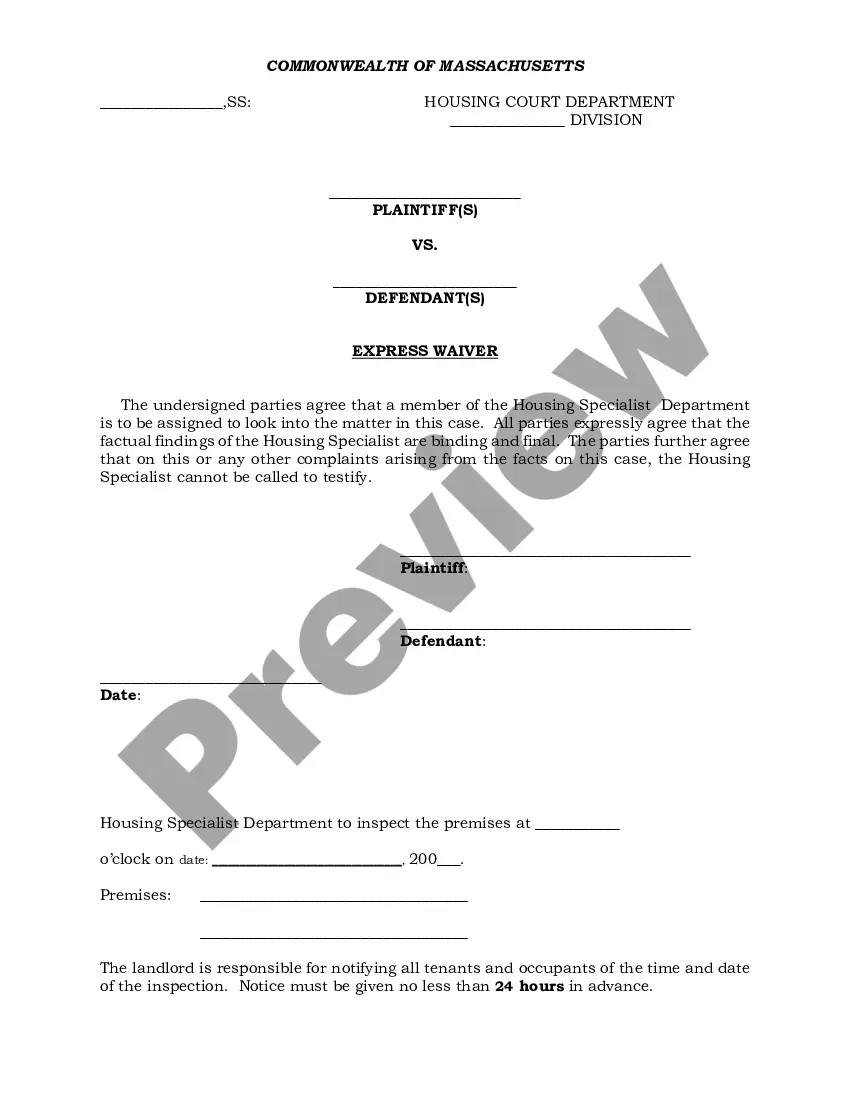

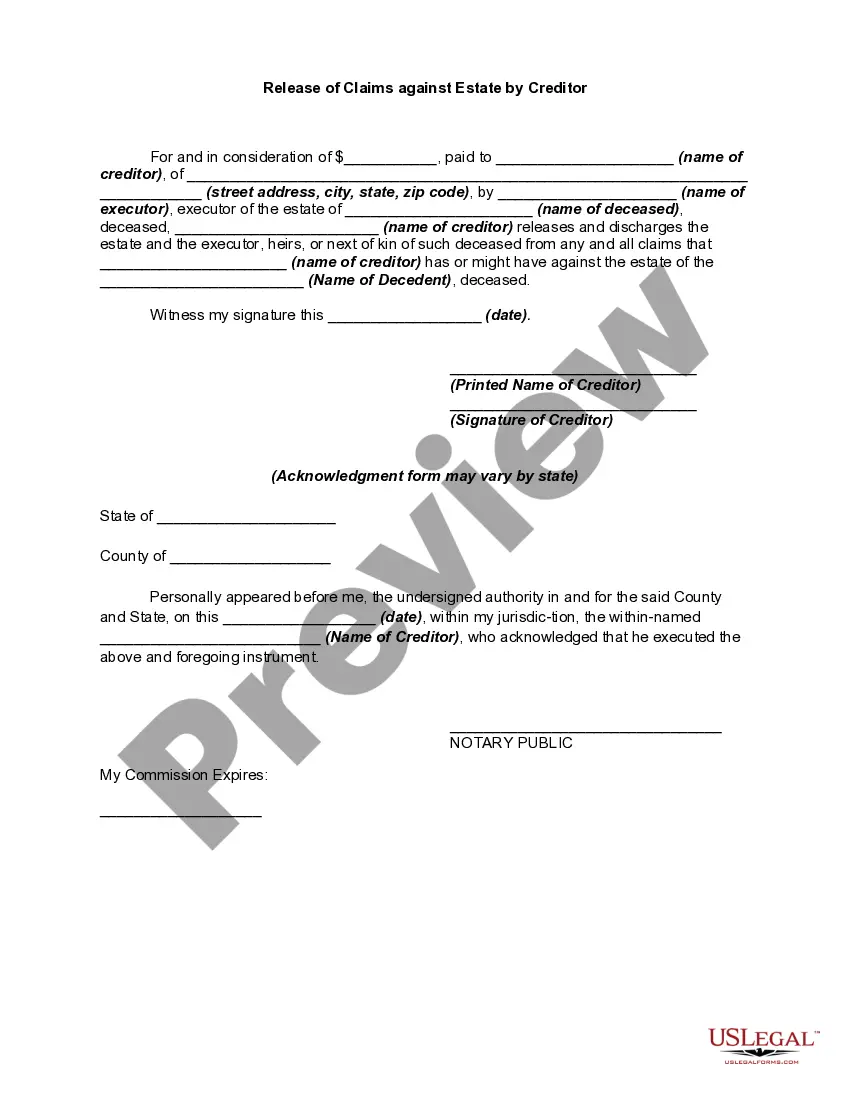
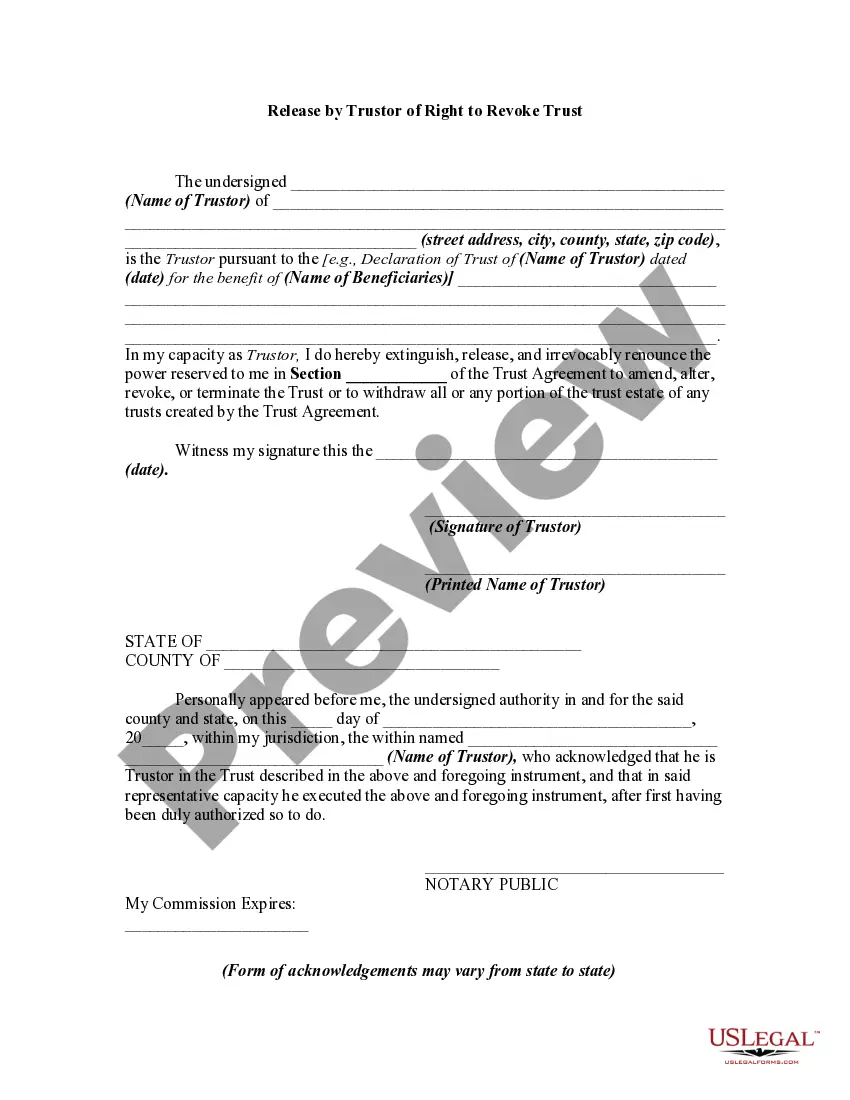
How to fill out Release Of Claims Against Estate By Creditor?
Securing a preferred location to obtain the latest and pertinent legal templates is part of the challenge of managing bureaucracy.
Finding the appropriate legal paperwork requires accuracy and careful observation, which is why it is crucial to acquire samples of Deceased Decedent Estate Foreign Assets solely from trustworthy sources, such as US Legal Forms.
Complete your purchase by selecting a payment method (credit card or PayPal). Choose the file format for downloading Deceased Decedent Estate Foreign Assets. Once the form is on your device, you may edit it with the editor or print it out and complete it by hand. Eliminate the stress associated with your legal documentation. Explore the extensive US Legal Forms catalog to find legal samples, assess their relevance to your situation, and download them instantly.
- An incorrect template will squander your time and hinder your current situation.
- With US Legal Forms, you have minimal concerns.
- You can access and review all the details regarding the document’s usage and relevance for your scenario and in your region.
- Utilize the library navigation or search box to find your sample.
- View the form’s description to determine if it meets the criteria of your region.
- Check the form preview, if available, to confirm the form matches your interests.
- Continue searching for the suitable template if the Deceased Decedent Estate Foreign Assets does not fulfill your criteria.
- When you are confident about the form’s relevance, download it.
- If you are an authorized user, click Log in to verify and access your selected forms in My documents.
- If you haven't created a profile yet, click Buy now to acquire the form.
- Choose the pricing plan that suits your preferences.
- Proceed to registration to finalize your purchase.
Form popularity
FAQ
Overseas assets can be subject to inheritance tax depending on the laws applicable to the estate. In the U.S., if a deceased decedent estate includes foreign assets, the estate may be liable for taxes on those holdings. It is crucial to understand how these deceased decedent estate foreign assets are treated under both U.S. tax law and the laws of the foreign country. USLegalForms offers resources that can help you navigate these complex legal landscapes.
Yes, US estate tax applies to foreign assets if the value of the deceased decedent estate exceeds the exemption threshold. This means that if a decedent owned foreign property, it must be included in the total estate value when calculating taxes owed. Beneficiaries should be aware of the implications of deceased decedent estate foreign assets in relation to estate taxes. Engaging with tax experts can provide clarity and support in these situations.
The IRS defines foreign assets as any property or financial interests located outside the United States. This includes bank accounts, real estate, stocks, and bonds held in foreign countries. When dealing with deceased decedent estate foreign assets, it’s important to accurately report these holdings to ensure compliance with tax obligations. Utilizing platforms like USLegalForms can simplify the process of managing and reporting these assets.
Yes, offshore accounts can be subject to inheritance tax in the United States. When a deceased decedent estate includes foreign assets, such as offshore accounts, it may be necessary to report these assets for tax purposes. Understanding the tax implications of deceased decedent estate foreign assets can help beneficiaries avoid unexpected tax liabilities. It’s wise to consult with a tax professional to navigate this complex area.
To avoid inheritance tax on deceased decedent estate foreign assets, it is crucial to understand the tax laws in both the U.S. and the foreign country where the assets are located. First, consider estate planning strategies such as establishing trusts, which may help shield your assets from taxation. Additionally, you can consult with a tax advisor experienced in international estate matters to navigate the complexities of foreign asset inheritance. Utilizing resources like the US Legal Forms platform can provide you with the necessary legal documents and guidance to effectively manage your estate.
Yes, if you inherit foreign assets, you are required to report them to the IRS, particularly if they exceed certain value thresholds. Form 3520 must be filed to disclose these deceased decedent estate foreign assets. Failing to report can lead to significant penalties, making it essential to stay compliant. Platforms like uslegalforms offer tools to help ensure you meet your reporting obligations.
In general, inheriting foreign property is not taxable at the time of inheritance. However, any income generated from that property may be taxable. You must also report the inherited foreign assets to the IRS if they exceed specific thresholds. Seeking advice from tax professionals can provide guidance tailored to your circumstances.
When a foreign national dies with assets in the US, their estate must go through the probate process according to state laws. The deceased decedent estate foreign assets may be subject to US estate tax if the value exceeds certain limits. It is important to assess the estate's entire value and understand the necessary filings. Utilizing uslegalforms can help streamline this complex process.
Yes, foreign assets can be subject to US estate tax, depending on their value and the total estate size. If the total value of the deceased decedent estate foreign assets exceeds the estate tax exemption threshold, you may owe taxes. It is essential to evaluate the entire estate's worth, including both domestic and foreign assets. Engaging with uslegalforms can provide clarity on your obligations.
When you inherit a house in another country, you must first understand the local laws regarding foreign property ownership. Additionally, you may have to report the property to the IRS as part of your deceased decedent estate foreign assets. Depending on the country, you may also face tax obligations. Consulting with legal experts can help you navigate these complex situations.