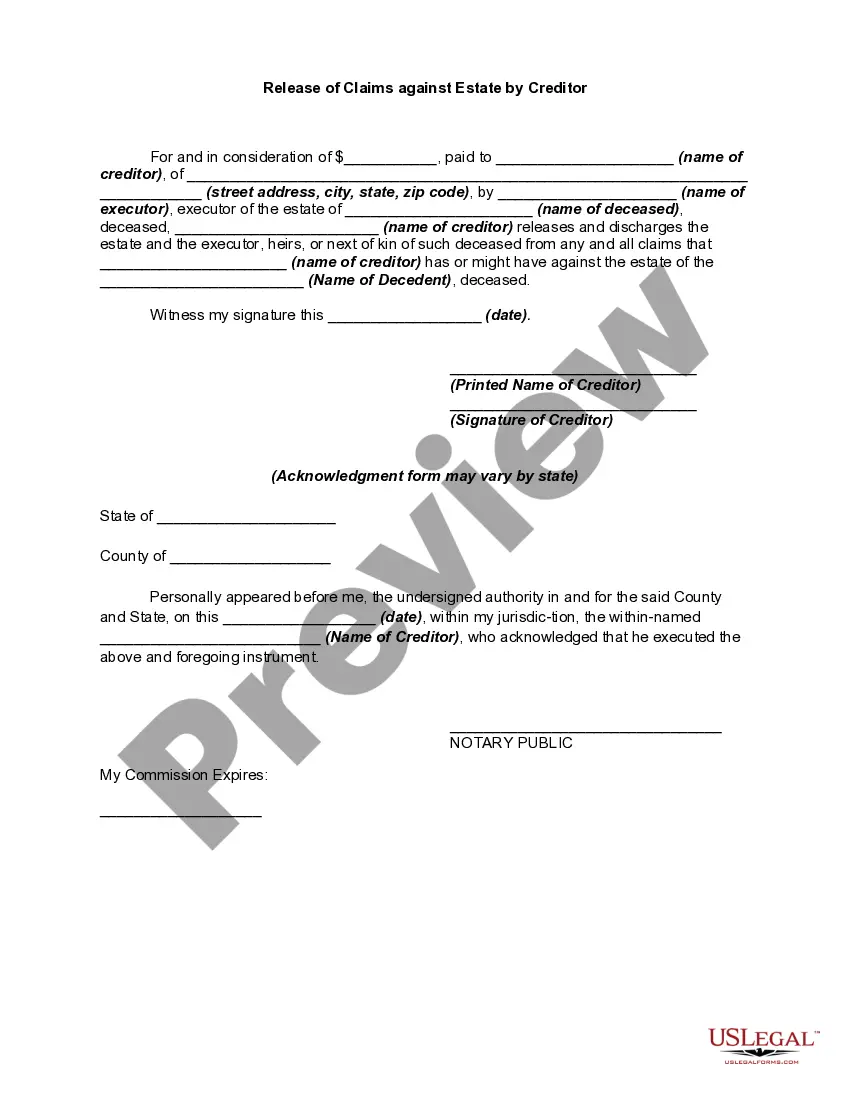
Claims Against Estate Texas
Description
Get your form ready online
Our built-in tools help you complete, sign, share, and store your documents in one place.
Make edits, fill in missing information, and update formatting in US Legal Forms—just like you would in MS Word.
Download a copy, print it, send it by email, or mail it via USPS—whatever works best for your next step.
Sign and collect signatures with our SignNow integration. Send to multiple recipients, set reminders, and more. Go Premium to unlock E-Sign.
If this form requires notarization, complete it online through a secure video call—no need to meet a notary in person or wait for an appointment.
We protect your documents and personal data by following strict security and privacy standards.

Make edits, fill in missing information, and update formatting in US Legal Forms—just like you would in MS Word.

Download a copy, print it, send it by email, or mail it via USPS—whatever works best for your next step.

Sign and collect signatures with our SignNow integration. Send to multiple recipients, set reminders, and more. Go Premium to unlock E-Sign.

If this form requires notarization, complete it online through a secure video call—no need to meet a notary in person or wait for an appointment.

We protect your documents and personal data by following strict security and privacy standards.
Looking for another form?


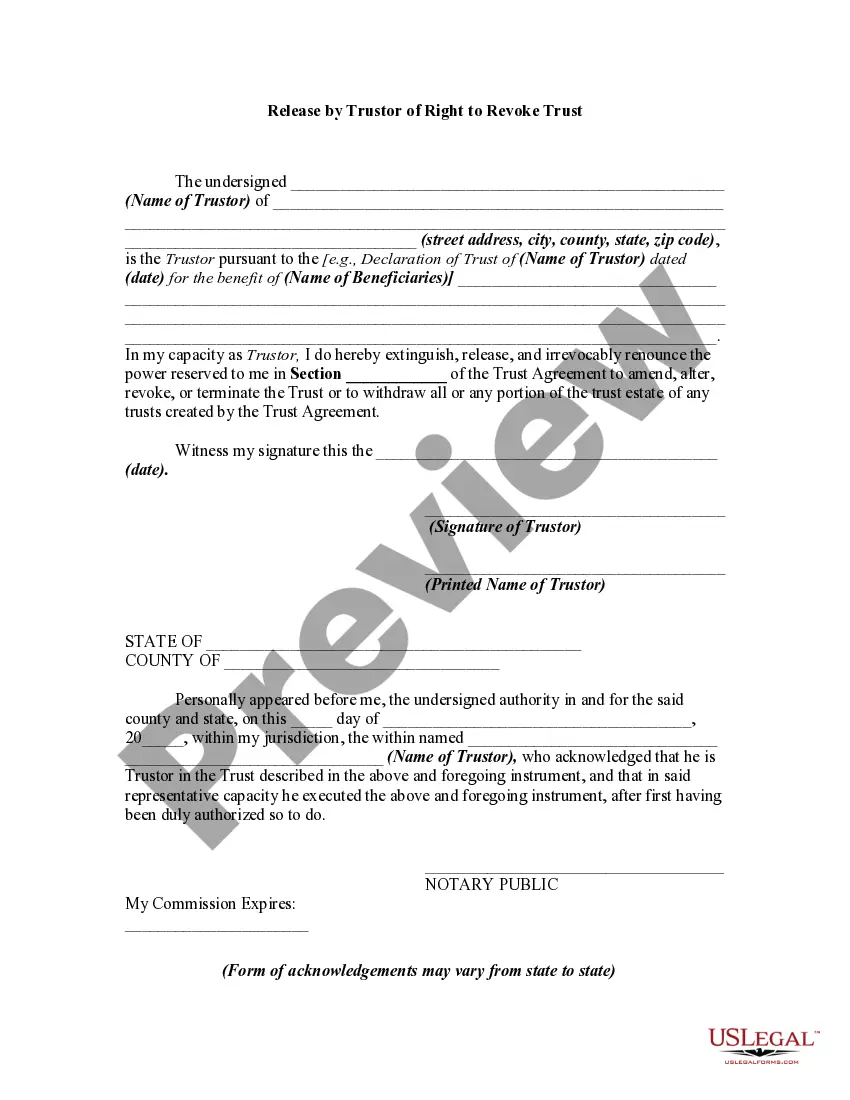
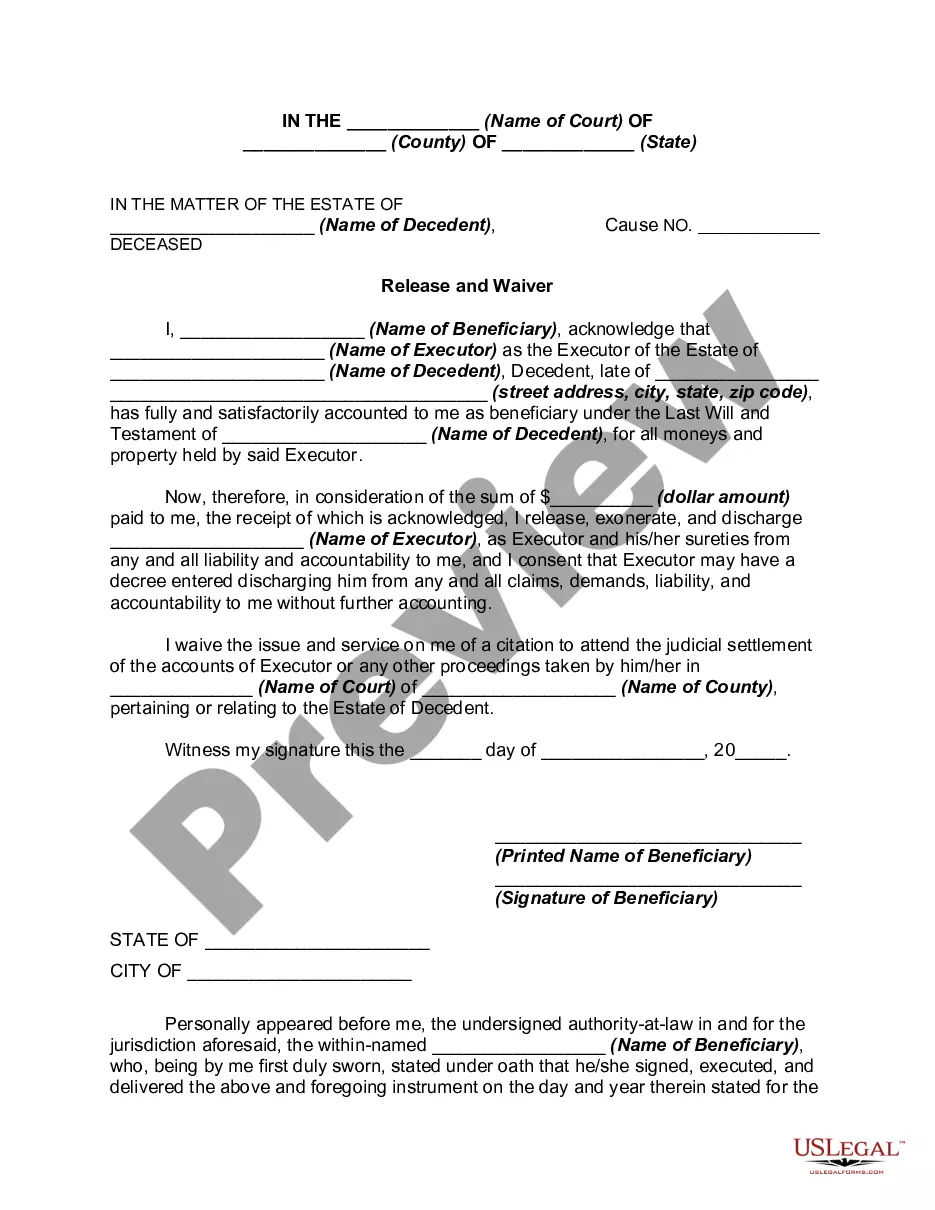
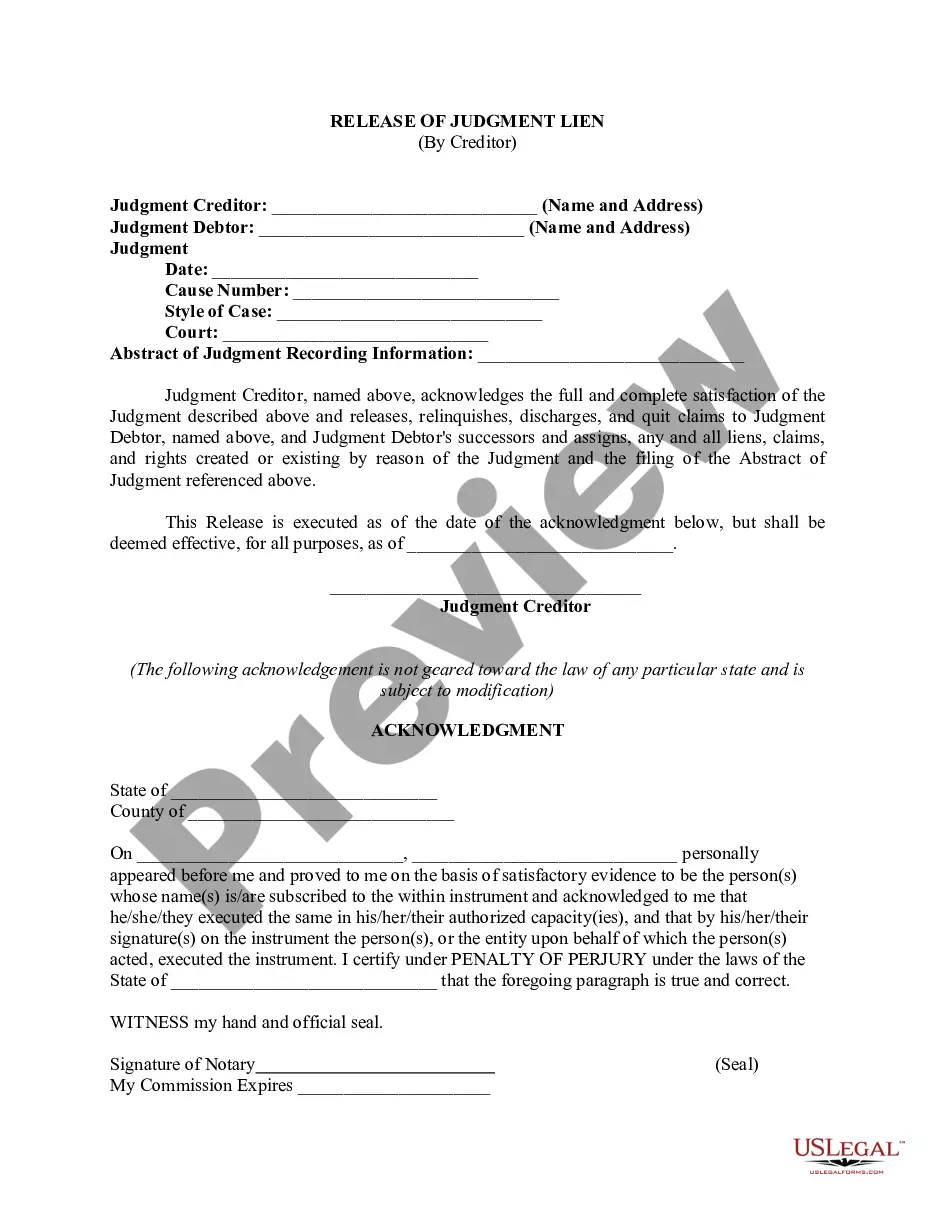
How to fill out Release Of Claims Against Estate By Creditor?
- If you have previously used US Legal Forms, simply log in to your account and download the necessary form template by clicking the Download button. Ensure your subscription is up to date.
- For first-time users, begin by reviewing the Preview mode and form description to confirm you've selected the correct document that aligns with Texas jurisdiction requirements.
- If the selected form does not meet your needs, utilize the Search tab to find the appropriate template.
- Once you've found the necessary document, proceed to purchase it by clicking the Buy Now button. Don’t forget to select your preferred subscription plan and register your account.
- Complete your purchase by entering your credit card information or using your PayPal account for payment.
- After your transaction is successful, download the form and save it to your device. You can also access it at any time from the My Forms section of your profile.
In conclusion, US Legal Forms offers a robust collection of over 85,000 legal documents, making it easier for individuals and attorneys to navigate the complexities of legal paperwork.
By following these steps, you can ensure that your claims against an estate in Texas are filed correctly. Explore the extensive library of US Legal Forms today!
Form popularity
FAQ
Individuals have four months from the date of notice to file a claim against an estate in Texas. This timeline is critical, as missing it can jeopardize your chances of recovering debts owed. It is advisable to act promptly and consult legal resources or professionals for guidance. Tools available on US Legal Forms can assist you in understanding and fulfilling your filing obligations.
Yes, you can sue an estate in Texas, but you must first file a formal claim against the estate in probate court. If the claim is denied or not addressed, you may have grounds to file a lawsuit. The estate must be administered properly, and it is important to adhere to legal procedures. Utilizing resources like US Legal Forms can help clarify the necessary steps.
Creditors generally have four months from the date notice is given to the estate to file claims. If a claim is filed after this period, it may not be considered, which could leave creditors without recourse. However, any claims based on contracts or judgments may have different timelines. Stay informed about these deadlines when dealing with claims against estate Texas.
In Texas, reasonable compensation for an executor is typically based on a percentage of the estate's total value, often ranging from 2% to 5%. The actual amount may vary based on the complexity of the estate and the executor's duties. Executors should keep detailed accounts of their time and expenses to justify their compensation. This aspect of estate management is crucial for anyone considering claims against estate Texas.
Filing a claim against an estate in Texas involves preparing a formal claim document and submitting it to the appropriate probate court. Make sure your claim specifies the nature of the debt, the amount owed, and includes relevant proof of the claim. It is vital to meet the four-month deadline to ensure your claim is considered valid. For assistance with the filing process, US Legal Forms offers helpful templates.
To make a claim against an estate in Texas, start by drafting a written claim outlining the debt owed to you. You must file this claim with the probate court handling the estate’s administration. It is essential to include supporting documentation, such as contracts or invoices, to substantiate your claim. Using services like US Legal Forms can streamline this process.
In Texas, the statute of limitations for claims against an estate is generally four months from the date the decedent's will is admitted to probate. If you have a claim against an estate, it is crucial to act promptly to avoid the potential loss of your legal rights. Filing within this timeframe ensures that your claims against estate Texas are considered by the probate court. To navigate this process effectively, you may want to explore resources like USLegalForms, which can help simplify your estate claim documentation.
Yes, Texas law does provide a timeframe for settling an estate, typically requiring the executor to complete the process within a reasonable amount of time. While no strict deadline exists, it is generally expected to settle the estate within a year. However, complexities can extend this timeline, especially if claims against the estate Texas are arising. Thus, maintaining clear communication with all beneficiaries can facilitate a smoother settlement process.
In Texas, you usually have two years from the deceased's date of death to file a lawsuit against their estate. This deadline is critical and differs from the time allowed for claims against the estate. Ensure you gather all documentation and evidence supporting your case well before this deadline. Consulting with an attorney can bolster your chances of successfully navigating the process of claims against estate Texas.
You typically have a four-month period to make a claim against an estate in Texas once the estate is formally opened in probate court. However, if the estate has been closed, you may not be able to make any claims. Therefore, if you believe you have a claim, it’s crucial to act quickly to avoid missing this deadline. Utilizing resources like USLegalForms can provide guidance on navigating claims against estate Texas.