Attorney State Estate With Real
Description

Get your form ready online
Our built-in tools help you complete, sign, share, and store your documents in one place.
Make edits, fill in missing information, and update formatting in US Legal Forms—just like you would in MS Word.
Download a copy, print it, send it by email, or mail it via USPS—whatever works best for your next step.
Sign and collect signatures with our SignNow integration. Send to multiple recipients, set reminders, and more. Go Premium to unlock E-Sign.
If this form requires notarization, complete it online through a secure video call—no need to meet a notary in person or wait for an appointment.
We protect your documents and personal data by following strict security and privacy standards.

Make edits, fill in missing information, and update formatting in US Legal Forms—just like you would in MS Word.

Download a copy, print it, send it by email, or mail it via USPS—whatever works best for your next step.

Sign and collect signatures with our SignNow integration. Send to multiple recipients, set reminders, and more. Go Premium to unlock E-Sign.

If this form requires notarization, complete it online through a secure video call—no need to meet a notary in person or wait for an appointment.

We protect your documents and personal data by following strict security and privacy standards.
Looking for another form?
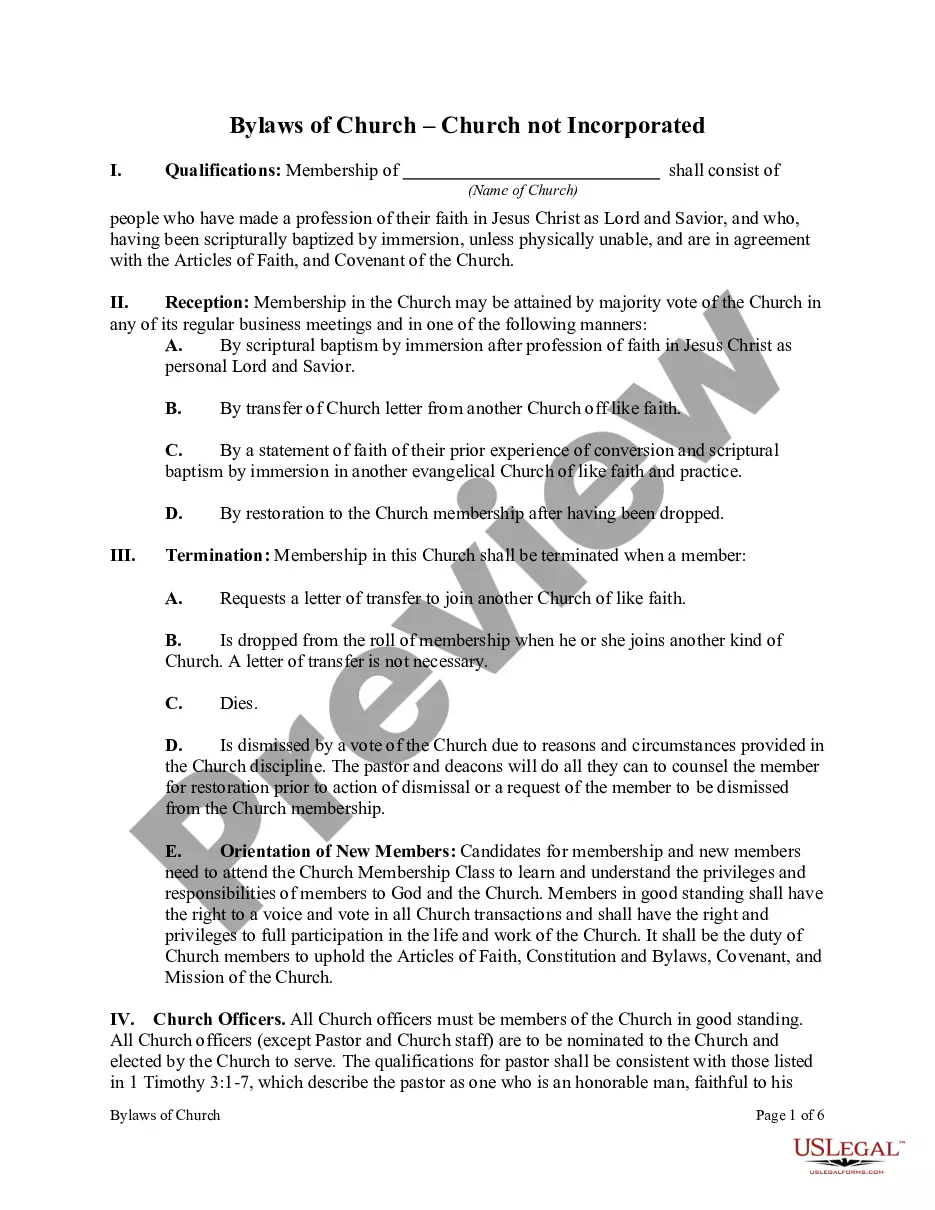





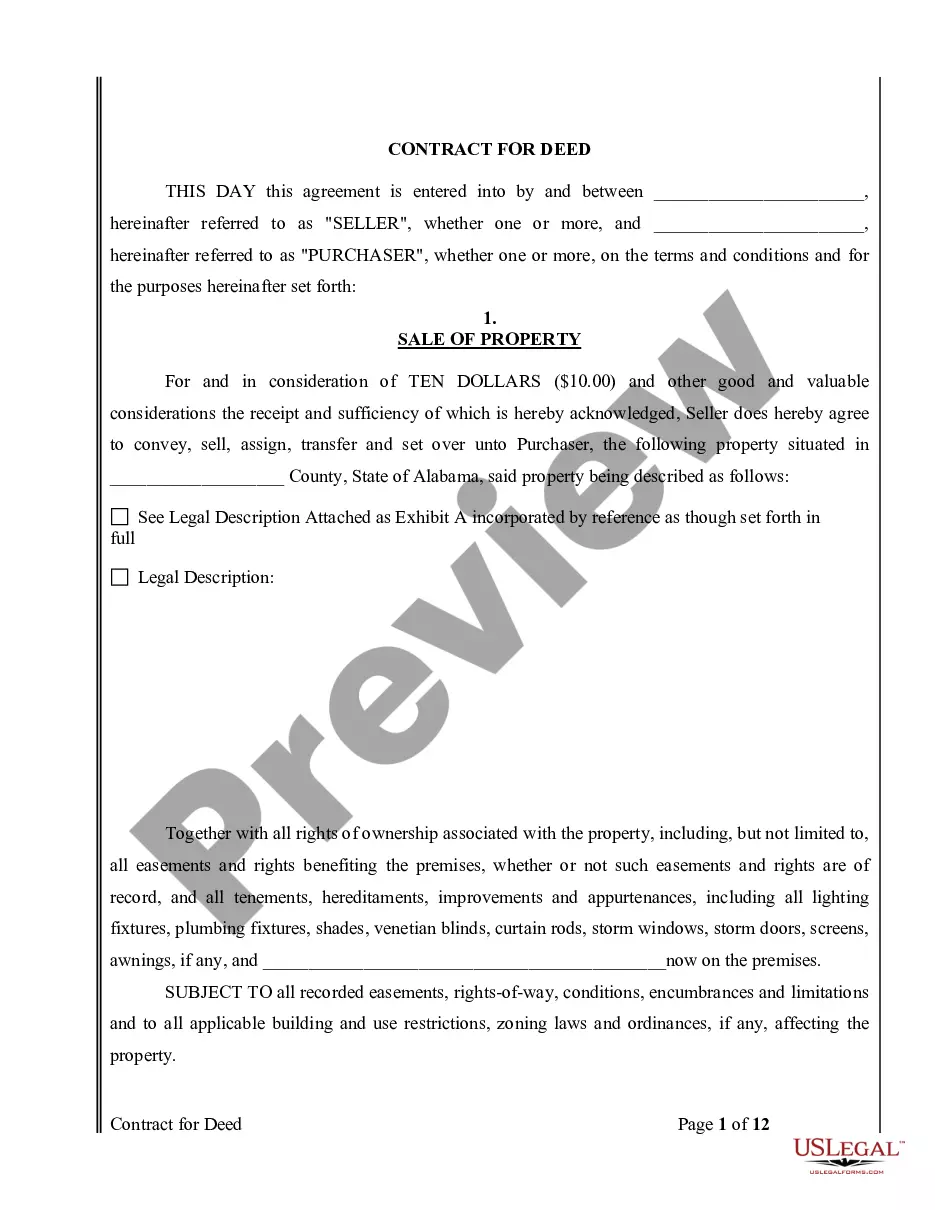


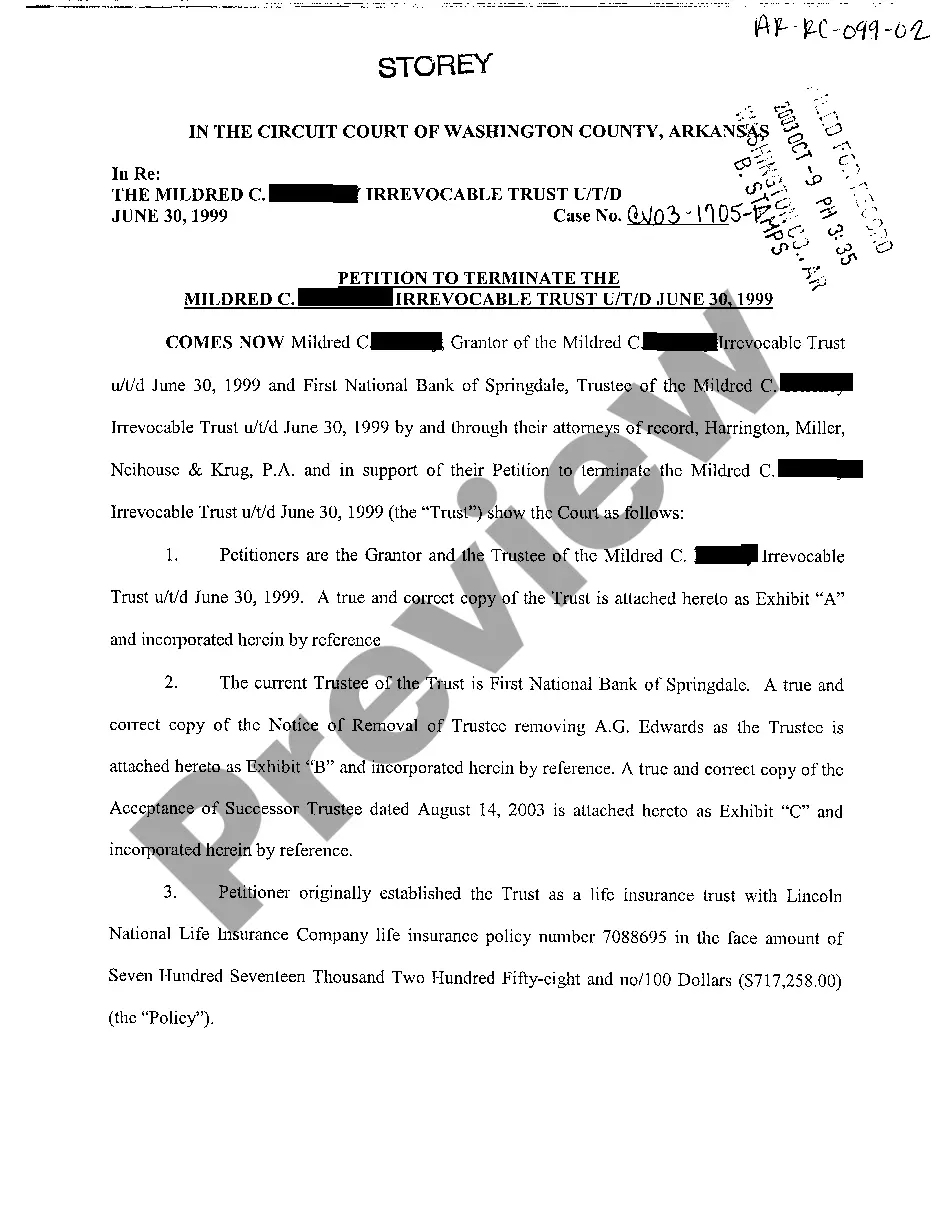
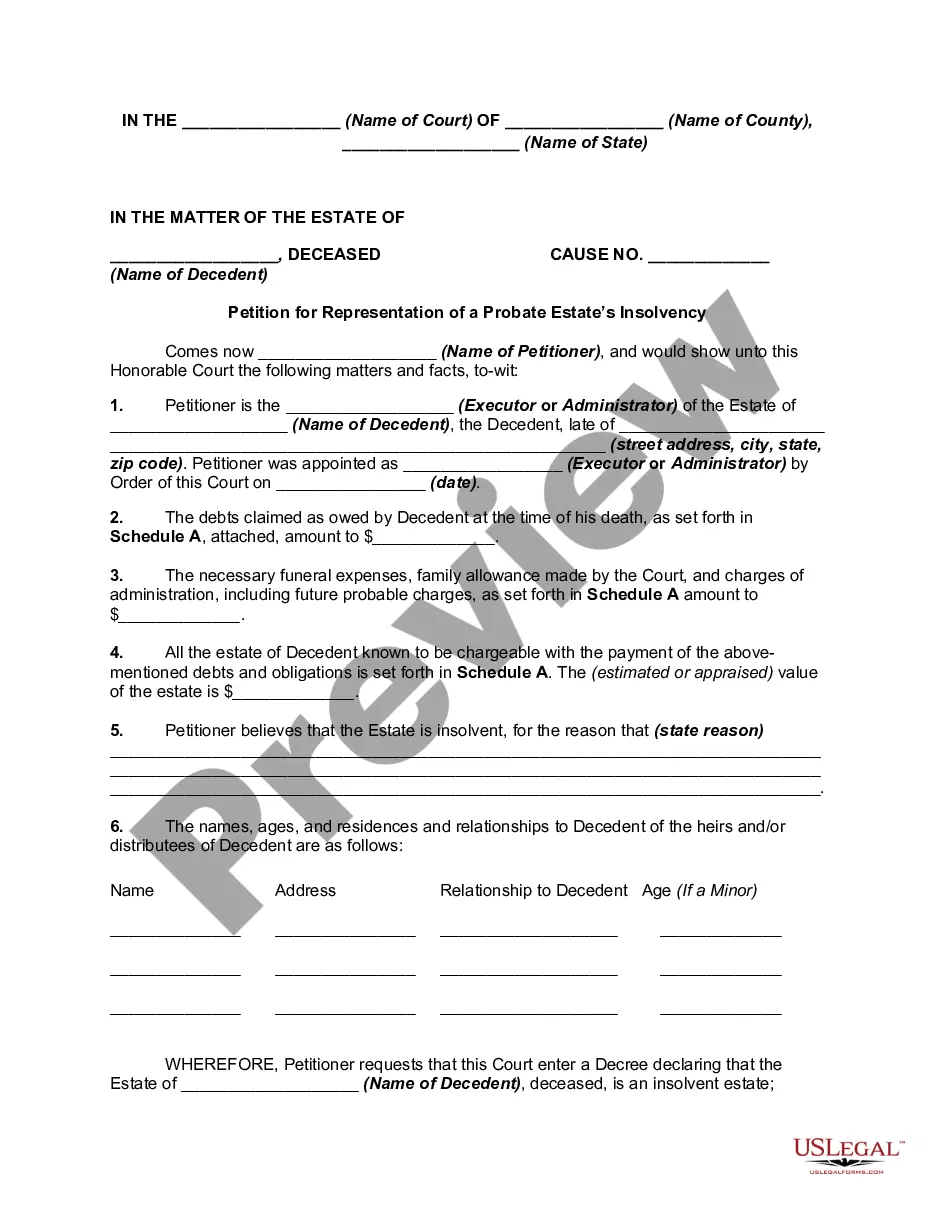
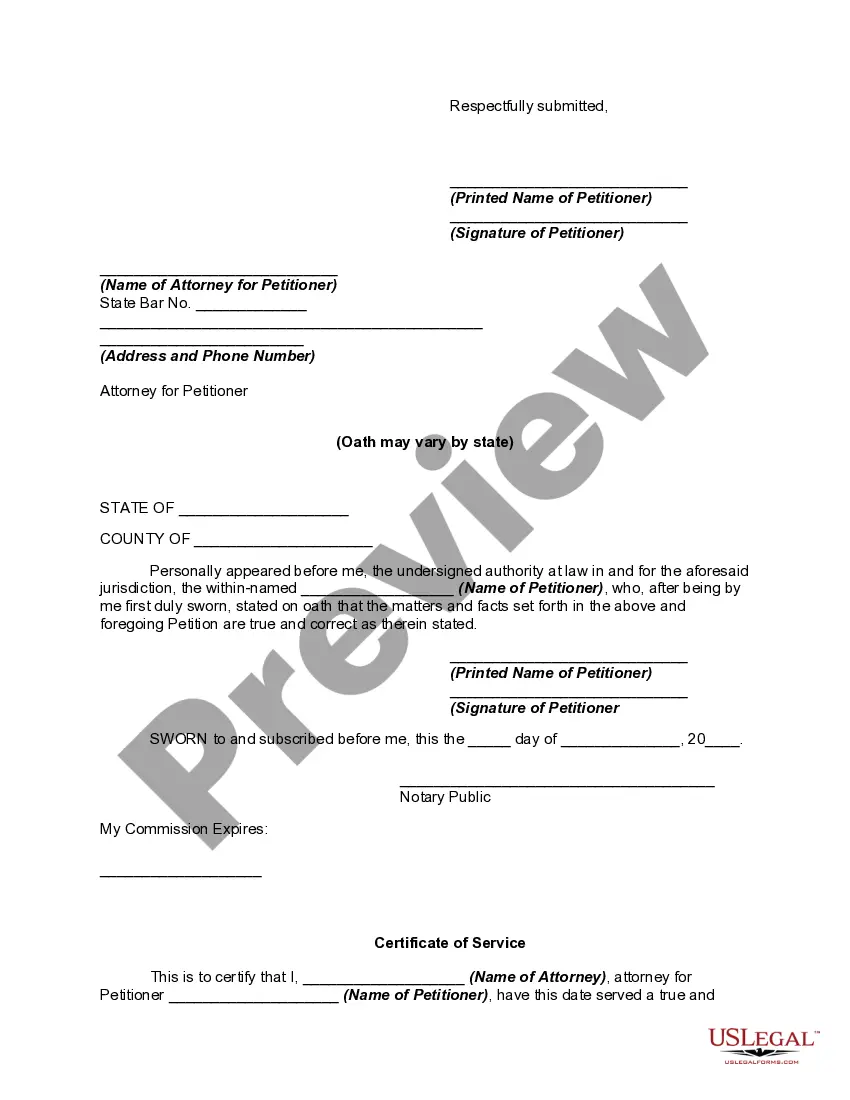
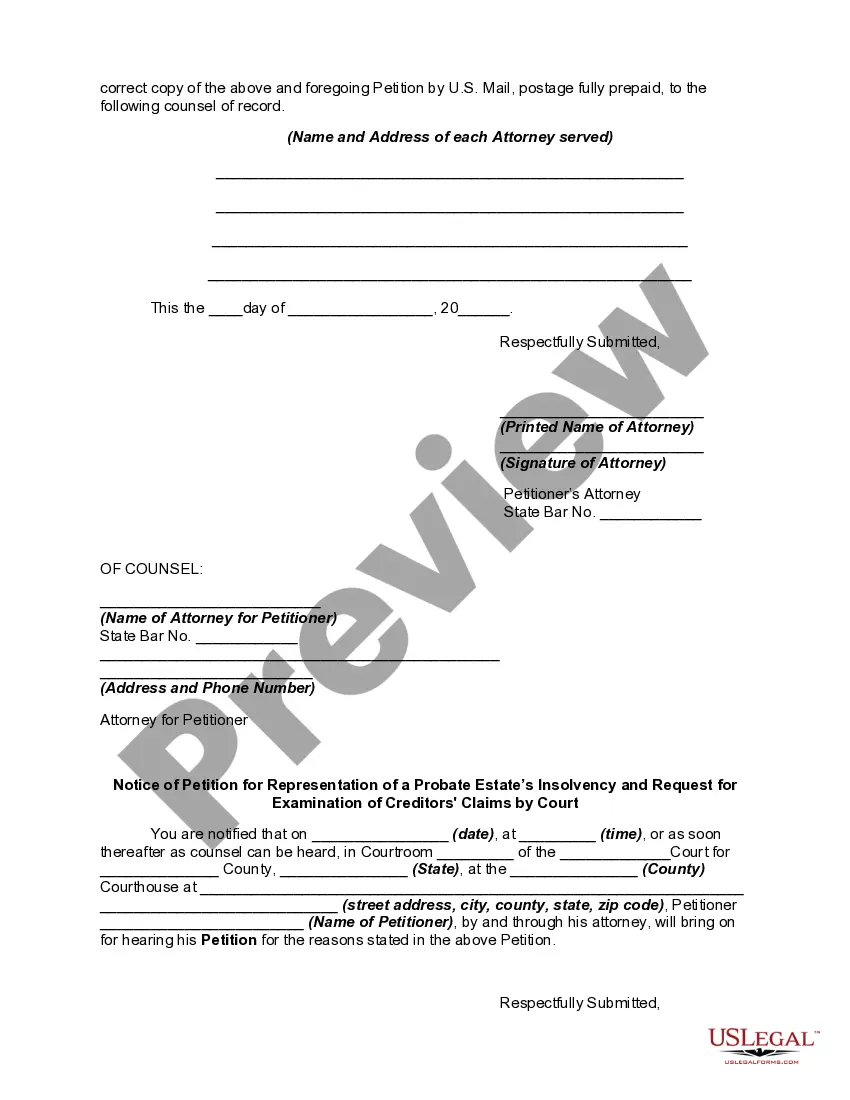
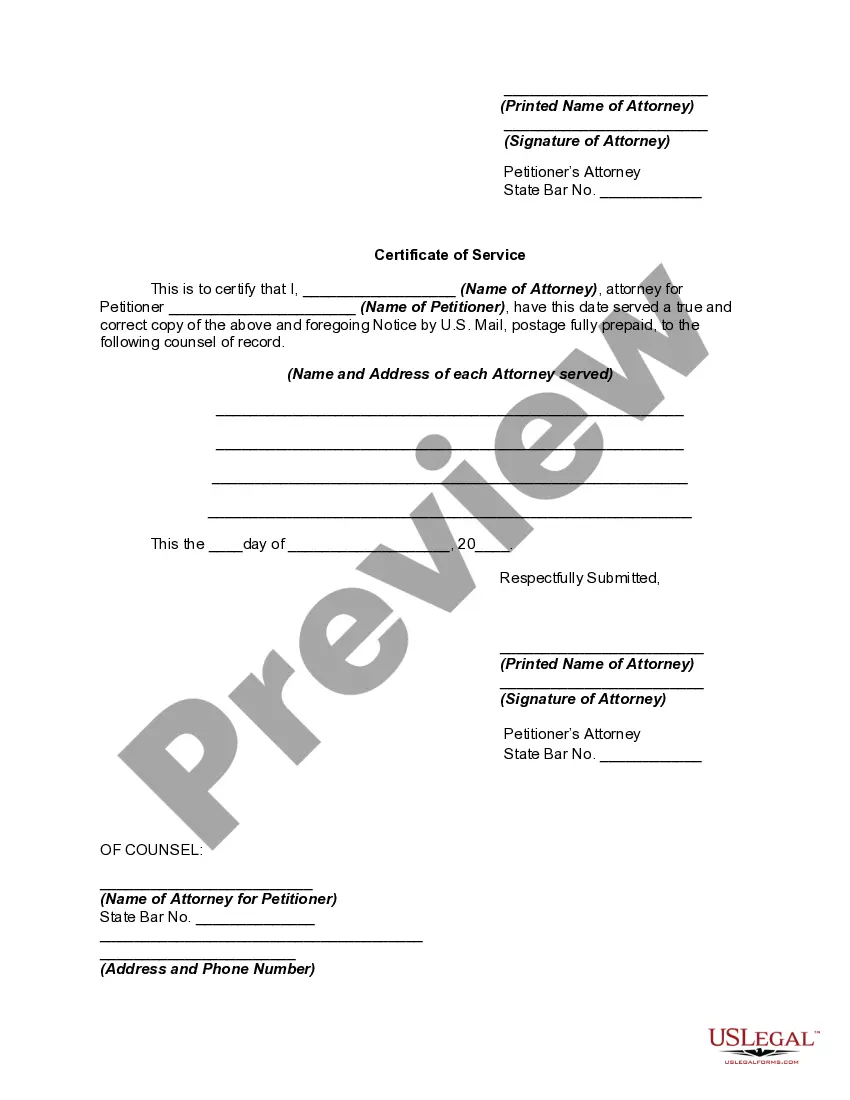
How to fill out Petition For Representation Of A Probate Estate's Insolvency And Request?
Creating legal documents from the ground up can frequently feel somewhat daunting.
Certain cases may require extensive investigation and significant financial investment.
If you’re seeking a simpler and more economical method of drafting Attorney State Estate With Real or any other documents without unnecessary complications, US Legal Forms is always available for you.
Our online library of over 85,000 current legal documents encompasses almost every aspect of your financial, legal, and personal matters.
However, before proceeding to download Attorney State Estate With Real, consider these guidelines: Review the form preview and descriptions to verify that you’ve located the document you need. Ensure the template you select adheres to the laws and regulations of your state and county. Pick the appropriate subscription plan to acquire the Attorney State Estate With Real. Download the file, then fill it out, sign it, and print it. US Legal Forms enjoys an impeccable reputation and over 25 years of experience. Join us today and make document preparation easy and efficient!
- With just a few clicks, you can quickly access specific state and county forms carefully prepared by our legal experts.
- Utilize our website whenever you require a dependable and trustworthy service to swiftly locate and download the Attorney State Estate With Real.
- If you’re familiar with our services and have previously created an account with us, just Log In to your account, choose the form, and download it, or re-download it anytime later in the My documents section.
- Don't have an account? No problem! It only takes a few minutes to create one and explore the catalog.
Form popularity
FAQ
A real estate lawyer and an estate lawyer focus on different areas of law, although their roles can overlap. A real estate lawyer specializes in property transactions, while an estate lawyer focuses on wills, trusts, and probate issues. However, in matters involving an attorney state estate with real, both types of lawyers can collaborate to address complex situations that involve both real estate and estate planning.
The terms 'lawyer' and 'attorney' are often used interchangeably, but there are subtle differences between them. A lawyer has completed law school and is trained in the law, while an attorney has passed the bar exam and is licensed to practice. In an attorney state estate with real, working with a licensed attorney ensures that you receive professional representation in legal matters related to real estate.
An estate lawyer, also commonly referred to as an estate planning attorney, specializes in matters concerning wills, trusts, and the eventual distribution of assets. Their primary objective is to help clients manage their properties during their lifetime and plan for the transfer of those assets after death. In the context of an attorney state estate with real, these lawyers often work alongside real estate attorneys to ensure that both estate planning and real estate transactions comply with legal requirements.
A real estate attorney plays a crucial role in facilitating property transactions, ensuring that everything adheres to legal guidelines. They help draft and review documents, negotiate terms, and resolve disputes that may arise. In an attorney state estate with real, their expertise ensures that the closing process is smooth and compliant with state laws. This professional guidance can significantly reduce the risks associated with real estate transactions.
Whether your state operates as a title company or a closing attorney state influences how real estate transactions are conducted. In a title company state, a title insurance company will handle the closing, ensuring that the property title is clear. Conversely, in a closing attorney state, a real estate attorney oversees the closing process to protect the interests of the buyer and the seller. Understanding your state's classification can help you make informed decisions during a real estate transaction.
You should hire a real estate attorney when purchasing, selling, or managing property, especially in attorney states. They can help navigate contracts, title issues, and compliance with local laws. Engaging a legal professional early can save you time and minimize potential mistakes in the transaction process.
The terms real estate attorney and real estate lawyer are often used interchangeably; both refer to legal professionals specializing in property law. However, a real estate lawyer may also handle litigation cases, while a real estate attorney may focus more on transaction-related services. Clarity on these definitions can help you choose the right professional for your needs.
Common title states include Florida, Texas, and California. In these states, buyers can conduct transactions without needing an attorney present, relying instead on title companies to facilitate the process. Knowing your state's classification can greatly affect your strategy when purchasing real estate.
About 20 states require a real estate attorney for transactions involving property. This requirement ensures legal oversight, protecting both buyers and sellers from potential issues. Understanding the specifics of your state’s regulations can help make your real estate experience more secure.
A key step in settling an estate is filing the will with the probate court to begin the legal process. This step verifies the legality of the will and allows for the distribution of assets. Engaging an attorney may provide valuable guidance throughout this crucial phase.