Tax Ad Valorem With Cigarettes
Description
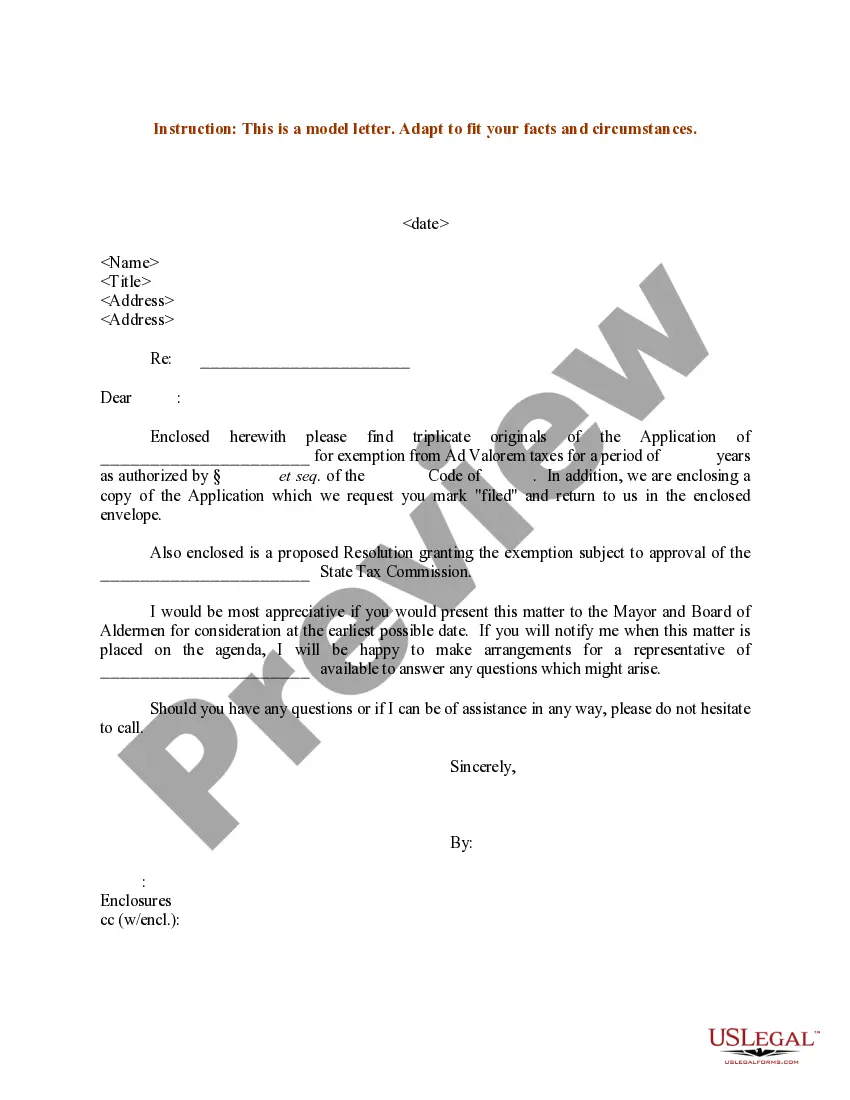
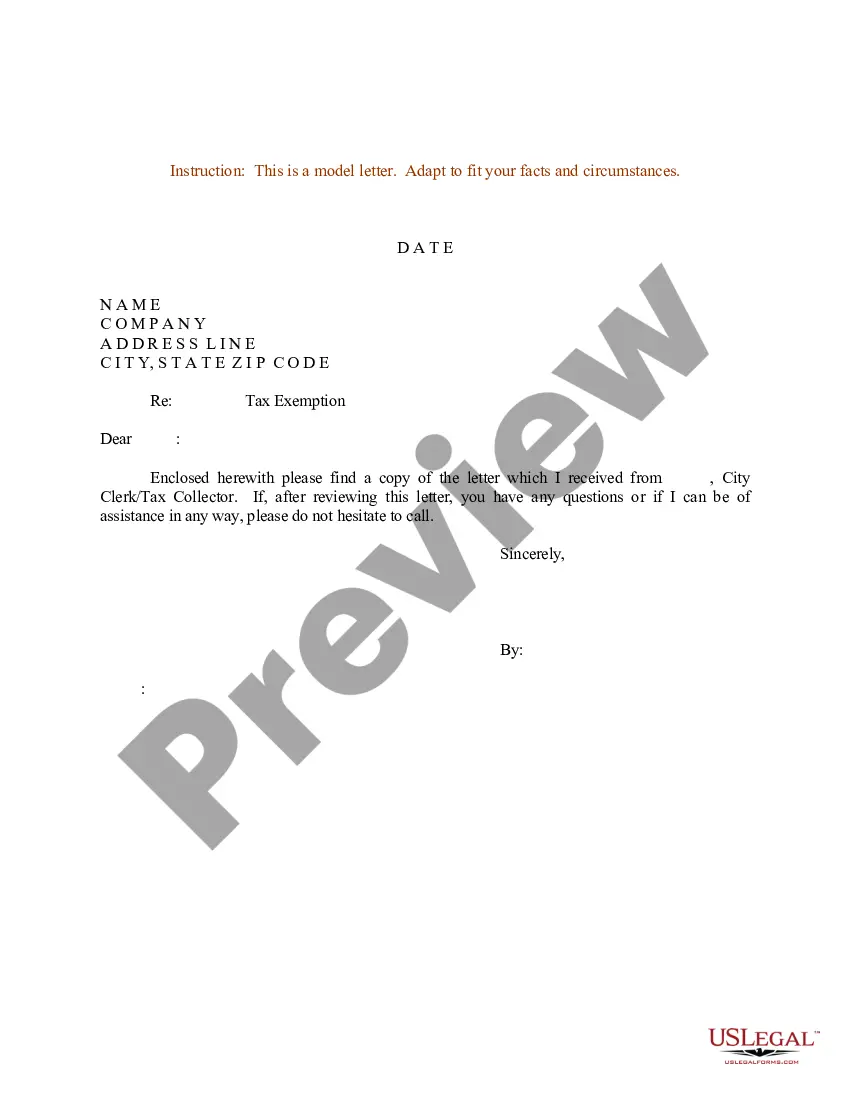
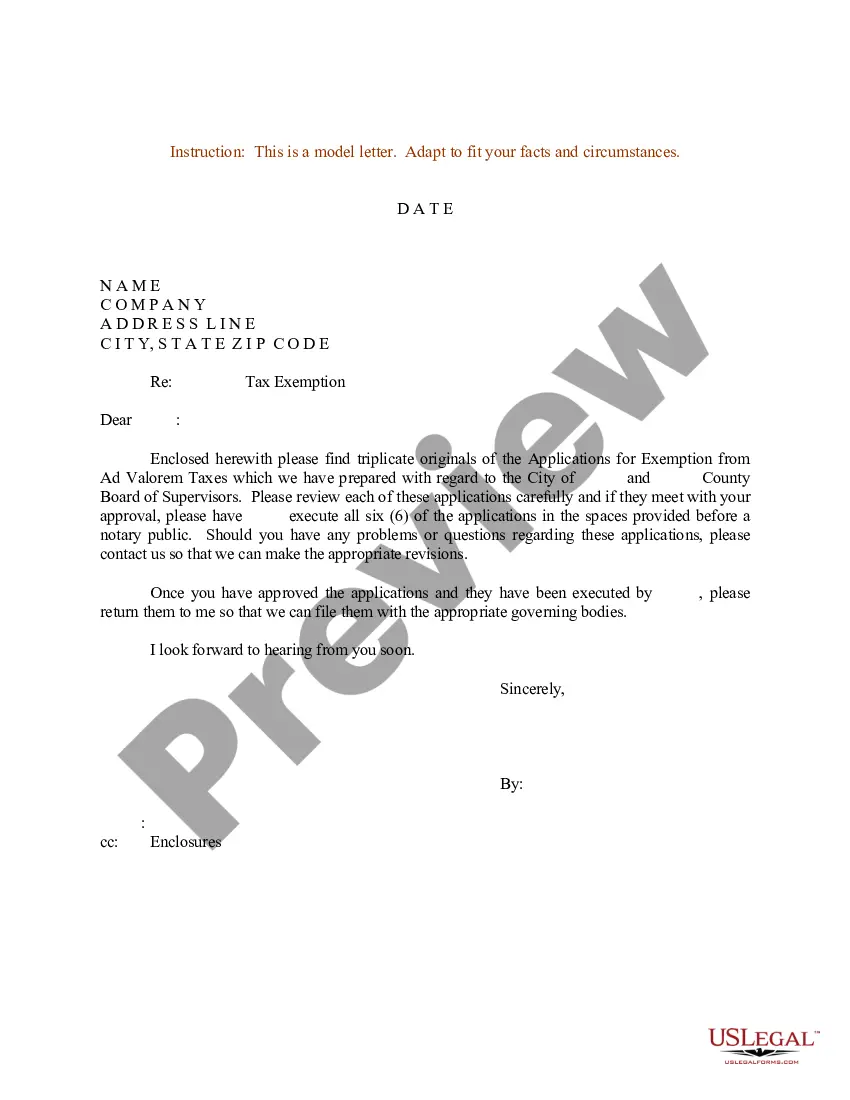
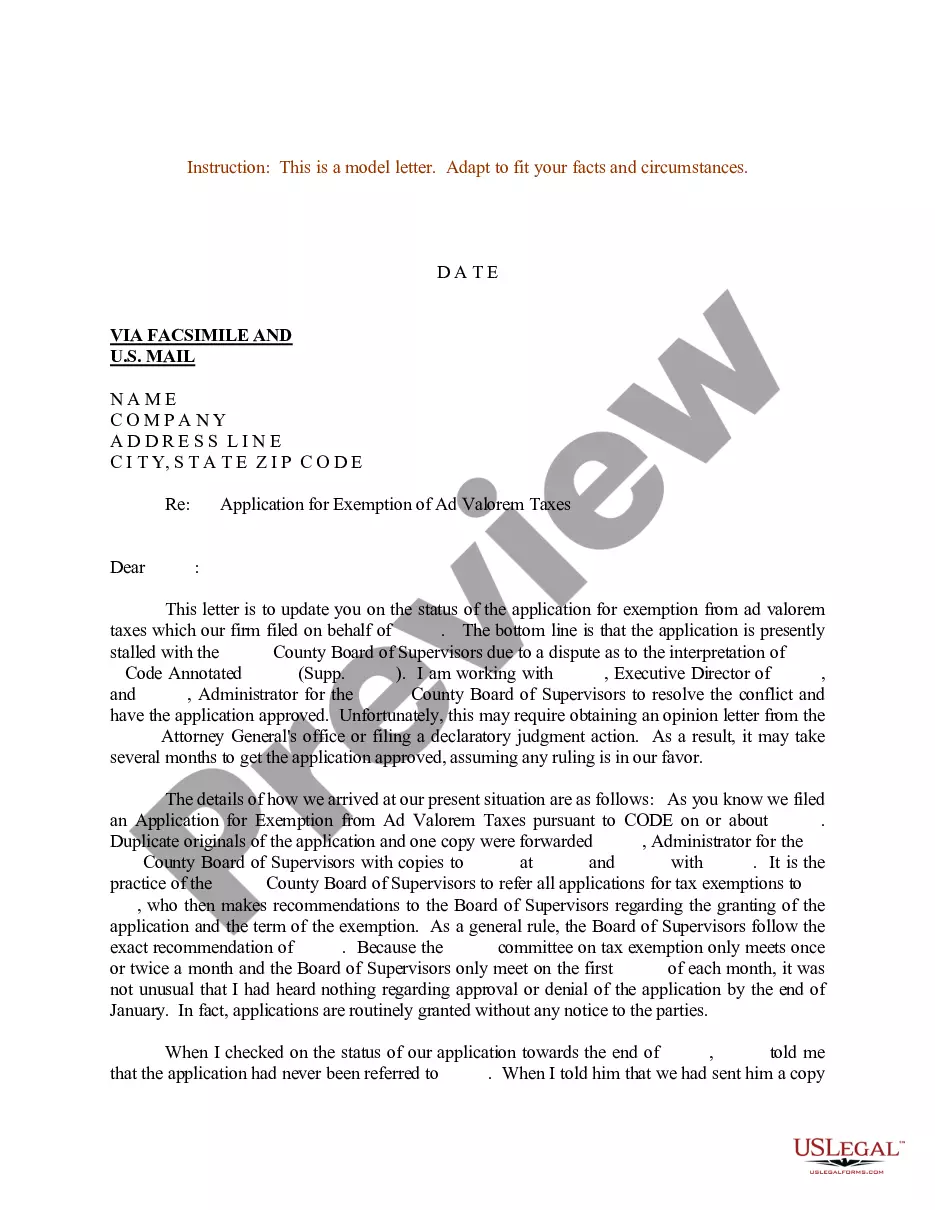
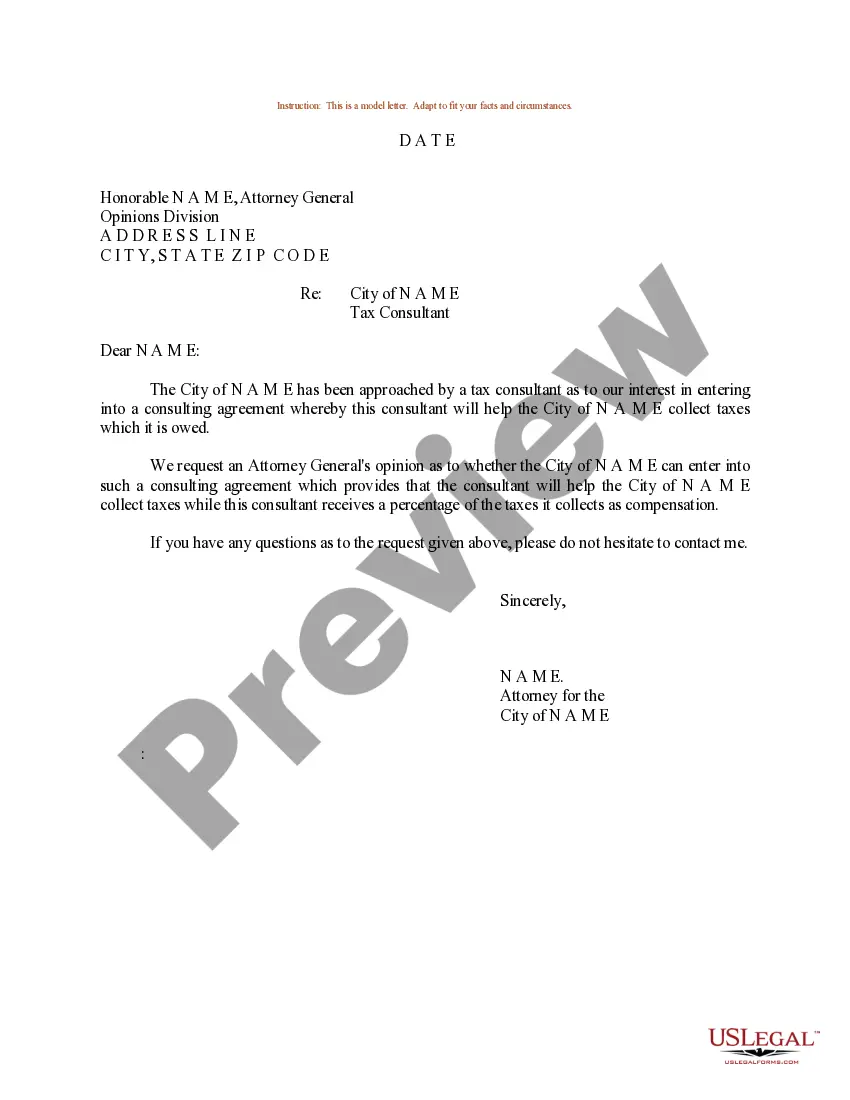




How to fill out Sample Letter For Ad Valorem Tax Exemption?
It’s obvious that you can’t become a law expert overnight, nor can you figure out how to quickly draft Tax Ad Valorem With Cigarettes without having a specialized set of skills. Putting together legal documents is a long process requiring a certain education and skills. So why not leave the creation of the Tax Ad Valorem With Cigarettes to the professionals?
With US Legal Forms, one of the most comprehensive legal document libraries, you can find anything from court papers to templates for internal corporate communication. We understand how important compliance and adherence to federal and state laws are. That’s why, on our website, all templates are location specific and up to date.
Here’s start off with our website and get the form you need in mere minutes:
- Find the form you need by using the search bar at the top of the page.
- Preview it (if this option available) and check the supporting description to figure out whether Tax Ad Valorem With Cigarettes is what you’re searching for.
- Start your search over if you need a different template.
- Set up a free account and select a subscription plan to purchase the form.
- Choose Buy now. As soon as the payment is through, you can download the Tax Ad Valorem With Cigarettes, complete it, print it, and send or mail it to the necessary people or organizations.
You can re-access your forms from the My Forms tab at any time. If you’re an existing client, you can simply log in, and find and download the template from the same tab.
Regardless of the purpose of your paperwork-whether it’s financial and legal, or personal-our website has you covered. Try US Legal Forms now!
Form popularity
FAQ
The federal government taxes tobacco products, including cigarettes, cigars, pipe tobacco, and roll-your-own tobacco. The federal excise tax on cigarettes is just over $1.00 per pack. Large cigars are taxed at 52.75 percent of the manufacturer's sales price, with a maximum tax of 40.26 cents per cigar.
Types of tobacco products include cigarettes, pipe tobacco, cigars, hookah/shisha tobacco, snuff, etc. Excise taxes are usually levied on the sale and production for sale of tobacco products, resulting in the price offered to buyers being higher relative to the cost of other goods and services.
CURRENT TAX INFORMATION The last federal cigarette tax increase of 61.66 cents per pack went into effect in 2009. Today, the rate remains the same, making federal tax on a pack of cigarettes $1.01 per pack; state rates vary.
Excise taxes are imposed on a specific good or activity, such as cigarettes, alcohol, and fuel. Because of their narrow base (applying a tax to a small selection of goods or services), excise tax.
Sin taxes are typically added to liquor, cigarettes, and goods that are considered morally hazardous. Because they generate enormous revenue, state governments favor sin taxes.