Use License Software Without A License
Description
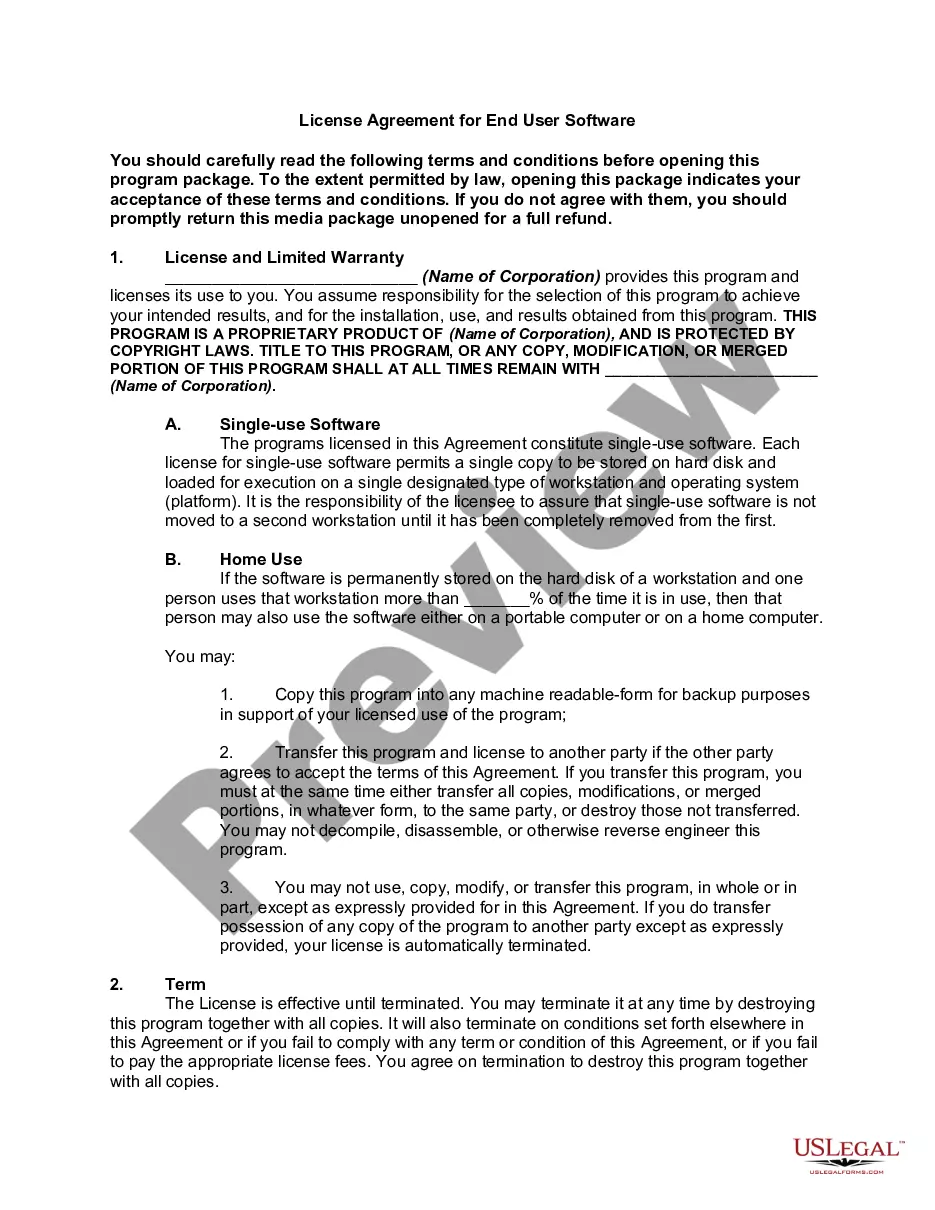
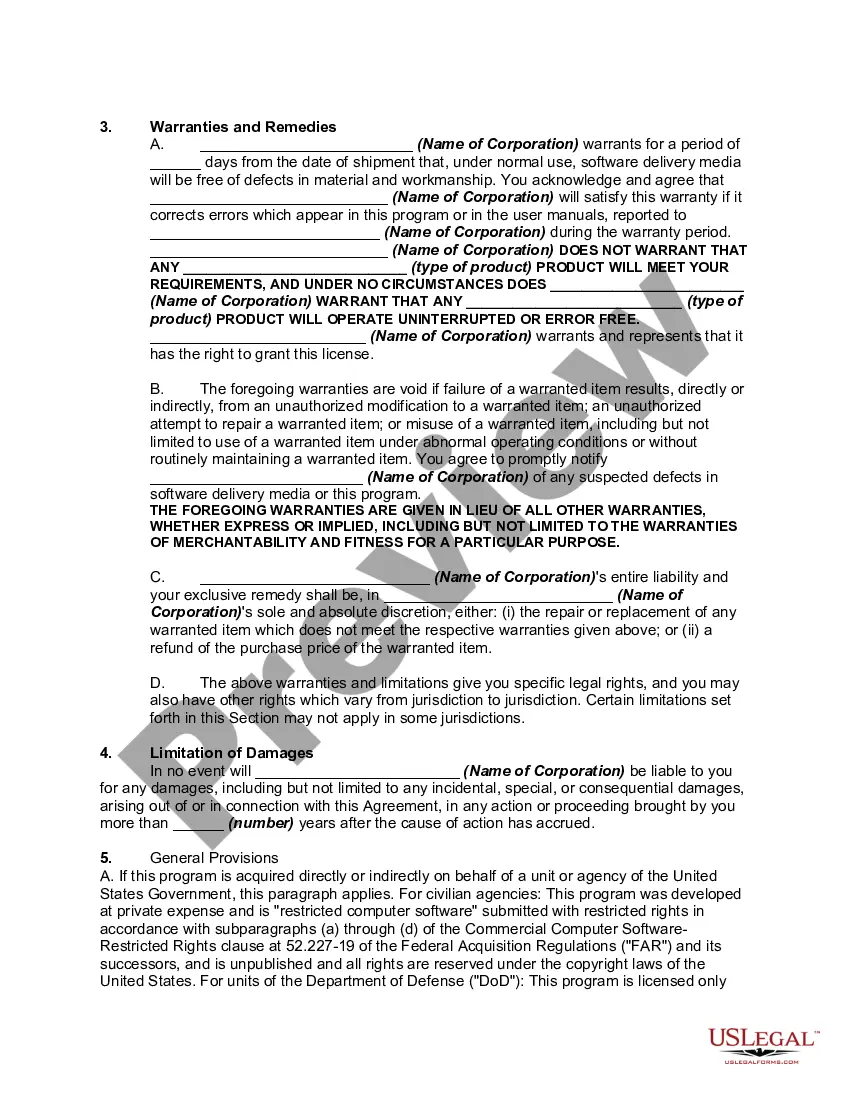
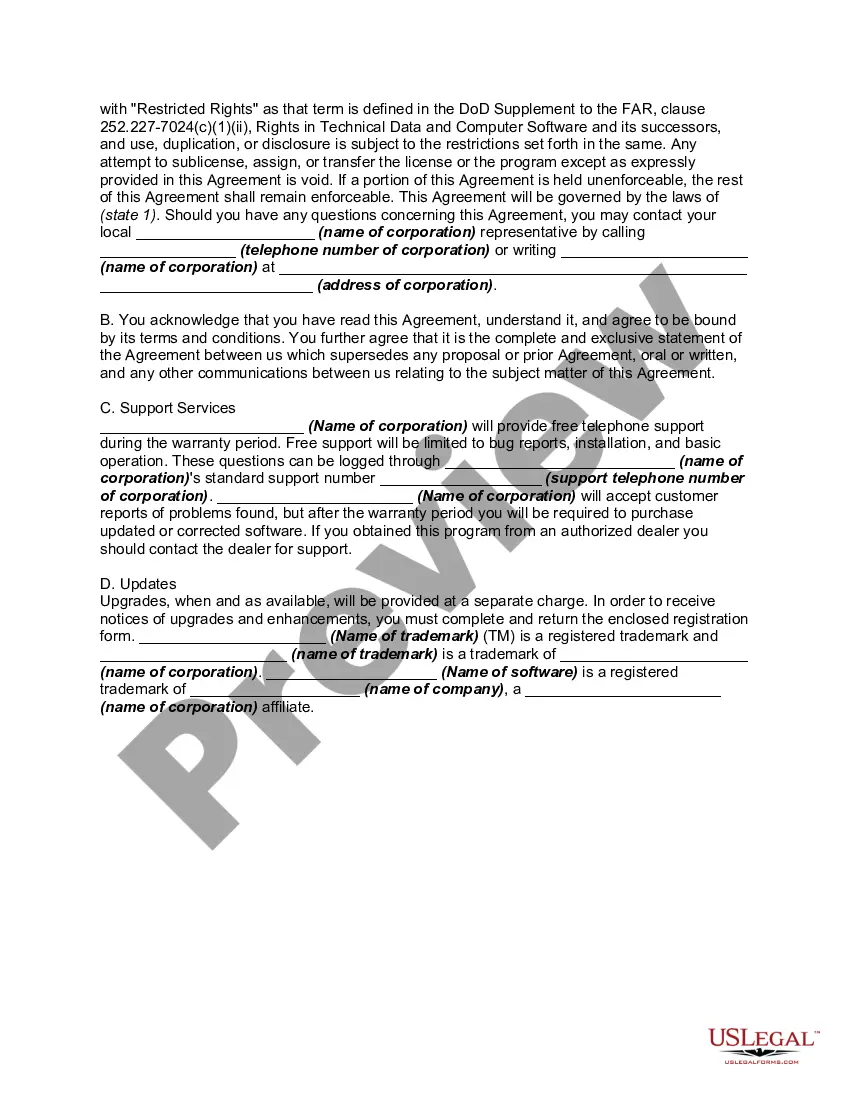
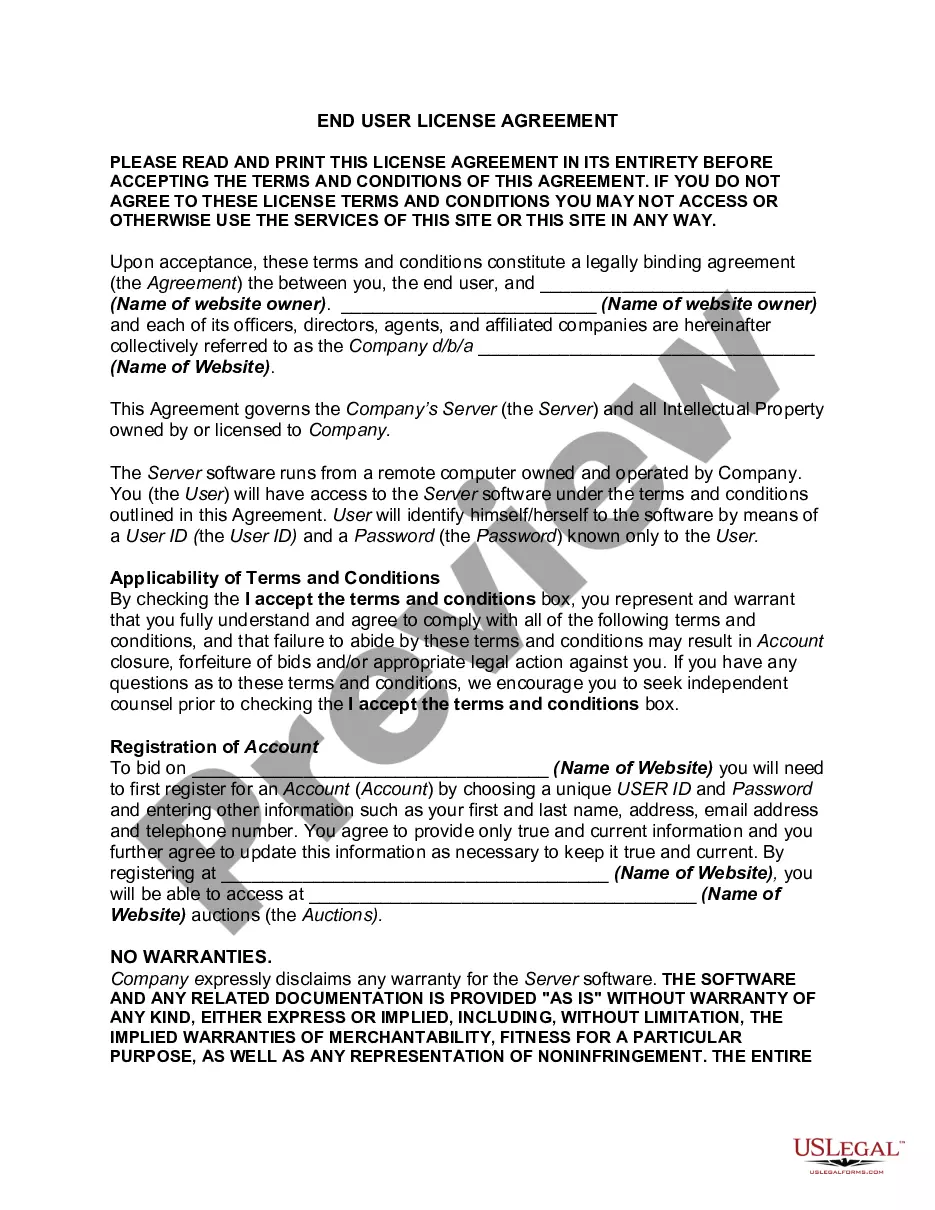
Get your form ready online
Our built-in tools help you complete, sign, share, and store your documents in one place.
Make edits, fill in missing information, and update formatting in US Legal Forms—just like you would in MS Word.
Download a copy, print it, send it by email, or mail it via USPS—whatever works best for your next step.
Sign and collect signatures with our SignNow integration. Send to multiple recipients, set reminders, and more. Go Premium to unlock E-Sign.
If this form requires notarization, complete it online through a secure video call—no need to meet a notary in person or wait for an appointment.
We protect your documents and personal data by following strict security and privacy standards.

Make edits, fill in missing information, and update formatting in US Legal Forms—just like you would in MS Word.

Download a copy, print it, send it by email, or mail it via USPS—whatever works best for your next step.

Sign and collect signatures with our SignNow integration. Send to multiple recipients, set reminders, and more. Go Premium to unlock E-Sign.

If this form requires notarization, complete it online through a secure video call—no need to meet a notary in person or wait for an appointment.

We protect your documents and personal data by following strict security and privacy standards.
Looking for another form?







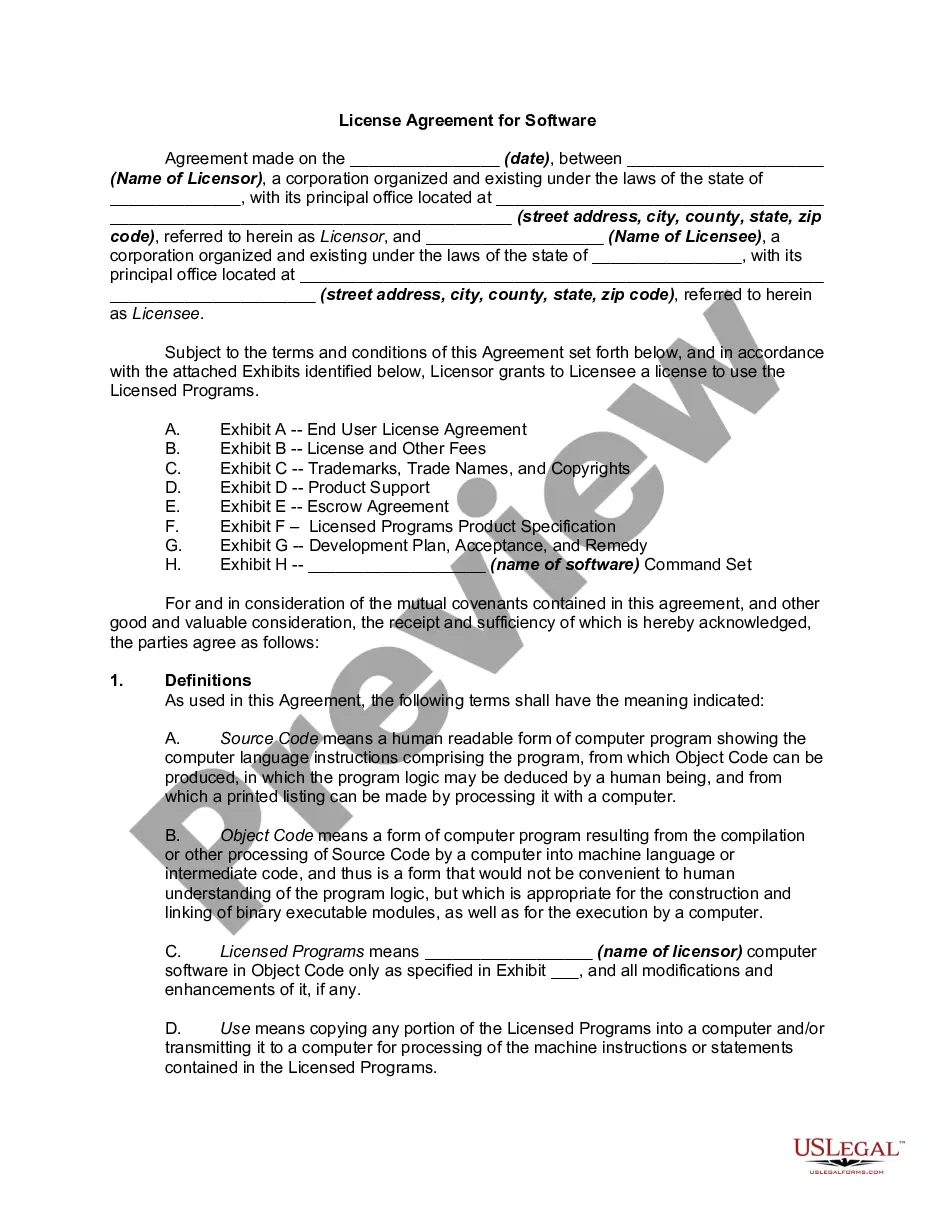
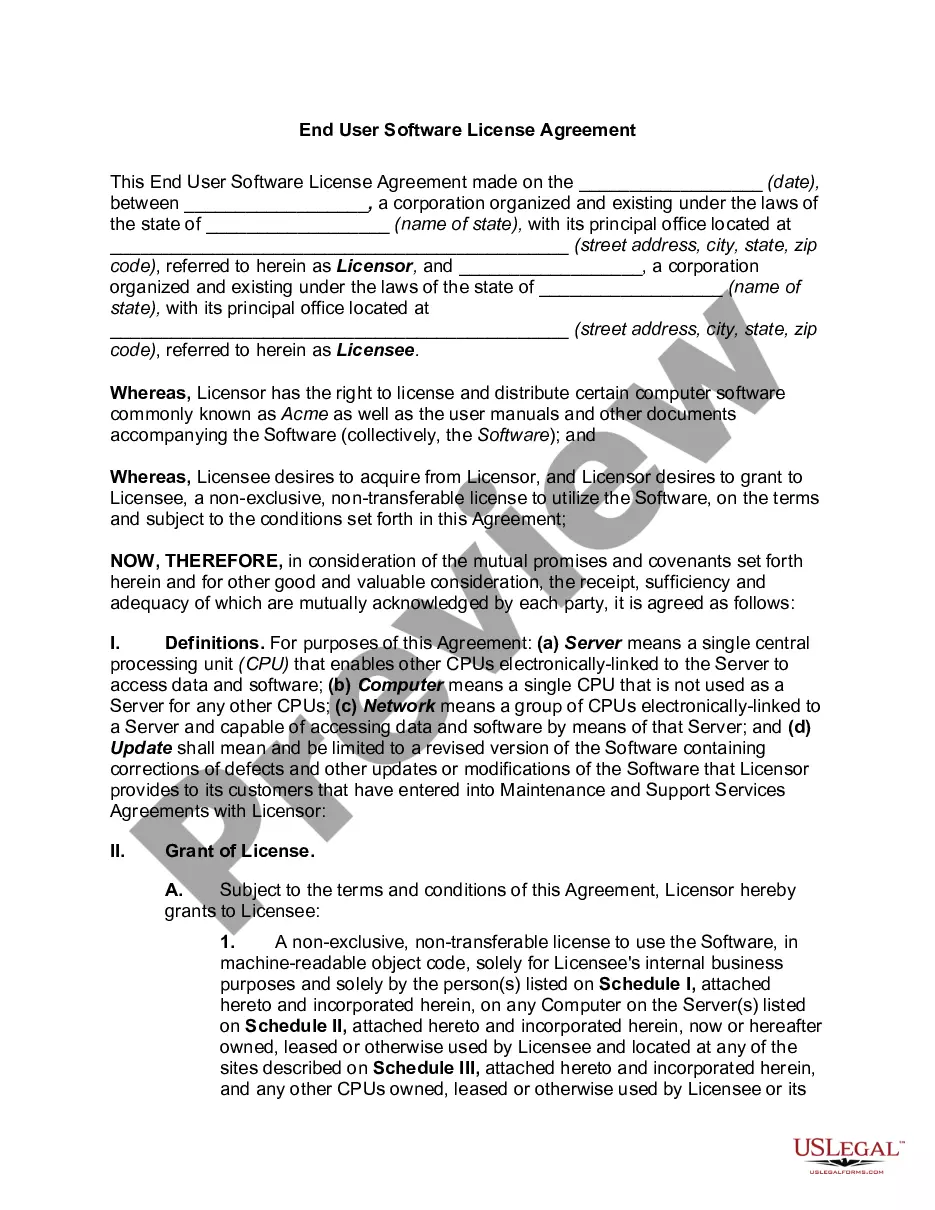
How to fill out License Agreement For End User Software?
Whether for professional reasons or for personal affairs, individuals must encounter legal matters at some time in their lives. Filling out legal documents necessitates meticulous attention, beginning with selecting the correct form template.
For instance, if you choose an incorrect version of a Use License Software Without A License, it will be rejected upon submission. It is therefore essential to obtain a trustworthy source of legal documents such as US Legal Forms.
With a comprehensive US Legal Forms catalog available, you don’t need to waste time searching for the correct sample online. Take advantage of the library’s simple navigation to find the proper form for any circumstance.
- Acquire the sample you require by utilizing the search bar or catalog navigation.
- Review the form’s details to ensure it aligns with your situation, state, and locality.
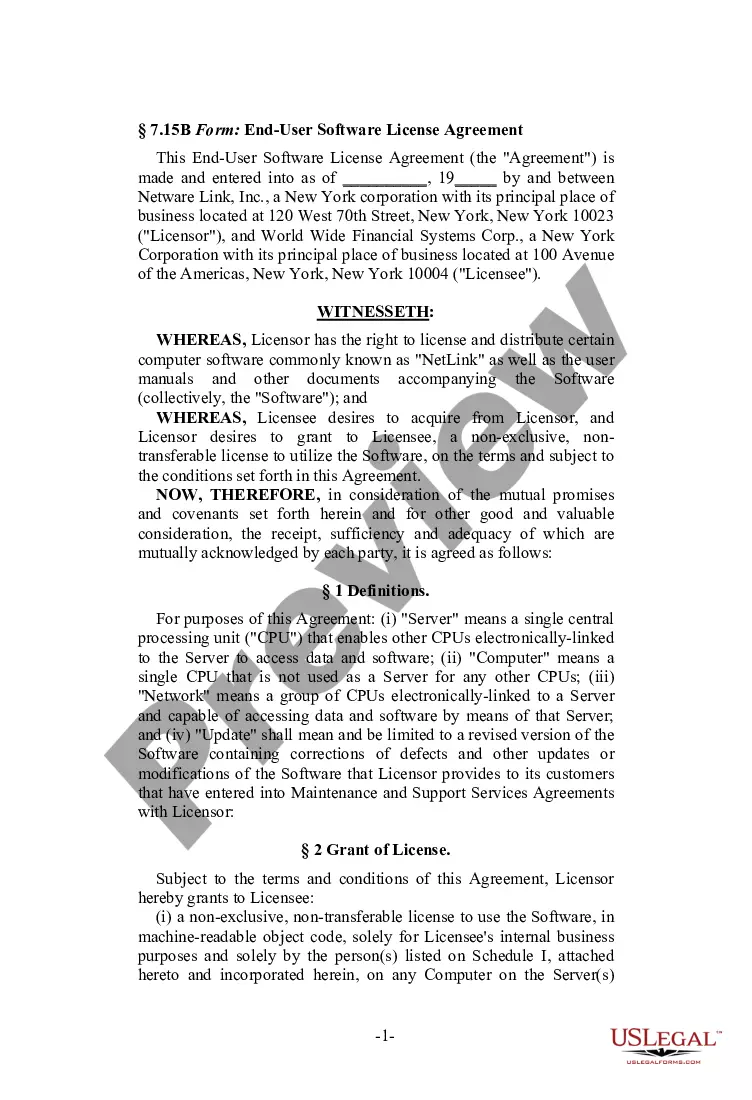
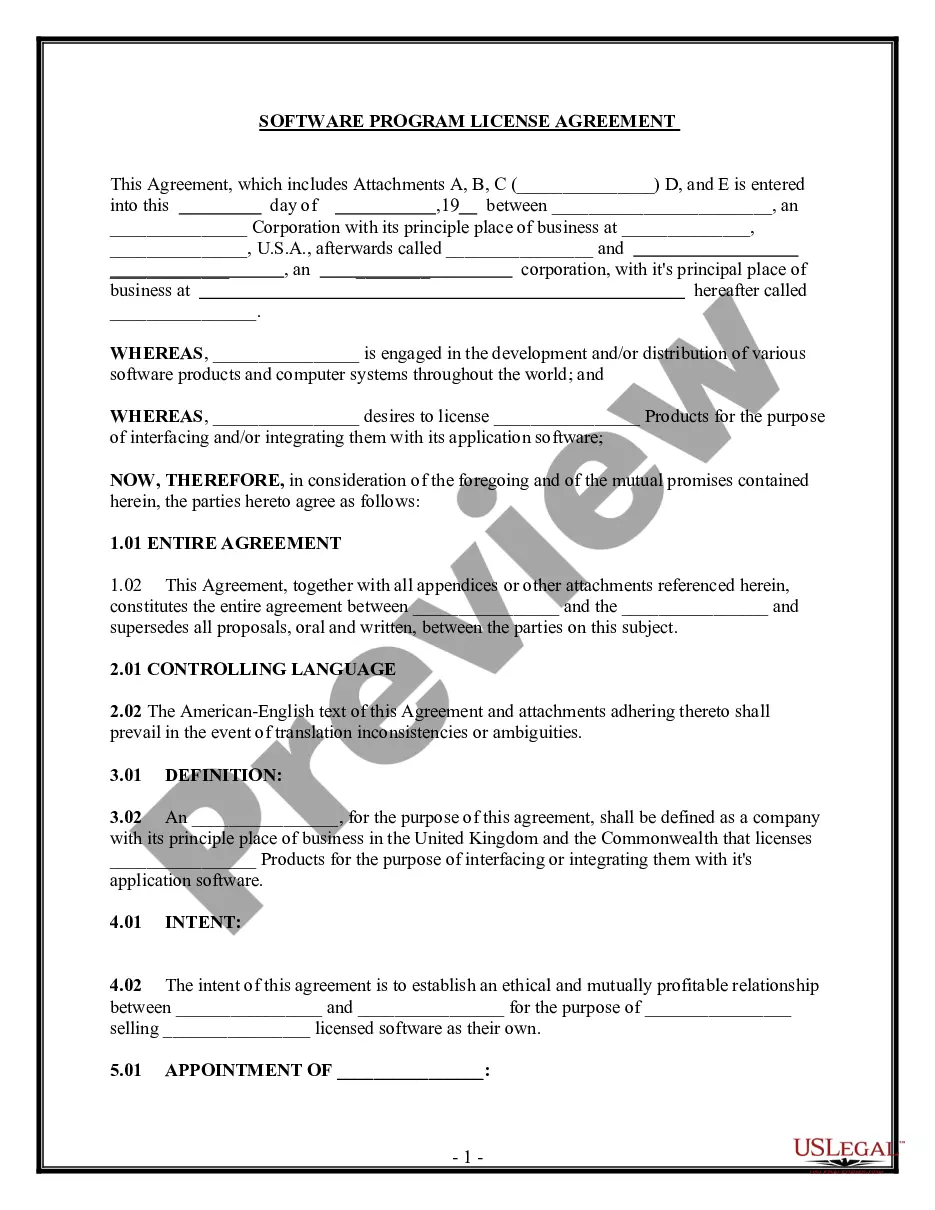
- Click on the form’s preview to examine it.
- If it is the incorrect document, return to the search feature to find the Use License Software Without A License sample you need.
- Obtain the template if it meets your specifications.
- If you possess a US Legal Forms account, click Log in to access previously saved templates in My documents.
- If you do not yet have an account, you can acquire the form by clicking Buy now.
- Select the appropriate pricing option.
- Complete the account registration form.
- Choose your payment method: utilize a credit card or PayPal account.
- Select the document format you prefer and download the Use License Software Without A License.
- Once downloaded, you can fill out the form using editing software or print it and complete it by hand.
Form popularity
FAQ
Complete the Bankruptcy Forms You can get the forms online as fillable PDFs for free from the Bankruptcy Court or find them on the District of Arizona's page. If you file pro se (which means without an attorney) you'll have to complete and file a declaration along with the other paperwork.
If the amount is between $7,700 and $12,850: You must make further calculations involving your nonpriority unsecured debt (lines 41 and 42) to determine if you may qualify. If your disposable income exceeds $12,850: There is a presumption of abuse and you must check Box 2 on the top of Page 1 of this form.
If your total monthly income over the course of the next 60 months is less than $7,475 then you pass the means test and you may file a Chapter 7 bankruptcy. If it is over $12,475 then you fail the means test and don't have the option of filing Chapter 7.
Even if your income is higher than the median, you still can qualify for Chapter 7 if you don't have enough money left after qualifying expenses to pay on a Chapter 13 repayment plan. Failing the more complex means test calculation isn't even the end of the chances you get.
The bankruptcy court requires all filers to pay a filing fee. The filing fee for Chapter 7 bankruptcy cases is $335 and the filing fee for a Chapter 13 filing is $310. You can often pay your filing fee in installments over the course of a few months if you have a financial hardship.
Here are some of the exemptions allowed by Arizona bankruptcy law: Homestead - up to $400,000. Bank balance up to $5,000 ( for one account only) Most pension and retirement plans, IRAs and 401(k) accounts (deposited more than 120 days before filing bankruptcy)
If your total monthly income over the course of the next 60 months is less than $7,475 then you pass the means test and you may file a Chapter 7 bankruptcy. If it is over $12,475 then you fail the means test and don't have the option of filing Chapter 7.
The biggest difference between Chapter 7 and Chapter 13 is that Chapter 7 focuses on discharging (getting rid of) unsecured debt such as credit cards, personal loans and medical bills while Chapter 13 allows you to catch up on secured debts like your home or your car while also discharging unsecured debt.