Information Insurance Release Without Patient Authorization
Description
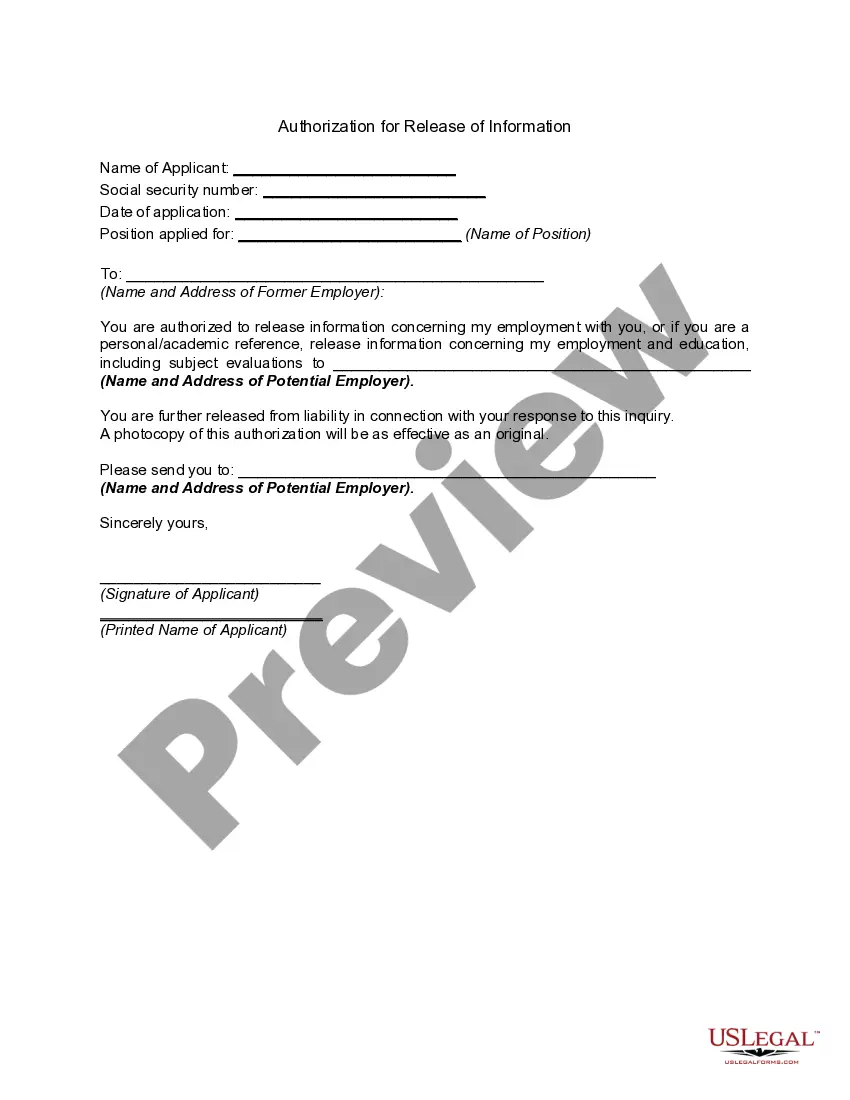
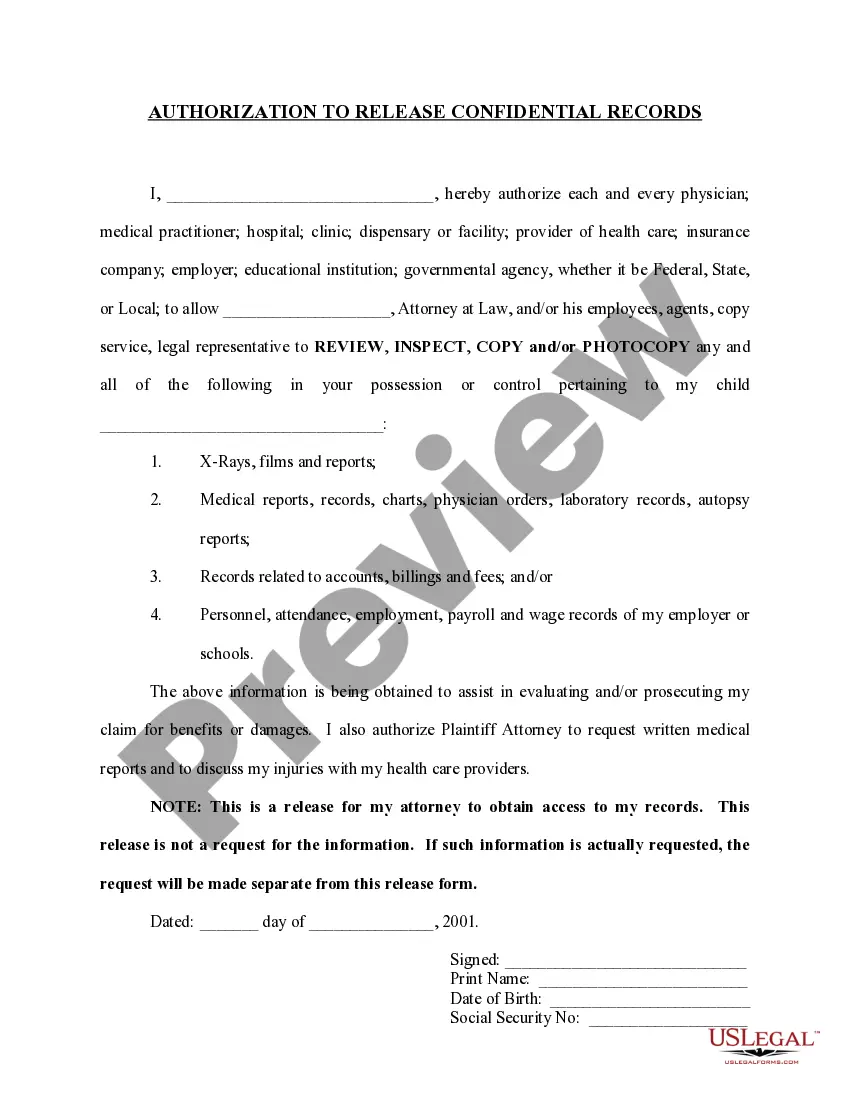
Get your form ready online
Our built-in tools help you complete, sign, share, and store your documents in one place.
Make edits, fill in missing information, and update formatting in US Legal Forms—just like you would in MS Word.
Download a copy, print it, send it by email, or mail it via USPS—whatever works best for your next step.
Sign and collect signatures with our SignNow integration. Send to multiple recipients, set reminders, and more. Go Premium to unlock E-Sign.
If this form requires notarization, complete it online through a secure video call—no need to meet a notary in person or wait for an appointment.
We protect your documents and personal data by following strict security and privacy standards.

Make edits, fill in missing information, and update formatting in US Legal Forms—just like you would in MS Word.

Download a copy, print it, send it by email, or mail it via USPS—whatever works best for your next step.

Sign and collect signatures with our SignNow integration. Send to multiple recipients, set reminders, and more. Go Premium to unlock E-Sign.

If this form requires notarization, complete it online through a secure video call—no need to meet a notary in person or wait for an appointment.

We protect your documents and personal data by following strict security and privacy standards.
Looking for another form?
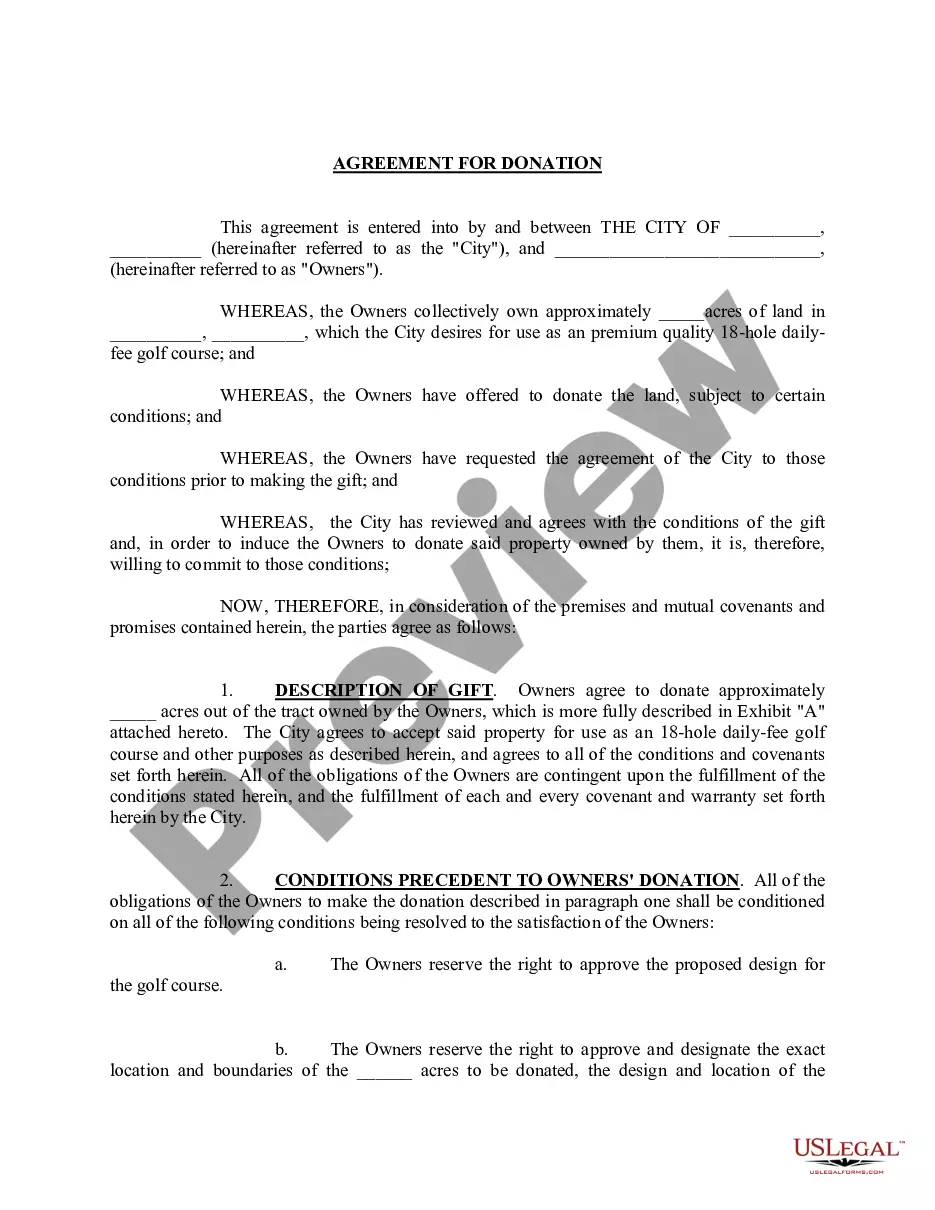



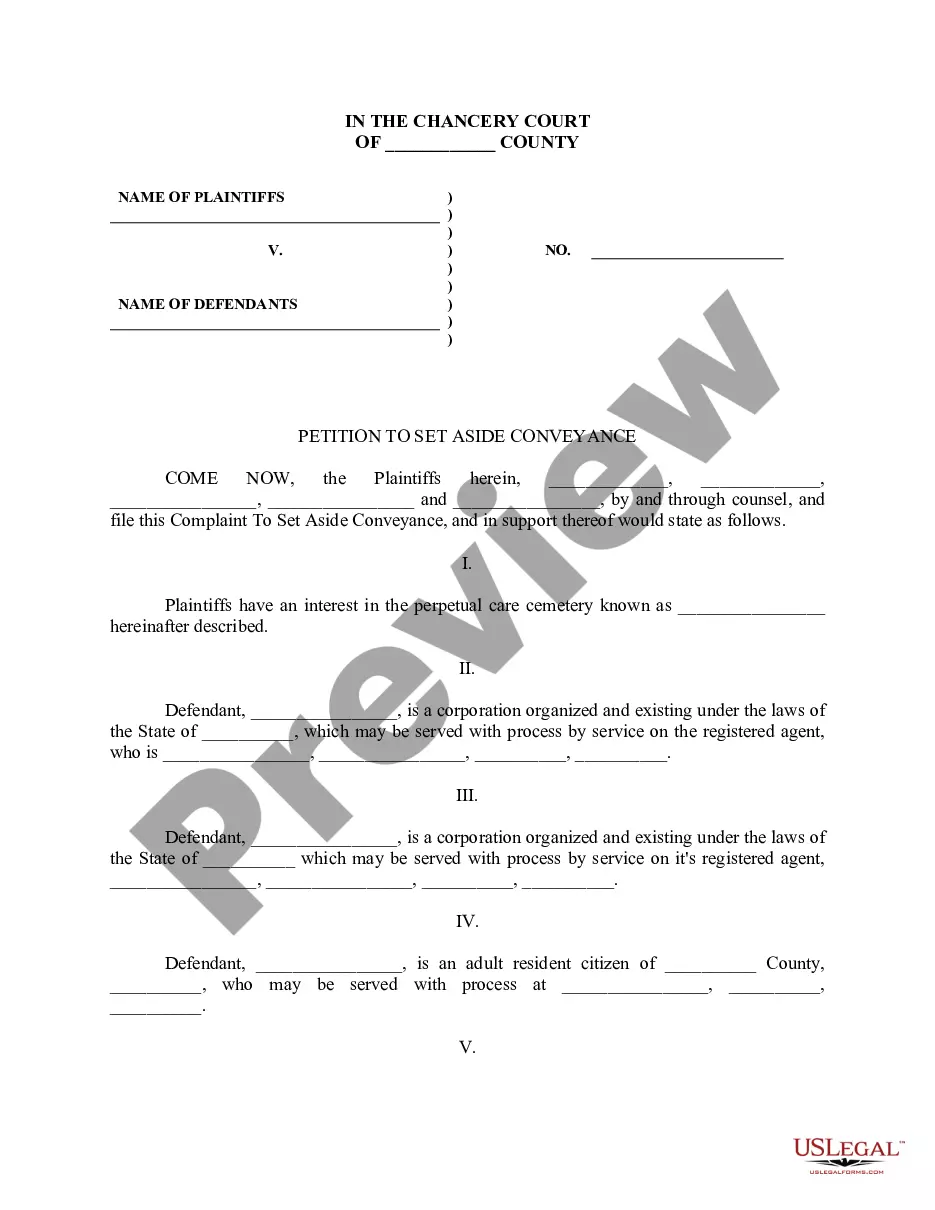




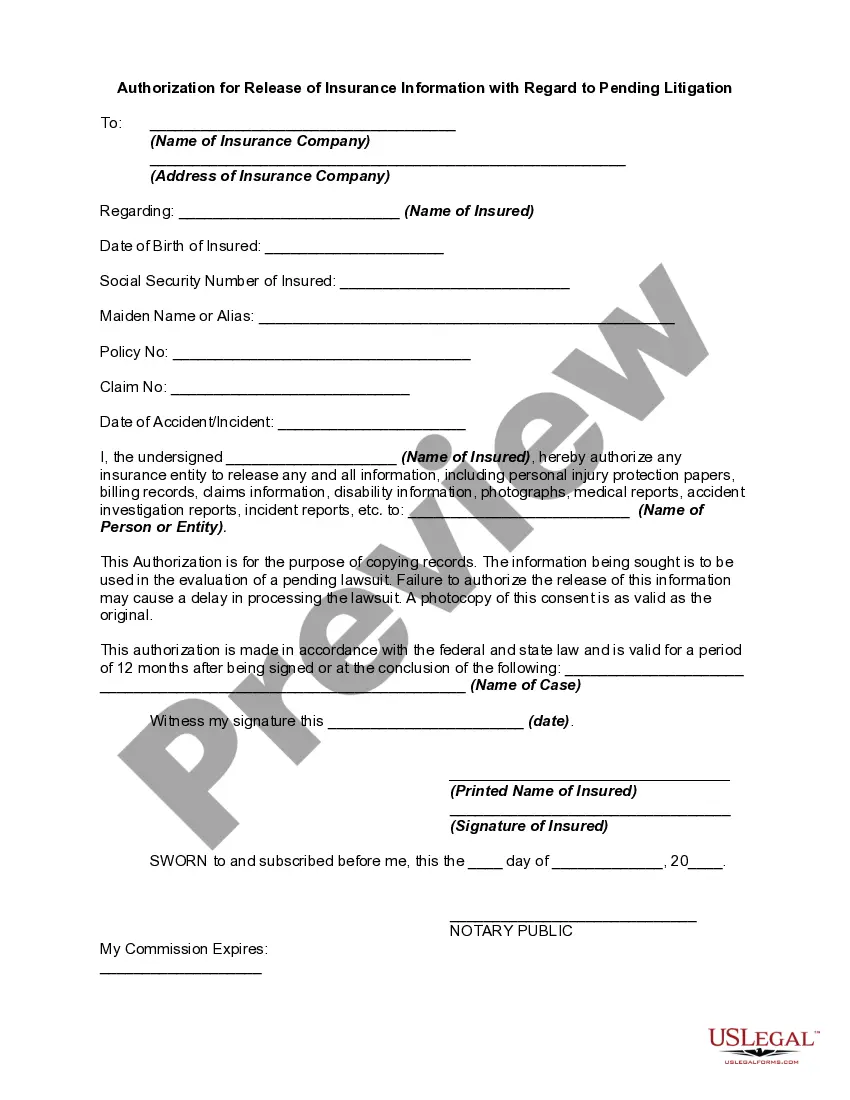
How to fill out Authorization For Release Of Insurance Information With Regard To Pending Litigation?
Whether you frequently handle documents or occasionally need to submit a legal report, it is crucial to find a resource where all samples are interrelated and current.
The first step in using an Information Insurance Release Without Patient Authorization is to ensure that it is indeed the most up-to-date version, as this determines its eligibility for submission.
If you want to streamline your search for the latest document samples, look for them on US Legal Forms.
Avoid the complications of handling legal paperwork. All your templates will be organized and verified with a US Legal Forms account.
- US Legal Forms is a repository of legal templates that includes nearly any document sample you may need.
- You can search for the necessary templates, assess their relevance immediately, and learn more about how to use them.
- With US Legal Forms, you have access to over 85,000 form templates across various sectors.
- Easily locate the Information Insurance Release Without Patient Authorization examples in just a few clicks and save them in your profile.
- A US Legal Forms profile enables you to access all required samples with greater ease and reduced hassle.
- Simply click Log In in the site header and navigate to the My documents section where all needed forms are readily available, eliminating the need to waste time on finding the right template or verifying its suitability.
- To acquire a form without an account, follow these steps.
Form popularity
FAQ
There are a few scenarios where you can disclose PHI without patient consent: coroner's investigations, court litigation, reporting communicable diseases to a public health department, and reporting gunshot and knife wounds.
A covered entity is permitted, but not required, to use and disclose protected health information, without an individual's authorization, for the following purposes or situations: (1) To the Individual (unless required for access or accounting of disclosures); (2) Treatment, Payment, and Health Care Operations; (3)
There are a few scenarios where you can disclose PHI without patient consent: coroner's investigations, court litigation, reporting communicable diseases to a public health department, and reporting gunshot and knife wounds.
Exceptions Under the HIPAA Privacy Rule for Disclosure of PHI Without Patient AuthorizationPreventing a Serious and Imminent Threat.Treating the Patient.Ensuring Public Health and Safety.Notifying Family, Friends, and Others Involved in Care.Notifying Media and the Public.
No. The HIPAA Privacy Rule permits a health care provider to disclose protected health information about an individual, without the individual's authorization, to another health care provider for that provider's treatment of the individual.