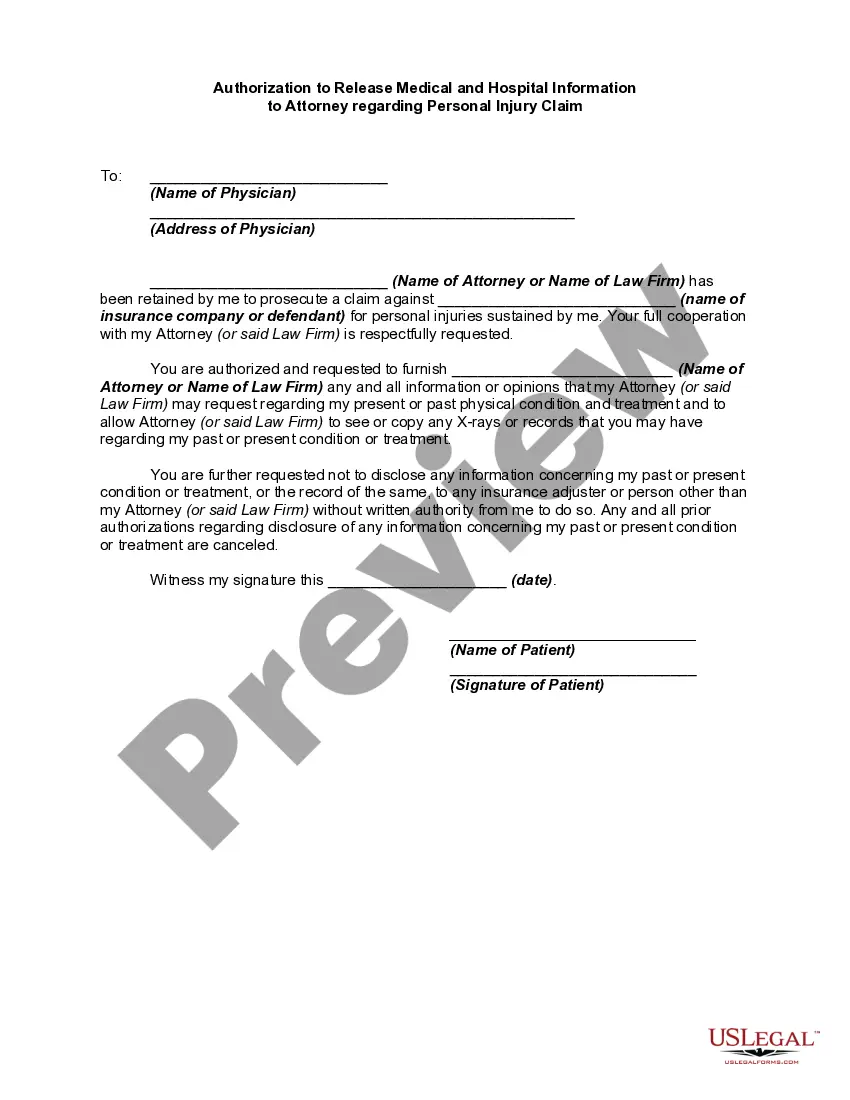
A Signed Consent To Release Medical Information For Treatment Payment And Health Care Operations
Description

Get your form ready online
Our built-in tools help you complete, sign, share, and store your documents in one place.
Make edits, fill in missing information, and update formatting in US Legal Forms—just like you would in MS Word.
Download a copy, print it, send it by email, or mail it via USPS—whatever works best for your next step.
Sign and collect signatures with our SignNow integration. Send to multiple recipients, set reminders, and more. Go Premium to unlock E-Sign.
If this form requires notarization, complete it online through a secure video call—no need to meet a notary in person or wait for an appointment.
We protect your documents and personal data by following strict security and privacy standards.

Make edits, fill in missing information, and update formatting in US Legal Forms—just like you would in MS Word.

Download a copy, print it, send it by email, or mail it via USPS—whatever works best for your next step.

Sign and collect signatures with our SignNow integration. Send to multiple recipients, set reminders, and more. Go Premium to unlock E-Sign.

If this form requires notarization, complete it online through a secure video call—no need to meet a notary in person or wait for an appointment.

We protect your documents and personal data by following strict security and privacy standards.
Looking for another form?

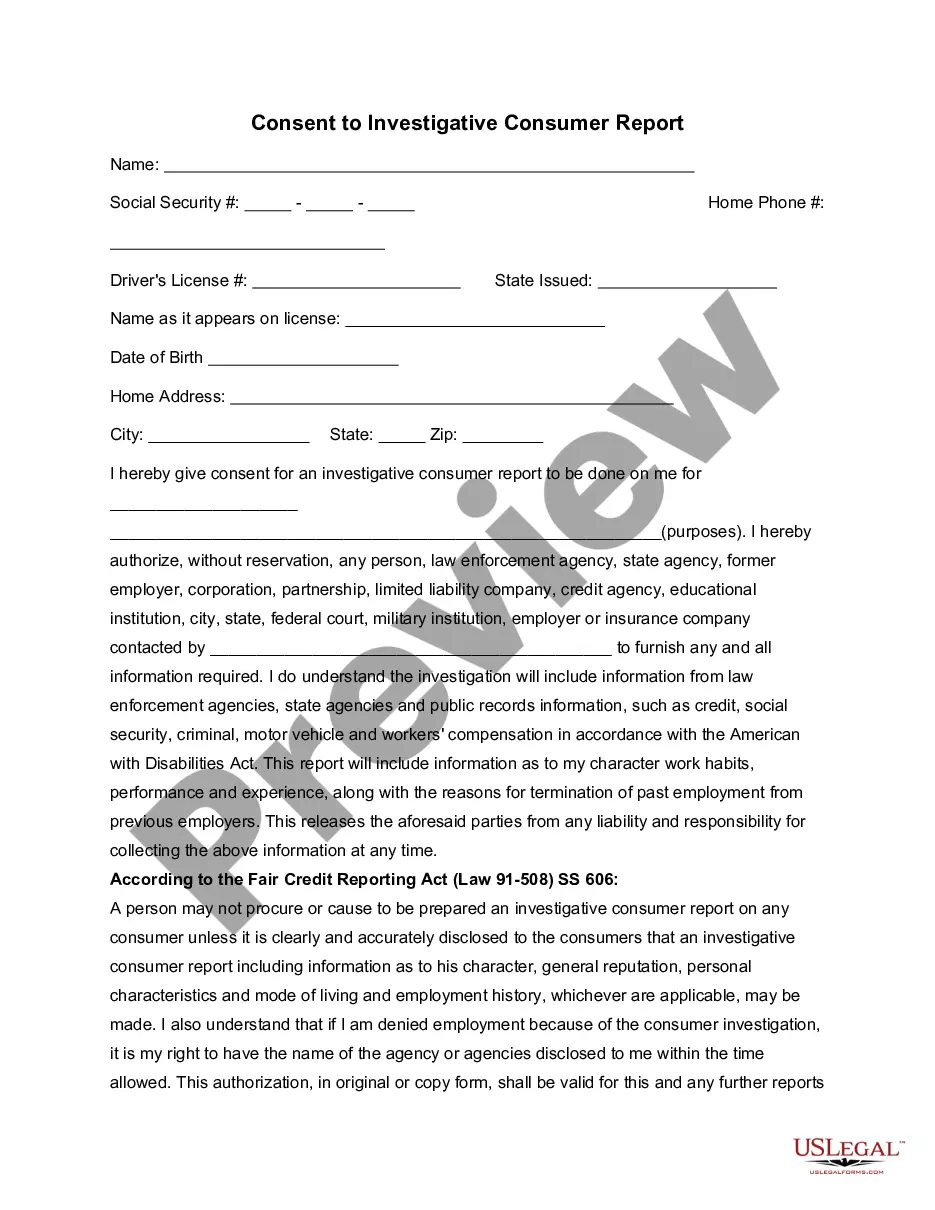




How to fill out Authorization To Release Medical And Hospital Information To Attorney?
- If you are a returning user, log in to your account and download the required form template directly by clicking the Download button. Ensure your subscription is active.
- For first-time users, start by reviewing the Preview mode and form description to select the correct document that aligns with your requirements and meets local jurisdictional standards.
- If you find discrepancies, utilize the Search tab at the top to locate the appropriate template. Once you identify a suitable option, proceed to the next step.
- Click on the Buy Now button to purchase your document. Choose the subscription plan that best fits your needs, and register an account for access to the vast library of forms.
- Complete your payment using a credit card or PayPal account to finalize the purchase.
- Download the completed form and save it on your device. You can access it anytime in the My Forms section.
In conclusion, using US Legal Forms allows you to efficiently manage your legal document needs and ensures that you have the right forms for your healthcare transactions. With an extensive library and expert support, obtaining a signed consent form has never been easier.
Start your journey with US Legal Forms today and experience hassle-free access to your legal needs!
Form popularity
FAQ
A signed consent to release medical information for treatment payment and health care operations signifies your permission to share your health data with specific parties. This agreement allows your healthcare providers to process payments and coordinate treatment effectively. Understanding this consent is crucial, as it ensures that your information can be shared properly while maintaining your privacy. Utilizing platforms like uSlegalForms can help you create and manage this consent form seamlessly.
A court order is often required to release medical records when necessary for legal proceedings. This document must detail which records should be released and to whom. Having a signed consent to release medical information for treatment payment and health care operations may ease the process, but the court order remains crucial for ensuring compliance with legal standards.
To release a patient's medical records to that patient, the patient must provide a signed consent to release medical information for treatment payment and health care operations. This includes completing a specific release form that identifies the records and limits disclosure. Ensuring this process is followed protects the patient's rights and guarantees compliance with legal obligations.
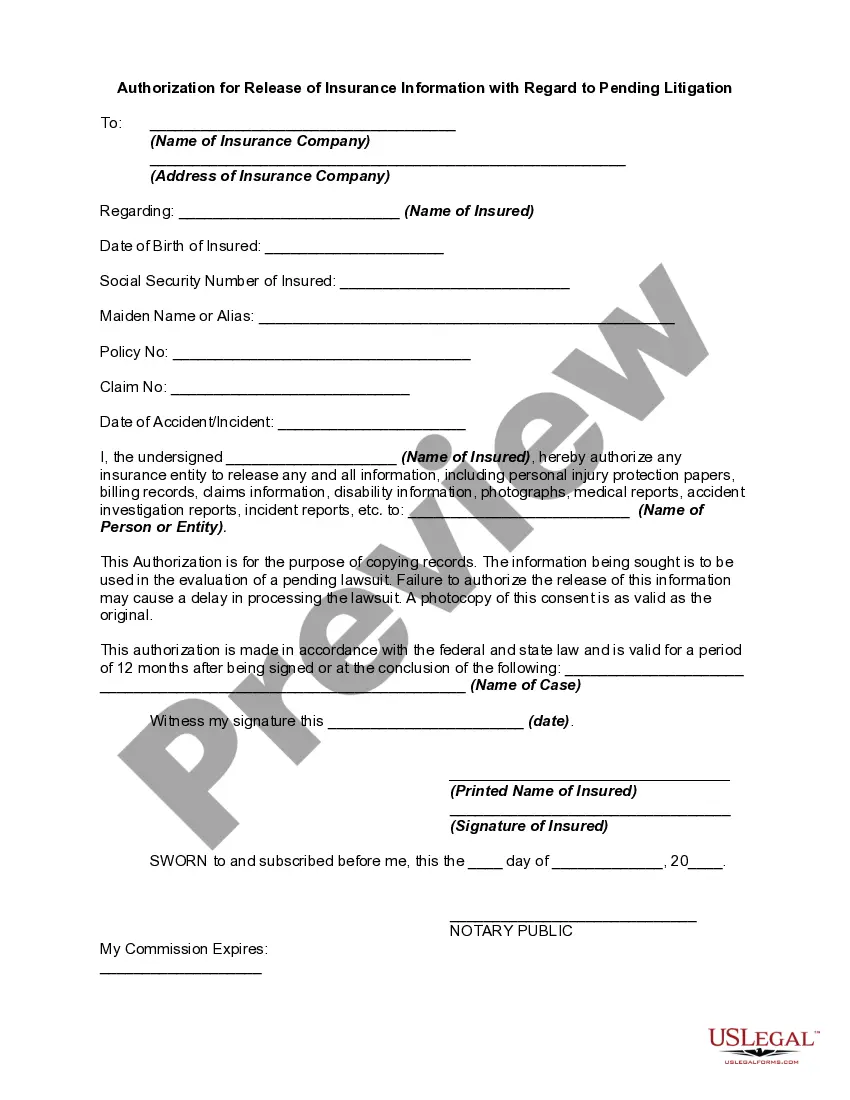
Under HIPAA, a signed consent to release medical information for treatment payment and health care operations is crucial. The individual must provide explicit consent, and the release must adhere to guidelines ensuring confidentiality and privacy. Providers are required to document the consent process, including the purpose and extent of the information shared.
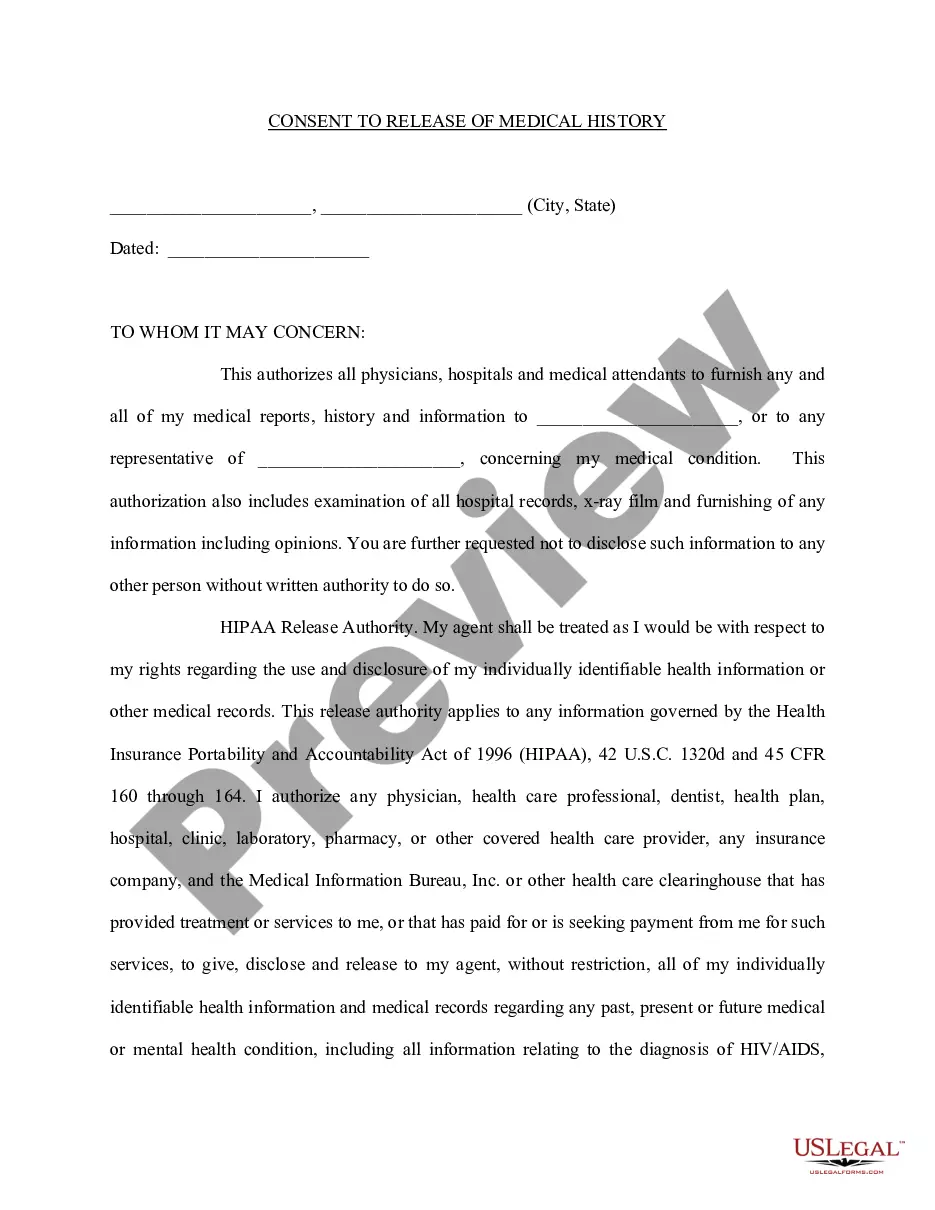
A medical release form must include specific elements to be valid, including your name, the name of the healthcare provider, and the types of information that can be shared. Additionally, it should specify the purpose of the release and the duration for which it remains valid. Signing this form constitutes a signed consent to release medical information for treatment payment and health care operations.
Yes, medical records typically require a signed consent to release medical information for treatment payment and health care operations. This consent ensures that healthcare providers have the legal authority to share your medical records with relevant parties. Without your signature, the release of your medical information cannot proceed, safeguarding your privacy.
To politely ask for medical records, approach your healthcare provider with respect and clarity. Clearly state your request, providing your details, and mention any necessary forms that you have completed, such as a signed consent to release medical information for treatment payment and health care operations. This approach creates a positive atmosphere for a more efficient response.
The best way to request the release of medical information is to submit a formal request using a signed consent form. Include all necessary details such as your name, contact information, and specific records you want released. Doing this will facilitate the process and ensure that your signed consent to release medical information for treatment payment and health care operations is honored without delays.
To write a letter for the release of medical records, start by addressing the appropriate healthcare provider. Clearly state your request for the release of specific medical records and include your identifying information. Be sure to include a signed consent to release medical information for treatment payment and health care operations to ensure timely processing of your request.
The patient typically authorizes the release of their medical information by signing a consent form. In some cases, a legal guardian or authorized representative may sign on behalf of a patient who is unable to do so. This signed consent to release medical information for treatment payment and health care operations is crucial for protecting patient privacy and ensuring information accuracy.