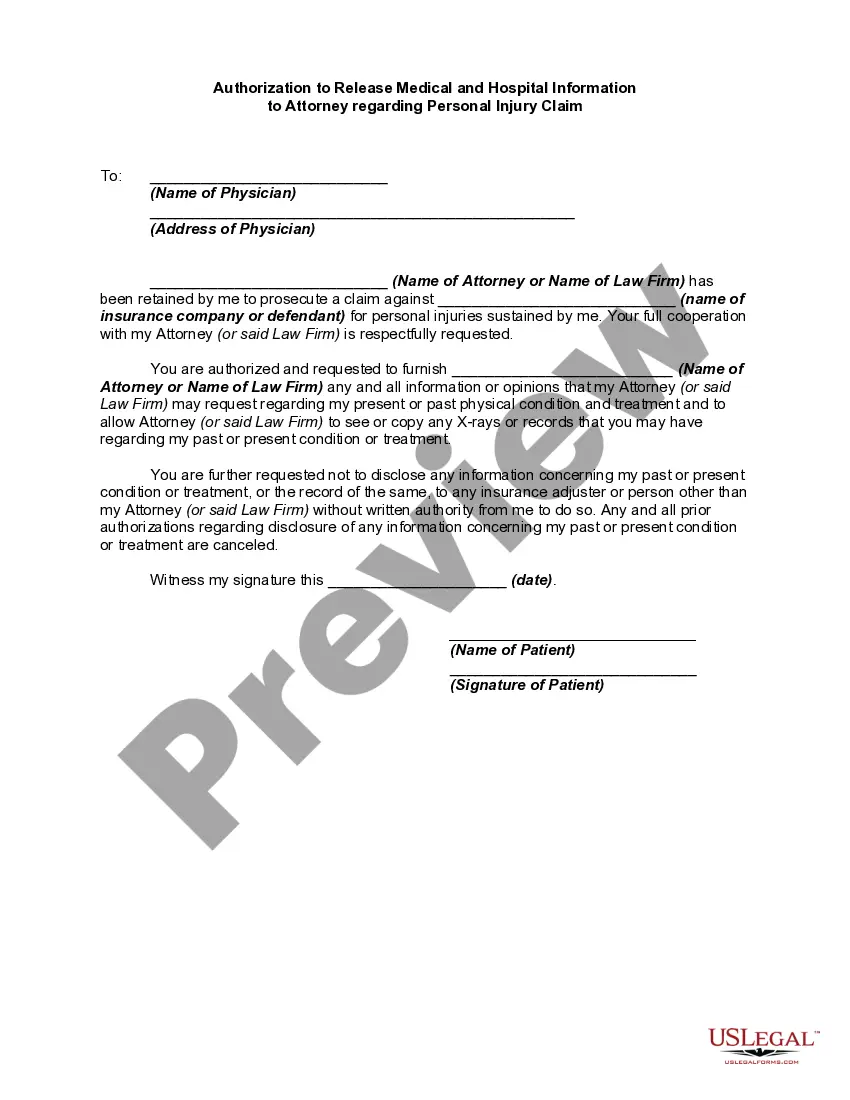
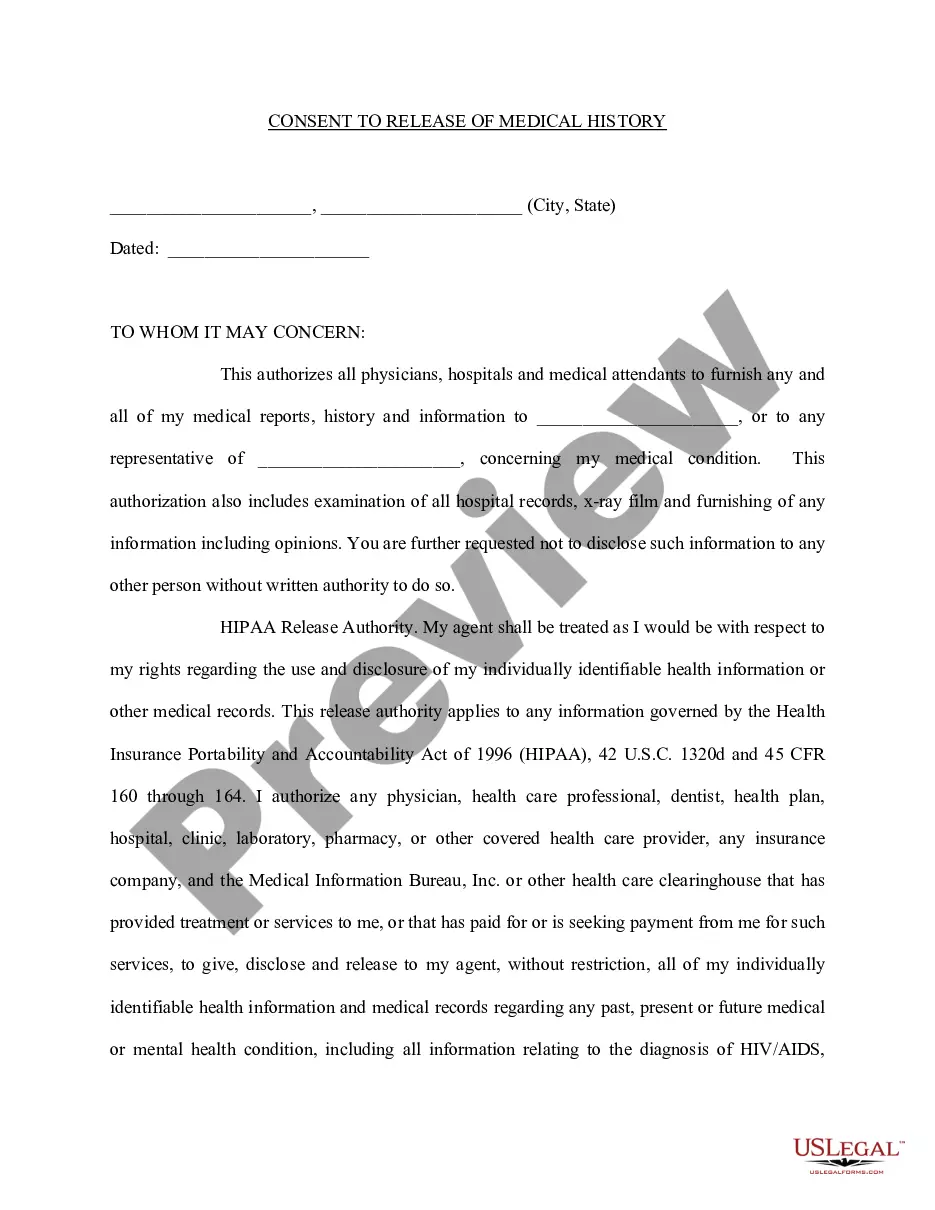
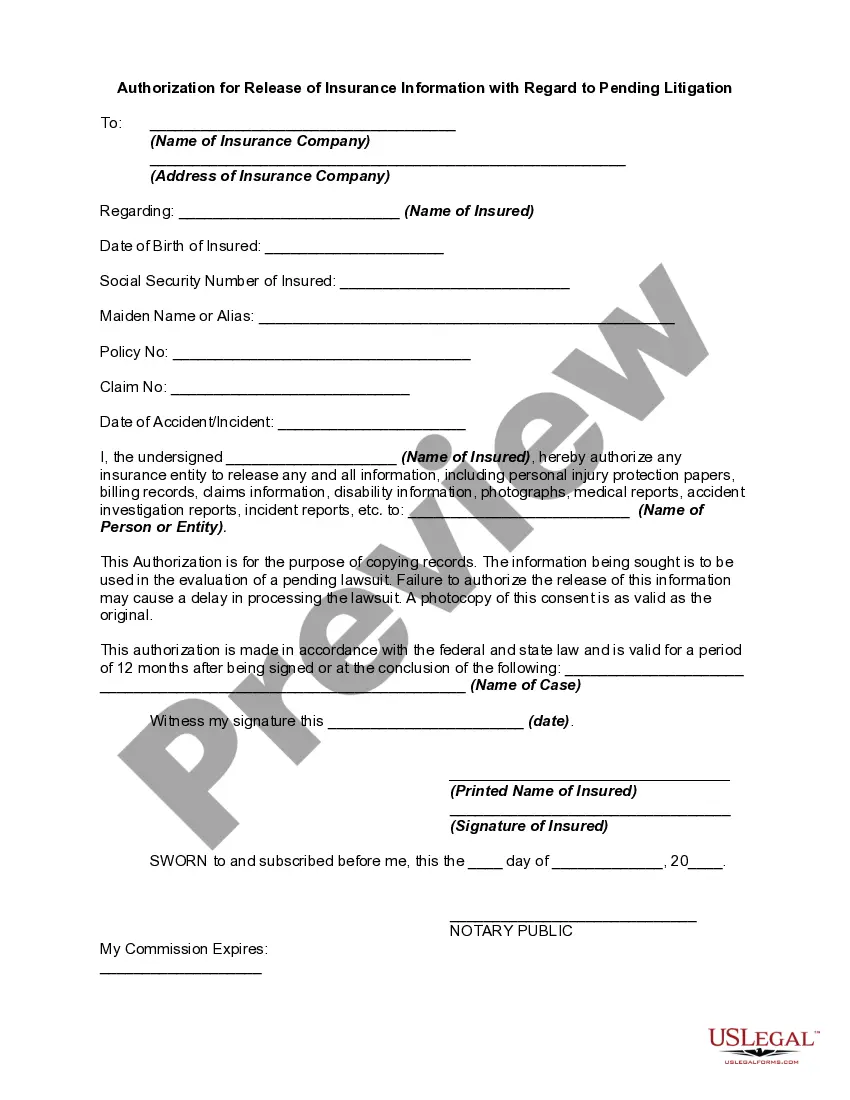
Authorization Form For Medical Records
Description

Get your form ready online
Our built-in tools help you complete, sign, share, and store your documents in one place.
Make edits, fill in missing information, and update formatting in US Legal Forms—just like you would in MS Word.
Download a copy, print it, send it by email, or mail it via USPS—whatever works best for your next step.
Sign and collect signatures with our SignNow integration. Send to multiple recipients, set reminders, and more. Go Premium to unlock E-Sign.
If this form requires notarization, complete it online through a secure video call—no need to meet a notary in person or wait for an appointment.
We protect your documents and personal data by following strict security and privacy standards.

Make edits, fill in missing information, and update formatting in US Legal Forms—just like you would in MS Word.

Download a copy, print it, send it by email, or mail it via USPS—whatever works best for your next step.

Sign and collect signatures with our SignNow integration. Send to multiple recipients, set reminders, and more. Go Premium to unlock E-Sign.

If this form requires notarization, complete it online through a secure video call—no need to meet a notary in person or wait for an appointment.

We protect your documents and personal data by following strict security and privacy standards.
Looking for another form?

How to fill out Authorization To Release Medical And Hospital Information To Attorney?
- Log into your US Legal Forms account if you're a returning user. Click the Download button to access the needed template directly. Ensure that your subscription is active; if not, renew according to your plan.
- For first-time users, start by checking the preview mode and descriptions of the available forms. Verify that the selected template meets your requirements and complies with local jurisdiction regulations.
- If the chosen form isn’t suitable, use the Search tab at the top to find an alternative template that better fits your needs.
- Click on the Buy Now button to purchase the document. Choose a subscription plan that works for you and create an account to access the extensive resources.
- Complete your purchase by entering your credit card details or using your PayPal account to finalize the transaction.
- Download the form to your device for easy access. You can also find it later in the My Forms section of your profile.
US Legal Forms not only simplifies the process of obtaining legal documents but also provides a robust collection of forms. With over 85,000 editable templates, users can easily navigate their options to find the right one for their needs.
Take control of your medical documentation today and experience the benefits of a trusted resource. Visit US Legal Forms to get started!
Form popularity
FAQ
Filling out an authorization form requires careful attention to detail. Start by entering the patient's information and specifying what records you want released. Next, provide the recipient's contact information and any additional notes regarding the release. Always ensure the form is signed, as this converts it into a legitimate authorization form for medical records.
On a medical release form, include the patient's full name, date of birth, and a description of the medical records being released. Clearly state the purpose of the release and identify who will receive this information. Finally, don't forget to sign and date the form, as this step is crucial for validating the authorization form for medical records.
To write a letter requesting medical records, begin with your personal details and the patient’s information. Specify the records you need, such as dates of treatment or specific documents. It’s essential to reference the authorization form for medical records to demonstrate that you have the legal right to obtain this information.
Writing an authorization letter for medical records release involves a few key elements. Start with your contact information and the recipient's details, followed by a clear statement granting permission to release the specified records. Include relevant details such as the type of information needed and the duration of authorization. Make sure to sign it to finalize the authorization form for medical records.
To write a letter providing medical permission, start by clearly stating your intent at the top. Include the patient's name, date of birth, and a request for the release of medical records with the specific purpose outlined. Remember to sign the authorization form for medical records to validate the request, ensuring it's sent to the appropriate healthcare provider.
Another person can access your medical records by obtaining your permission through an authorization form for medical records. You must specify the scope of access on this form, including any limitations. After signing and submitting the form to your healthcare provider, they can grant access to the designated individual, ensuring your privacy is maintained.
To allow someone access to your medical records, complete an authorization form for medical records provided by your healthcare provider. This form should detail the individual or entity you're granting access to and specify what records can be accessed. Submit the completed form to your healthcare provider to initiate the authorization process.
The authorization form for medical records must include your personal information, the recipient’s details, and a description of the records being released. Additionally, it should specify the purpose of sharing this information and include your signature and the date of signing. Ensuring all required information is complete helps avoid delays in processing your request.
Filling out an authorization to release medical records is straightforward. Start by obtaining the authorization form for medical records from your healthcare provider. Clearly fill in the details of the person or organization you are granting access to, along with what specific records they can access. After completing the form, sign and date it to finalize the process.
When you give someone access to your medical records, it's referred to as granting medical authorization. This is usually documented through an authorization form for medical records, which outlines the specific information shared and the person receiving access. It's crucial to understand this process to ensure your privacy and control over your health information.