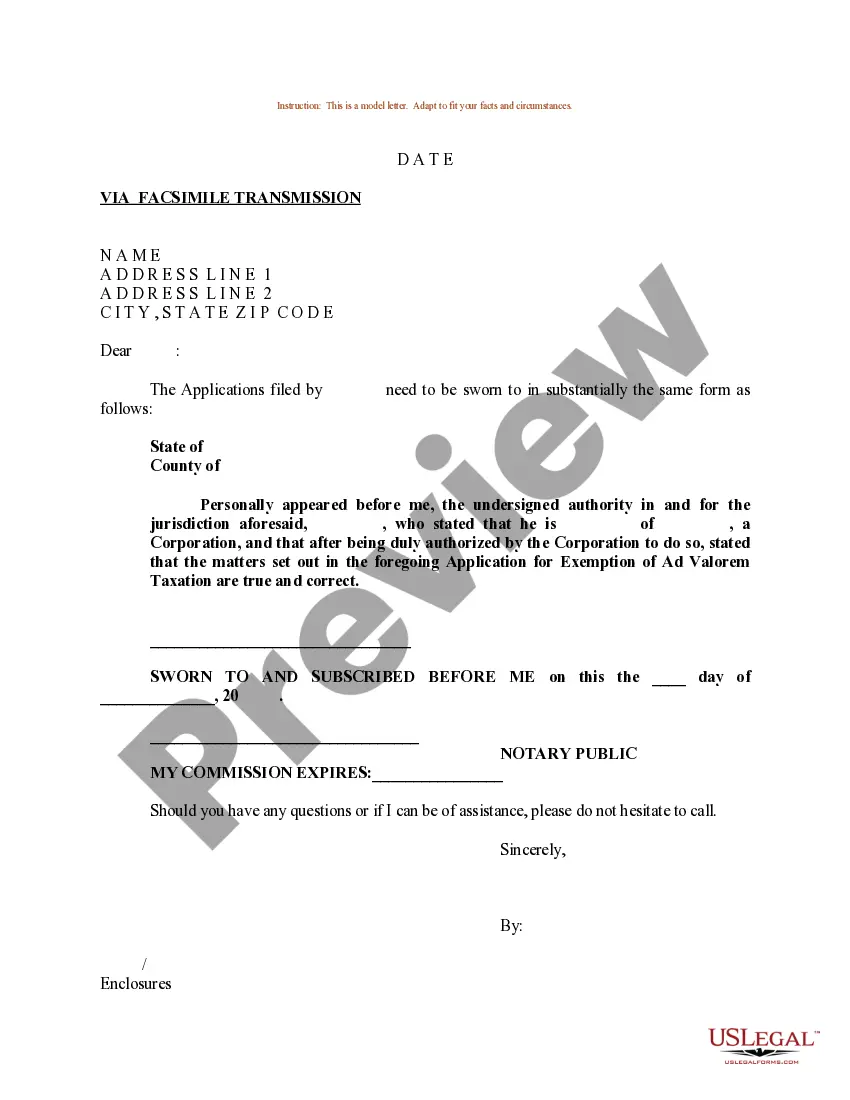
Valorem Taxation Ad Withdrawal Limit
Description


Get your form ready online
Our built-in tools help you complete, sign, share, and store your documents in one place.
Make edits, fill in missing information, and update formatting in US Legal Forms—just like you would in MS Word.
Download a copy, print it, send it by email, or mail it via USPS—whatever works best for your next step.
Sign and collect signatures with our SignNow integration. Send to multiple recipients, set reminders, and more. Go Premium to unlock E-Sign.
If this form requires notarization, complete it online through a secure video call—no need to meet a notary in person or wait for an appointment.
We protect your documents and personal data by following strict security and privacy standards.

Make edits, fill in missing information, and update formatting in US Legal Forms—just like you would in MS Word.

Download a copy, print it, send it by email, or mail it via USPS—whatever works best for your next step.

Sign and collect signatures with our SignNow integration. Send to multiple recipients, set reminders, and more. Go Premium to unlock E-Sign.

If this form requires notarization, complete it online through a secure video call—no need to meet a notary in person or wait for an appointment.

We protect your documents and personal data by following strict security and privacy standards.
Looking for another form?








How to fill out Sample Letter For Corporation Application?
Managing legal documents can be challenging, even for experienced experts.
When searching for a Valorem Taxation Ad Withdrawal Limit and lacking the time to invest in finding the correct and current version, the tasks can be arduous.
Access a resource pool of articles, guides, handbooks, and materials pertinent to your situation and needs.
Save effort and time searching for the necessary documents, and utilize US Legal Forms' advanced search and Review feature to find Valorem Taxation Ad Withdrawal Limit and obtain it.
Select Buy Now when you are ready. Choose a subscription plan, select the file format you need, and Download, complete, sign, print, and send your documents.
Enjoy the US Legal Forms online library, backed by 25 years of experience and reliability. Transform your daily document management into a seamless and user-friendly process today.
- If you are a member, Log In to your US Legal Forms account, search for the form, and obtain it.
- Visit the My documents tab to see the documents you have previously downloaded and manage your folders as you choose.
- If this is your initial experience with US Legal Forms, create a free account to gain unlimited access to all platform advantages.
- Once you access the needed form, ensure this is the correct document by previewing it and reviewing its details.
- Make sure the template is recognized in your state or county.
- Access state- or county-specific legal and business documents.
- US Legal Forms accommodates all your requirements, from personal to business paperwork, all in one location.
- Utilize innovative tools to fill out and oversee your Valorem Taxation Ad Withdrawal Limit.
Form popularity
FAQ
You can deduct only the Ad Valorem Tax portion of the annual auto registration on your Federal Schedule A. The new Title Ad Valorem Tax (TAVT) does not appear to be deductible for Federal or Georgia purposes. In order to be deductible as a personal property tax, it must be imposed on an annual basis.
The main types of ad valorem taxes include property taxes and sales tax. An ad valorem tax is a tax that is calculated based on an assessed value and a tax rate.
How is ad valorem tax calculated? It is calculated by multiplying the property's assessed value with the tax rates applied. For example, if A buys a car worth $1000 and the rate applied is 4%, the tax applicable is 1000*4/100 = 1000*0.04 = $40.
The Latin phrase ad valorem means "ing to value." So all ad valorem taxes are based on the assessed value of the item being taxed. Property ad valorem taxes (property taxes) are usually levied by local jurisdictions, such as counties or school districts.
Ad valorem taxes are due each year on all vehicles whether they are operational or not, even if the tag or registration renewal is not being applied for. Taxes must be paid by the last day of your registration period (birthday) to avoid a 10% penalty.