Collection Letter For Estate
Description
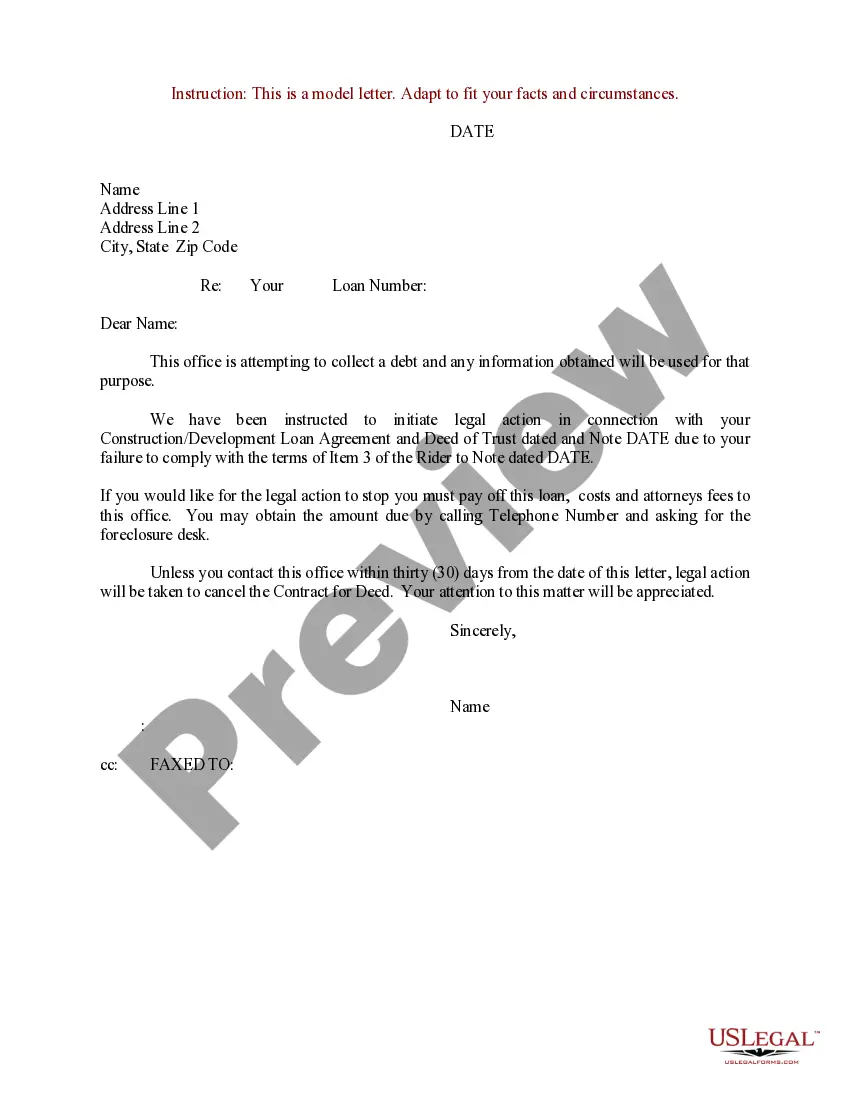
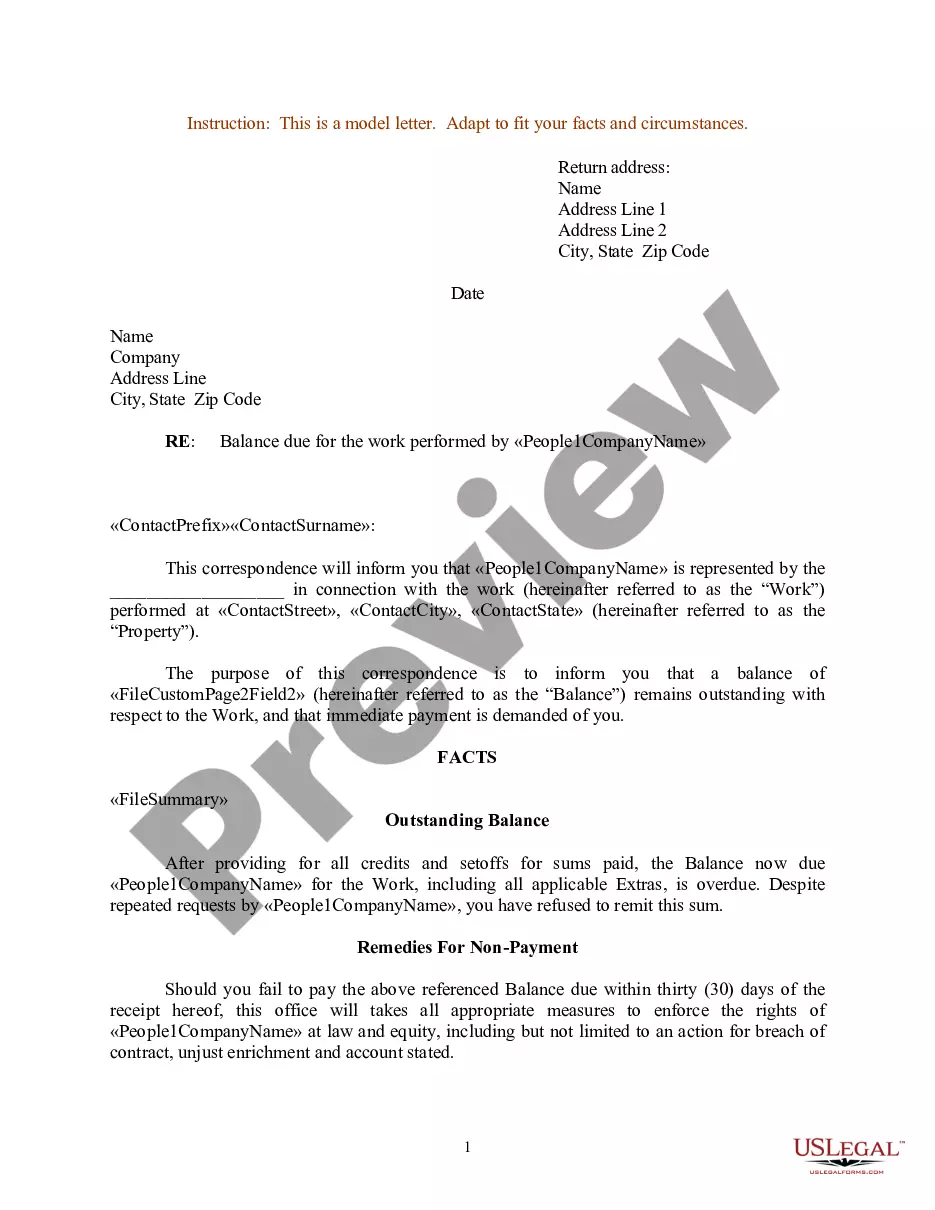
Get your form ready online
Our built-in tools help you complete, sign, share, and store your documents in one place.
Make edits, fill in missing information, and update formatting in US Legal Forms—just like you would in MS Word.
Download a copy, print it, send it by email, or mail it via USPS—whatever works best for your next step.
Sign and collect signatures with our SignNow integration. Send to multiple recipients, set reminders, and more. Go Premium to unlock E-Sign.
If this form requires notarization, complete it online through a secure video call—no need to meet a notary in person or wait for an appointment.
We protect your documents and personal data by following strict security and privacy standards.

Make edits, fill in missing information, and update formatting in US Legal Forms—just like you would in MS Word.

Download a copy, print it, send it by email, or mail it via USPS—whatever works best for your next step.

Sign and collect signatures with our SignNow integration. Send to multiple recipients, set reminders, and more. Go Premium to unlock E-Sign.

If this form requires notarization, complete it online through a secure video call—no need to meet a notary in person or wait for an appointment.

We protect your documents and personal data by following strict security and privacy standards.
Looking for another form?
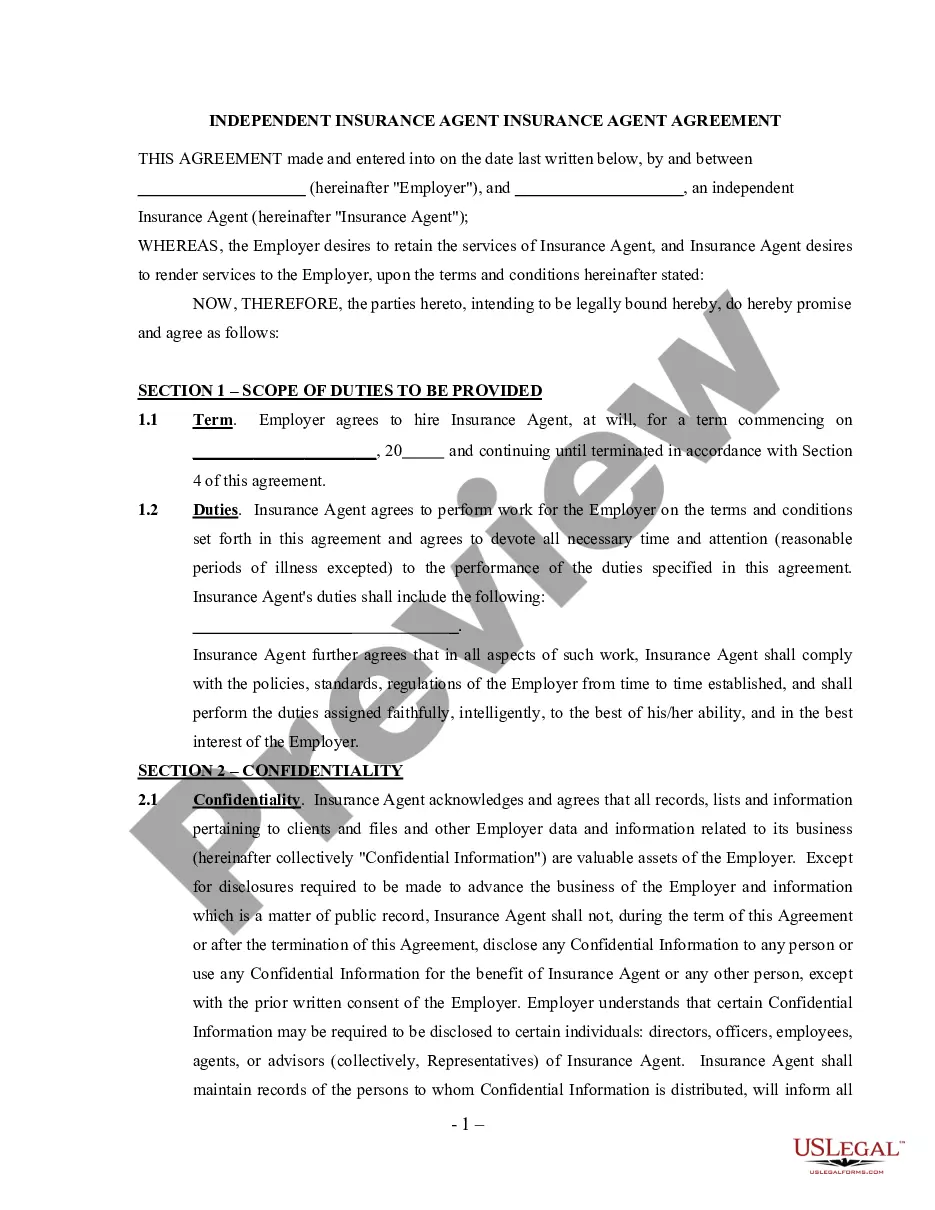

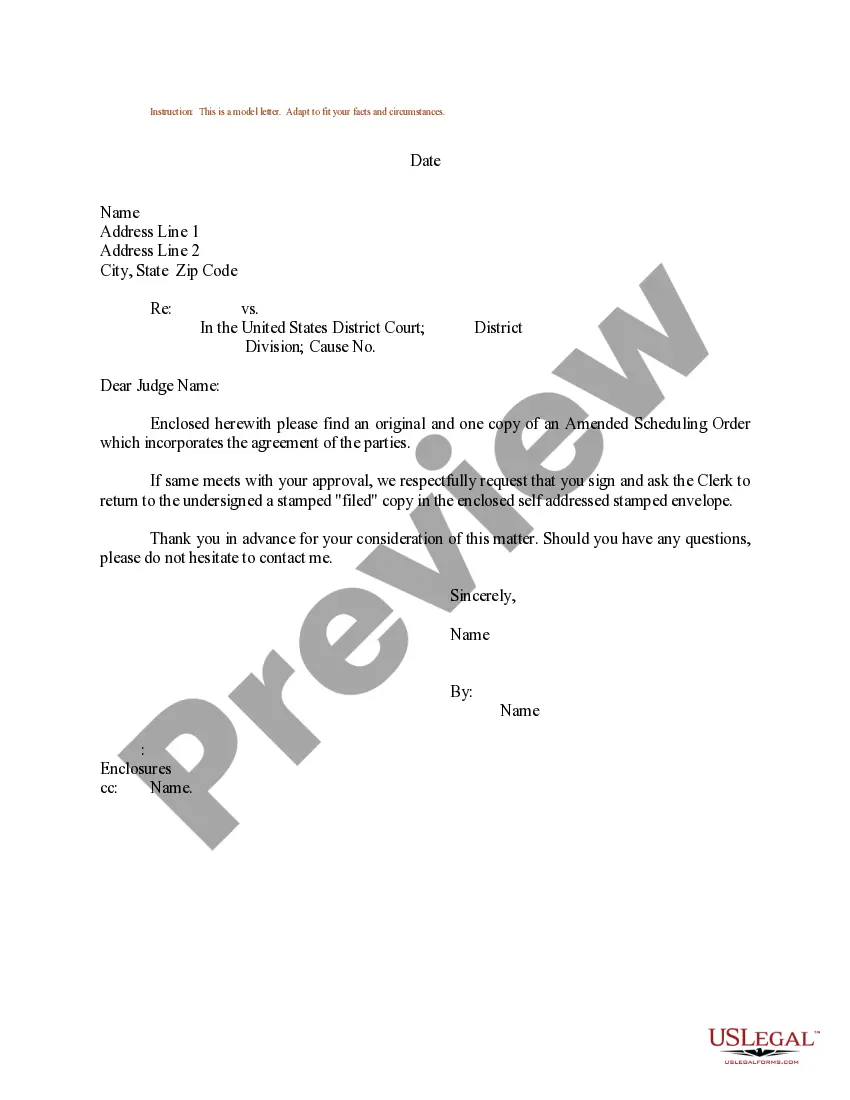
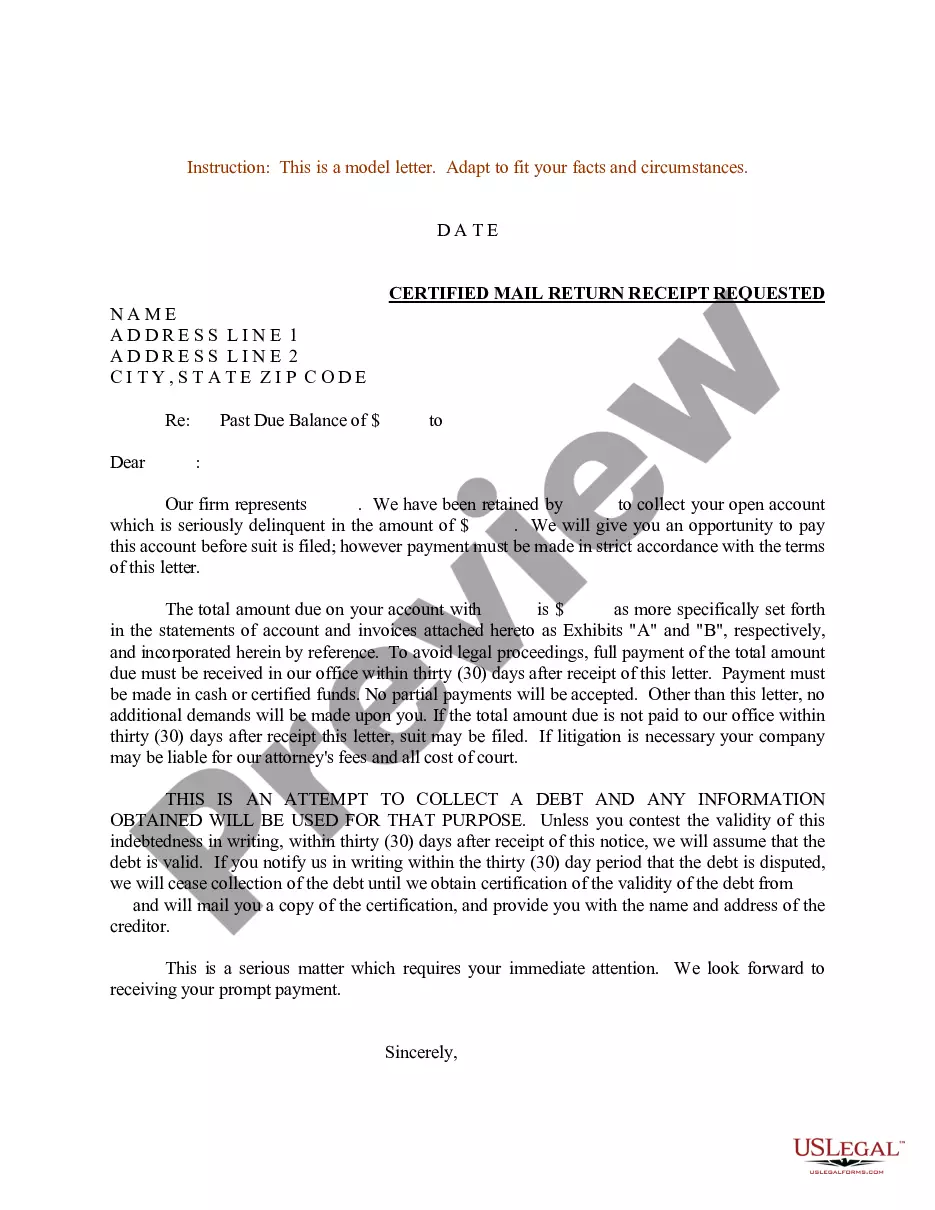
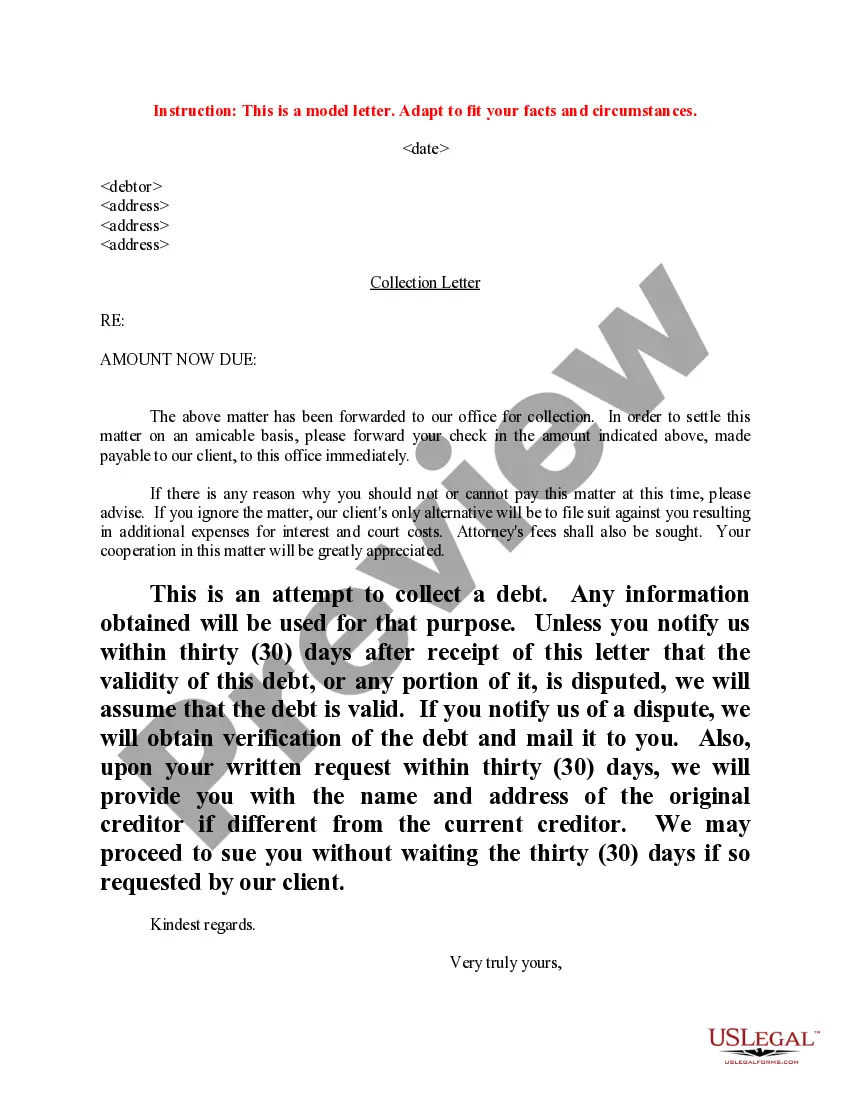
How to fill out Sample Letter For Debt Collection - Letter Offering Opportunity To Pay Debt?
It’s clear that you can’t become a legal expert instantly, nor can you swiftly learn how to proficiently create a Collection Letter For Estate without possessing a specialized skill set.
Drafting legal documents is a lengthy procedure necessitating specific training and expertise. So why not entrust the creation of the Collection Letter For Estate to the experts.
With US Legal Forms, one of the most comprehensive libraries of legal documents, you can access a wide range from court filings to templates for internal business communication.
You can regain access to your documents from the My documents tab anytime. If you're a returning customer, you can simply Log In, and find and download the template from the same section.
Regardless of the intent behind your documents—whether they are financial, legal, or personal—our platform has you covered. Try US Legal Forms today!
- Locate the document you require using the search bar at the top of the page.
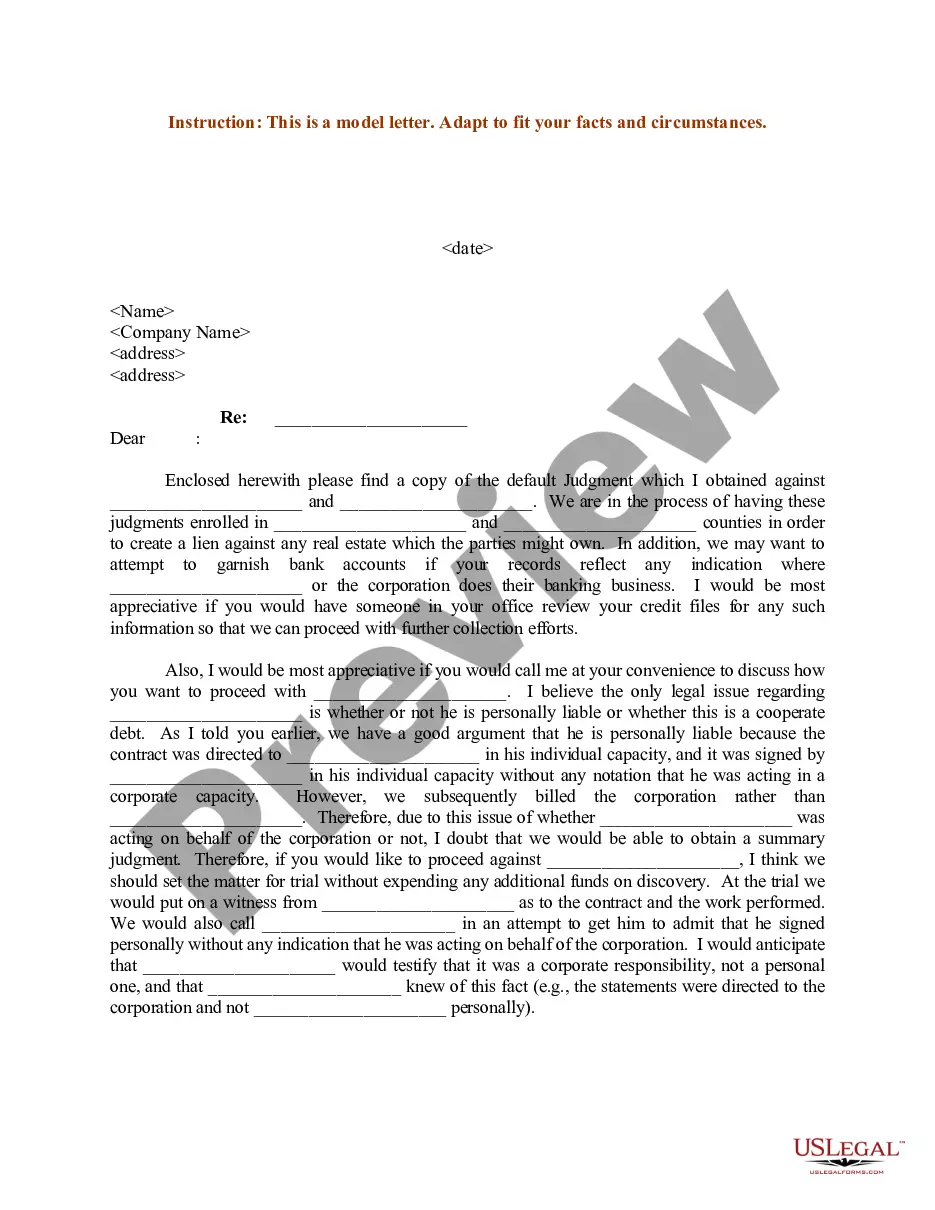
- Preview it (if this option is available) and review the accompanying description to confirm whether Collection Letter For Estate is what you need.
- Start your search again if you require a different document.
- Create a free account and select a subscription plan to obtain the document.
- Click Buy now. After the transaction is complete, you can acquire the Collection Letter For Estate, complete it, print it out, and send it via mail to the required individuals or organizations.
Form popularity
FAQ
To inform creditors of a death, begin your letter with a clear statement of the person's passing, including the date and relevant details. Include information about the estate, such as the executor’s contact details and any reference numbers associated with the debts. It’s important to maintain a respectful tone while stating that the estate will address the debts based on its assets. A collection letter for estate template can provide clarity and structure for your correspondence.
To contact creditors after someone's death, gather relevant documents, including the death certificate and information about the estate. Reach out to each creditor via phone or written communication, and inform them about the death. It is advisable to follow up with a collection letter for estate that details the situation clearly. This letter serves as a formal notification and can simplify the process of resolving outstanding debts.
Debt collectors generally cannot go after family members for the deceased's debts unless they co-signed or are legally responsible. If there are no assets in the estate, the debts typically die with the person. However, this can vary by state, so understanding your local laws is crucial. A well-written collection letter for estate can help clarify the legal position and inform creditors appropriately.
When someone dies without an estate, any credit card debt usually becomes uncollectible. Creditors cannot pursue family members or friends for the deceased's debts unless they were co-signers. The absence of assets to settle the debt means it often goes unpaid. Crafting a clear collection letter for estate can help inform creditors of the situation and any potential liabilities.
To start a collection letter for estate debts, use a polite greeting that acknowledges the recipient. Open with a succinct statement of your purpose, such as 'I am writing to address an outstanding debt related to the estate of…' This establishes a clear framework for the discussion that follows.
When writing a collection letter for estate debts, begin with a clear header that outlines your identity and contact details. State the facts simply and directly, mentioning the specific amount owed and any due dates. Your letter should be courteous and professional throughout, encouraging the recipient to respond.
To file a claim against an estate, you need to formally submit your claim to the probate court, presenting all relevant evidence. Make sure to include proof of the debt, relevant dates, and any supporting documentation. This process ensures that your claim will be considered during the estate's settlement.
A nice collection letter should maintain a respectful tone, clearly outline the facts, and express understanding. For instance, start with a friendly greeting, followed by the necessary details regarding the debt. Conclude with a sincere invitation for discussion, showing your willingness to work together.
To write a collection statement for estate debts, start with a polite greeting and briefly outline the purpose of the letter. Include specific details about the debt, such as the amount owed and any due dates. Finally, provide instructions on how the recipient can make payment or contact you for more information.
To file a debt against an estate, first gather all necessary documentation, including the original debt agreement and any relevant correspondence. Next, submit a claim to the probate court handling the estate. The court will review your claim, and if valid, it will be addressed during the estate settlement period.