Tenants Moving In Checklist
Description
Get your form ready online
Our built-in tools help you complete, sign, share, and store your documents in one place.
Make edits, fill in missing information, and update formatting in US Legal Forms—just like you would in MS Word.
Download a copy, print it, send it by email, or mail it via USPS—whatever works best for your next step.
Sign and collect signatures with our SignNow integration. Send to multiple recipients, set reminders, and more. Go Premium to unlock E-Sign.
If this form requires notarization, complete it online through a secure video call—no need to meet a notary in person or wait for an appointment.
We protect your documents and personal data by following strict security and privacy standards.

Make edits, fill in missing information, and update formatting in US Legal Forms—just like you would in MS Word.

Download a copy, print it, send it by email, or mail it via USPS—whatever works best for your next step.

Sign and collect signatures with our SignNow integration. Send to multiple recipients, set reminders, and more. Go Premium to unlock E-Sign.

If this form requires notarization, complete it online through a secure video call—no need to meet a notary in person or wait for an appointment.

We protect your documents and personal data by following strict security and privacy standards.
Looking for another form?







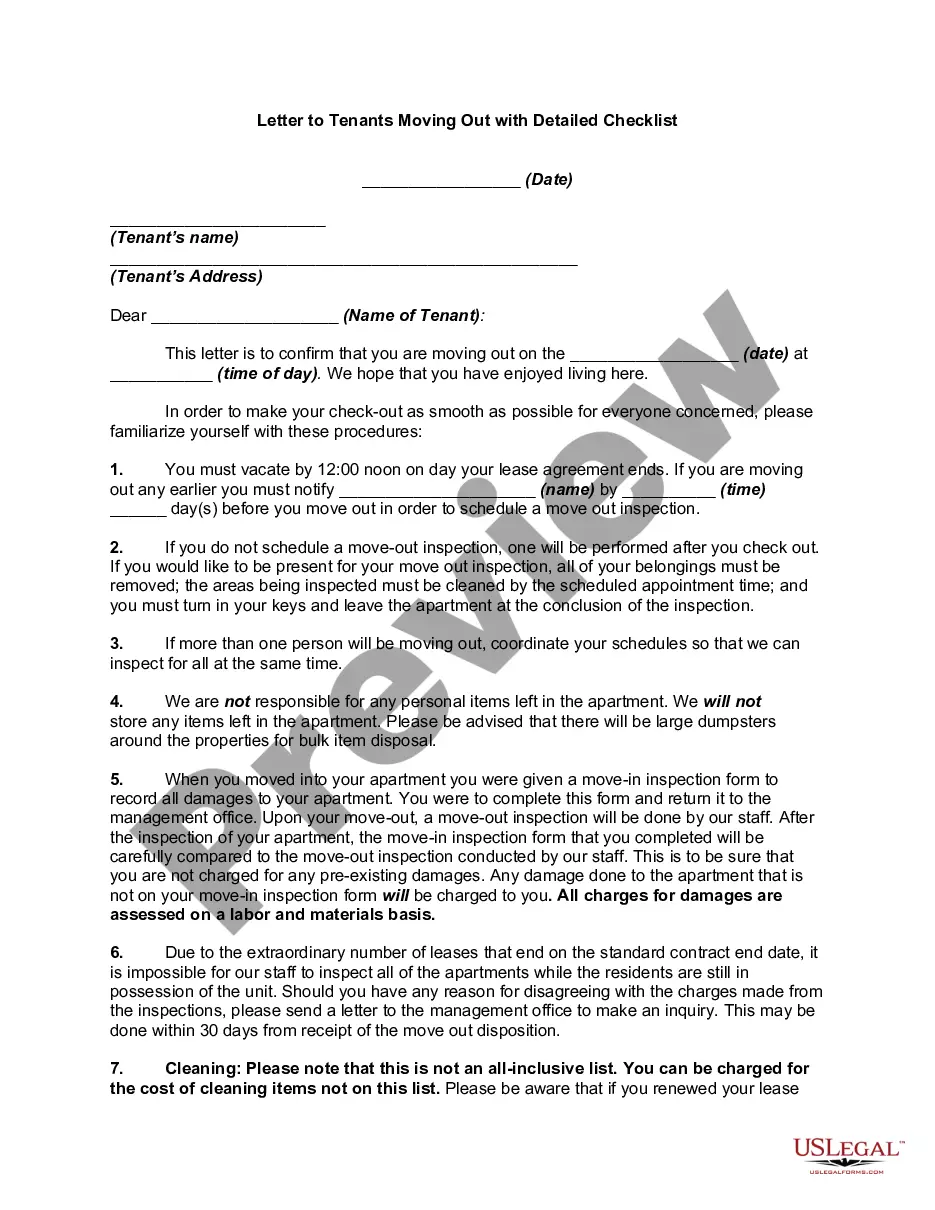
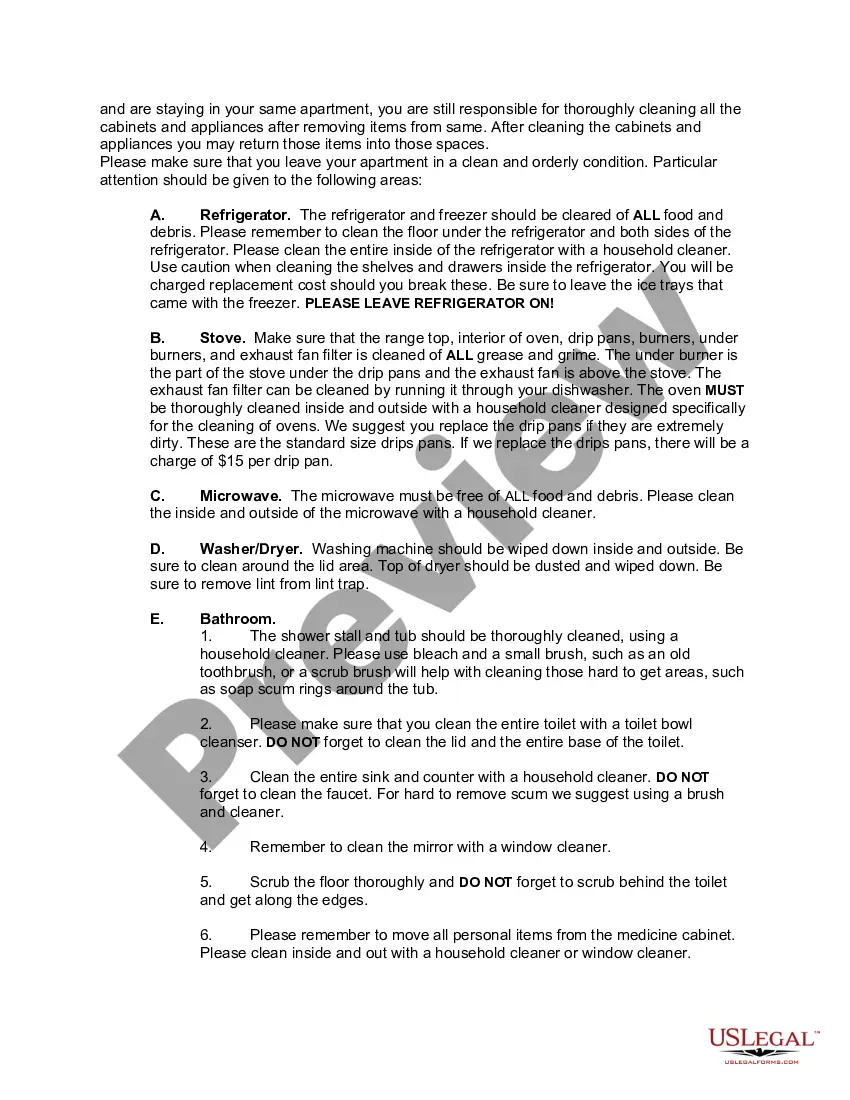
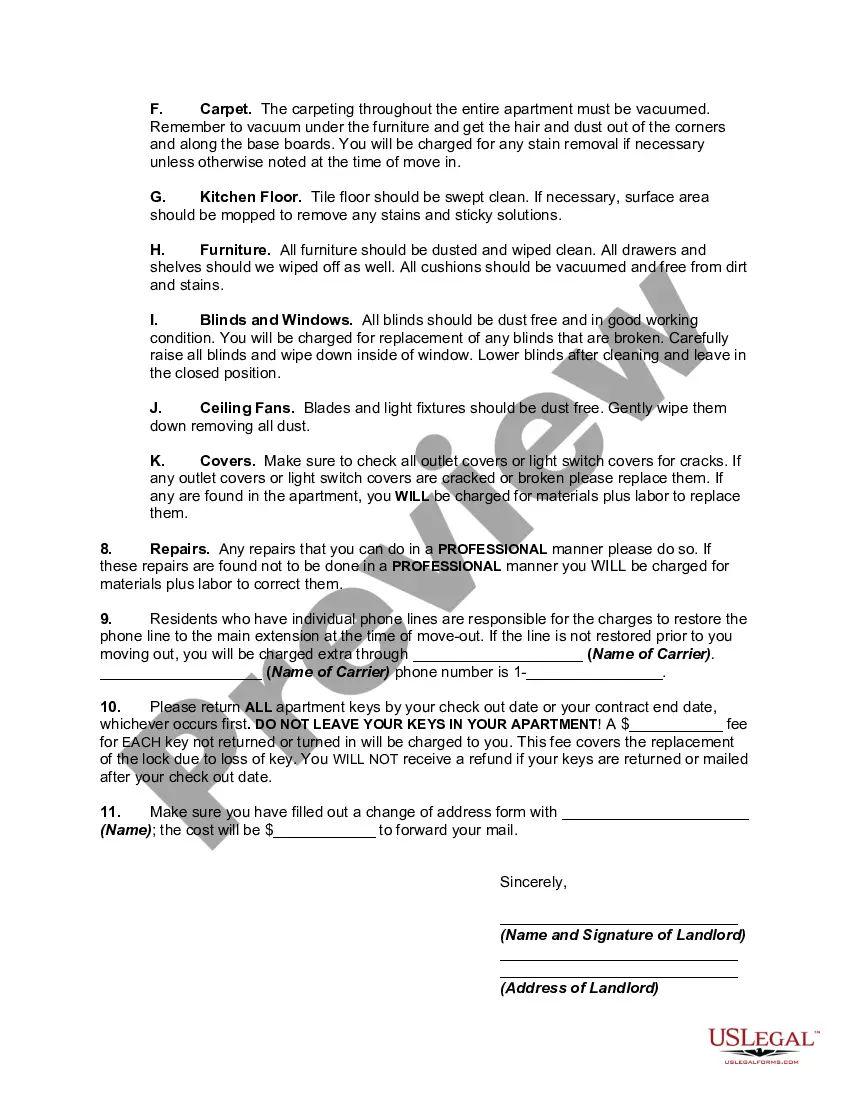
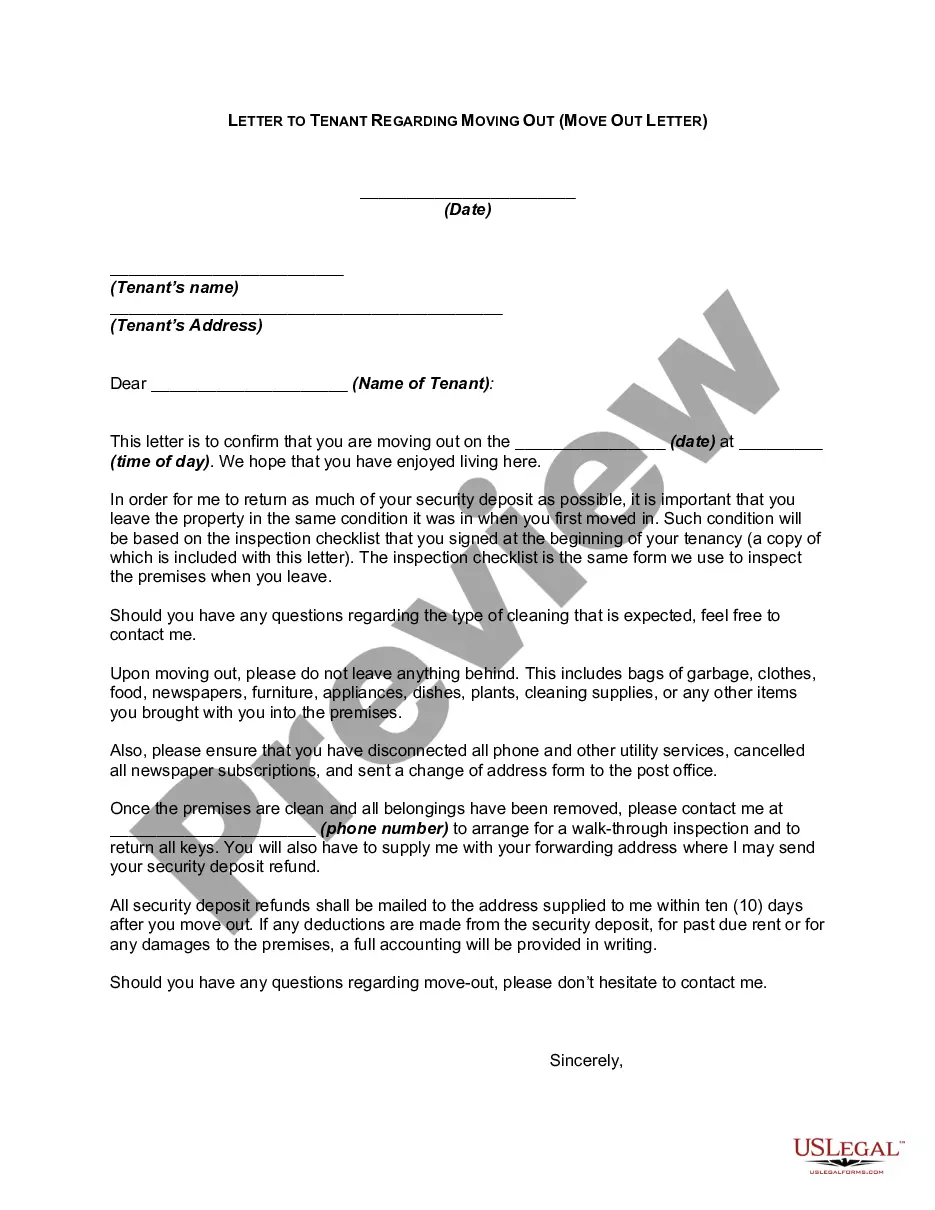
How to fill out Letter To Tenants Moving Out With Detailed Checklist?
Creating legal documents from the ground up can occasionally be daunting.
Certain situations may require extensive research and significant financial investment.
If you’re seeking a simpler and more cost-effective method to generate a Tenants Moving In Checklist or any other paperwork without unnecessary obstacles, US Legal Forms is readily available to assist you.
Our online repository of over 85,000 current legal documents encompasses nearly every aspect of your financial, legal, and personal matters. With just a few clicks, you can swiftly obtain state- and county-specific forms meticulously compiled for you by our legal experts.
US Legal Forms is well-regarded and boasts over 25 years of expertise. Join us today and simplify the document completion process!
- Utilize our site whenever you require dependable services to quickly find and download the Tenants Moving In Checklist.
- If you're a returning user who has previously established an account with us, simply sign in to your account, choose the form, and effortlessly download it or re-access it anytime in the My documents section.
- Not yet a member? No worries. It takes just a few minutes to register and survey the library.
- However, before rushing to download the Tenants Moving In Checklist, consider these suggestions.
- Review the form preview and descriptions to confirm you’ve located the document you need.
Form popularity
FAQ
To fill out a move-in inspection checklist, start by reviewing the property thoroughly for any pre-existing damages or issues. Document your findings clearly, noting any discrepancies with the rental agreement. Both you and your landlord should sign the inspection checklist to acknowledge the condition of the property before you move in. A well-structured tenants moving in checklist will remind you to complete this vital step.
Begin the process of moving by assessing your current living situation and determining a timeline for your move. Next, create a detailed tenants moving in checklist that outlines each step from finding your new home to packing. Consider your moving budget and explore services that can assist you, such as moving companies or packing supplies. A structured approach will help make your relocation more manageable.
The first item on your moving checklist should be creating a comprehensive timeline of your move. This helps you visualize the entire process and allocate time for each task, from packing to setting up utilities. A clear timeline will keep you organized and reduce last-minute chaos. Start your tenants moving in checklist with this step for a smoother transition.
Red flags for landlords include inconsistent income, previous evictions, or poor credit history. Additionally, a lack of references or unwillingness to complete a background check can raise concerns. It’s essential to be prepared to showcase your reliability as a tenant. By addressing these points in your tenants moving in checklist, you can enhance your appeal to potential landlords.
When moving, start by packing non-essential items first, such as seasonal clothes or rarely used kitchenware. This allows you to gradually sort through your belongings without the pressure of packing everything at once. Additionally, remember to label boxes clearly to identify contents easily. Using a tenants moving in checklist can help you prioritize what to pack first and ensure nothing is overlooked.
Before moving into a new rental property, typically, you need to provide identification, a signed lease, and payment for the first month’s rent and security deposit. Landlords may also require references or proof of income to ensure you can meet rental obligations. Having your documents organized will simplify the rental process significantly. Utilize a tenants moving in checklist to ensure you have all necessary paperwork in place.
A moving house checklist should include tasks such as confirming your moving date, hiring movers, and notifying relevant parties about your address change. The checklist should also cover packing supplies, labeling boxes, and canceling or transferring utilities. By following these steps, you can manage your relocation smoothly. Remember, a detailed tenants moving in checklist will guide you through each phase of your move.
Start your tenants moving in checklist at least four to six weeks before your move. This will give you ample time to organize tasks, gather supplies, and plan logistics. The earlier you begin, the less stress you may face as your moving date approaches. A well-prepared checklist can streamline your transition and ensure no vital steps are missed.
Filling in a move-in checklist is a straightforward process. Begin by reviewing the entire property and noting any damages or issues on the Tenants moving in checklist. Be sure to include specific details, such as the condition of walls, floors, appliances, and other key areas. Using a platform like US Legal Forms can provide a structured format, making it easy to complete and ensuring you don’t miss any important points.
When a tenant moves out, the landlord should conduct a thorough inspection of the property. This includes reviewing the Tenants moving in checklist that was completed at the start of the tenancy. The landlord should note any damages and determine if cleaning or repairs are needed. Finally, the landlord must return the security deposit in accordance with state laws, deducting any valid expenses documented in the checklist.