Tenant Moved Without Notice
Description
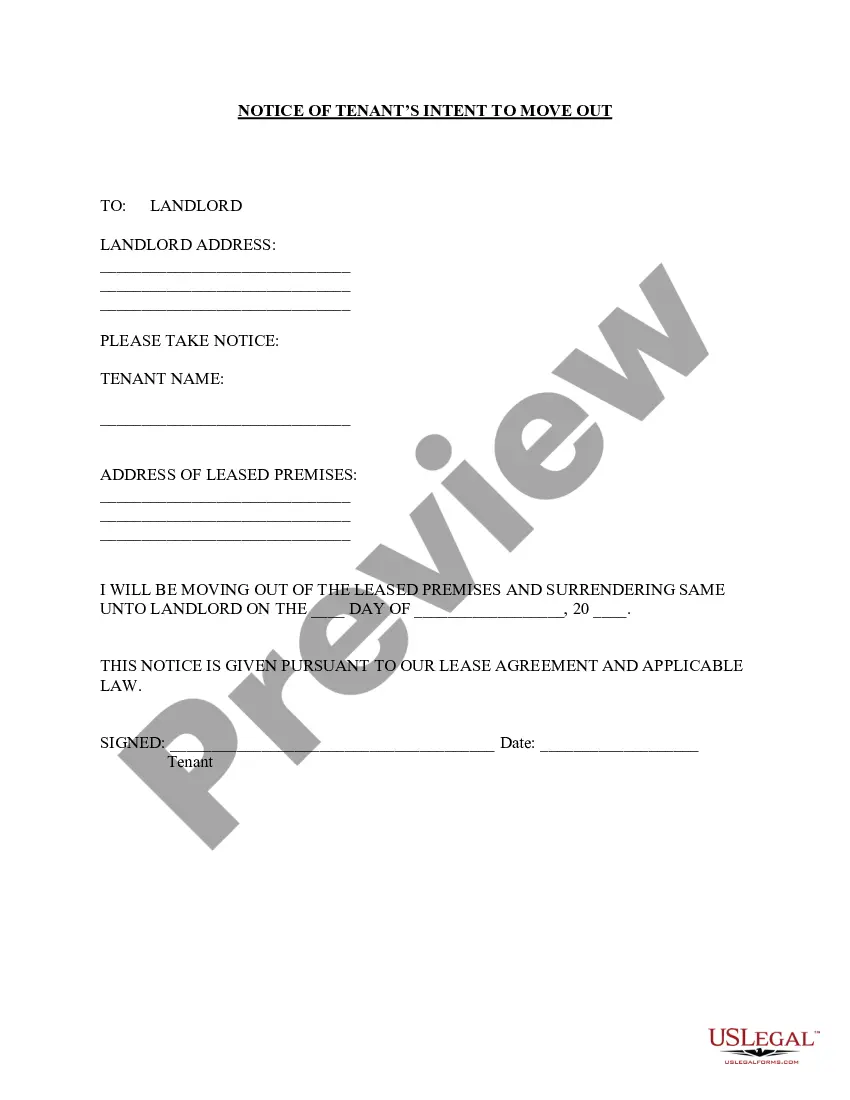
Get your form ready online
Our built-in tools help you complete, sign, share, and store your documents in one place.
Make edits, fill in missing information, and update formatting in US Legal Forms—just like you would in MS Word.
Download a copy, print it, send it by email, or mail it via USPS—whatever works best for your next step.
Sign and collect signatures with our SignNow integration. Send to multiple recipients, set reminders, and more. Go Premium to unlock E-Sign.
If this form requires notarization, complete it online through a secure video call—no need to meet a notary in person or wait for an appointment.
We protect your documents and personal data by following strict security and privacy standards.

Make edits, fill in missing information, and update formatting in US Legal Forms—just like you would in MS Word.

Download a copy, print it, send it by email, or mail it via USPS—whatever works best for your next step.

Sign and collect signatures with our SignNow integration. Send to multiple recipients, set reminders, and more. Go Premium to unlock E-Sign.

If this form requires notarization, complete it online through a secure video call—no need to meet a notary in person or wait for an appointment.

We protect your documents and personal data by following strict security and privacy standards.
Looking for another form?



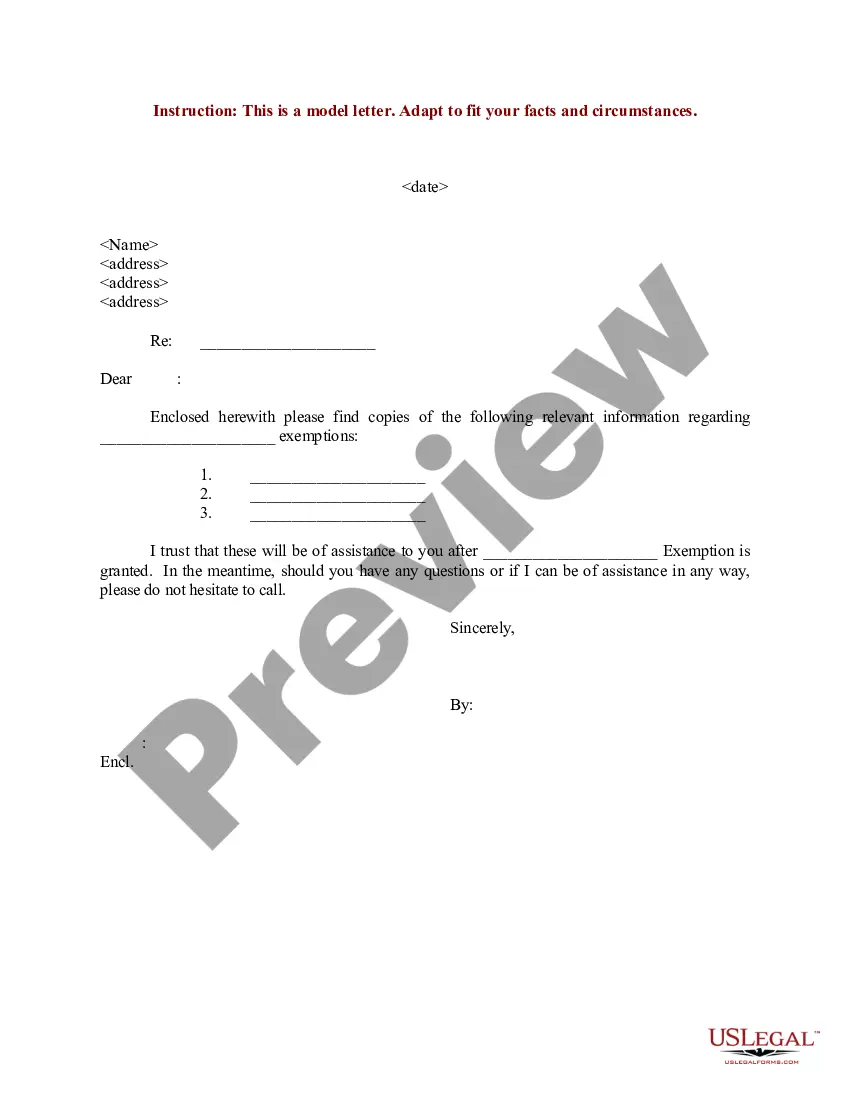



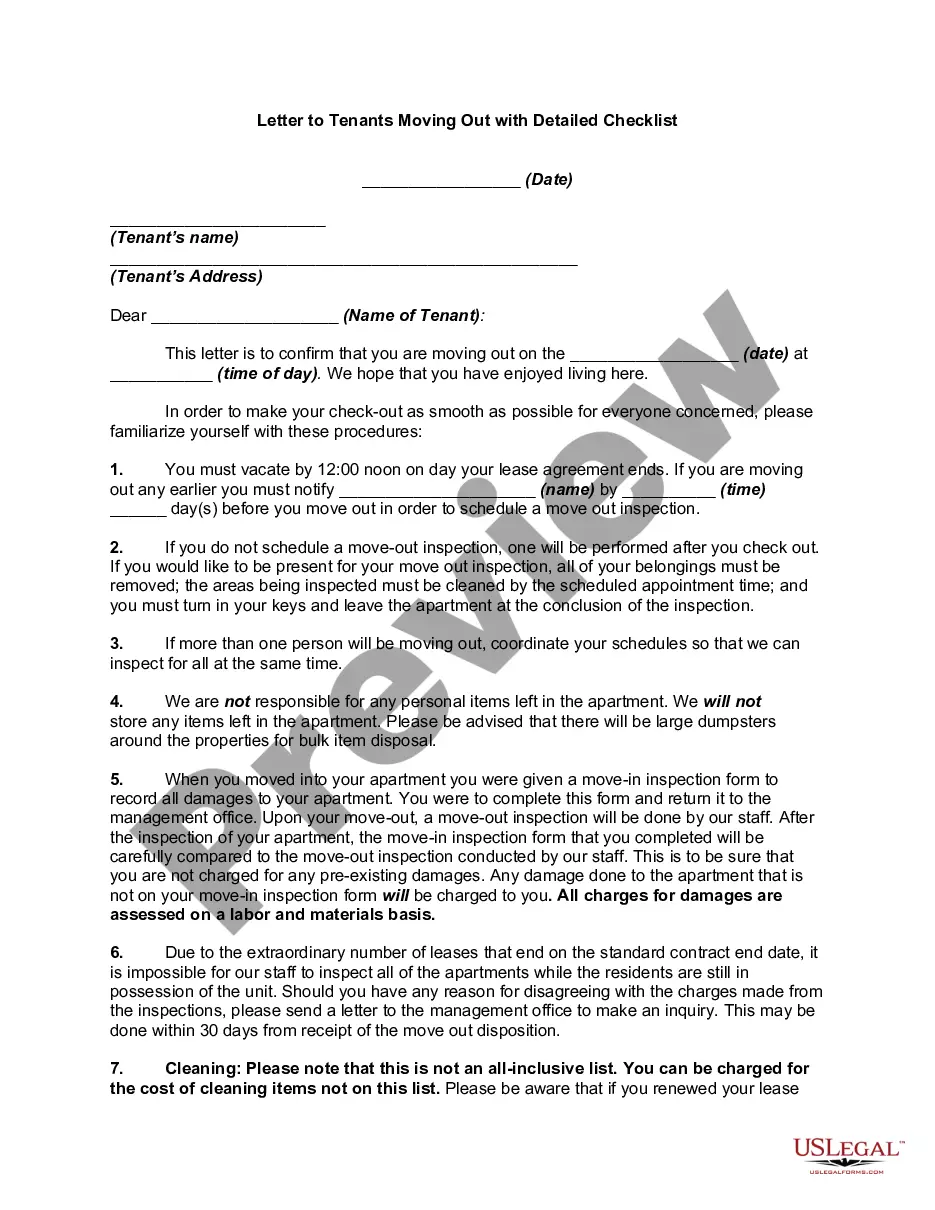
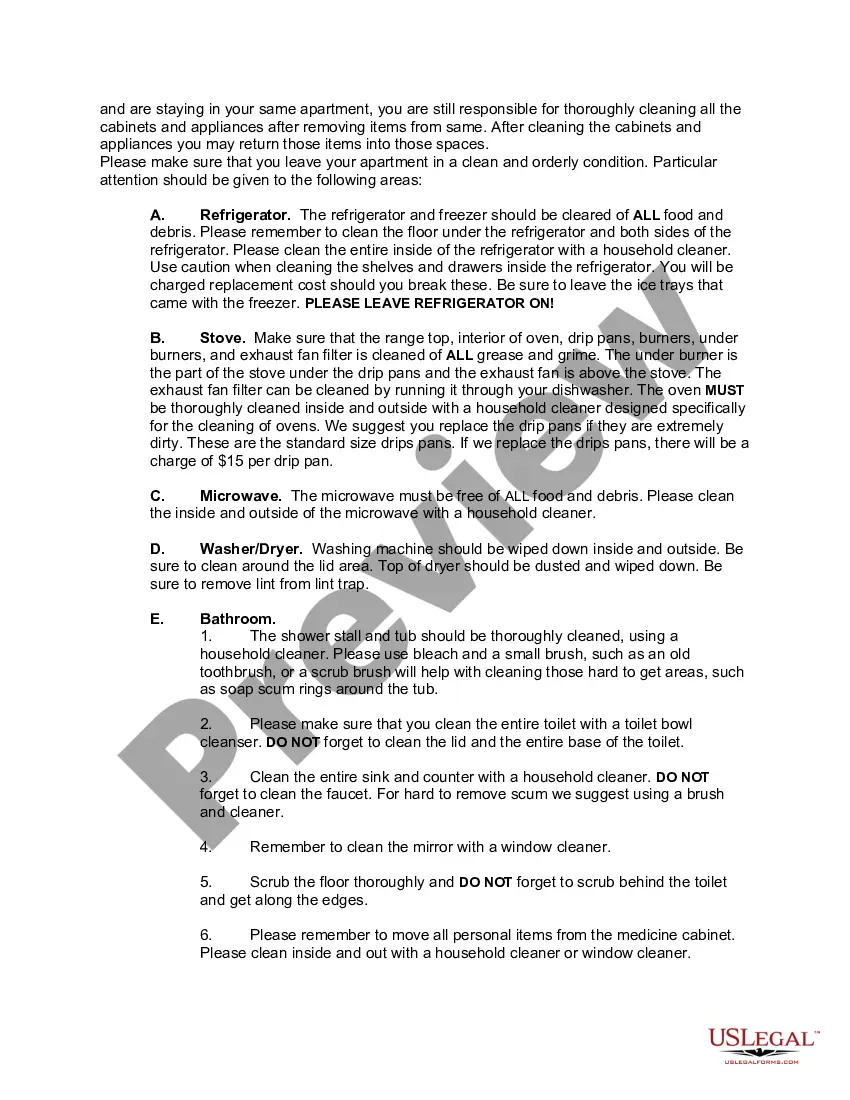
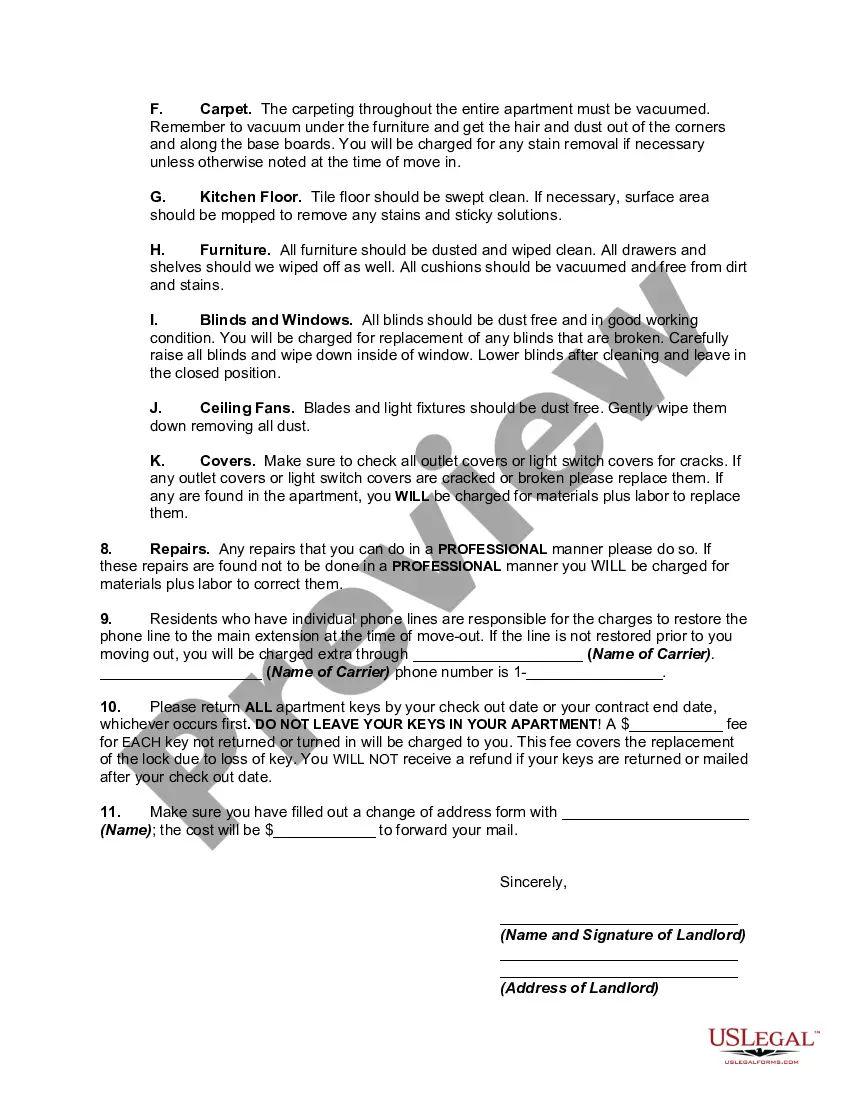
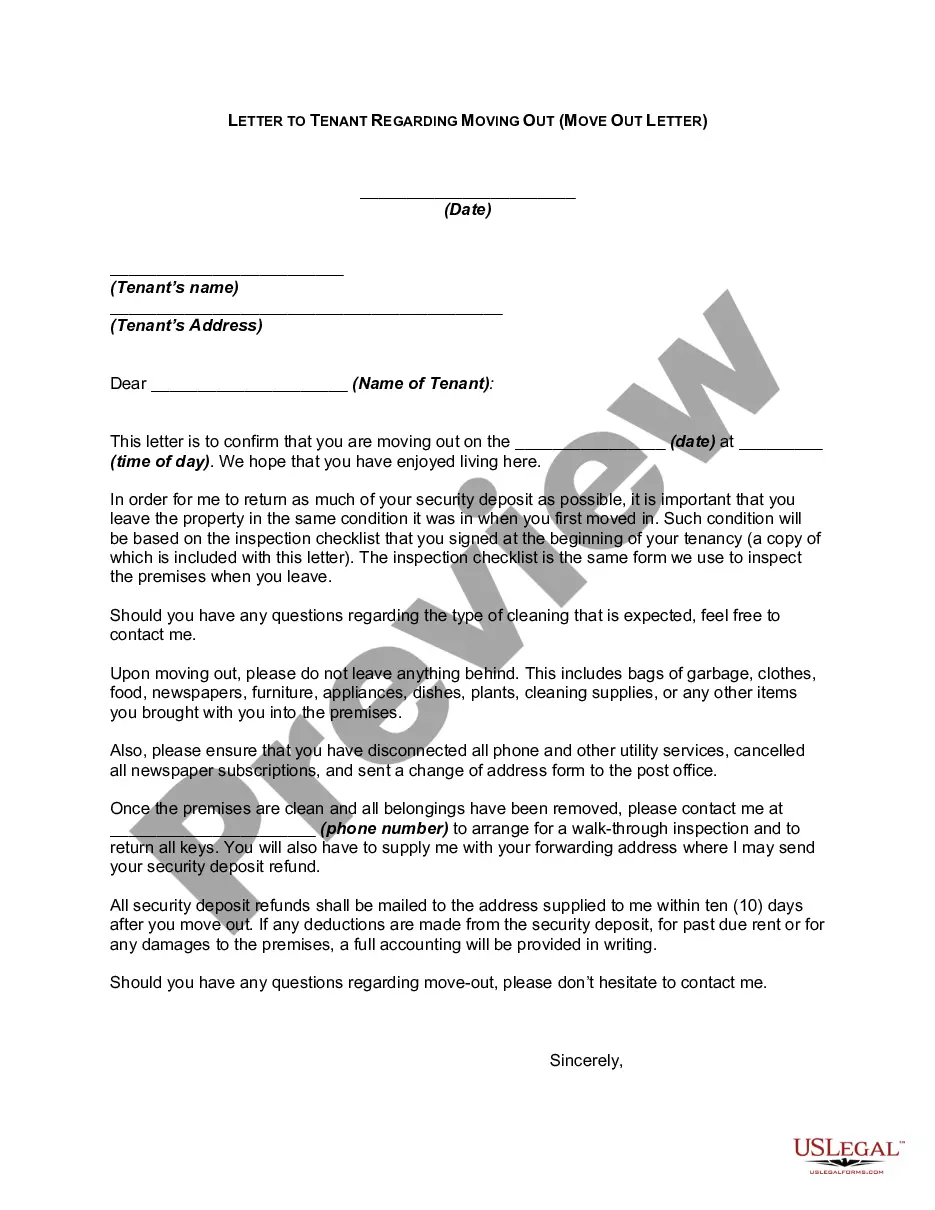
How to fill out Letter To Tenants Moving Out With Detailed Checklist?
Legal administration can be perplexing, even for the most experienced professionals.
When you are searching for a Tenant Departed Without Notification and lack the time to find the correct and current version, the procedures can be overwhelming.
US Legal Forms caters to any needs you may have, from personal to business paperwork, all in one location.
Utilize advanced tools to complete and manage your Tenant Departed Without Notification.
Here are the steps to take after you have accessed the form you require: Verify that this is the correct form by previewing it and reviewing its description.
- Access a collection of articles, tutorials, handbooks, and resources relevant to your circumstances and requirements.
- Conserve time and effort searching for the documents you need, and use US Legal Forms’ sophisticated search and Review feature to find Tenant Departed Without Notification and obtain it.
- If you hold a subscription, Log In to your US Legal Forms account, search for the form, and retrieve it.
- Check the My documents tab to review the documents you have previously saved and organize your folders as necessary.
- If it’s your first time with US Legal Forms, create an account and enjoy unlimited access to all the platform’s benefits.
- A comprehensive online form catalog can revolutionize the way anyone manages these matters efficiently.
- US Legal Forms is a frontrunner in digital legal forms, offering over 85,000 state-specific legal forms available to you at any moment.
- With US Legal Forms, you can access state- or county-specific legal and business documents.
Form popularity
FAQ
If tenants do not give notice before leaving, landlords have the right to retain a portion of the security deposit to cover losses. This situation may also prompt landlords to pursue legal channels, including seeking unpaid rent or damages. Understanding the terms of the lease is crucial for both parties. For landlords needing to manage these situations effectively, US Legal Forms offers important legal documents and insights.
Moving out without informing your landlord can lead to complications, including financial penalties and legal repercussions. Landlords may interpret this as a breach of the lease agreement, which can result in claims against the tenant. It's essential for tenants to understand their rights and responsibilities before making such a decision. For resources and information on lease agreements, US Legal Forms is a valuable tool.
When a tenant leaves without notice, the landlord may struggle to fill the vacancy, resulting in lost rental income. Depending on local laws, the landlord may be entitled to deductions from the tenant's security deposit or pursue legal action for any unpaid rent. Documenting the situation is vital for the landlord's records and any potential disputes. US Legal Forms can assist landlords with relevant forms and guidance to address such issues.
If a tenant moves out and stops paying rent, the landlord can take legal action to recover lost income. This often involves pursuing eviction proceedings or filing a claim in small claims court. It’s important to know that moving without notice does not absolve the tenant of their financial obligations. Landlords can utilize US Legal Forms to access the necessary legal documents to protect their rights in these situations.
In California, landlords must provide tenants with a written notice to vacate, typically 30 or 60 days, depending on the length of the tenancy. If the tenant moved without notice, the landlord may have to clarify their intentions to ensure compliance with state laws. Following proper procedures not only protects the landlord's interests but also minimizes potential disputes. For detailed legal guidelines, US Legal Forms is a reliable resource.
When a tenant moves out, it's crucial for the landlord to inspect the property for any damages and determine if repairs are needed. The landlord should also check for any outstanding rent or fees owed by the tenant. Documenting the condition of the unit is essential for possible claims against the security deposit. If you need assistance with legal forms or processes, US Legal Forms provides templates to streamline these tasks.
When a tenant moves without notice, the landlord faces potential challenges in finding a new tenant quickly. The lease agreement typically stipulates notice requirements, and breaking this can lead to financial repercussions for the tenant. Additionally, the landlord may start legal proceedings to recover lost rent or damages caused by the sudden departure. For those navigating these situations, US Legal Forms offers relevant documentation and resources to help manage such events.
If your tenant doesn't move out, you may have to take legal steps to regain possession of your property. Starting with proper documentation and communication can sometimes resolve the issue without escalation. If these efforts fail, follow your state's eviction procedures. Relying on resources like U.S. Legal Forms can help ensure you've met all legal requirements and provide you with the right forms.
If a tenant doesn't move out after the notice period, first confirm that you provided proper notifications as required by law. Next, consider mediation to resolve the issue amicably. If the tenant still refuses to leave, you may need to initiate an eviction process. As a landlord, understanding this process helps protect your rights while addressing the tenant who moved without notice.
When facing a tenant who won't leave, start by reviewing the lease agreement and documenting communication. If informal discussions fail, eviction may be the next step. It's crucial to follow legal procedures for eviction, as improper actions can lead to drawbacks. Using resources like U.S. Legal Forms can provide you with the necessary forms and guidance to handle this situation correctly.