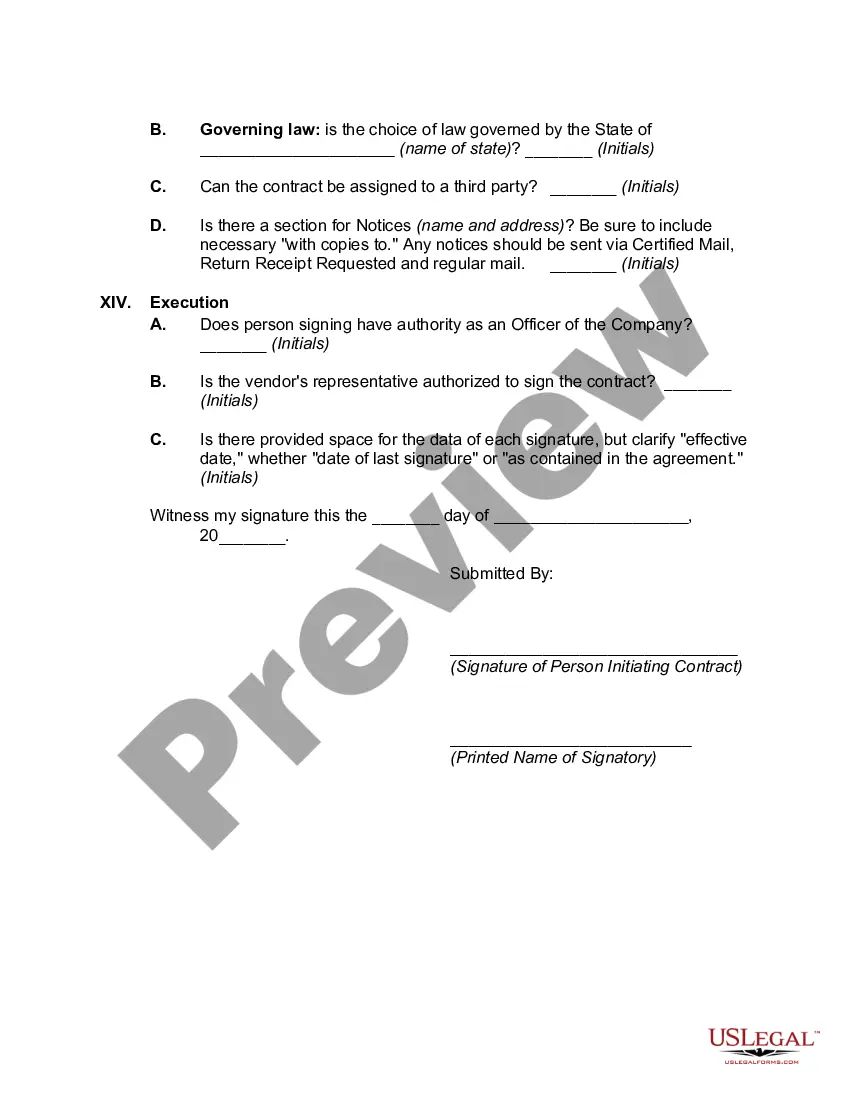
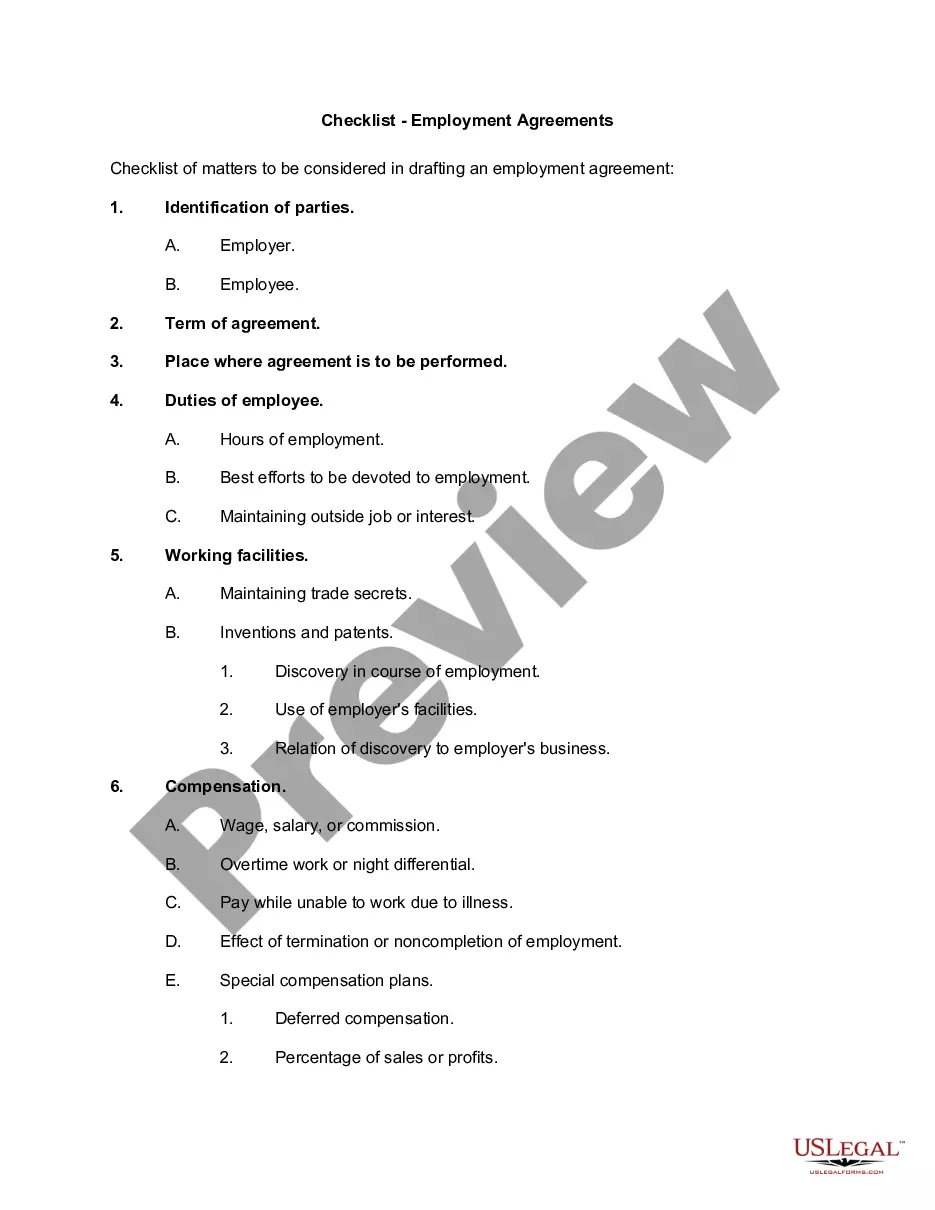
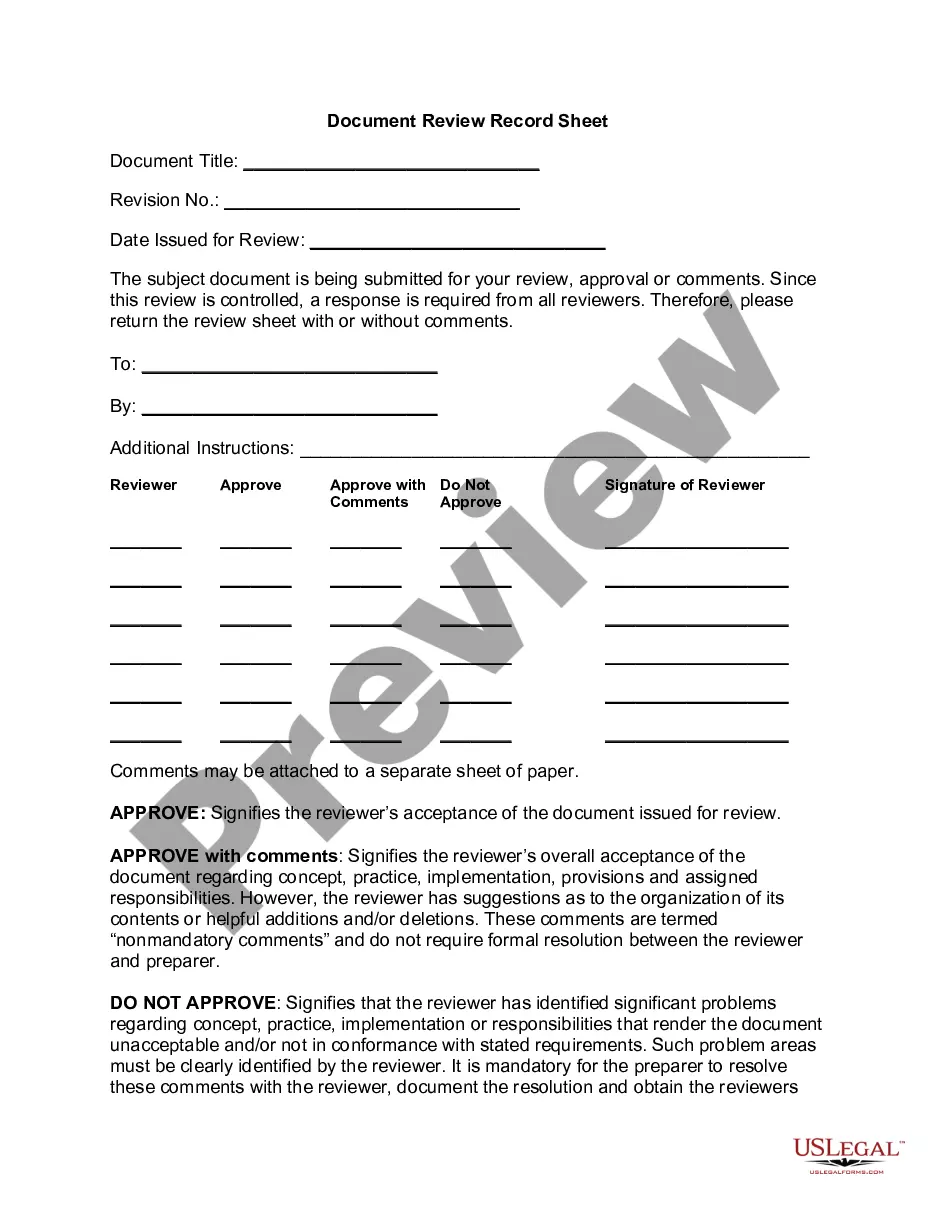
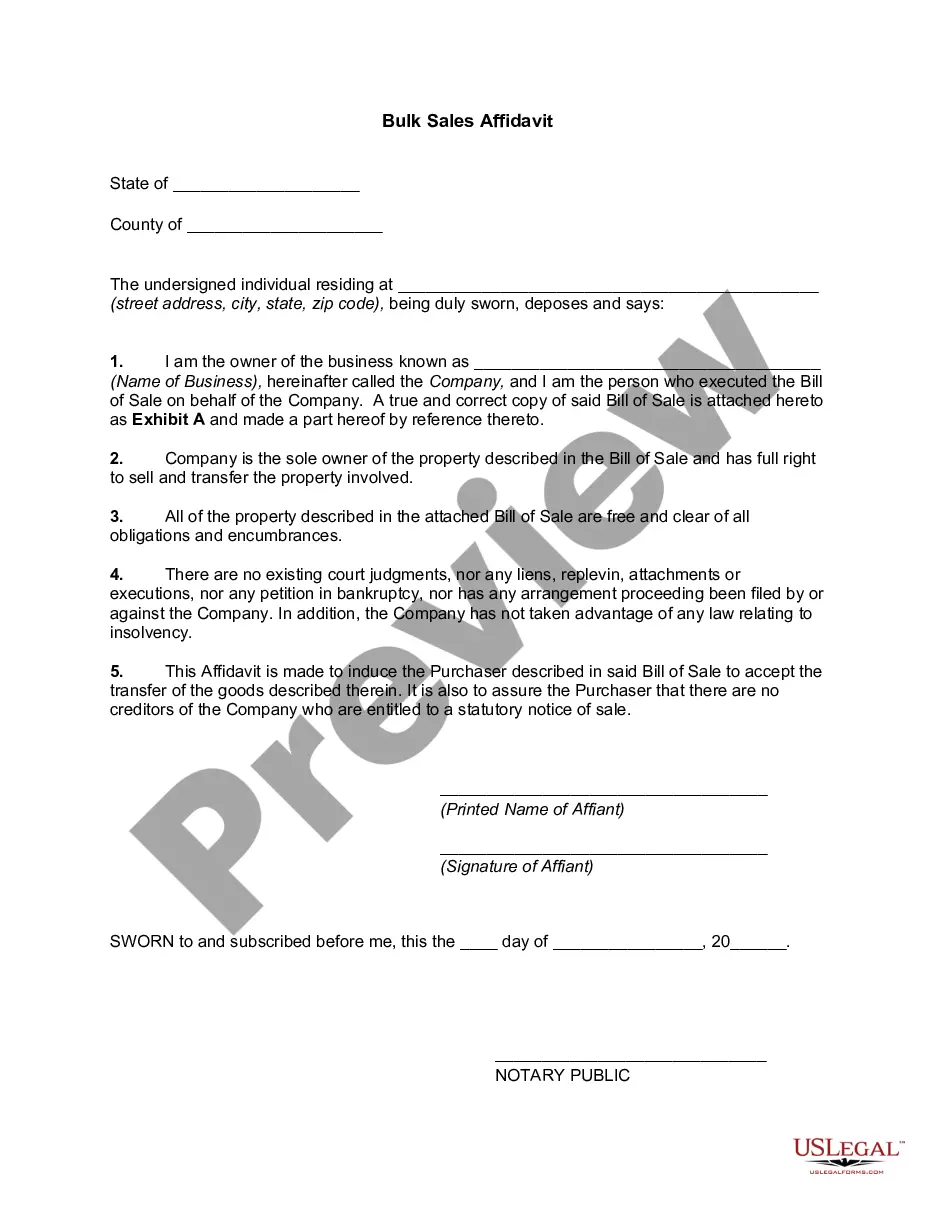
Contract Review Checklist Template
Description
Get your form ready online
Our built-in tools help you complete, sign, share, and store your documents in one place.
Make edits, fill in missing information, and update formatting in US Legal Forms—just like you would in MS Word.
Download a copy, print it, send it by email, or mail it via USPS—whatever works best for your next step.
Sign and collect signatures with our SignNow integration. Send to multiple recipients, set reminders, and more. Go Premium to unlock E-Sign.
If this form requires notarization, complete it online through a secure video call—no need to meet a notary in person or wait for an appointment.
We protect your documents and personal data by following strict security and privacy standards.

Make edits, fill in missing information, and update formatting in US Legal Forms—just like you would in MS Word.

Download a copy, print it, send it by email, or mail it via USPS—whatever works best for your next step.

Sign and collect signatures with our SignNow integration. Send to multiple recipients, set reminders, and more. Go Premium to unlock E-Sign.

If this form requires notarization, complete it online through a secure video call—no need to meet a notary in person or wait for an appointment.

We protect your documents and personal data by following strict security and privacy standards.
Looking for another form?


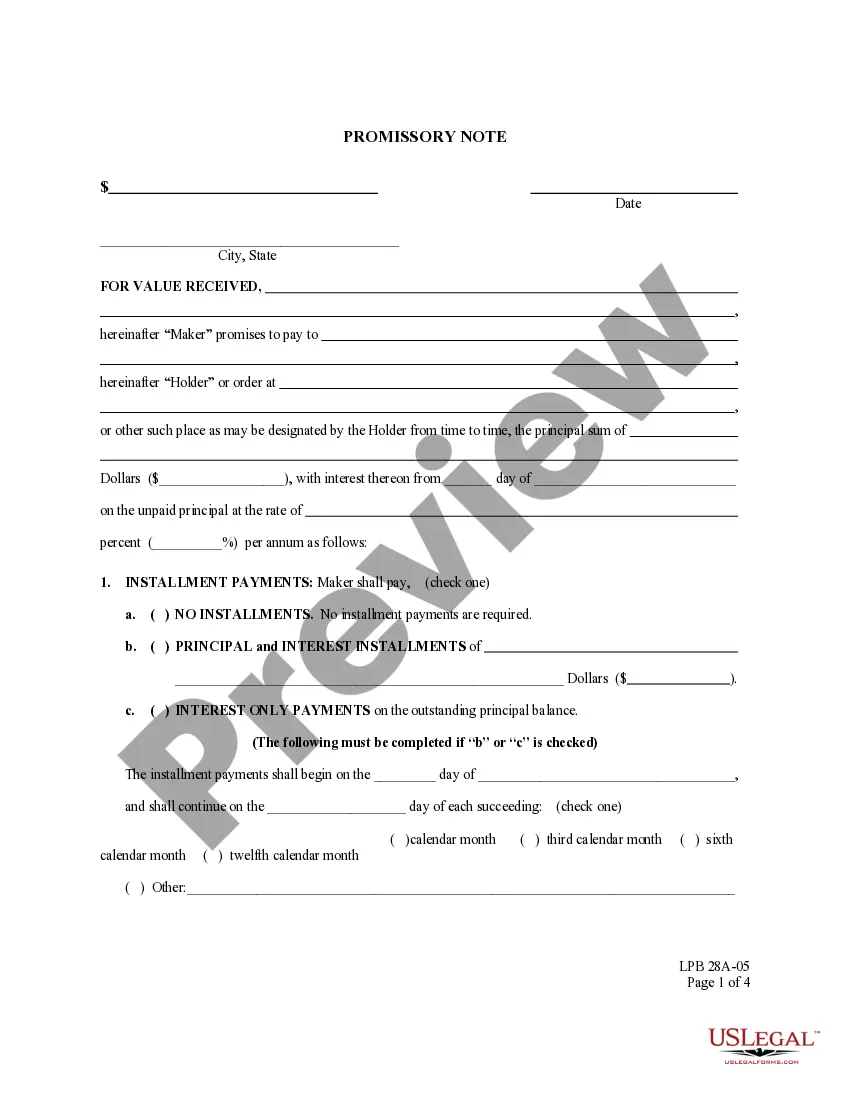
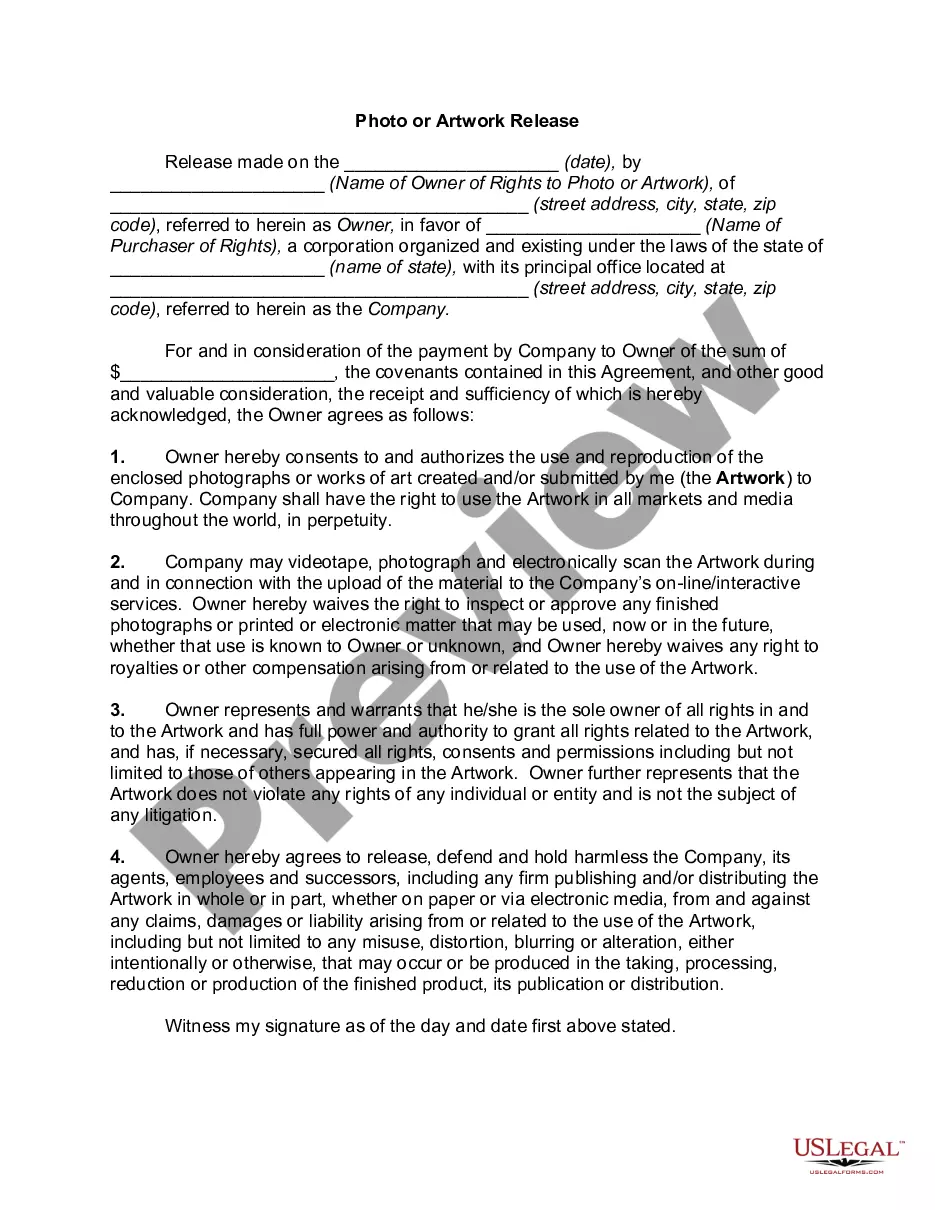





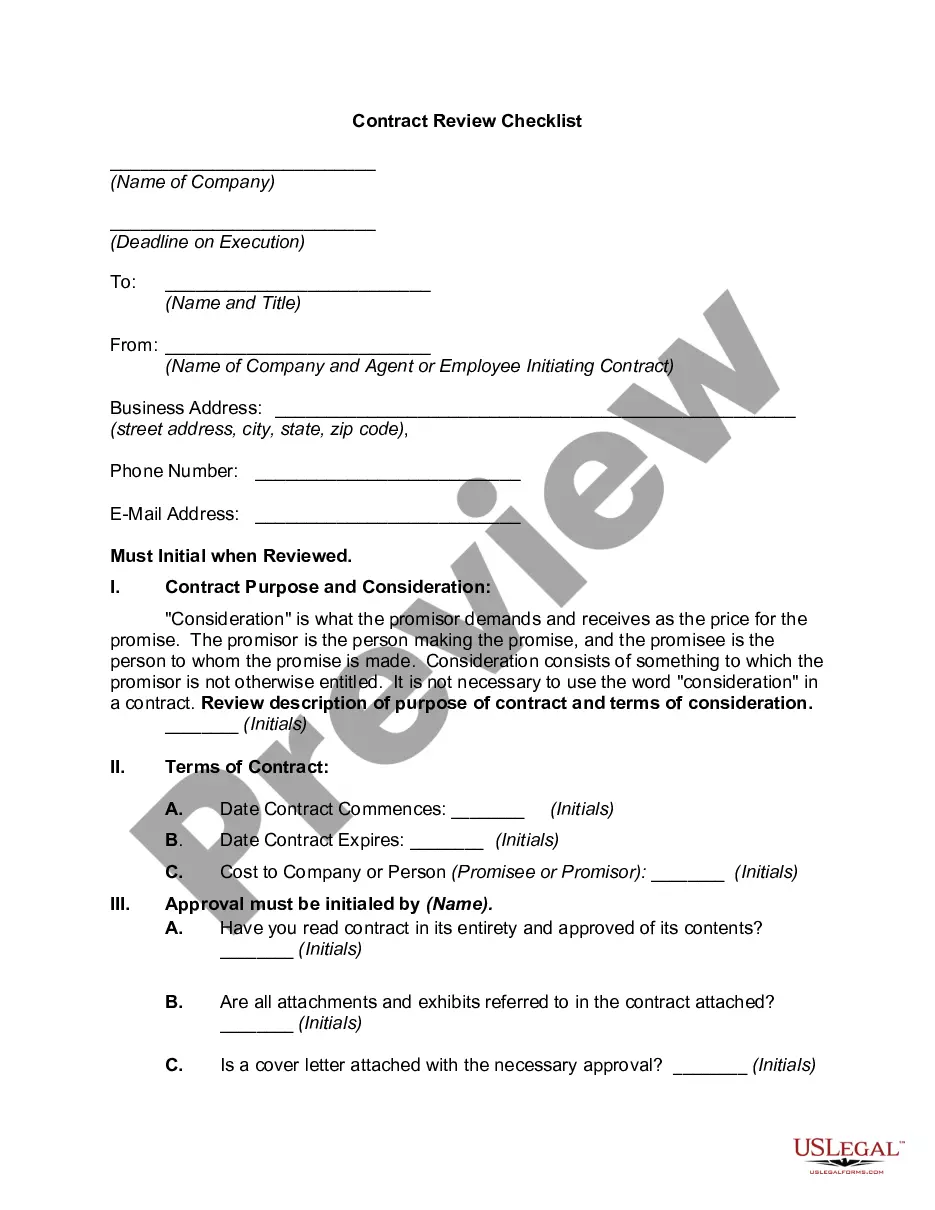
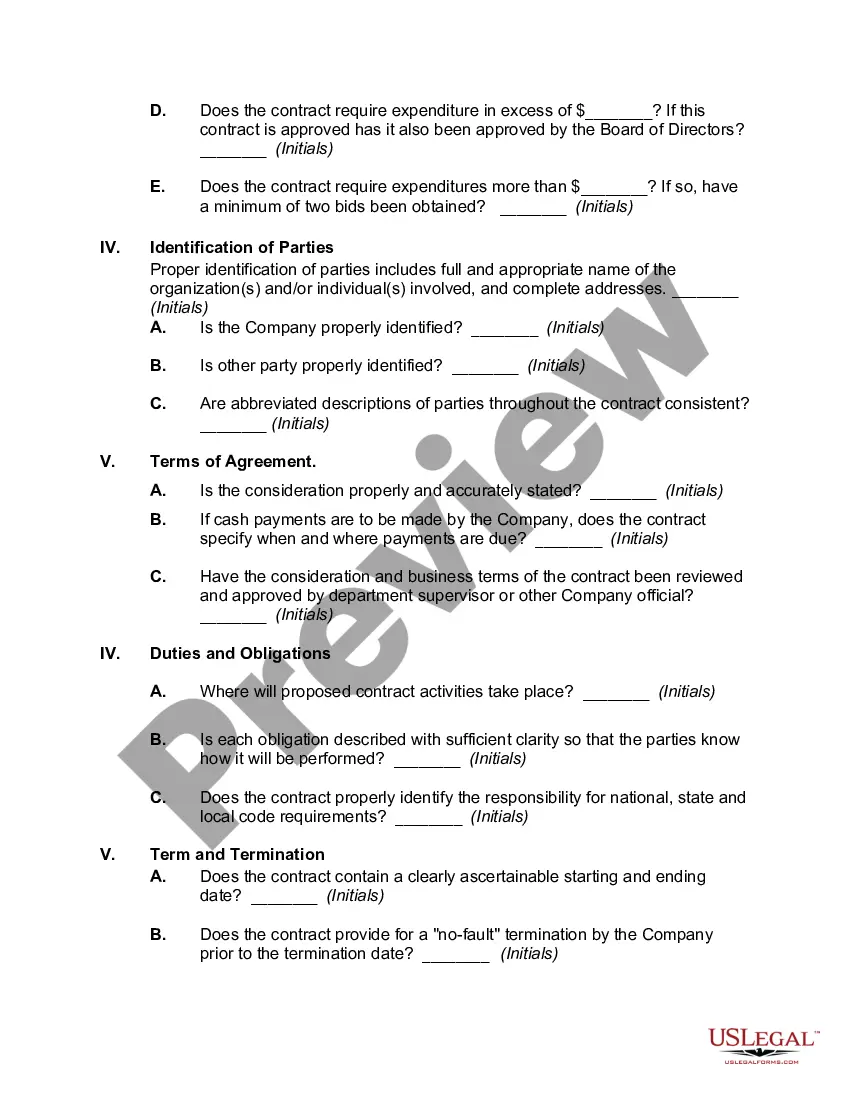
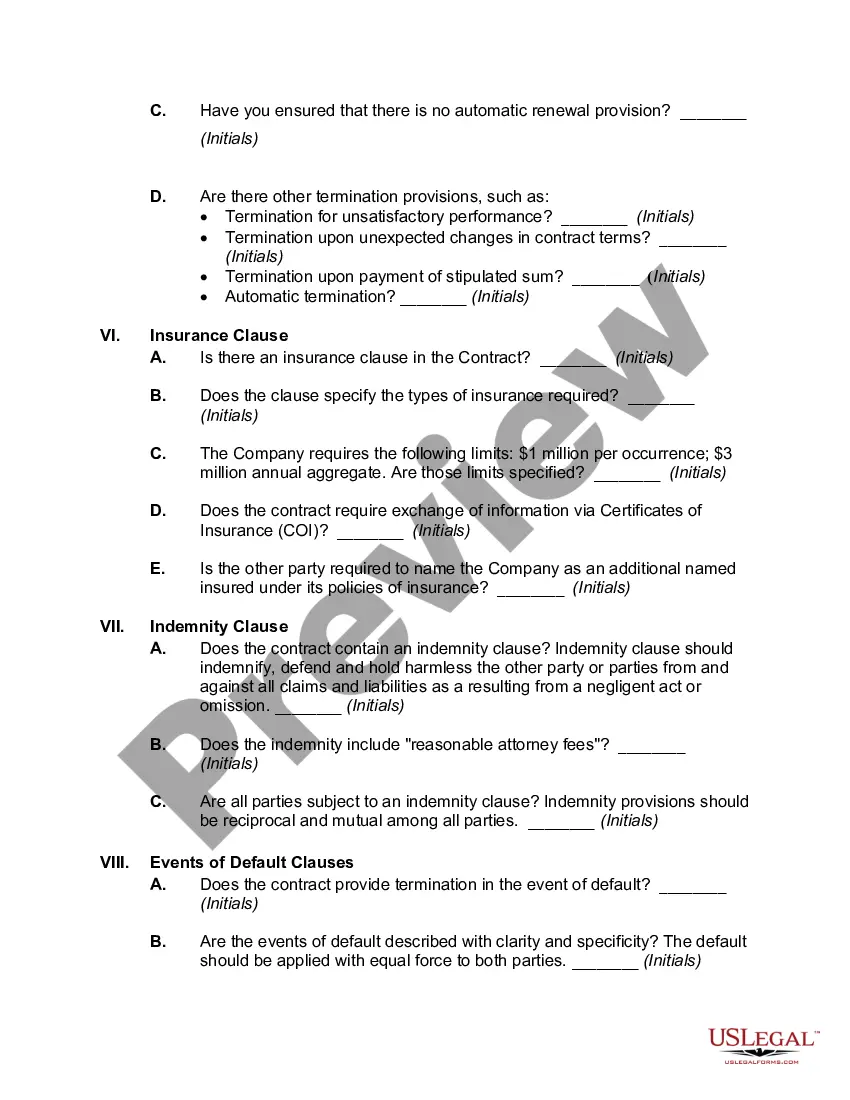
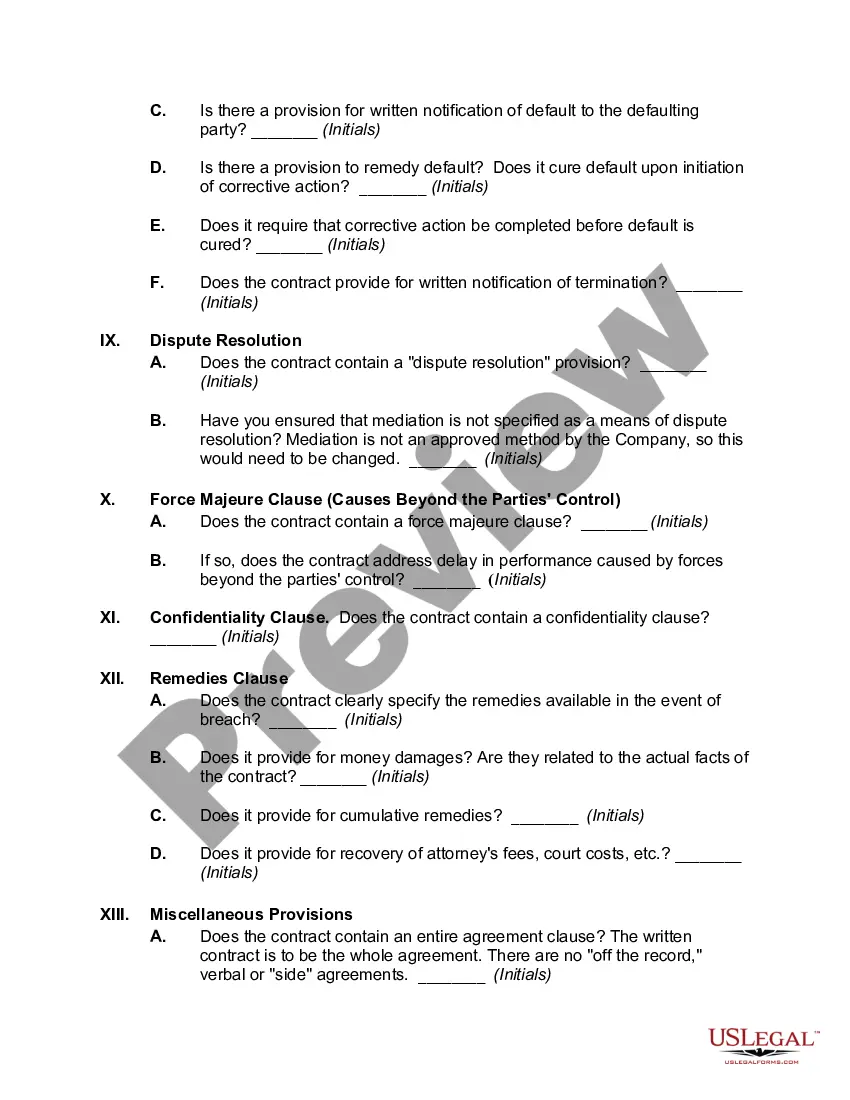
How to fill out Contract Review Checklist?
Whether for corporate reasons or personal concerns, everyone must address legal matters at some stage in their lives.
Completing legal documents requires meticulous care, starting with selecting the appropriate form example.
With a vast US Legal Forms catalog available, you do not have to waste time hunting for the correct template online. Utilize the library’s user-friendly navigation to locate the appropriate template for any circumstance.
- Obtain the template you require by utilizing the search bar or catalog browsing.
- Review the form’s description to confirm it fits your situation, jurisdiction, and locality.
- Select the form’s preview to examine it.
- If it is the incorrect document, return to the search tool to find the Contract Review Checklist Template example you need.
- Retrieve the template when it corresponds with your requirements.
- If you possess a US Legal Forms account, simply click Log in to access previously stored documents in My documents.
- In case you do not have an account yet, you can acquire the form by clicking Buy now.
- Select the appropriate payment option.
- Fill out the account registration form.
- Choose your payment method: use a credit card or PayPal account.
- Select the file format you prefer and download the Contract Review Checklist Template.
- Once it is saved, you can complete the form using editing software or print it and finalize it by hand.
Form popularity
FAQ
Only a man married to the mother automatically takes on the legal role of father, ing to The Mississippi Bar. Until someone other than a husband establishes paternity through legal means, he does not have parental rights. A man who wants custody or visitation rights and responsibilities must establish paternity.
(1) Paternity may be determined upon the petition of the mother, or father, the child or any public authority chargeable by law with the support of the child; provided that such an adjudication after the death of the defendant must be made only upon clear and convincing evidence.
Sometimes, one of the parties does not want to participate in the paternity test. In that case, all of the three parties involved ? mother, alleged father or child ? have the right to file a complaint with the court in order to establish possible paternity. However, it must be before the child turns 18.
In Mississippi, when a couple who is not married has a child together, the mother automatically has sole custody of the child. The father can only claim those rights that he asserts. If the child's father would like to have shared custody of the child, he must establish paternity.
A Simple Acknowledgment of Paternity (ASAP) is a voluntary form, often completed at the hospital. It is signed by both the mother and the father and gets filed with the birth certificate. The father's name will be added to the birth certificate, and in most cases, the child's last name will be the same as the father's.
Only a man married to the mother automatically takes on the legal role of father, ing to The Mississippi Bar. Until someone other than a husband establishes paternity through legal means, he does not have parental rights.
This filing must occur before the child reaches 18 years of age. If the court rules the man as the father, he is the biological and legal father. With the legal designation comes certain rights and responsibilities.