Should A Defendant Testify At Trial
Description

Get your form ready online
Our built-in tools help you complete, sign, share, and store your documents in one place.
Make edits, fill in missing information, and update formatting in US Legal Forms—just like you would in MS Word.
Download a copy, print it, send it by email, or mail it via USPS—whatever works best for your next step.
Sign and collect signatures with our SignNow integration. Send to multiple recipients, set reminders, and more. Go Premium to unlock E-Sign.
If this form requires notarization, complete it online through a secure video call—no need to meet a notary in person or wait for an appointment.
We protect your documents and personal data by following strict security and privacy standards.

Make edits, fill in missing information, and update formatting in US Legal Forms—just like you would in MS Word.

Download a copy, print it, send it by email, or mail it via USPS—whatever works best for your next step.

Sign and collect signatures with our SignNow integration. Send to multiple recipients, set reminders, and more. Go Premium to unlock E-Sign.

If this form requires notarization, complete it online through a secure video call—no need to meet a notary in person or wait for an appointment.

We protect your documents and personal data by following strict security and privacy standards.
Looking for another form?


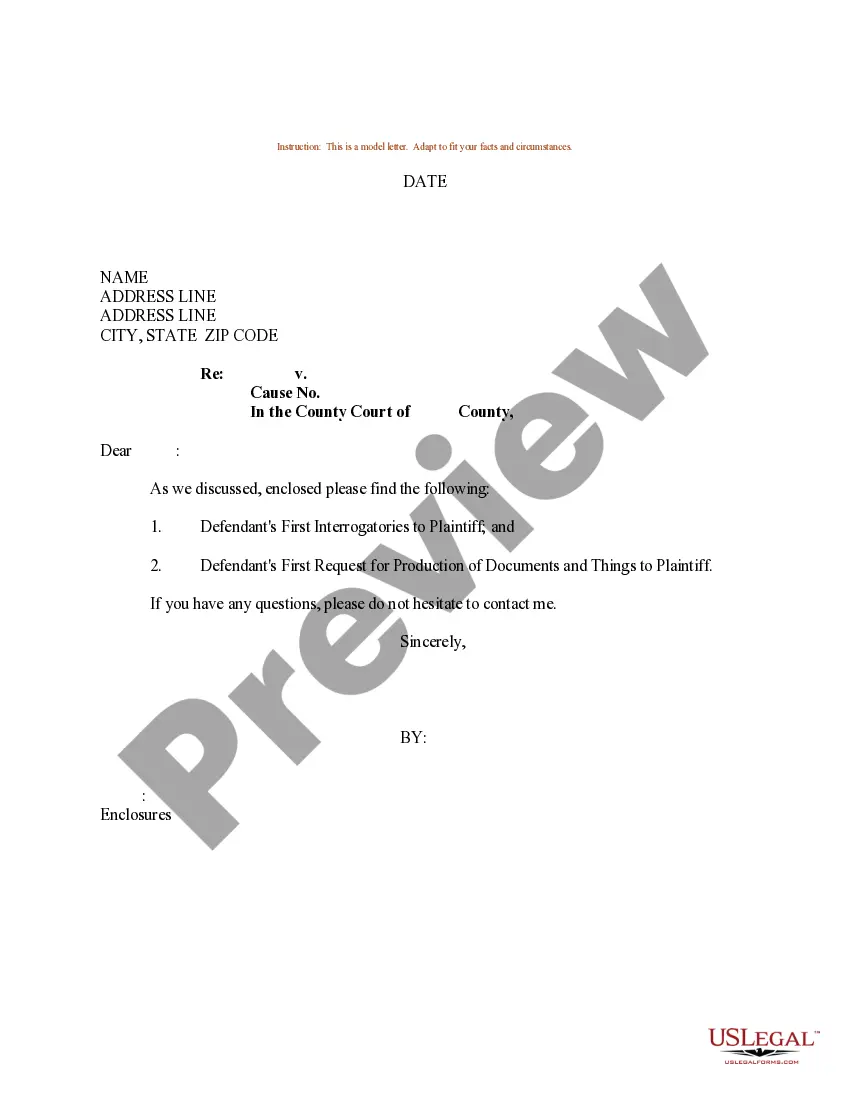
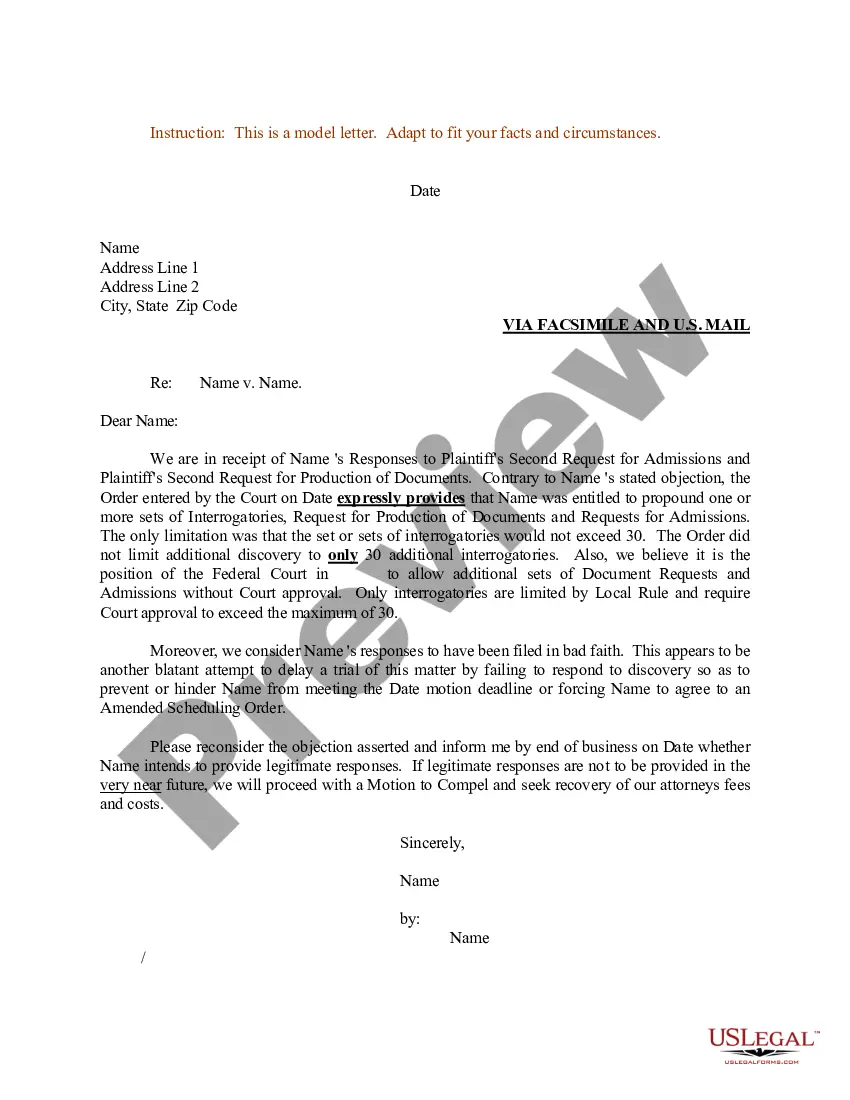
How to fill out Sample Letter For Trial - Defendant's First Interrogatories To Plaintiff?
Locating a reliable source for the latest and pertinent legal templates is half the challenge of navigating bureaucracy.
Identifying the appropriate legal documents requires precision and meticulousness, which is why it is essential to obtain samples of Should A Defendant Testify At Trial solely from trustworthy sources, such as US Legal Forms.
Eliminate the hassle associated with your legal paperwork. Explore the extensive US Legal Forms library where you can find legal templates, verify their relevance to your needs, and download them instantly.
- Utilize the catalog navigation or search bar to locate your template.
- Review the form’s description to confirm if it aligns with the requirements of your state and county.
- Preview the form, if available, to verify that the template is the one you are looking for.
- Return to the search to find the correct template if the Should A Defendant Testify At Trial does not meet your criteria.
- If you are certain about the form’s relevance, download it.
- If you are a registered user, click Log in to verify and access your chosen forms in My documents.
- If you have not created a profile yet, click Buy now to get the template.
- Select the pricing plan that fits your needs.
- Proceed to registration to finalize your purchase.
- Complete your purchase by selecting a payment method (credit card or PayPal).
- Choose the document format for downloading Should A Defendant Testify At Trial.
- Once you have the form on your device, you can modify it using the editor or print it out and fill it out by hand.
Form popularity
FAQ
Having a defendant testify can provide a human touch to the defense and allow them to present their side of the story directly. However, it also opens the door to cross-examination, which can undermine the defense's case. Weighing these pros and cons is crucial when considering whether a defendant should testify at trial. Utilizing platforms like uslegalforms can equip defendants with necessary documents and information to make informed decisions.
Criminal defendants do not typically testify in their trials. Many defense attorneys advise against it to avoid the risks of cross-examination and potential damage to their case. However, the choice to testify ultimately hinges on the unique facts of the case and whether the benefits outweigh the risks. Consulting with a legal expert can provide insights into whether a defendant should testify at trial.
The outcome for defendants can vary significantly based on the evidence, legal representation, and the specifics of each case. While there's no definitive percentage, many defendants find success with a well-structured defense. Engaging with resources and legal forms can help clarify the options available, making it easier to determine if a defendant should testify at trial.
People often refuse to testify due to fear of self-incrimination, anxiety about public speaking, or concerns about how their testimony could affect their case. Additionally, some may feel that their defense attorney has a stronger strategy without their input. Ultimately, deciding whether a defendant should testify at trial is a complex choice that requires careful consideration of the circumstances.
To properly testify in court, a witness should be clear, concise, and truthful. They must listen carefully to questions and answer directly without providing unnecessary information. Practicing responses and understanding courtroom decorum can enhance confidence. For defendants contemplating whether to testify at trial, preparing with legal counsel can ensure the testimony aligns with their defense strategy.
In a courtroom, the correct order of testimony typically starts with the plaintiff or prosecution presenting their case first. Witnesses are called to testify, followed by cross-examination from the defense. After the prosecution rests, the defense presents their case, which also includes calling witnesses and cross-examination. Understanding this order is crucial, especially when considering whether a defendant should testify at trial, as it can significantly impact the case's outcome.
If a defendant refuses to speak during their trial, they are exercising their right to remain silent under the Fifth Amendment. This silence cannot be used against them, and the jury is instructed not to draw any negative conclusions from it. The prosecution must still prove their case beyond a reasonable doubt without relying on the defendant's testimony. This legal safeguard is essential for maintaining justice and fairness in the courtroom.
Research indicates that only a small percentage of defendants choose to testify at trial, with estimates ranging from 10% to 30%. The decision often depends on various factors, including the strength of the evidence, the defendant's comfort level with public speaking, and the overall strategy of the defense. Each case is unique, so it's important for defendants to consult with their attorney to determine the best course of action.
In the courtroom, a District Attorney (DA) and a judge have different roles and powers. The DA represents the state and is responsible for prosecuting criminal cases, while the judge oversees the trial, ensuring it adheres to legal standards. Although a DA has significant influence in the prosecution process, the judge has the final say on legal rulings and courtroom procedures. Understanding these dynamics is essential for defendants navigating the legal system.
Having a criminal defendant testify at trial can provide several advantages. It allows the defendant to present their narrative directly to the jury, potentially humanizing them and fostering empathy. Furthermore, it can help clarify misunderstandings or misrepresentations from the prosecution's case. However, this decision should always be made with careful consideration of the specific circumstances and legal advice.