Condo Association Bylaws With Hoa
Description
Get your form ready online
Our built-in tools help you complete, sign, share, and store your documents in one place.
Make edits, fill in missing information, and update formatting in US Legal Forms—just like you would in MS Word.
Download a copy, print it, send it by email, or mail it via USPS—whatever works best for your next step.
Sign and collect signatures with our SignNow integration. Send to multiple recipients, set reminders, and more. Go Premium to unlock E-Sign.
If this form requires notarization, complete it online through a secure video call—no need to meet a notary in person or wait for an appointment.
We protect your documents and personal data by following strict security and privacy standards.

Make edits, fill in missing information, and update formatting in US Legal Forms—just like you would in MS Word.

Download a copy, print it, send it by email, or mail it via USPS—whatever works best for your next step.

Sign and collect signatures with our SignNow integration. Send to multiple recipients, set reminders, and more. Go Premium to unlock E-Sign.

If this form requires notarization, complete it online through a secure video call—no need to meet a notary in person or wait for an appointment.

We protect your documents and personal data by following strict security and privacy standards.
Looking for another form?


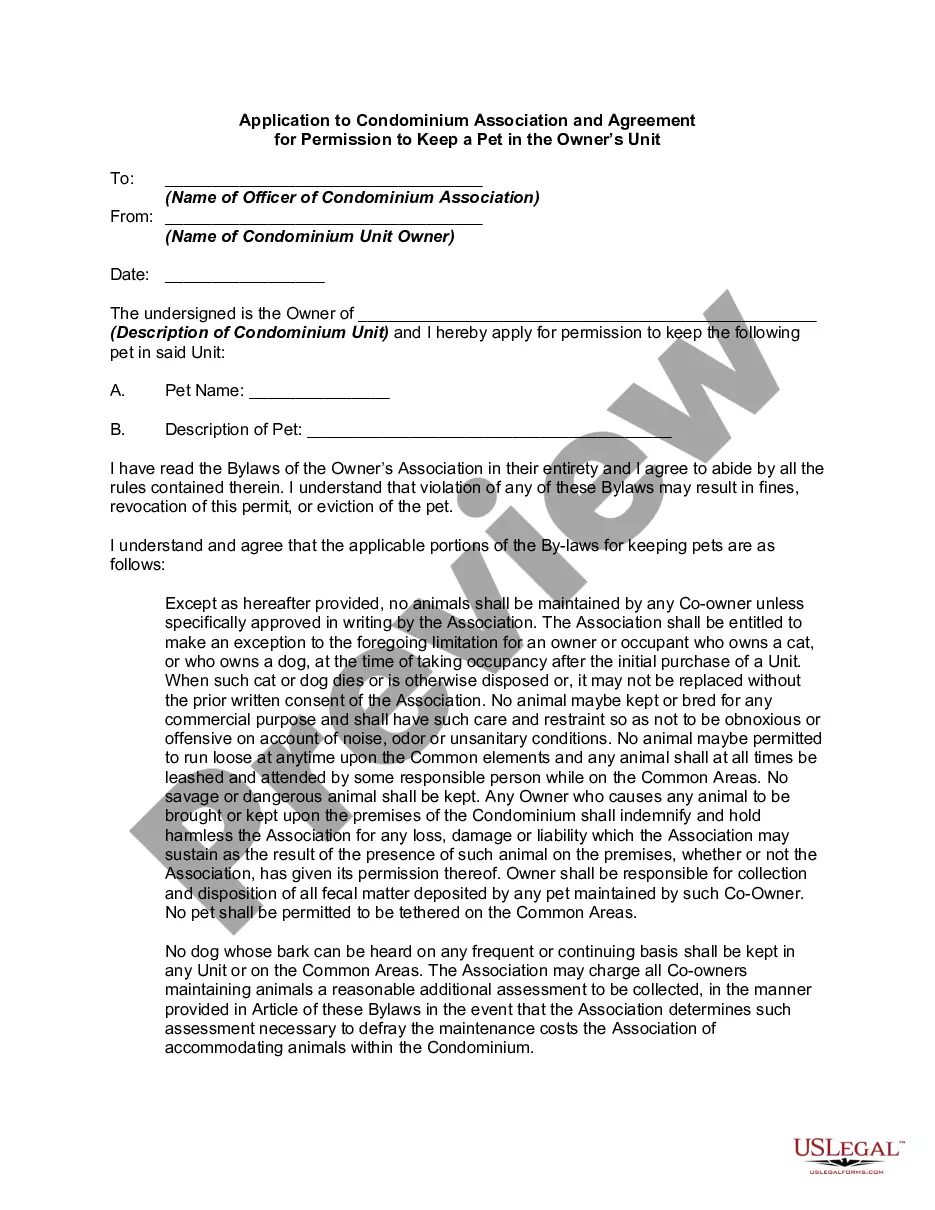
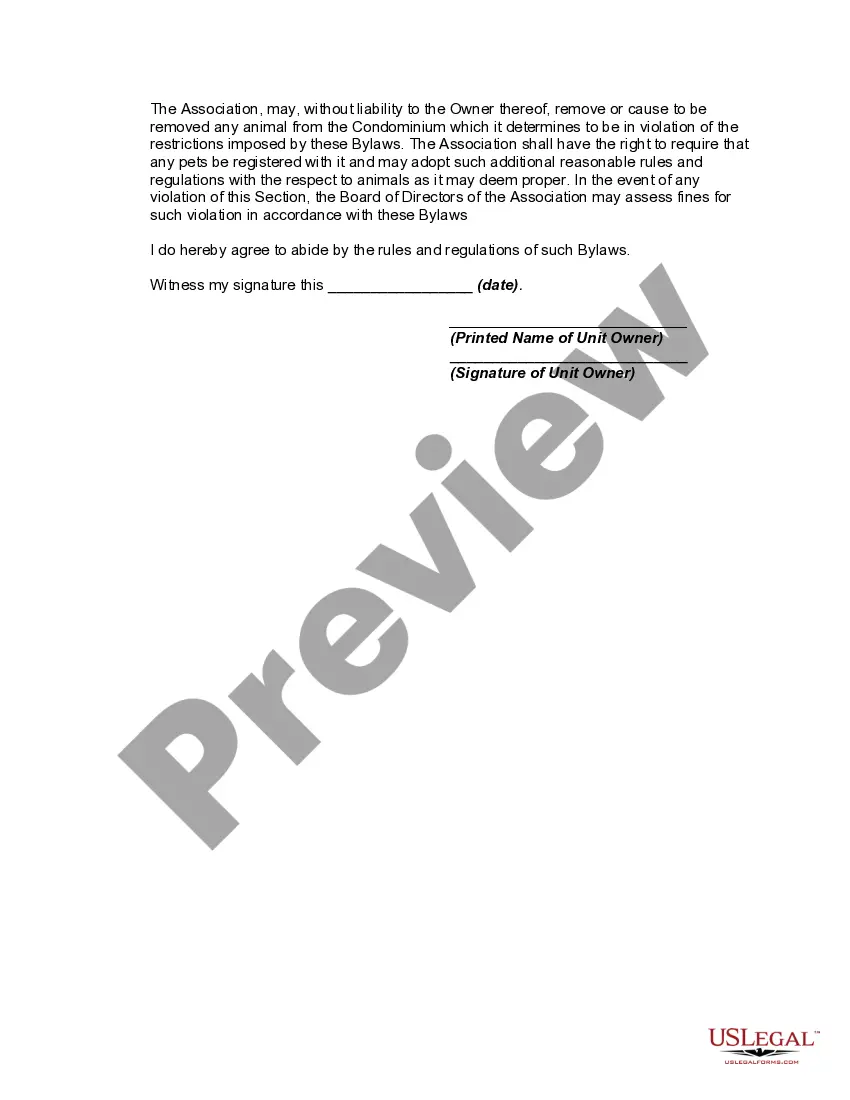
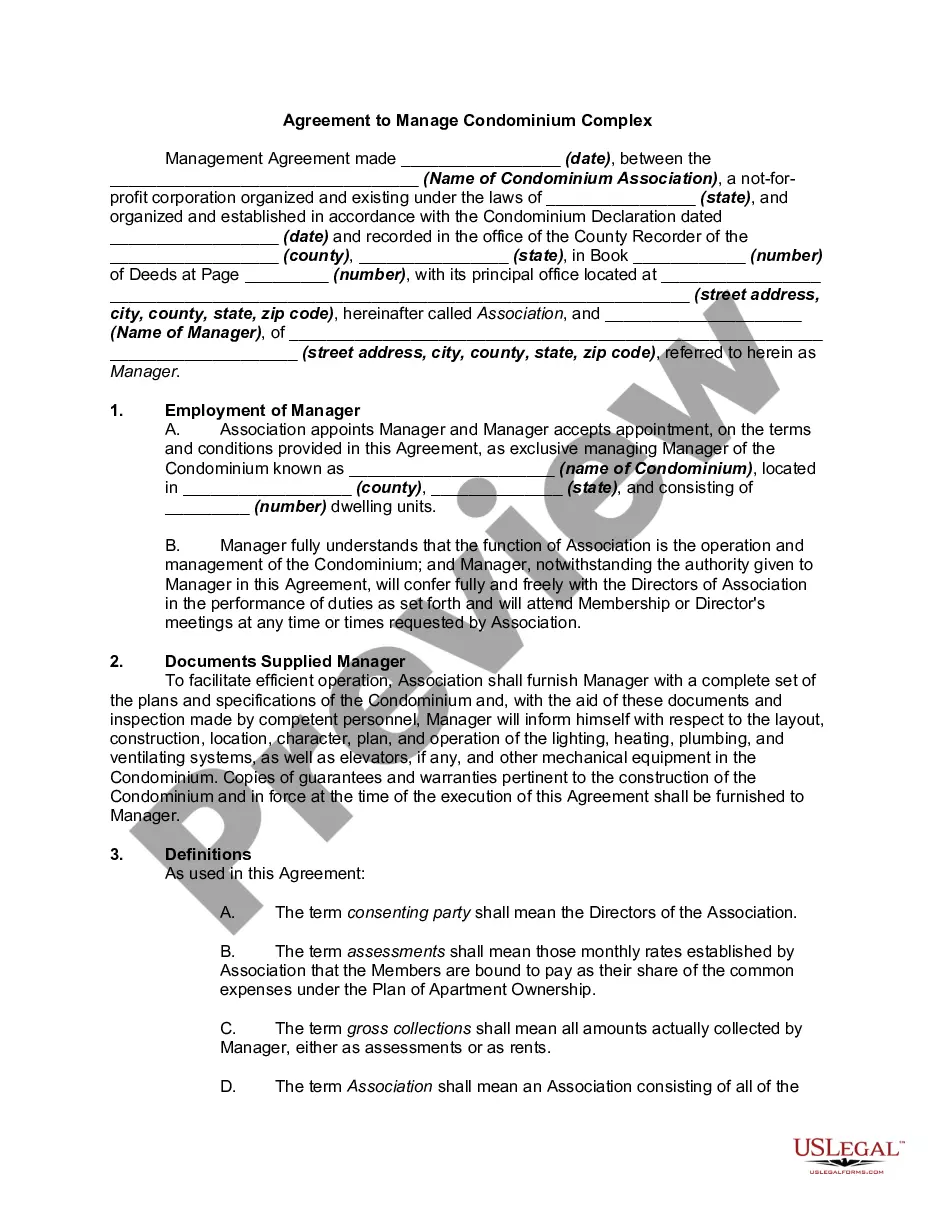
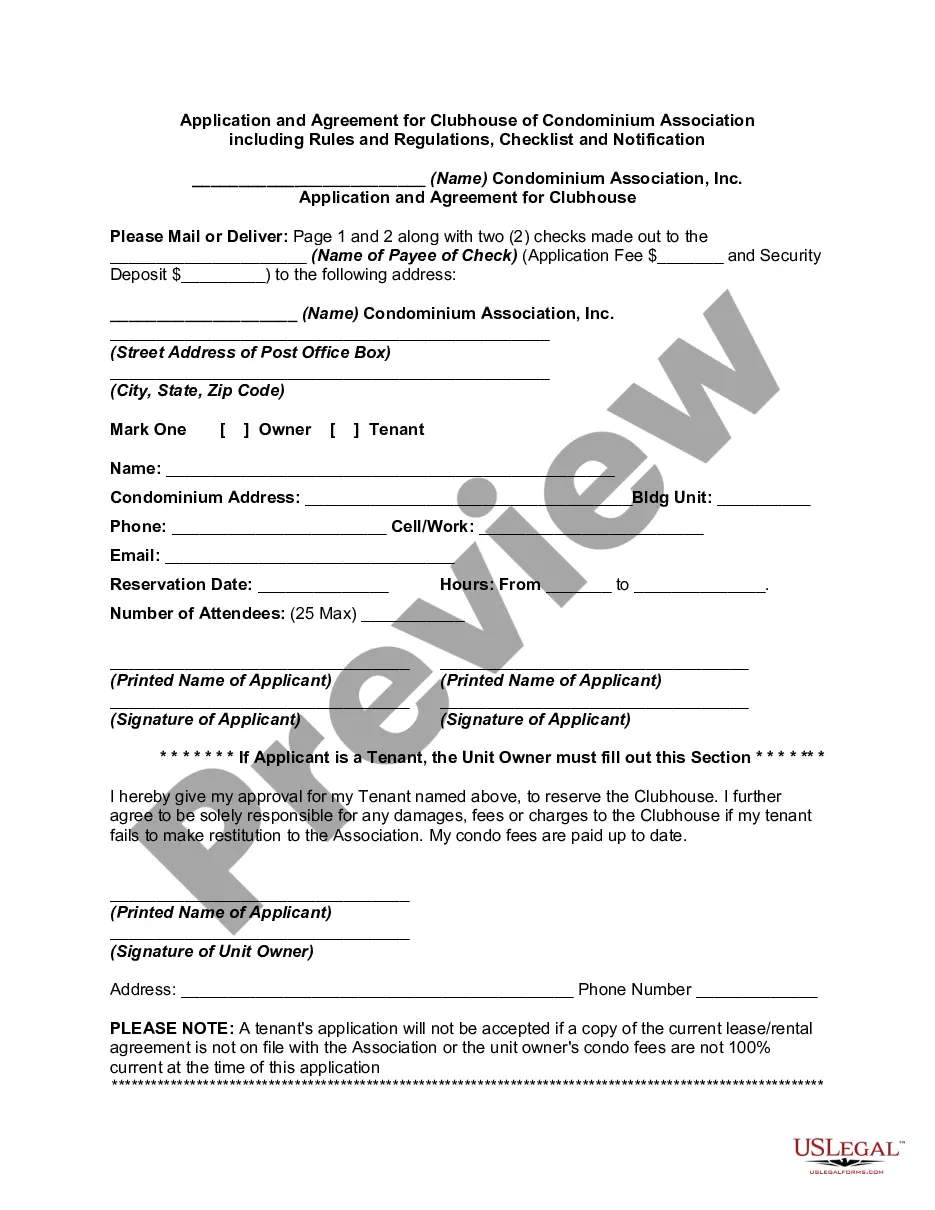
How to fill out Application To Condominium Association And Agreement For Permission To Keep A Pet In The Owner's Unit?
The Condominium Association Regulations With Hoa you find on this page is a reusable formal framework created by experienced attorneys in accordance with federal and state statutes.
For over 25 years, US Legal Forms has supplied individuals, organizations, and legal practitioners with more than 85,000 validated, state-specific documents for any commercial and personal circumstances. It’s the quickest, simplest, and most trustworthy method to acquire the paperwork you require, as the service ensures the utmost level of data protection and anti-malware safeguards.
Sign up for US Legal Forms to have authenticated legal templates for all of life’s circumstances at your service.
- Browse for the document you require and evaluate it.
- Look through the example you searched for and preview it or check the document description to confirm it meets your needs. If it doesn't, utilize the search bar to find the correct one. Click Buy Now once you have found the template you need.
- Register and Log In.
- Choose the payment plan that works for you and sign up for an account. Utilize PayPal or a credit card to make a swift payment. If you already possess an account, Log In and review your subscription to proceed.
- Obtain the fillable template.
- Select the format you wish for your Condominium Association Regulations With Hoa (PDF, DOCX, RTF) and save the document on your device.
- Complete and sign the document.
- Print the template to finish it by hand. Alternatively, use an online multifunctional PDF editor to quickly and accurately fill out and sign your form with a valid signature.
- Redownload your paperwork as needed.
- Utilize the same document again whenever required. Access the My documents tab in your profile to redownload any previously acquired forms.
Form popularity
FAQ
Yes, HOA covenants generally qualify as public records. They are usually recorded with the county and accessible to anyone interested in them. You can request these documents from your local recorder’s office, which ensures transparency within condo association bylaws with HOA. Knowing these covenants helps you understand your rights and responsibilities as a homeowner.
Finding your HOA rules is straightforward. Start by requesting a copy from your HOA’s management office or board. Additionally, many communities publish their rules online, allowing residents easy access. Familiarizing yourself with these rules is vital for navigating condo association bylaws with HOA effectively.
To discover who serves on your HOA board, check your community's official website or contact the management office. You may also attend monthly meetings where board members often introduce themselves. Additionally, reviewing community newsletters or bulletins can provide insights into the board's structure. Knowledge of the board is crucial for understanding condo association bylaws with HOA.
Writing HOA bylaws involves outlining the rules and regulations that govern your community. Start by gathering input from residents to ensure their needs and concerns are addressed. It's essential to include procedures for meetings, voting, and board member responsibilities. Online platforms like US Legal Forms offer templates for condo association bylaws with HOA to simplify the drafting process.
To encourage your HOA to enforce rules, start by reviewing the condo association bylaws with HOA for clarity on the rules in place. Next, gather support from fellow residents who share your concerns—having a collective voice can be more impactful. You might then consider presenting your case at a HOA meeting, emphasizing respect for community standards and the importance of upholding agreement terms. If necessary, platforms like US Legal Forms can guide you in drafting a petition or letter to formally address your request, helping streamline the process.
An example of abuse of power in an HOA could be a board member using their position to favor friends for maintenance contracts, despite higher bids from other contractors. This goes against the ethical responsibilities outlined in the condo association bylaws with HOA, which are designed to ensure fairness. Such actions can harm the community’s finances and trust. Engaging residents in decision-making can prevent such abuses and uphold community integrity.
Abuse of power in an HOA can occur when board members misuse their authority for personal gain or excessively penalize residents. Examples include making decisions that only benefit a select few or ignoring community feedback during policy changes. Staying informed about condo association bylaws with HOA can empower residents to hold their board accountable. Transparency in leadership can help mitigate these concerns.
HOA bylaws are the foundational legal documents that govern the operation of the community, while rules address day-to-day living and behavioral expectations. Condo association bylaws with HOA outline the structure, duties, and rights of the board and members. On the other hand, rules might cover aspects like noise control or parking regulations. Understanding both helps residents navigate their rights and responsibilities effectively.
Some of the worst HOA rules might include restrictions on personal freedom, like banning all pets or imposing strict regulations on home exteriors. These rules can feel restrictive and may not align with the condo association bylaws with HOA intended to foster community spirit. Excessive fees or fines for minor infractions can add to frustration, too. Residents should closely review their bylaws to ensure rules remain reasonable and equitable.
HOA harassment may manifest through excessive fines or strict enforcement of rules that target specific residents. For instance, if an HOA issues repeated complaints about a member’s landscaping choices that adhere to condo association bylaws with HOA, this may be seen as harassment. Understanding your rights can help residents challenge unfair treatment. Open communication with the HOA board can also foster a more respectful environment.