Trust Documents For Kyc
Description
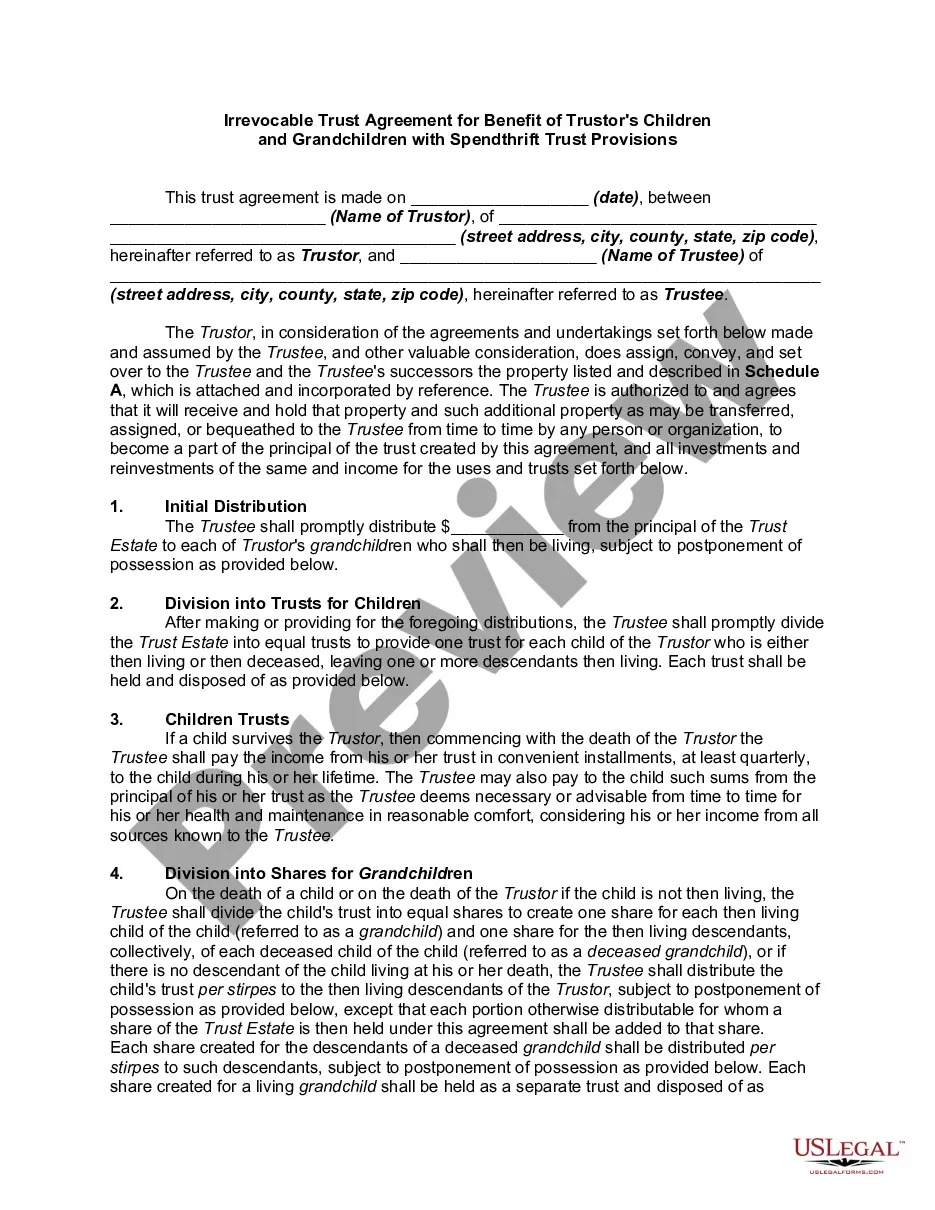
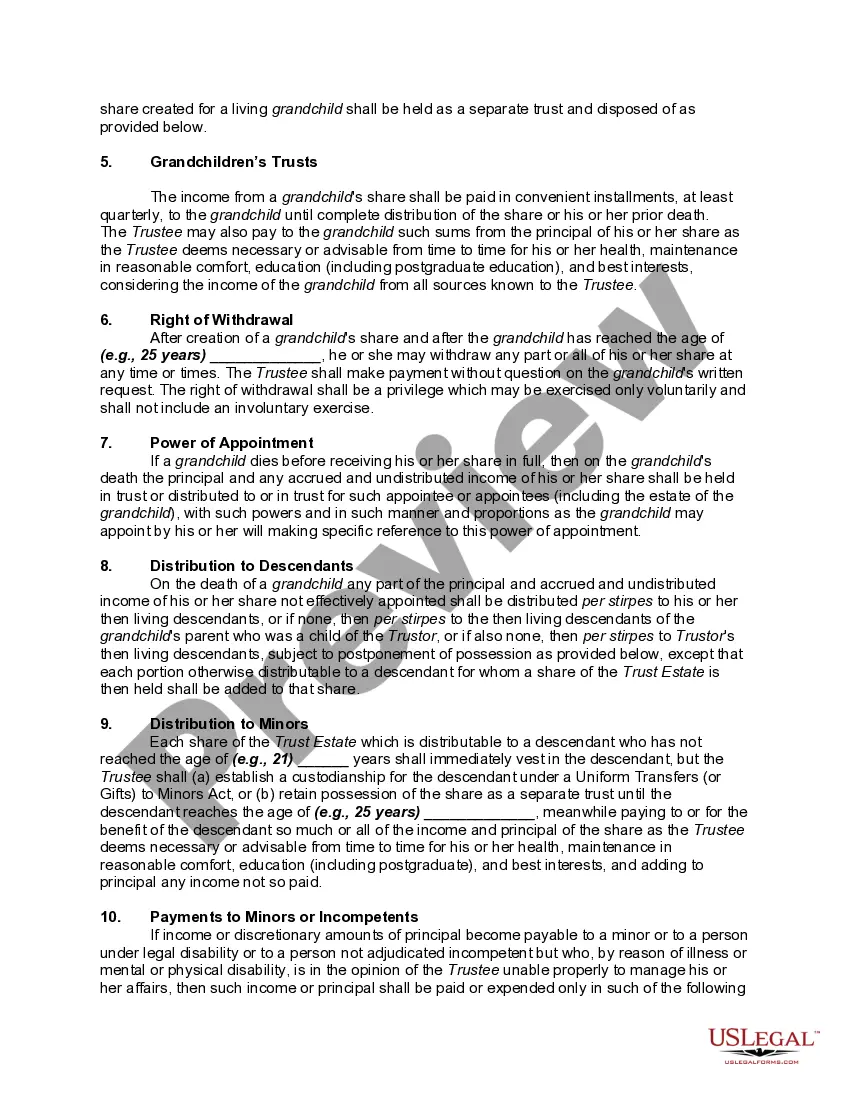
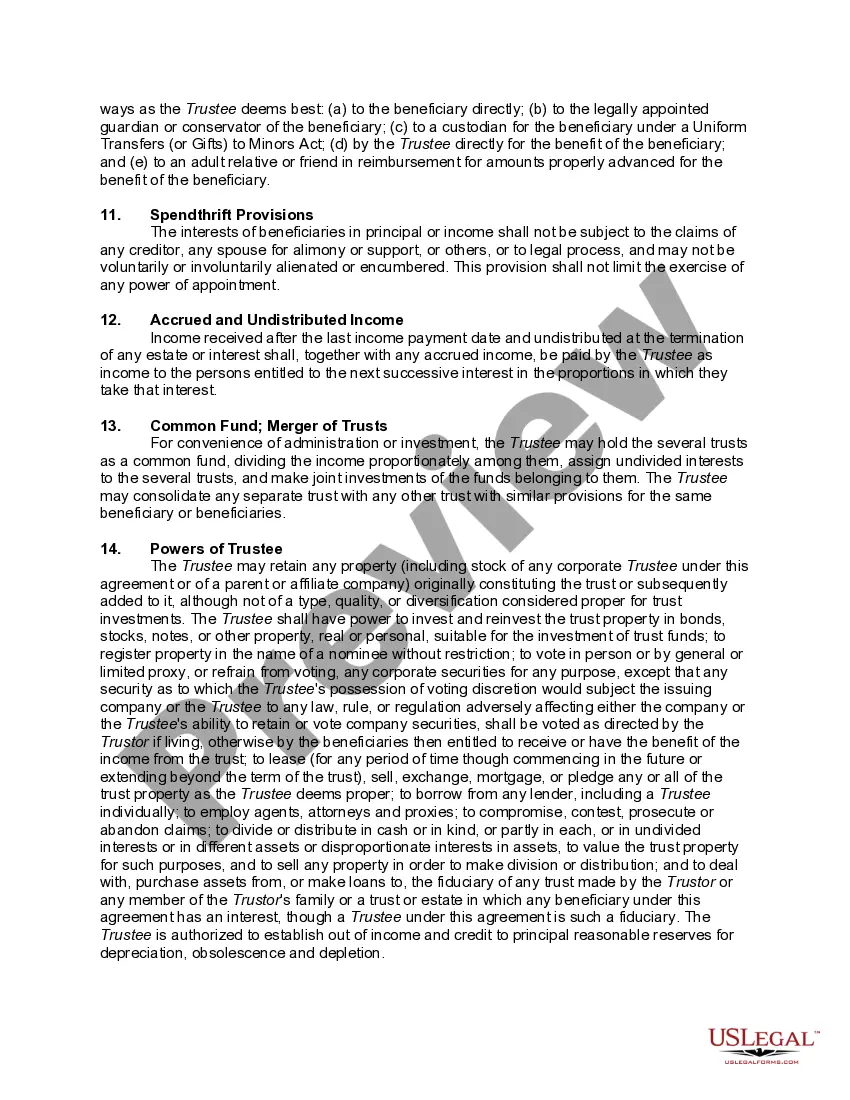
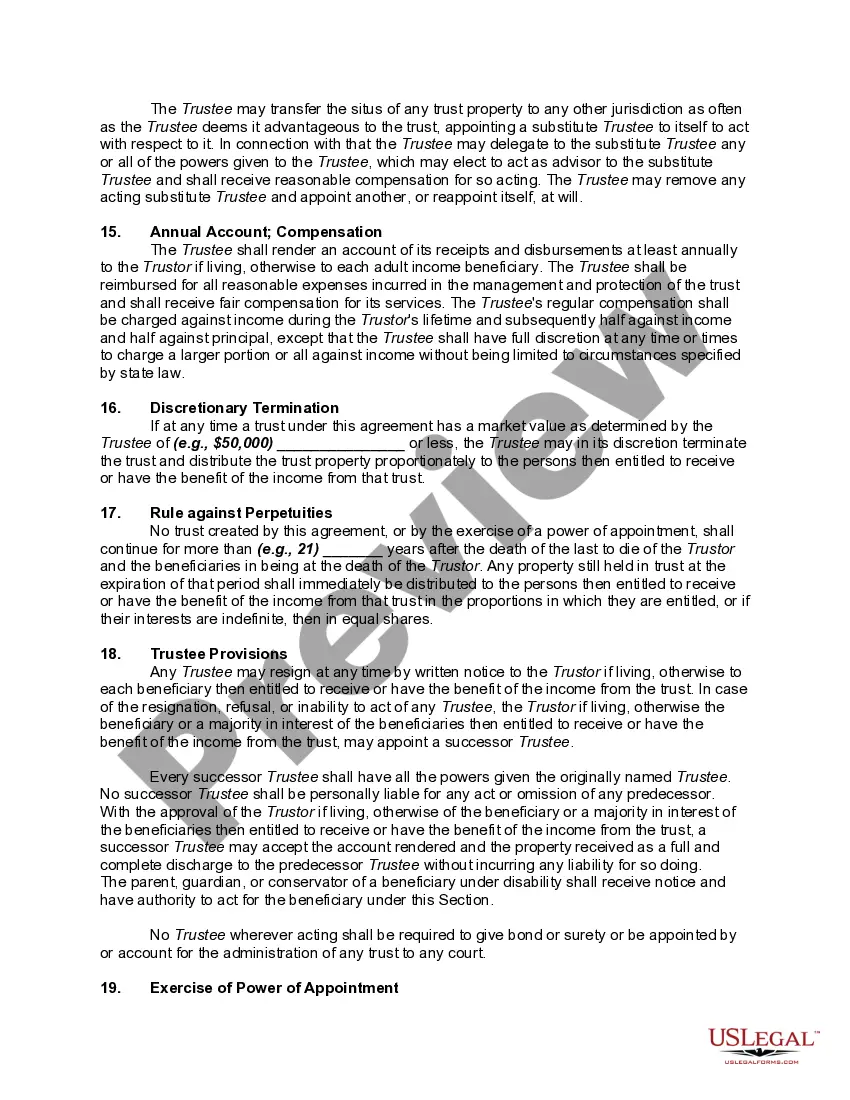

Get your form ready online
Our built-in tools help you complete, sign, share, and store your documents in one place.
Make edits, fill in missing information, and update formatting in US Legal Forms—just like you would in MS Word.
Download a copy, print it, send it by email, or mail it via USPS—whatever works best for your next step.
Sign and collect signatures with our SignNow integration. Send to multiple recipients, set reminders, and more. Go Premium to unlock E-Sign.
If this form requires notarization, complete it online through a secure video call—no need to meet a notary in person or wait for an appointment.
We protect your documents and personal data by following strict security and privacy standards.

Make edits, fill in missing information, and update formatting in US Legal Forms—just like you would in MS Word.

Download a copy, print it, send it by email, or mail it via USPS—whatever works best for your next step.

Sign and collect signatures with our SignNow integration. Send to multiple recipients, set reminders, and more. Go Premium to unlock E-Sign.

If this form requires notarization, complete it online through a secure video call—no need to meet a notary in person or wait for an appointment.

We protect your documents and personal data by following strict security and privacy standards.
Looking for another form?
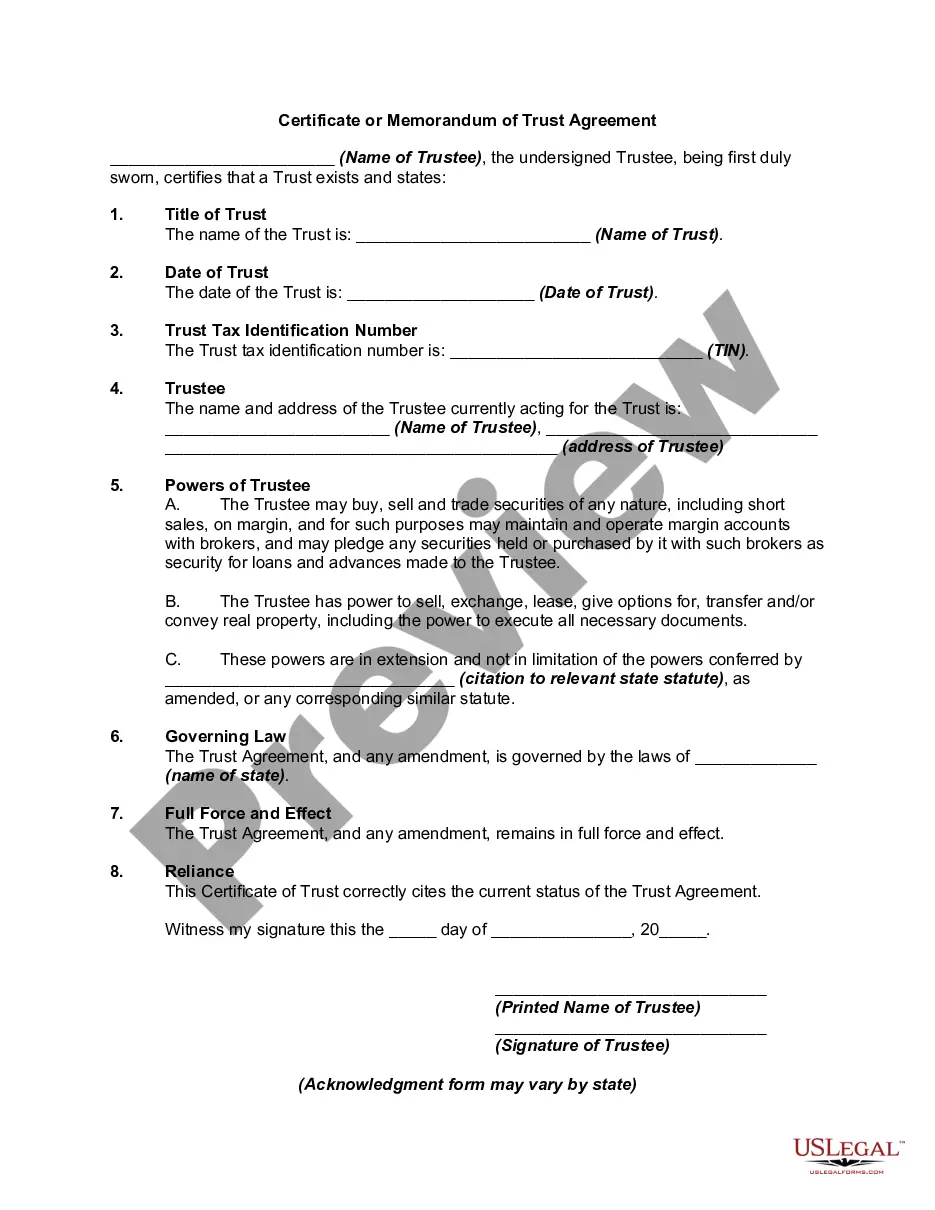




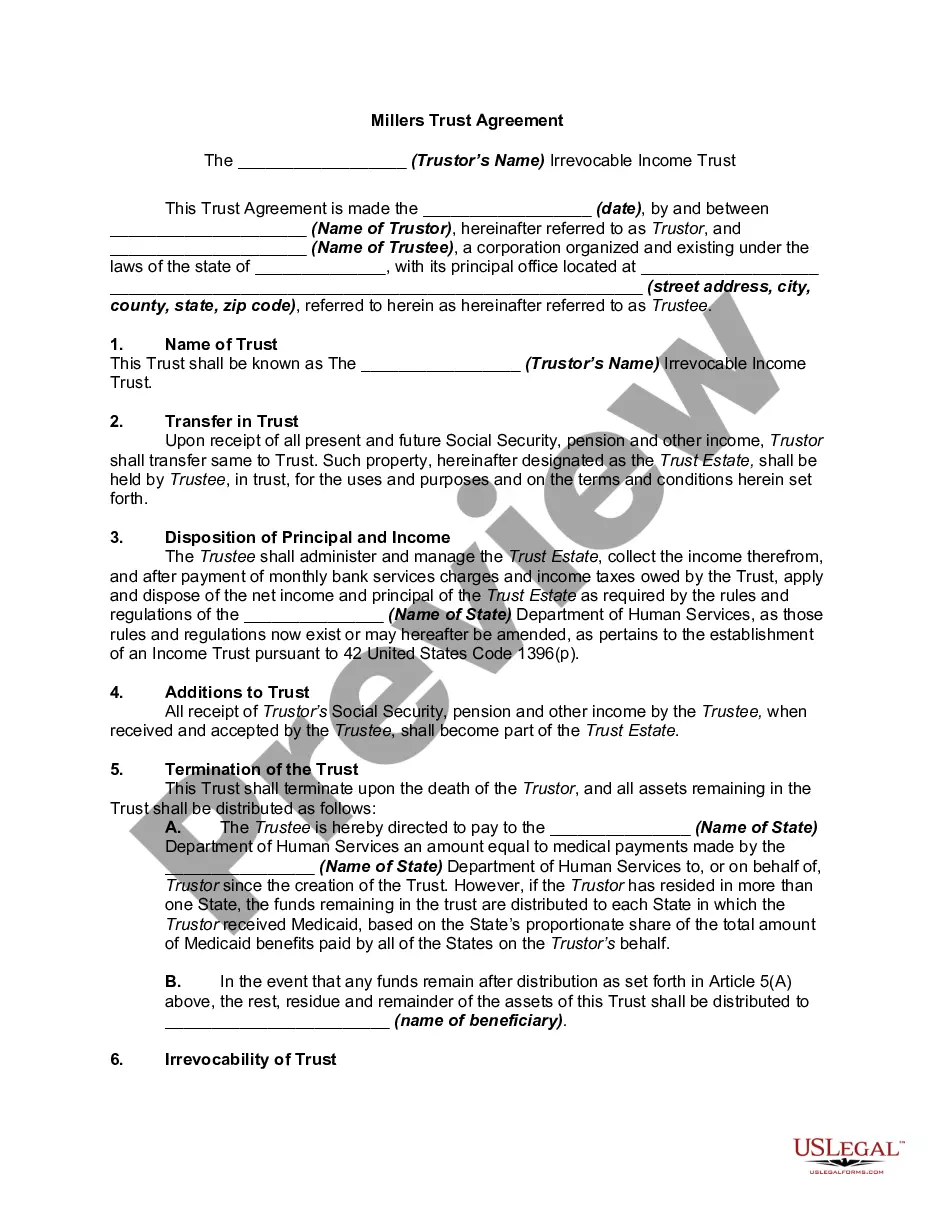
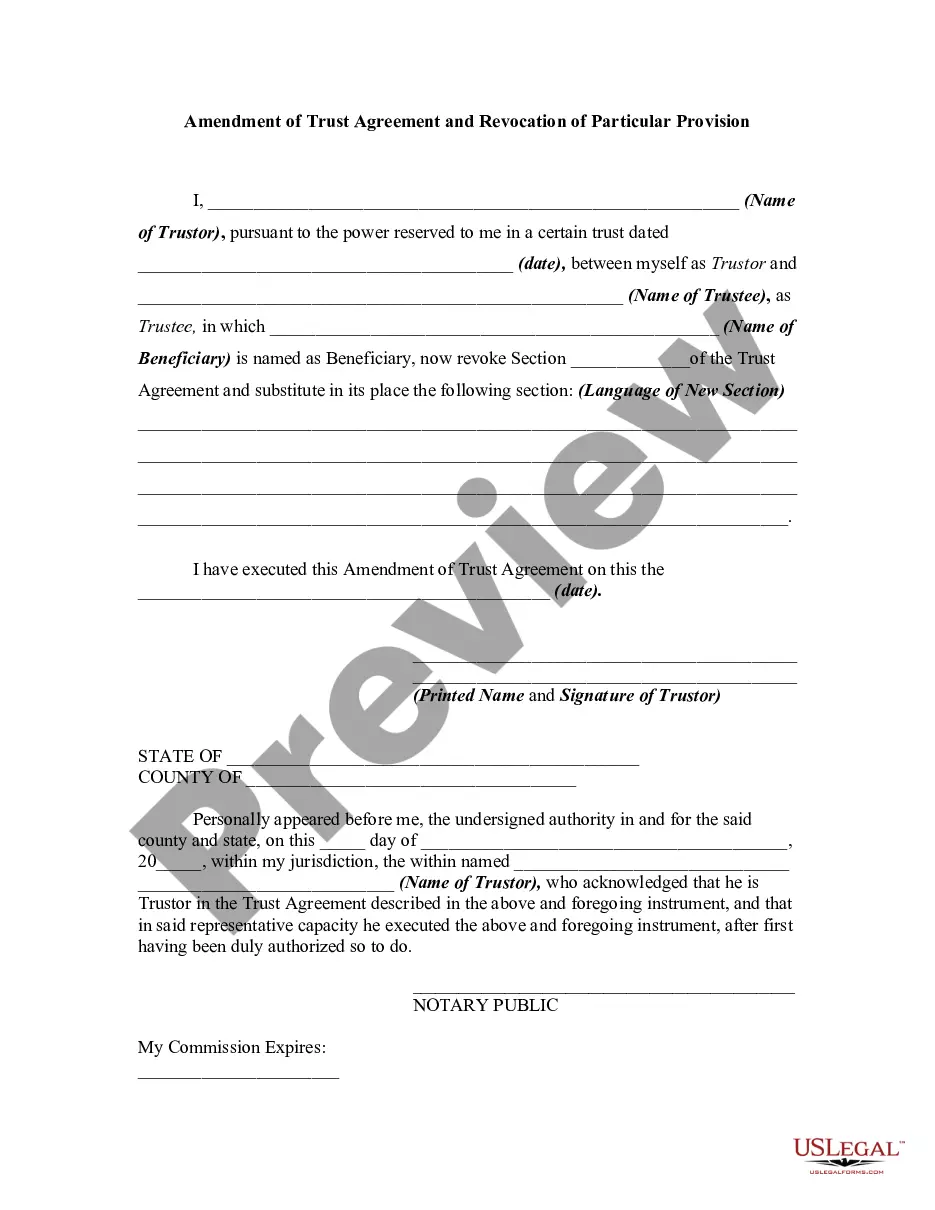

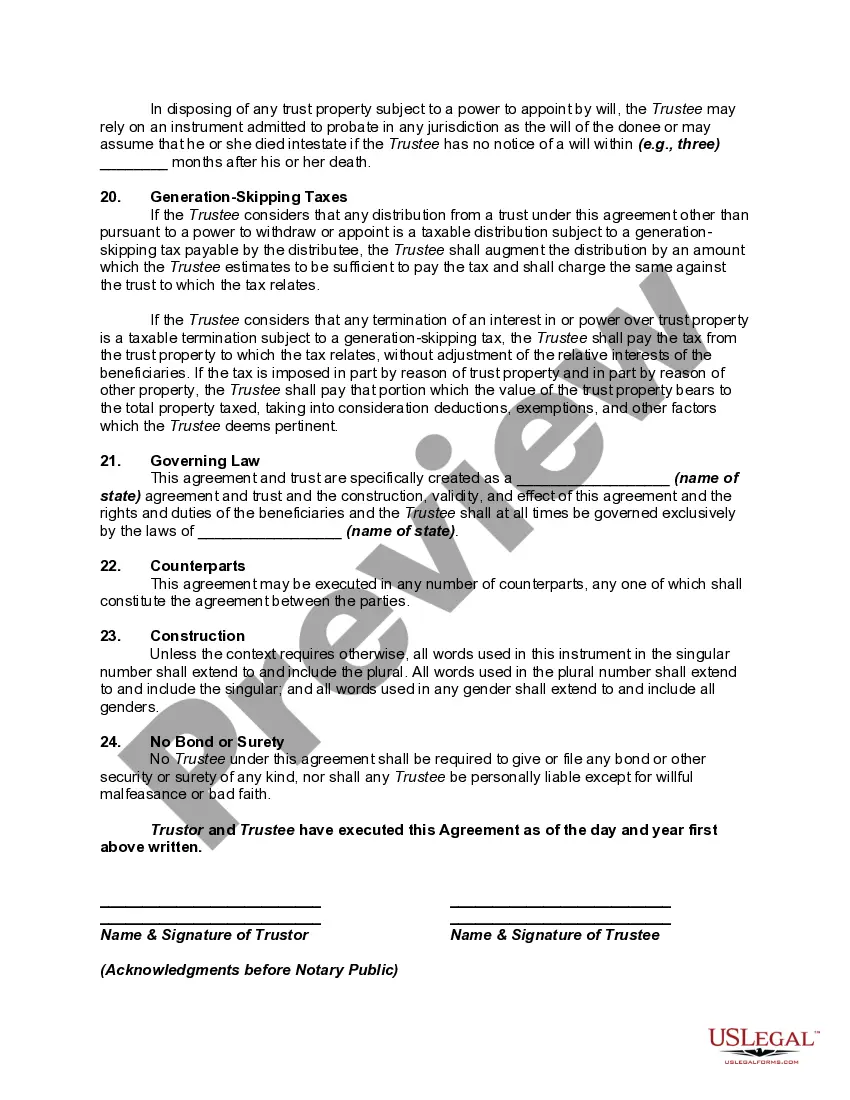
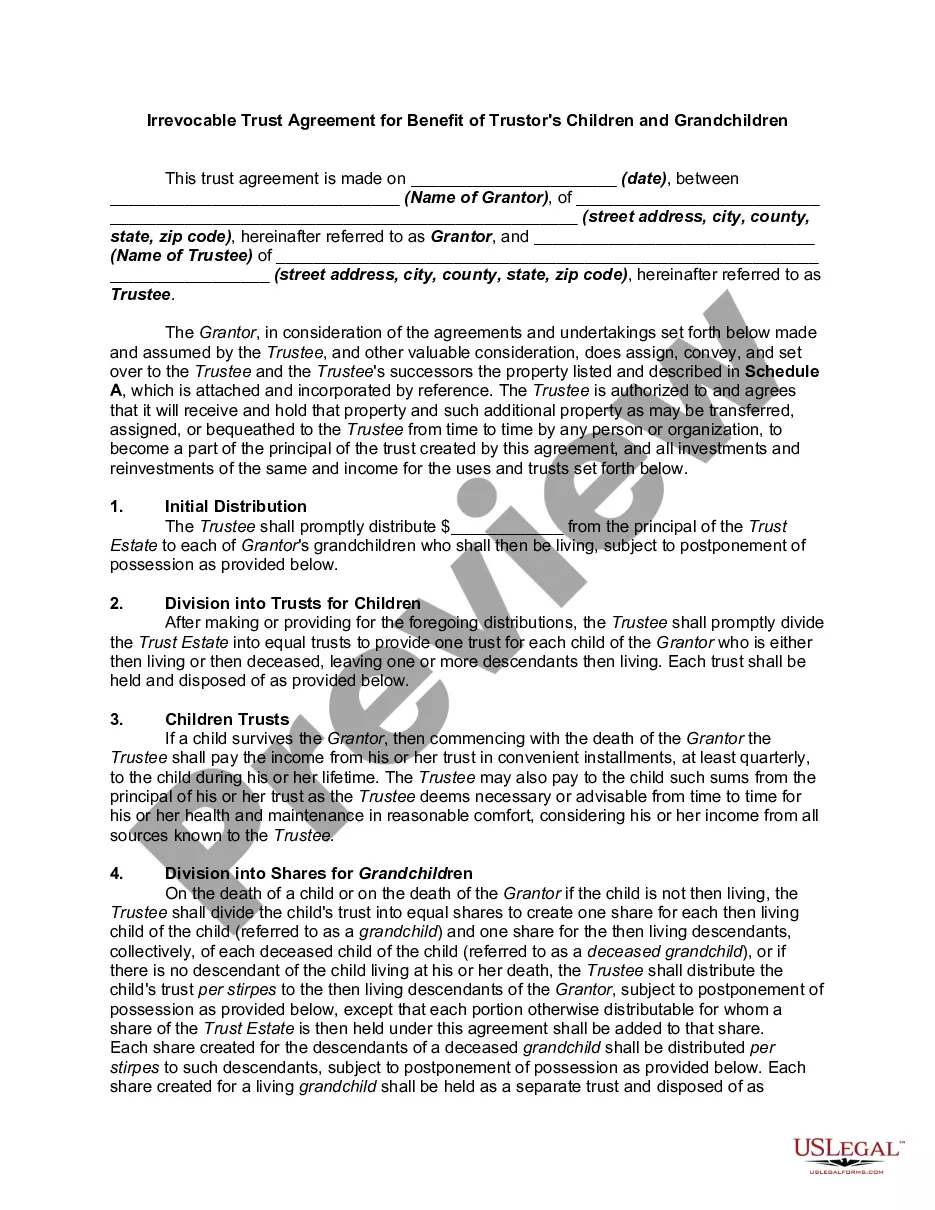
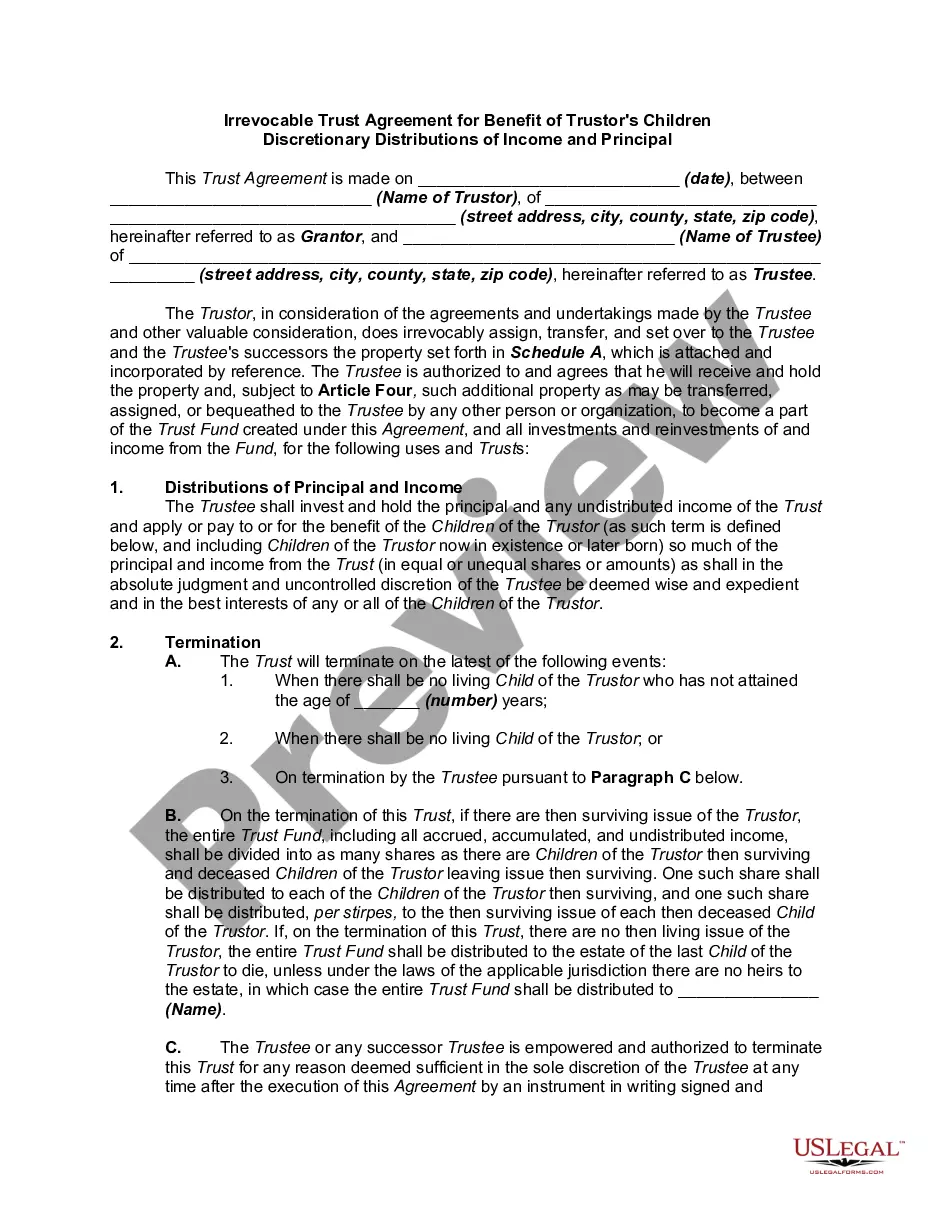
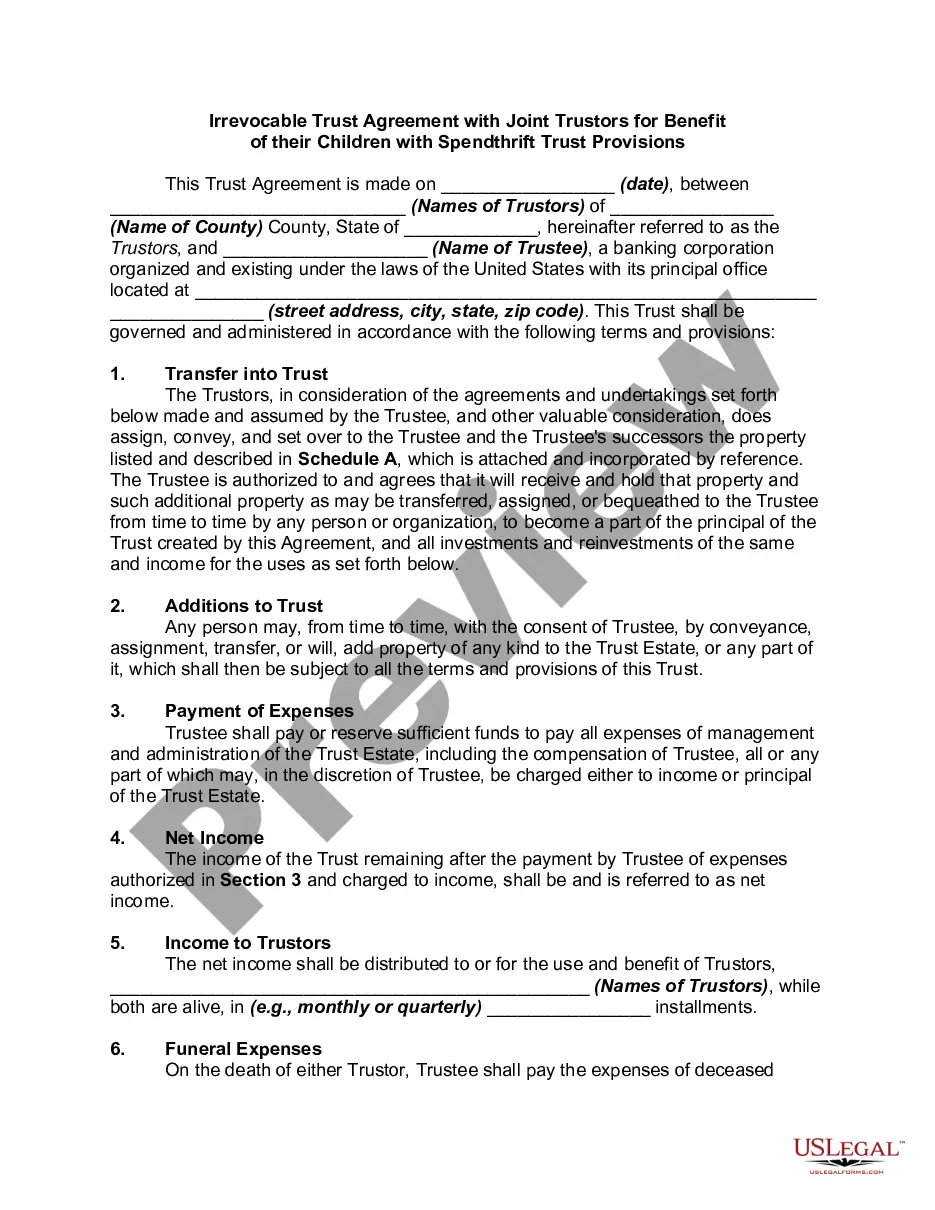
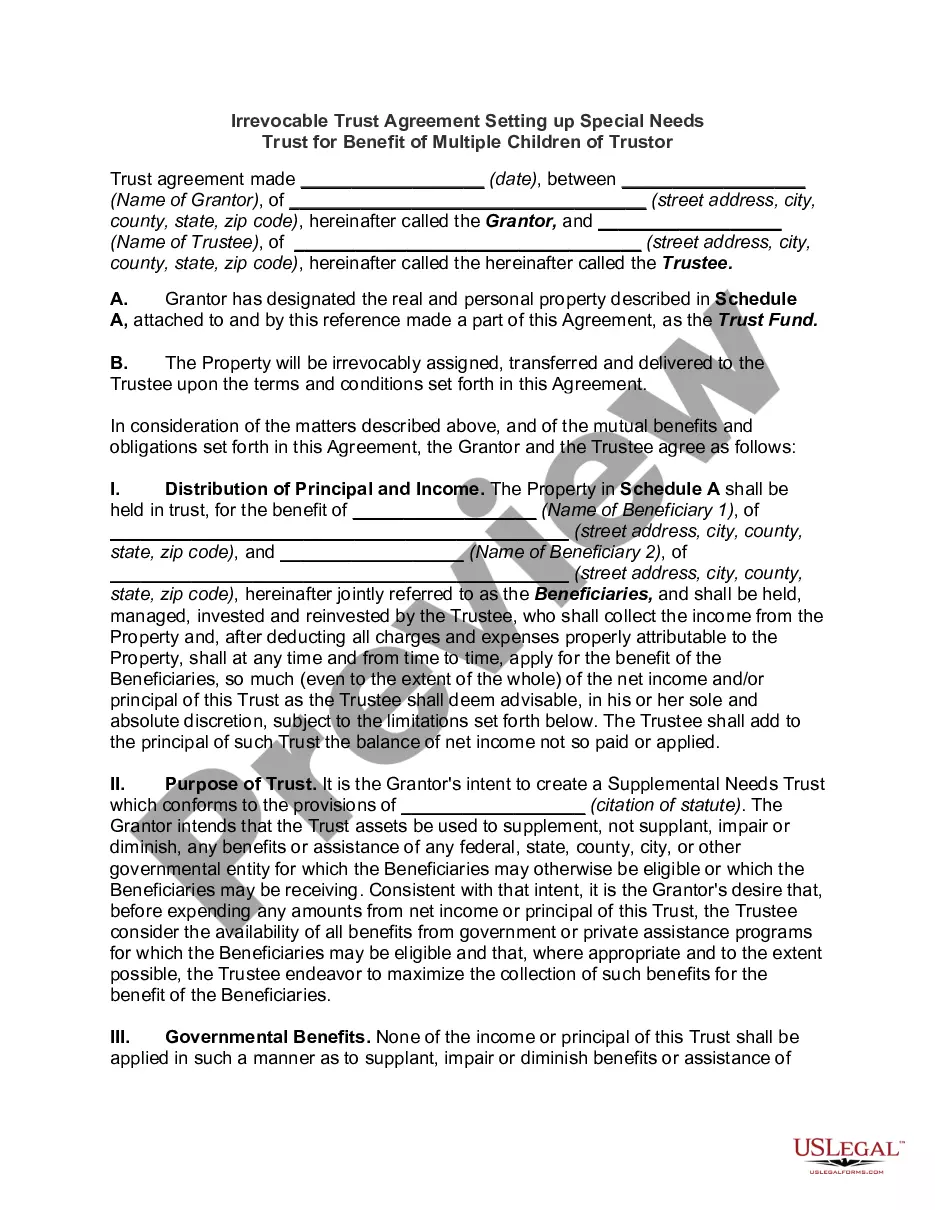
How to fill out Irrevocable Trust Agreement For Benefit Of Trustor's Children And Grandchildren With Spendthrift Trust Provisions?
- If you are a returning user, log in to your account and access your dashboard to locate and download the desired trust document template by clicking the Download button. Ensure your subscription remains active, renewing it if necessary.
- For first-time users, begin by selecting your required document. Utilize the Preview mode to evaluate the form layout and description, confirming its relevance to your local jurisdiction.
- If adjustments are needed, use the Search tab to refine your query until you identify the appropriate template.
- Once the correct document is found, proceed by clicking the Purchase button and selecting your preferred subscription plan. Registration is required to unlock full access.
- Make your payment using either a credit card or PayPal to finalize your subscription.
- Download the completed form directly to your device, and access it anytime through the My Forms section in your account.
US Legal Forms empowers users with an extensive collection of over 85,000 editable legal documents, making it a superior option to competitors. By facilitating easy access and expert assistance, the platform guarantees that users create precise and compliant forms.
In conclusion, using US Legal Forms for trust documents for KYC not only simplifies the process but also ensures legality and accuracy. Start your journey today and experience the convenience of effortless document management.
Form popularity
FAQ
KYC requirements vary by institution but generally include verifying identity through official identification, providing proof of address, and if applicable, submitting trust documents for KYC. Additionally, some organizations may require information on the source of funds. Understanding these requirements is vital for smooth transactions and avoiding delays. By utilizing USLegalForms, you can easily obtain trust documents for KYC and ensure you meet all necessary guidelines.
To complete Know Your Customer (KYC) procedures, individuals typically need to provide a form of identification, such as a driver’s license or passport, proof of address, like a utility bill or bank statement, and any trust documents for KYC that may pertain to their financial activities. Each institution may have slight variations, so it's crucial to check their specific requirements. Proper trust documents for KYC help verify identity and ensure compliance with regulations. Using platforms like USLegalForms can simplify this process by providing access to necessary documents.
KYC identification requirements typically involve presenting valid trust documents for KYC that prove both your identity and residency. Most institutions require a government-issued ID, such as a passport or driver’s license, alongside proof of address like a utility bill. Some may also request financial documents to better understand your financial status. Always check with the institution for their specific criteria.
The documents needed for KYC verification usually include a government-issued ID and proof of residence. A utility bill or bank statement can serve as excellent proof of address. You may need to provide additional documentation depending on the specific requirements of the entity you are engaging with. Ensuring that all trust documents for KYC are complete and accurate will expedite your verification process.
KYC verification requires specific trust documents for KYC to confirm your identity. Generally, you will need to submit a valid government ID, proof of address, and any relevant financial documentation. The verification process can vary depending on the institution you are working with, so it's wise to check their requirements directly. This precaution not only protects your identity but also streamlines your experience.
Submitting a KYC document is typically straightforward. Most institutions offer multiple methods, including online uploads through their secure portals. Alternatively, you may send hard copies through traditional mail or, in some cases, visit a physical branch. Be sure to check your institution’s guidelines for the preferred submission method to ensure your trust documents for KYC are processed promptly.
To open a KYC account, you must submit several essential trust documents for KYC. Commonly required documents include a valid photo ID, proof of residence, and tax identification information. Your institution will specify any additional documents necessary for your particular account type. Providing accurate and complete documentation speeds up the account opening process.
The KYC process generally involves five critical steps. First, you need to provide your trust documents for KYC, including ID and address evidence. Next, the institution will verify your identity through these documents. Once verified, you will need to provide additional information relevant to the financial services you are accessing. Finally, they may conduct an ongoing monitoring of your transactions to ensure continued compliance.
When you go through the KYC process, the common trust documents for KYC include government-issued identification, proof of address, and financial documents. Specifically, you might need a driver's license, passport, utility bills, or bank statements. These documents help agencies confirm your identity and assess your financial profile. It's important that all documents are current and meet the specific requirements set by the institution.
A trust document is not the same as a will; both serve different purposes in estate planning. While a will outlines how your assets are distributed after death, a trust document provides for asset management during your lifetime and beyond. Understanding the distinctions is vital for effective estate management and for submitting accurate trust documents for KYC.