Tax Reporting For Irrevocable Grantor Trusts
Description




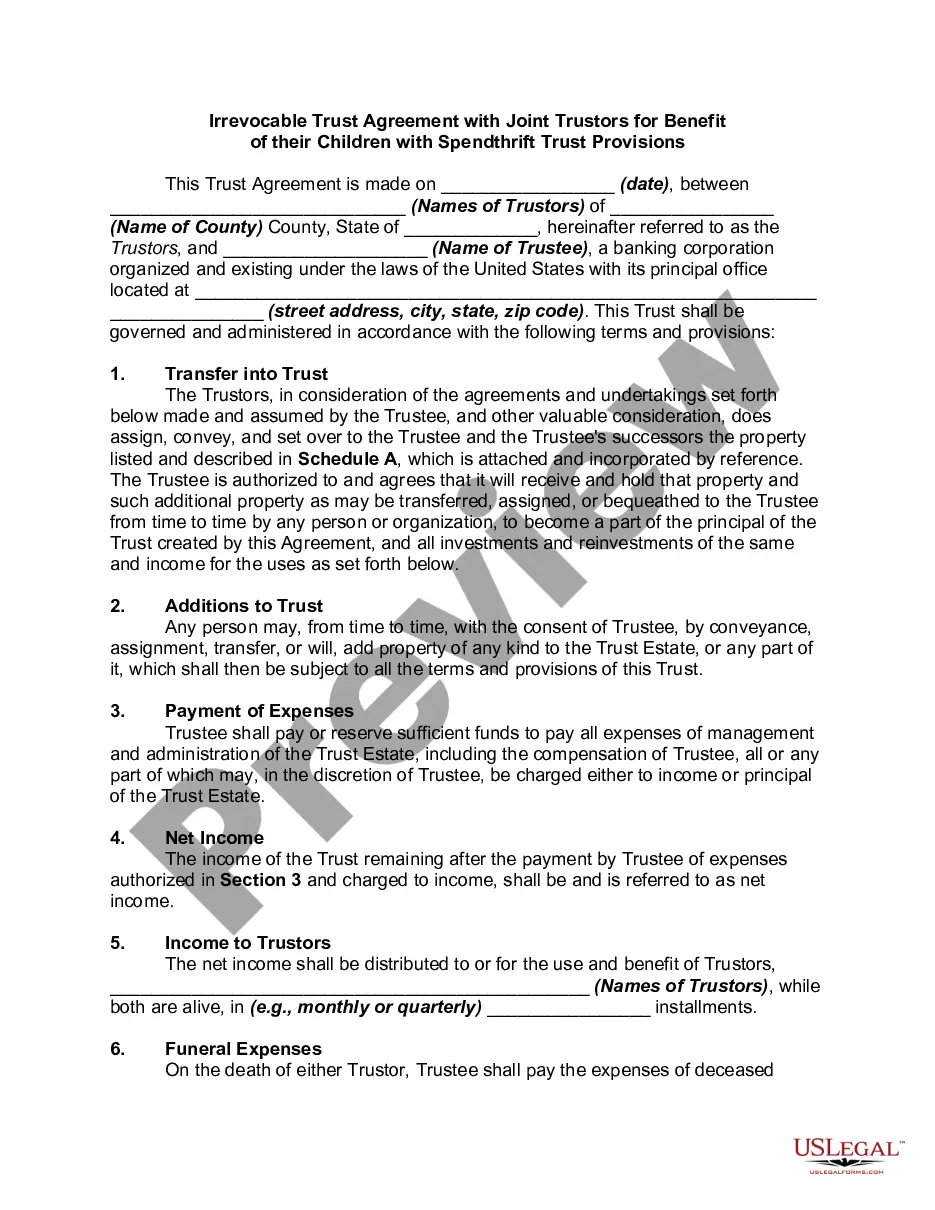

Get your form ready online
Our built-in tools help you complete, sign, share, and store your documents in one place.
Make edits, fill in missing information, and update formatting in US Legal Forms—just like you would in MS Word.
Download a copy, print it, send it by email, or mail it via USPS—whatever works best for your next step.
Sign and collect signatures with our SignNow integration. Send to multiple recipients, set reminders, and more. Go Premium to unlock E-Sign.
If this form requires notarization, complete it online through a secure video call—no need to meet a notary in person or wait for an appointment.
We protect your documents and personal data by following strict security and privacy standards.

Make edits, fill in missing information, and update formatting in US Legal Forms—just like you would in MS Word.

Download a copy, print it, send it by email, or mail it via USPS—whatever works best for your next step.

Sign and collect signatures with our SignNow integration. Send to multiple recipients, set reminders, and more. Go Premium to unlock E-Sign.

If this form requires notarization, complete it online through a secure video call—no need to meet a notary in person or wait for an appointment.

We protect your documents and personal data by following strict security and privacy standards.
Looking for another form?
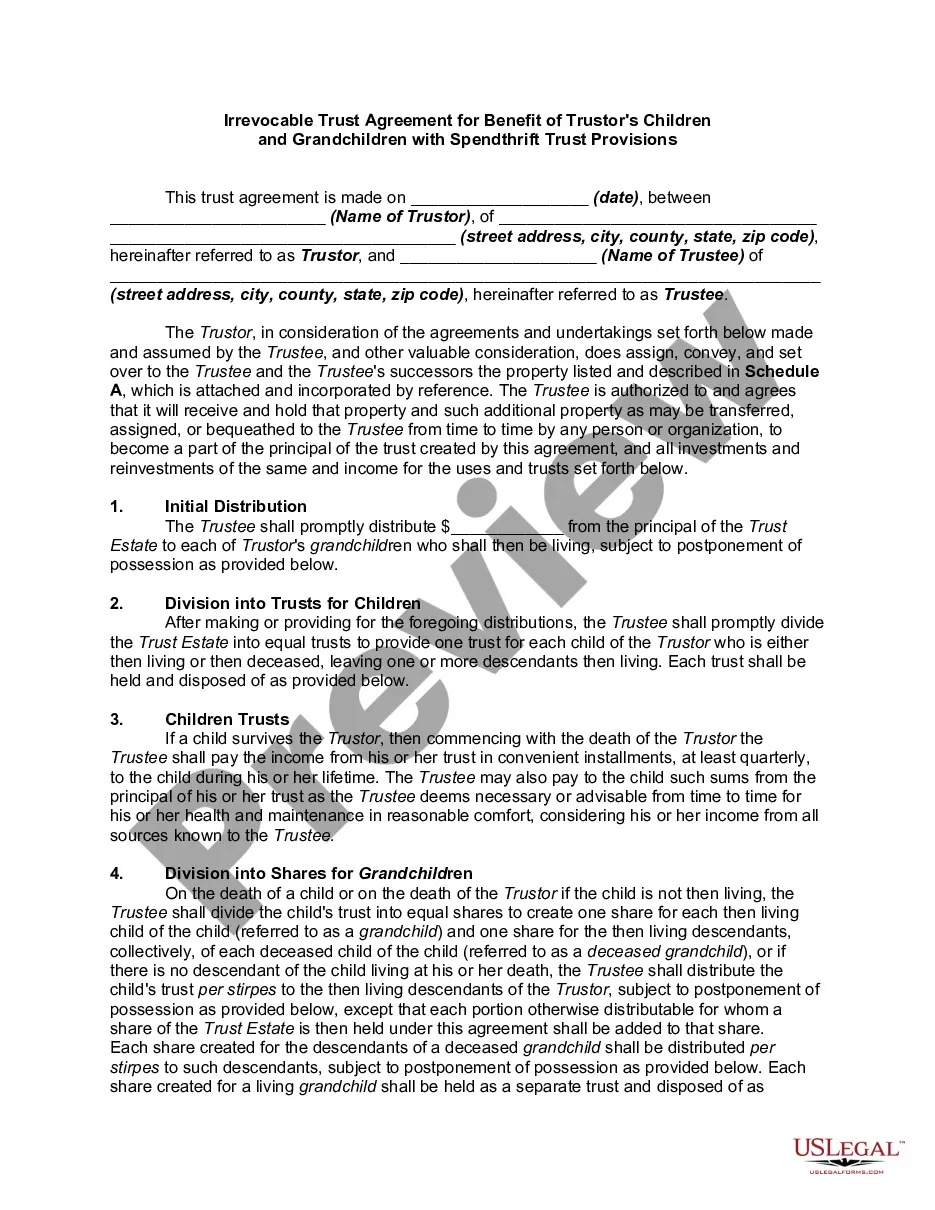
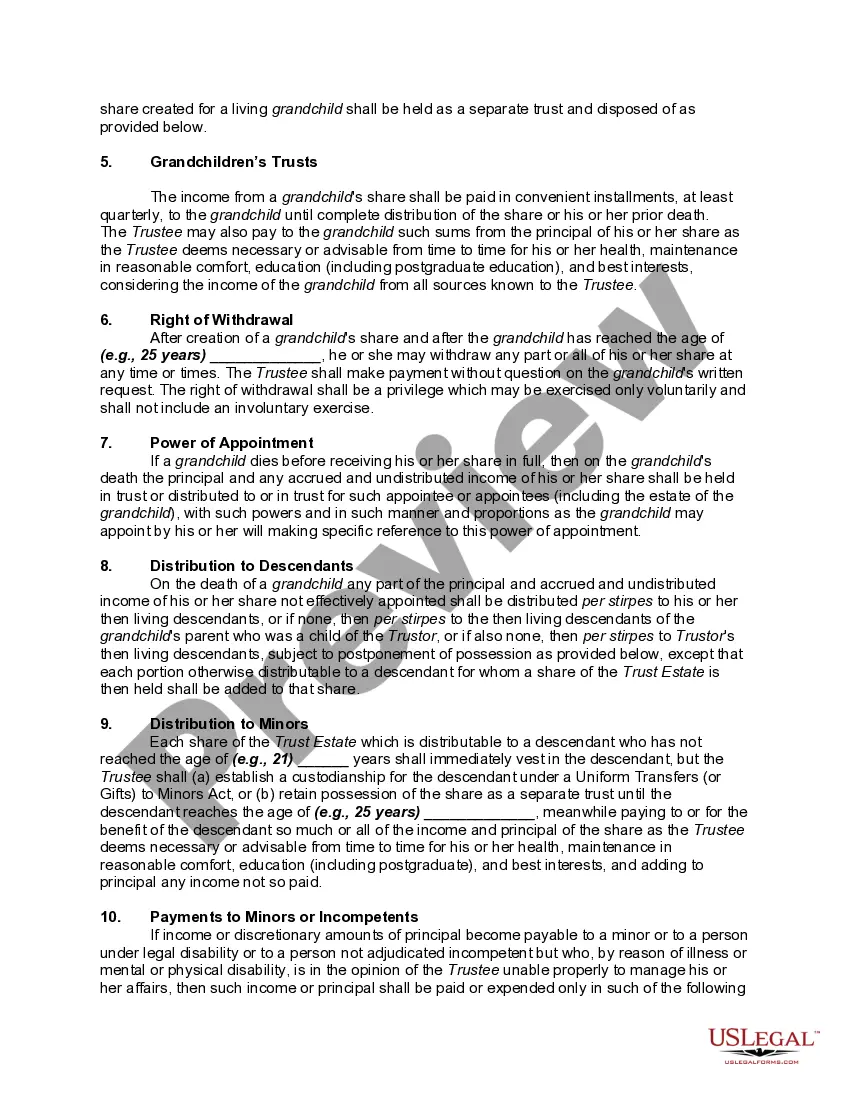
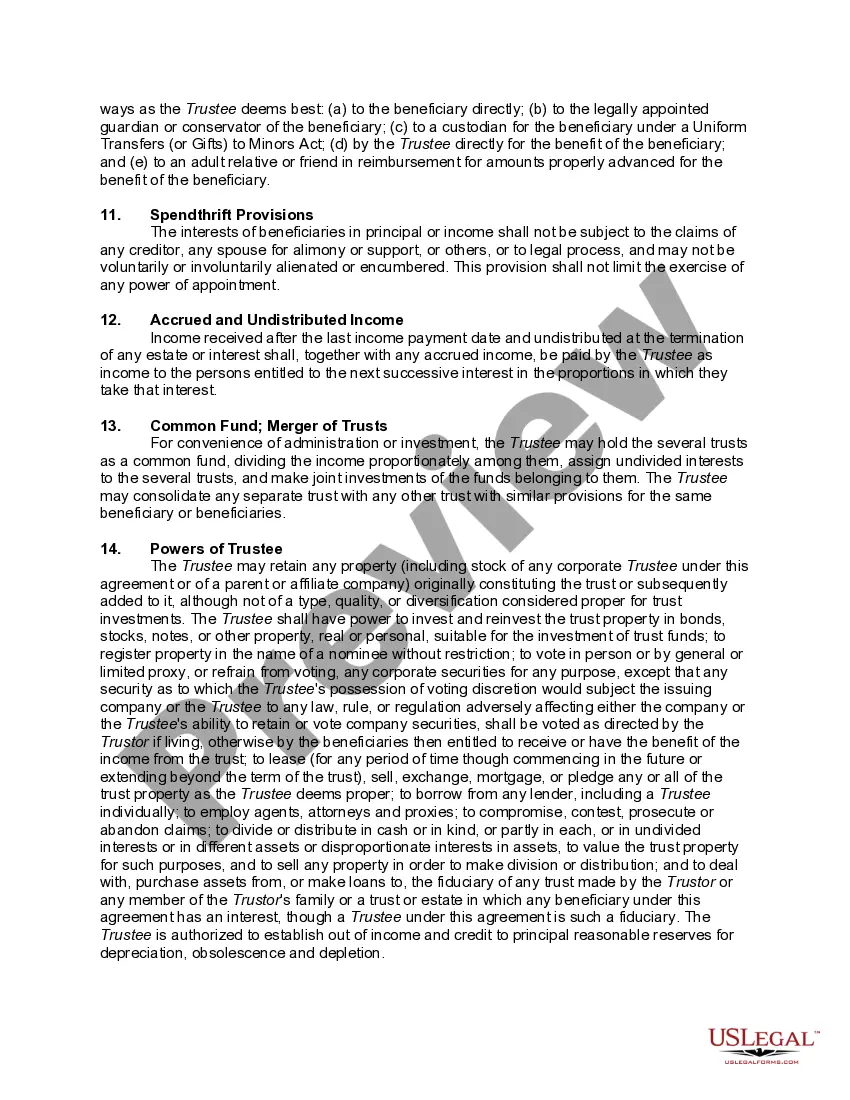
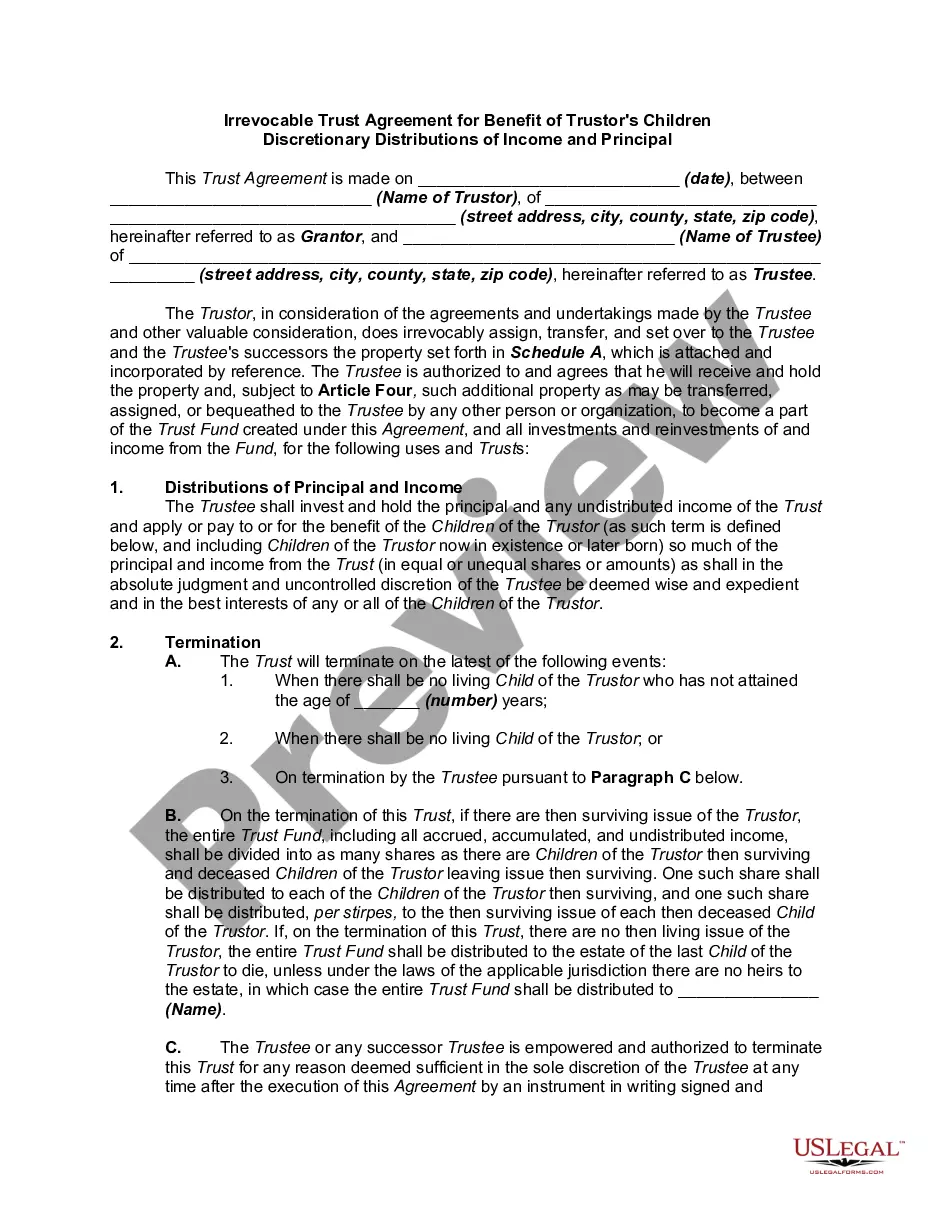
How to fill out Irrevocable Trust Agreement For Benefit Of Trustor's Children And Grandchildren With Spendthrift Trust Provisions?
- If you're an existing user, log in to your account and access the Download button for your desired form. Ensure your subscription is active and renew if necessary.
- For new users, start by selecting the right form. Review the Preview mode and detailed description to verify it meets your jurisdiction's requirements.
- If adjustments are needed, utilize the Search tab to find a more suitable template.
- To purchase the document, click the Buy Now button and pick your preferred subscription. You will need to create an account to gain access.
- Complete your transaction by entering your payment information, either via credit card or PayPal.
- Finally, download the completed form and save it on your device. You can also find it later in the My Forms section of your profile.
Using US Legal Forms not only provides you with a robust collection of over 85,000 editable legal documents but also connects you with premium experts for guidance, ensuring each document is accurate and legally compliant.
Ready to simplify your legal paperwork? Visit US Legal Forms today and take the first step towards efficient tax reporting for your irrevocable grantor trusts.
Form popularity
FAQ
You report irrevocable trust income on Schedule K-1 (Form 1041), which outlines each beneficiary's share of income. The income must then be reported on the beneficiary's individual tax returns. Accurate reporting ensures compliance with tax laws and simplifies tax reporting for irrevocable grantor trusts. For more clarity, you can explore the helpful information offered by US Legal Forms.
Trust income is reported to the IRS using Form 1041, which is the annual income tax return for estates and trusts. However, since the income is generally attributed to the grantor, it should also be included on the grantor's personal tax return. This process is crucial for accurate tax reporting for irrevocable grantor trusts. You may benefit from the resources available on US Legal Forms to ensure proper reporting.
Yes, an irrevocable grantor trust typically needs to file a tax return. The trust's income is taxable to the grantor, meaning you must report it on your personal tax return. This necessity emphasizes the importance of understanding tax reporting for irrevocable grantor trusts. If you need assistance, consider using US Legal Forms to navigate the complexities.
Income from a trust is reported on IRS Form 1041 if the trust is a separate taxable entity. However, for an irrevocable grantor trust, the income is passed through to the grantor's personal tax return. This process facilitates tax reporting for irrevocable grantor trusts, since it creates clarity around who is responsible for the taxes owed. You may want to use platforms like uslegalforms for resources and guidance in tax reporting.
Income from an irrevocable trust is typically distributed according to the terms outlined in the trust document. Beneficiaries may receive funds at specific intervals, or they might get a portion based on the trust's earnings. It is crucial to adhere to these guidelines to ensure compliant tax reporting for irrevocable grantor trusts. Keep in mind that distributions could have tax implications for the beneficiaries, making accurate record-keeping essential.
Income from an irrevocable grantor trust is reported by the grantor on their personal tax return. In essence, the grantor remains responsible for reporting all income, deductions, and credits related to the trust. This process simplifies tax reporting for irrevocable grantor trusts, as it allows for a clearer understanding of financial responsibilities. Utilizing user-friendly platforms like uslegalforms can streamline this reporting process.
The grantor pays income tax on the income generated by the grantor trust. Because of the grantor's retained ownership and control, tax reporting for irrevocable grantor trusts generally places the burden of taxes on the grantor's shoulders. This means that trust income is included in the grantor's overall taxable income. It is important for grantors to understand how this impacts their personal tax liability.
Income from a grantor trust is reported on the grantor's personal tax return. Since the grantor retains some control over the trust, all income, deductions, and credits flow through to their individual tax filing. This process simplifies tax reporting for irrevocable grantor trusts, making it easier for the grantor to manage their tax obligations. Remember to keep thorough records of all trust-related transactions to ensure accurate reporting.
Yes, you typically need an Employer Identification Number (EIN) for an irrevocable grantor trust. This number is essential for tax reporting for irrevocable grantor trusts and helps manage trust income and expenses. An EIN also simplifies the process if the trust has multiple beneficiaries or requires a separate bank account. You can easily obtain an EIN through the IRS.
An irrevocable trust typically needs to file a tax return if it earns income that is not distributed to beneficiaries. This is crucial for accurate tax reporting for irrevocable grantor trusts. If you are unsure of your filing requirements, using the resources available on uslegalforms can be beneficial in ensuring compliance.