Living Trust Schedule Of Assets Form For Trust
Description

Get your form ready online
Our built-in tools help you complete, sign, share, and store your documents in one place.
Make edits, fill in missing information, and update formatting in US Legal Forms—just like you would in MS Word.
Download a copy, print it, send it by email, or mail it via USPS—whatever works best for your next step.
Sign and collect signatures with our SignNow integration. Send to multiple recipients, set reminders, and more. Go Premium to unlock E-Sign.
If this form requires notarization, complete it online through a secure video call—no need to meet a notary in person or wait for an appointment.
We protect your documents and personal data by following strict security and privacy standards.

Make edits, fill in missing information, and update formatting in US Legal Forms—just like you would in MS Word.

Download a copy, print it, send it by email, or mail it via USPS—whatever works best for your next step.

Sign and collect signatures with our SignNow integration. Send to multiple recipients, set reminders, and more. Go Premium to unlock E-Sign.

If this form requires notarization, complete it online through a secure video call—no need to meet a notary in person or wait for an appointment.

We protect your documents and personal data by following strict security and privacy standards.
Looking for another form?
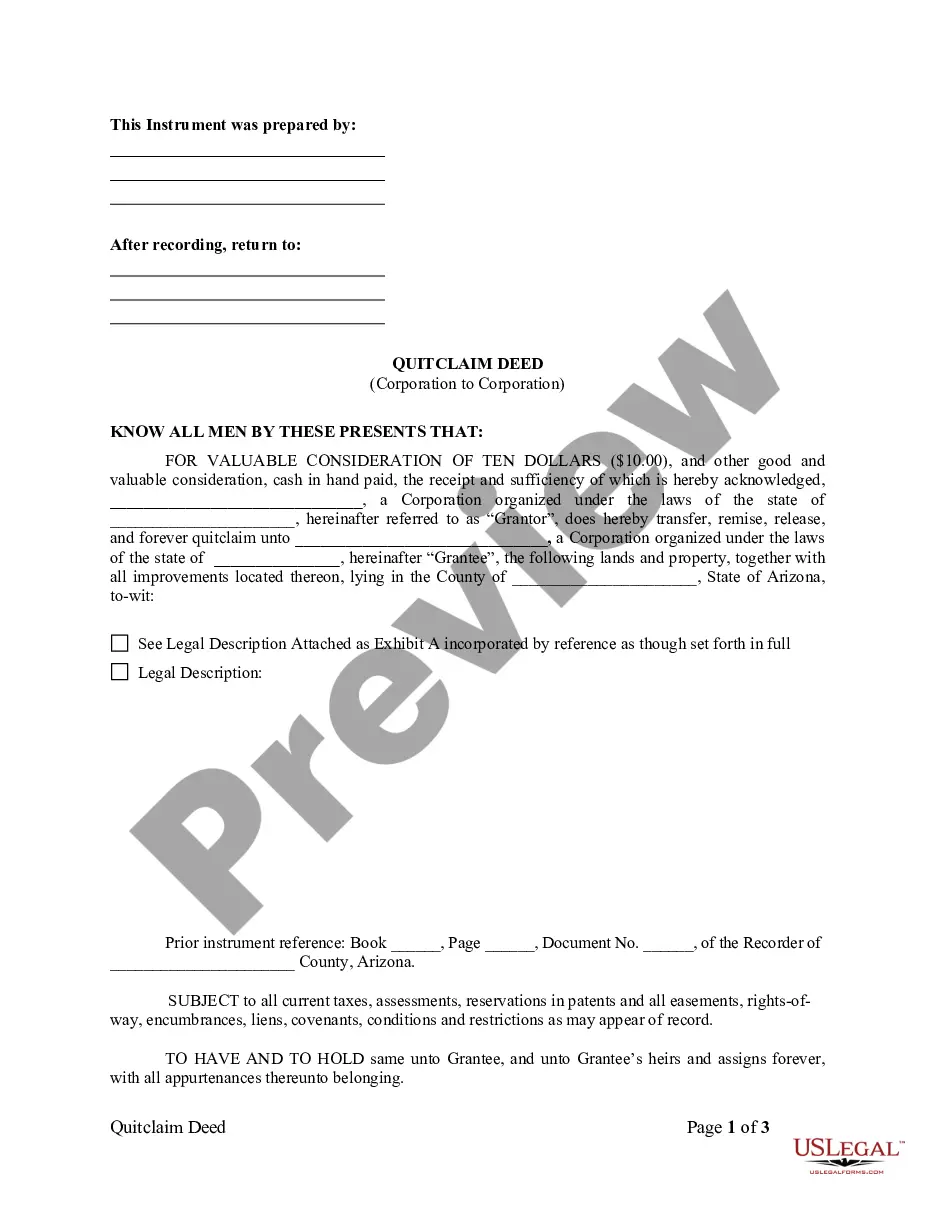

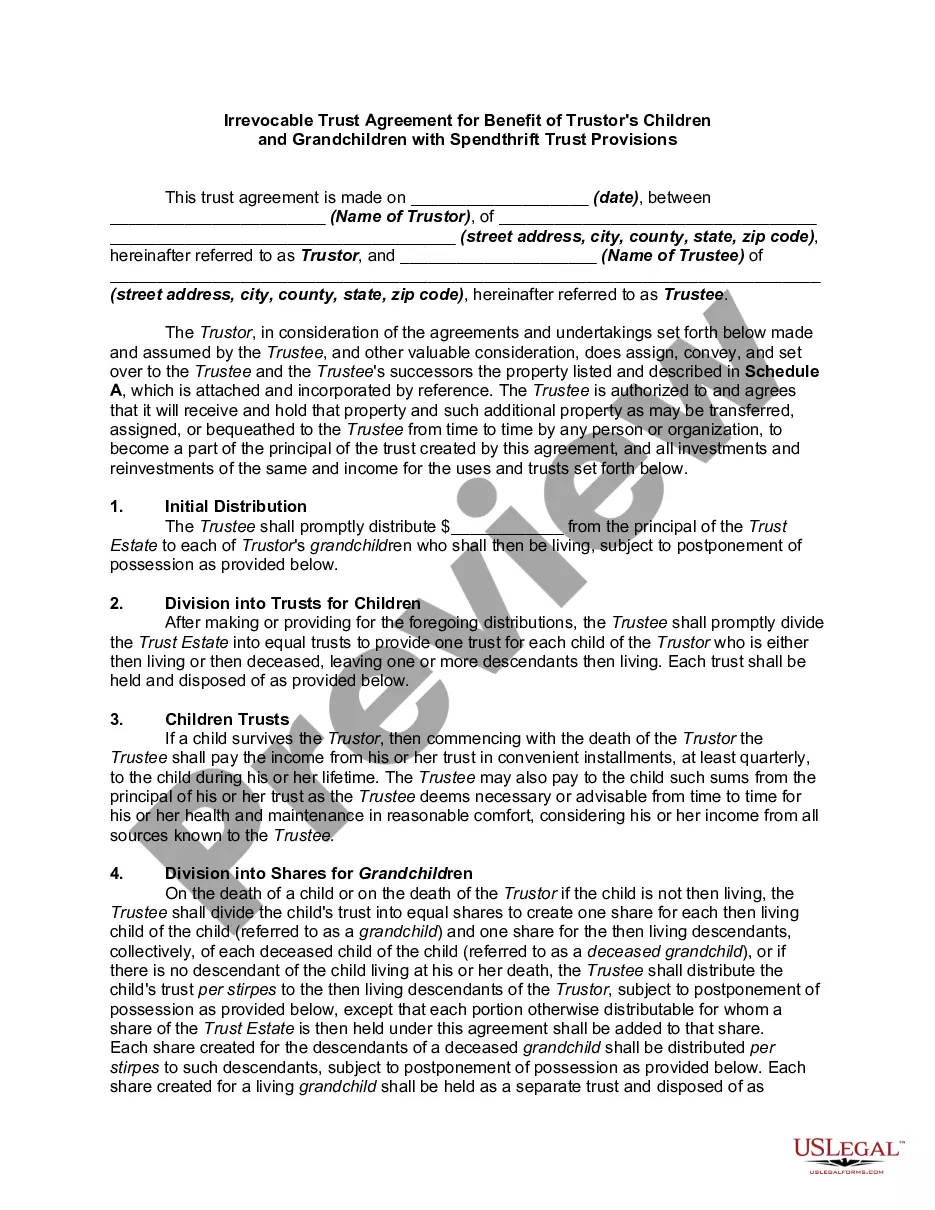
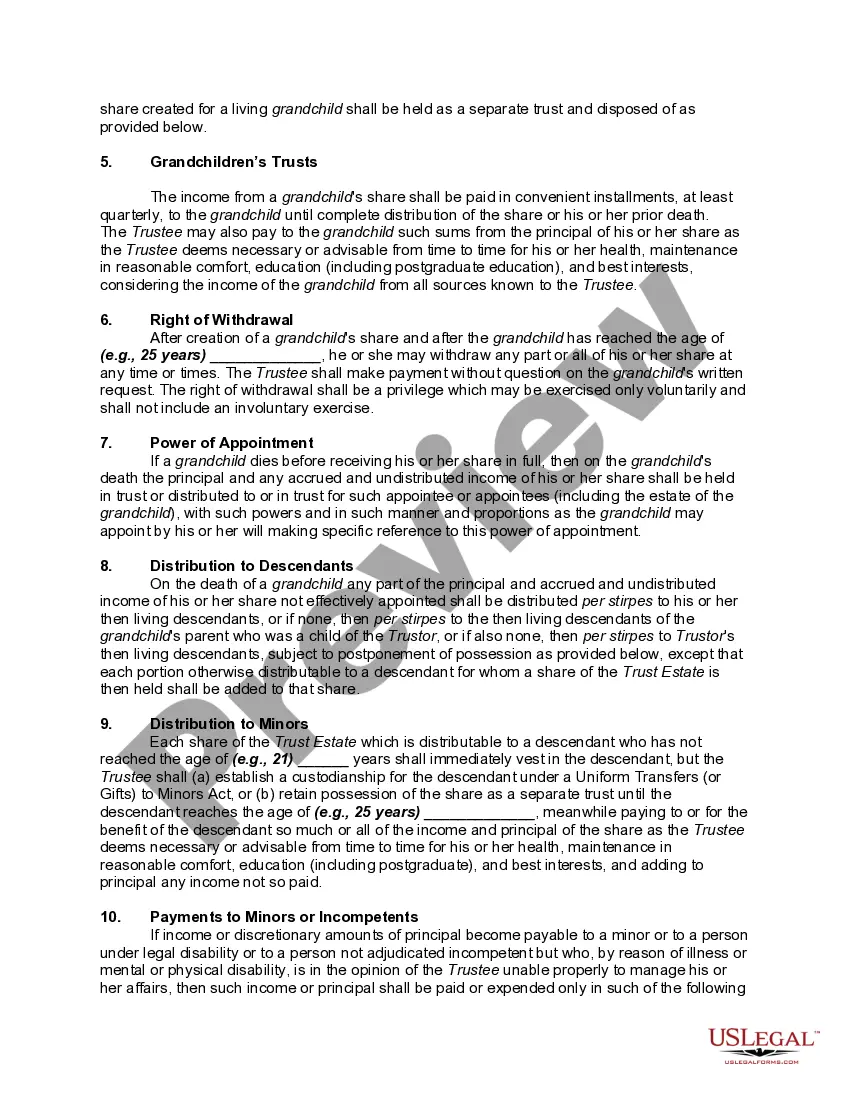
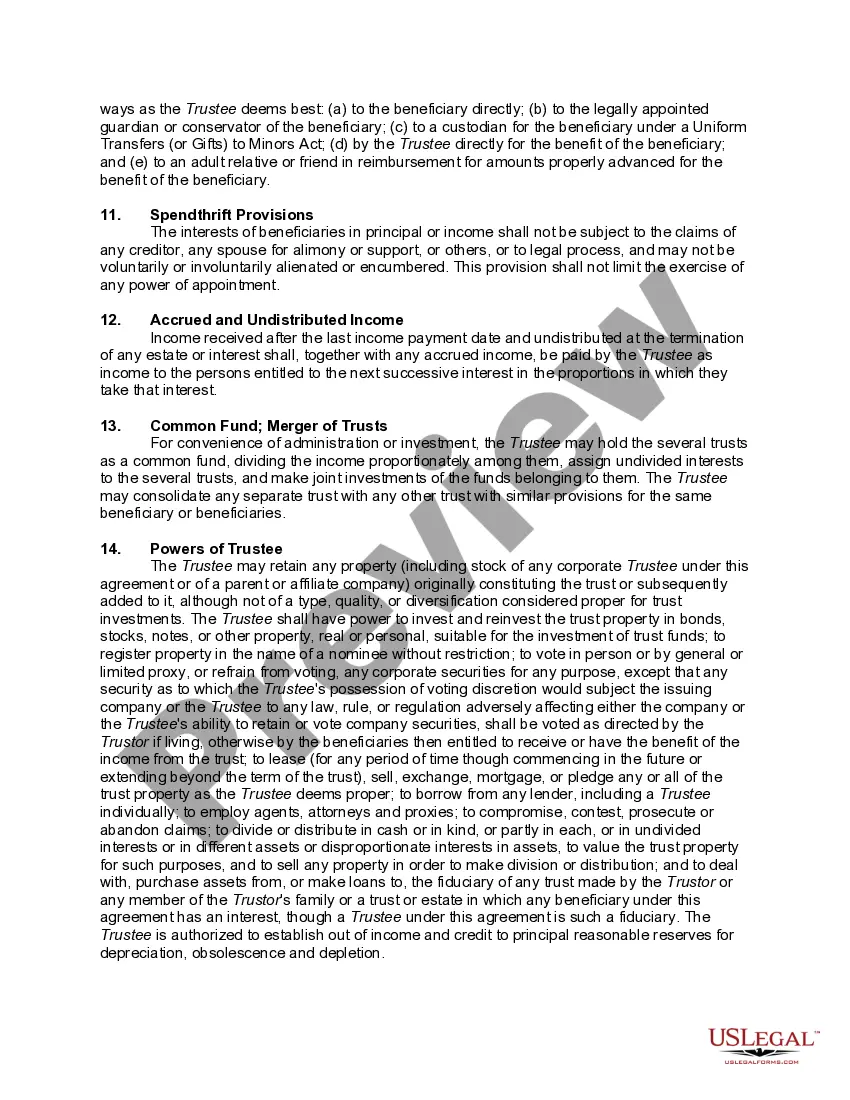
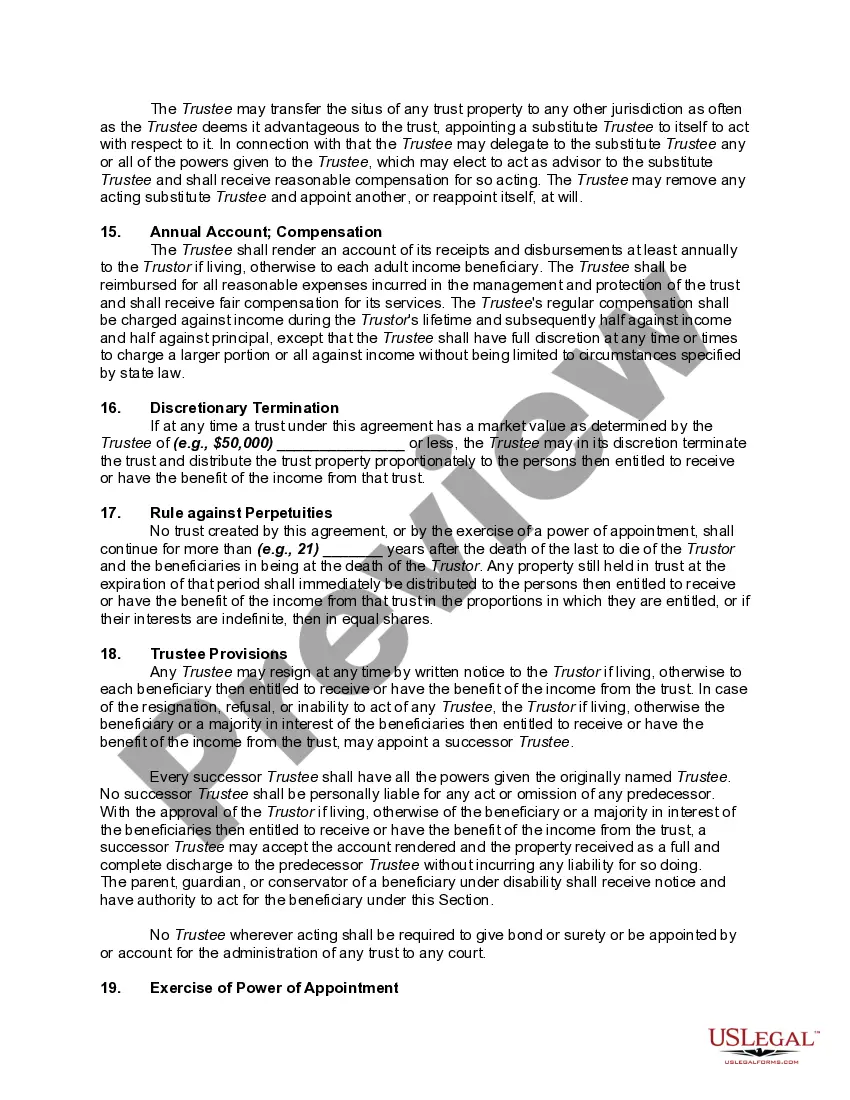
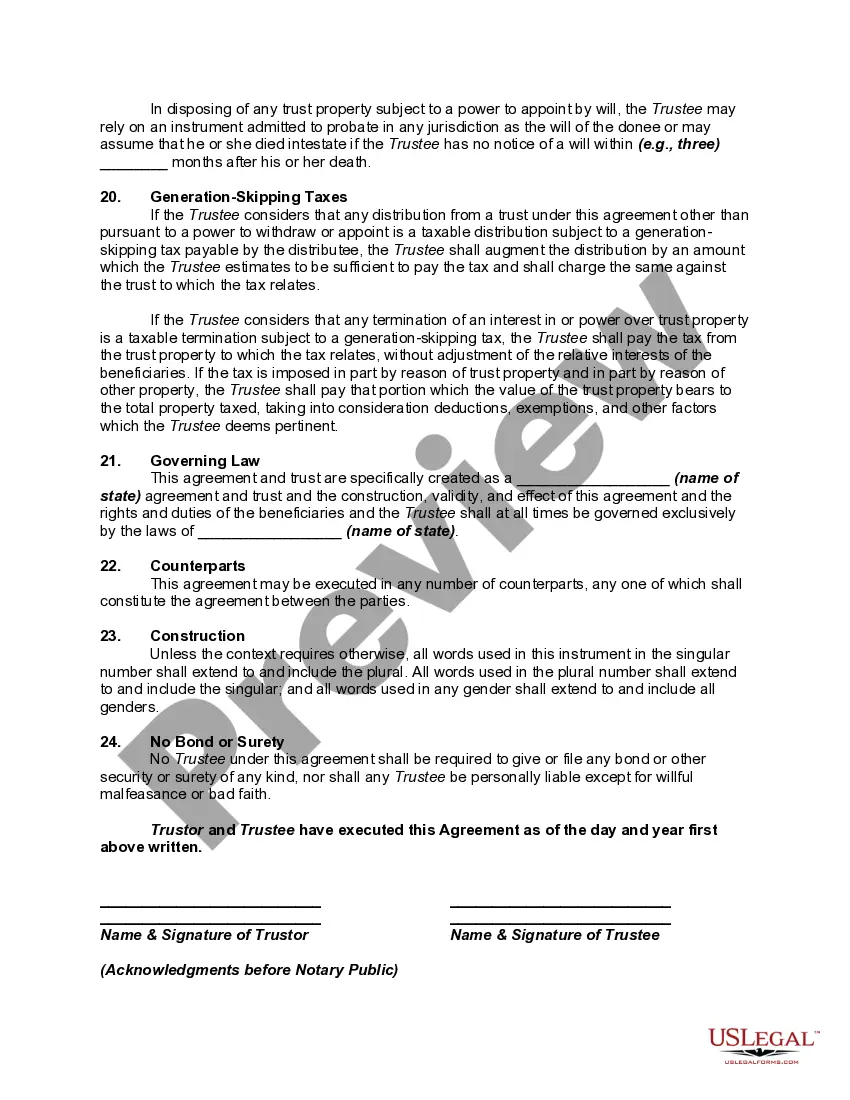
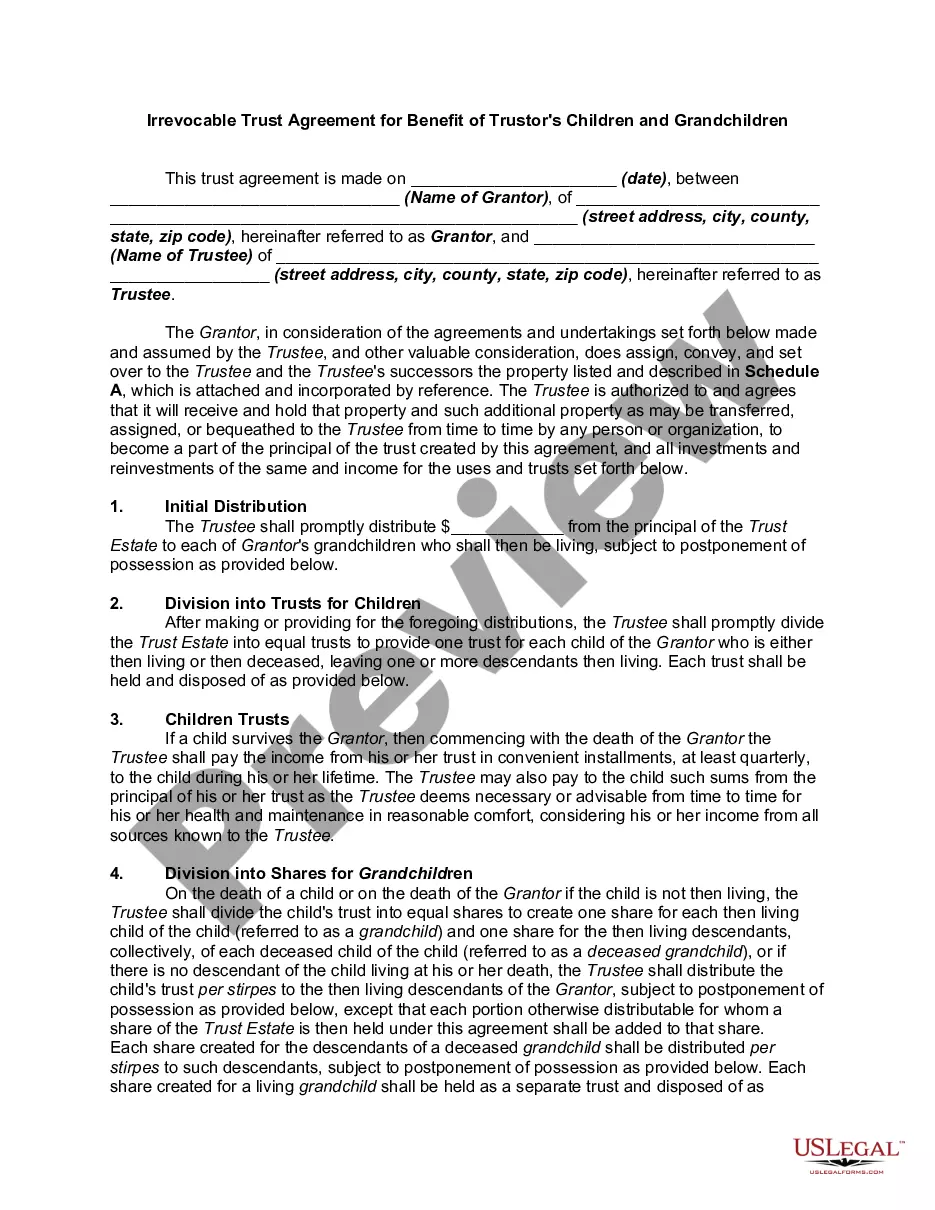
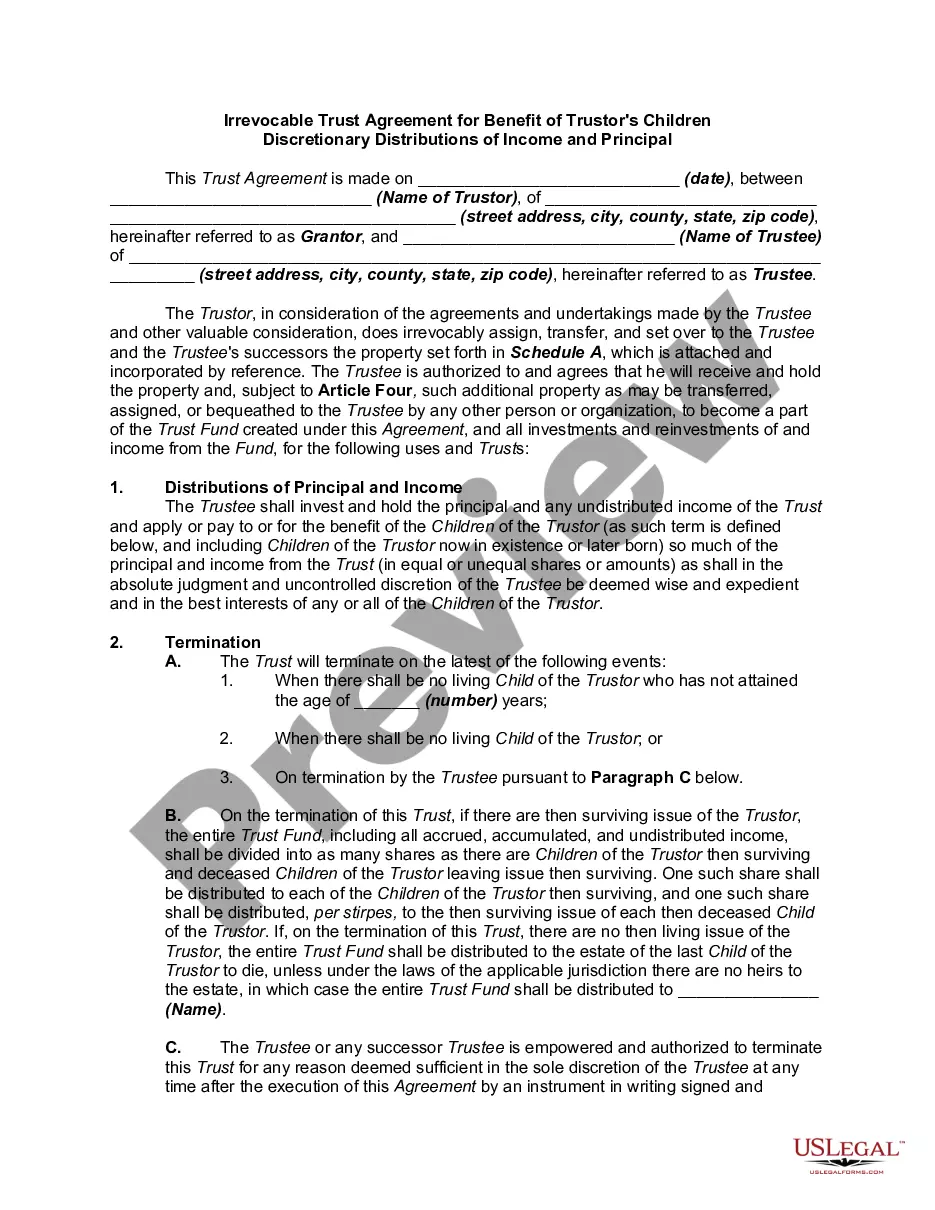
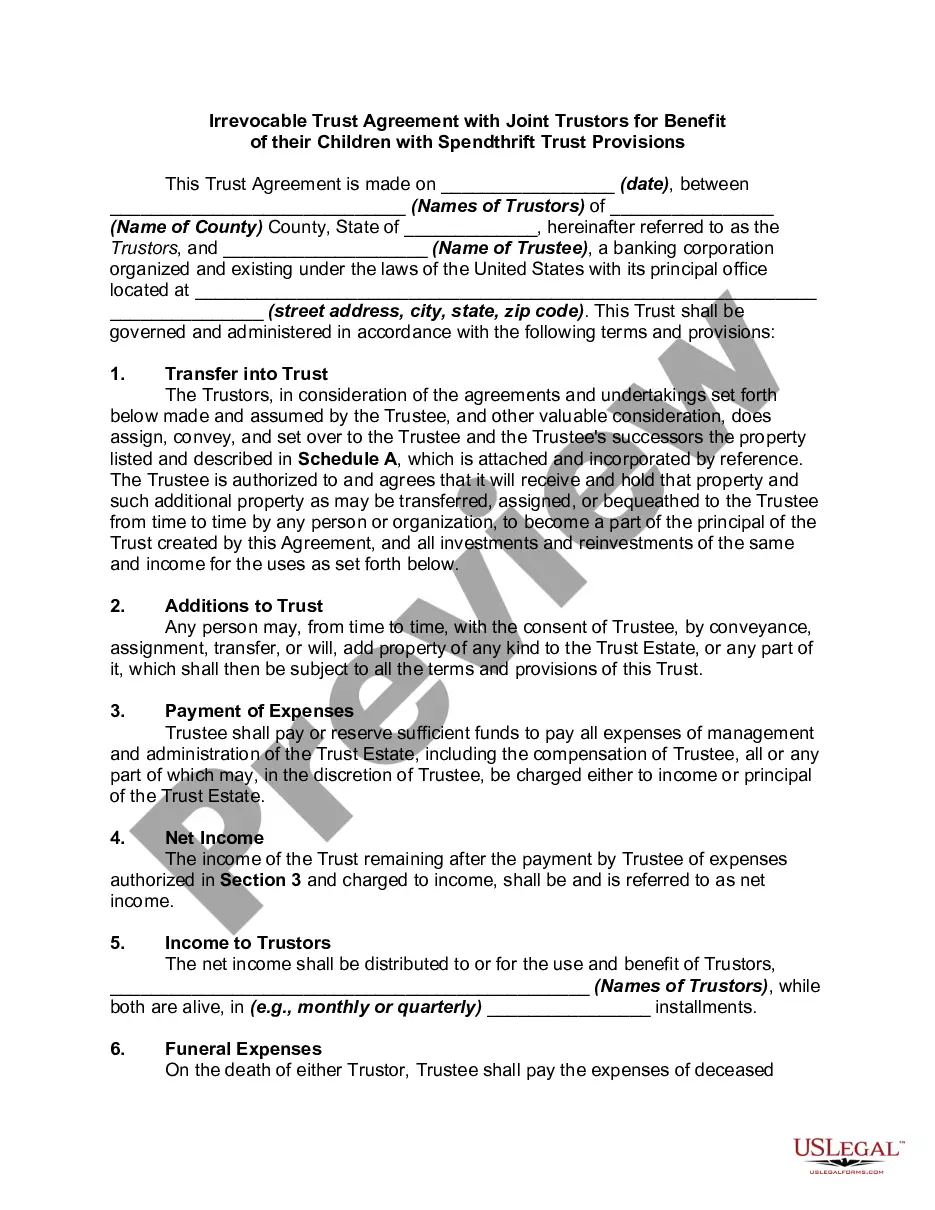
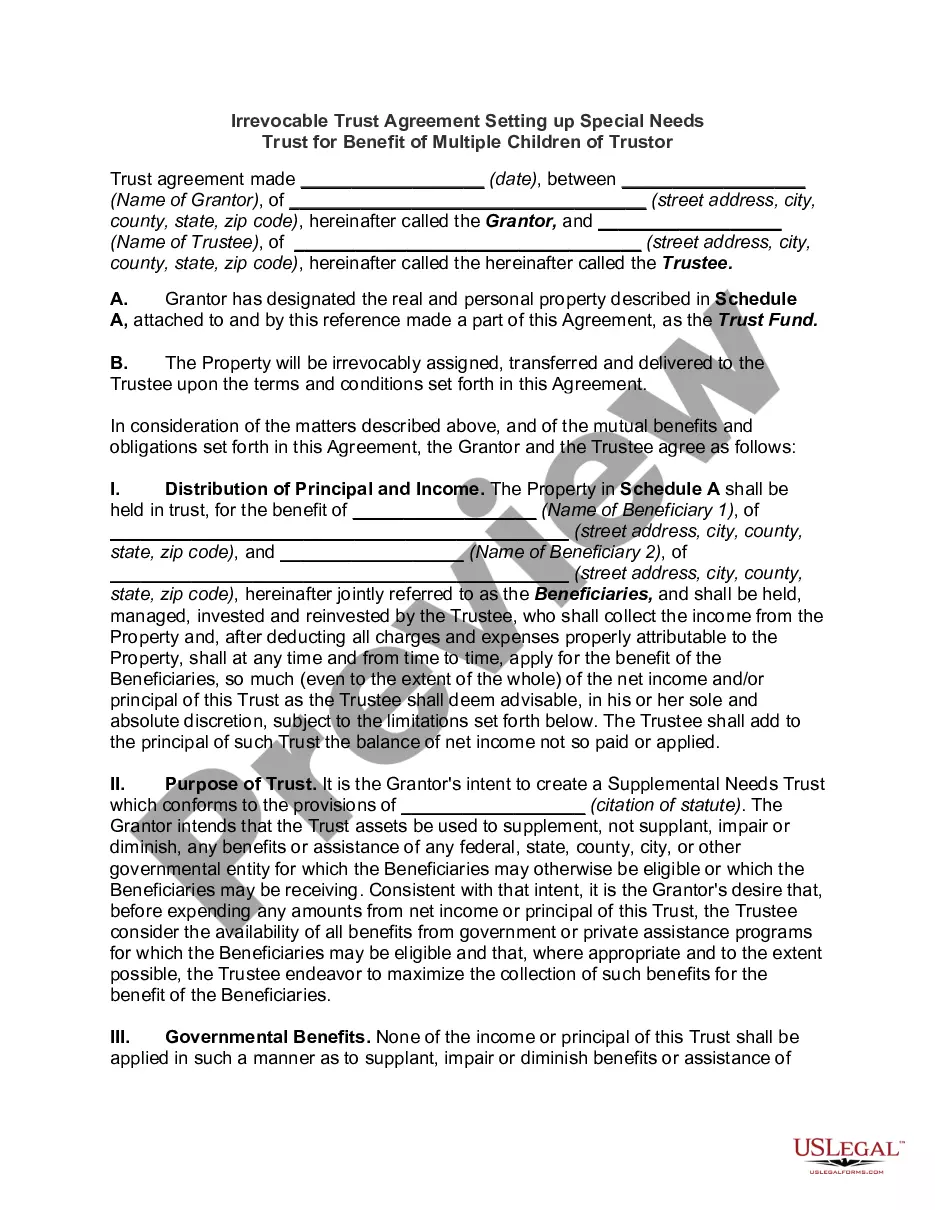
How to fill out Irrevocable Trust Agreement For Benefit Of Trustor's Children And Grandchildren With Spendthrift Trust Provisions?
The Living Trust Asset Schedule Document For Trust displayed on this page is a versatile formal template crafted by experienced attorneys in accordance with national and local laws and regulations.
For over 25 years, US Legal Forms has supplied individuals, businesses, and legal experts with more than 85,000 validated, state-specific documents for any professional and personal occasion. It’s the fastest, simplest, and most dependable method to secure the paperwork you require, as the service assures the utmost level of data protection and anti-malware security.
Register with US Legal Forms to have verified legal templates for all of life’s situations readily accessible.
- Search for the document you require and examine it.
- Browse through the sample you looked for and preview it or review the form description to confirm it matches your needs. If it doesn't, utilize the search function to find the right one. Click Buy Now once you have located the template you desire.
- Register and Log In.
- Select the pricing option that best fits you and create an account. Use PayPal or a credit card to make a swift payment. If you already possess an account, Log In and verify your subscription to continue.
- Obtain the editable template.
- Choose the format you wish for your Living Trust Asset Schedule Document For Trust (PDF, DOCX, RTF) and download the template to your device.
- Fill out and sign the document.
- Print the template to fill it out manually. Alternatively, use an online multifunctional PDF editor to quickly and accurately complete and sign your form with a legally-binding electronic signature.
- Re-download your documents.
- Use the same document again whenever necessary. Access the My documents tab in your profile to redownload any previously downloaded forms.
Form popularity
FAQ
A significant mistake parents often make is not clearly defining their intentions regarding the trust fund. This can lead to confusion and disputes among beneficiaries later on. Utilizing a living trust schedule of assets form for trust can help clarify how assets should be managed and distributed according to your wishes.
For example, a trust provision may stipulate that upon the death of the grantor, if all her children are over the age of 30, the trust assets are to be distributed equally amongst them, while if some are under the age of 30, then the trust does not terminate until the youngest reaches that age.
Assets in a living trust typically include bank accounts, real estate, personal property and investments such as stocks, bonds and cryptocurrencies.
Typically attached to an individual Revocable Living Trust is Schedule A that lists all the Trust assets. This provides a roadmap for the Successor Trustee to find the Trustor's assets held in the Trust and to begin administering the assets correctly.
Assets that should not be used to fund your living trust include: Qualified retirement accounts ? 401ks, IRAs, 403(b)s, qualified annuities. Health saving accounts (HSAs) Medical saving accounts (MSAs) Uniform Transfers to Minors (UTMAs) Uniform Gifts to Minors (UGMAs) Life insurance. Motor vehicles.