Notice Lien Owner For Unpaid Work
Description
Get your form ready online
Our built-in tools help you complete, sign, share, and store your documents in one place.
Make edits, fill in missing information, and update formatting in US Legal Forms—just like you would in MS Word.
Download a copy, print it, send it by email, or mail it via USPS—whatever works best for your next step.
Sign and collect signatures with our SignNow integration. Send to multiple recipients, set reminders, and more. Go Premium to unlock E-Sign.
If this form requires notarization, complete it online through a secure video call—no need to meet a notary in person or wait for an appointment.
We protect your documents and personal data by following strict security and privacy standards.

Make edits, fill in missing information, and update formatting in US Legal Forms—just like you would in MS Word.

Download a copy, print it, send it by email, or mail it via USPS—whatever works best for your next step.

Sign and collect signatures with our SignNow integration. Send to multiple recipients, set reminders, and more. Go Premium to unlock E-Sign.

If this form requires notarization, complete it online through a secure video call—no need to meet a notary in person or wait for an appointment.

We protect your documents and personal data by following strict security and privacy standards.
Looking for another form?


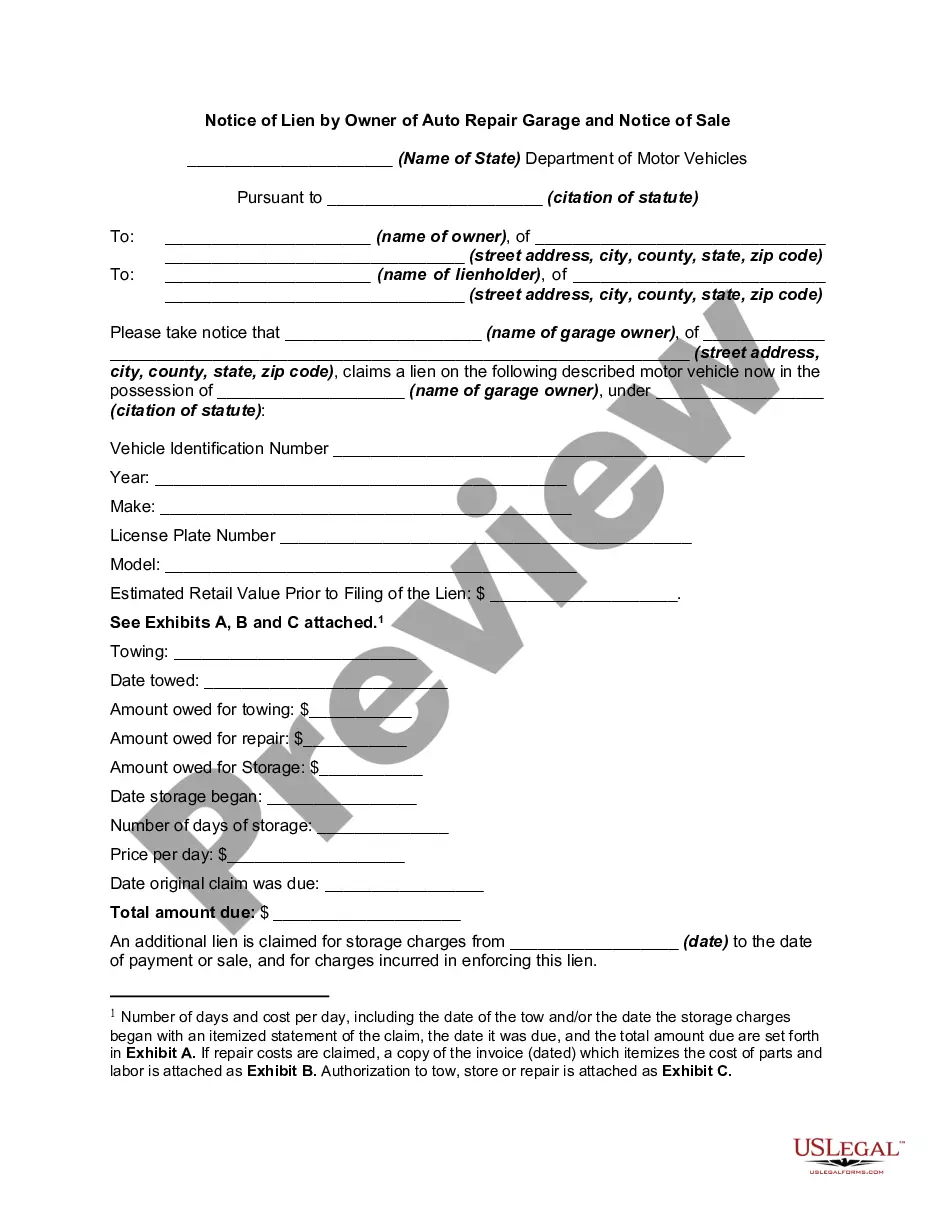
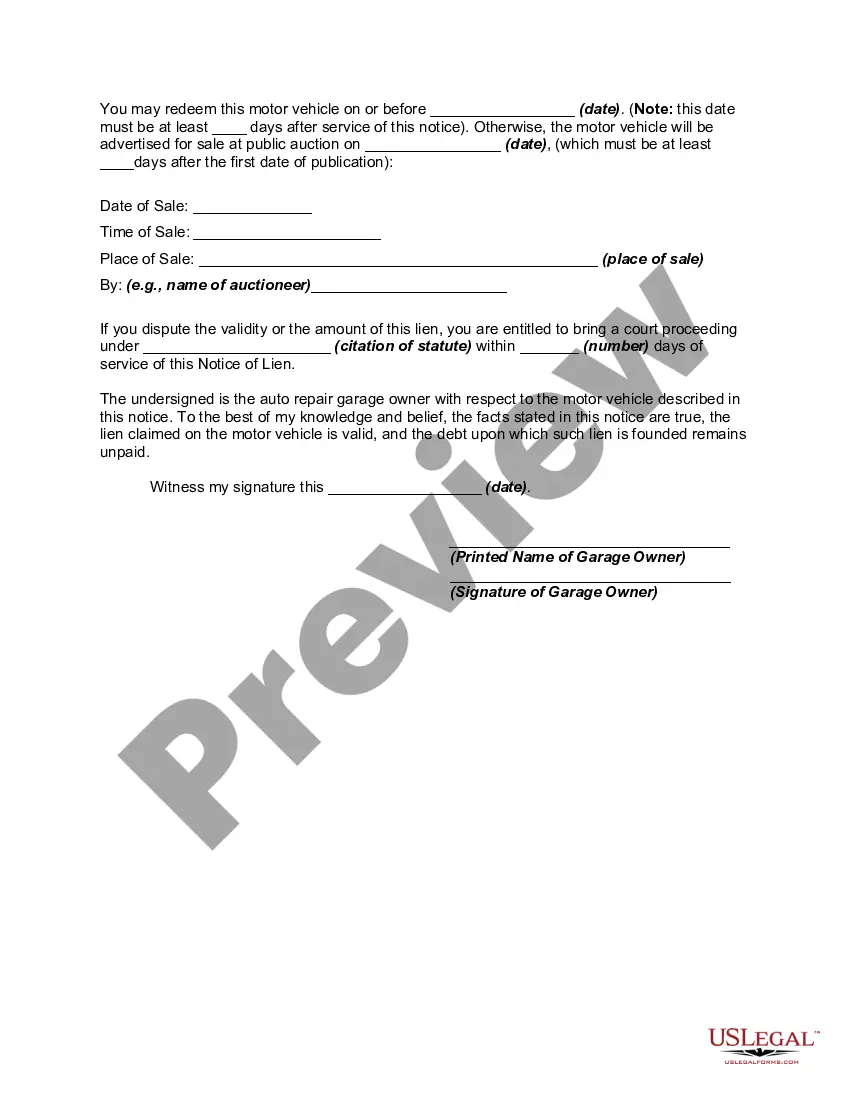
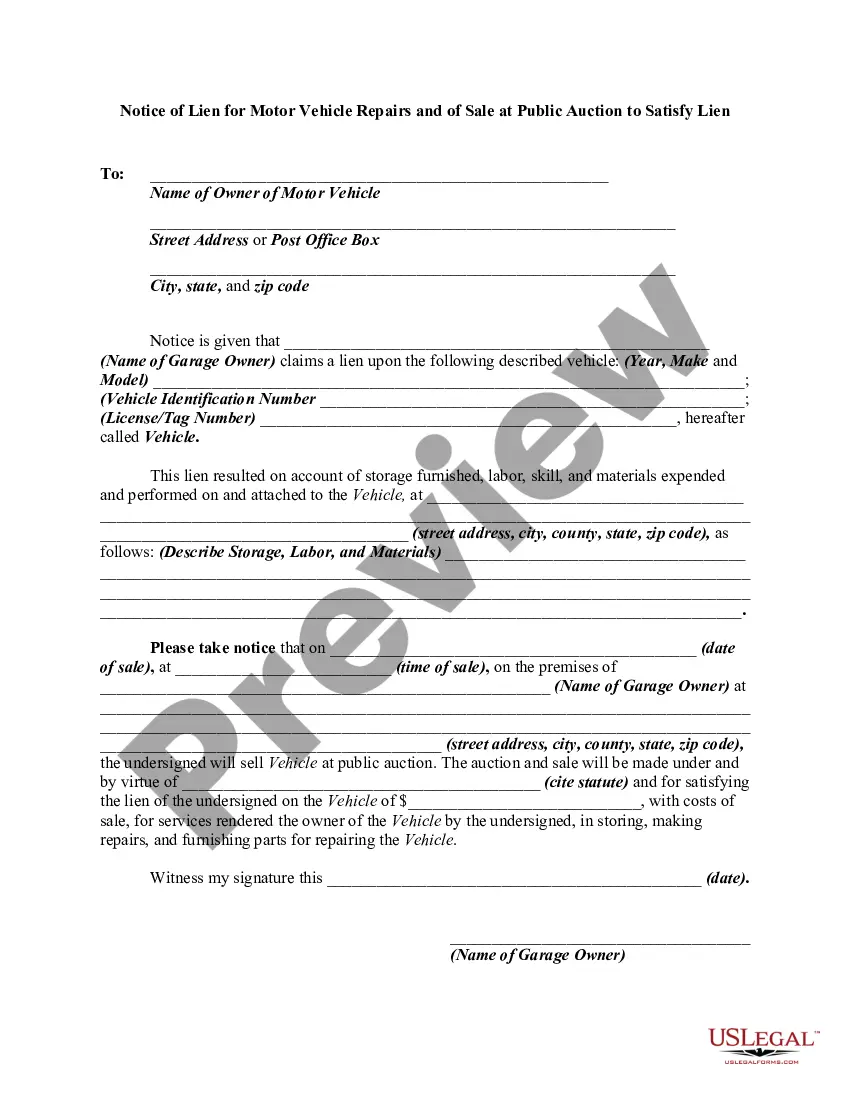
How to fill out Notice Of Lien By Owner Of Auto Or Car Repair Garage And Notice Of Sale?
- If you're a returning user, log in to your account. Ensure your subscription is active; renew it if needed.
- For first-time users, start by browsing US Legal Forms. Use the Preview mode to check form descriptions and select one that suits your local jurisdiction.
- If you encounter inconsistencies, utilize the Search tab to locate a more suitable form.
- Once you've selected the right document, click on the Buy Now button. You'll need to create an account to gain access to the full library.
- Enter your payment details, either via credit card or PayPal, to complete your purchase.
- After your transaction, download the form to your device. You can find this document anytime in the My Forms section.
Following these steps will ensure you notify the lien owner correctly while saving time and ensuring legal compliance.
Start using US Legal Forms today to handle your legal documentation needs swiftly and efficiently!
Form popularity
FAQ
When a lien is placed on you in Ohio, it becomes a matter of public record, which can impact your credit score and your ability to sell or obtain loans against your property. The lien can remain until the debt is settled, which means you may face challenges completing other transactions. Understanding this process can motivate you to take immediate action. Utilizing platforms like uslegalforms can provide you with the necessary resources to manage any notice lien owner for unpaid work effectively.
To write a letter to release a lien in Ohio, start by including the lien details such as the property address and the parties involved. Then, clearly state your intention to release the lien and provide any necessary proof of payment or agreement reached. Additionally, ensure you send this letter to the appropriate county recorder’s office. This proactive step can clear your record of any notice lien owner for unpaid work.
Yes, in Ohio, a lien can be placed on your house without your prior knowledge if a contractor or supplier follows the correct legal procedures. Typically, this involves providing you with a notice if payment is not made. To prevent such surprises, it is crucial to stay informed about any work done on your property and respond to any notices concerning unpaid work. Receiving a notice lien owner for unpaid work can be a wake-up call to address the situation.
In Ohio, a lien typically lasts for five years from the date it is filed. However, it can be renewed if the lien holder takes action to extend it before expiration. It's important to note that if you want to resolve the issue, acting promptly can help you avoid the implications of a notice lien owner for unpaid work lingering on your property for an extended period.
In Georgia, several parties can hold lien rights, including contractors, subcontractors, and suppliers who provide labor or materials for a project. Additionally, property owners can also assert rights to collect payments when work remains unpaid. It's crucial to understand these rights to navigate any disputes effectively. For detailed guidance on lien rights and procedures, you can explore resources at US Legal Forms, which can help you stay informed about your obligations and options.
Georgia's lien laws are designed to protect those who provide labor or materials for property improvements. These laws specify the process for filing a lien, including the requirements for notification and the timeline for enforcement. Understanding these regulations is vital, especially when you notice the lien owner for unpaid work. For detailed guidance, uslegalforms offers resources that can clarify these complexities.
In Georgia, a lien is generally valid for one year from the date it is filed. After this period, the lien may need to be renewed or it will eventually expire. This timeframe makes it essential to be proactive in addressing any unpaid work. If you’re facing a situation involving a lien, consulting with uslegalforms can help you understand your rights and obligations.
A notice of lien is a formal declaration that alerts a property owner about an unpaid debt related to their property. It serves as a warning that failure to settle the debt may result in legal claims against the property. The purpose of this notice is to protect the interests of those who provided services or materials, allowing them to notice the lien owner for unpaid work. Properly managing these notices is crucial for maintaining good relationships.
A lien typically requires prior notice to be enforceable. Most states, including Georgia, require that a property owner be informed of the claim before a lien can be attached to their property. This process ensures transparency and allows the property owner an opportunity to resolve unpaid work. If you need help navigating this process, uslegalforms can assist you in sending proper notices.
Yes, it is possible for someone to place a lien on your house without your immediate knowledge. A lien can be filed through the court system, and you may not receive personal notification. However, you have the right to receive notice once the lien is recorded, allowing you the opportunity to contest it. Understanding the process is crucial so you can notice the lien owner for unpaid work.