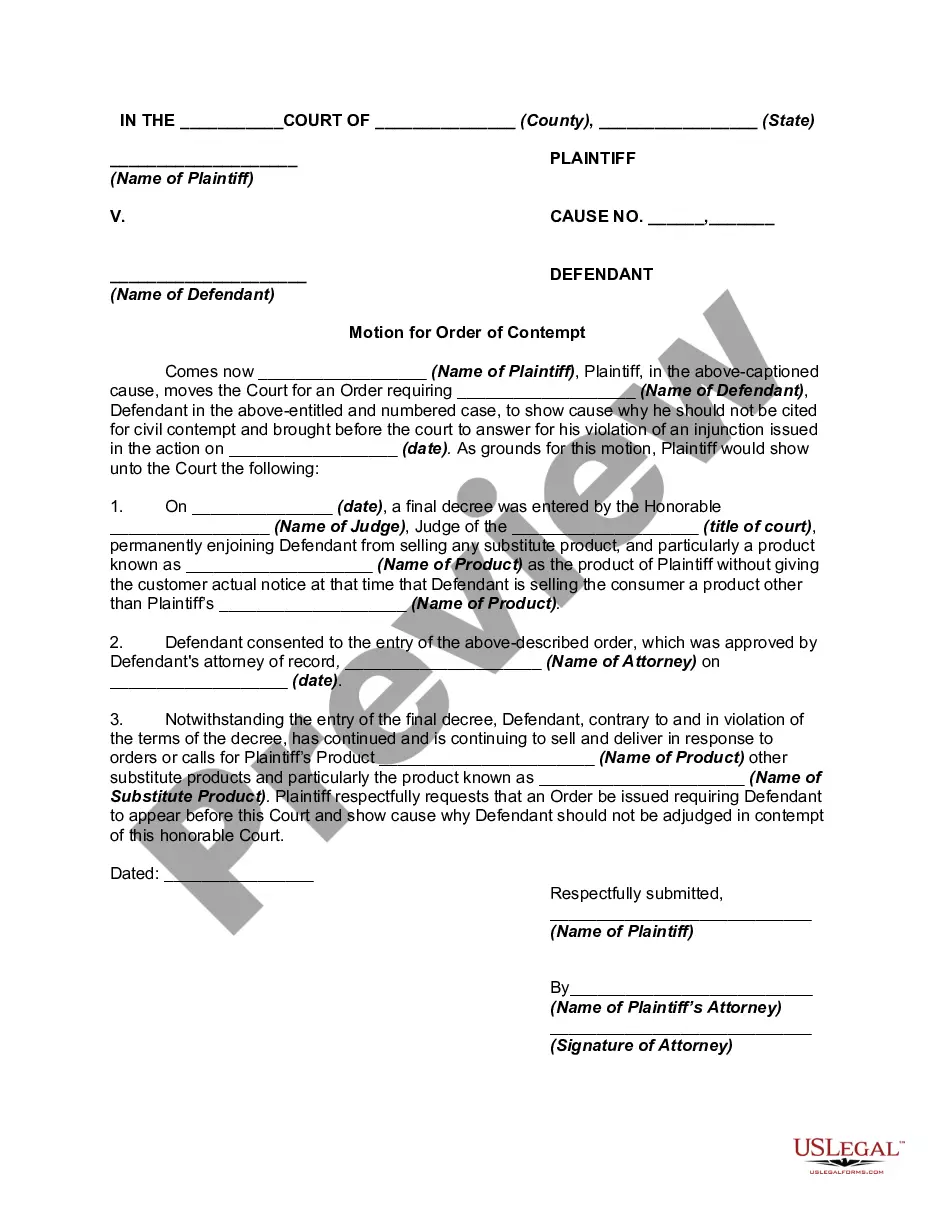
Motion For Contempt Of Court Order Form
Description

Get your form ready online
Our built-in tools help you complete, sign, share, and store your documents in one place.
Make edits, fill in missing information, and update formatting in US Legal Forms—just like you would in MS Word.
Download a copy, print it, send it by email, or mail it via USPS—whatever works best for your next step.
Sign and collect signatures with our SignNow integration. Send to multiple recipients, set reminders, and more. Go Premium to unlock E-Sign.
If this form requires notarization, complete it online through a secure video call—no need to meet a notary in person or wait for an appointment.
We protect your documents and personal data by following strict security and privacy standards.

Make edits, fill in missing information, and update formatting in US Legal Forms—just like you would in MS Word.

Download a copy, print it, send it by email, or mail it via USPS—whatever works best for your next step.

Sign and collect signatures with our SignNow integration. Send to multiple recipients, set reminders, and more. Go Premium to unlock E-Sign.

If this form requires notarization, complete it online through a secure video call—no need to meet a notary in person or wait for an appointment.

We protect your documents and personal data by following strict security and privacy standards.
Looking for another form?
Form popularity
FAQ
In Connecticut, a judge generally has 120 days to rule on a motion after the hearing concludes. Timely decisions are important for maintaining the efficiency of the court system. If you find yourself needing to follow up, ensure you document everything and refer to the Motion for contempt of court order form for clarity. Staying informed about the timeline can help manage your expectations.
Being placed in contempt means that a person has failed to comply with a court order. This can occur in various legal situations, including family law and civil cases. The consequences can include fines, changes in custody arrangements, or even jail time. Understanding your rights and options is crucial, and utilizing a Motion for contempt of court order form can help you respond appropriately.
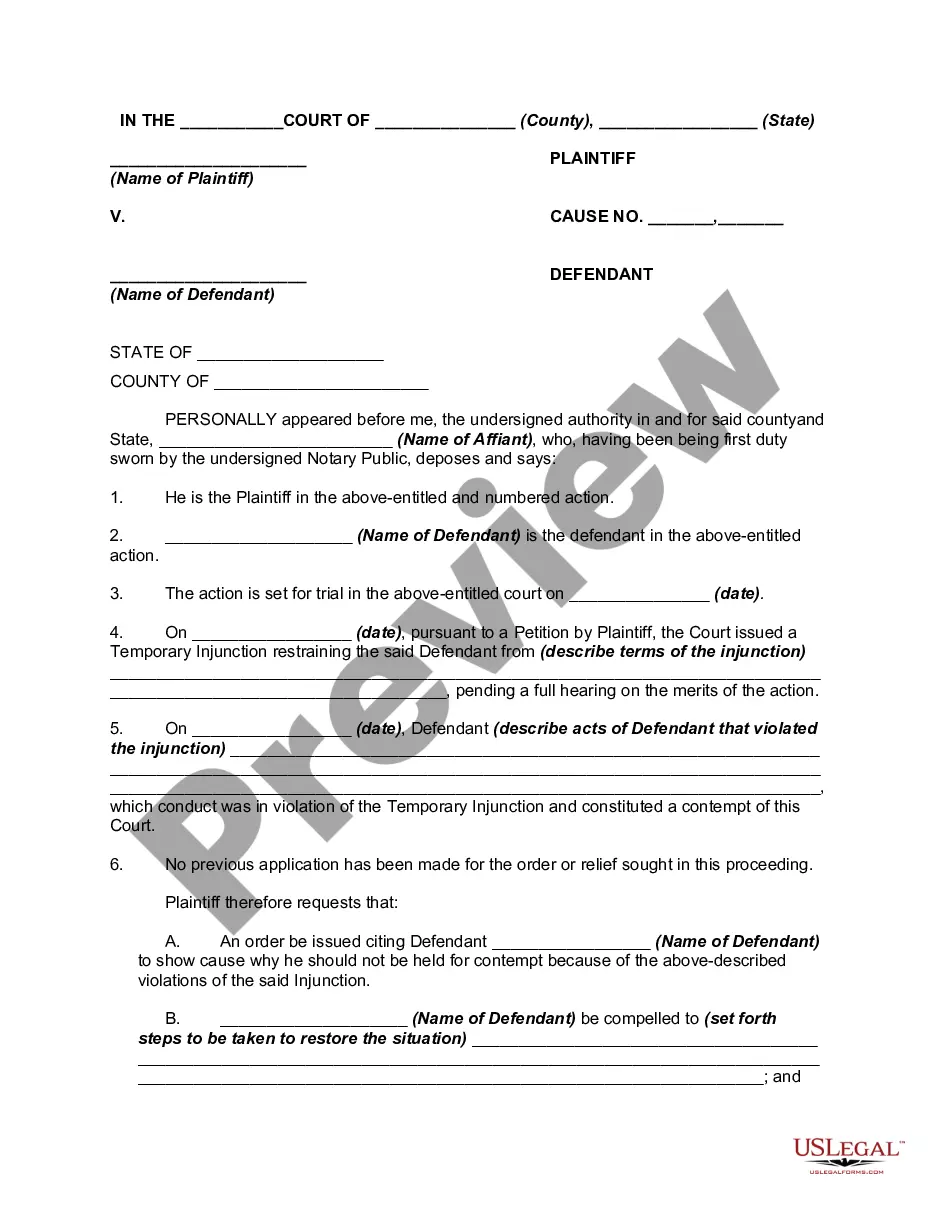
The best defense for contempt of court often involves demonstrating that you did not willfully disobey the court order. You may show that you could not comply with the order due to circumstances beyond your control. Using a Motion for contempt of court order form can help present your case effectively to the court. It's essential to gather evidence and support your claims during this process.
A form of contempt occurs when someone disobeys or shows disrespect for a court order. In this context, a motion for contempt of court order form is used to request the court to enforce its previous ruling. This form helps you outline the specifics of the disobedience and seek corrective action. Understanding this process can empower you to uphold your legal rights effectively.
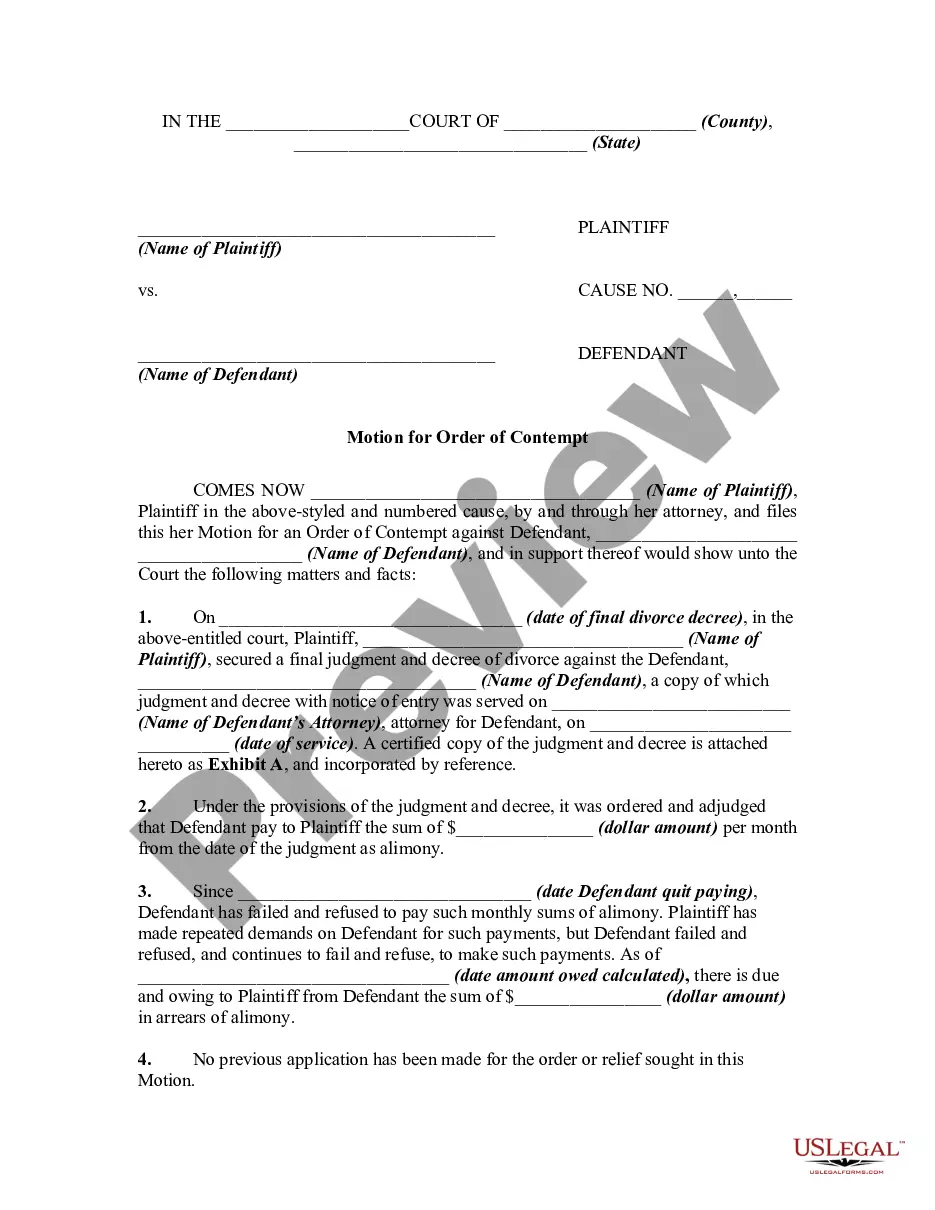
When you violate a court order in California, the other party may file a motion for contempt, using the motion for contempt of court order form. If found in contempt, you may face various penalties, including fines or imprisonment. Additionally, the court may require you to comply with the original order. Understanding the seriousness of such violations can help prevent legal troubles.
In California, the penalty for contempt can vary significantly based on the severity of the violation. Possible consequences include fines, jail time, or both. The court may also order compliance with the original court order, which is crucial when utilizing the motion for contempt of court order form. It is essential to take contempt charges seriously, as they can have lasting impacts on your legal obligations.
In Connecticut, filing a motion for contempt involves completing the motion for contempt of court order form specific to Connecticut's court system. Gather evidence that supports your claim of the other party's noncompliance with a court order. Submit your completed form to the court, and ensure you serve the other party with the notice. You may also consult a legal professional to navigate the process effectively.
The FL 300 form is a Request for Order form used in family law cases in California. It allows individuals to request specific court orders, including motions for contempt. When using the motion for contempt of court order form, you may attach the FL 300 to specify the details surrounding the contempt issue. This form is crucial for ensuring that the court understands your request clearly.
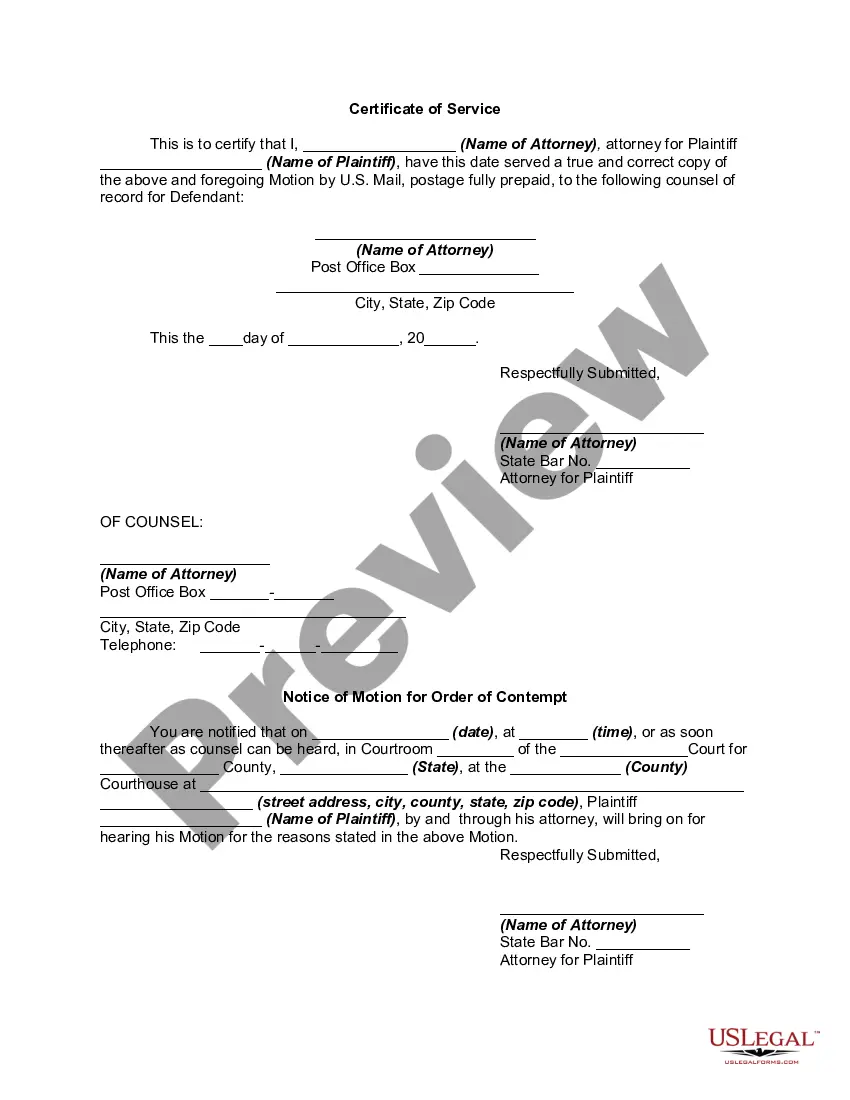
To file a motion for contempt in California, you must complete the motion for contempt of court order form, along with supporting documents that explain how the other party disobeyed the court order. Ensure that you provide specific details about the order that was violated. Once completed, submit the form to the court where the original order was issued. You will also need to schedule a hearing and serve the other party with your motion.
