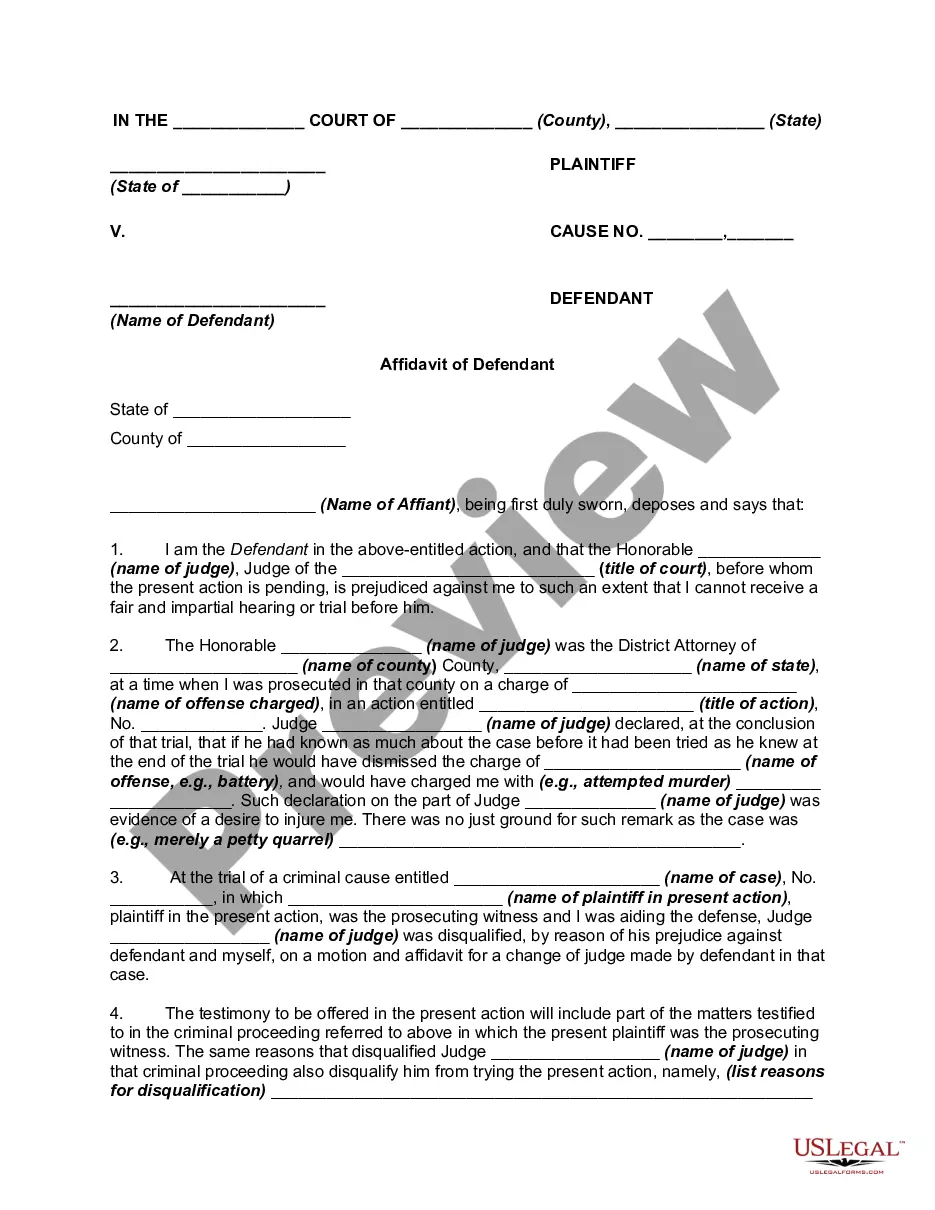
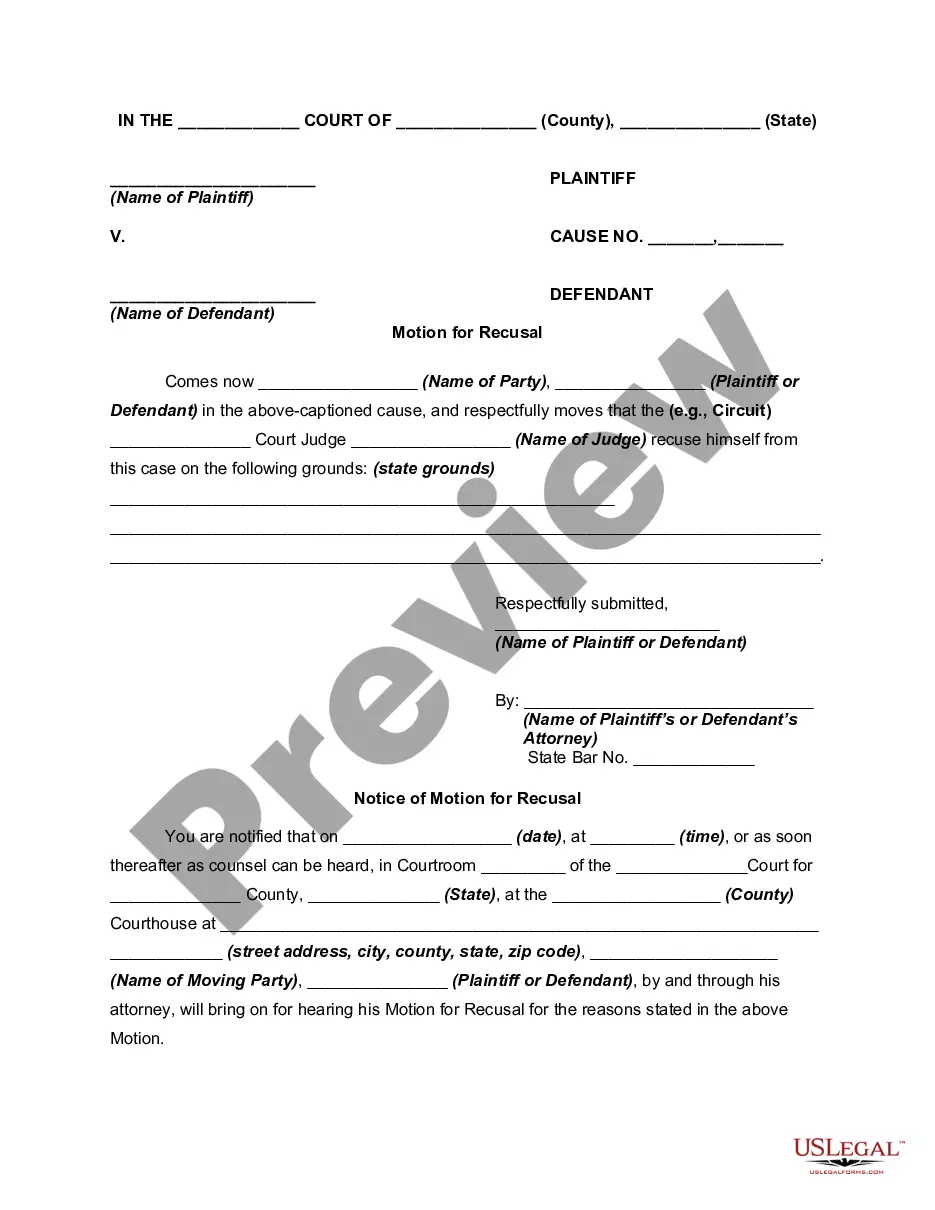
Sample Motion Disqualify Judge For Defendant
Description
Get your form ready online
Our built-in tools help you complete, sign, share, and store your documents in one place.
Make edits, fill in missing information, and update formatting in US Legal Forms—just like you would in MS Word.
Download a copy, print it, send it by email, or mail it via USPS—whatever works best for your next step.
Sign and collect signatures with our SignNow integration. Send to multiple recipients, set reminders, and more. Go Premium to unlock E-Sign.
If this form requires notarization, complete it online through a secure video call—no need to meet a notary in person or wait for an appointment.
We protect your documents and personal data by following strict security and privacy standards.

Make edits, fill in missing information, and update formatting in US Legal Forms—just like you would in MS Word.

Download a copy, print it, send it by email, or mail it via USPS—whatever works best for your next step.

Sign and collect signatures with our SignNow integration. Send to multiple recipients, set reminders, and more. Go Premium to unlock E-Sign.

If this form requires notarization, complete it online through a secure video call—no need to meet a notary in person or wait for an appointment.

We protect your documents and personal data by following strict security and privacy standards.
Looking for another form?








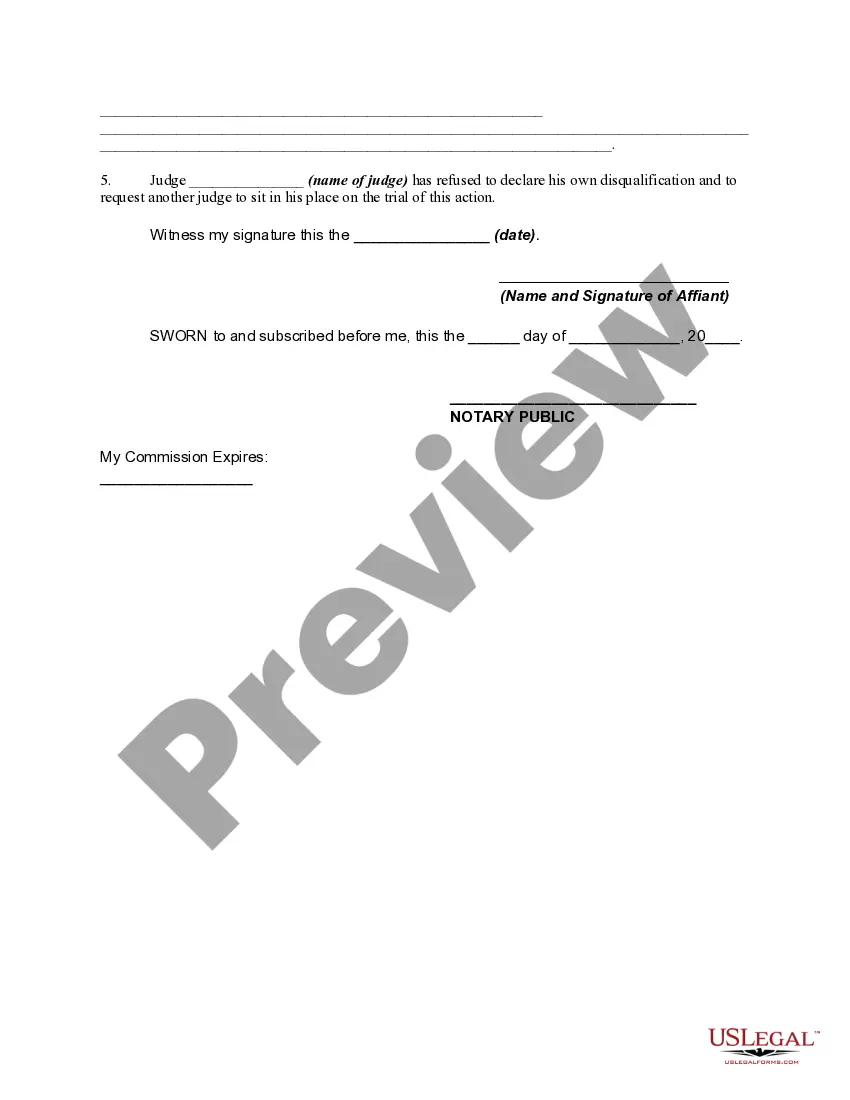
How to fill out Affidavit To Disqualify Or Recuse Judge For Prejudice - Recusal Or Removal?
Whether for professional reasons or personal matters, everyone must confront legal circumstances at some stage in their lives. Completing legal paperwork necessitates meticulous attention, starting with choosing the correct form template. For instance, if you select an incorrect iteration of the Sample Motion Disqualify Judge For Defendant, it will be rejected upon submission.
Therefore, it's essential to acquire a trustworthy source of legal documents such as US Legal Forms.
With an extensive US Legal Forms catalog available, you don't have to waste time searching for the suitable sample online. Use the library’s straightforward navigation to discover the right form for any circumstance.
- Locate the sample you require by using the search bar or exploring the catalog.
- Review the form’s details to ensure it aligns with your case, state, and county.
- Click on the form’s preview to examine it.
- If it is the wrong form, return to the search function to locate the Sample Motion Disqualify Judge For Defendant template you need.
- Obtain the template when it suits your requirements.
- If you already possess a US Legal Forms account, click Log in to access previously saved documents in My documents.
- If you do not yet have an account, you may access the form by clicking Buy now.
- Choose the appropriate pricing option.
- Fill out the account registration form.
- Select your payment method: utilize a credit card or PayPal account.
- Determine the document format you prefer and download the Sample Motion Disqualify Judge For Defendant.
- Once downloaded, you can complete the form using editing software or print it and fill it out manually.
Form popularity
FAQ
To write a motion to disqualify, start with an outline that includes the title, introduction, and body that presents your legal arguments. Make sure to thoroughly detail any grounds for disqualification with supporting facts. By utilizing resources, such as uslegalforms, you can access templates for a sample motion disqualify judge for defendant, ensuring your filing is precise and persuasive.
A 170.1 motion refers to the California Code of Civil Procedure concerning disqualifying judges based on specific conflicts of interest or biases. This legal mechanism ensures fairness in judicial proceedings. Defendants in California may find it beneficial to look for a sample motion disqualify judge for defendant tailored to these standards.
A motion to disqualify requests that a judge be removed from a case due to bias or conflicts of interest. This legal filing must clearly articulate the reasons for the disqualification and often includes affidavits or documentary evidence. For defendants, utilizing a sample motion disqualify judge can streamline this process.
Reasons to disqualify a judge often include conflicts of interest, bias, or potential prejudice. If a judge has a relationship with a party or significant financial interests in the outcome, these can serve as valid reasons. A well-prepared sample motion disqualify judge for defendant will effectively outline these concerns.
An example of disqualification might include a judge having a personal relationship with one of the parties involved in a case. Such a relationship can lead to perceived bias, justifying a motion to disqualify. For defendants, understanding these nuances is crucial when preparing a sample motion to disqualify judge.
When writing a disengagement letter to your lawyer, clearly state your intention to terminate the attorney-client relationship. Include pertinent details such as your case number and any pending issues. Mention any outstanding matters regarding a motion to disqualify and request a final accounting before concluding your representation.
To write a letter of reconsideration, start by addressing the judge respectfully and state the case number. Clearly explain the grounds for your request, highlighting any new evidence or overlooked facts that warrant reconsideration. Conclude by politely asking the judge to review the motion for disqualifying the judge, if applicable.
Writing a motion involves clearly articulating your request to the court. You should begin with the title and caption, followed by your introduction, statement of facts, argument, and a conclusion. For a sample motion disqualify judge for defendant, be sure to include specific reasons for the disqualification and supporting evidence.
Writing a motion letter to a judge involves clearly stating your request and the reasons behind it. Begin by addressing the judge properly, followed by a concise introduction of your case. It is important to outline the specific reasons for your motion, providing relevant facts and legal references. To streamline the process, you can refer to a sample motion disqualify judge for defendant available on US Legal Forms, which offers templates and guidance to ensure your letter meets court requirements.
A motion to disqualify a judge is a formal request made by a party involved in a legal case, asking the court to remove the judge from presiding over the case. This motion typically arises when a party believes that the judge may have a bias or conflict of interest that could influence the outcome. To support your case, you may need to present evidence or reasoning that clearly illustrates the grounds for disqualification. If you're looking for resources, consider using a sample motion to disqualify a judge for defendant from the US Legal Forms platform to guide your writing.