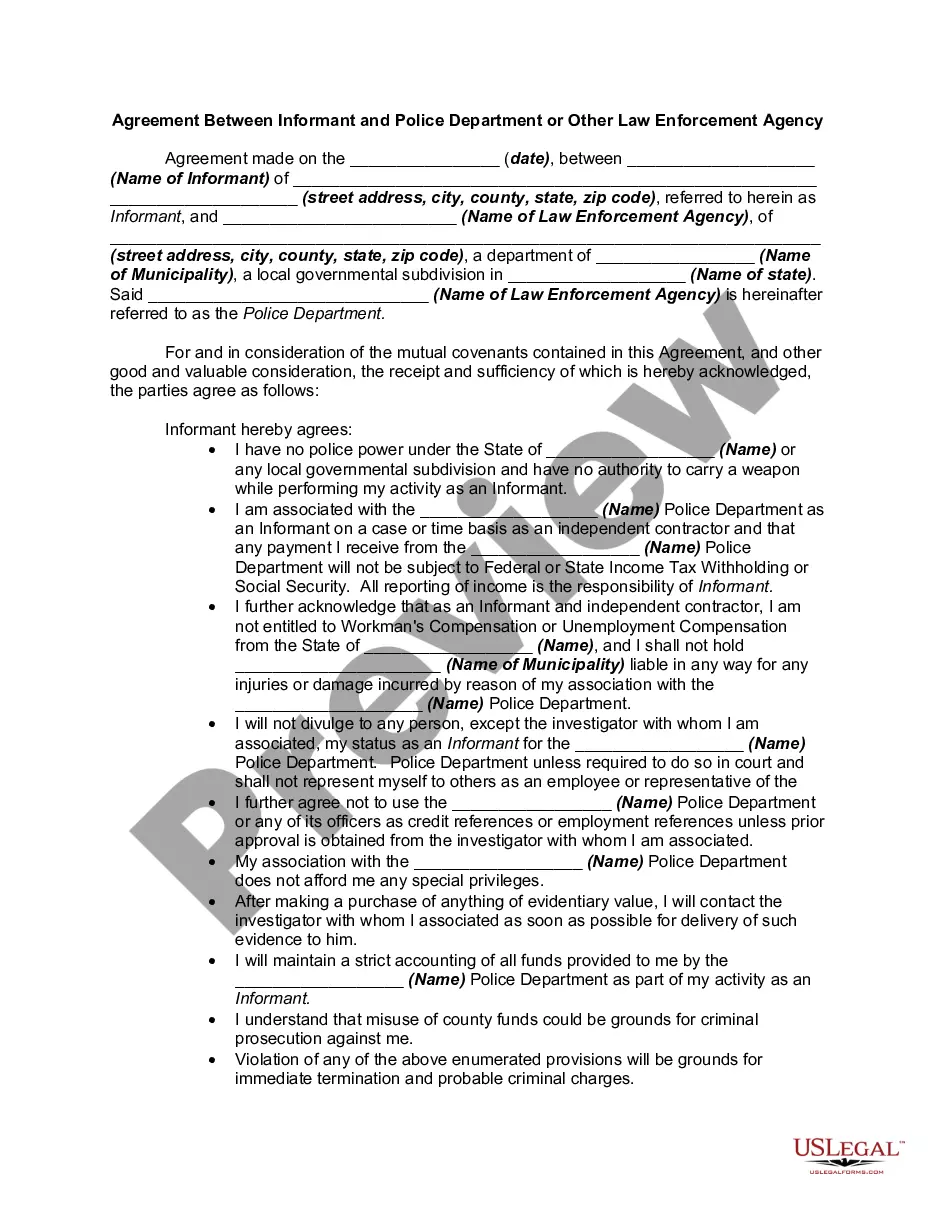
Confidential Informant In A Sentence
Description
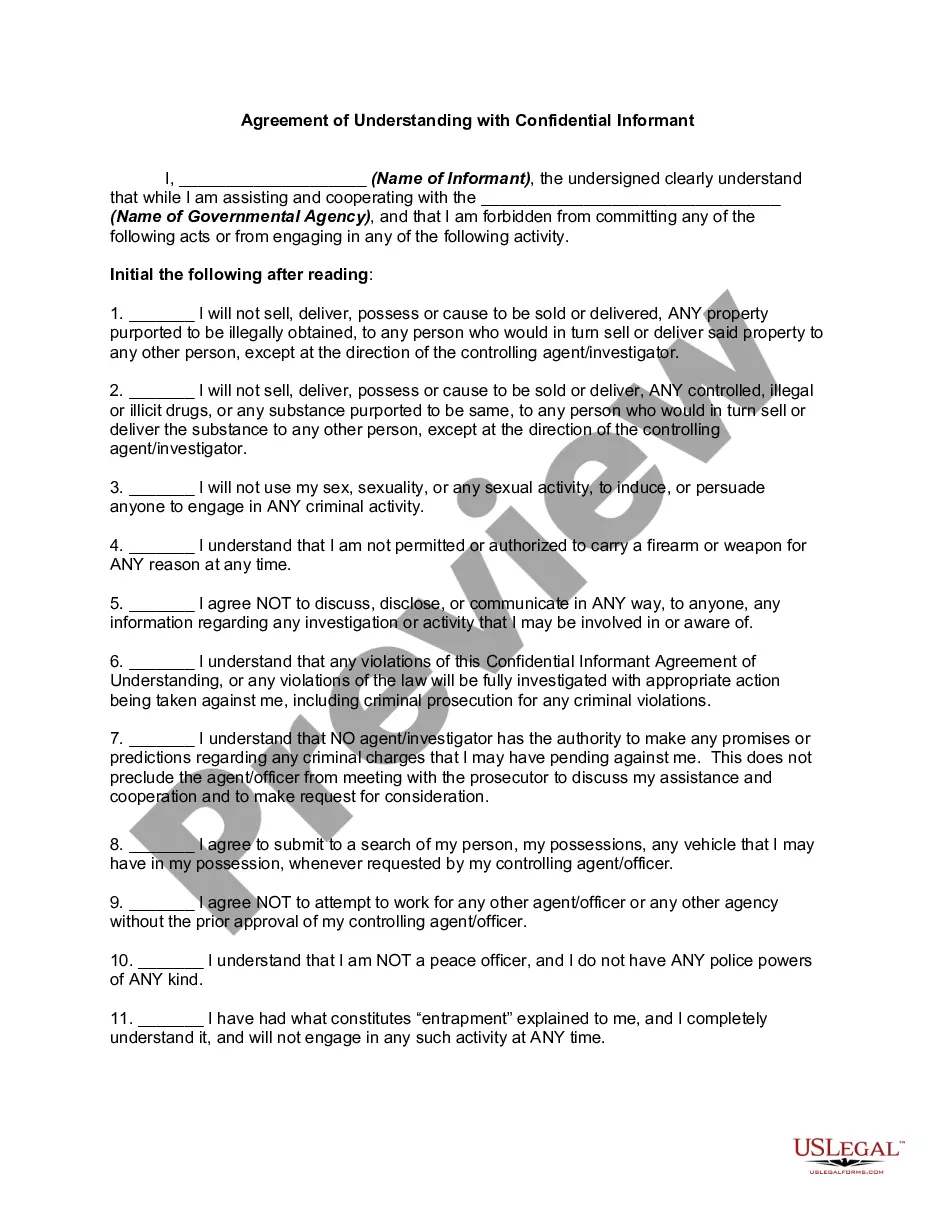
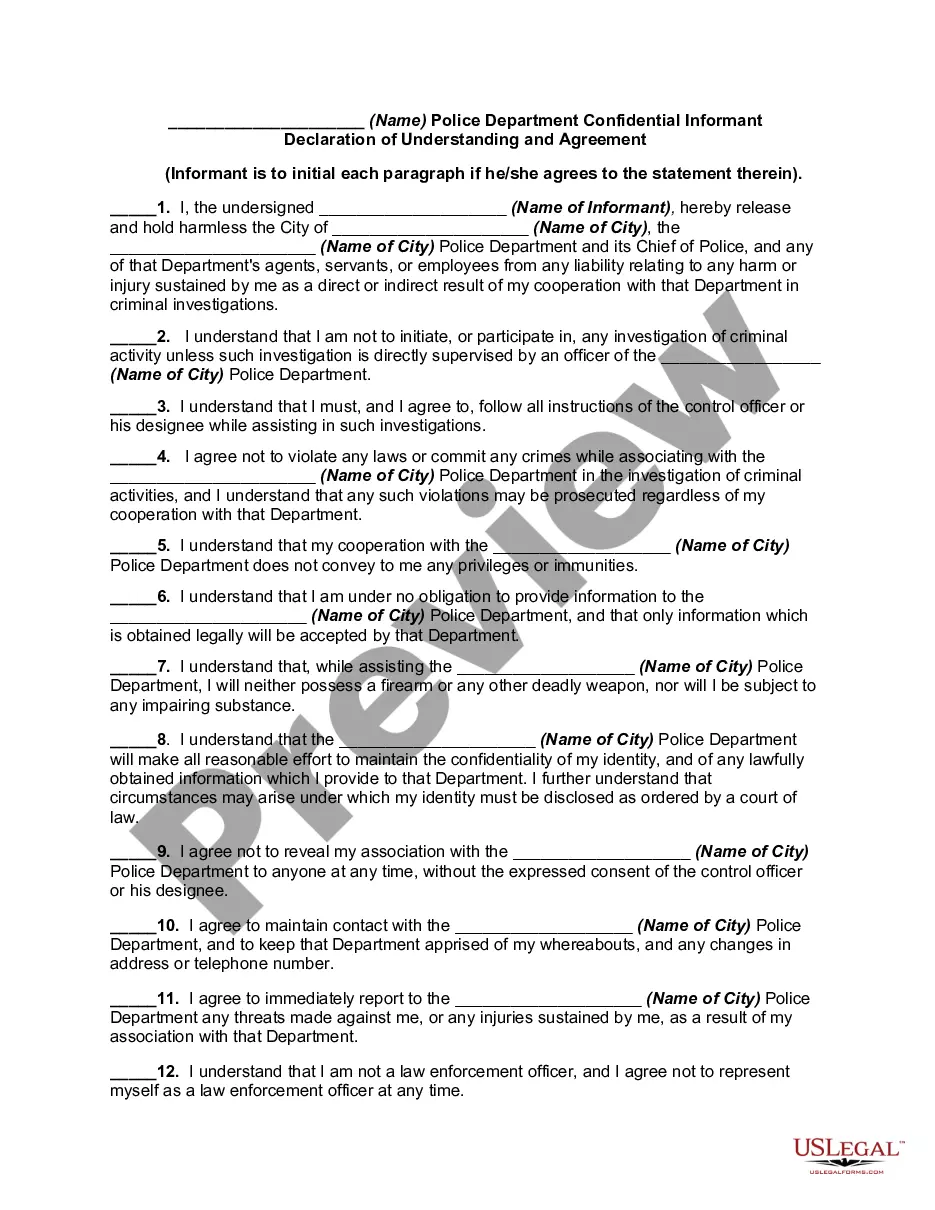
Get your form ready online
Our built-in tools help you complete, sign, share, and store your documents in one place.
Make edits, fill in missing information, and update formatting in US Legal Forms—just like you would in MS Word.
Download a copy, print it, send it by email, or mail it via USPS—whatever works best for your next step.
Sign and collect signatures with our SignNow integration. Send to multiple recipients, set reminders, and more. Go Premium to unlock E-Sign.
If this form requires notarization, complete it online through a secure video call—no need to meet a notary in person or wait for an appointment.
We protect your documents and personal data by following strict security and privacy standards.

Make edits, fill in missing information, and update formatting in US Legal Forms—just like you would in MS Word.

Download a copy, print it, send it by email, or mail it via USPS—whatever works best for your next step.

Sign and collect signatures with our SignNow integration. Send to multiple recipients, set reminders, and more. Go Premium to unlock E-Sign.

If this form requires notarization, complete it online through a secure video call—no need to meet a notary in person or wait for an appointment.

We protect your documents and personal data by following strict security and privacy standards.
Looking for another form?



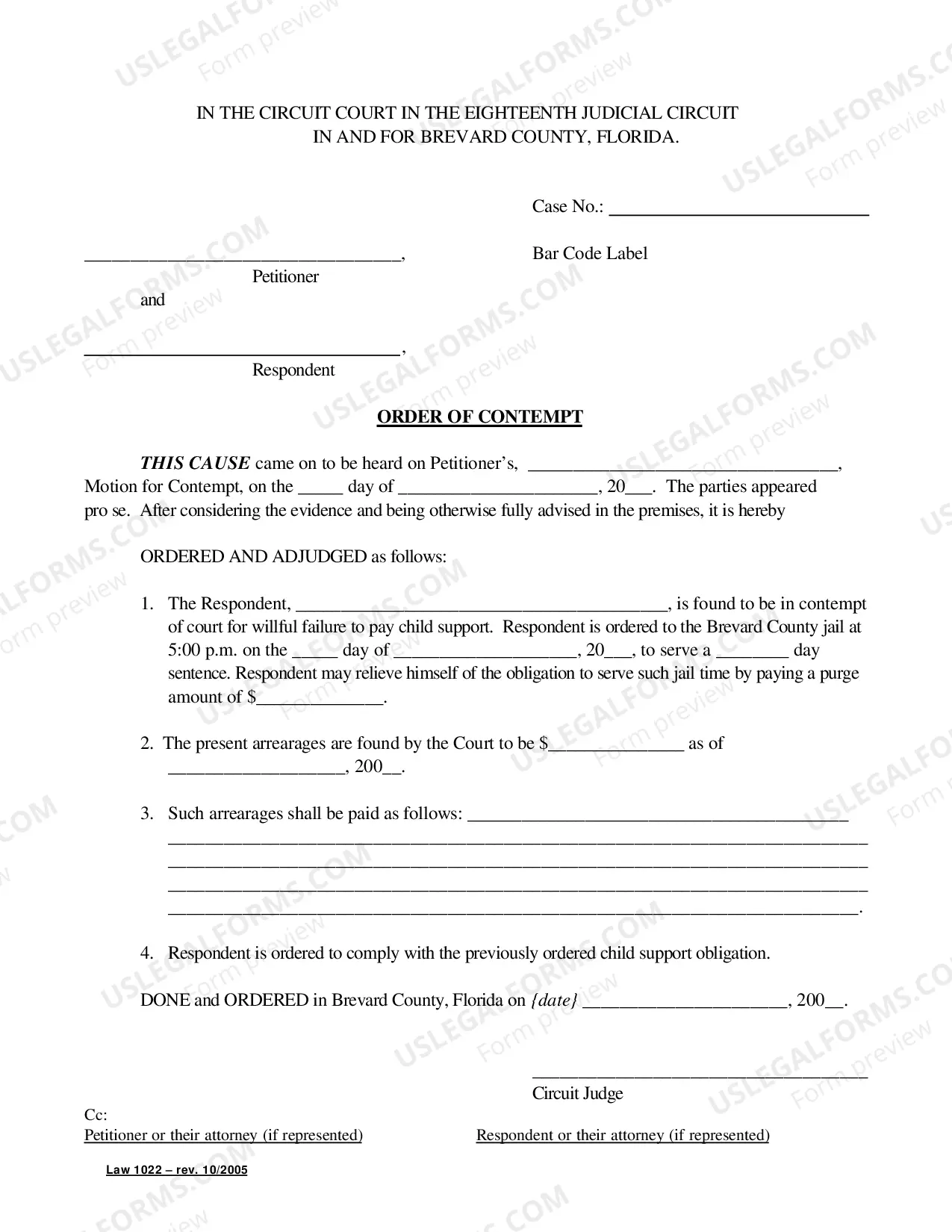




How to fill out Agreement Of Understanding With Confidential Informant?
The Confidential Informant In A Sentence you encounter on this page is a reusable formal blueprint crafted by expert attorneys in compliance with federal and regional statutes and regulations.
For over 25 years, US Legal Forms has offered individuals, corporations, and legal experts access to more than 85,000 verified, state-specific documents for any business and personal need. It’s the quickest, simplest, and most dependable method to acquire the paperwork you require, as the service ensures the utmost level of data protection and anti-virus security.
Subscribe to US Legal Forms to have validated legal templates for every situation in life readily available.
- Search for the document you need and examine it.
- Sign up and Log In.
- Obtain the editable template.
- Fill out and sign the documentation.
- Re-download your paperwork as needed.
Form popularity
FAQ
In many cases, confidential informants can receive leniency or have their charges dropped in exchange for their cooperation. This arrangement often depends on the legal agreements in place and the importance of their information to law enforcement. However, the specifics can vary widely. If you wish to understand this dynamic better, US Legal Forms can provide resources to clarify how these agreements work.
Determining if someone is an FBI informant can be challenging. Look for signs such as unusual behavior, secretive actions, or connections with law enforcement. Additionally, be cautious; these individuals often blend into their social environments while gathering information. If you suspect someone is acting as a confidential informant in a sentence, consider seeking advice from an attorney.
Exposing a confidential informant can be complex and risky. First, gather evidence that points to their role as an informant. Consider consulting a legal professional who can guide you through the process. It is key to approach this situation carefully, as confidential informants often operate under the protection of law enforcement.
The term 'informant' refers to a person who provides information, particularly to law enforcement, while 'informer' can denote anyone who reports specific details. Both terms emphasize the act of sharing valuable knowledge that can aid investigations. Understanding the nuances can clarify the roles involved. Explaining the terms, such as 'confidential informant in a sentence,' highlights their importance in law enforcement contexts.
Someone who provides information, especially to law enforcement, is commonly referred to as an informant. This term encapsulates various roles, including anonymous sources or witnesses. Informants help agencies gather intel about criminal activities. Describing the contributions of a confidential informant in a sentence reflects their vital position in the justice system.
Individuals who may become informants often include those involved in crime or those with firsthand knowledge of illegal activities. These people might seek reduced charges or other legal benefits by cooperating with law enforcement. However, not everyone is suitable, as informants must be trustworthy and reliable. Understanding who becomes a confidential informant in a sentence allows for a simpler grasp of their role.
A person typically becomes a confidential informant by providing valuable information to law enforcement. The process starts when law enforcement identifies an individual who can contribute useful details about criminal activities. Following this, authorities may conduct an interview to determine suitability and discuss potential benefits. Communicating the role of a confidential informant in a sentence helps clarify the expectations involved.
To become a confidential informant, one typically needs to be approached by law enforcement or volunteer information. The process often includes an initial interview, where potential informants discuss their knowledge of criminal activities. Once selected, individuals might sign agreements outlining their responsibilities and the protection they will receive. It’s essential to understand the role of a confidential informant in a sentence to clarify expectations.
Recruiting confidential informants involves building trust and establishing a relationship. Law enforcement agencies might approach individuals already involved in criminal activities or community members who have knowledge of such activities. By ensuring the potential informant understands the benefits and protections involved, agencies create a foundation for a successful partnership. Remember, a skilled recruiter uses effective communication to present the role of a confidential informant in a sentence.
In many situations, a confidential informant may choose not to disclose their identity, even if asked directly. This option typically stems from legal protections and the need for privacy to ensure safety. Therefore, if a confidential informant is involved in a case, they may not reveal their status readily. Engaging with legal resources or platforms like USLegalForms can provide clarity on the rights and obligations surrounding confidential informants.