Shoplifting With A Child
Description
Get your form ready online
Our built-in tools help you complete, sign, share, and store your documents in one place.
Make edits, fill in missing information, and update formatting in US Legal Forms—just like you would in MS Word.
Download a copy, print it, send it by email, or mail it via USPS—whatever works best for your next step.
Sign and collect signatures with our SignNow integration. Send to multiple recipients, set reminders, and more. Go Premium to unlock E-Sign.
If this form requires notarization, complete it online through a secure video call—no need to meet a notary in person or wait for an appointment.
We protect your documents and personal data by following strict security and privacy standards.

Make edits, fill in missing information, and update formatting in US Legal Forms—just like you would in MS Word.

Download a copy, print it, send it by email, or mail it via USPS—whatever works best for your next step.

Sign and collect signatures with our SignNow integration. Send to multiple recipients, set reminders, and more. Go Premium to unlock E-Sign.

If this form requires notarization, complete it online through a secure video call—no need to meet a notary in person or wait for an appointment.

We protect your documents and personal data by following strict security and privacy standards.
Looking for another form?


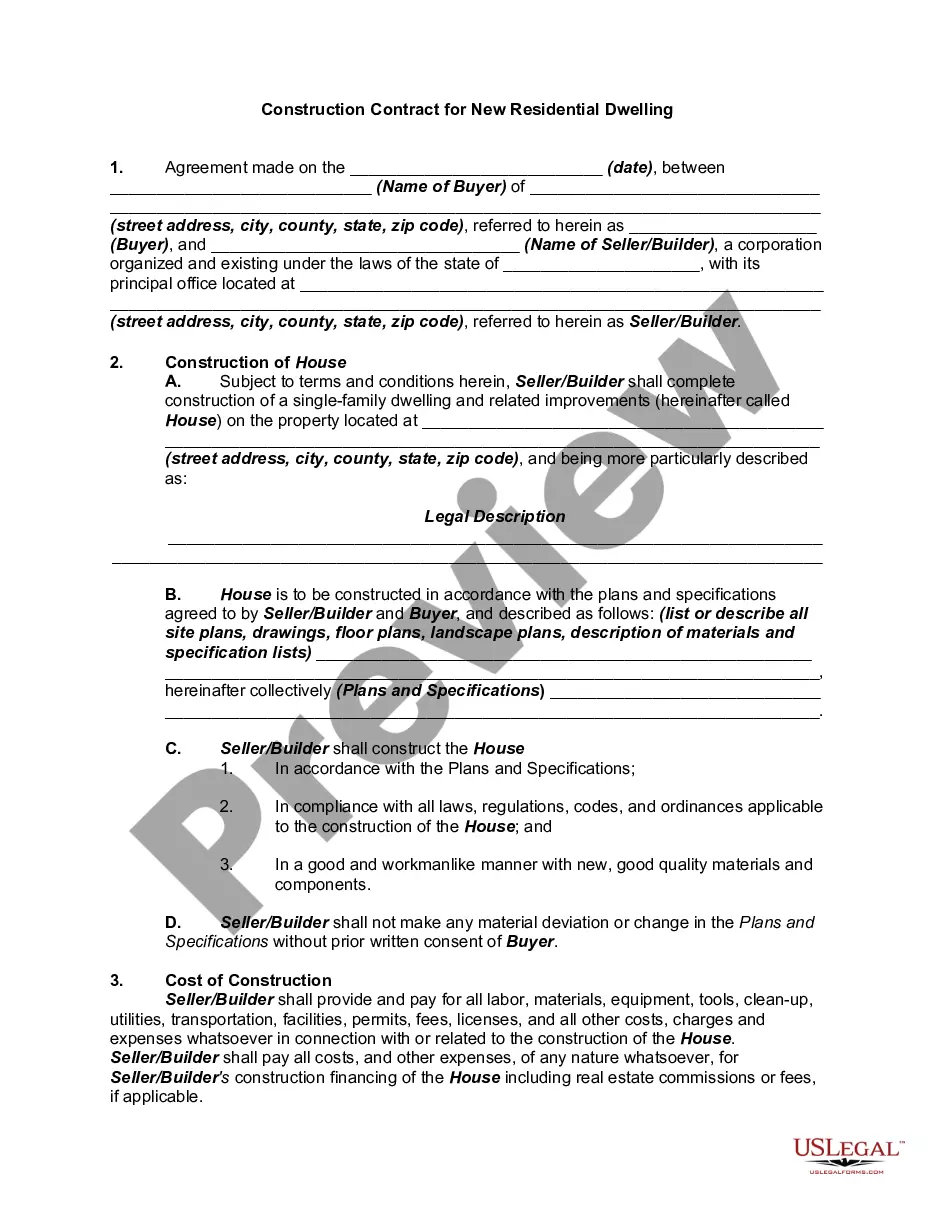






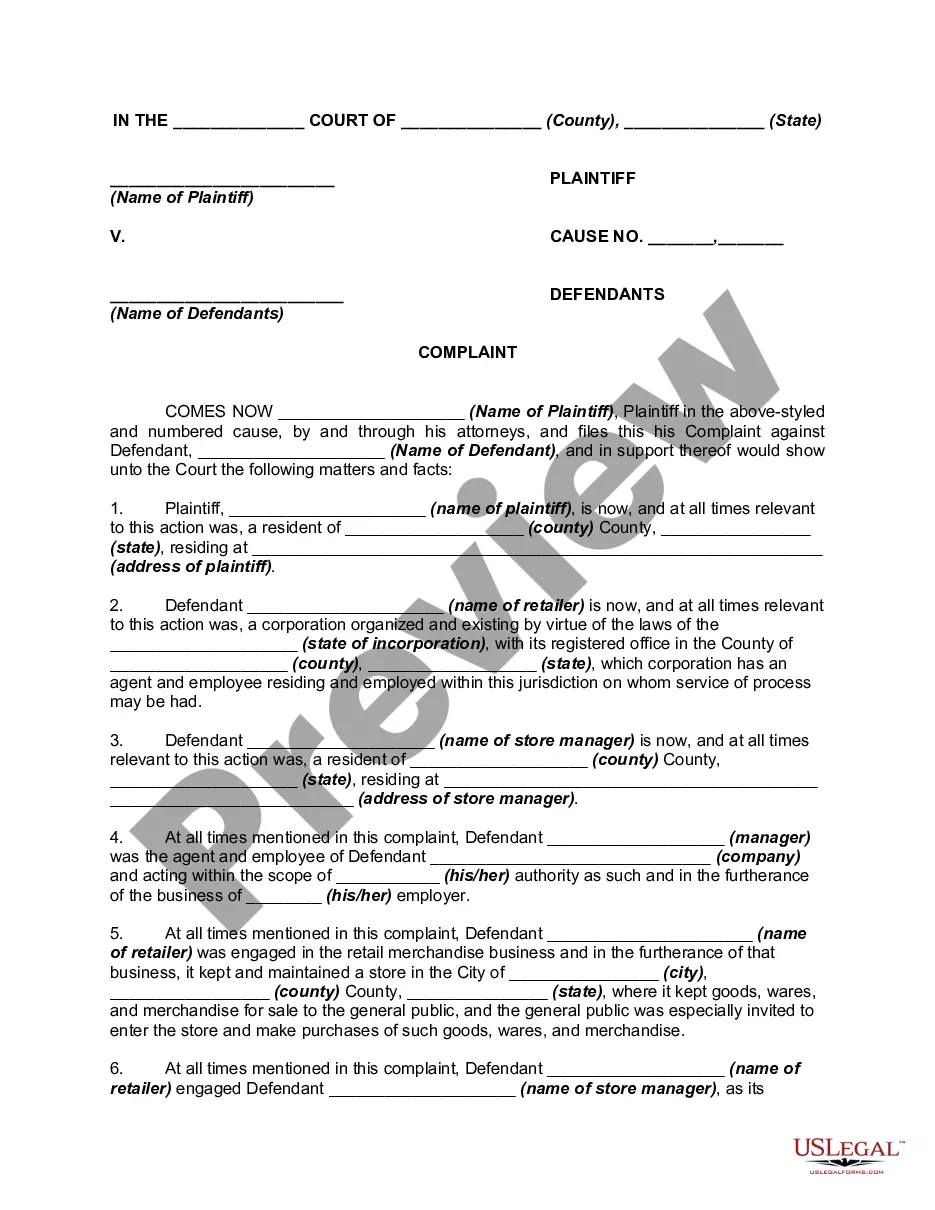
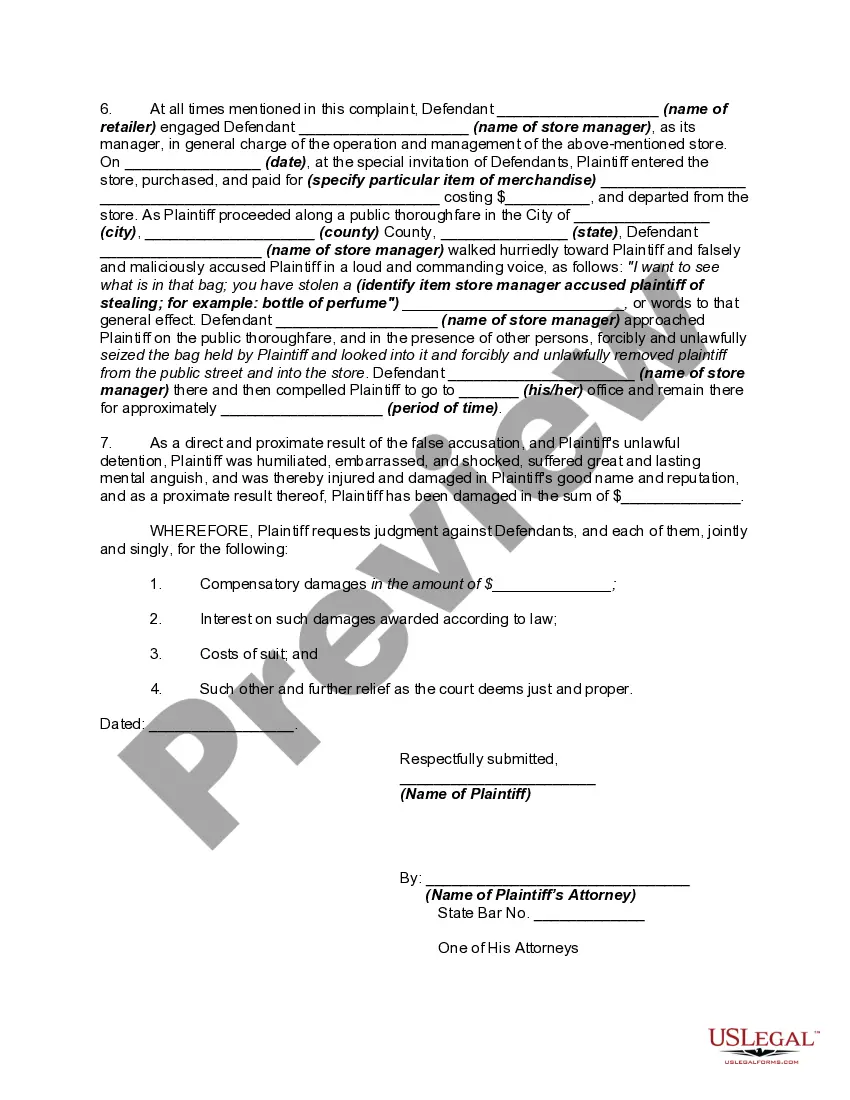
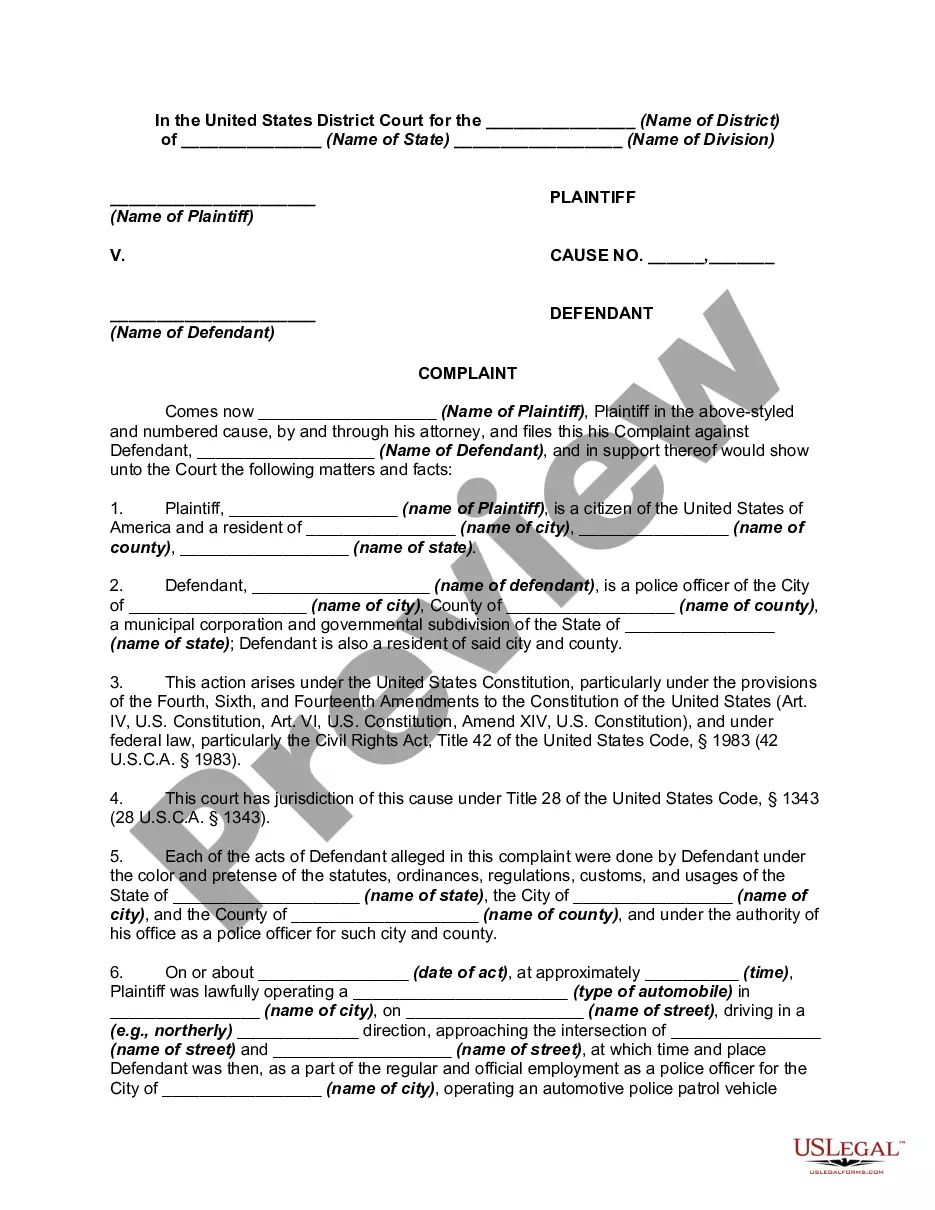
How to fill out Complaint For Unreasonable Detention And Search Of Customer On Accusation Of Shoplifting Or Stealing Against Store And Store Manager?
Individuals frequently link legal documentation with something complex that only an expert can manage.
In a manner, this is accurate, as composing Shoplifting With A Child necessitates considerable knowledge of subject criteria, which includes state and local laws.
Nevertheless, with US Legal Forms, everything has become simpler: pre-prepared legal documents for any personal and business situation specific to state regulations are gathered in a single online repository and are now accessible to everyone.
Print your document or upload it to an online editor for an expedited completion. All templates in our library are reusable: once purchased, they remain stored in your profile, allowing you to access them whenever needed via the My documents tab. Explore all the benefits of using the US Legal Forms platform. Subscribe today!
- US Legal Forms provides over 85,000 up-to-date forms categorized by state and application area, making the search for Shoplifting With A Child or any other specific template a matter of minutes.
- Previously registered users with a valid subscription must Log In to their account and click Download to obtain the form.
- New users to the platform will first need to create an account and subscribe before they can download any files.
- Here is a step-by-step guide on how to acquire the Shoplifting With A Child.
- Examine the page content carefully to ensure it meets your requirements.
- Review the form description or check it through the Preview option.
- Search for another sample using the Search field above if the previous one does not meet your criteria.
- Once you find the appropriate Shoplifting With A Child, click Buy Now.
- Select a subscription plan that aligns with your needs and financial plan.
- Create an account or sign in to continue to the payment page.
- Complete your subscription payment via PayPal or with your credit card.
- Choose the format for your template and click Download.
Form popularity
FAQ
To accuse someone of stealing, you need credible evidence that supports your claim. This evidence may include photographs, witness statements, or surveillance footage that illustrates the act of theft. Clear documentation of the incident is essential in navigating any legal proceedings. If you find yourself dealing with a case of shoplifting with a child, it's wise to consult legal professionals who can provide relevant guidance and support.
Addressing stealing with a child involves open communication and guidance. Start by discussing the importance of honesty and respect for others' property. Encourage your child to express their feelings and thoughts about why they chose to steal. Be supportive and explore possible solutions together. Utilizing resources and legal guidance from platforms like US Legal Forms can also help in navigating these sensitive discussions effectively.
If a child gets caught shoplifting, it can be a distressing experience for the family. It's crucial to stay calm and talk to the child about the incident. Understanding their reasons for stealing can help address the underlying issues. Seeking legal advice may also be beneficial, especially if the situation escalates. Remember, dealing with shoplifting with a child requires patience and care.
The psychology behind stealing in children often relates to various emotional or social factors, such as seeking attention or testing boundaries. Understanding this behavior can help parents address the root cause, rather than just the action of shoplifting with a child. A supportive environment that encourages honesty and trust can greatly influence your child’s choices. It might also be beneficial to consult professionals or resources available on uslegalforms to navigate these challenges effectively.
Disciplining a child for stealing should focus on teaching rather than punishment. Set clear expectations and consequences, and involve your child in finding a solution to their behavior, whether it’s returning the taken item or doing chores. Consider discussing the implications of shoplifting with a child to highlight the importance of honesty and respect for others’ belongings. This approach promotes learning instead of just reprimanding.
If you discover that your child has stolen from you, it's important to stay calm. Talk to your child about the situation and encourage open communication. Explain the impact of shoplifting with a child on both the family and the broader community. This conversation can help your child understand the seriousness of their actions and foster a willingness to make amends.
That said, do take the following steps to convey your concern to your child:Decide on the consequences beforehand. One in four shoplifters caught is a teen.Remain calm at the scene of the crime.Allow a cooling off period.Follow through.
A court can order a juvenile to pay restitution to the property owner for the value of the shoplifted property. If the juvenile has a job, the court may order the juvenile to continue employment until the restitution is paid.
Ask him how much he would like it if someone stole, for example, his most valuable possession. Your priority should be to help the child understand that stealing is wrong. Exploring possible emotional motivators/causes may help to understand you child's behaviour and allow you to make adjustments.
6 Ways To Stop Your Child From StealingTake Action Now. If you discover money or other items missing, or your child has something in their possession that cannot be accounted for, act immediately.Just the facts, ma'am.Assume guilt.Remove temptation.Shape the social scene.Consider counseling.
