Work Made For Hire Uk
Description
Get your form ready online
Our built-in tools help you complete, sign, share, and store your documents in one place.
Make edits, fill in missing information, and update formatting in US Legal Forms—just like you would in MS Word.
Download a copy, print it, send it by email, or mail it via USPS—whatever works best for your next step.
Sign and collect signatures with our SignNow integration. Send to multiple recipients, set reminders, and more. Go Premium to unlock E-Sign.
If this form requires notarization, complete it online through a secure video call—no need to meet a notary in person or wait for an appointment.
We protect your documents and personal data by following strict security and privacy standards.

Make edits, fill in missing information, and update formatting in US Legal Forms—just like you would in MS Word.

Download a copy, print it, send it by email, or mail it via USPS—whatever works best for your next step.

Sign and collect signatures with our SignNow integration. Send to multiple recipients, set reminders, and more. Go Premium to unlock E-Sign.

If this form requires notarization, complete it online through a secure video call—no need to meet a notary in person or wait for an appointment.

We protect your documents and personal data by following strict security and privacy standards.
Looking for another form?
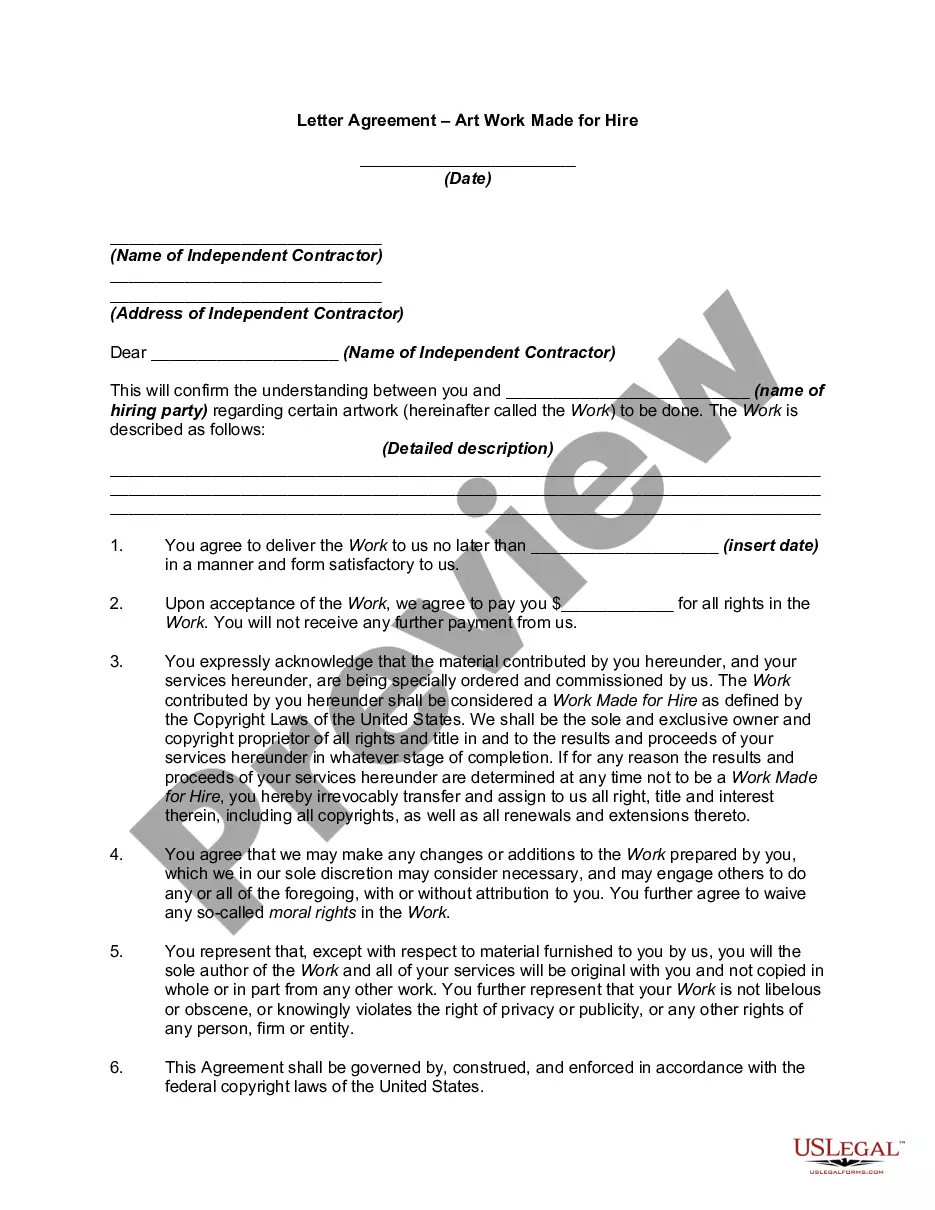
How to fill out Letter Agreement - Art Work Made For Hire - Self-Employed?
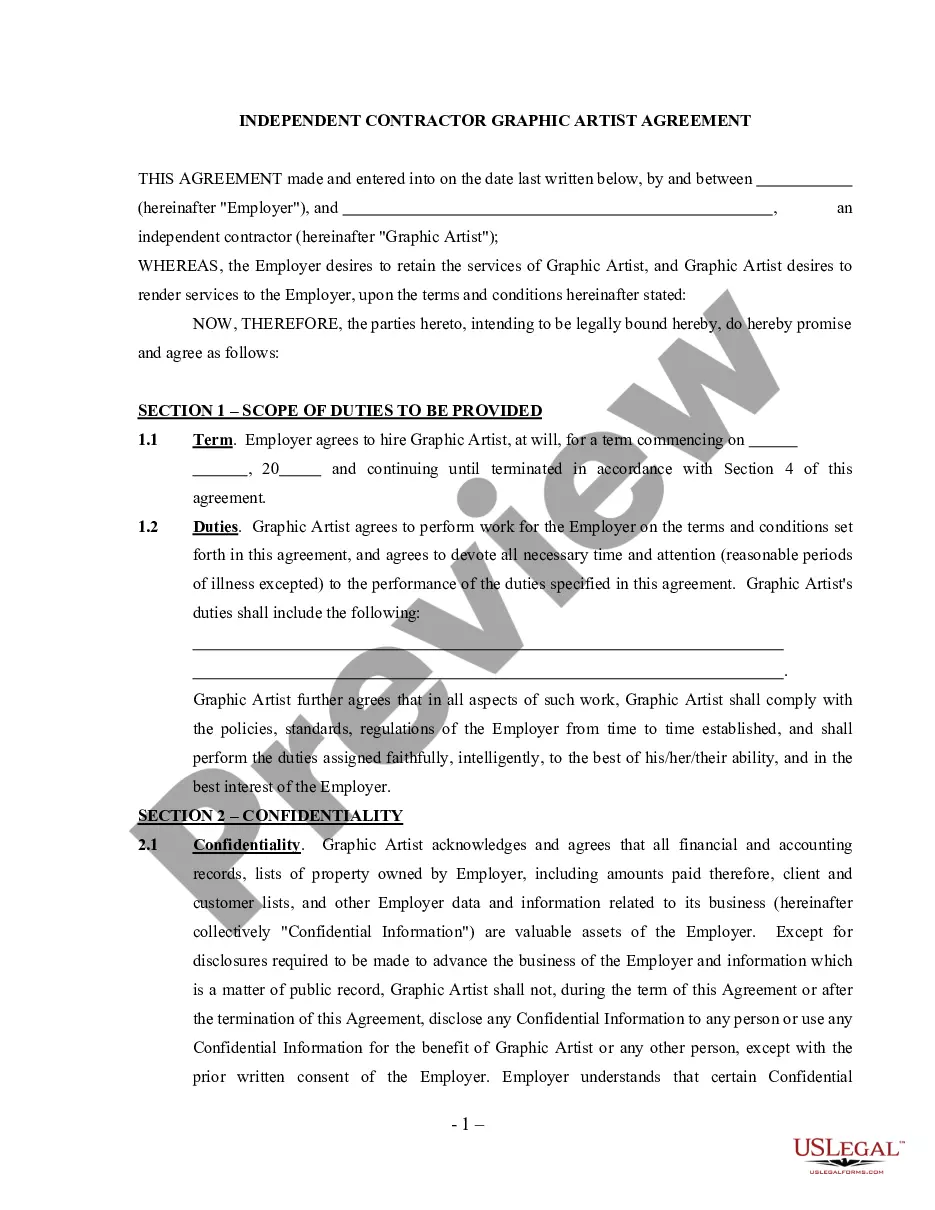
The Work Made For Hire UK you see on this page is a versatile formal template created by expert attorneys in accordance with federal and local laws.
For over 25 years, US Legal Forms has offered individuals, organizations, and legal experts more than 85,000 validated, state-specific documents for any commercial and personal situation.
Subscribe to US Legal Forms to have verified legal templates for all of life's situations available to you.
- Search for the document you need and examine it.
- Browse the file you searched and preview it or check the form description to confirm it suits your needs. If it doesn't, utilize the search bar to find the accurate one. Click Buy Now when you find the template you require.
- Subscribe and sign in.
- Choose the pricing plan that fits you and create an account. Use PayPal or a credit card for quick payment. If you already have an account, Log In and verify your subscription to proceed.
- Acquire the editable template.
- Select the format you want for your Work Made For Hire UK (PDF, Word, RTF) and save the template on your device.
- Complete and sign the documents.
- Print the template to fill it out manually. Alternatively, utilize an online multi-functional PDF editor to efficiently and accurately complete and sign your form with a legally-binding electronic signature.
- Re-download your documents as needed.
- Access the same document again whenever necessary. Open the My documents tab in your profile to redownload any previously acquired forms.
Form popularity
FAQ
To use work for hire effectively, first, ensure that any agreements you enter into clearly define ownership rights. This includes specifying who retains the rights to the work created and under what circumstances. Whether you are an employer or a contractor, understanding the work made for hire UK concept can help you navigate your rights and responsibilities, making platforms like uslegalforms a valuable resource for drafting agreements.
The standard work for hire clause typically states that any work produced by an employee or contractor during their engagement is owned by the employer. This clause aims to clarify that any intellectual property created in the course of employment belongs to the hiring party. Utilizing a well-drafted work made for hire UK clause can protect both parties and minimize legal complications.
An example of a work for hire is a software developer who creates an application for a tech company as part of their employment. In this case, the company owns the application and all related rights, as the developer was hired to create that specific work. This demonstrates the importance of clearly defining work made for hire UK terms in contracts to avoid potential disputes.
An example of work made for hire includes a graphic designer creating a logo for a company while working on a contract basis. Since the designer is hired specifically to create that logo, the company owns the rights to it. This illustrates how work made for hire UK applies in real-world scenarios, ensuring that the hiring party can use the work without concerns about copyright ownership.
A work for hire refers to a specific type of employment arrangement where an employer automatically owns the rights to any work created by an employee within the scope of their job. This means that if you create something while fulfilling your employment duties, the employer retains ownership. In the context of the UK, understanding the concept of work made for hire is crucial for both employees and employers to navigate copyright issues effectively.
To secure a job in the UK, focus on building a strong CV that highlights your skills and experience. Networking plays a crucial role; connect with professionals in your field through social media platforms like LinkedIn. Additionally, consider utilizing resources and templates from platforms like US Legal Forms, which can guide you in creating documents relevant to employment contracts, including aspects of work made for hire UK. This proactive approach will enhance your chances of landing the right job.
A work made for hire typically refers to creative works produced under employment or specific contracts where the employer or commissioning party owns the rights. This can include artworks, music, literature, and more. In the UK, clarity comes from contracts rather than the concept itself. Therefore, always ensure that you have clear agreements in place to define ownership and rights associated with your work.
While the specific term 'work made for hire' is not recognized under UK law, similar principles apply. In the UK, the creator of a work generally retains copyright unless an agreement states otherwise. It is essential to understand the implications of your contracts and how they define ownership. Knowing these details can help prevent misunderstandings down the line.
In the UK, the ownership of work created under a work for hire arrangement typically lies with the employer or the person who commissioned the work. This differs from the creator's rights, which can vary based on agreements and contracts. It's crucial to have contracts in place to define ownership rights explicitly. Using services like USLegalForms can help you draft these important documents.
In the context of UK law, the idea of work made for hire implies that the employer owns the copyright, thus negating personal claims by the creator. This means that unless a contract specifies otherwise, the employer retains all rights to the work. Understanding these nuances is essential for anyone engaging in freelance or contractual work. Proper agreements can clarify ownership and rights associated with your creations.