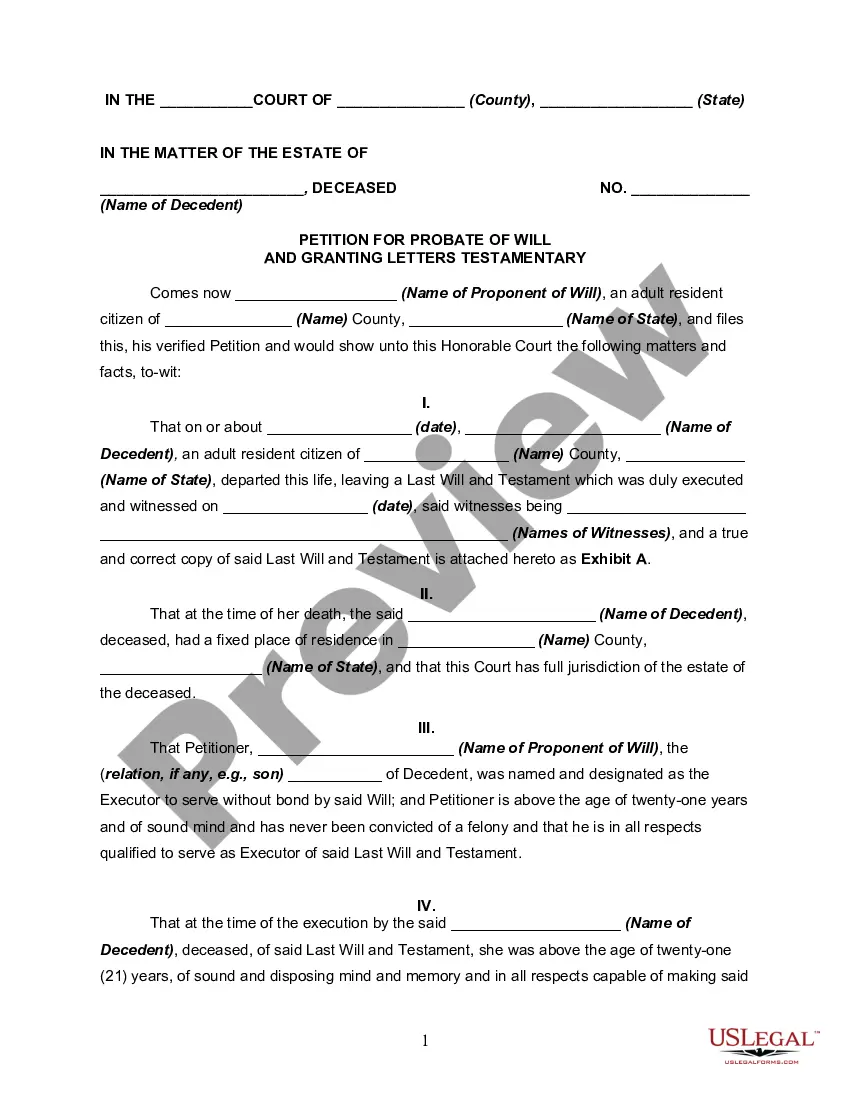
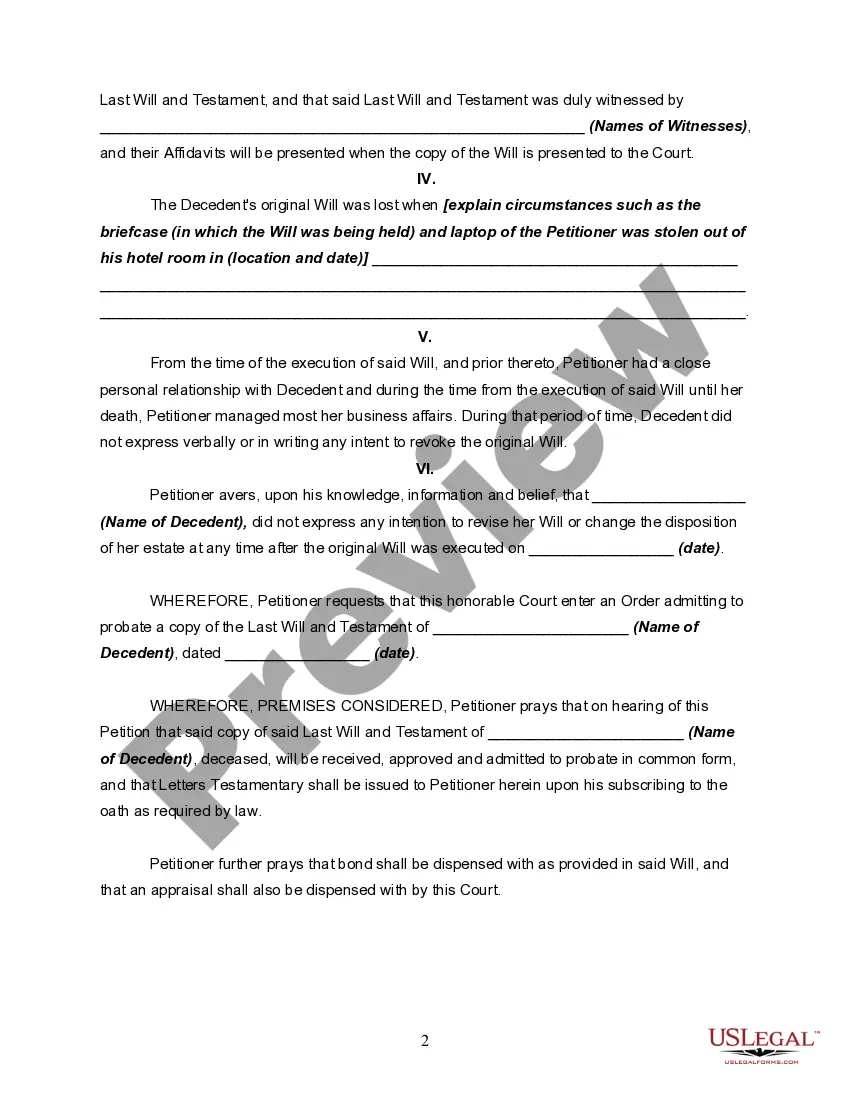
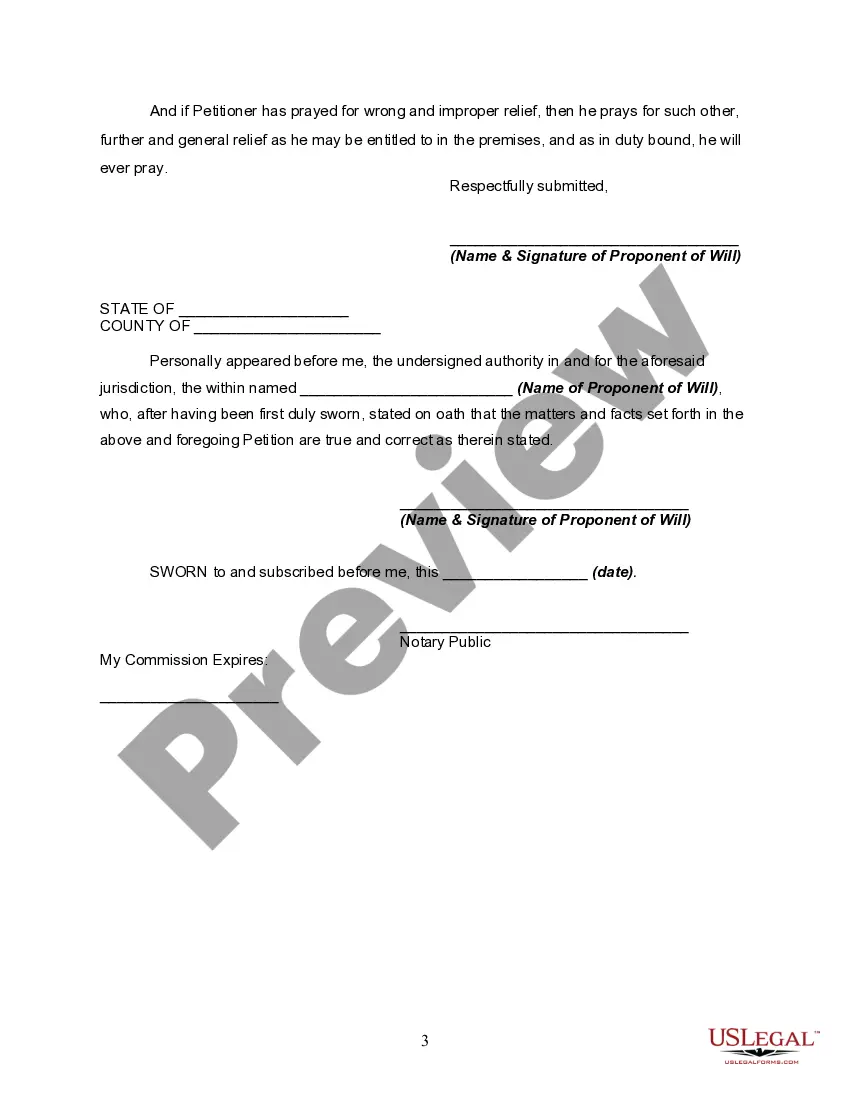
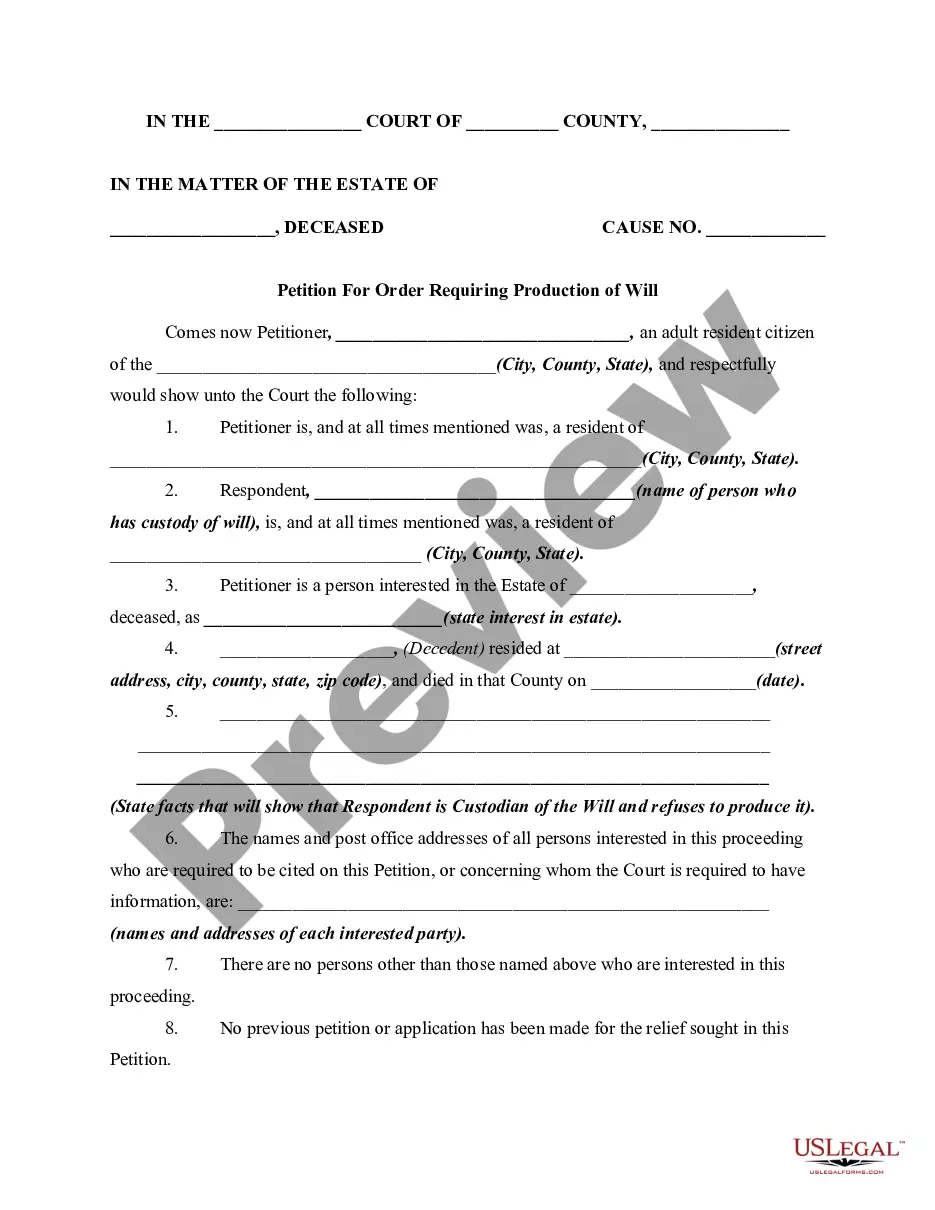
Petition For Probate Example Form Pennsylvania
Description

Get your form ready online
Our built-in tools help you complete, sign, share, and store your documents in one place.
Make edits, fill in missing information, and update formatting in US Legal Forms—just like you would in MS Word.
Download a copy, print it, send it by email, or mail it via USPS—whatever works best for your next step.
Sign and collect signatures with our SignNow integration. Send to multiple recipients, set reminders, and more. Go Premium to unlock E-Sign.
If this form requires notarization, complete it online through a secure video call—no need to meet a notary in person or wait for an appointment.
We protect your documents and personal data by following strict security and privacy standards.

Make edits, fill in missing information, and update formatting in US Legal Forms—just like you would in MS Word.

Download a copy, print it, send it by email, or mail it via USPS—whatever works best for your next step.

Sign and collect signatures with our SignNow integration. Send to multiple recipients, set reminders, and more. Go Premium to unlock E-Sign.

If this form requires notarization, complete it online through a secure video call—no need to meet a notary in person or wait for an appointment.

We protect your documents and personal data by following strict security and privacy standards.
Looking for another form?






How to fill out Petition To Probate Lost Will?
Legal administration can be overwhelming, even for the most adept professionals.
When you are looking for a Petition For Probate Example Form Pennsylvania and do not have the opportunity to search for the correct and updated edition, the procedures can be taxing.
Access a resource library of articles, guides, and manuals pertinent to your situation and needs.
Save time and effort seeking the documents you require, and utilize US Legal Forms' advanced search and Preview feature to acquire Petition For Probate Example Form Pennsylvania.
Ensure that the template is accepted in your state or county.
- If you have a subscription, Log In to your US Legal Forms account, search for the form, and retrieve it.
- Check the My documents tab to view the documents you have previously downloaded and to manage your folders as needed.
- If it is your initial experience with US Legal Forms, create an account and gain unlimited access to all the benefits of the library.
- Listed below are the actions to take after obtaining the form you require.
- Confirm it is the correct form by previewing it and reviewing its description.
- Access state- or county-specific legal and business forms.
- US Legal Forms addresses any needs you might have, from personal to business documents, all in one location.
- Use cutting-edge tools to complete and manage your Petition For Probate Example Form Pennsylvania.
Form popularity
FAQ
Beginning the probate process in Pennsylvania requires several key steps. First, locate the deceased's will, if one exists, and determine the appropriate Petition for probate example form Pennsylvania to complete. Next, gather necessary documents like death certificates and asset inventories. Finally, file the completed petition with the Register of Wills in the county where the deceased resided. This organized approach helps ensure a smooth commencement of the probate process.
Probating a Will in Pennsylvania Step 1: Appoint an Executor. ... Step 2: Authenticate the Will. ... Step 3: Notification of Beneficiaries, Heirs, and Creditors. ... Step 4: Inventory the Assets. ... Step 5: Calculation of Estate and Inheritance Taxes. ... Step 6: Payment of Debts. ... Step 6: Resolve Will Disputes.
In Pennsylvania, you can use a summary probate procedure when estates are worth less than $50,000 (not including funeral costs, real estate and allowable family payments). There is no Affidavit procedure in PA.
Pennsylvania's simplified probate option for small estates can greatly ease the ability for survivors to transfer property after a loved one has passed away. In fact, even smaller amounts of cash can be transferred to heirs of the deceased without needing the approval of the probate court.
In Pennsylvania, it is only necessary to probate if the decedent owned assets, whether financial or real estate holdings, solely in their name which did not already have a beneficiary designated. Such assets are called probate assets, and in order to convey ownership of them it is necessary to probate.
The probate process begins with filing the deceased's will, if there is one, and a petition for probate with the Register of Wills in the county where the deceased resided. The named executor or a close relative, if there is no will, must file these documents.