Petition For Alien Relative
Description

Get your form ready online
Our built-in tools help you complete, sign, share, and store your documents in one place.
Make edits, fill in missing information, and update formatting in US Legal Forms—just like you would in MS Word.
Download a copy, print it, send it by email, or mail it via USPS—whatever works best for your next step.
Sign and collect signatures with our SignNow integration. Send to multiple recipients, set reminders, and more. Go Premium to unlock E-Sign.
If this form requires notarization, complete it online through a secure video call—no need to meet a notary in person or wait for an appointment.
We protect your documents and personal data by following strict security and privacy standards.

Make edits, fill in missing information, and update formatting in US Legal Forms—just like you would in MS Word.

Download a copy, print it, send it by email, or mail it via USPS—whatever works best for your next step.

Sign and collect signatures with our SignNow integration. Send to multiple recipients, set reminders, and more. Go Premium to unlock E-Sign.

If this form requires notarization, complete it online through a secure video call—no need to meet a notary in person or wait for an appointment.

We protect your documents and personal data by following strict security and privacy standards.
Looking for another form?




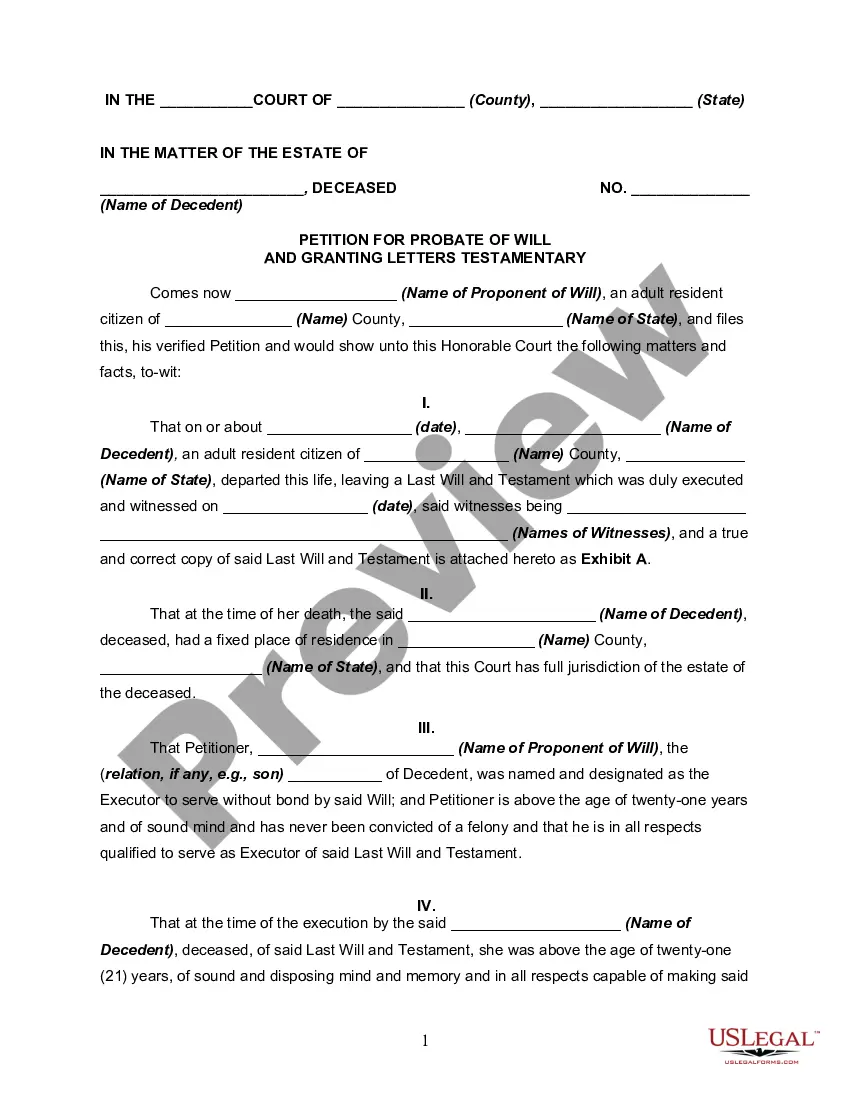
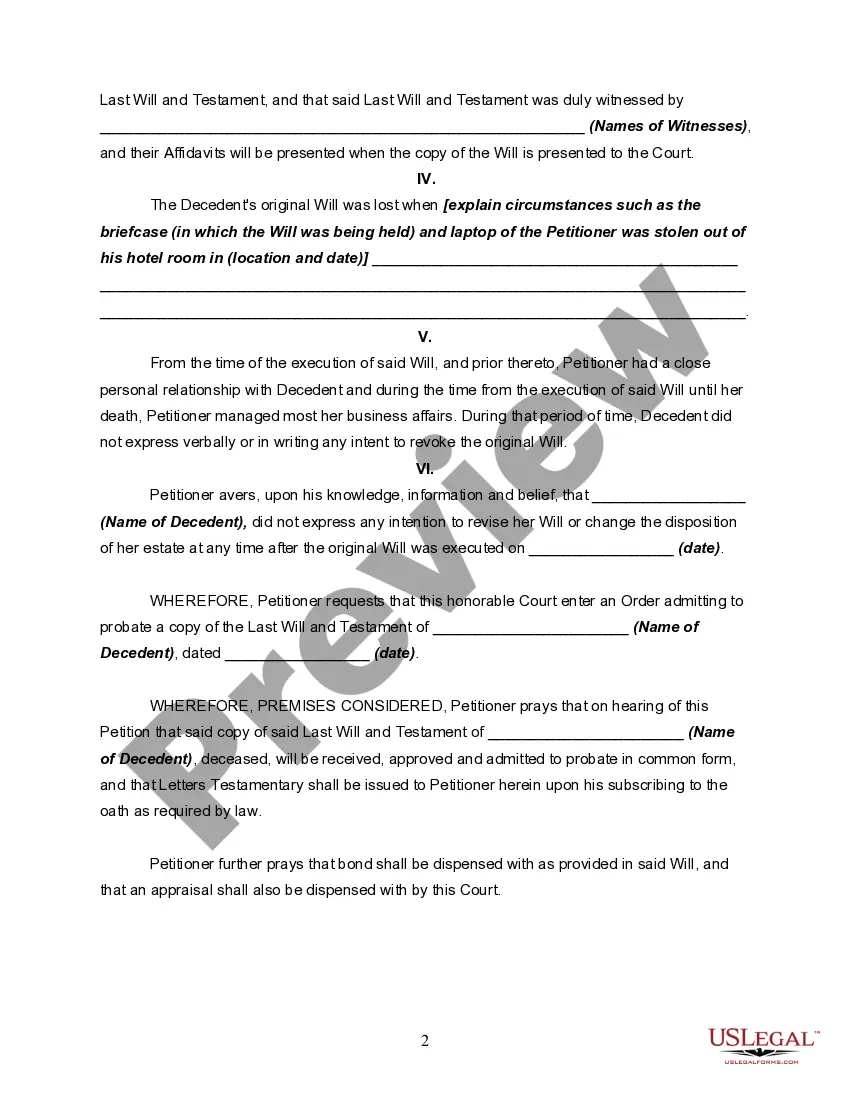
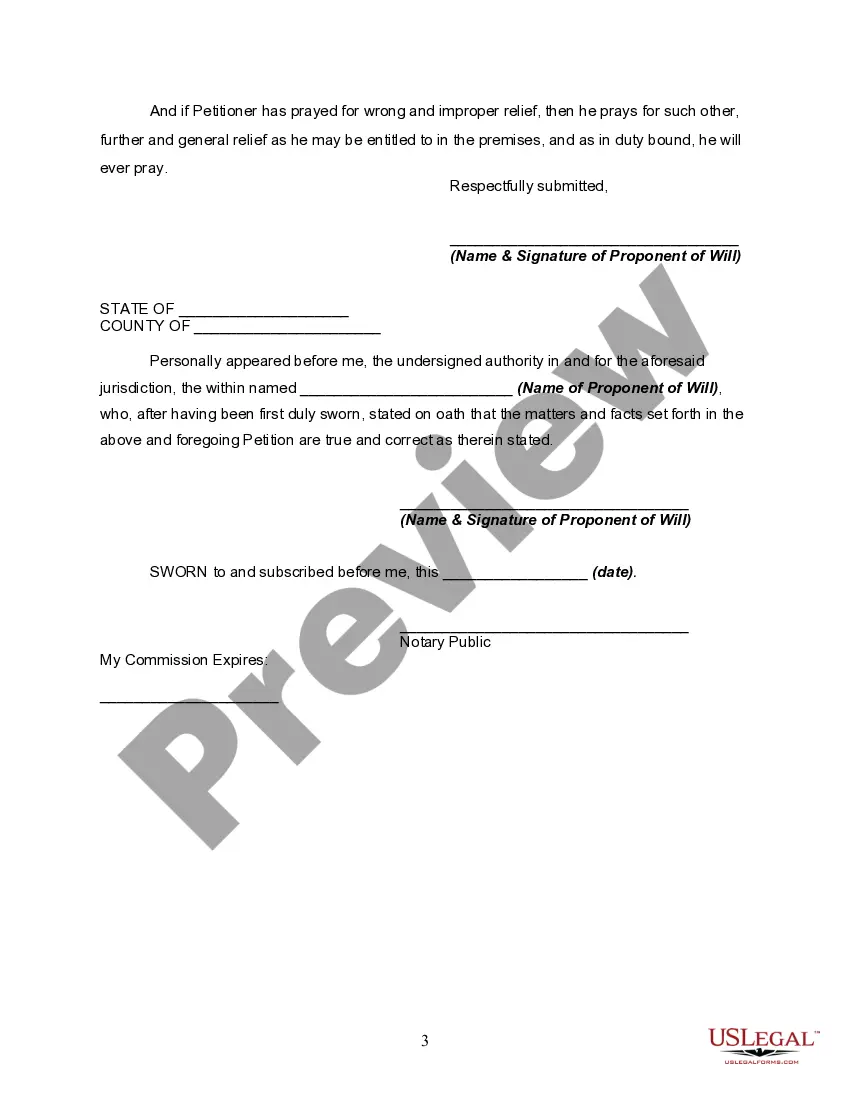
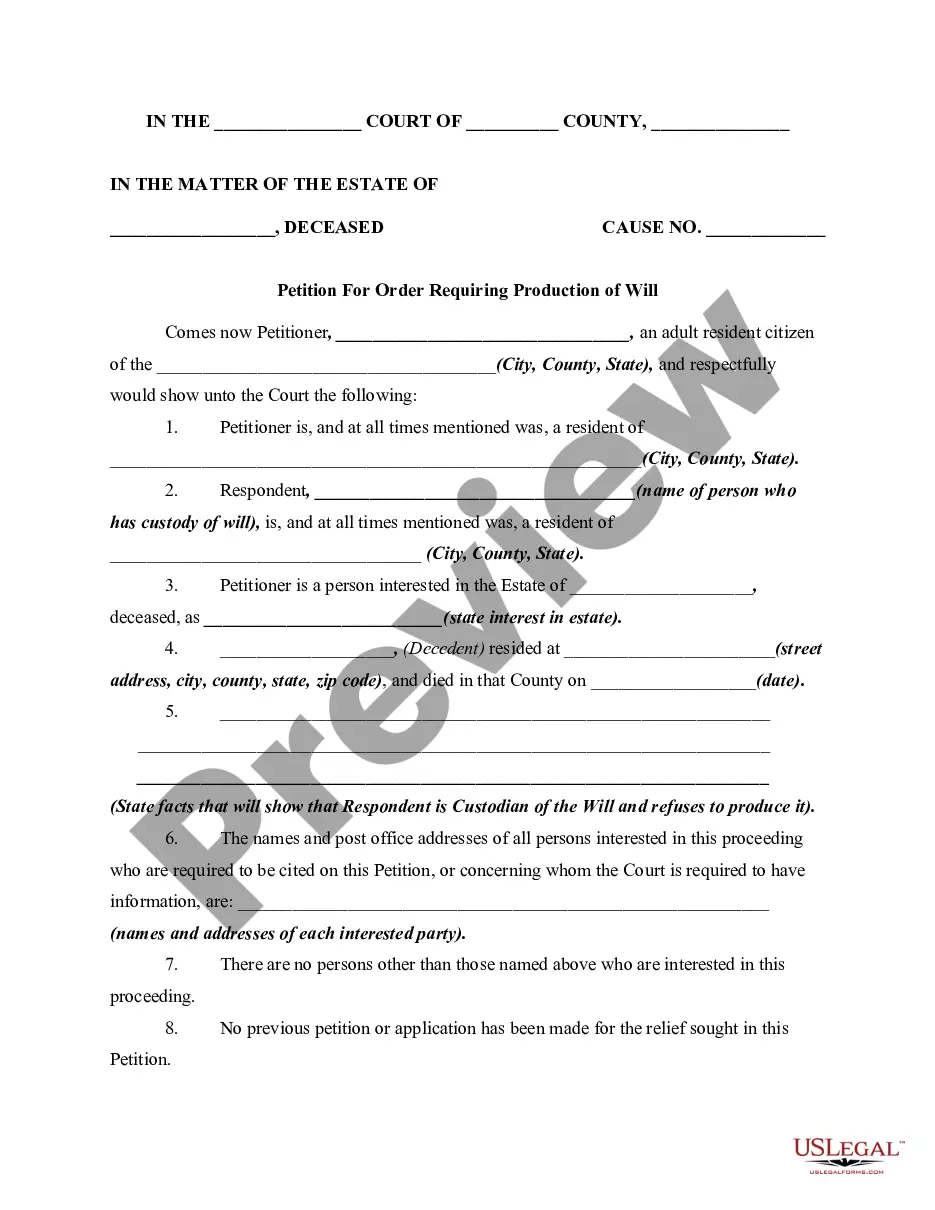
How to fill out Petition To Probate Lost Will?
- If you're an existing user, log in to your account and locate the required form template. Check that your subscription is active; otherwise, renew it as needed.
- For new users, start by checking the Preview mode to review the form description. Ensure that you select the right petition that adheres to your jurisdiction's requirements.
- Should you need a different template, utilize the Search tab to find an appropriate form that meets your specifications.
- Once confirmed, purchase the document by clicking the Buy Now button, selecting your preferred subscription plan, and creating an account for full access.
- Proceed to checkout by entering your payment information, either via credit card or PayPal.
- Finally, download your completed form. Access it anytime in the My Forms section of your profile.
US Legal Forms simplifies the legal documentation process, providing over 85,000 editable forms tailored for various needs. With a robust collection that surpasses competitors, users enjoy the benefit of expert guidance to ensure their forms are accurately completed.
Take the first step toward reuniting your family by utilizing our user-friendly forms. Visit US Legal Forms today!
Form popularity
FAQ
Common mistakes on form I-130A include incomplete sections, incorrect information, and failure to sign the form. Such errors can delay your application for the petition for alien relative. To avoid these issues, consider using platforms like uslegalforms to provide guidance and ensure your forms are filled out correctly.
The I-130 is the primary petition for alien relative that establishes the familial relationship, while the I-130A is a supplemental form specifically for the foreign spouse of a U.S. citizen or lawful permanent resident. Together, they help streamline the application process for marriage-based immigration. Understanding these differences is important for a successful application.
After you file form I-130A, the U.S. Citizenship and Immigration Services will review your submission and may request additional information or documentation. If everything is in order, your petition for alien relative will be processed. You will receive updates regarding your application's progress, so staying informed is essential.
Yes, you can file both the I-130 petition for alien relative and I-130A online through the U.S. Citizenship and Immigration Services portal. Filing online can simplify the process, making it easier to track your application status. It also helps ensure that your forms are complete and submitted correctly.
The I-130 petition for alien relative establishes a qualifying relationship between the petitioner and the beneficiary. In contrast, the I-485 application allows the foreign national to adjust their status to become a lawful permanent resident. While the I-130 is focused on family relationships, the I-485 deals with legal residency in the U.S.
Form I-130A is typically completed by the foreign national spouse of a U.S. citizen or lawful permanent resident when filing a petition for alien relative. This form provides additional information about the spouse and their background. Completing this form accurately can help ensure a smoother application process.
When an I-130 petition for alien relative is approved, it indicates that U.S. Citizenship and Immigration Services has recognized the relationship between a U.S. citizen or lawful permanent resident and their foreign relative. This approval is a crucial first step toward securing a visa or green card for the foreign relative. This does not guarantee a visa but allows the process to begin.
The processing time for a petition for an alien relative can vary based on several factors, including the service center handling your case and the type of relationship involved. Typically, you can expect the process to take anywhere from several months to over a year. Using USLegalForms can help you navigate the paperwork efficiently, potentially reducing the time it takes to prepare and submit your application.
When you petition for an alien relative, you must provide supporting evidence to demonstrate your relationship. This evidence can include proof of citizenship or lawful permanent residency, as well as documents showing your familial ties, such as birth certificates or marriage licenses. Gathering and organizing this evidence beforehand can significantly speed up the processing time for your petition.
To petition for an alien relative, you start by completing the necessary Form I-130, Petition for Alien Relative. After filling out the form, you need to submit it to the United States Citizenship and Immigration Services (USCIS) along with any required fees and supporting documents. Once USCIS processes your petition, they will send you a notice of action. This marks the beginning of your family's journey toward gaining status in the U.S.