Petition Film
Description

Get your form ready online
Our built-in tools help you complete, sign, share, and store your documents in one place.
Make edits, fill in missing information, and update formatting in US Legal Forms—just like you would in MS Word.
Download a copy, print it, send it by email, or mail it via USPS—whatever works best for your next step.
Sign and collect signatures with our SignNow integration. Send to multiple recipients, set reminders, and more. Go Premium to unlock E-Sign.
If this form requires notarization, complete it online through a secure video call—no need to meet a notary in person or wait for an appointment.
We protect your documents and personal data by following strict security and privacy standards.

Make edits, fill in missing information, and update formatting in US Legal Forms—just like you would in MS Word.

Download a copy, print it, send it by email, or mail it via USPS—whatever works best for your next step.

Sign and collect signatures with our SignNow integration. Send to multiple recipients, set reminders, and more. Go Premium to unlock E-Sign.

If this form requires notarization, complete it online through a secure video call—no need to meet a notary in person or wait for an appointment.

We protect your documents and personal data by following strict security and privacy standards.
Looking for another form?








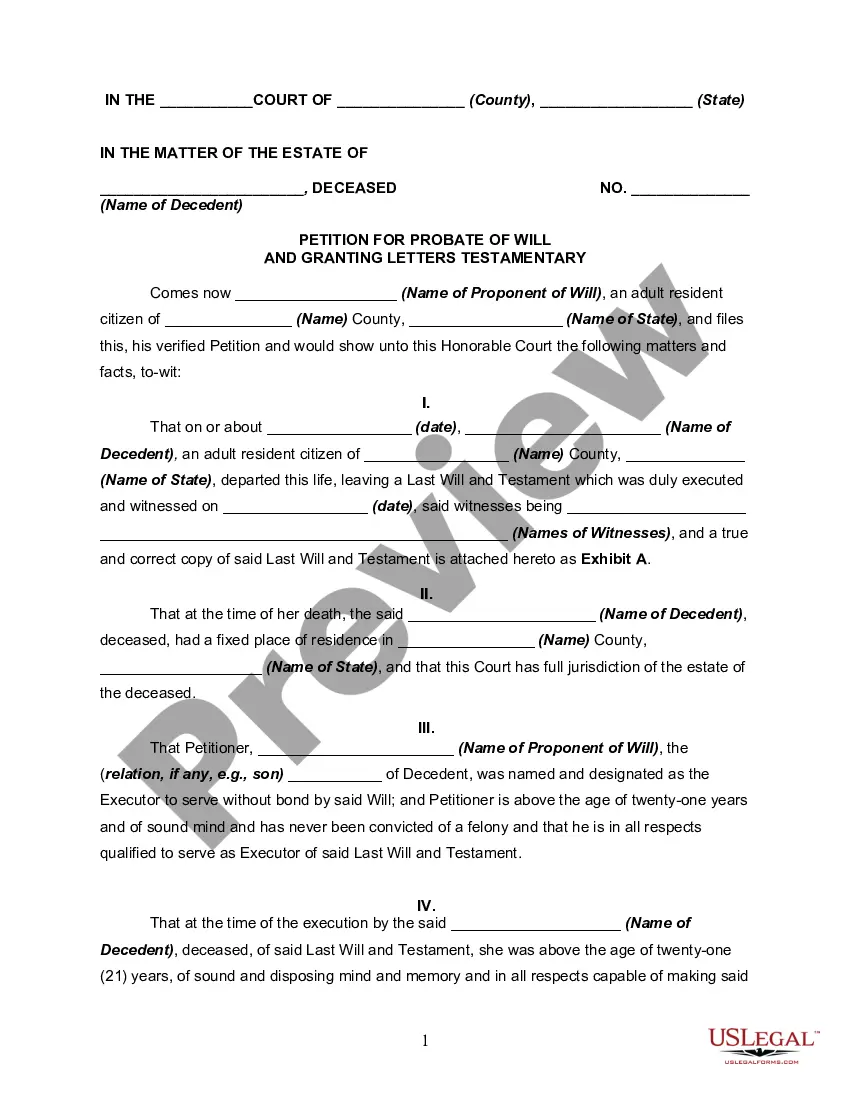
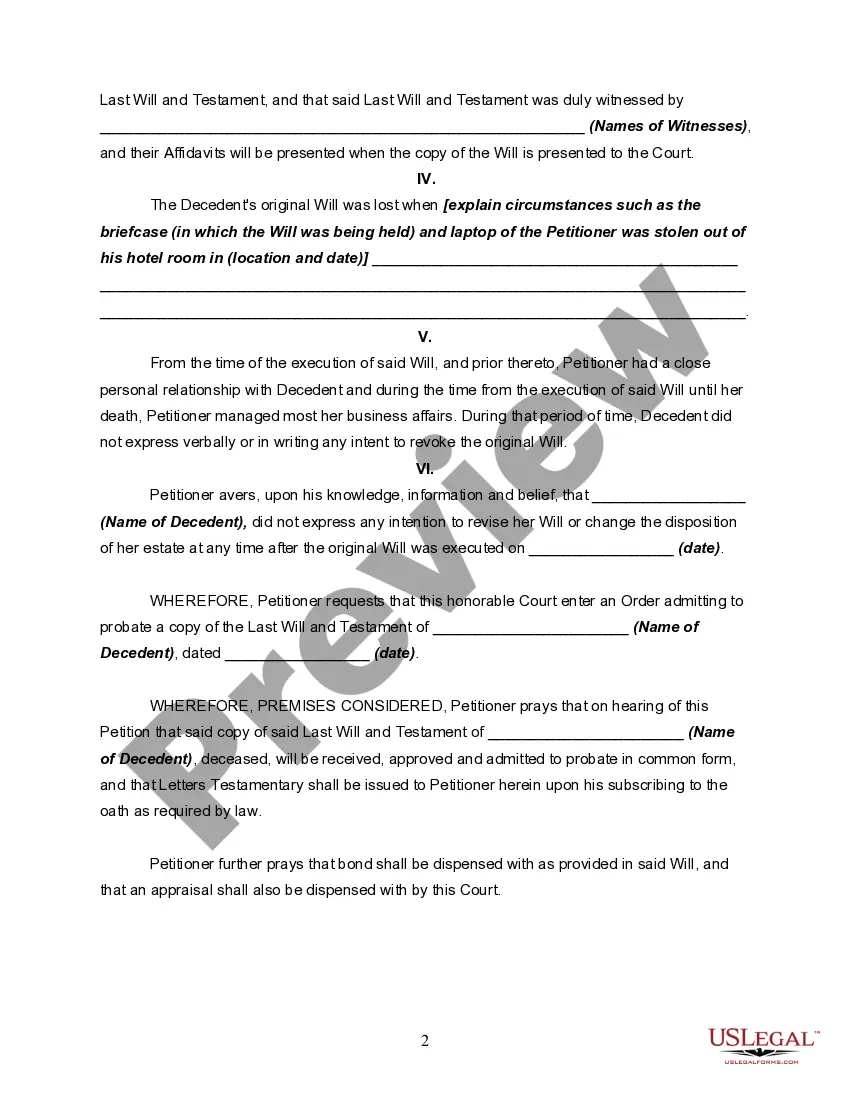
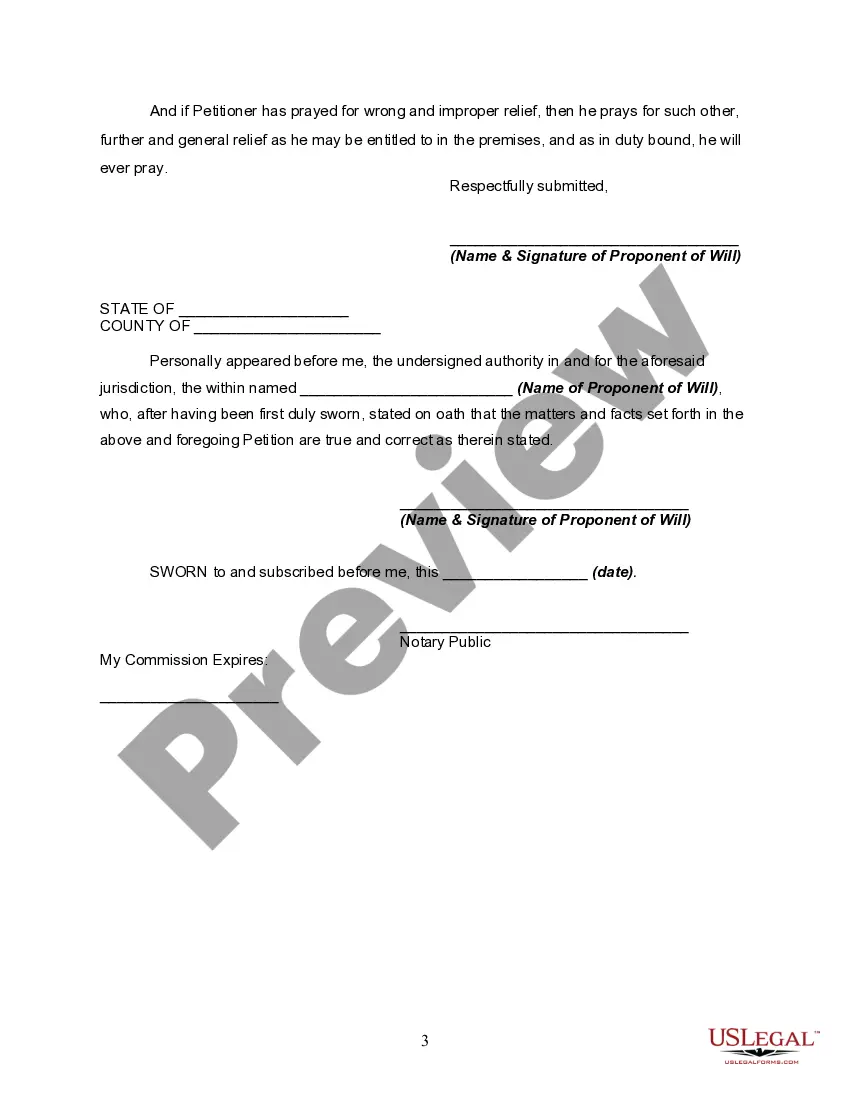
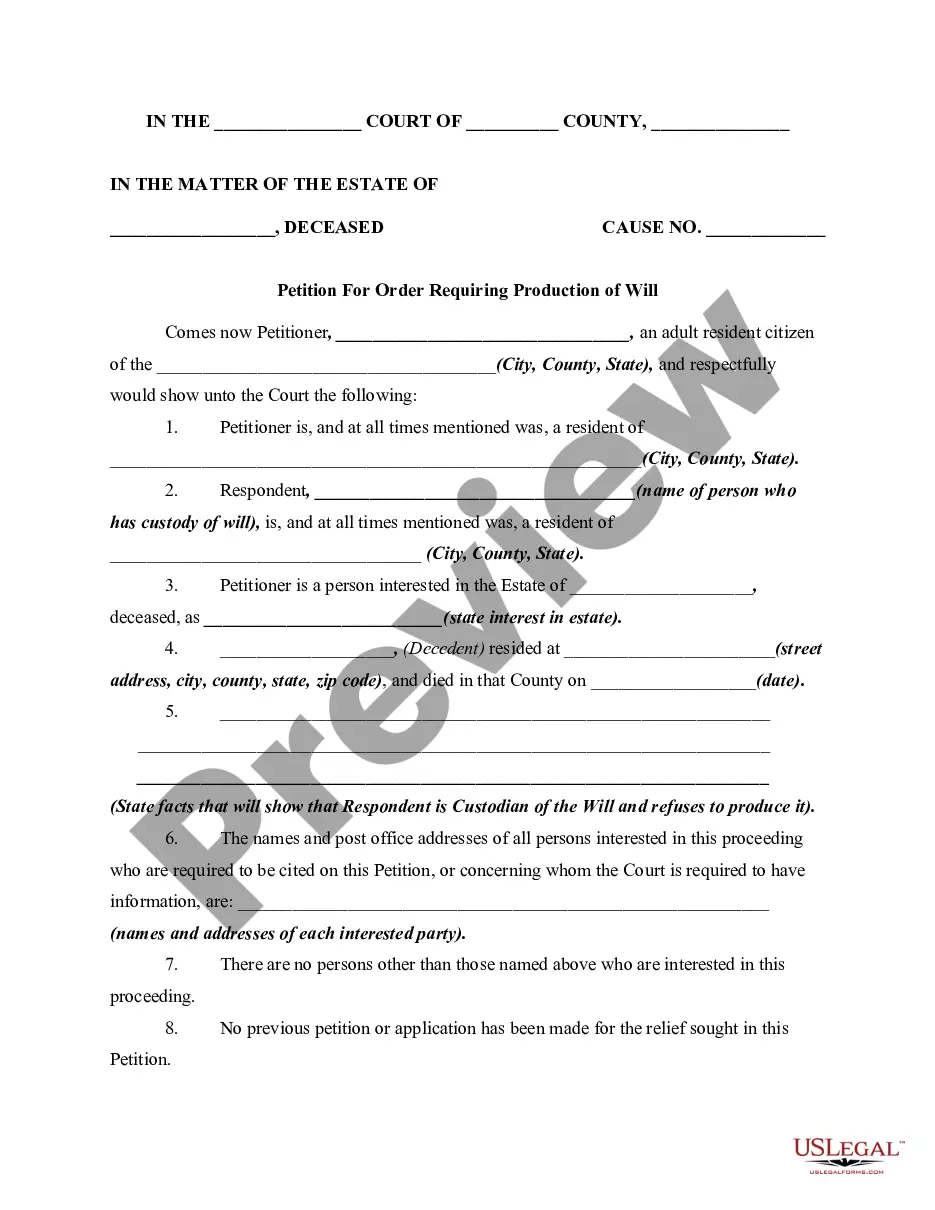
How to fill out Petition To Probate Lost Will?
- Log in to your existing US Legal Forms account by visiting the login page, ensuring your subscription is active. If not, renew your plan as needed.
- Explore the Preview mode and descriptions of available forms to ensure you've selected the correct petition film that aligns with your specific requirements.
- If necessary, utilize the Search tab to find additional templates that better suit your needs. Confirm that the document meets your local jurisdiction criteria.
- Select the appropriate subscription plan by clicking the Buy Now button; this will require you to create an account to unlock access to our extensive library.
- Complete your transaction by entering your payment information, either through credit card or PayPal to finalize the subscription.
- Download the petition film template to your device. It's also available for easy access later in the My Forms section of your profile.
With US Legal Forms, you benefit from an extensive library of over 85,000 legal forms, enabling both individuals and attorneys to create accurate documents effortlessly. Our service stands out with a broader form collection and access to premium experts for form assistance.
Start your journey towards hassle-free legal documentation today. Visit US Legal Forms to access your petition film and simplify your legal needs!
Form popularity
FAQ
An example of a petition could be a request to a government body to change a local law. It should outline the issue clearly, provide supporting evidence, and state what action you want the body to take. Reviewing actual petitions that influenced outcomes, akin to popular petition films, can serve as inspiration for your own.
Laying out a petition requires a logical flow of information. Start with a title, followed by a brief introduction that outlines the problem and your request. Use bullet points or numbered lists for clarity about your arguments, similar to effective petition film formats, making it easy for readers to navigate your petition.
The format of a petition typically includes a title, introduction, and a statement of the request. It's essential to list any relevant facts and cite laws if necessary. Familiarizing yourself with the structure of a petition film can help ensure your content is organized and persuasive.
Creating an example of a petition involves drafting a sample based on a clear issue and desired outcome. Include a title, a brief introduction, and a list of facts that support your claim. Referencing templates from US Legal Forms can provide you with a solid framework to create your example effectively.
To start a petition, first, define the issue clearly and state what you want to achieve. Capture attention by introducing the problem right away and explain why it matters. You can refer to popular petition film projects for insights on effective opening statements that resonate with the audience.
Writing your own petition requires clarity and structure. Begin with your case title, then describe your request in clear language and provide supporting facts. Make sure to review successful petition film examples to understand effective wording and formatting, ensuring your message is succinct and compelling.
To fill out a petition form, start by gathering all necessary information, such as the title of the case, your name, and the names of other participants. Clearly state the purpose of your petition and provide the details required, ensuring you follow any specific instructions given by the court or agency. For ease, you can use platforms like US Legal Forms that provide templates designed for common petition formats.
To show a movie, you need to secure the appropriate licensing rights from the film's distributor or rights holder. This process can vary, especially for petition films. Consider seeking assistance from platforms like USLegalForms, which provide guidance on securing permissions correctly and legally.
To get your film financed, focus on developing a compelling script and pitching it to potential investors. Present a life-like budget and production plan while clearly stating how the film aligns with market trends, especially in petition films. Utilizing resources from USLegalForms can equip you with legal documents needed during this process.
Film financiers typically earn a percentage of the film's profits, which can vary widely based on the project's budget and success. For petition films, this percentage may range from 10% to 25%, depending on the agreement. It's essential to negotiate terms that reflect the risks involved in financing your film.