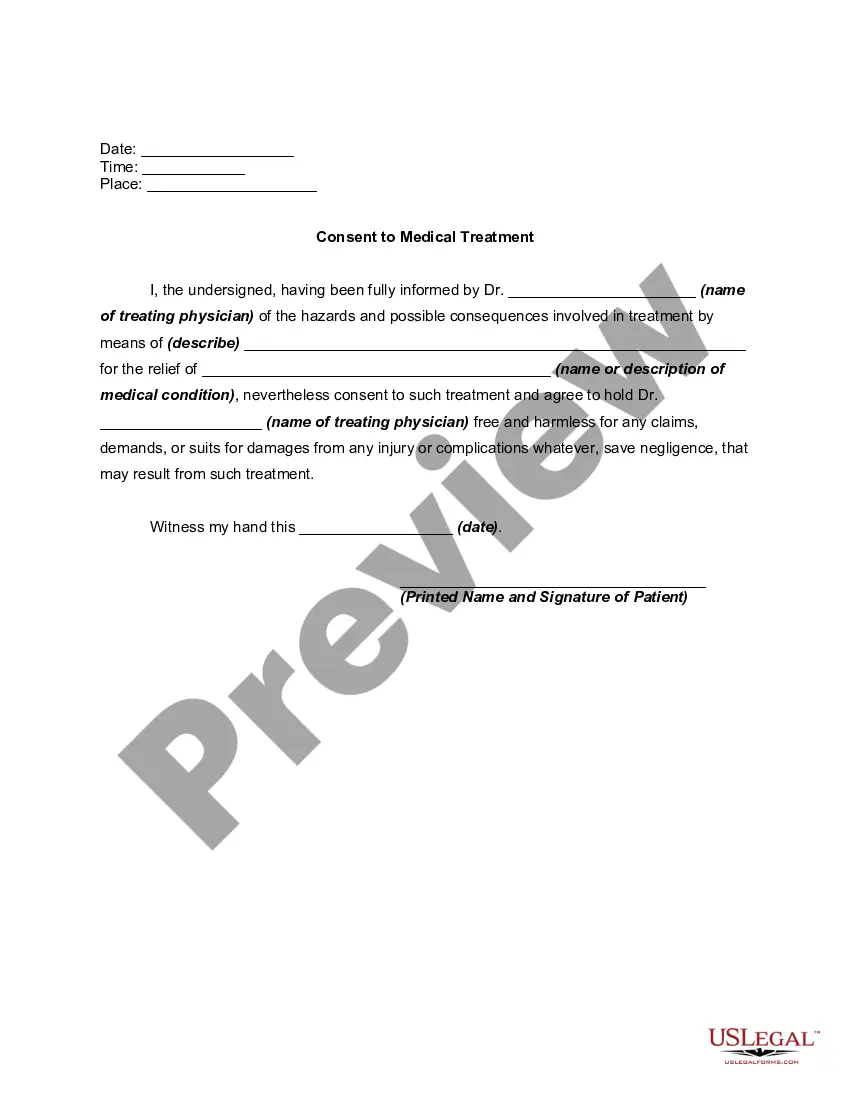
Dental Consent Form For Treatment
Description
Get your form ready online
Our built-in tools help you complete, sign, share, and store your documents in one place.
Make edits, fill in missing information, and update formatting in US Legal Forms—just like you would in MS Word.
Download a copy, print it, send it by email, or mail it via USPS—whatever works best for your next step.
Sign and collect signatures with our SignNow integration. Send to multiple recipients, set reminders, and more. Go Premium to unlock E-Sign.
If this form requires notarization, complete it online through a secure video call—no need to meet a notary in person or wait for an appointment.
We protect your documents and personal data by following strict security and privacy standards.

Make edits, fill in missing information, and update formatting in US Legal Forms—just like you would in MS Word.

Download a copy, print it, send it by email, or mail it via USPS—whatever works best for your next step.

Sign and collect signatures with our SignNow integration. Send to multiple recipients, set reminders, and more. Go Premium to unlock E-Sign.

If this form requires notarization, complete it online through a secure video call—no need to meet a notary in person or wait for an appointment.

We protect your documents and personal data by following strict security and privacy standards.
Looking for another form?






How to fill out General Form Of Consent To Medical Treatment?
Locating a reliable source for obtaining the most up-to-date and suitable legal templates is a significant portion of managing administrative tasks.
Identifying the correct legal paperwork requires precision and meticulousness, which is why it’s vital to obtain samples of the Dental Consent Form For Treatment solely from trustworthy providers, such as US Legal Forms. An incorrect template can lead to wasted time and prolong your situation.
After obtaining the form on your device, you can edit it using the editor or print it out to complete it by hand. Eliminate the stress associated with your legal paperwork. Explore the vast catalog of US Legal Forms to discover legal templates, assess their applicability to your situation, and download them immediately.
- Utilize the library navigation or search bar to find your template.
- Check the form’s details to verify its compliance with your state's and area’s requirements.
- View the form preview, if accessible, to confirm that the template aligns with your interests.
- Continue searching until you locate the appropriate document if the Dental Consent Form For Treatment does not meet your needs.
- Once you are confident in the form’s applicability, download it.
- If you are a registered user, click Log in to authenticate and access your selected forms in My documents.
- If you do not have an account yet, click Buy now to acquire the template.
- Select the payment plan that meets your requirements.
- Proceed to registration to finalize your purchase.
- Complete your transaction by choosing a payment method (credit card or PayPal).
- Select the download format for the Dental Consent Form For Treatment.
Form popularity
FAQ
Creating an informed consent form for treatment involves several important steps. First, you should clearly outline the procedure, including potential risks and benefits, to ensure that patients understand what they are consenting to. Next, include space for signatures and dates to demonstrate that the patient has acknowledged this information. Utilizing a platform like US Legal Forms can simplify this process by providing templates specifically designed for dental consent forms, saving you time and ensuring compliance.
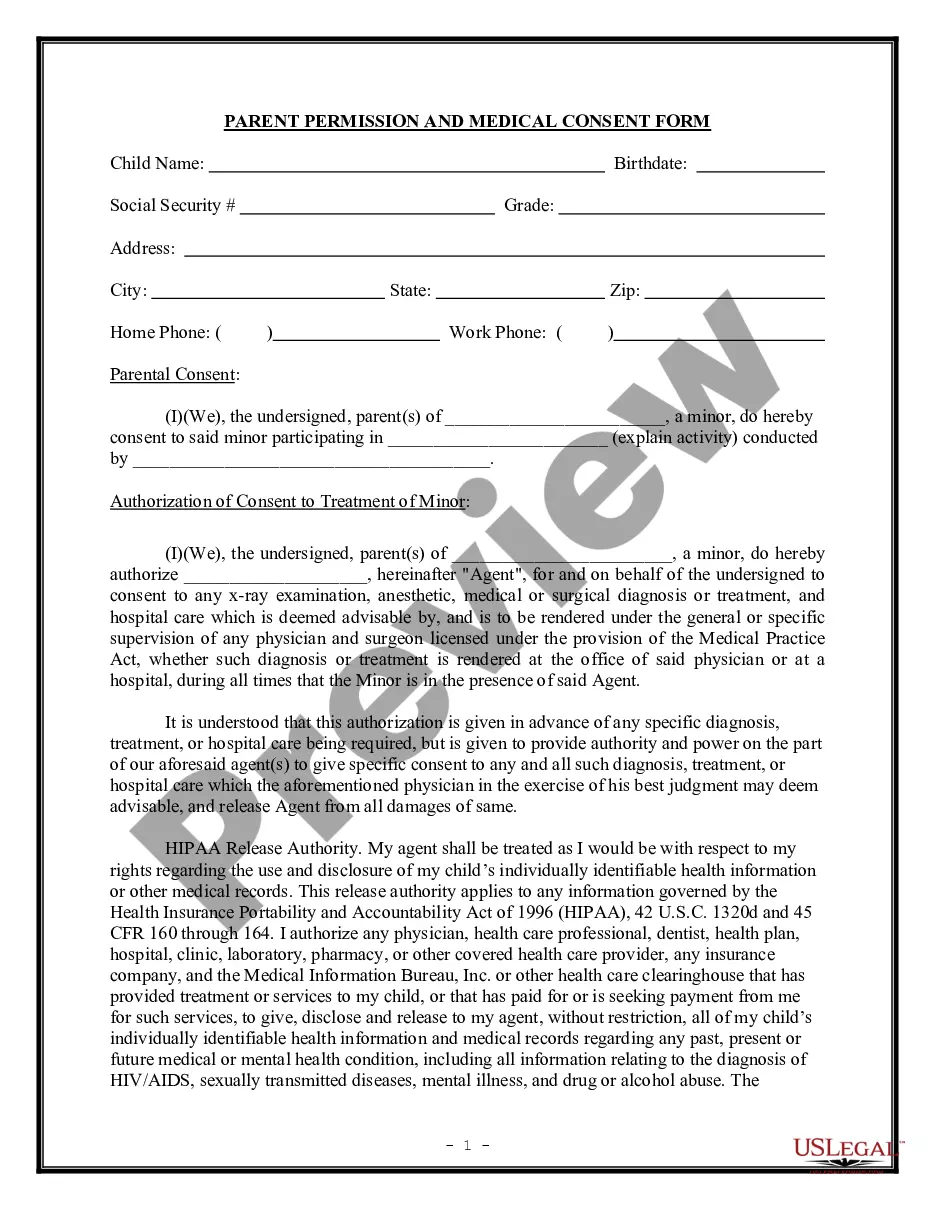
The primary difference between general consent and informed consent lies in the level of detail and understanding. General consent allows a healthcare provider to perform a broad range of treatments, while informed consent requires a specific explanation of a treatment, including risks and benefits. Informed consent is often documented through a dental consent form for treatment, ensuring patients make fully informed decisions about their care. This distinction is crucial for protecting both patients' rights and providers' responsibilities.
To fill out an informed consent form, begin by thoroughly reading the document and understanding its contents, especially the treatment details and associated risks. Complete the personal information section and any required medical history. Sign the form only after you feel confident about the information provided and ensure it aligns with your understanding of the dental consent form for treatment. Seeking clarification from your healthcare provider is wise if anything is unclear.
The four types of consent include implied consent, explicit consent, informed consent, and general consent. Implied consent occurs through the patient's actions, while explicit consent is given verbally or in writing. Informed consent involves a comprehensive explanation of the procedure and its risks, often documented in a dental consent form for treatment. Understanding these types is crucial for both patients and providers to ensure clear communication and legal protection.
General consent to treat means that a patient agrees to receive treatment from a healthcare provider without specifying the details of each procedure. This consent is typically obtained upon the patient's first visit and remains valid for future treatments. It is important as it establishes the healthcare provider's authority to deliver care, including various dental procedures covered under the dental consent form for treatment.
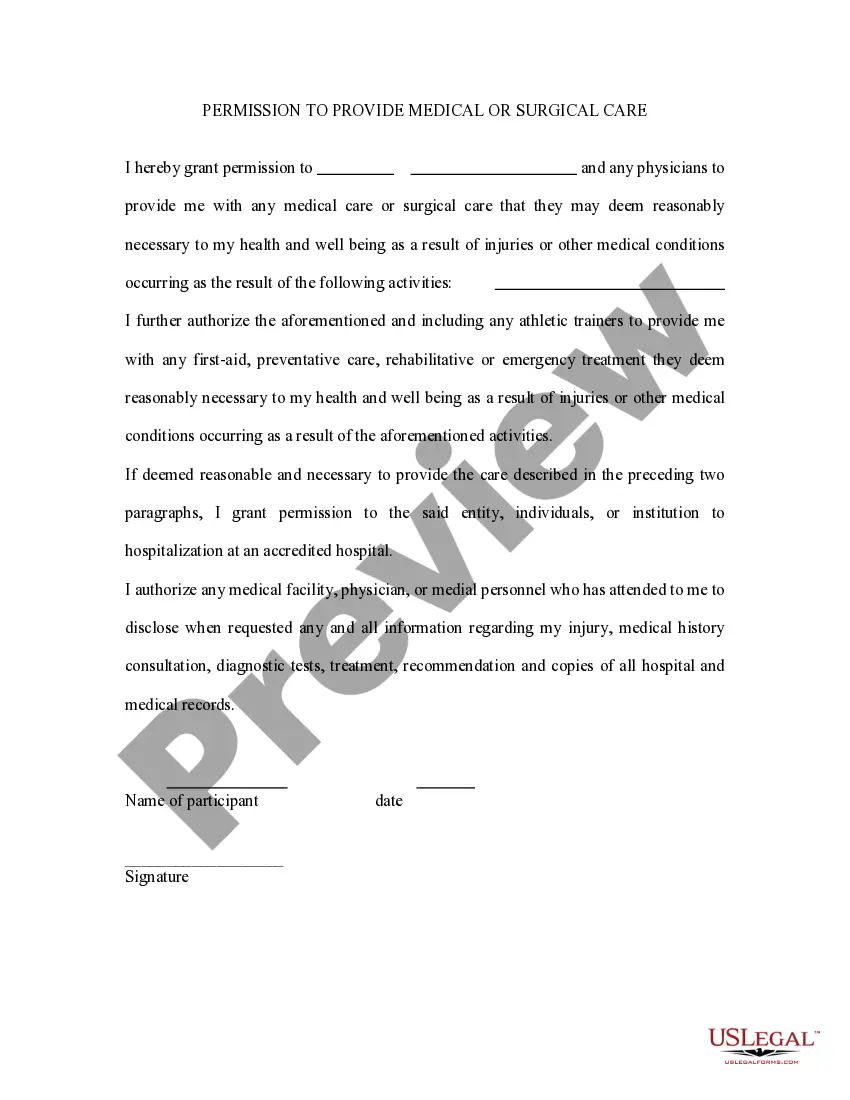
General consent for dental treatment refers to the broad authorization a patient gives to a dentist to perform various procedures. This can include routine check-ups, cleanings, or other necessary dental treatments. Signing a general consent form ensures that you acknowledge the potential risks and benefits of these treatments. For convenience, you can find templates for general consent forms on US Legal Forms.
To write a consent letter for dental treatment, begin with a clear statement indicating your request for treatment, specifying the procedure type. Include your personal details, and express your understanding of the treatment's risks and benefits. This letter serves as a formal agreement for your dental provider, confirming that you are informed and in agreement with the proposed procedures.
Filling out the consent form involves several steps. First, read through the entire form to grasp what is being asked of you. Next, provide your information accurately, specifying the treatment options and any relevant medical conditions. Lastly, sign the form after confirming that you understand the treatments and any associated risks.
In a dental consent form for treatment, you should write your full name, date of birth, and any relevant medical history, including allergies and medications. Additionally, you should clearly specify the treatment you are consenting to and acknowledge an understanding of the risks involved. This documentation is crucial for ensuring both your and your provider's accountability in the treatment process.
An example of a consent to treatment form in dentistry outlines the procedures that will be performed, such as fillings or braces. It details the possible risks, benefits, and alternatives to these treatments as well. This form helps ensure that you are fully informed and consent to proceed. You can utilize platforms like US Legal Forms to access examples tailored to dental practices.