Taxes In Escrow At Closing
Description
Get your form ready online
Our built-in tools help you complete, sign, share, and store your documents in one place.
Make edits, fill in missing information, and update formatting in US Legal Forms—just like you would in MS Word.
Download a copy, print it, send it by email, or mail it via USPS—whatever works best for your next step.
Sign and collect signatures with our SignNow integration. Send to multiple recipients, set reminders, and more. Go Premium to unlock E-Sign.
If this form requires notarization, complete it online through a secure video call—no need to meet a notary in person or wait for an appointment.
We protect your documents and personal data by following strict security and privacy standards.

Make edits, fill in missing information, and update formatting in US Legal Forms—just like you would in MS Word.

Download a copy, print it, send it by email, or mail it via USPS—whatever works best for your next step.

Sign and collect signatures with our SignNow integration. Send to multiple recipients, set reminders, and more. Go Premium to unlock E-Sign.

If this form requires notarization, complete it online through a secure video call—no need to meet a notary in person or wait for an appointment.

We protect your documents and personal data by following strict security and privacy standards.
Looking for another form?



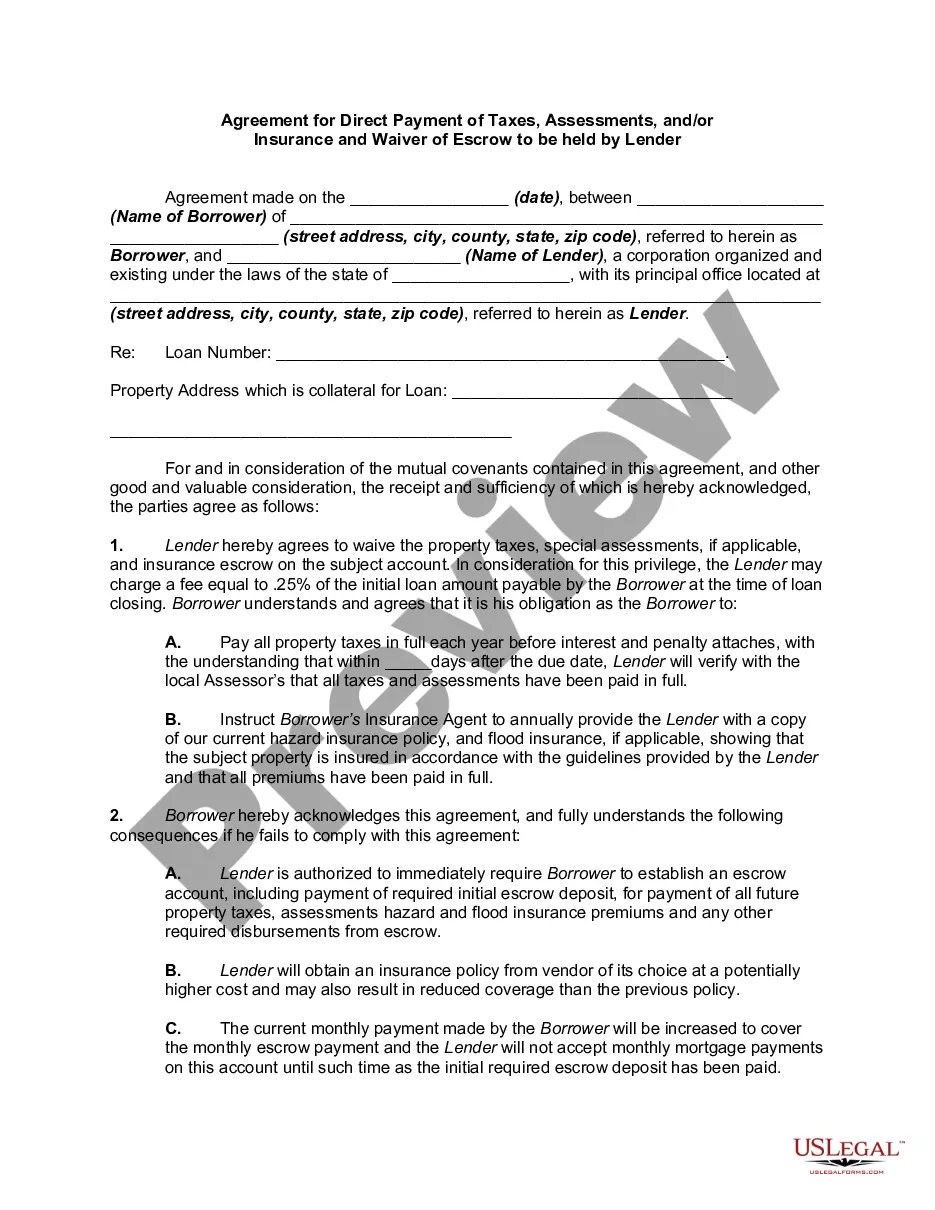
How to fill out Agreement For Direct Payment Of Taxes, Assessments, And/or Insurance And Waiver Of Escrow To Be Held By Lender?
Securing a reliable destination to obtain the latest and suitable legal templates is half the battle of dealing with bureaucracy.
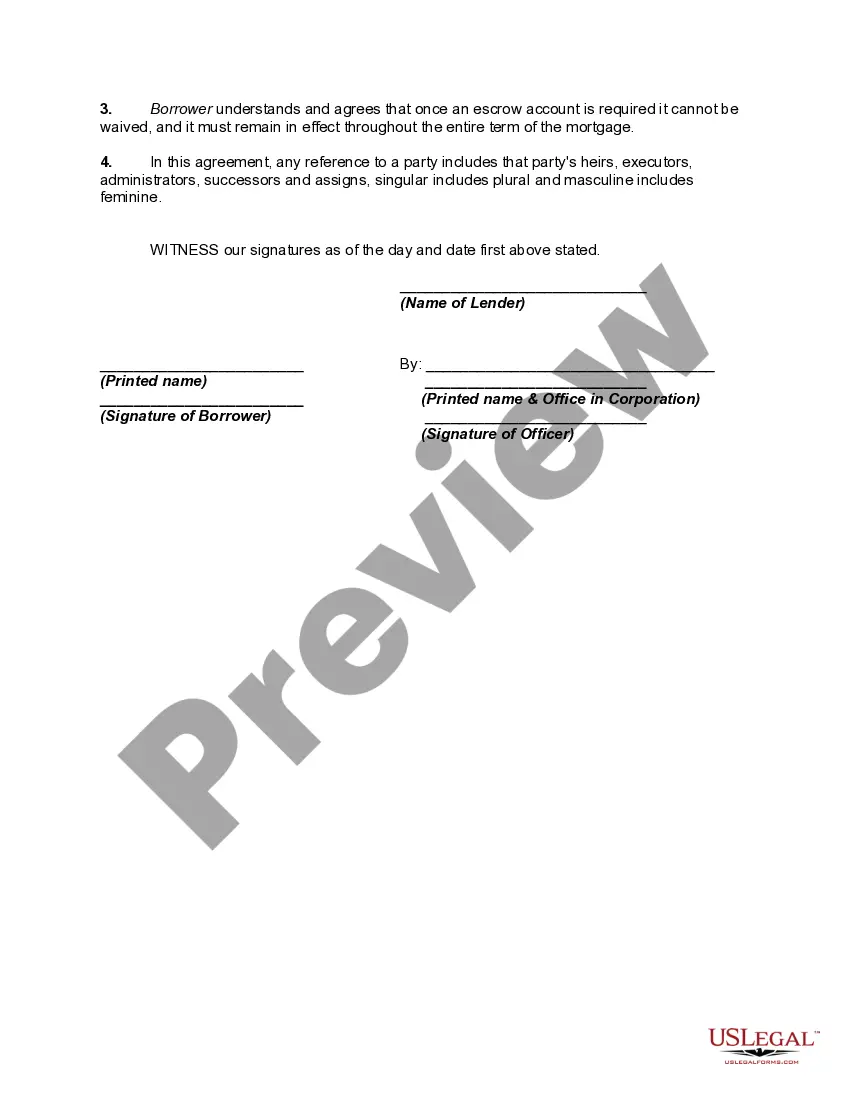
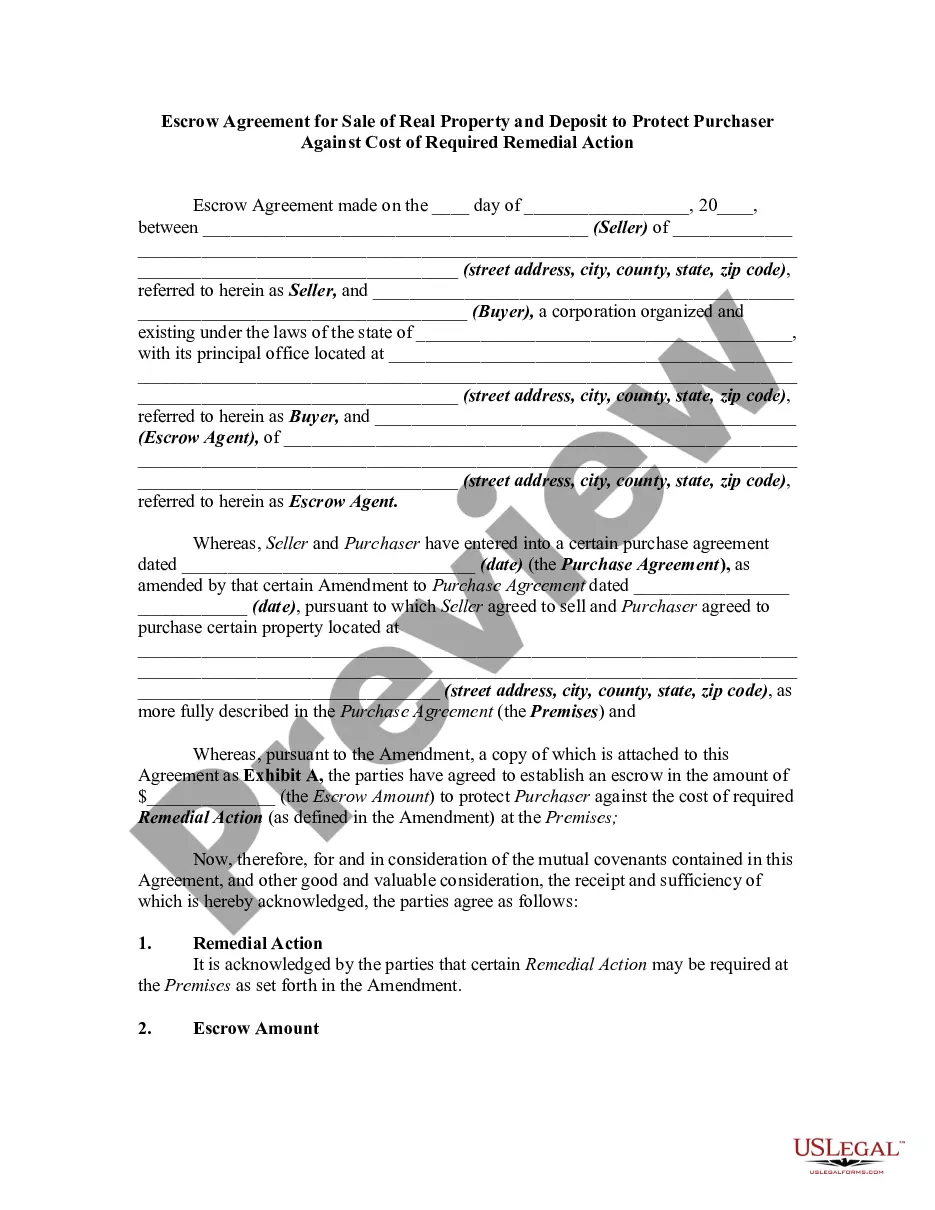
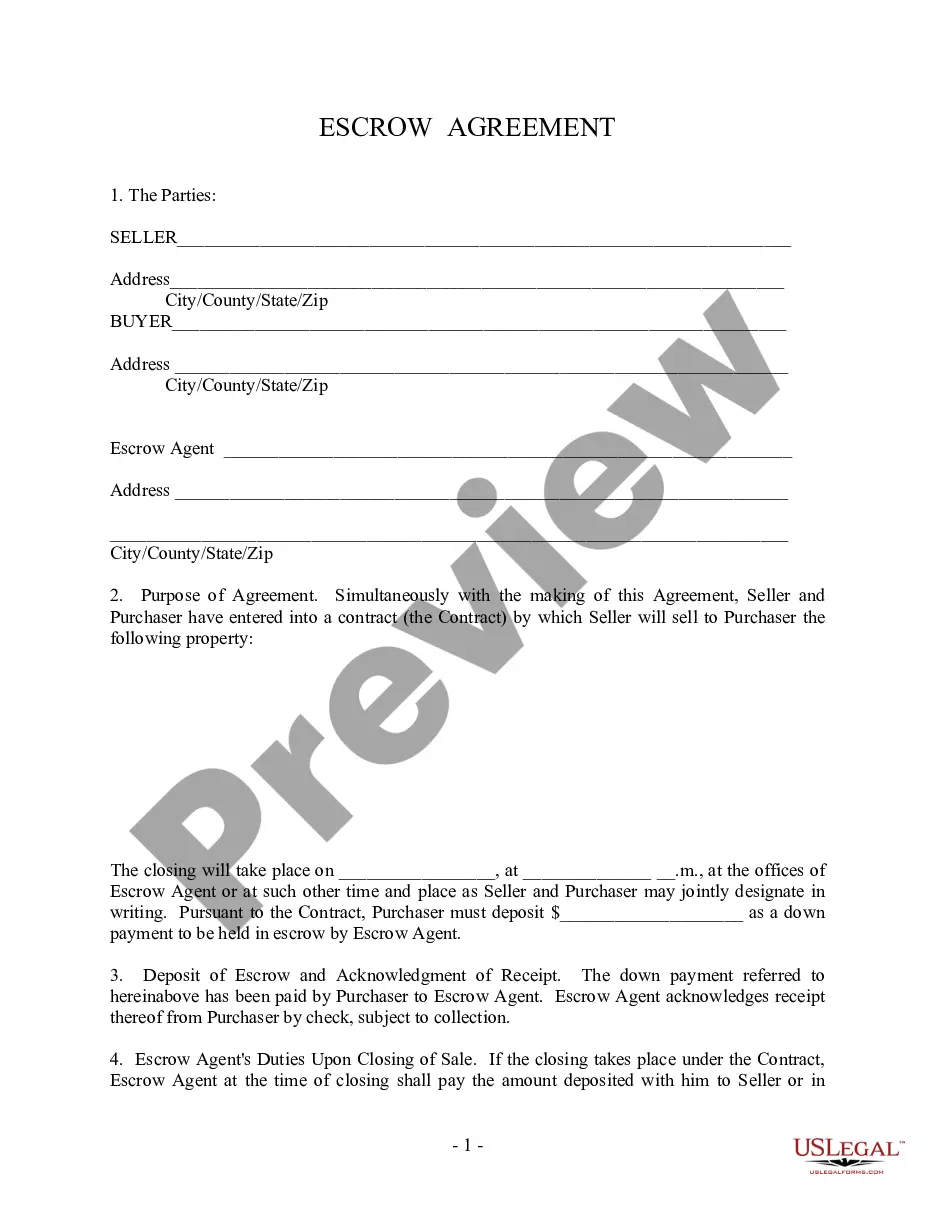
Locating the correct legal documents demands accuracy and meticulousness, which is why it is crucial to obtain samples of Taxes In Escrow At Closing solely from trustworthy sources, such as US Legal Forms. An incorrect template can squander your time and delay your current situation. With US Legal Forms, you have minimal concerns. You can access and verify all the specifics regarding the document’s application and significance for your situation and in your state or county.
Remove the stress associated with your legal documentation. Explore the extensive US Legal Forms library where you can locate legal templates, assess their applicability to your situation, and download them instantly.
- Utilize the library navigation or search feature to find your template.
- Examine the form’s details to determine if it meets the criteria of your state and county.
- Check the form preview, if available, to ensure the form is what you are looking for.
- Continue the search and seek the suitable template if the Taxes In Escrow At Closing does not meet your needs.
- Once you are confident about the form’s pertinence, download it.
- If you are a registered user, click Log in to verify and access your selected forms in My documents.
- If you do not have an account yet, click Buy now to obtain the form.
- Choose the pricing option that suits your requirements.
- Proceed to the registration to finalize your purchase.
- Complete your purchase by selecting a payment method (credit card or PayPal).
- Select the document format for downloading Taxes In Escrow At Closing.
- Once you have the form on your device, you can edit it with the editor or print it and fill it out manually.
Form popularity
FAQ
Escrow is calculated at closing by taking into account your property taxes and homeowners insurance premiums. The lender estimates the total annual costs, divides them by twelve, and adds a cushion for unexpected expenses. Taxes in escrow at closing are designed to create a reserve that covers these costs smoothly. Understanding this calculation helps you prepare for your ongoing financial obligations.
At closing, the amount of property tax that is prepaid can vary, but it usually ranges from two to six months’ worth. This prepaid amount is included in the total funds placed into escrow. By having taxes in escrow at closing, you can ensure that these amounts are handled efficiently. This upfront payment helps protect you from late fees and potential penalties.
In Arkansas, property taxes are generally due on October 15th each year. If you have taxes in escrow at closing, your lender often takes care of this payment for you. It's important to keep this date in mind to avoid any penalties. Knowing your tax due dates helps you stay organized and prepared.
Typically, lenders require two to six months of property taxes in escrow at closing. This amount helps ensure that you have enough funds available to cover your tax obligation when it comes due. The specific requirement can vary based on your lender's policies. Understanding how taxes in escrow at closing work is vital for managing your finances effectively.
Deciding whether to put your taxes in escrow is a personal choice, but it often simplifies financial planning. By placing taxes in escrow at closing, you can avoid a significant lump sum payment when taxes are due. This method allows you to budget effectively, ensuring that the funds are available when needed, and prevents unexpected financial strain.
When you see $5000 in escrow, it typically refers to the funds set aside during a real estate transaction to cover certain costs, such as taxes in escrow at closing. This amount ensures that the necessary payments are made on your behalf, providing peace of mind during the home buying process. It acts as a security measure, ensuring that both parties fulfill their obligations, especially regarding property taxes.
It is not uncommon for a lender to require a buyer to pay a full year's worth of property taxes as a closing cost. The amount of property tax you will owe depends on the home's location and value.
Escrow Deposit for Property Taxes & Mortgage Insurance ? The buyer is often required to put down two months of property tax and mortgage insurance payments at closing.
Example #1 Let us assume that company A takes over company B. Now company A does not want to make full payment to company B till the transition is complete. In this case, company A will deposit the payment into a third-party account. This third party is an escrow.
Who owns the money in an escrow account? The buyer in a transaction owns the money held in escrow. This is because the escrow agent only has the money in trust. The ownership of the money is transferred to the seller once the transaction's obligations are met.