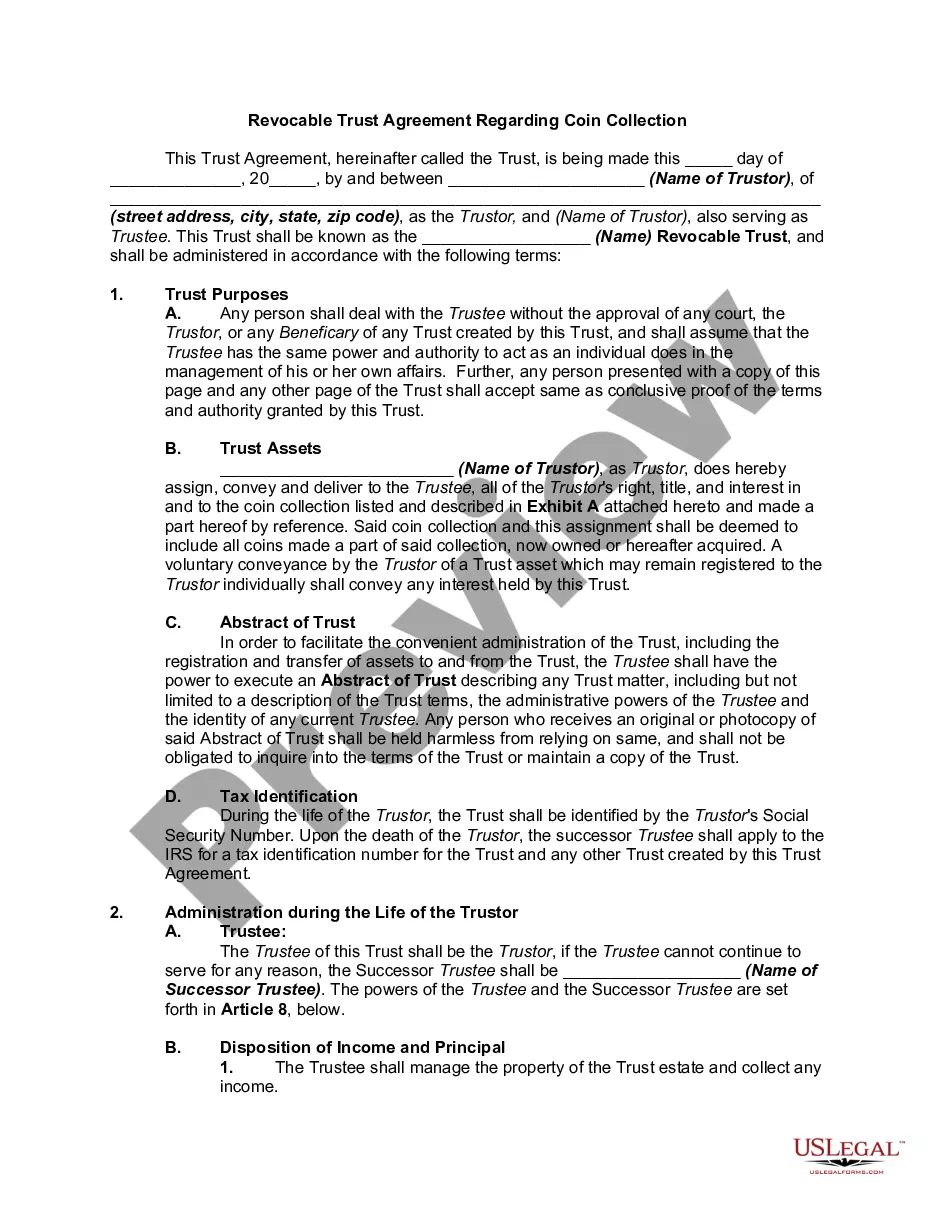
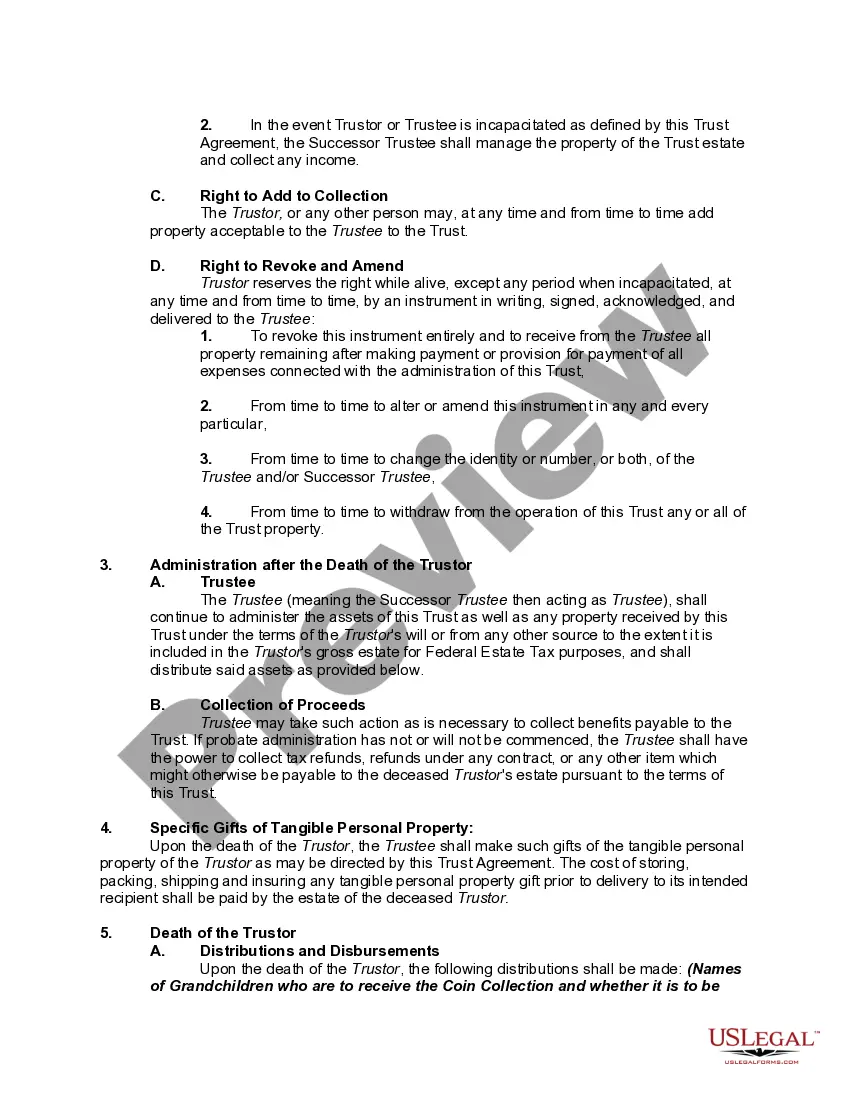
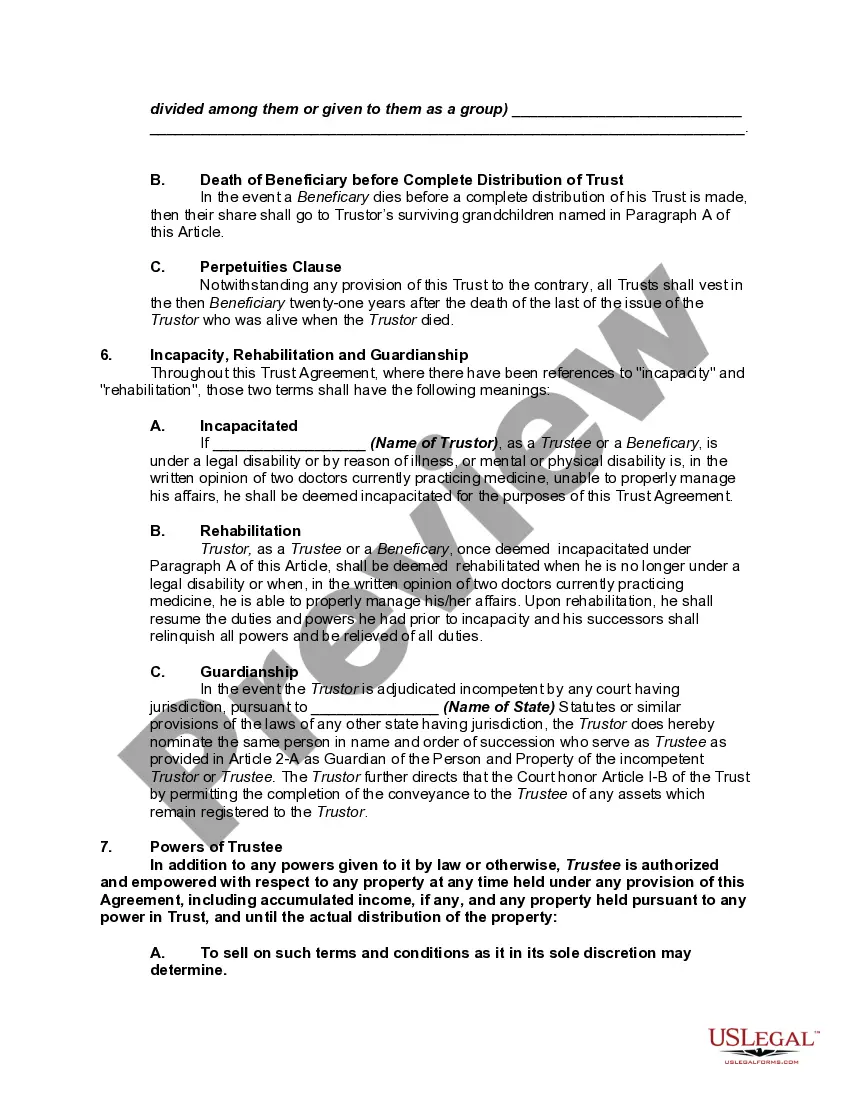
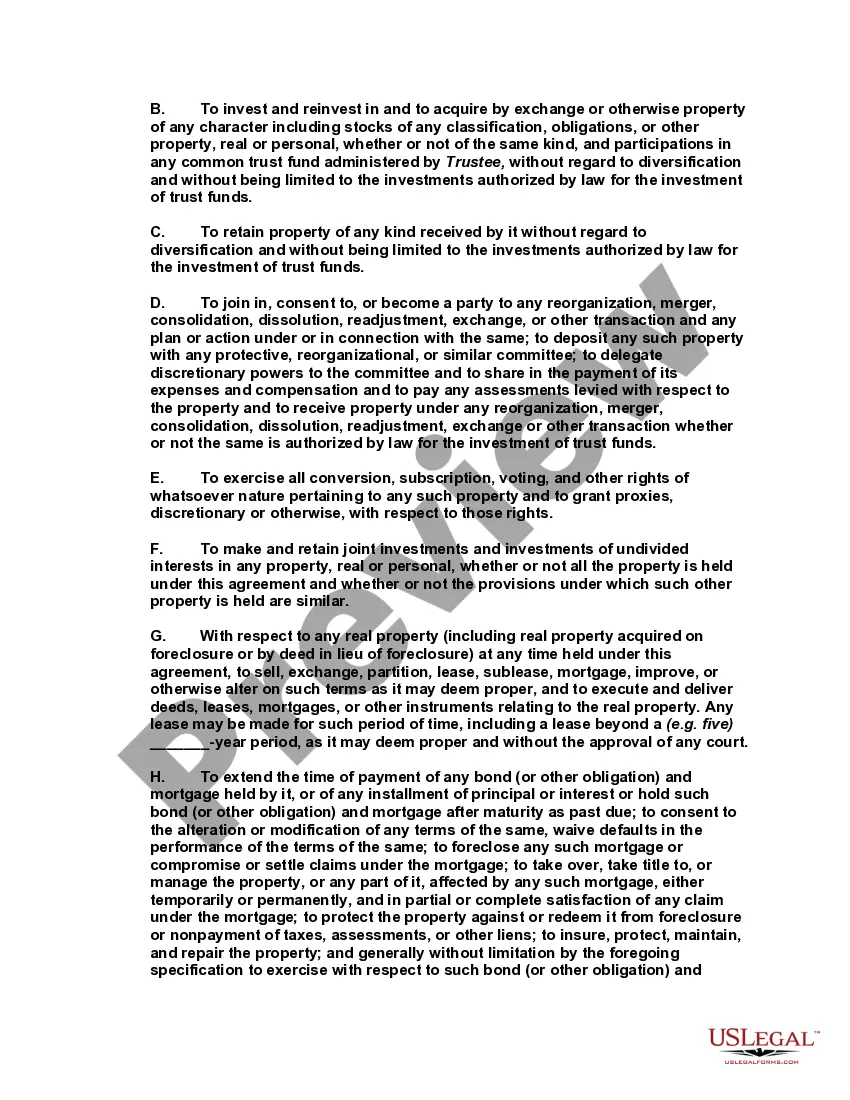
Trust Form Revocable With A Condition
Description
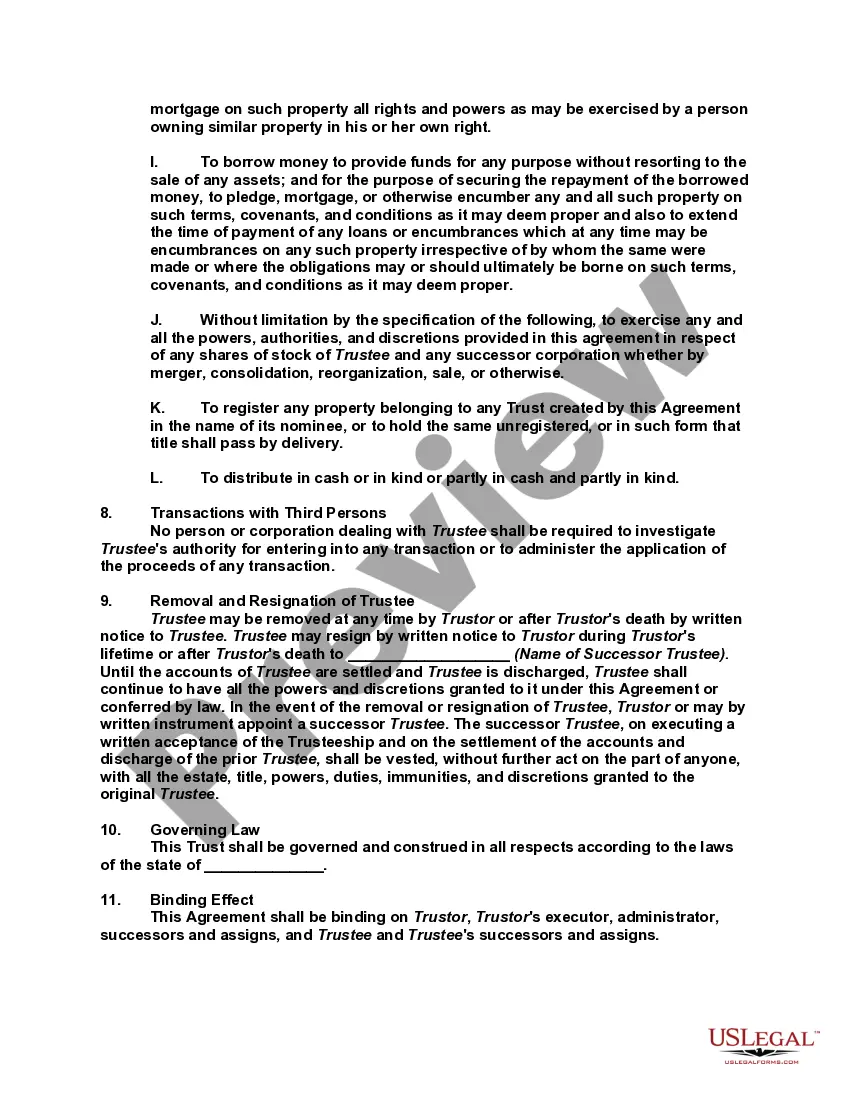
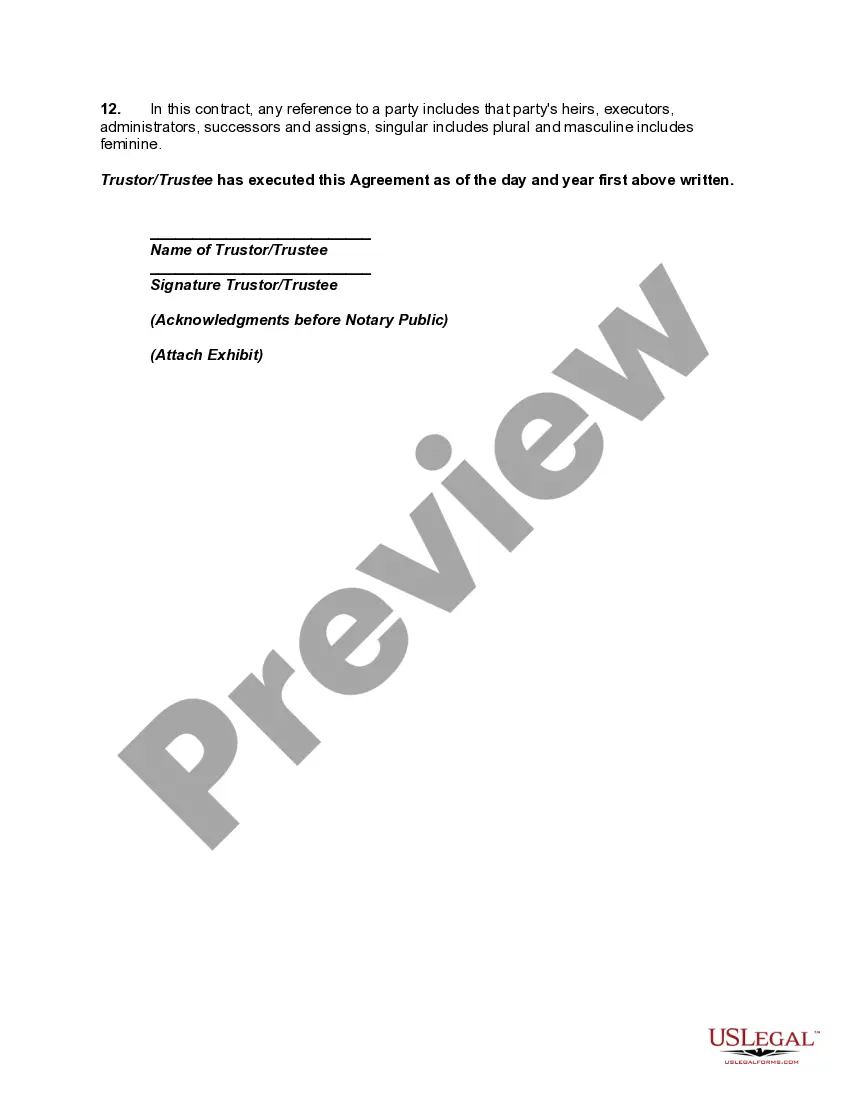
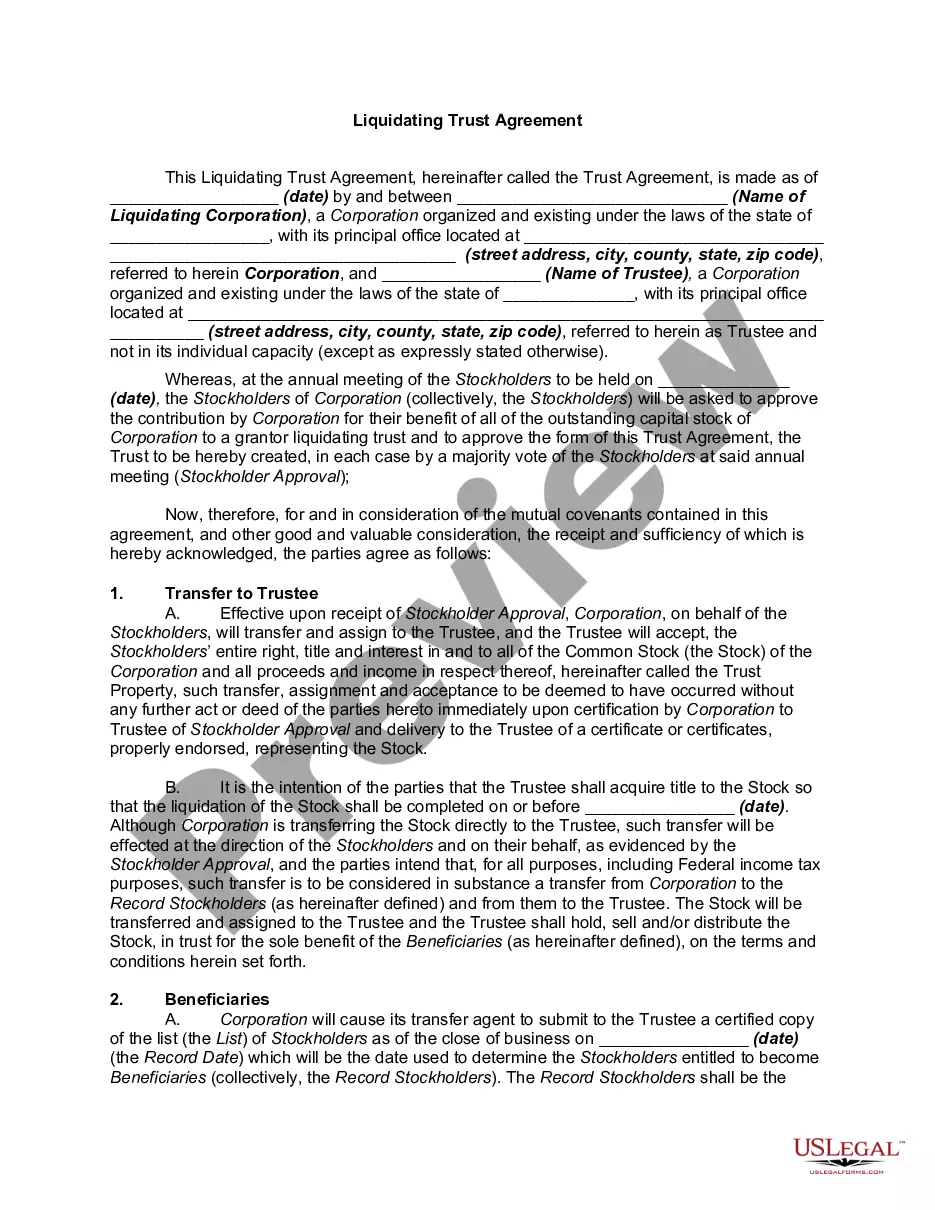
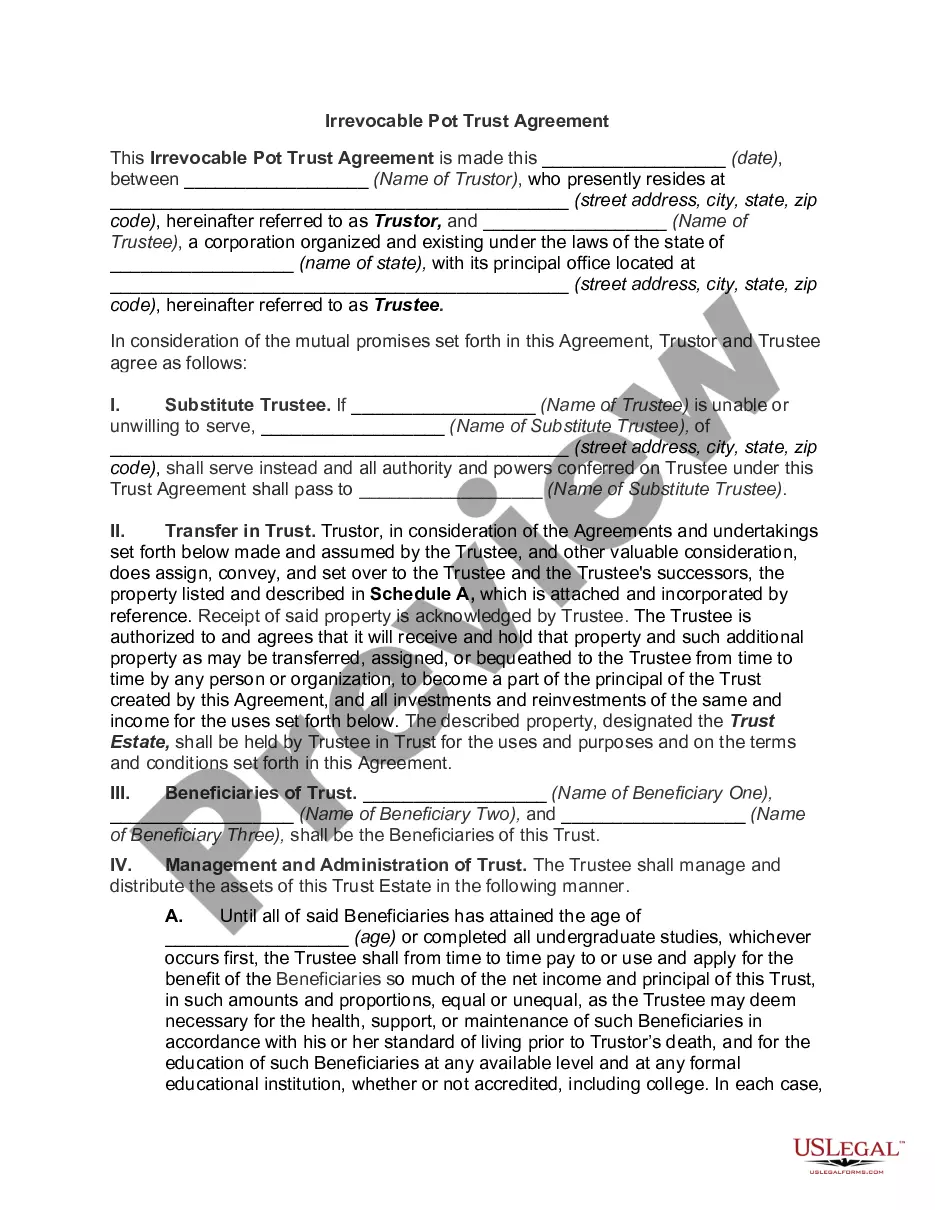
Get your form ready online
Our built-in tools help you complete, sign, share, and store your documents in one place.
Make edits, fill in missing information, and update formatting in US Legal Forms—just like you would in MS Word.
Download a copy, print it, send it by email, or mail it via USPS—whatever works best for your next step.
Sign and collect signatures with our SignNow integration. Send to multiple recipients, set reminders, and more. Go Premium to unlock E-Sign.
If this form requires notarization, complete it online through a secure video call—no need to meet a notary in person or wait for an appointment.
We protect your documents and personal data by following strict security and privacy standards.

Make edits, fill in missing information, and update formatting in US Legal Forms—just like you would in MS Word.

Download a copy, print it, send it by email, or mail it via USPS—whatever works best for your next step.

Sign and collect signatures with our SignNow integration. Send to multiple recipients, set reminders, and more. Go Premium to unlock E-Sign.

If this form requires notarization, complete it online through a secure video call—no need to meet a notary in person or wait for an appointment.

We protect your documents and personal data by following strict security and privacy standards.
Looking for another form?
How to fill out Revocable Trust Agreement Regarding Coin Collection?
- If you are a returning user, log in to your account and download the required form by clicking the Download button, ensuring your subscription is current. If necessary, renew your plan.
- For new users, begin by reviewing the Preview mode and form description to confirm that you've selected the appropriate template that matches your needs and local jurisdiction requirements.
- If you discover inconsistencies in your selection, utilize the Search tab above to find the correct template that suits your requirements.
- Once you find the right form, click on the Buy Now button and select your preferred subscription plan. Register for an account to unlock access to the extensive library.
- Complete your purchase by entering your credit card information or using your PayPal account to pay for the subscription.
- Download the form to your device, and you can access it anytime in the My Forms section of your profile.
In conclusion, US Legal Forms not only provides a robust collection of more than 85,000 editable legal forms but also offers access to premium experts for any assistance you may need. This ensures that your trust forms are completed accurately and in compliance with legal requirements.
Get started today and experience the convenience of managing your legal documents effortlessly.
Form popularity
FAQ
When considering a trust form revocable with a condition, it's important to be aware of some drawbacks. One primary disadvantage is that assets in a revocable trust do not receive the same level of creditor protection as those in an irrevocable trust. Additionally, since you maintain control over the assets, they are included in your taxable estate, potentially leading to higher estate taxes. Finally, managing a revocable trust may require ongoing attention and periodic updates, which can be time-consuming for some individuals.
One of the main disadvantages of a family trust, particularly a trust form revocable with a condition, is the potential for family disputes. When clear communication is absent, misunderstandings about the trust's terms can lead to conflict. Additionally, the trust can incur legal and tax-related costs that may be surprising. Ensuring all family members understand the trust’s purpose can help mitigate these challenges.
Deciding whether your parents should use a trust form revocable with a condition depends on their specific situation. If they want to manage their assets during their lifetime and streamline the transfer to beneficiaries, a trust can be beneficial. It simplifies the process and may help avoid probate delays. However, it’s important for them to consider their unique financial circumstances and consult professionals for personalized advice.
The downfall of establishing a trust form revocable with a condition lies in the complexity it brings to your financial planning. Administration of a trust usually requires meticulous record-keeping and can lead to management confusion. If the trust documentation is unclear, it may lead to disputes among beneficiaries. It's wise to consult experts to navigate this process effectively.
Using a trust form revocable with a condition can have downsides. One concern is that creating a trust might involve upfront legal fees and ongoing maintenance. Additionally, you must transfer assets into the trust, which can be time-consuming. Not to mention, a trust does not provide complete protection from creditors or lawsuits, which is an important consideration.
It's essential to be cautious about which assets to exclude from your revocable trust. Assets with designated beneficiaries, such as life insurance policies and retirement accounts, typically should not go into the trust. You may also want to refrain from placing assets subject to specific legal constraints or taxes. Engaging with the Trust form revocable with a condition can help you make informed decisions.
You can include a variety of assets in your revocable trust to ensure effective management and distribution. Common inclusions are bank accounts, real estate, and investment properties. Additionally, personal property, such as jewelry or art, can also be part of your trust. Remember, utilizing the Trust form revocable with a condition provides clarity on what to include.
One common mistake is failing to properly fund the trust after its creation. Parents might set up a trust but forget to move assets into it, rendering it ineffective for estate planning. Additionally, not updating the trust to reflect life changes can lead to issues down the line. Using the Trust form revocable with a condition ensures that all necessary details are captured and can adapt to your family's needs.
It's wise to avoid placing certain assets in a revocable trust. For instance, retirement accounts such as 401(k)s and IRAs generally shouldn't be included because they have designated beneficiaries. Additionally, some types of real estate can complicate trust management. If you're uncertain, consult with an expert about the Trust form revocable with a condition to ensure your assets are protected.
Yes, even if your trust does not generate income, you may still need to file a final IRS Form 1041. This form is necessary to declare the trust’s status and to formally close it. It's important to comply with tax filing requirements to avoid potential penalties. Using the Trust form revocable with a condition can help streamline this process.