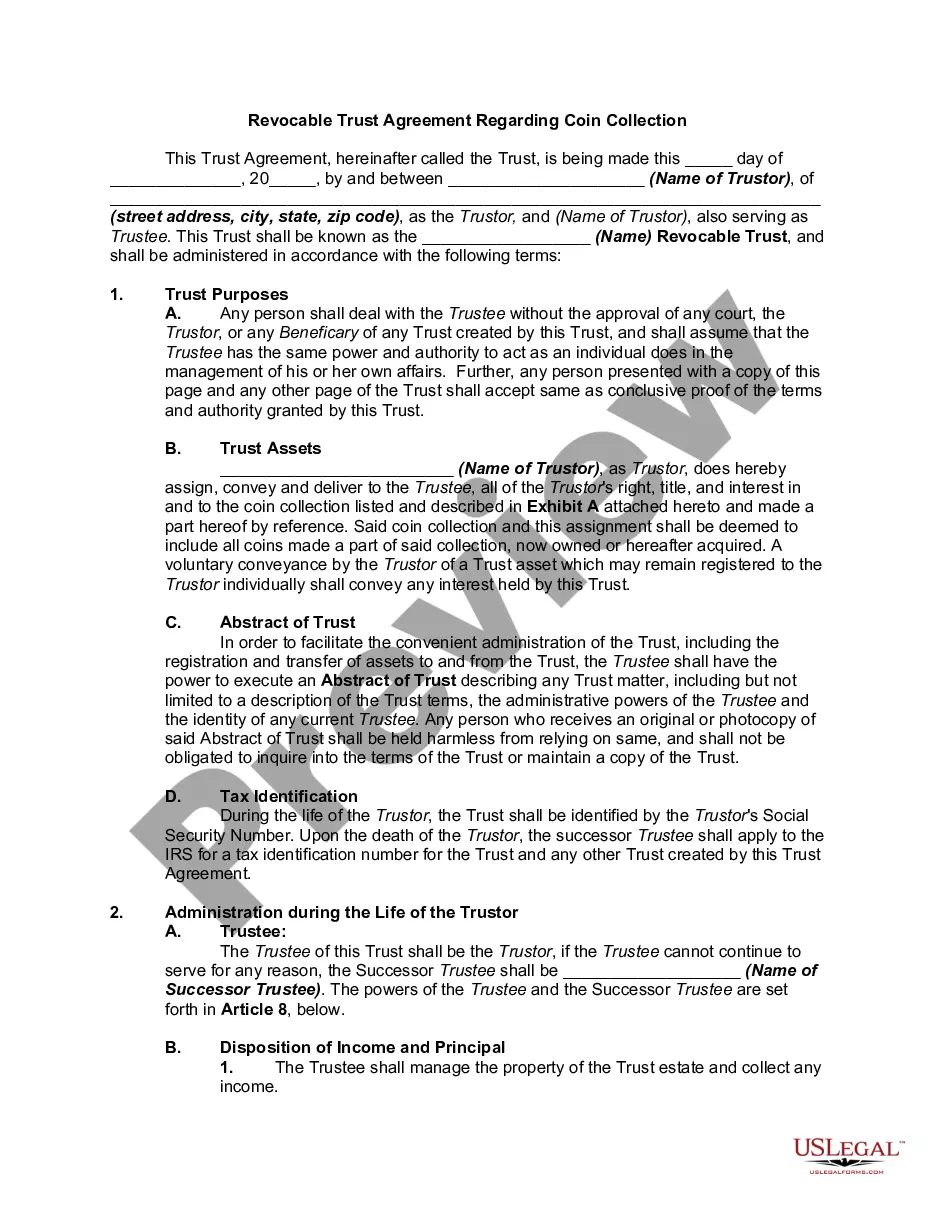
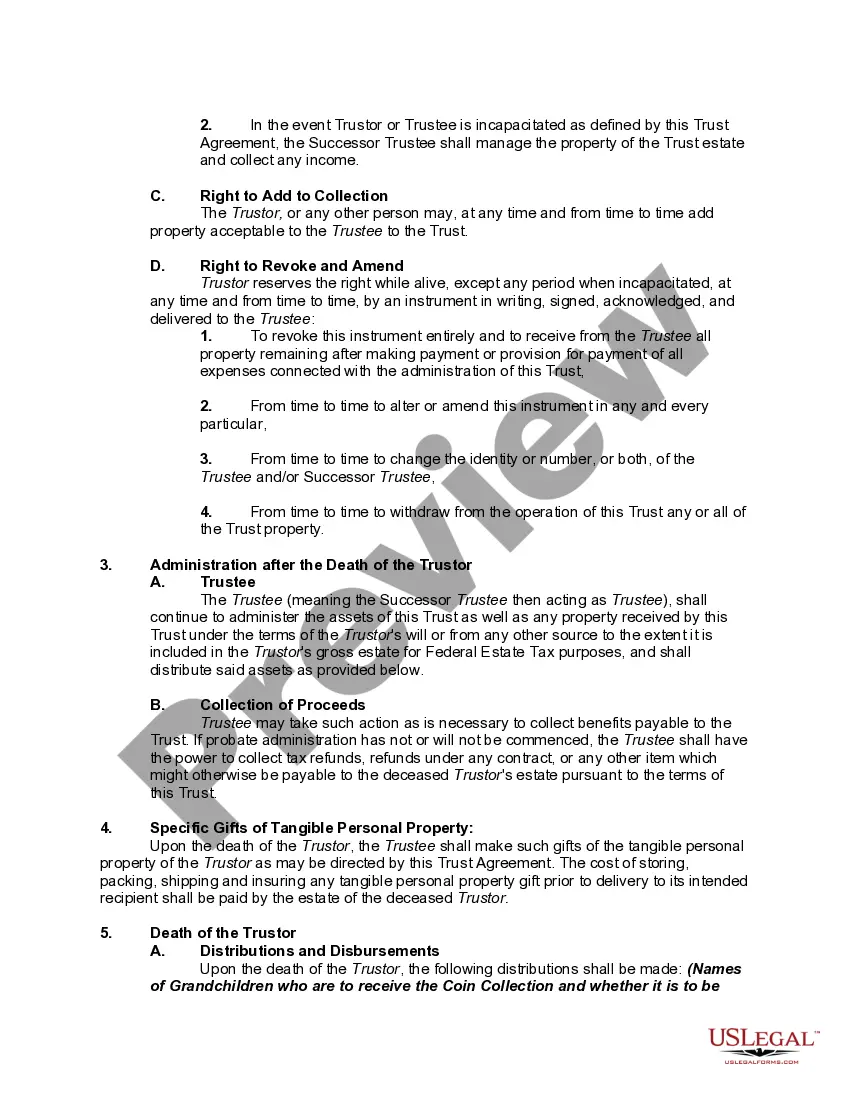
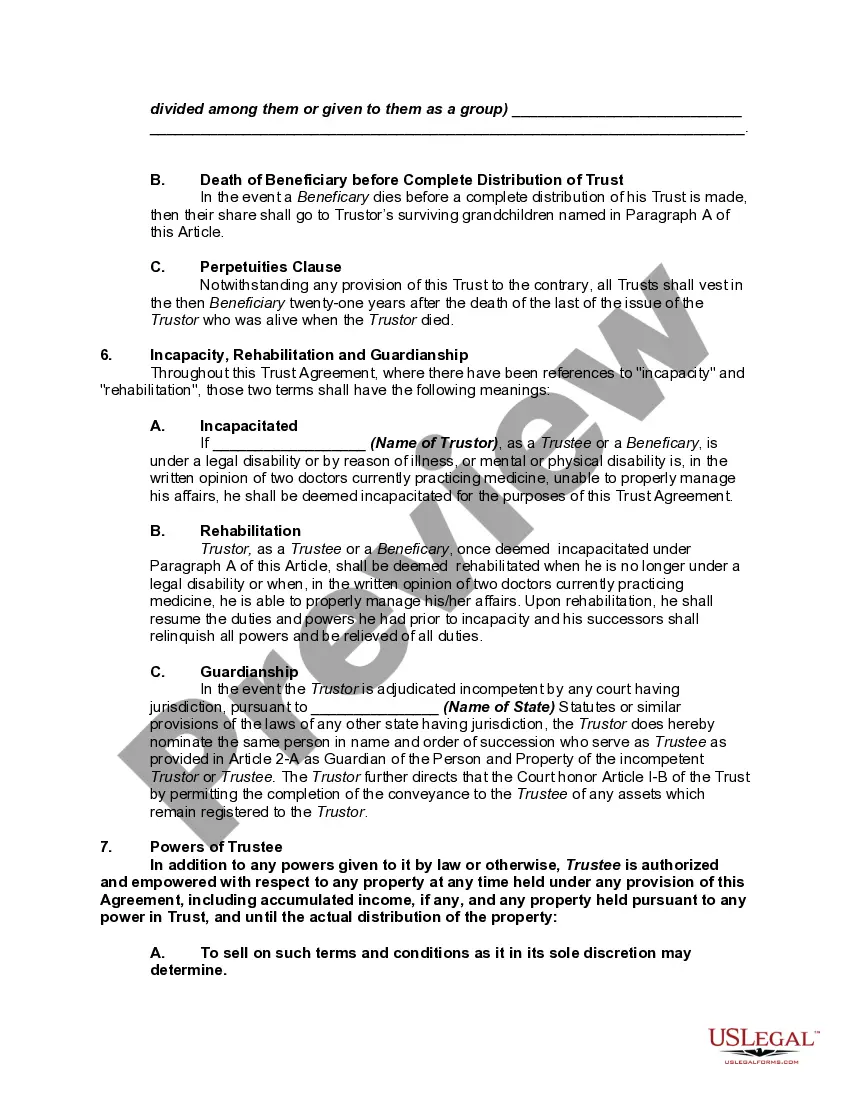
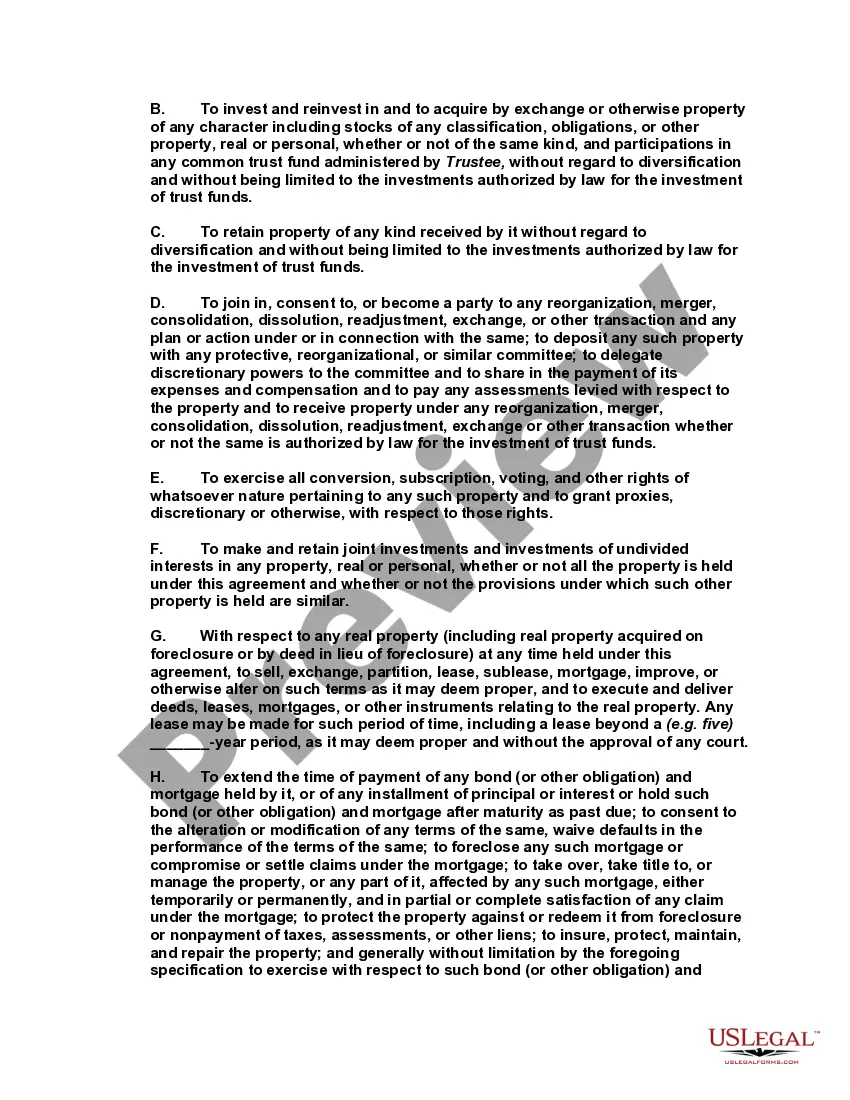
Revocable Trust Regarding For The Information
Description
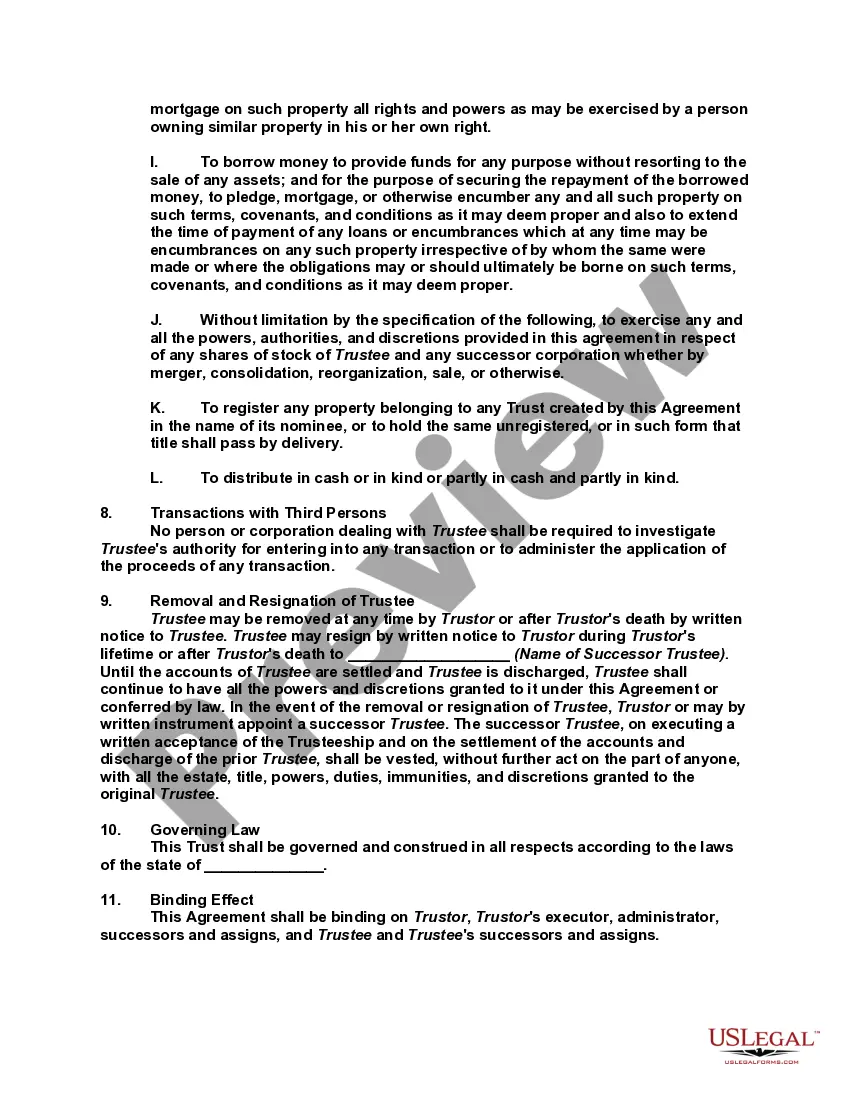
Get your form ready online
Our built-in tools help you complete, sign, share, and store your documents in one place.
Make edits, fill in missing information, and update formatting in US Legal Forms—just like you would in MS Word.
Download a copy, print it, send it by email, or mail it via USPS—whatever works best for your next step.
Sign and collect signatures with our SignNow integration. Send to multiple recipients, set reminders, and more. Go Premium to unlock E-Sign.
If this form requires notarization, complete it online through a secure video call—no need to meet a notary in person or wait for an appointment.
We protect your documents and personal data by following strict security and privacy standards.

Make edits, fill in missing information, and update formatting in US Legal Forms—just like you would in MS Word.

Download a copy, print it, send it by email, or mail it via USPS—whatever works best for your next step.

Sign and collect signatures with our SignNow integration. Send to multiple recipients, set reminders, and more. Go Premium to unlock E-Sign.

If this form requires notarization, complete it online through a secure video call—no need to meet a notary in person or wait for an appointment.

We protect your documents and personal data by following strict security and privacy standards.
Looking for another form?







How to fill out Revocable Trust Agreement Regarding Coin Collection?
- If you are a returning user, log in to your account and download the required form template by clicking the Download button after confirming your subscription is active.
- For first-time users, start by checking the Preview mode and form description. Ensure the selected form fits your local jurisdiction needs.
- If you need an alternative template, use the Search tab to find one that suits your requirements.
- Click on the Buy Now button for your chosen document and select your preferred subscription plan. You will need to create an account for access.
- Complete your purchase by entering your payment details or using your PayPal account for the subscription.
- Finally, download your completed form for your records and find it later in the My Forms section of your profile.
US Legal Forms provides users with a vast library of over 85,000 legal forms and packages, enabling quick access and easy customization for individual needs. With premium expert support, you can be assured that your documents are accurate and legally sound.
Don't wait to secure your future! Start using US Legal Forms today for all your legal documentation needs.
Form popularity
FAQ
An example of a revocable trust name could be 'The John Smith Revocable Trust.' It’s important to include your name and the word 'Revocable Trust' to clearly identify the purpose. This naming convention helps in managing the trust effectively, as it provides clarity during asset distribution. Using a professional service like US Legal Forms can further simplify the creation process and ensure compliance with legal standards.
To write a revocable trust, start by clearly outlining your assets and the beneficiaries you wish to include. Next, you will need to create a trust document that identifies the trustee and specifies how the assets should be managed and distributed. Consider using online tools like US Legal Forms, which can guide you through the process and provide templates to ensure that your revocable trust meets all legal requirements.
The downfall of having a trust, particularly a revocable trust regarding your estate, lies in the potential for mismanagement. If the trust is not updated regularly, it may not reflect current wishes or circumstances, leading to legal complications. Additionally, there may be ongoing costs for maintenance and taxes. Utilizing platforms like uslegalforms can help streamline the process and ensure everything is in order.
While a revocable trust regarding your estate offers flexibility and ease of management, there are downsides to consider. It does not provide protection from creditors, meaning your assets could still be vulnerable during lawsuits. Another issue is that, unlike irrevocable trusts, a revocable trust does not offer tax benefits. Careful evaluation is necessary to determine if it fits your needs.
Putting assets in a trust, such as a revocable trust regarding your estate, may lead to certain complexities. For instance, you may have to give up direct ownership and the associated control over those assets, which could cause concerns. Furthermore, improper funding of the trust could result in unintended consequences regarding asset distribution. Seeking guidance from professionals can help mitigate these risks.
Considering a revocable trust regarding your parents' assets can be a beneficial choice. It allows them to maintain control over their assets while providing a clear plan for distribution upon their passing. Moreover, it simplifies the transfer process, potentially avoiding probate altogether. Open communication with them about their estate planning goals can ensure their wishes are honored.
When funding your revocable trust, it's essential to include assets that you want to manage and distribute posthumously. This often includes real estate, bank accounts, investment accounts, and valuable personal property. By strategically placing these assets in a revocable trust regarding estate planning, you simplify the transfer process for your loved ones.
Reporting a revocable trust involves understanding how it affects your taxes. Typically, you do not need to report the trust itself, as the IRS taxes the income on the grantor's personal tax return. However, if the trust becomes irrevocable after your passing, or if you have specific questions, consider using resources like US Legal Forms for guidance on trust reporting requirements.
Assets that may not belong in a revocable trust generally include your life insurance policies and retirement accounts, as they have specific beneficiary designations. Additionally, some people choose to keep personal property and titled vehicles outside of a revocable trust for easier access during their lifetime. Understanding what not to include helps ensure the trust operates smoothly.
One significant mistake parents make when establishing a trust fund is failing to properly fund the trust. Revocable trust regarding your assets requires you to transfer ownership of the intended assets into the trust. If you neglect this crucial step, the trust cannot fulfill its purpose, leaving your beneficiaries without the intended support.