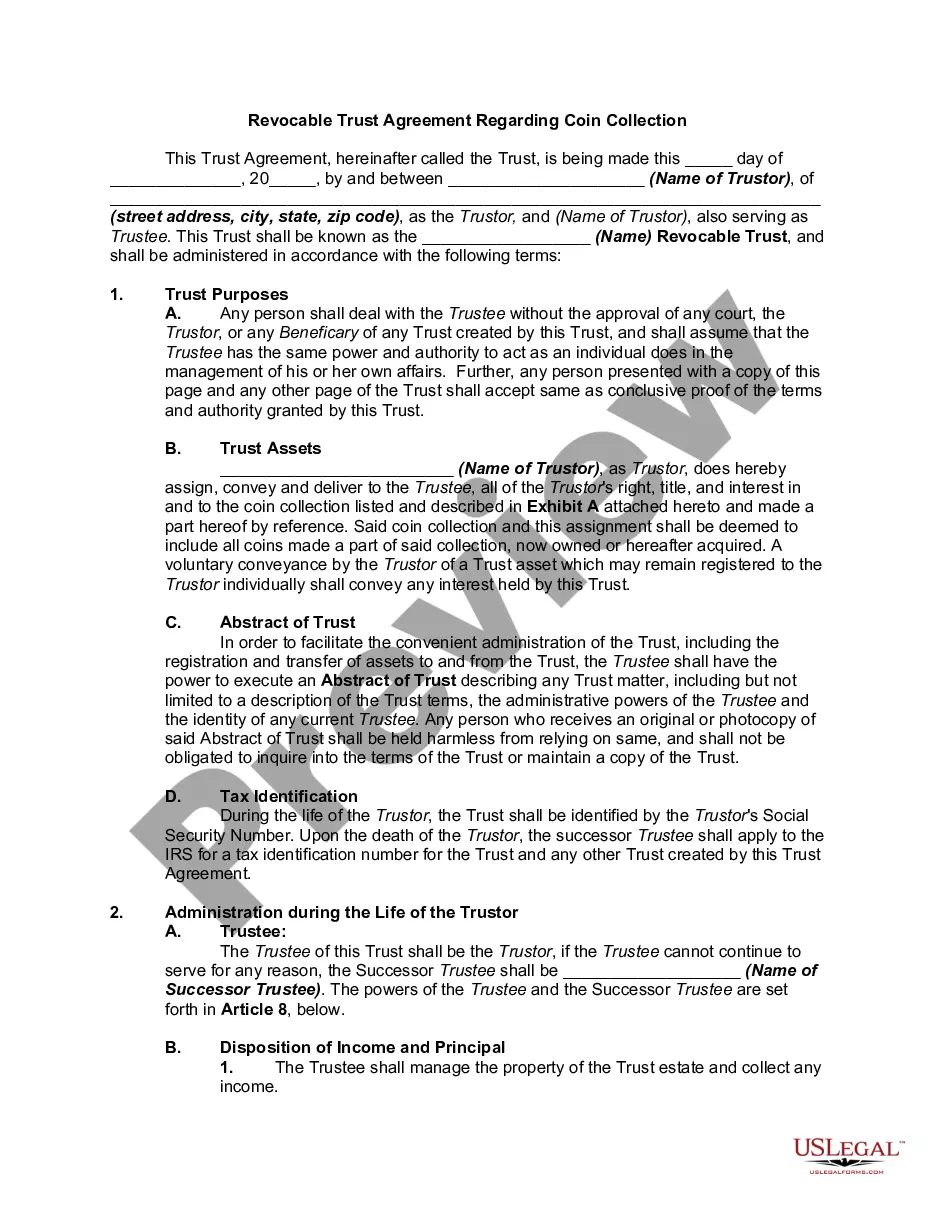
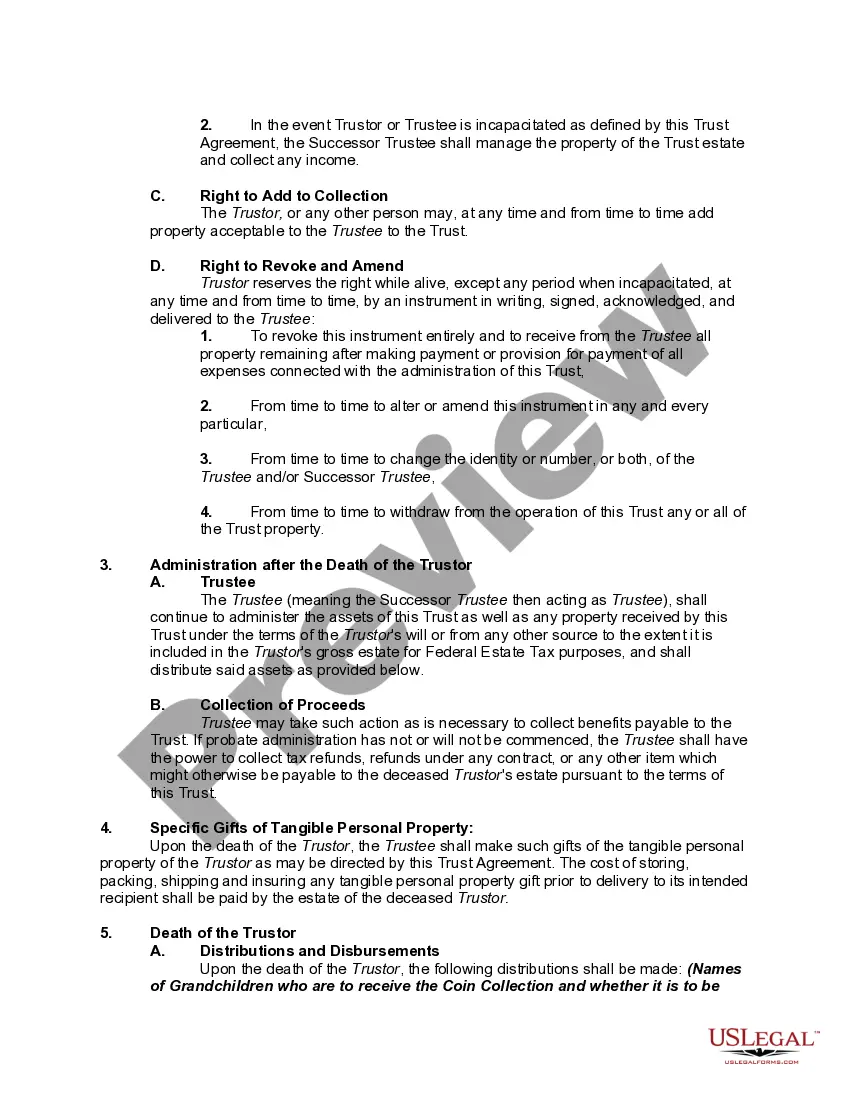
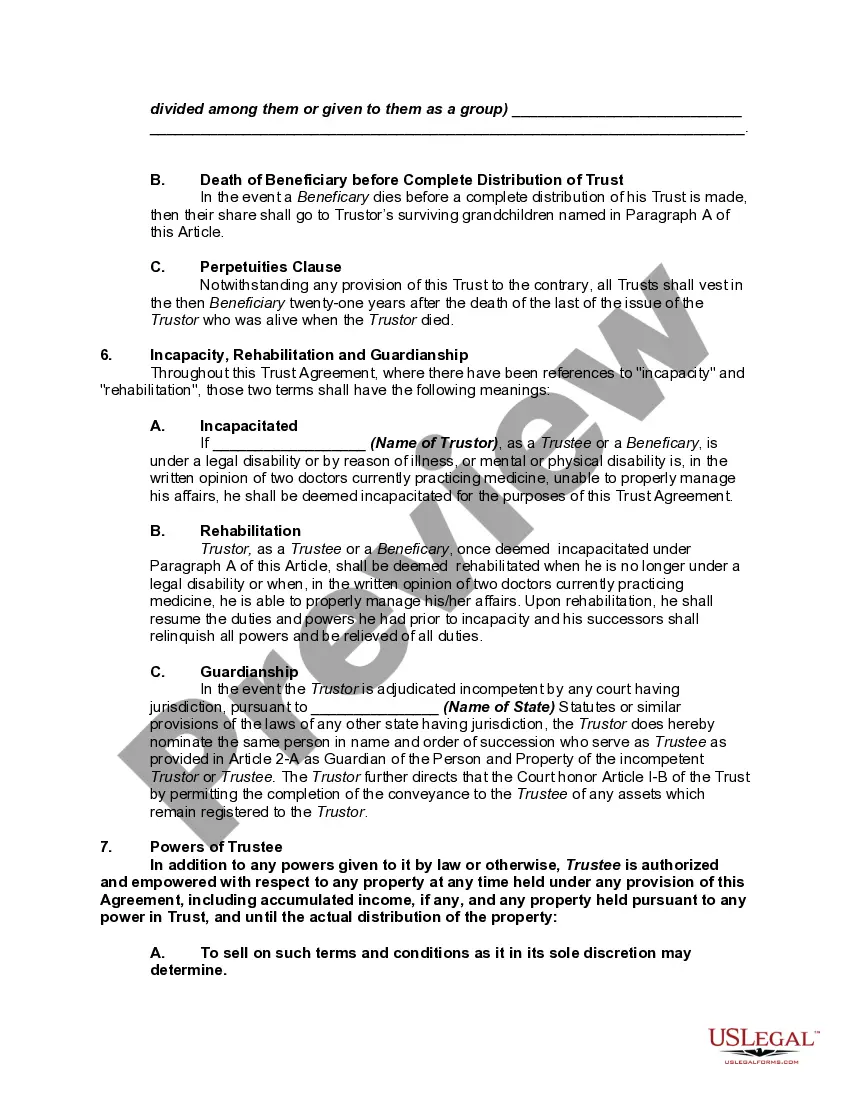
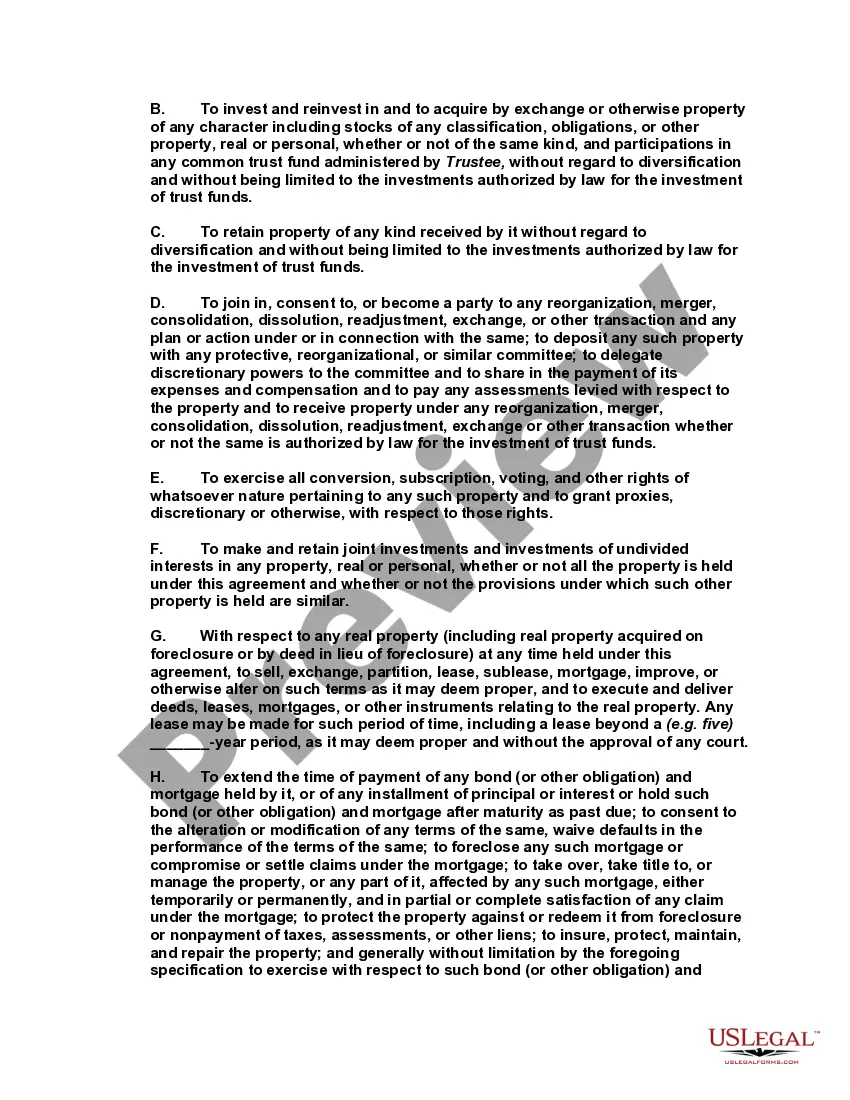
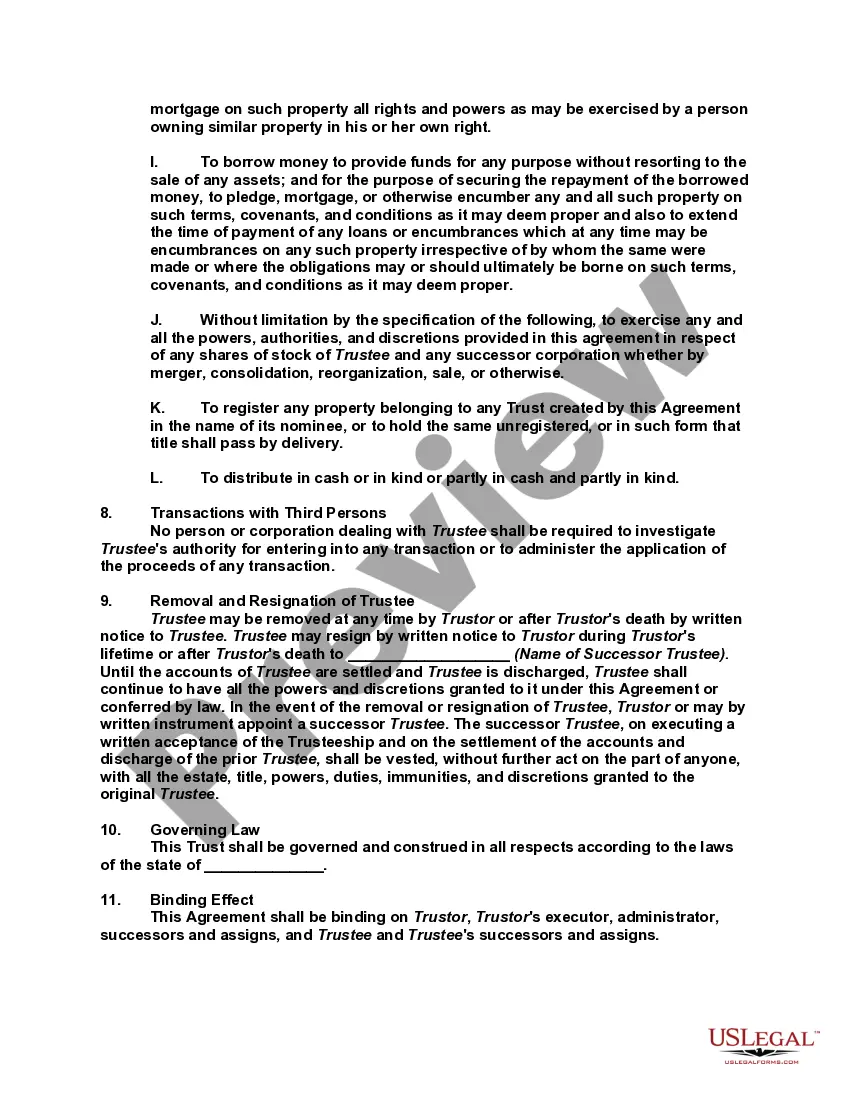
Revocable Trust Agreement For Property
Description
Get your form ready online
Our built-in tools help you complete, sign, share, and store your documents in one place.
Make edits, fill in missing information, and update formatting in US Legal Forms—just like you would in MS Word.
Download a copy, print it, send it by email, or mail it via USPS—whatever works best for your next step.
Sign and collect signatures with our SignNow integration. Send to multiple recipients, set reminders, and more. Go Premium to unlock E-Sign.
If this form requires notarization, complete it online through a secure video call—no need to meet a notary in person or wait for an appointment.
We protect your documents and personal data by following strict security and privacy standards.

Make edits, fill in missing information, and update formatting in US Legal Forms—just like you would in MS Word.

Download a copy, print it, send it by email, or mail it via USPS—whatever works best for your next step.

Sign and collect signatures with our SignNow integration. Send to multiple recipients, set reminders, and more. Go Premium to unlock E-Sign.

If this form requires notarization, complete it online through a secure video call—no need to meet a notary in person or wait for an appointment.

We protect your documents and personal data by following strict security and privacy standards.
Looking for another form?








How to fill out Revocable Trust Agreement Regarding Coin Collection?
- Start by logging into your US Legal Forms account. If you're new to the service, create an account to access the legal document library.
- Browse the extensive collection of legal forms and locate the revocable trust agreement tailored to your requirements.
- Review the form in Preview mode to ensure it aligns with your jurisdiction's regulations and your specific needs.
- If necessary, use the Search feature to find additional templates that might suit your situation better.
- Select the 'Buy Now' option and choose the subscription plan that works for you, enabling full access to the library.
- Complete your purchase safely using credit card information or your PayPal account.
- Download the completed form to your device and save it for future reference in the 'My Forms' section of your account.
In conclusion, utilizing US Legal Forms not only streamlines the process of creating a revocable trust agreement for property but also ensures that all documents are precise and legally validated. The platform's vast array of resources and expert support make it a top choice for individuals and attorneys alike.
Get started today by exploring the US Legal Forms library and take control of your estate planning!
Form popularity
FAQ
While there are benefits, a revocable trust agreement for property can also come with disadvantages. Transferring your home into a trust might involve upfront costs and paperwork. Additionally, some lenders could view the trust as a complication, impacting financing options. It’s crucial to weigh these factors and consult professionals to make informed decisions.
Certain assets are generally not ideal for inclusion in a revocable trust agreement for property. For instance, retirement accounts and life insurance policies can retain benefits through designated beneficiaries. Additionally, personal property like vehicles might be better managed outside of the trust. Understanding which assets to keep out helps streamline your estate planning.
A qualified attorney typically prepares a revocable trust agreement for property. They understand the legal requirements and can tailor the trust to your specific needs. Working with a professional helps ensure that the document complies with state laws. This process can provide peace of mind, knowing your assets are protected as intended.
Obtaining proof of a revocable trust agreement for property typically involves contacting the trustee, who manages the trust. They should provide a copy of the trust document itself or an affidavit declaring the trust's existence. In some cases, financial institutions may require specific documentation to recognize the trust, especially when transferring assets. If you need guidance in this process, the US Legal Forms platform can simplify acquiring the necessary forms and supporting documents.
Deciding whether to put your house in a revocable trust agreement for property often depends on your specific financial and familial circumstances. Many find that this approach simplifies the transfer of property upon passing, avoiding the probate process. Moreover, it allows for easier asset management in case of incapacity. We recommend discussing your options with a qualified attorney to help you weigh the benefits against potential challenges.
One potential disadvantage of placing your house in a revocable trust agreement for property is the upfront costs associated with the trust's creation and management. Additionally, transferring a house into a trust may complicate mortgage terms, especially if your lender has specific requirements regarding such changes. Some individuals also worry about losing control over their property, even though you retain significant autonomy while the trust is revocable. Understanding these factors allows you to make informed decisions.
It is generally not advisable to place certain assets in a revocable trust agreement for property, such as your personal residence if you have a mortgage, vehicles, and retirement accounts. These assets may not provide significant benefits when transferred to a revocable trust. Additionally, placing property that generates income in a trust can complicate tax situations. It’s important to consult with a legal expert to determine the best strategy for your specific situation.
To place assets in a revocable trust, you start by selecting the assets you wish to transfer and then completing the necessary documentation. This often includes changing titles for properties and reassigning ownership for bank accounts. A solid revocable trust agreement for property will guide you through this process, ensuring everything is correctly handled.
One downfall of having a trust is the ongoing administrative responsibilities, such as filing tax returns and keeping records updated. Additionally, some may encounter resistance from family members who might not understand the trust's purpose. These concerns can be addressed through a comprehensive revocable trust agreement for property that outlines the roles and responsibilities of all parties involved.
In California, the person who creates a revocable trust, known as the grantor, retains ownership of the property while they are alive. This means they can manage, change, or revoke the trust at any time. It's crucial to understand the specifics of a revocable trust agreement for property to navigate ownership and control issues effectively.