Conversion Lawsuit Example
Description

Get your form ready online
Our built-in tools help you complete, sign, share, and store your documents in one place.
Make edits, fill in missing information, and update formatting in US Legal Forms—just like you would in MS Word.
Download a copy, print it, send it by email, or mail it via USPS—whatever works best for your next step.
Sign and collect signatures with our SignNow integration. Send to multiple recipients, set reminders, and more. Go Premium to unlock E-Sign.
If this form requires notarization, complete it online through a secure video call—no need to meet a notary in person or wait for an appointment.
We protect your documents and personal data by following strict security and privacy standards.

Make edits, fill in missing information, and update formatting in US Legal Forms—just like you would in MS Word.

Download a copy, print it, send it by email, or mail it via USPS—whatever works best for your next step.

Sign and collect signatures with our SignNow integration. Send to multiple recipients, set reminders, and more. Go Premium to unlock E-Sign.

If this form requires notarization, complete it online through a secure video call—no need to meet a notary in person or wait for an appointment.

We protect your documents and personal data by following strict security and privacy standards.
Looking for another form?
How to fill out Complaint For Conversion Seeking Punitive Damages?
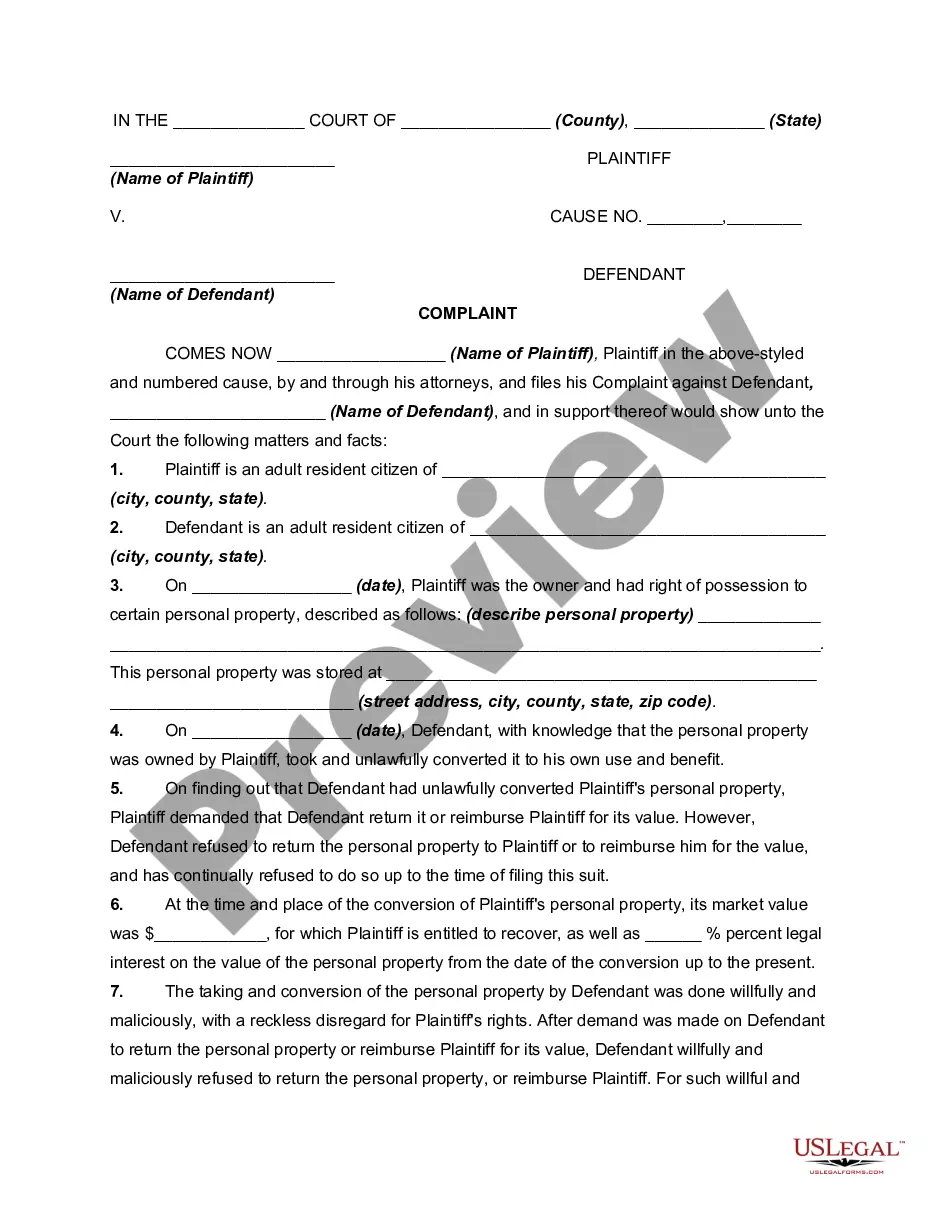
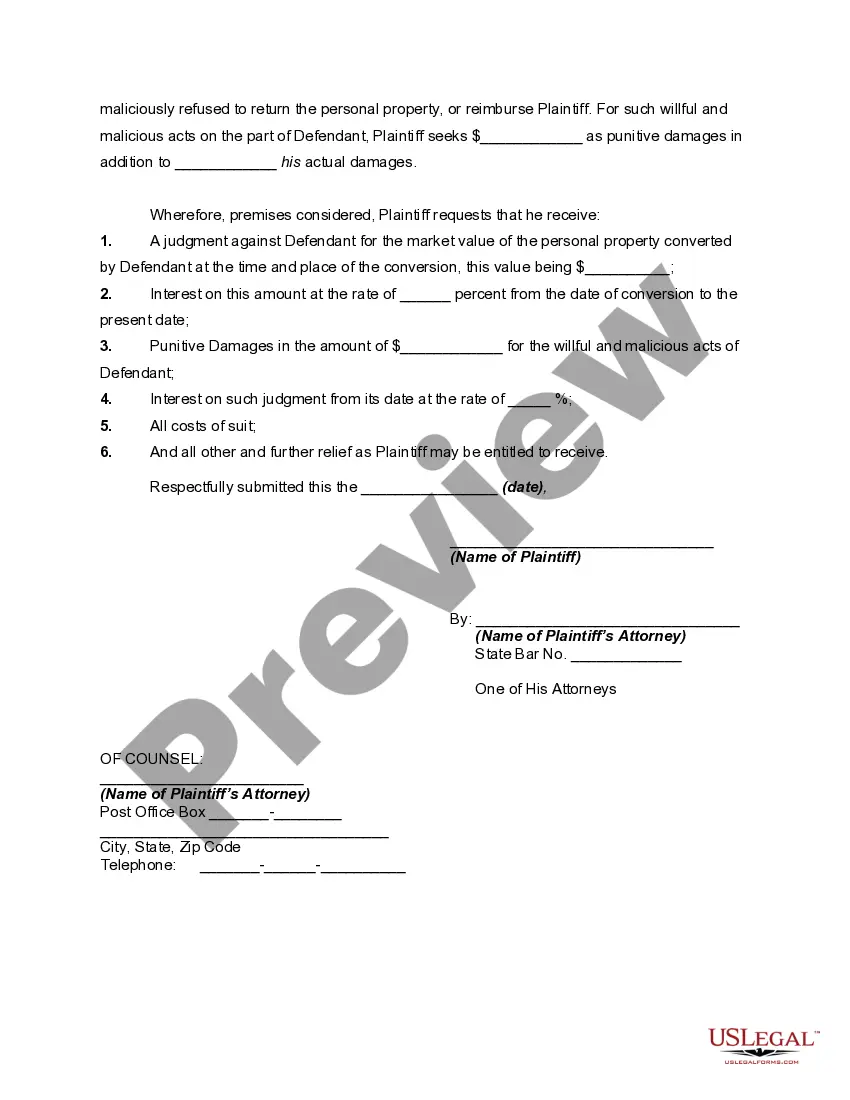
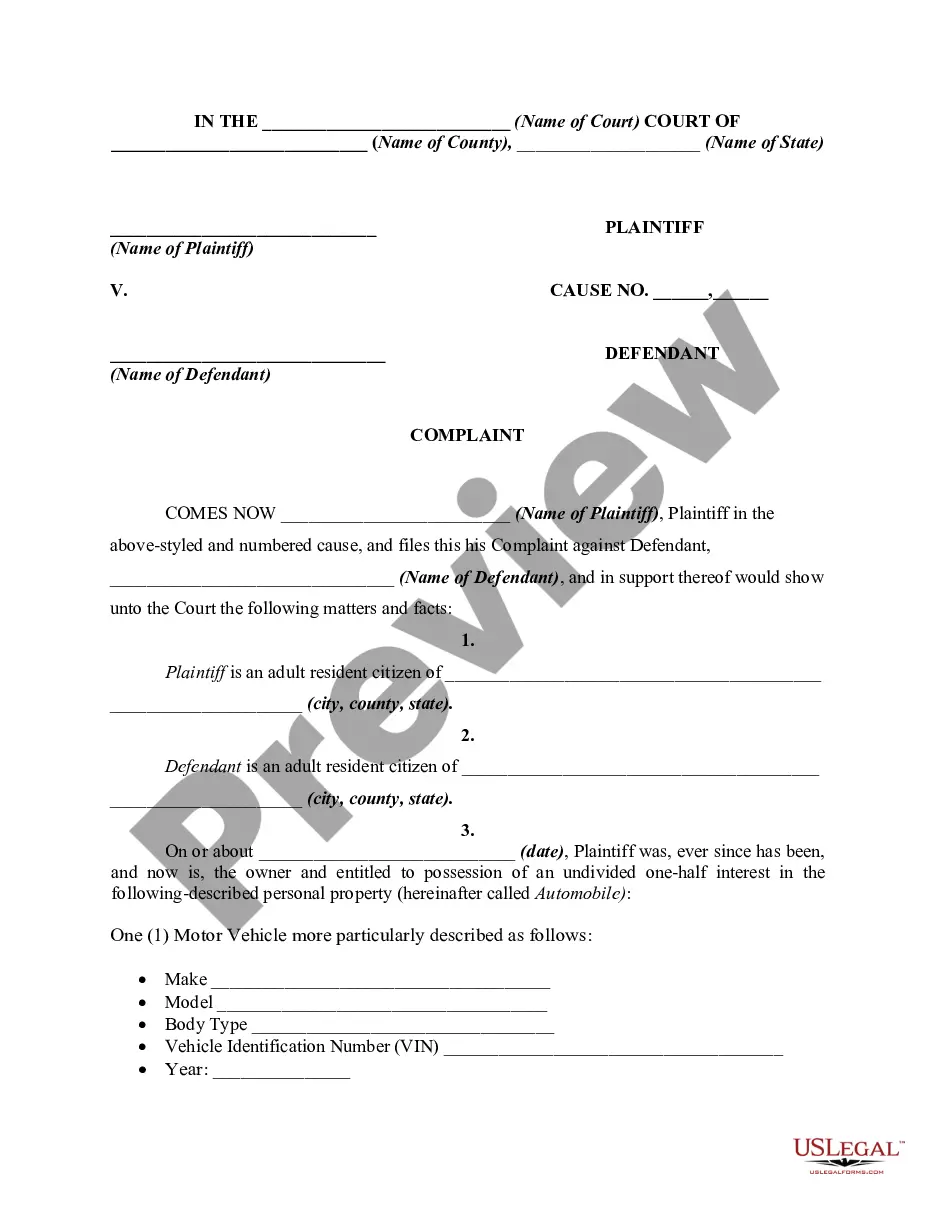
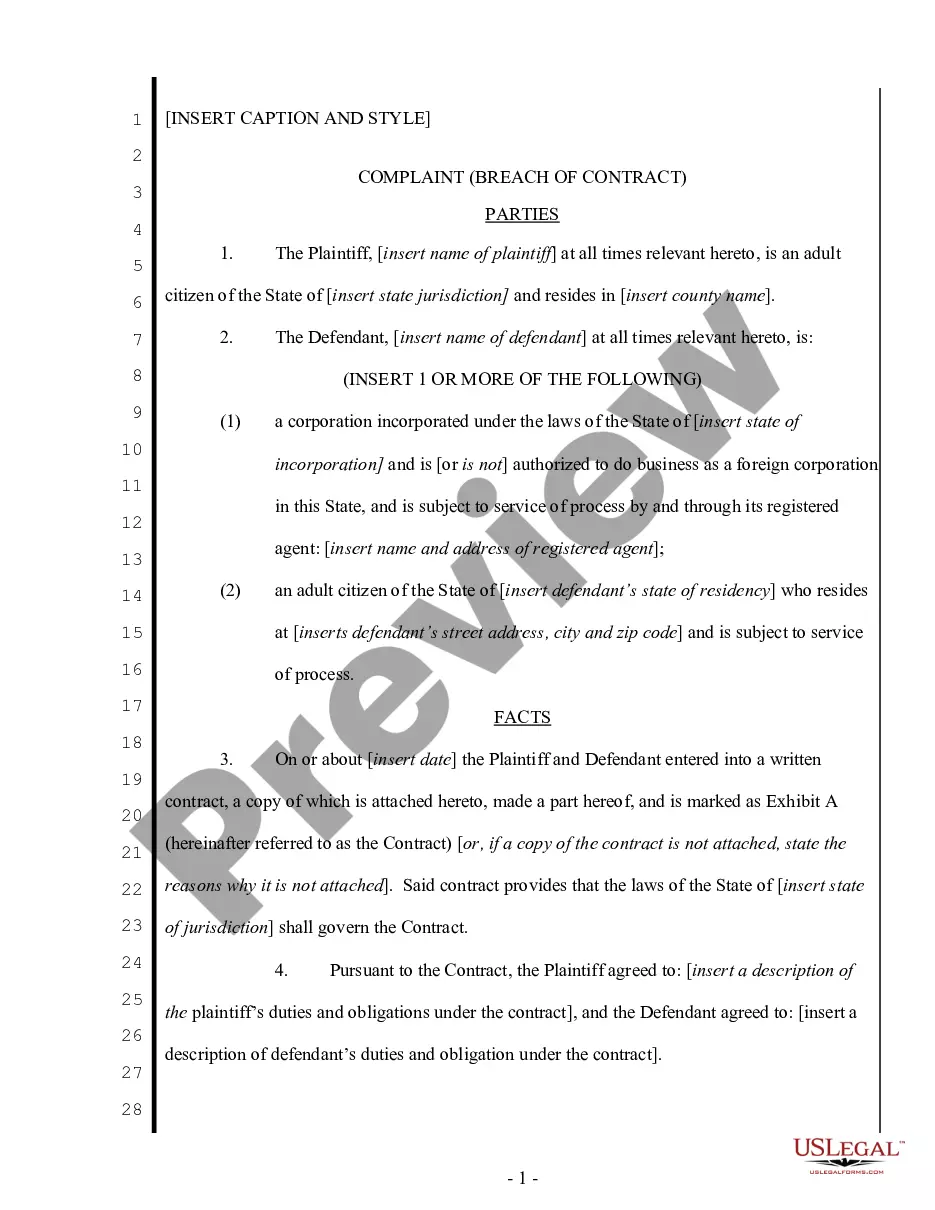
The Conversion Lawsuit Sample presented on this page is a reusable legal template crafted by experienced attorneys according to federal and local regulations.
For over 25 years, US Legal Forms has supplied individuals, companies, and lawyers with more than 85,000 verified, state-specific documents for any business and personal circumstance. It’s the quickest, easiest, and most reliable method to secure the forms you require, as the service ensures the utmost level of data safety and anti-malware safeguards.
Utilize the same document again whenever necessary. Access the My documents tab in your profile to redownload any previously downloaded forms. Sign up for US Legal Forms to have verified legal templates for all of life's situations at your fingertips.
- Search for the document you require and evaluate it.
- Examine the sample you searched for and preview it or check the form description to ensure it meets your requirements. If it doesn't, utilize the search function to find the suitable one. Click Buy Now once you have identified the template you need.
- Select a pricing plan that fits your needs and create an account. Use PayPal or a credit card for a quick payment. If you already possess an account, Log In and verify your subscription to continue.
- Obtain the editable template. Choose the format you prefer for your Conversion Lawsuit Sample (PDF, Word, RTF) and save the document on your device.
- Complete and sign the documentation. Print the template to finish it manually. Alternatively, use an online multifunctional PDF editor to quickly and accurately fill out and sign your form with a legally binding electronic signature.
Form popularity
FAQ
In many lawsuits there are several causes of action stated separately, such as fraud, breach of contract, and debt, or negligence and intentional destruction of property.
Under California law, the elements required to prove a claim of conversion are: (1) the plaintiff's ownership or right to possession of the property; (2) the defendant's conversion by a wrongful act or in a manner that is inconsistent with the plaintiff's property rights; and (3) resulting damages.
For example, a person who picks up a necklace off the ground with the intent to resell it because they erroneously believed it was abandoned still converted that necklace. The standard remedy for conversion is return of the property in question or damages for the fair market value of the property.
To establish a conversion claim, a plaintiff must prove that: it had a possessory interest in the property, the defendants intentionally interfered with the plaintiff's possession, and. the defendants' acts are the legal cause of the plaintiff's loss of property.
Under California law, the elements required to prove a claim of conversion are: (1) the plaintiff's ownership or right to possession of the property; (2) the defendant's conversion by a wrongful act or in a manner that is inconsistent with the plaintiff's property rights; and (3) resulting damages.