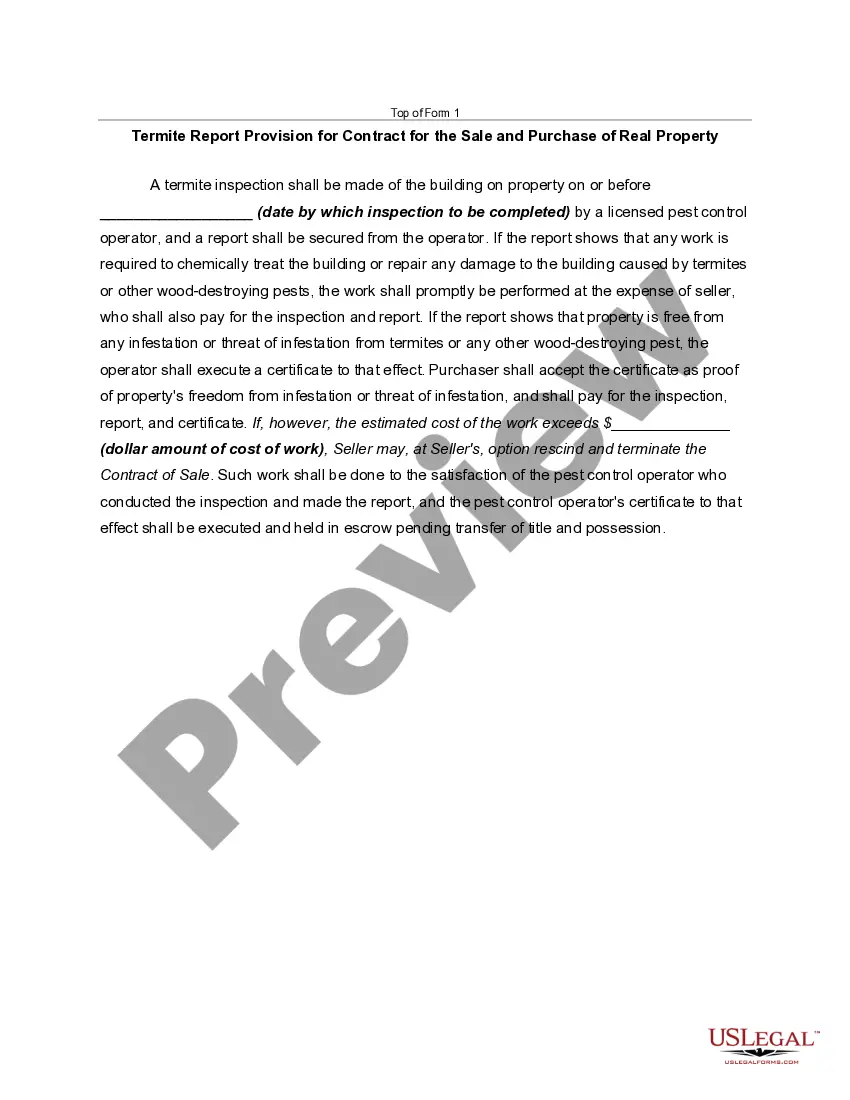
Termite Inspection Waiver Form
Description
Get your form ready online
Our built-in tools help you complete, sign, share, and store your documents in one place.
Make edits, fill in missing information, and update formatting in US Legal Forms—just like you would in MS Word.
Download a copy, print it, send it by email, or mail it via USPS—whatever works best for your next step.
Sign and collect signatures with our SignNow integration. Send to multiple recipients, set reminders, and more. Go Premium to unlock E-Sign.
If this form requires notarization, complete it online through a secure video call—no need to meet a notary in person or wait for an appointment.
We protect your documents and personal data by following strict security and privacy standards.

Make edits, fill in missing information, and update formatting in US Legal Forms—just like you would in MS Word.

Download a copy, print it, send it by email, or mail it via USPS—whatever works best for your next step.

Sign and collect signatures with our SignNow integration. Send to multiple recipients, set reminders, and more. Go Premium to unlock E-Sign.

If this form requires notarization, complete it online through a secure video call—no need to meet a notary in person or wait for an appointment.

We protect your documents and personal data by following strict security and privacy standards.
Looking for another form?









Form popularity
FAQ
You might be able to write off a termite inspection if it falls under allowable home repair expenses for tax purposes. Typically, costs related to maintenance and repairs aimed at preserving the property can qualify. Keep thorough records of your expenses, including any termite inspection waiver forms you receive. This documentation can help ensure you meet IRS guidelines when filing your taxes.
While you can perform a preliminary inspection, it is advisable to hire a licensed professional for a thorough assessment. Professionals are trained to identify signs of termite activity that you may overlook. In addition, documenting any inspections via a termite inspection waiver form can add credibility to your findings. This is especially useful when engaging in real estate transactions or whenever you want to ensure peace of mind.
While termite insurance is not a legal requirement, it is a prudent measure to protect your home. The risk of damage from termites can be substantial, and insurance can help cover unexpected costs. Moreover, having a termite inspection waiver form can show loyalty to preventive measures, which might be beneficial should issues arise in the future. In short, insurance can offer a safety net you may not want to overlook.
Investing in termite insurance can be worthwhile, especially if you consider the potential repair costs of termite damage. This insurance often covers inspections and treatments, making your home maintenance easier. Additionally, if you have a termite inspection waiver form, it may further enhance your chances of securing insurance. Overall, the peace of mind that comes with protection is invaluable.
Termite insurance provides financial protection against damages caused by termite infestations. While not mandatory, it is a wise investment for homeowners, especially in areas prone to termite activity. By having a termite inspection waiver form, you can demonstrate that you understand the risks and have taken steps to mitigate them. This can ease worries during real estate transactions.
To obtain a termite clearance letter, you need to schedule a professional inspection of your property. Once the inspection is complete and if no termite activity is found, the inspector will issue this important document. Having a termite inspection waiver form on hand can facilitate the process, serving as proof of inspection and its results. This letter is often required when you are selling or refinancing your home.
Buying a house with a history of termites can be a smart choice if you know the damage has been resolved. Always request documentation of past treatments and repairs. A termite inspection waiver form may apply if the house has been treated and is now clear of pests. Carefully assess the property's condition and consult with professionals before deciding.
In most cases, a licensed pest control professional will provide the termite letter. This letter verifies whether there are any signs of termite infestation in the property. When obtaining a termite inspection waiver form, it's essential to ensure that a qualified expert conducts the inspection. By working with reputable service providers, you can secure a reliable termite letter that meets your needs.