Decedent Intestate Without Will
Description
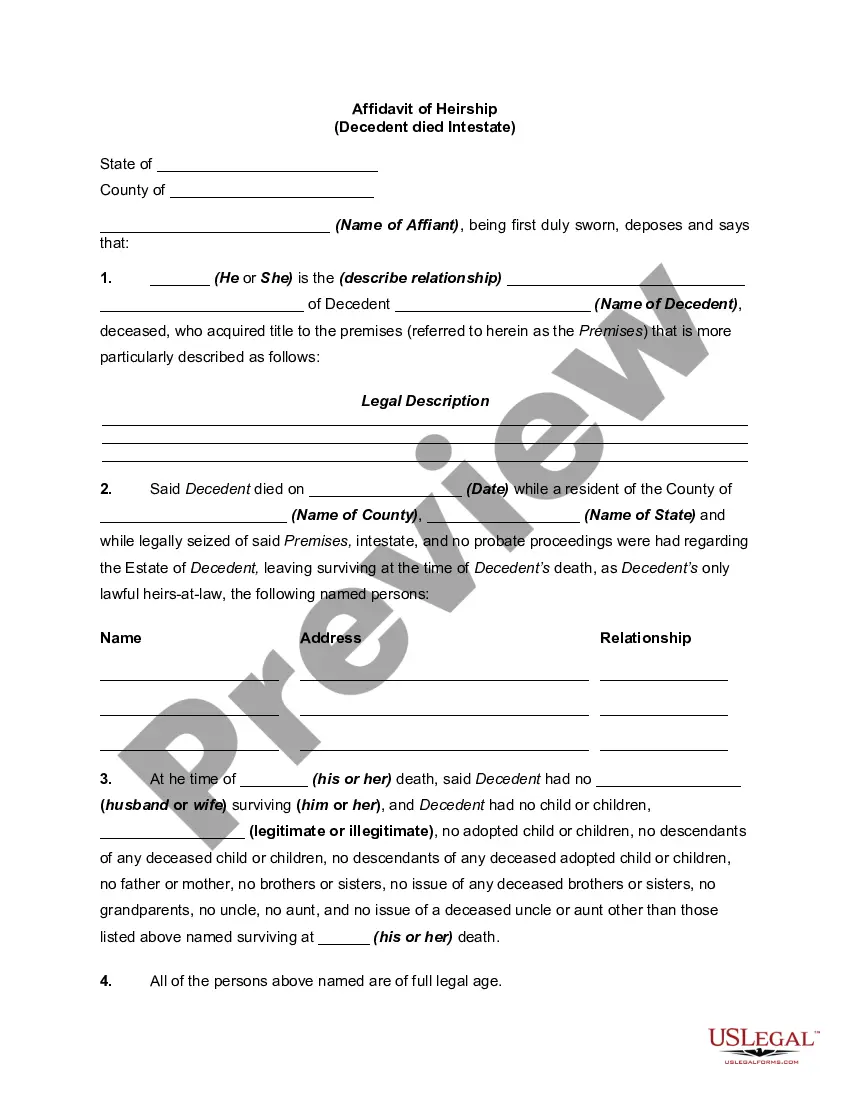
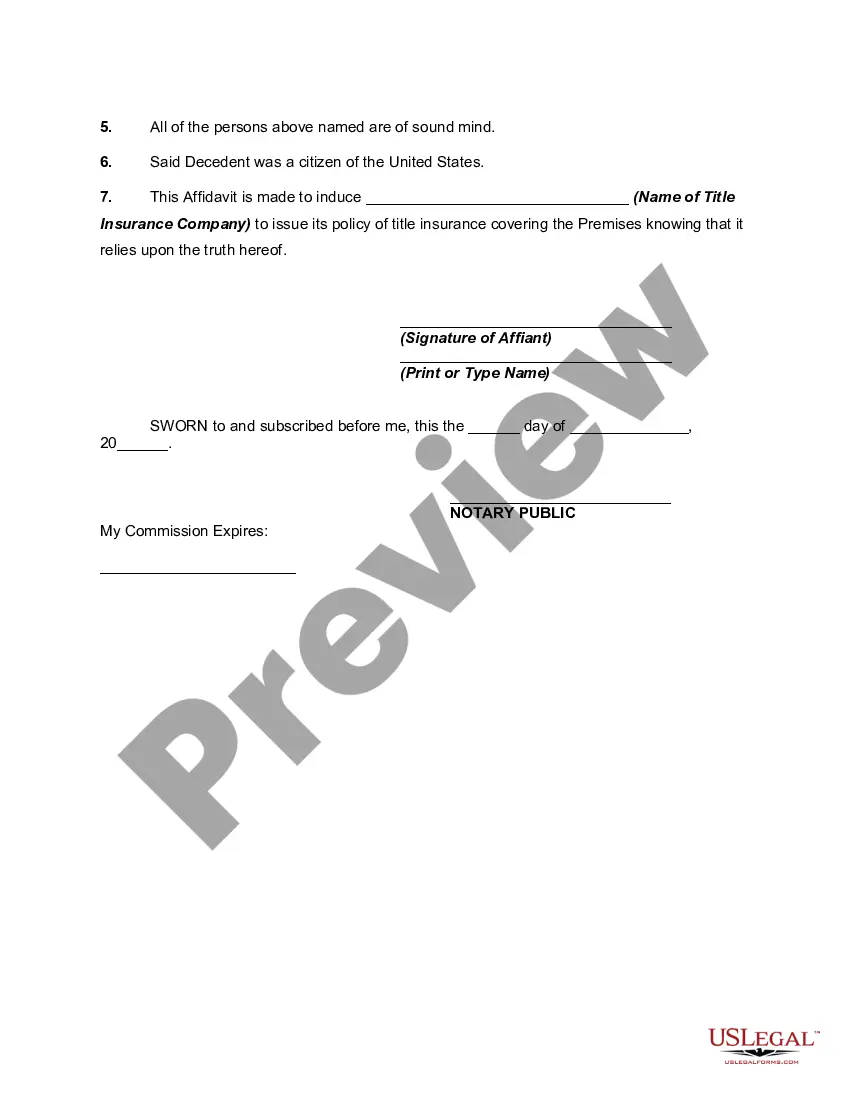
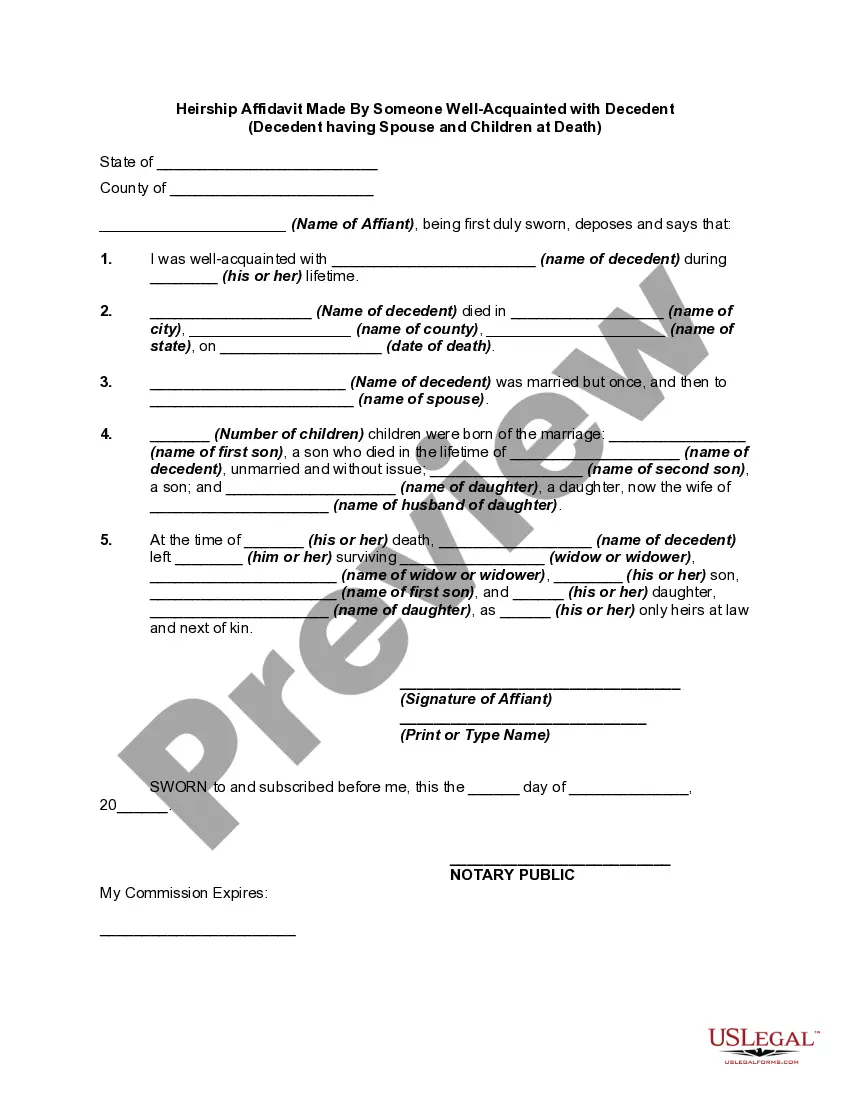
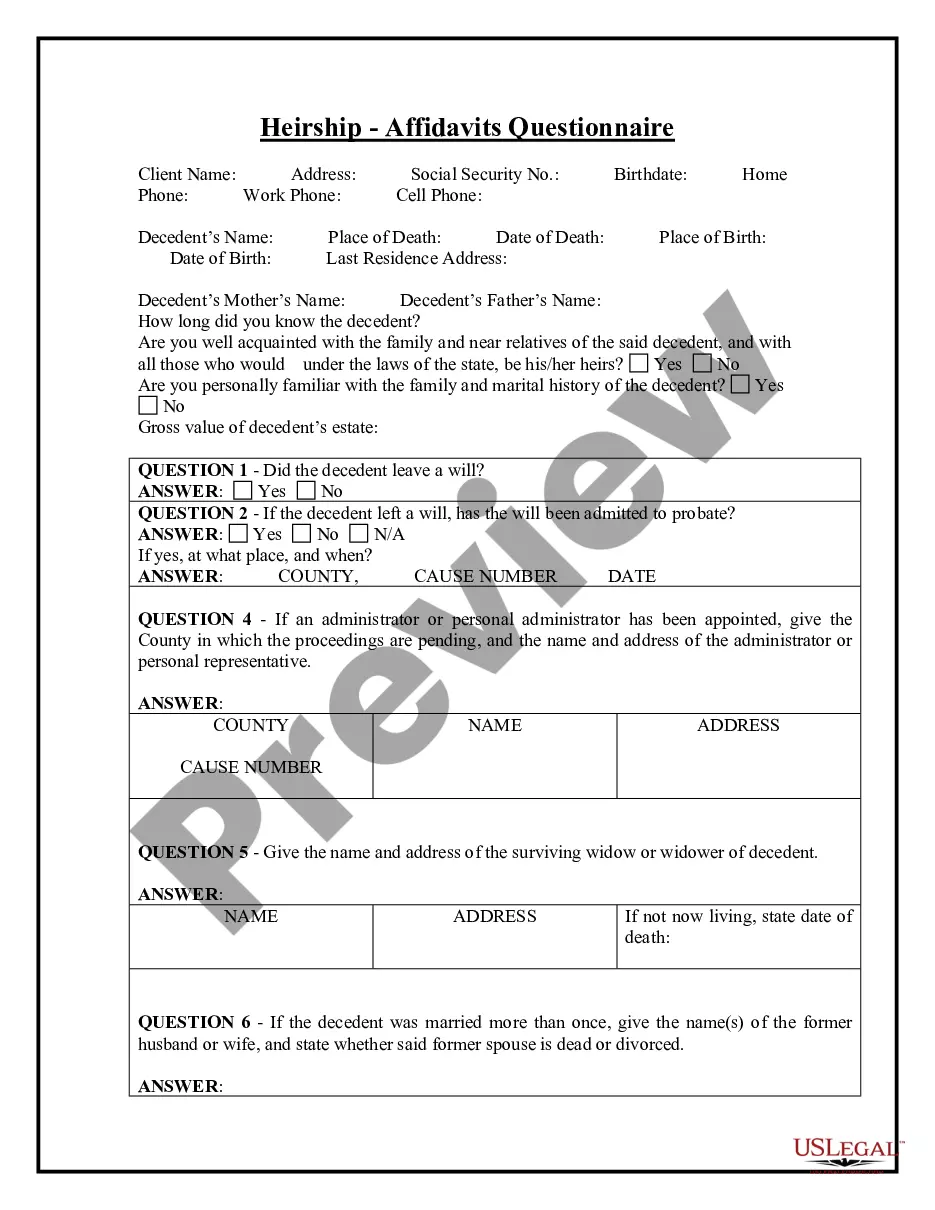


How to fill out Affidavit Of Heirship, Next Of Kin Or Descent - Decedent Died Intestate?
The Deceased Intestate Without Will that you observe on this page is a reusable formal template crafted by qualified attorneys in accordance with national and local statutes.
For over 25 years, US Legal Forms has supplied individuals, enterprises, and lawyers with more than 85,000 validated, state-specific documents for any professional and personal circumstance. It’s the quickest, easiest, and most dependable method to acquire the documents you require, as the service ensures the utmost level of data security and anti-malware safeguards.
Subscribe to US Legal Forms to have authenticated legal templates for every aspect of life readily available.
- Search for the document you require and evaluate it.
- Choose the pricing plan that works for you and set up an account. Use PayPal or a credit card for a swift payment. If you already possess an account, Log In and verify your subscription to continue.
- Select the format you prefer for your Deceased Intestate Without Will (PDF, DOCX, RTF) and store the template on your device.
- Print the template to fill it out manually. Alternatively, utilize an online multifunctional PDF editor to efficiently and accurately complete and sign your form with an electronic signature.
- Re-download the same document whenever necessary. Access the My documents tab in your profile to retrieve any previously downloaded documents.
Form popularity
FAQ
If a person dies without a will they are considered intestate "without a will". Therefore that person's property and estate is distributed ing to the state that is their home state. Real property is handled ing to state law. The distribution of all property is by relationship to the deceased.
When a person dies without a will, their estate is called an intestate estate. It is the Administrator's responsibility, under the court's supervision, to ensure that the debts and assets of the estate are managed and distributed in ance with New Hampshire law.
Intestacy: Dying without a will In New Hampshire in the absence of a will, a surviving spouse inherits the entire estate unless the decedent and the spouse share descendants, in which case the spouse inherits the first $250,000 of the estate plus half the balance.
Intestate refers to dying without a legal will. When a person dies intestate, deciding how their assets will be distributed becomes the responsibility of a state probate court. An intestate estate can also be one in which the will presented to the court was deemed to be invalid.
If you die intestate (without a will), your state's laws of descent and distribution will determine who receives your property by default. These laws vary from state to state, but typically the distribution would be to your spouse and children, or if none, to other family members.