Decedent Intestate Without Heirs
Description
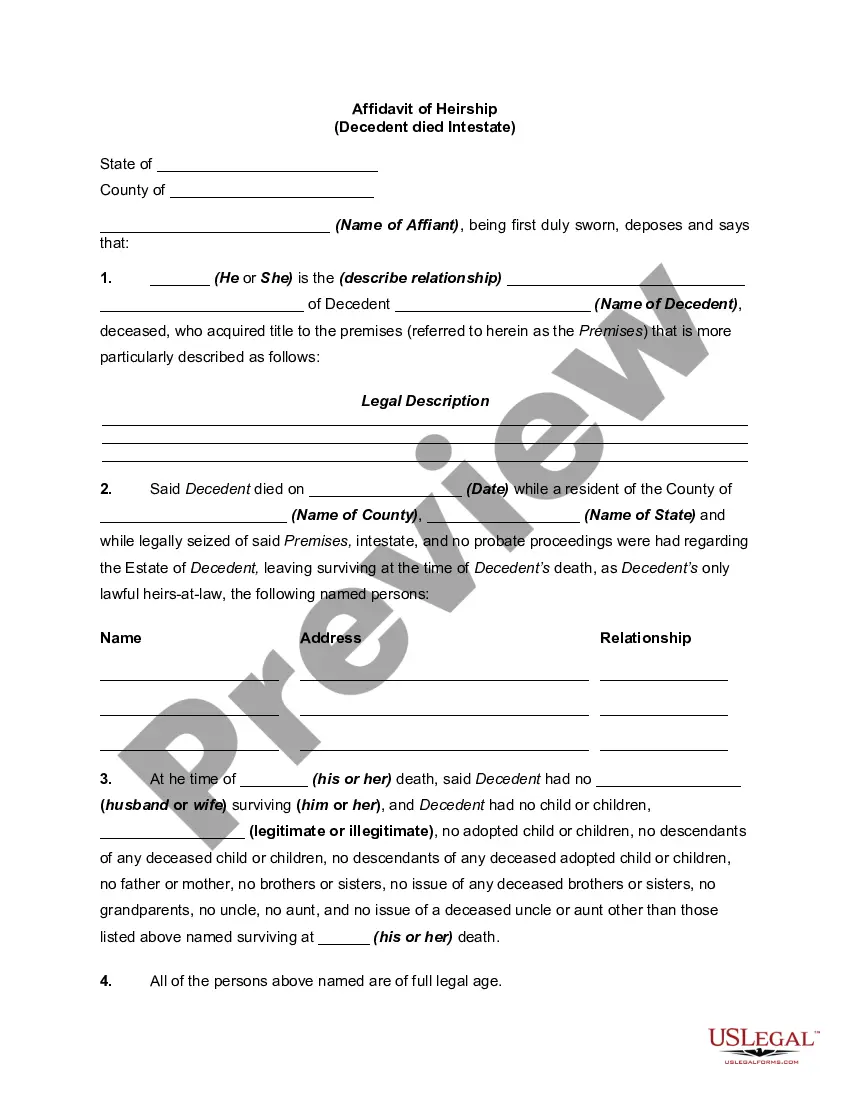
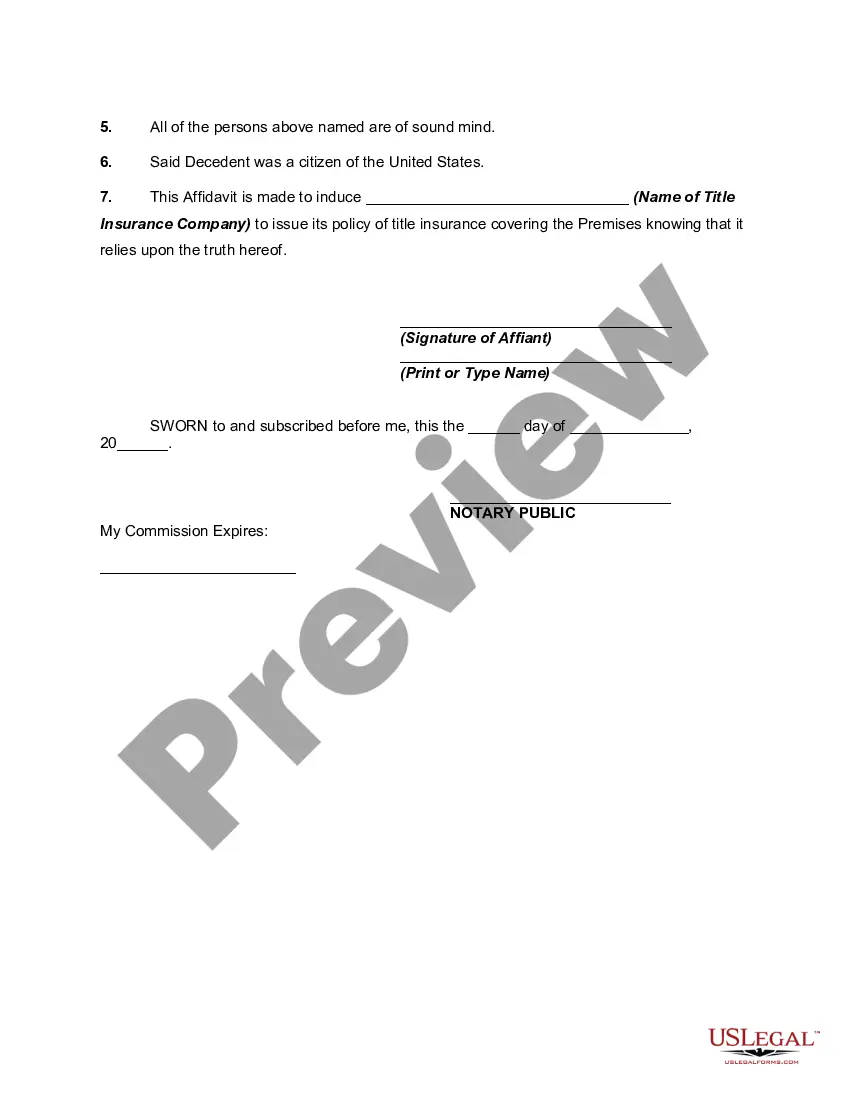
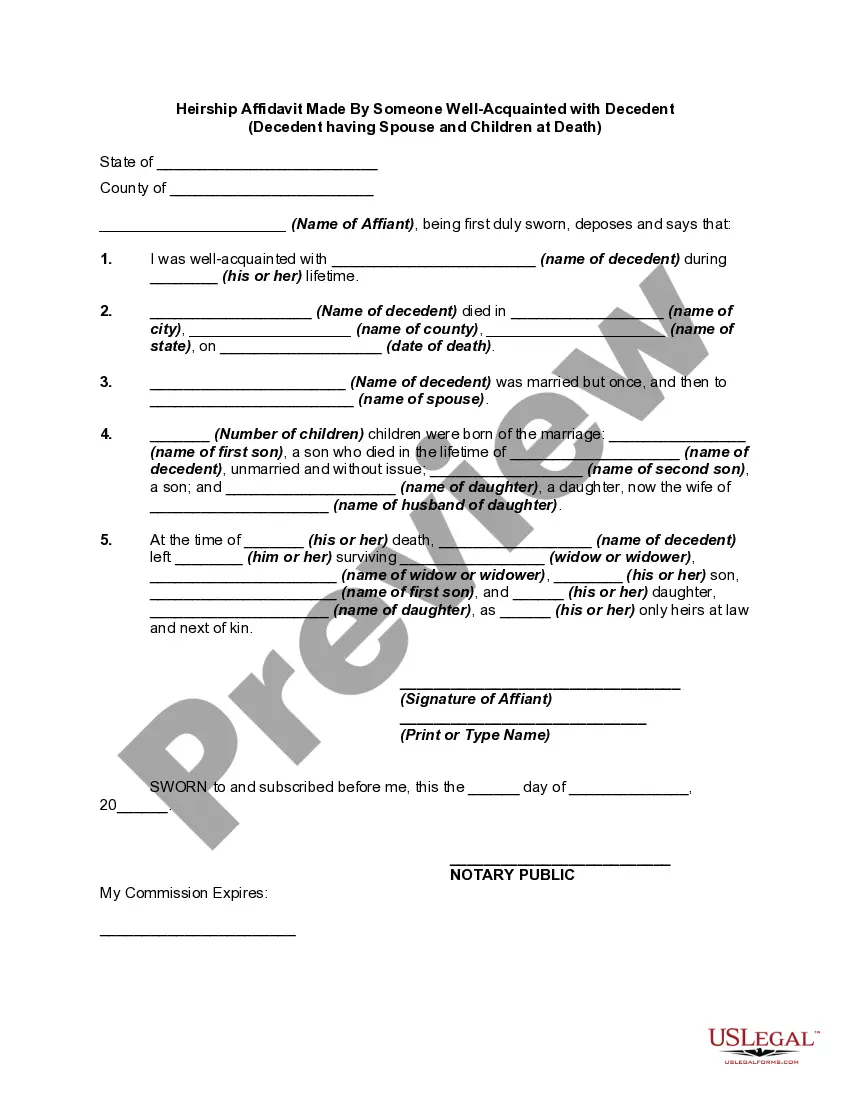
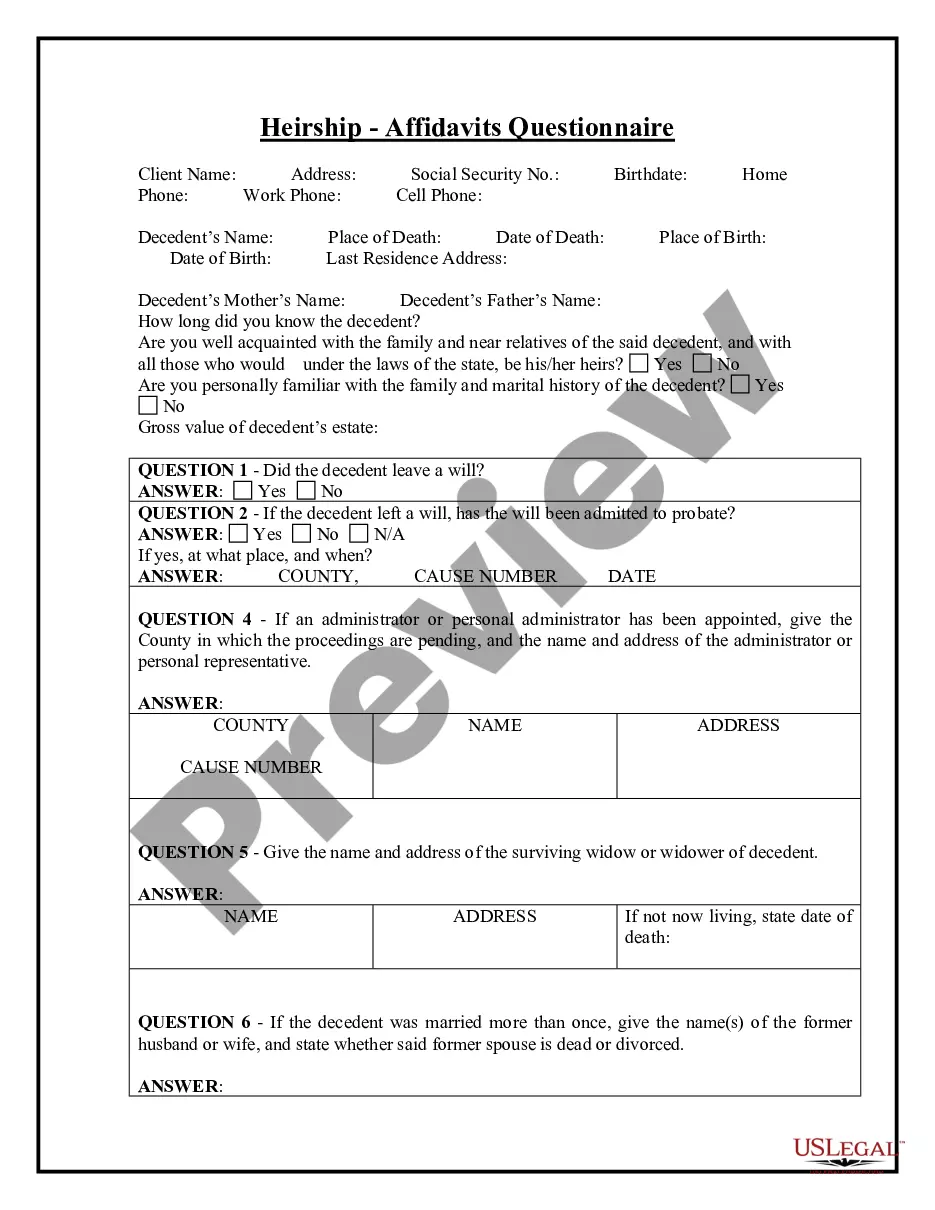



How to fill out Affidavit Of Heirship, Next Of Kin Or Descent - Decedent Died Intestate?
Legal paperwork administration can be perplexing, even for the most skilled professionals.
If you are seeking information on a Decedent Intestate Without Heirs and don't have the time to spend locating the correct and current version, the processes may be stressful.
US Legal Forms addresses any requirements you may have, from personal to business documents, all in one location.
Employ advanced tools to complete and manage your Decedent Intestate Without Heirs.
Below are the steps to follow after accessing the form you require: Verify that it is the correct form by previewing it and reviewing its description.
- Tap into a wealth of articles, guides, tutorials, and resources pertinent to your situation and requirements.
- Save time and effort in searching for the documents you require, and utilize US Legal Forms' enhanced search and Review tool to find Decedent Intestate Without Heirs and acquire it.
- If you hold a monthly subscription, Log In to your US Legal Forms account, search for the form, and retrieve it.
- Check the My documents tab to review the documents you have previously downloaded and manage your folders as needed.
- If this is your first experience with US Legal Forms, create a complimentary account and gain unrestricted access to all the benefits of the library.
- Utilize a robust web form repository to revolutionize how you handle these matters effectively.
- US Legal Forms stands as a frontrunner in online legal documentation, providing over 85,000 specific state legal forms accessible to you at all times.
- Access state- or county-specific legal and business forms.
Form popularity
FAQ
Intestate refers to dying without a legal will. When a person dies intestate, deciding how their assets will be distributed becomes the responsibility of a state probate court. An intestate estate can also be one in which the will presented to the court was deemed to be invalid.
Mention name of the deceased and date of expiry. In case person is missing/not traceable (i.e., whereabouts of person is unknown for more than 7 years an order/certi?cate of legal death/presumption of death may be issued by Court) mention date since missing.
Heirs are a person's blood relatives, their surviving spouse (if applicable), and any adopted children. Parents, siblings, grandparents, nieces and nephews, aunts and uncles, and cousins are also heirs. In estate law, heirs are discussed when a person dies without a will in place.
If you have no spouse or descendants, your estate goes equally to your parents. If only one of them is alive, they receive the whole amount of your estate. If you have no spouse, descendants, or surviving parents, your estate will be split equally among your siblings.
As per the Hindu Succession Act, 1965, if a person dies intestate, his property would go to Class I heirs. If the Class I heirs do not exist, then the property would be delegated to Class II heirs. However, if both the Class I and Class II heirs are not alive, then the property would be transferred to Agnates.