Qualified Trust Form Caps Contract For Beneficiaries
Description
Get your form ready online
Our built-in tools help you complete, sign, share, and store your documents in one place.
Make edits, fill in missing information, and update formatting in US Legal Forms—just like you would in MS Word.
Download a copy, print it, send it by email, or mail it via USPS—whatever works best for your next step.
Sign and collect signatures with our SignNow integration. Send to multiple recipients, set reminders, and more. Go Premium to unlock E-Sign.
If this form requires notarization, complete it online through a secure video call—no need to meet a notary in person or wait for an appointment.
We protect your documents and personal data by following strict security and privacy standards.

Make edits, fill in missing information, and update formatting in US Legal Forms—just like you would in MS Word.

Download a copy, print it, send it by email, or mail it via USPS—whatever works best for your next step.

Sign and collect signatures with our SignNow integration. Send to multiple recipients, set reminders, and more. Go Premium to unlock E-Sign.

If this form requires notarization, complete it online through a secure video call—no need to meet a notary in person or wait for an appointment.

We protect your documents and personal data by following strict security and privacy standards.
Looking for another form?



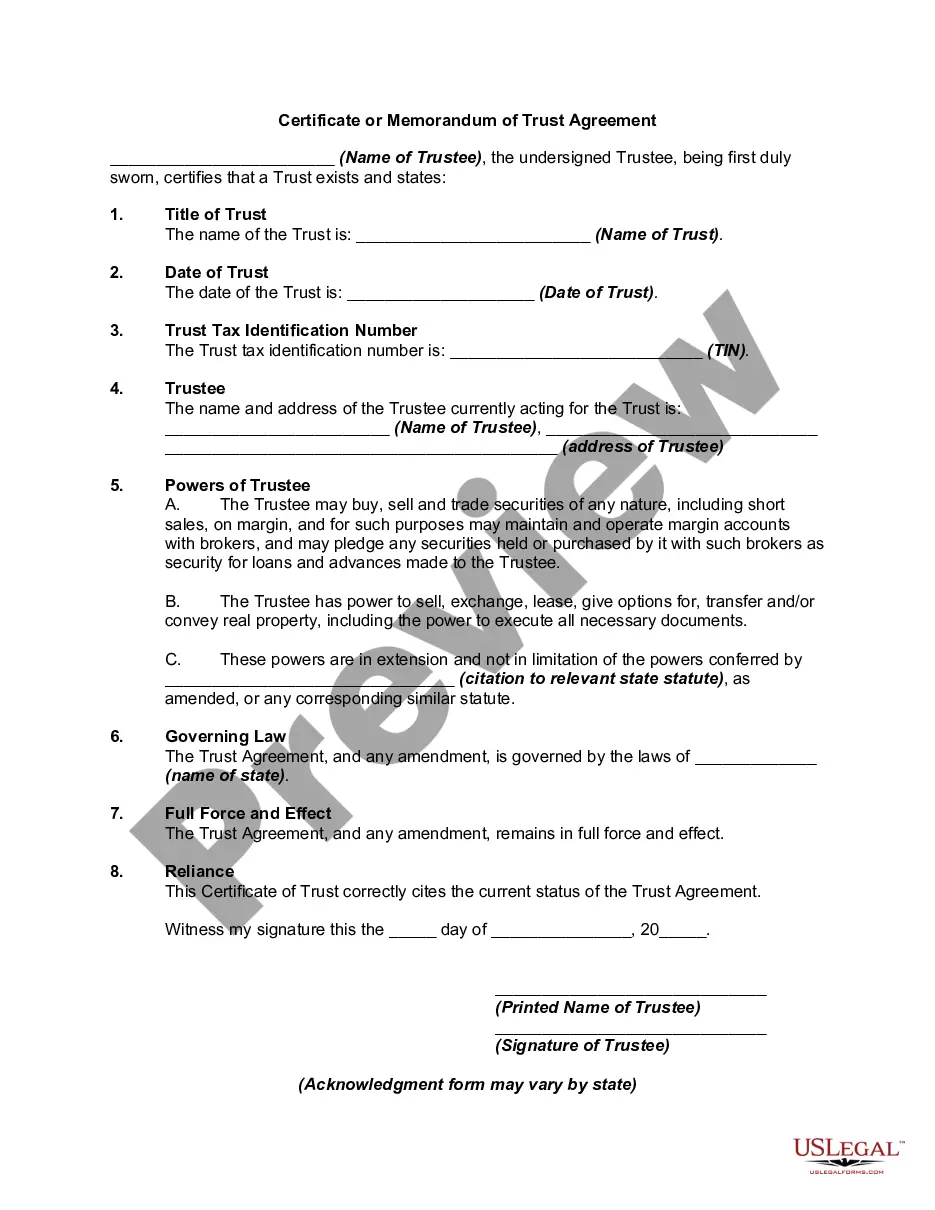




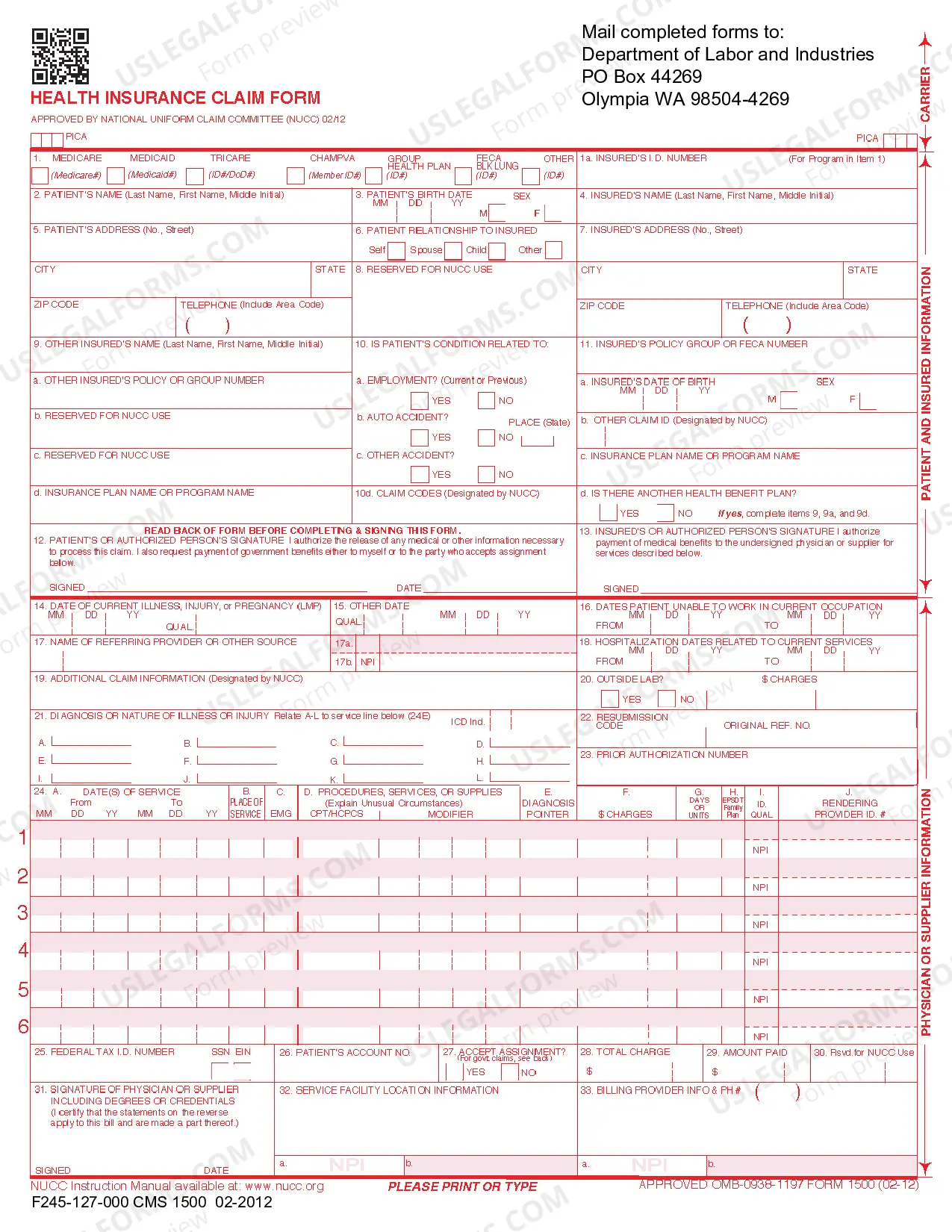

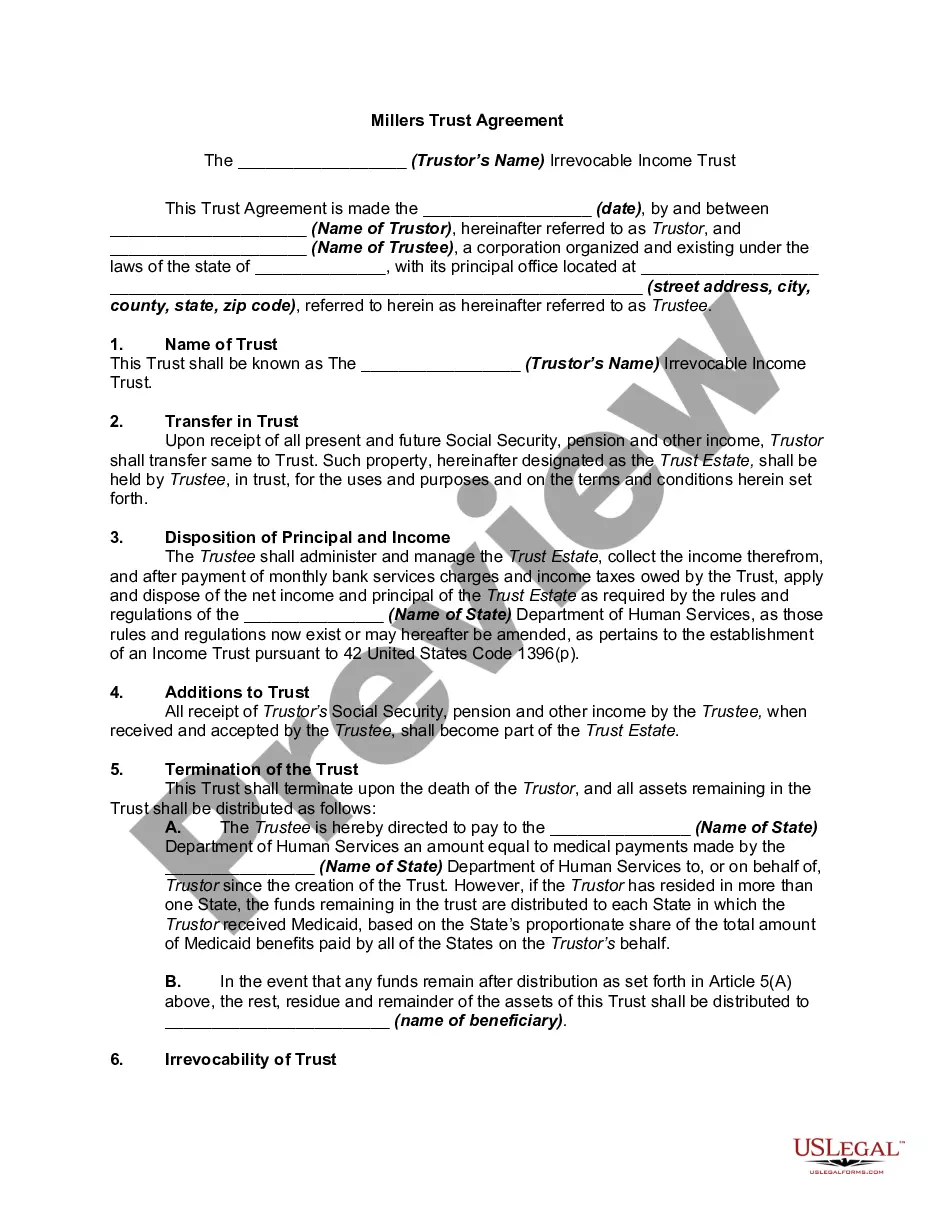
How to fill out Qualified Income Miller Trust?
- If you are a returning user, log in to your account to download the Qualified Trust Form directly to your device. Verify that your subscription is active and renew it if necessary.
- For first-time users, begin by checking the Preview mode and form description to confirm you have selected the correct Qualified Trust Form for your jurisdiction.
- If the form does not meet your needs, utilize the Search tab to find an appropriate template.
- Purchase the document by clicking on the Buy Now button. Select a subscription plan that suits you, keeping in mind you need to create an account to access the full library.
- Complete your purchase by entering your credit card or PayPal information.
- Finally, download your Qualified Trust Form to save it on your device, allowing for easy access anytime through the My Forms section of your profile.
By utilizing US Legal Forms, you can trust that you are accessing a robust library with over 85,000 fillable and editable forms, all aimed at making legal documentation as seamless as possible.
Get started today with US Legal Forms and take the first step towards securing your beneficiaries' future.
Form popularity
FAQ
Opening a QIT account for Medicaid involves several important steps, including selecting a bank and preparing necessary documentation. You will also need to establish a qualified trust form caps contract for beneficiaries, which governs how income is deposited and managed. Using platforms like USLegalForms can streamline this process, as they provide templates and guidance. This support helps ensure that you meet all regulatory requirements effectively.
A QIT document is a legal instrument that outlines the terms and conditions of a Qualified Income Trust. It specifies how income is handled and distributed to meet the requirements for Medicaid eligibility. Utilizing a qualified trust form caps contract for beneficiaries clearly defines how funds are used, ensuring compliance with Medicaid regulations. This document is essential for anyone looking to protect their assets while accessing necessary health care services.
QIT stands for Qualified Income Trust. This arrangement is designed specifically to help individuals meet Medicaid income limits. By using a qualified trust form caps contract for beneficiaries, people can legally retain more income while still qualifying for essential medical benefits. Understanding this terminology is crucial for anyone considering applying for Medicaid.
Setting up a qualified income trust involves several steps, including drafting the trust document and funding the trust. You must create a qualified trust form caps contract for beneficiaries to ensure compliance with state laws. It is advisable to consult with professionals or use trusted platforms like USLegalForms to simplify this process. This way, you can focus on securing your benefits while the platform helps manage the details.
The main purpose of a qualified income trust (QIT) is to allow individuals to qualify for Medicaid while retaining a higher income level. This mechanism is essential for managing the financial aspects of long-term care without sacrificing eligibility. By creating a qualified trust form caps contract for beneficiaries, individuals can allocate their excess income for specific uses, ensuring they can receive necessary care. This strategy ultimately benefits both the beneficiary and the overall care planning process.
While you can technically set up a Miller trust without a lawyer, having legal guidance often proves beneficial. A lawyer can help ensure that your qualified trust form caps contract for beneficiaries meets all legal requirements. This support can minimize potential mistakes and save you time. Consider consulting with a legal expert to navigate the complexities involved.
The primary beneficiary of a Qualified Income Trust is typically the individual whose income exceeds the Medicaid limits, enabling them to qualify for benefits. This trust acts as a qualified trust form caps contract for beneficiaries, allowing these individuals to retain some income for their personal needs. It’s essential to designate this beneficiary correctly to comply with regulations and ensure the trust functions as intended. By utilizing US Legal Forms, you can ensure proper documentation and compliance when identifying beneficiaries.
To set up a Qualified Income Trust (QIT), also known as a qualified trust form caps contract for beneficiaries, you need to follow a few steps. First, gather all necessary documents, including your trust agreement and items that outline income sources. Then, ensure your trust complies with state regulations before submitting it to the appropriate agency. Using US Legal Forms can simplify this process, as we provide templates and guidance to help you create a compliant QIT quickly.
In Florida, a qualified income trust operates under strict guidelines established by state law. It allows individuals whose income exceeds Medicaid limits to qualify for benefits. The trust holds income that surpasses the allowable limit, making all funds directed to legitimate expenses. Thus, individuals can still preserve their eligibility while benefiting from the advantages of a qualified trust form caps contract for beneficiaries.
Funds within a qualified income trust are typically used for specific expenses. Most often, these funds assist in covering living costs, such as housing, utilities, and medical services. Keep in mind that these expenses must align with Medicaid's stipulations. The qualified trust form caps contract for beneficiaries outlines these approved uses, ensuring compliance.